Date
Author
Пресс-служба «ТИ-Россия

Preserved copy
Translated material
IVK-2024: Russia has 22 points – the worst result in history
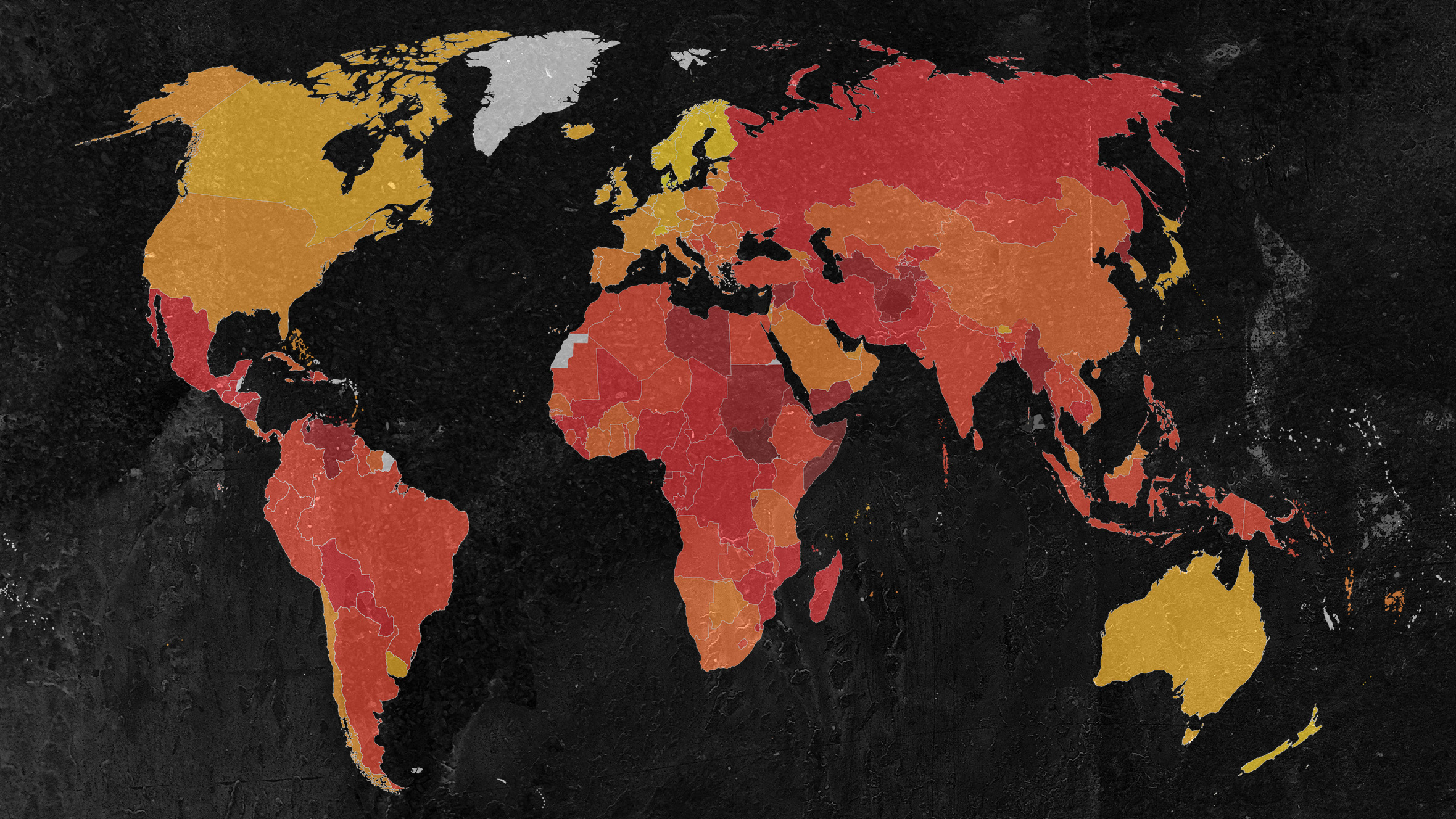
Corruption Perceptions Index 2024: Russia has 22 points - the worst result in history
Transparency International has published the Corruption Perceptions Index (CPI) for 2024. This time, Russia scored 22 points out of 100 and took 154th place out of 180. Azerbaijan, Honduras and Lebanon received the same results. For our country, this is the worst result in the history of the Index.
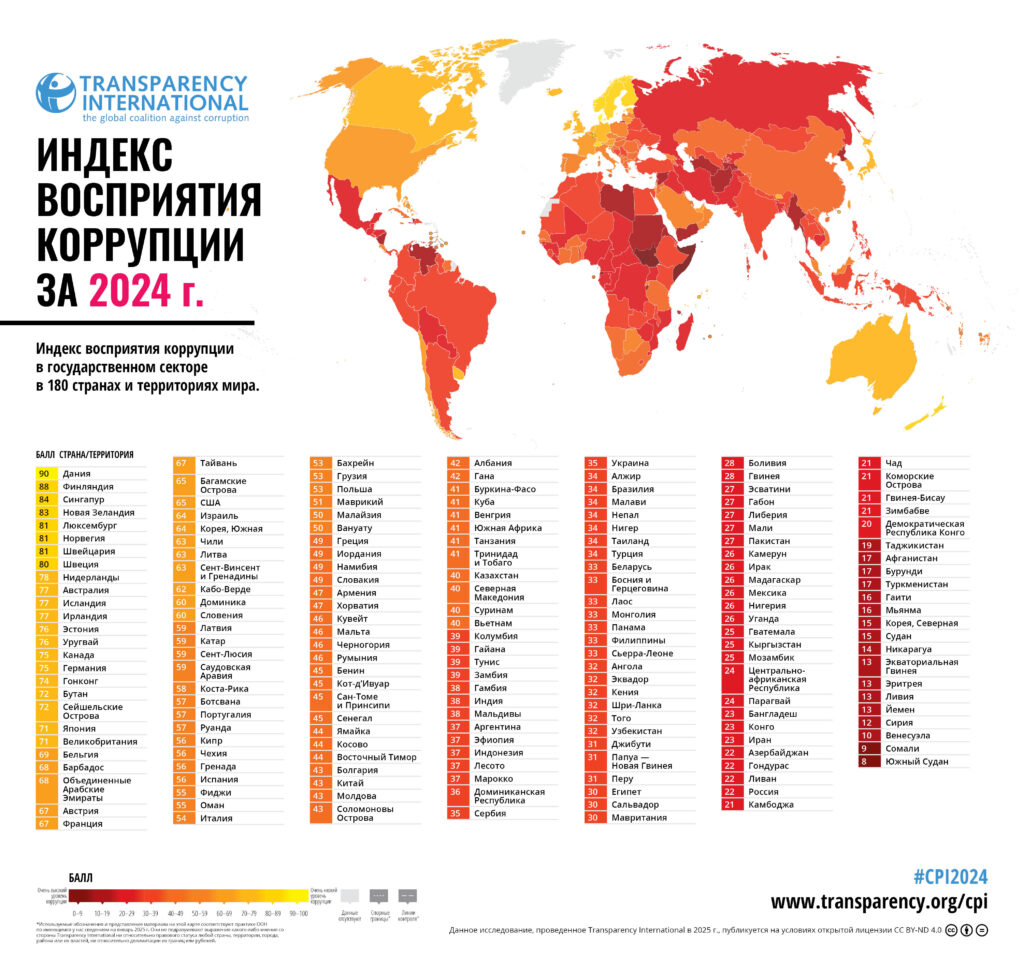
The Corruption Perceptions Index (CPI) is a ranking of 180 countries on the perception of public sector corruption. It is calculated based on data obtained from 13 expert sources, including the World Bank, Freedom House, private consulting firms and rating agencies, think tanks and other organizations. The CPI scores countries from 100—perceived as free of corruption—to 0—perceived as the most corrupt.
In 2023, Russia scored 26 points and took 141st place. Then Guinea took the same number of points and improved its result in 2024, gaining 28 points. Even against the backdrop of regions with traditionally high levels of corruption, Russia continues to worsen its position.
War, secrecy and corruption
The full-scale invasion of Ukraine has accelerated the degradation of institutions that are supposed to ensure transparency and accountability of government. Russia consistently suppresses independent media and NGOs and closes access to information about budget spending and procurement by government agencies. In such conditions, the possibilities of public control are minimized, which leads to the spread of corrupt practices at all levels of government.
State resources are directed to military needs without the possibility of civilian control. The secrecy of military contracts, multibillion-dollar purchases on non-competitive terms, schemes to enrich “their” contractors - all this makes war a powerful driver of corruption. Authorities use conflicts as an excuse to further restrict transparency and civil liberties, giving themselves complete control over resources.
“Corruption threatens the safety and well-being of each of us. Anyone can face being asked to pay a bribe in exchange for a guarantee of a successful operation or being forced to share business profits with an official. In addition, many corruption risks are generated by a full-scale war. Closed contracts in the defense sector, purchases from a single supplier, a regime of secrecy that extends to the budget for military purposes - this is not a complete list. The war weakens the anti-corruption landscape and minimizes the results of anti-corruption reforms in the public sector.
Green corruption, which has been in the shadows for a long time, also deserves attention. How can one not recall the tragedy of the fuel oil spill in the Black Sea and the numerous violations during the liquidation of its consequences. It took 10 days to assess the damage caused to nature and assign a federal emergency status. The consequences of such sluggishness threaten environmental safety for decades to come.
Civil society is consistently having the ground pulled out from under its feet, but our task is to look for resources and creative solutions in order to cope with challenges and not stop anti-corruption initiatives and investigations,” comments Alena Vandysheva , General Director of Transparency International - Russia .
Corruption and the climate crisis
The consequences of corruption are manifested not only in economics and politics, but also in the environmental sphere. The recent fuel oil spill in the Black Sea is a direct consequence of the inaction and crisis in the field of environmental supervision.
The lack of proper control over oil transportation, the use of outdated tankers - all this led to disaster. It is beneficial for the authorities to support opaque schemes, turning a blind eye to high environmental risks. Without tough anti-corruption measures, such disasters will be repeated.
Corruption is also jeopardizing global climate initiatives. Billions of dollars allocated to combat climate change are at risk of being stolen and wasted. An illustrative case is the Russian project “Standards and Labels for Improving Energy Efficiency,” implemented in 2010–2017 under the leadership of the United Nations Development Program with funds from the Global Environment Facility. $7.8 million was allocated for its implementation. Its goal was to reduce emissions through strengthening energy efficiency standards. However, a significant part of the budget was spent without obtaining specific useful results; the declared goal was never achieved. The audits revealed significant violations: inflated prices, lack of competitive procedures, conflicts of interest and inconsistency of reporting with actual work performed.
Another prominent example was the UN Climate Change Conference (COP29) in Azerbaijan, where 1,773 lobbyists from the oil and gas sector were present , while civil society had limited access. This highlights the dangers of corporate influence undermining the fight against climate change to benefit a narrow circle of elites.
“We must urgently root out corruption before it derails meaningful climate initiatives. Governments and multilateral organizations must integrate anti-corruption measures into climate change efforts to protect climate finance, restore trust and ensure maximum impact. Today, corrupt forces not only shape, but often dictate policy and undermine checks and balances, suppressing journalists, activists and all those fighting for equality and sustainable development. Achieving true resilience to the impacts of climate change requires confronting these threats head-on and decisively. Vulnerable people around the world desperately need this action,” emphasizes Maira Martini, Director General of Transparency International .
Global indicators: stagnation in the fight against corruption
The global average CPI 2024 remained at 43 points, indicating a lack of significant progress. More than two-thirds of countries scored below 50, highlighting systemic challenges to transparency and the rule of law.
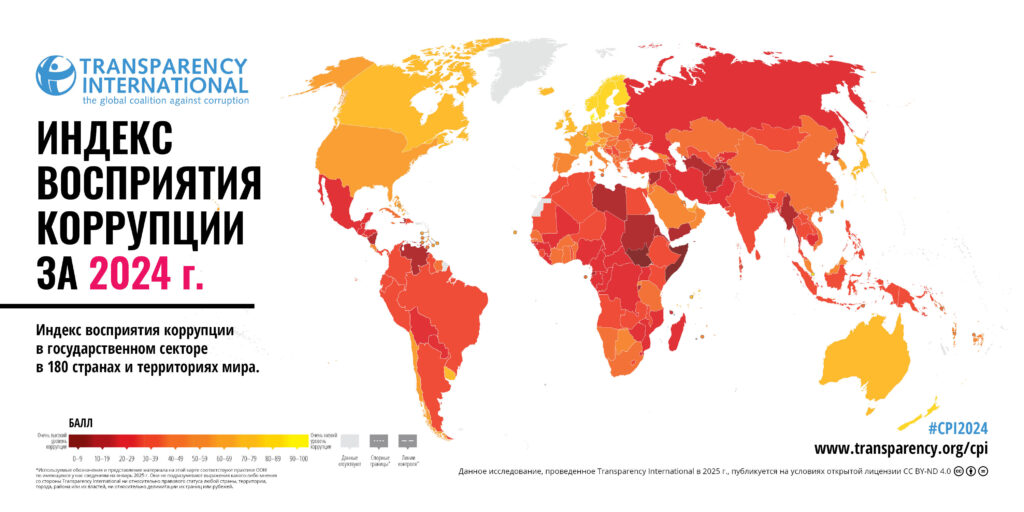
Leaders of IVK-2024:
- Denmark (90 points) – remains in first place since 2018.
- Finland (88 points) and Singapore (84 points) are in the top 3 “cleanest” countries.
Outsiders of the rating:
- South Sudan (8 points), Somalia (9 points), Venezuela (10 points), Syria (12 points), Libya (13 points).
“Corruption is a growing global threat that not only hampers development, but is also a major cause of democratic decline, instability and human rights abuses. The international community and every country must make the fight against corruption a top and long-term priority. This is critical to challenging authoritarianism and ensuring a peaceful, free and sustainable world. The dangerous trends identified in this year's Corruption Perceptions Index highlight the urgent need for concrete action to combat corruption around the world,” says François Valerian, Chairman of Transparency International .
The average for Eastern Europe and Central Asia remained at 35, making it one of the least transparent in the world.
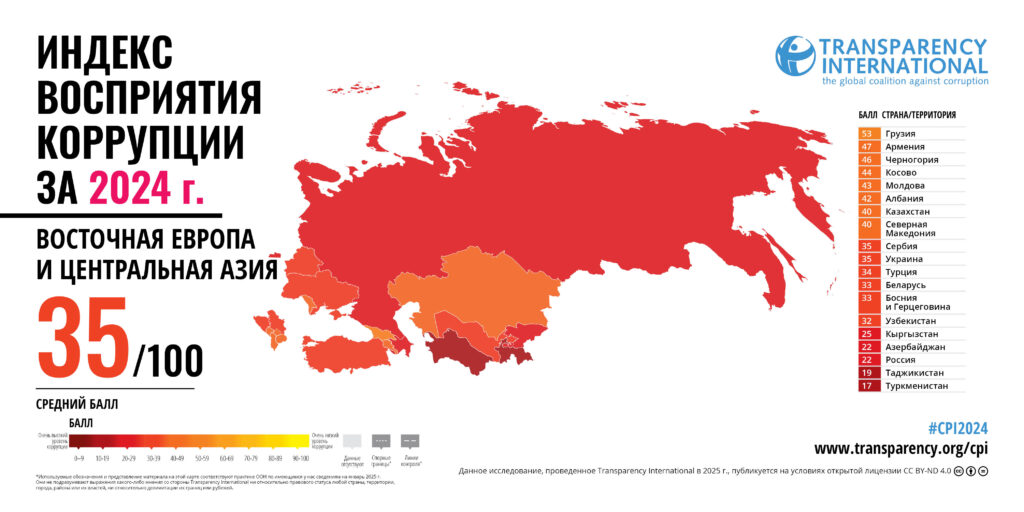
Countries that improved their positions:
- Moldova (43 points, +1)
- Kazakhstan (40 points, +1)
Countries that lost ground:
- Ukraine (35 points, -1)
- Bosnia and Herzegovina (33 points, -2)
- Belarus (33 points, -4)
- Uzbekistan (32 points, -1)
- Kyrgyzstan (25 points, -1)
- Azerbaijan (22 points, -1)
- Tajikistan (19 points, -1)
- Turkmenistan (17 points, -1)
Countries whose positions remained unchanged:
- Armenia (47 points)
- Serbia (35 points)
- Türkiye (34 points)
Recommendations
Lawyers at Transparency International Russia believe that improving the situation with corruption in Russia is only possible if there is a radical increase in the transparency of government institutions, the return of public control and consistent efforts to increase the level of government accountability.
The most important task is to ensure free access to information. It is necessary to cancel all restrictions introduced since 2018 and restore the publication of data on government procurement, statistics, reporting of government agencies and public companies. Open registers of real estate and legal entities should again become the norm. The publication of declarations of civil servants and politicians should be resumed, as well as a unified digital public register of declarations should be created.
The fight against financial crime and money laundering requires decisive action. Mandatory registration of cryptocurrency providers, including exchangers and exchanges, should be introduced to combat illegal financial schemes. Crypto-factories used for money laundering, especially in Moscow City, must be liquidated .
To reform the law enforcement and judicial systems , it is necessary to create an independent anti-corruption agency that will verify declarations, monitor conflicts of interest and investigate corruption crimes. The possibility of creating specialized anti-corruption courts should also be considered. Criminal liability for illicit enrichment should be introduced in accordance with Article 20 of the UN Convention against Corruption.
Businesses and private property need protection . The widespread practice of transferring assets into state ownership on dubious grounds must stop.
Civil society and independent media must be able to operate without fear of reprisals . Laws against “foreign agents” and “undesirable organizations” that are used to suppress independent viewpoints should be repealed. There should be a whistleblower protection law that guarantees protection from prosecution and dismissal, and provides compensation for credible reporting of corruption crimes.
Transparency International Russia calls on the international community to support independent NGOs and media that resist corruption, expose government crimes and continue to inform society despite repression and censorship.
For additional information, as well as questions about organizing interviews and comments, you can contact the organization’s PR specialist Ivan Korzh by mail: [email protected]