
Translated material
Rare -earth arrogance
Trump requires minerals from Ukraine for $ 500 billion. Novyevropa wilted whether Kyiv has such resources
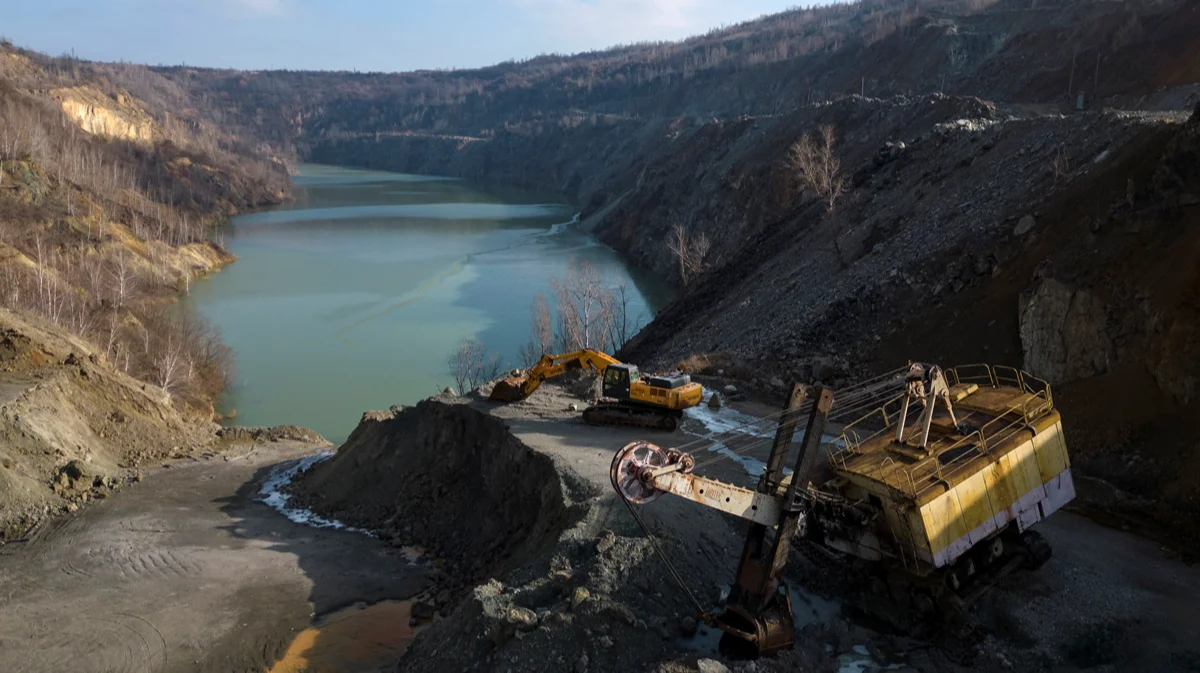
Open quarry of the Zavalievsky graphite mine, Kirovograd region, Ukraine, February 10, 2025. Photo: Thomas Peter / Reuters / Scanpix / Leta
US President Donald Trump said that Ukraine should pay with its natural fossils for help provided to it. At the same time, he operated on different amounts: a week ago he estimated the costs of supporting Kyiv “close to $ 300 billion”, and this week it was already about 500 billion. Trump regularly mentions “rare earth metals”, which, in his opinion, is rich in Ukraine , - and it is with them that she should pay for deliveries. Novyevropa sorted out how realistic these plans were.
In 2021, to a full -scale invasion, Ukraine exported metals, ores and other natural resources for $ 24.5 billion. There were no rare earth metals among these supplies. But even if you add here the hypothetical volumes of their possible production (which is not now), as well as the production of lithium, graphite and other “critical” materials (also absent), then, according to the calculations of the “New-Europe”, can give an increase from still from Forces of $ 1 billion. Then, if you imagine that Kyiv will give all its export income to Washington, then the country will need about 12 to 20 years to pay off Trump.
But to imagine a script in which all this revenue goes to the USA cannot even hypothetically. Natural resources, their production and production are in private hands,
And it is difficult to imagine the reasons why the owners will agree to give Washington their income or give control over deposits and enterprises.
In addition, although Ukraine is rich in various minerals, their production during the war has fallen significantly, and many places of prey were captured by Russia. There are potential deposits of valuable materials, but their industrial production and exports need many years and large investments - many reserves are not even explored.
If you look at what Trump is talking about - about rare earth and rare metals, as well as “critical materials”, then all the more, the amounts that Trump want to receive from Kyiv in exchange for help will not be gained. Even if Ukraine reaches the share of the main manufacturer in the market of rare lands - China - then it will take centuries to calculate with this raw material.
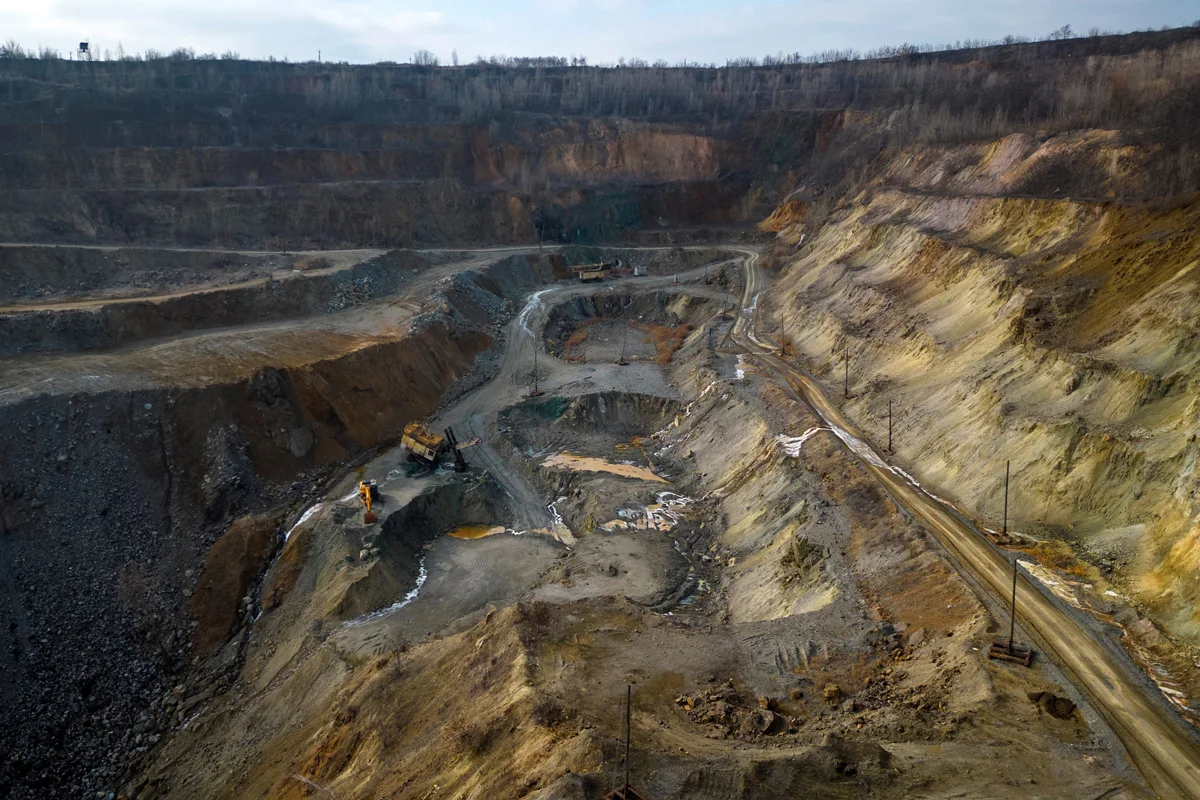
What Trump is talking about
It is not surprising that the US president speaks of precisely rare earth metals: they are required literally in all modern areas of the economy, from smartphones, medical equipment, “green energy” and space to the heads of self -control of combat missiles. At the same time, calling Ukraine the alleged source of such materials for the United States, Trump probably continues the dialogue with Beijing, which has just declared a new trade war.
China literally sits on the most valuable reserves of rare -earth ores: it accounts for about 70% of the global production of such metals. Chinese companies produce them more than American ones. To put an end to what Trump considers an economic dependence on China is one of the most important goals of the new president publicly declared publicly. It is in this logic that the intention to attach Greenland and Canada, which possess the world's largest reserves of rare -earth metals.
In his statements, Trump avoids specificity in every possible way. He talks about "rare earth metals and other things." At the same time, many have the impression that in fact, Trump with his characteristic scope means not only rare -earth metals (there are 17 of them), but also the so -called “critical materials”. Among them, in addition to rare lands, the US Geological Service (US Geological Survey, or USGS) also includes nickel and lithium - a total of 50 minerals.
Despite the great importance of these materials for the modern economy, they themselves are not estimated at the amounts that Trump wants from Ukraine. This market is very opaque and is not amenable to accurate estimates,
There are different estimates of its capacity - from 4 to 6 billion dollars in 2023–2024 and to a possible growth of up to $ 16 billion by mid -2030.
For example, China, a leading world exporter of such raw materials, reached out only $ 0.5 billion on the world market last year-due to the fact that prices fell by a third against the backdrop of a plentiful supply. If we imagine that Ukraine will be able to find comparable reserves and begin their industrial production, giving everything to Trump, then even with the scale of Chinese exports it will need from 600 to 1000 years.
But so far these reserves are not visible. According to USGS, Ukraine does not yet have such commercially recruited deposits of rare earth materials, the development of which could make a profit.
Although there are deposits themselves. Reuters with reference to the Kiev Institute of Geology lists : Ukraine has stocks of Lantan and Ceria (they are used in televisions and lighting devices), neodymium (needed for wind farms and electric vehicles), Erbia and Itatriy (used in different industries from nuclear energy to lasers) . And according to European researchers, which refers the same Reuters, the country has Scandia deposits. The volumes of all these deposits are unknown - these data are not disclosed .
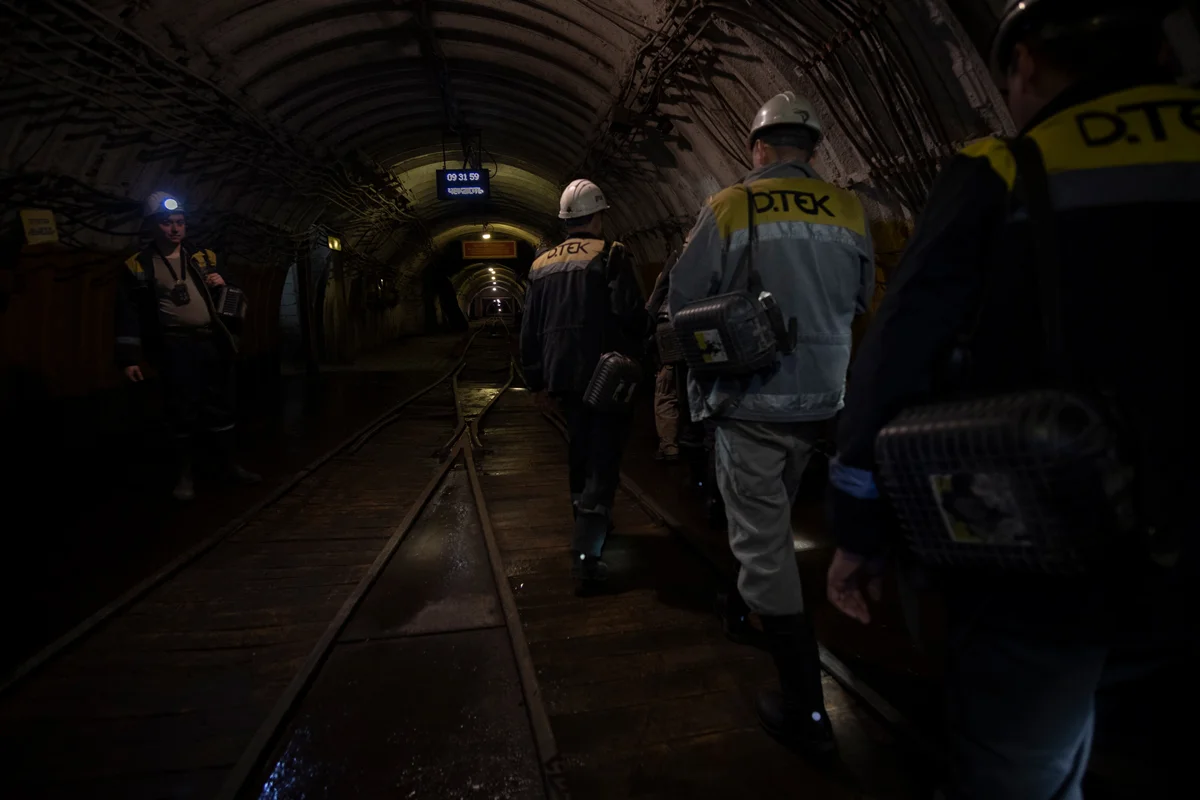
The production of Scandia in Ukraine was carried out until 2002 at the Zheranic-Uranian shaft in the city of Yellow Water (Dnipropetrovsk Region), until it was stopped due to the strike. Underground workings were flooded. There are rare lands at the Polokhovskoye field (Kirovograd region), but it is still only at the reconnaissance stage, as well as at the Samokan (Dnipropetrovsk region) - but it is underway and the production of completely different metals is underway.
The list of the largest manufacturers of rare -earth resources and their deposits - the USA, Burma, Australia, Thailand, Brazil, Greenland, India, Canada, Russia, Vietnam. Ukraine is not there.
Other "critical materials"
Ukraine will not be able to pay for $ 0.3 trillion, or for $ 0.5 trillion dollars of assistance and other resources.
Ukraine has significant reserves of lithium - one of the most important and valuable rare metals, which is necessary for the production of batteries, glass and ceramics. It is impossible to do without it in the energy, high -tech and military industry.
Ukraine, according to the same US geological service, is one of the richest metal countries with reserves of 0.5 million tons. There are four lithium deposits in the country, but two of them - the Shevchenkovskoe and steep beam, in the Zaporizhzhya and Donetsk regions - are captured by Russia. Under the control of Kyiv, only two sources of this metal in the Kirovograd region - a section of good and Polokhovskoye field. At the latter, the company Ukrlitiyatobych plans to produce about 20 thousand tons (about 2% of the current world demand) of lithium carbonate, but when it is unknown.
The world market of Lithuania is quite large - now it is about 10-12 billion dollars a year, but in 2022–2023 it was almost an order of magnitude more. The prices for this material are very variable and in three years fell by 90%.
Another “critical material” from Ukraine is the graphite necessary for automobile batteries and nuclear reactors. Ukraine owns approximately a fifth of the world reserves of this mineral, and they are located on the territory free of Russian occupation. Nevertheless, at the end of 2024, the only enterprise in the country for the extraction of natural graphite - Zavalievsky graphite -suspended work, unable to withstand competition in the world market.
There is another project-a mining and processing complex based on the Balakhovskoye field in the Kirovograd region. It should begin to build it next year, and its power can be 50 thousand tons - with world demand, about 1.3-1.5 million tons.
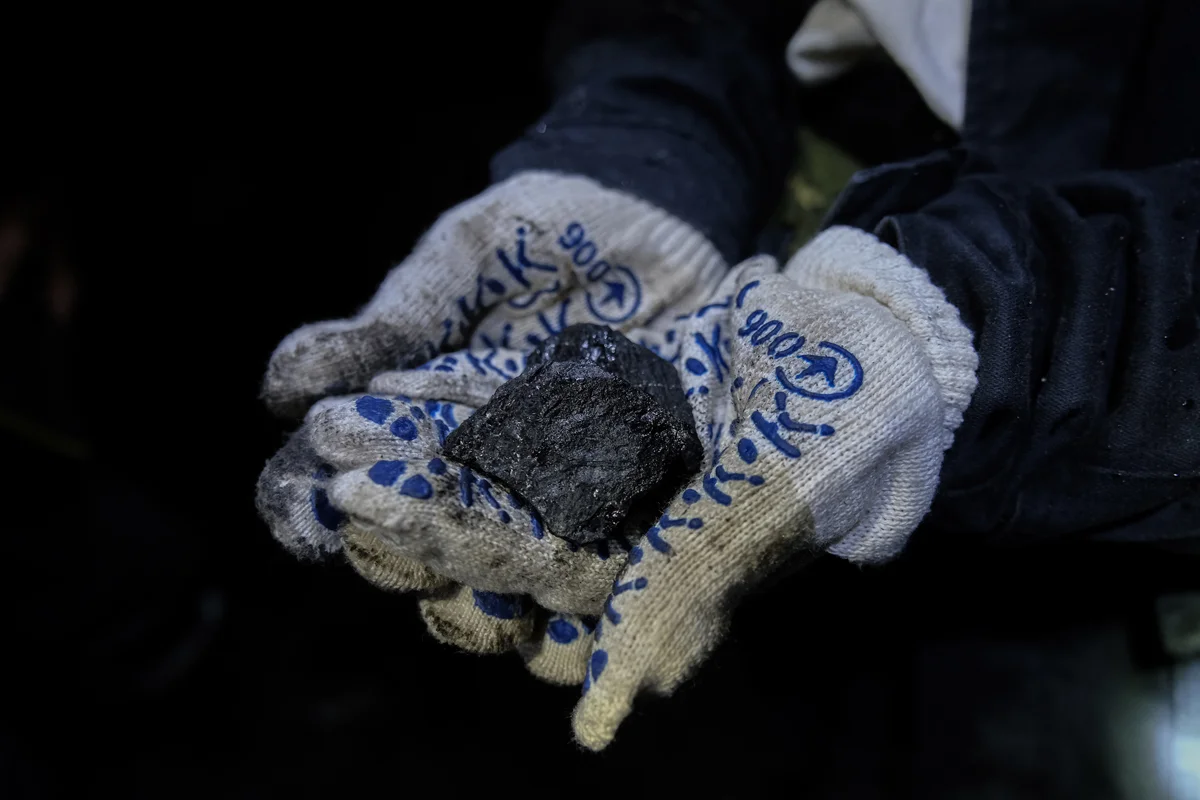
Steel and aluminum
Brail metals is an important part of the income of Ukraine, which last year increased the production of steel by 21% to 7.6 million tons (though there were three times more before the war). This is less than half a percent from world steel consumption, the volume of which is about 1.8 billion tons.
And besides, now the steel industry under a great threat due to the loss of the Pokrovskaya mine, the only one in Ukraine where cokes necessary for smelting of steel are mined. Now there are fights next to her, and one of the shaft trunks was blown up at the end of last year.
As for aluminum, Kiev is so far unsuccessfully looking for a buyer on the only country in the country of its manufacturer - the Zaporizhzhya aluminum plant. Until it works at the previous capacity, Ukraine has become a net importer of this metal.
Hydrocarbons
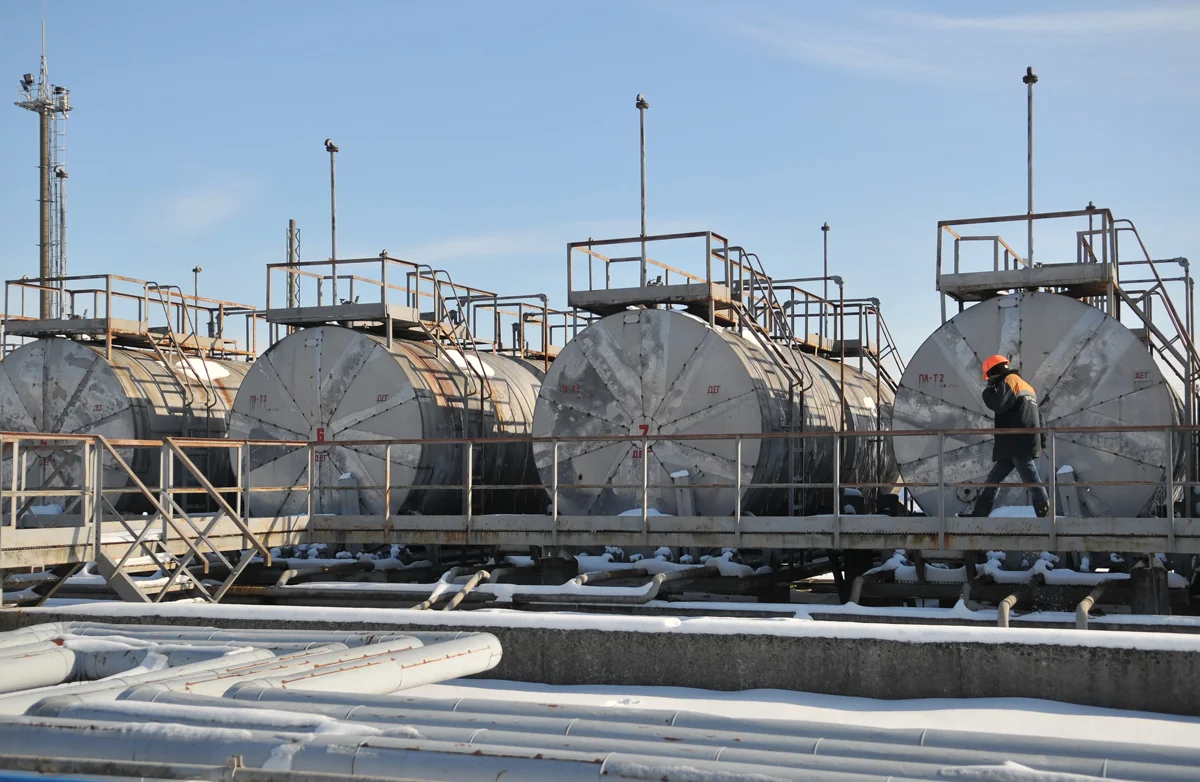
Finally, from Trump’s words it follows that he will get into Ukrainian oil and gas: “Their lands are incredibly rich in rare -earth metals, oil, gas and others. I want our money to be safe, ”he said on February 11. But he will not succeed with hydrocarbons.
RBC-Ukraine reported that as of 2023, explored oil reserves in the country were about 107 million tons. And global oil demand is about 14 million tons per day. At the current prices, 107 million tons are approximately $ 7.5 billion, but the explored reserves do not mean “recovered”. Besides,
In Ukraine, there is its own oil consumption - at the level of 10 million tons per year. The Ukrainian economy consumes oil more than it produces, so it depends on the import of raw materials.
As for the gas (its reserves, according to the same data, are about 680 billion cubic meters), Ukraine was one of the largest mining regions of the USSR in 1960-1970. But already in the 1980s, the prey, which was at a peak in the 1970s, fell, and now it is unlikely to increase it, the gas analyst of one of the Russian research organizations told the New Evrop (he asked not to name his name).
Recent decades in Ukraine have been at about 20 billion cubic meters per year, “now less for obvious reasons,” he adds. “At the peak of ideas about the shale revolution in Europe, the same conversations were about Ukrainian shale reserves, but everyone already realized that this could not be repeated outside the United States. Poland was more promising, and it did not work, ”the expert said. Perhaps in Ukraine you can get more methane from coal layers, but “decent costs are obtained there,” the interlocutor added. In addition, there is still a war near the coal mining regions.