
Translated material
Rupture in the transatlantic
The United States and the EU exchanged harsh criticism at the largest security conference in Europe. How will this affect the settlement of war in Ukraine? Report from Munich
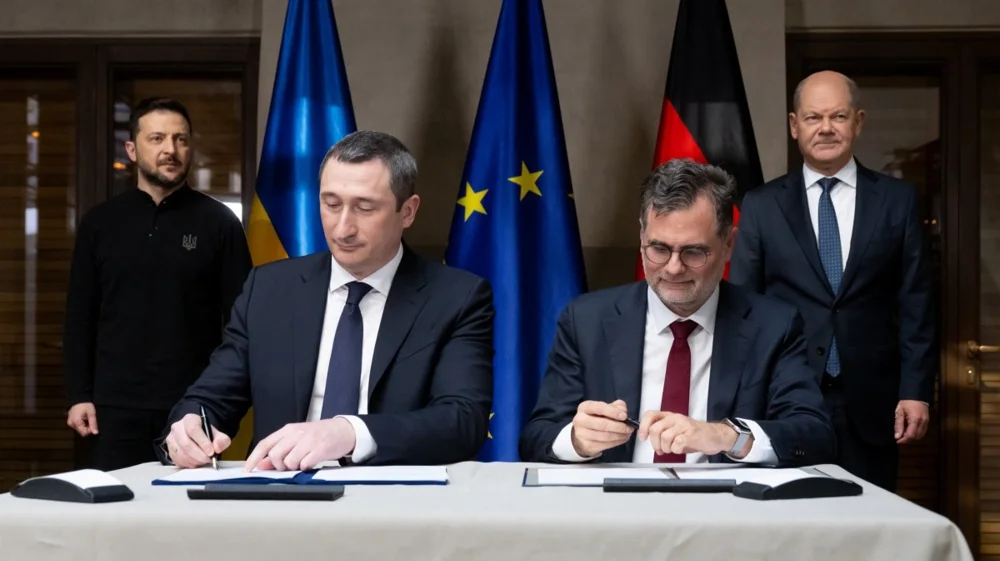
Deputy Prime Minister of Ukraine Alexei Chernyshov and the head of the Federal Chancellery Wolfgang Schmidt sign a mutual agreement on the creation of “unity centers” at the Munich Security Conference, February 15, 2025. Photo: Sven Hoppe / EPA-EFE
Great expectations were connected with the Munich Security Conference, which took place on February 14–16 in Germany. It was assumed that it would lead to serious progress on the end of the war in Ukraine. It was even reported that it was on this world's largest security forum that Trump’s long -awaited plan to resolve the conflict will be presented.
However, none of this happened. On the contrary, three -day discussions of presidents, heads of government, ministers and experts on both sides of the Atlantic proved what they began to talk about soon after Trump’s victory in the US election: the relations of Washington and Europe are radical and possibly irreversible changes. The impression was that the Trump administration plays his own, American football, whose rules are not fully understood. The former world order, by default, implying a close connection between Washington and Brussels, is rapidly collapsing. And the new one is not visible even on the horizon. In the stream of multidirectional and sometimes contradicting statements by American, European and Ukrainian politicians, the observer of the European and international policy of Novo-Europe, Nikolai Pershin, tried to figure out in Munich.
To whom - Ukraine, and to whom - Romania
Opening on February 14, a three -day conference, its leader, German diplomat and former adviser to Angels Merkel Christoph Hoysgen immediately recalled : we live in conditions of a record number of conflicts - from Ukraine to Sudan. Therefore, according to him, the dialogue is now needed as ever before. But instead of a dialogue, the forum in Munich has long become a key event in European security was brought only by aggravation.
The three -day agenda was diverse , but the priorities became obvious from the very first words of Hoisgen. At first, he greeted the “representative American delegation”, noting: “Since the [German publicist] Ewald von Kleist organized [in 1963] the first conference, the presence of the United States has always remained its key feature.” Then Hoisgen addressed the EU representatives, led by the Chairman of the European Commission, Ursula von der Layen: “From Europe they expect that it will play a key role in the field of security.” And finally, he greeted the Ukrainian delegation, headed by President Vladimir Zelensky. A significant part of the followed discussions eventually covered the extremely difficult, especially in recent weeks, relations in this triangle.
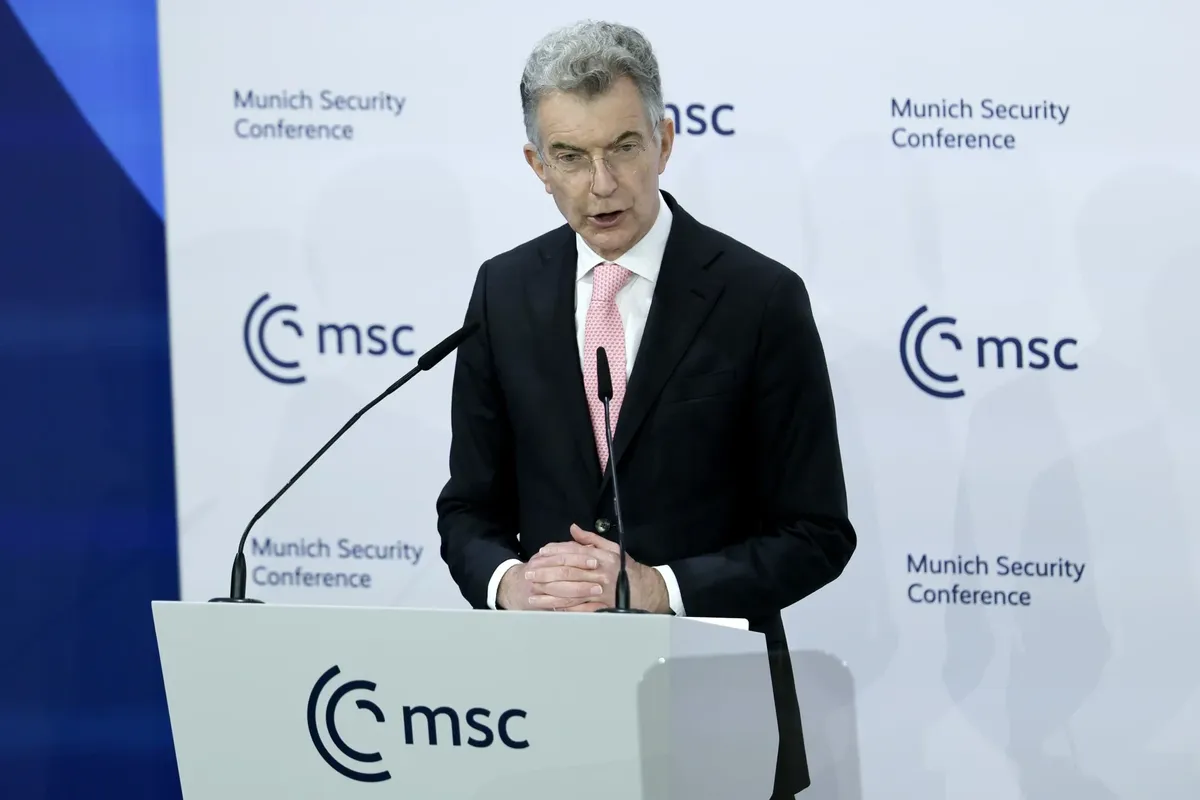
Analyzing the American-European side of this triangle, the speakers spoke of the need to cooperate to combat global security threats. “It is better to have partners than acting alone”, “Let's act as a united front”, “We are going to talk as friends”, “Diplomacy is not a battle in a cage,” the assembled presidents, ministers and experts said. However, these phrases were poorly combined with the atmosphere of the forum and therefore resembled a session of auto -training.
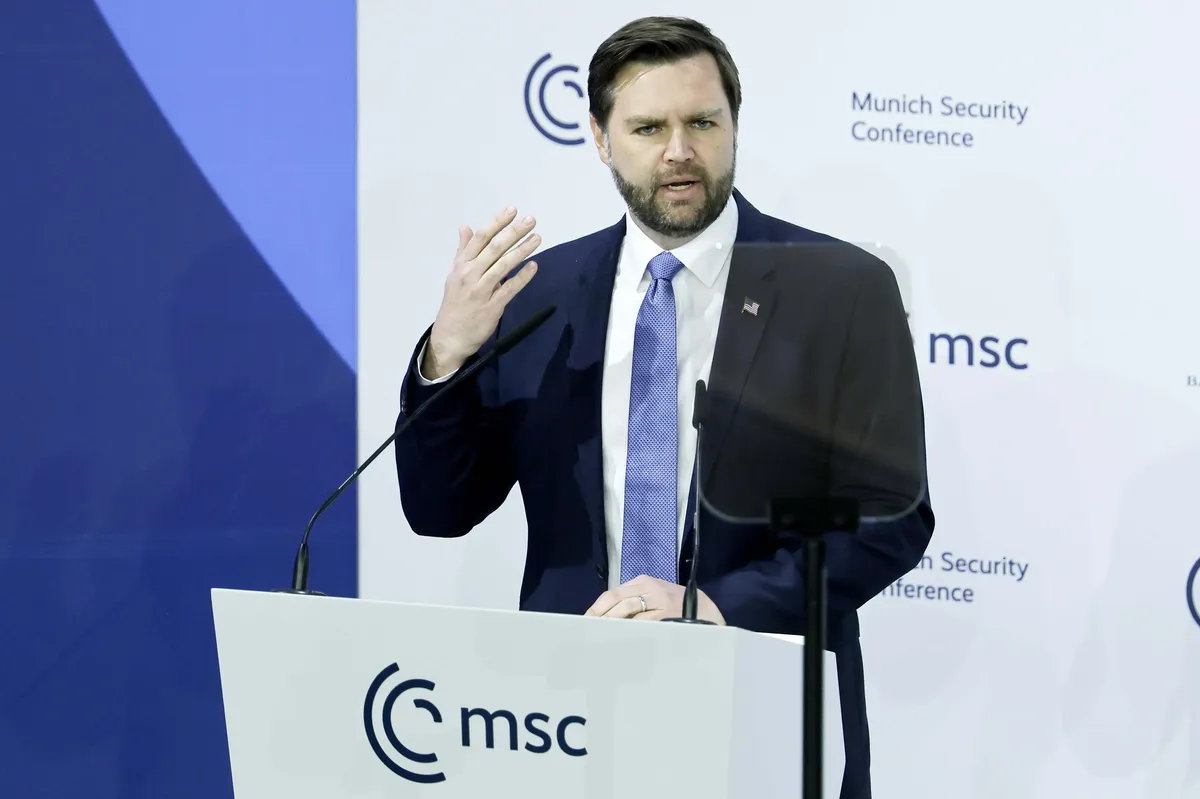
First of all, the 2025 conference will be remembered by the performance of the US Vice President Jay Di Wans, from which it followed: the paths of Brussels and Washington were significantly dispersed. Speech was devoted to the "retreat of Europe from the fundamental values that are divided in the United States."
The EU, according to Jay Di Wans, abandoned the principles of democracy. Firstly, the European elite does not respect the will of the people that the December abolition of the results of the presidential elections in Romania proved-and, most importantly, support for this decision by the Euroborlars.
The vice president suggested: Russia, as the Romanian authorities stated, could really try to influence the vote. But, Jay Di Wence added how weak this democracy is if it can be destroyed with the help of several hundred thousand dollars that a foreign power spent on advertising. ” The audience in the hall at that moment silently.
Secondly, Jay Di Wence continued, Europe does not give the site to the influential forces representing a significant part of the population. For example, politicians from the extreme right “alternative to Germany” (AFD) and the left “Union of Sarah Wagenknecht” were not allowed to the conference. European leaders, according to vice president, are afraid to listen to the opinion of their own people.
Thirdly, according to Jay Di Wans, personal rights and freedoms are violated in Europe. Then he talked about the arrests of people in Britain for silent prayers next to the clinics, where they are abortion.
In general, as follows from the speech of the American politician, today's Europe is more and more like the USSR, where they “censored dissidents, closed the churches, canceled the elections” - and eventually lost in the Cold War.
"Everything is in shock"
“They are trying to quarrel with us,” commented on Jay Di Wence, the head of the EU diplomacy, Kai Callas. “And we don’t want to quarrel with our friends.”
And this was not the most frank assessment. So, the French deputy, a member of the National Defense Committee, Natalya Puzireff, during one of the discussions, admitted that “was in horror” from speech, where “the war in Ukraine was not even mentioned”. In fact, at the beginning of the speech, Wence said that the Trump administration sees the possibility of a “reasonable settlement between Russia and Ukraine,” but he limited himself to this.
“In fact, everything is in shock,” said Alexander Gabuev, director of the Berlin Center for Russia and Eurasia, about the mood among the conference participants among the conference participants. -The [new] vice-president of the United States arrives and devotes most of the speech to one thesis: you are all not democratic enough here and, in general, why are you not allowing our dear partners from AFD? ”
On the sidelines of the conference, one could really hear different grades: in the range of “this is a speech for domestic consumption and do not take it seriously” before “America has ceased to be a strategic ally of Europe, it is time to adapt to a new reality.”
The authorities of Germany reacted especially acutely to the performance of Jay Di Wans. Thus, the Minister of Defense Boris Pistorius called the statements of the US Vice President “unacceptable”, assuring: in his country “every opinion is taken into account”, and party leaders like AFD are on the air of television channels. Chancellor Olaf Sholts also called the unacceptable “intervention in democracy and elections” - “especially from friends and allies”.
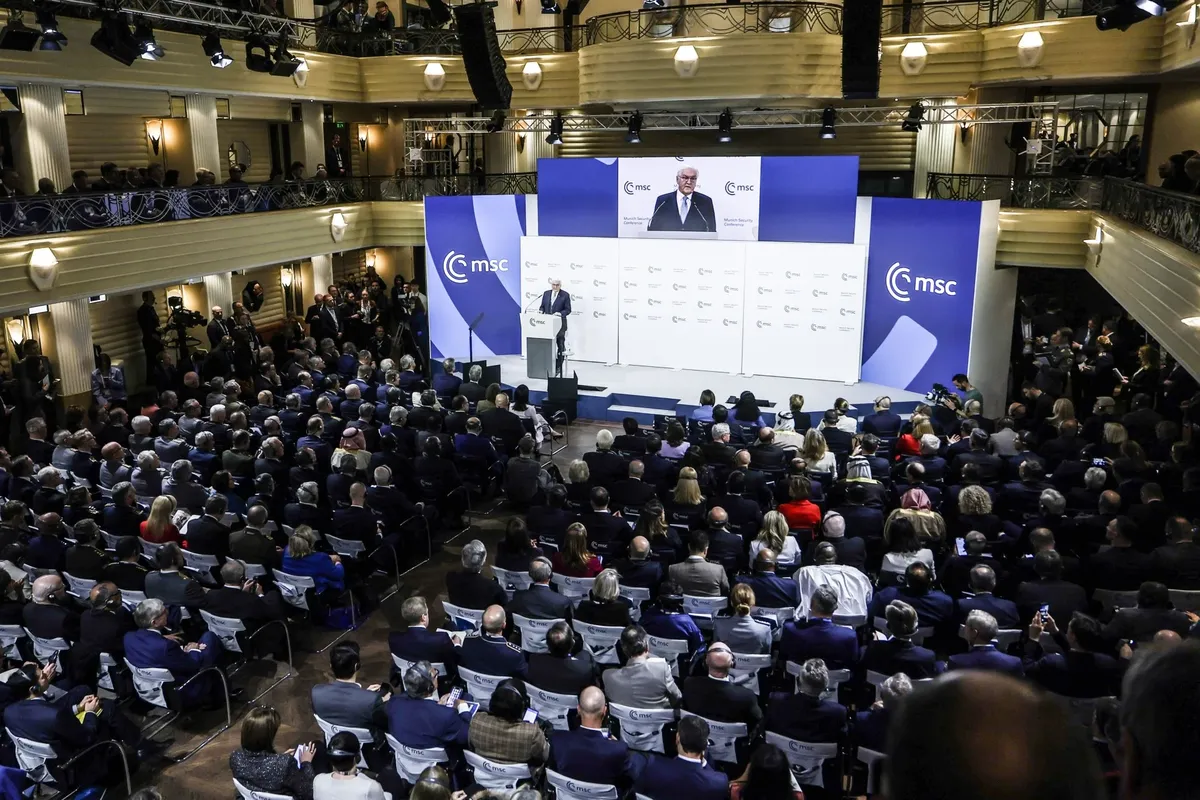
Germany President Frank-Walter Steinmeier drew attention to another aspect of the changes that occur, expressing the concern of the “historically unprecedented concentration of technological, financial and political power” in the United States. It was a clear attack on the ally of Donald Trump Ilon Mask, who previously called the President of Germany the “anti -democratic tyrant” and openly supported the AFD. The audience met Steinmeier's words with applause.
Meanwhile, Jay Di Wance found what to answer the President of Germany. “If American democracy has been able to survive ten years of moralizing [environmental activist] Greta Tunberg, then you guys will be able to survive Ilona Mask for several months.”
An unexpected like -minded person
The dive between Europe and America, which is not at all characteristic of past years, this time lasted all three days. At the same time, European officials invariably admitted: it is necessary to come to terms with the fact that the Trump administration looks at the world not like Europeans.
Given the subject of the conference, in Munich everything was considered in the context of safety. A key problem in this area is unanimous - with the exception of Jay Di Wans - recognized the war in Ukraine. The same thought was repeated in the statements: Europe should participate in negotiations on Ukrainian settlement, otherwise it cannot be. So, Boris Pistorius with anxiety noted that the United States "is trying to quickly bring Russia and Ukraine to the ceasefire, and Europe will have to live with the consequences of this agreement." “For transatlantic relations, this can be a turning point in a historical scale, after which our roads threaten to go in different directions,” he warned, thereby making it clear that the United States and the EU are still stomping at the intersection.
Some speakers tried to find at least some positive, but it turned out not too convincing. “You need to avoid indignation and noise. If we delve into the essence of the statements [representatives of the Trump administration for peaceful settlement], we will not only understand their reasons, but we will also see that we can agree with some of them, ”the head of the European Commission Ursula von Lyayen picked up a suitable formulation.
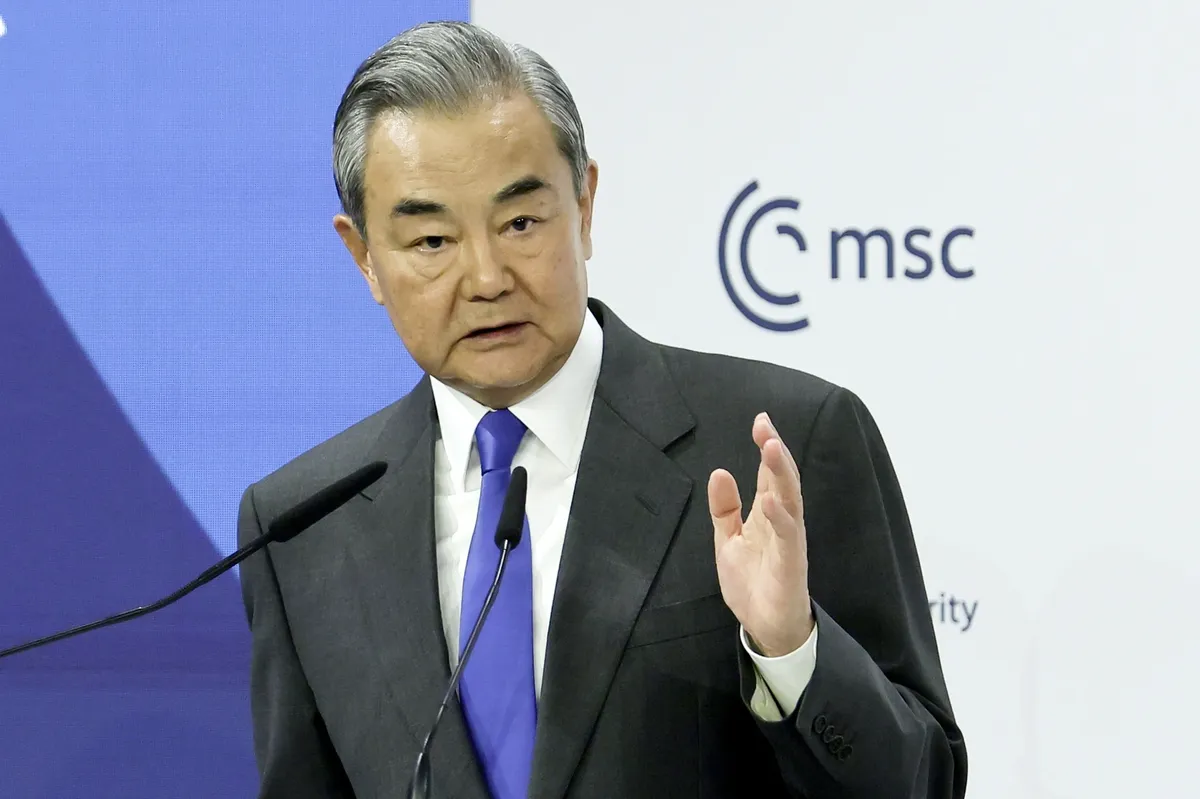
Against this background, unexpectedly and absolutely in line with the European approaches, the speech of the Chinese Wang I. Foreign Ministry, from the stand of the conference, was heard from the tribune of the conference, he said that since the “war is on European land”, then “Europe should play an important role in this process”.
As for Beijing, he, according to Van and, intends to “observe the world order and contribute to its evolution”, and not to ruin everything to the ground. By name to name those who are engaged in this very destruction, was unnecessary.
“Van’s speech was music for the ears of the European participants in the conference, it was well calibrated to the audience gathered in Munich,” said Alexander Gabuev. However, according to him, the years of “diplomacy of wolf warriors” (as they call the aggressive style of defending by Beijing of national interests), industrial policy and support for Russia in conflict with Ukraine have caused a serious damage to China-and the chances that the West will begin to perceive Beijing as Beijing as A reliable partner, no.
In the chaos of uncertainty
Summing up his conversations as part of the Munich conference, Alexander Gabuev noted that "Europeans are very concerned about the volatility and quality of decision -making in the United States." In recent days, the thesis of "volatility" has been fully confirmed.
In particular, extremely conflicting signals came on the same issue of the role of Europe in negotiations. On Friday, on the fields of the conference, Jay Di Wence said that European countries, of course, must participate in the negotiations.
The head of the Pentagon Pit Hegset, being on the same day in Warsaw, preferred to use the word “probably” in relation to ES participation. And on Saturday, again in Munich, the Special Supervisor of President Trump Keith Kellog expressed the opinion that the interests of Europeans, of course, will be taken into account, but there will be no negotiations at the table.
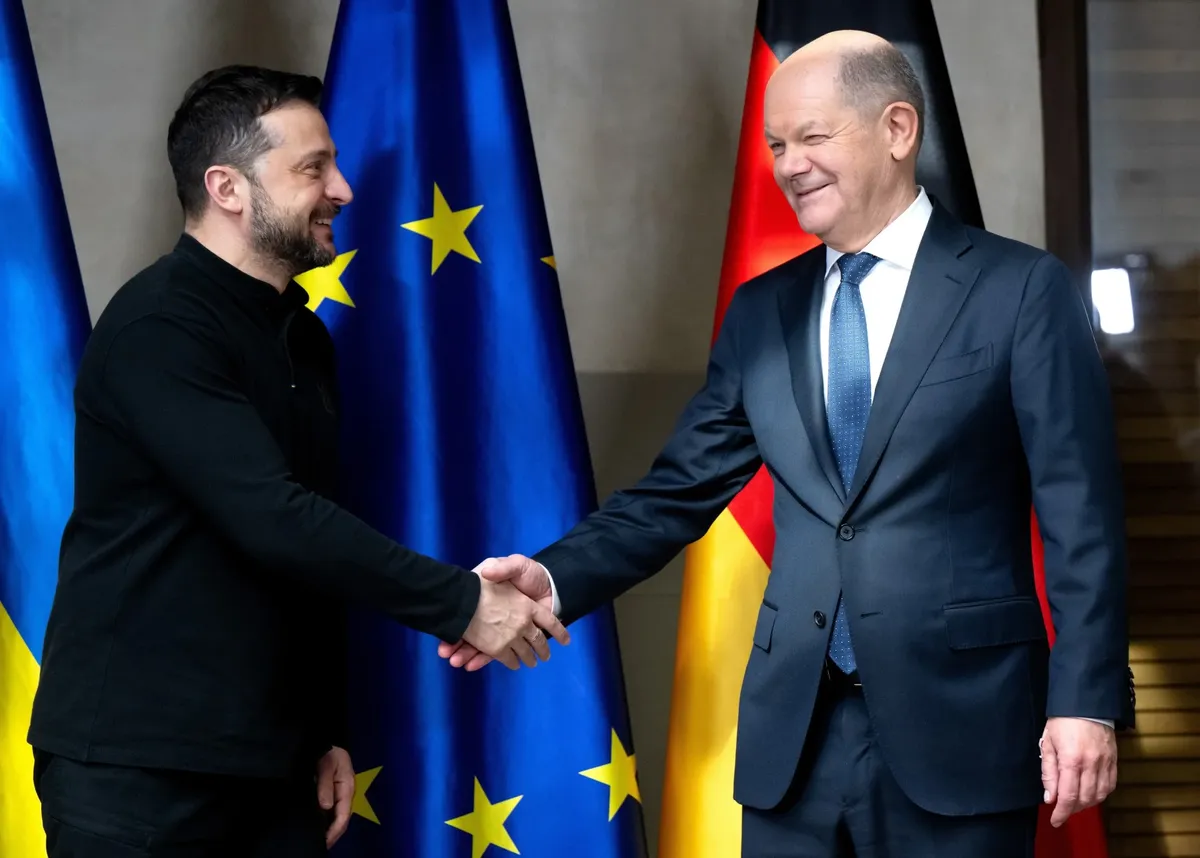
But this did not end there either. A few hours later, Vladimir Zelensky told reporters: “Let's see. The war is not in the USA and not in the EU. War in Ukraine. Therefore, Ukraine, I think, should have a decisive voice on the question of who should be at the negotiating table. ”
The “volatility” also affected the question of the possibility of Ukraine in NATO. Hegset said that such a scenario was actually excluded. Later, US President Donald Trump made it clear that this statement of the minister accurately reflects Washington's position. However, on the same days, the deputy special representative of the US President in Russia and Ukraine, John Cole, said that the possibility of Ukraine’s membership in NATO is still on the table.
In his speech at the conference, Vladimir Zelensky said that Kiev still does not refuse the purpose of joining NATO. “None of us removes this option from the table,” assured the German Foreign Minister Annalena Berbok. Moreover, the words of the hegset were criticized not only by Europeans ( for example , Boris Pistorius), but also by Trump's associates. Thus, the American Republican Senator Roger Wicker, who was present in Munich, said : actually, usually before the negotiations, all the cards do not disclose, that is, they don’t say, “what they agree to, and what is not”.
Another opinion of the head of the Pentagon was ambiguously perceived - that Ukraine’s exit to the borders until 2014 is unrealistic. John Cole and here commented that the United States also completely did not shake off such a scenario.
The state of complete uncertainty also caused Trump's sensational statement that a tripartite meeting of representatives of the United States, Ukraine and Russia would also be made on the eve of Trump's sensational statement. Such plans instantly refuted both in Kiev and in Moscow . And the conference organizers added that none of the officials was accredited to it (only representatives of the Russian opposition, for example, Julia Navalny ) were present in Munich).
Together with the head of the White House of Chaos, Vice President Vance added what was happening. At first, The Wall Street Journal announced with reference to it: in the event of Moscow intransigence, there is an option for tightening sanctions, as well as “sending American troops to Ukraine”. This was clearly surprised in the Kremlin: the presidential spokesman Dmitry Peskov noted that the Russian authorities “had not heard such formulations before” and are now waiting for “additional clarifications”. And the explanations followed: being in Munich, Jay Di Wence wrote on the social network X that he did not say anything like that - the journalists allegedly distorted his words.
Unfulfilled expectations
Against the background of such uncertainty, it quickly became clear: from Munich to wait for clarity on the question of how a peaceful transaction will look like. But initially, this conference was associated with big expectations. In early February, the Western media appeared that it was at this event that the Trump administration plan would be officially presented to stop the war.
In the Trump administration, this was then refuted , but Christophe Hoisgen assured the conference head that the forum would be used to “outline the contours and future parameters” of such a plan. But in the end, even the contours were not planned.
On Saturday, the special supporter KELLOLA only confirmed that the first task was to “stop the murder”. “Whatever you call it - the ceasefire or otherwise - this must be done,” he added. And then it is already possible to coordinate details that would not freeze the conflict, but solve it. At the same time, Kellogo took the obligation “to use all parties in 180 days” in the negotiation process so that “the end of the war in Ukraine came earlier than a year later”.
Vladimir Zelensky said that the United States did not see any ready -made plan. Therefore, in Munich, he continued to express his wishes for the actions of Washington and Brussels to stop the war. For example, the Ukrainian leader called the only real guarantee of security the equality of the armies of Russia and Ukraine in number - 1.5 million people each.
In his opinion, it is possible to do this with the support of the allies of Kyiv: “It doesn’t matter which country these forces are from, in any case we need 1.5 million army, if we are not in NATO.”
According to Zelensky, Kyiv has already developed a map with the number and types of troops that the allies of Ukraine could deploy as a peacekeeping contingent. But Western leaders, if commented on, is as careful as possible. And Die Welt reported with reference to sources: according to EU military officials, the maximum that Europeans can provide are 25 thousand soldiers. The figure, from the expectations of Zelensky, is extremely far away.
There was no breakthrough on the topic of rare earth metals of Ukraine actively discussed the last week. On February 12, US Minister of Finance Scott Bessant brought to Kyiv a draft partnership of these resources. Its signing was the key requirement of the Trump administration for further support of Kyiv. The media reported that the US proposal involved Washington’s transfer of rights to dispose of half of all reserves of rare earth metals of Ukraine.
The Ukrainian leadership did not sign the document, promising to prepare his own option for Munich. But as a result of the meeting of Vladimir Zelensky and Jay Di Wans, there was no news on signing the agreement. The Ukrainian leader only said : "We are still talking."
Now hopes for further progress in the topic of peaceful settlement of the conflict are associated with an event that Ukraine is organized on February 24, on the third anniversary of a full -scale invasion.
According to Vladimir Zelensky, “All Key Partners” will take the participation in Kiev and online: “From Spain to Finland, from Britain to Poland, from Washington to Tokyo”, and according to its results, everyone should have an understanding of what it is precisely There will be a path to the world.
However, in order for these expectations to be met, there is one necessary condition: Europe and the USA must first find a common language.
At the same time, the mood dominant in Brussels, Berlin and Paris after the conference is more likely to express the formula voiced by Germany President Steinmeier, who called on Europe "not to behave like deer that fell under the head of the headlights." That is, not to react passively to the flow of scandalous statements and initiatives, but to act.
Therefore, the United States and the United States are unlikely to have time to agree on the new conditions of Ukraine’s support for a meeting in Kyiv on February 24.