
Translated material
Silence VS leak
Lukashenko and the State Department about the liberation of the Politicals became known about the secret negotiations of Lukashenko thanks to a leak of diplomatic circles. But this can cross out all the agreements
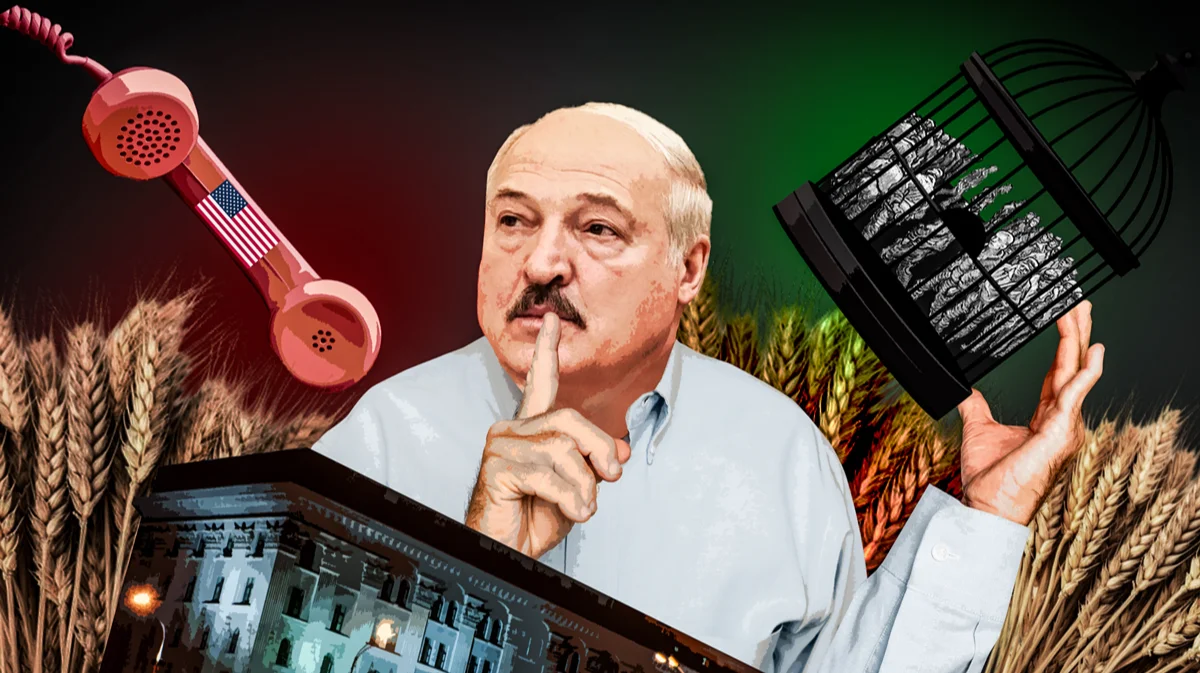
Illustration: "New Gazeta Europe"
The secret meeting in Minsk “for Three” - Alexander Lukashenko, KGB Chairman of Belarus Ivan Teretel and deputy assistant to US Secretary of State Chris Smith - Belarusian official media did not say a word. Smith himself in an interview with CNN said that he came to a “special operation”: “It was a special operation during which we crossed the border of Belarus and went to Minsk to meet with Belarusian colleagues who brought three prisoners. They were handed over to us, and we took them to Lithuania. ”
According to Smith, it was just a gesture of goodwill by Lukashenko, and no response from the United States will follow the liberation. And three liberated are a US and Ukraine citizen, Nikolai Shugaev, who has lived in Belarus since 2020, a former correspondent of Belarusian Radio Svoboda, Andrei Kuznechik and a large mother from Pinsk, Elena Movshuk, who has nothing to do with the United States. It was quite obvious that the purpose of Smith's trip to Minsk was something else.
With all American family values, hardly officials of the State Department would have rushed to Belarus to free many children to return them to families. Moreover, the husband of Elena Movshuk remains in conclusion, and the reunification of the family did not occur. And if it was about the liberation of US citizens and American media journalists, for which, of course, such a visit would be approved by the Brand House, with the Movshuk?
Three people at large are wonderful, but it was hardly for the sake of them that Chris Smith rode a “special operation” in Belarus.
The fact that Smith met in Minsk with Lukashenko and Teretel also became known not from the Belarusian official media, but from the Saturday article in The New York Times. Chris Smith did not say anything about the trip to Nyt journalists, but the text is based on information leaks after Smith's meeting with Western diplomats in Vilnius. Smith shared with them the details of his unofficial meeting with Alexander Lukashenko and Ivan Teretel, during which a large deal became possible: the release of a significant number of political prisoners in exchange for weakening sanctions against Belarusian banks (not all Belarusian banks fell under the sanctions, but only those that are connected with Russian capital) and exports of potassium fertilizers. Smith also asked Lukashenko whether he was ready to stop repressions, and Lukashenko answered positively.
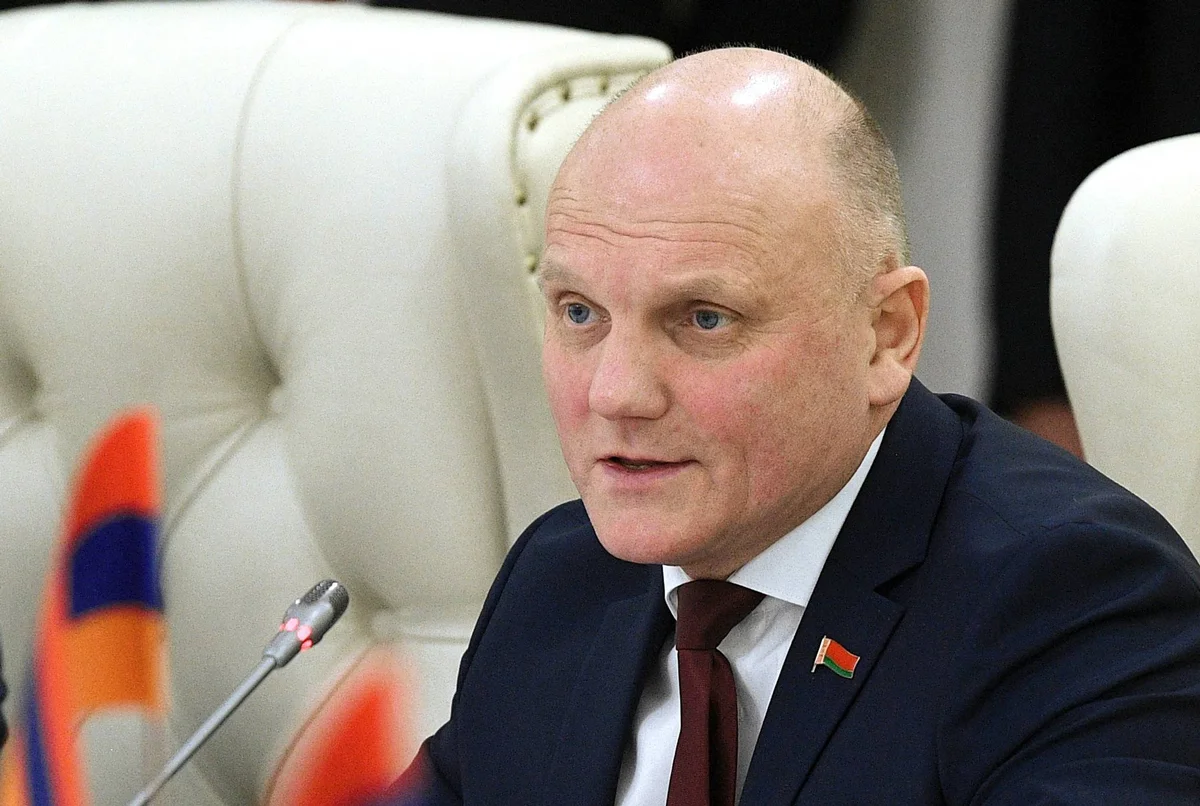
The day after the publication at The New York Times, the Bologo-Beligation Telegram channel (“Belarusian intelligence”), which publishes all kinds of leaks from the power structures, wrote that allegedly in early February, the administration of Lukashenko was a meeting, which discussed the phased plan release of political prisoners. This plan, the authors say, provides for four stages of liberation on the principle of “step in exchange of a step”, and freed with the third and fourth waves will not be able to leave Belarus and will actually remain hostages. In addition, according to “Telegram intelligence”, Lukashenko instructed the KGB chairman Teretel to study the list of US citizens regularly visiting Belarus in order to determine potential hostages, which can be detained and bargained more than they are supposed to be in negotiations with the American administration.
On February 18, Senior Advisor to Lithuania President Asta Skysgita said that the European Union holds a more stringent position regarding sanctions against the Lukashenko regime than the United States. And since the decision on sanctions was made by the European community, the decision to mitigate sanctions should be taken at the EU level.
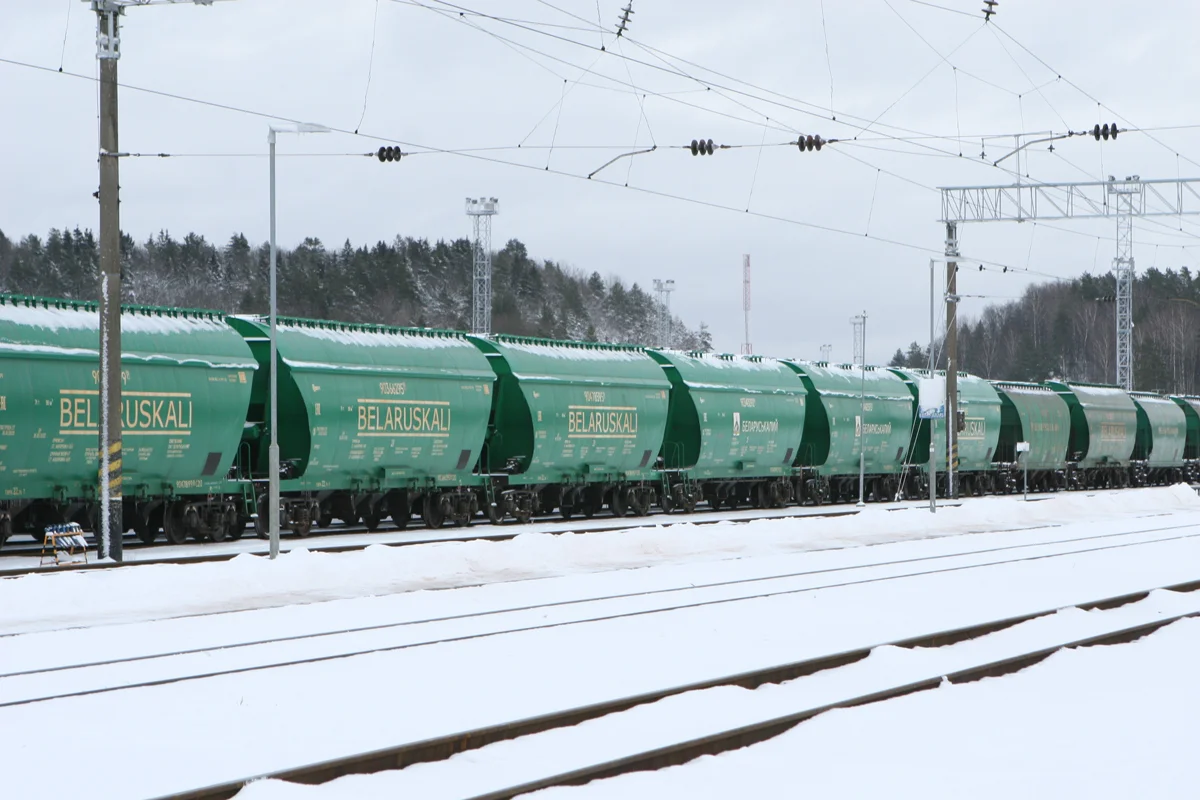
The transit of Belarusian fertilizers through the territory of Lithuania was valid until February 1, 2022 - despite the fact that the United States imposed sanctions against Belaruskali in 2021. But on January 12, 2022, the Lithuanian government approved the conclusion of the Commission for checking the transactions of strategic enterprises, and the Lithuanian Railway contract with Belaruskalius for the transportation of fertilizers (the cargo was followed by the Port of Klaipeda, from where the sea went to buyers) was terminated. In December last year, Belaruskali filed a lawsuit against Lithuania as part of the international investment arbitration.
The state potassium company estimates the damage from the termination of fertilizer transit through the territory of Lithuania at $ 12 billion. So the sanctions are undoubtedly working.
You can endlessly look at the fire, water and calculate the damage from sanctions. But in this case, one must not forget about one important thing: information leaks regarding secret negotiations with Lukashenko are dangerous for hostages. Perhaps the words of Asta Skycgiritis that the EU position is tougher than the American, are also dictated by the experience that Europeans already had. And what is happening now is very similar to a long history of attempts to free political prisoners.
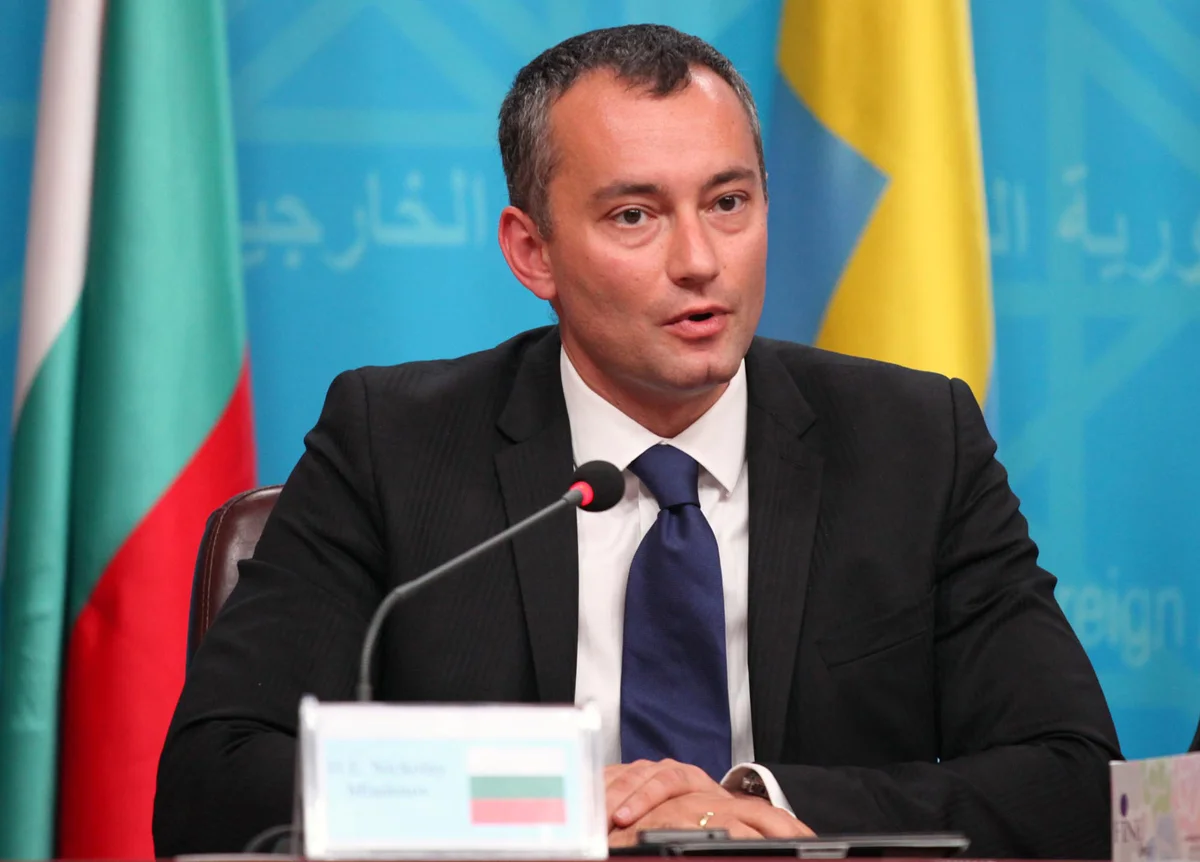
In 2011, after mass protests, not thousands of political prisoners were sitting in Belarusian prisons, as it is now, but dozens. On Belarusian television, hastily concocted propaganda films about terrible conspirators who wanted to overthrow the constitutional system with the help of Poland, Lithuania and America spun. In the spring of 2011, courts were sent in Minsk, sentences were sentenced, and the political prizes were transferred to the colony, the European Union and the United States imposed sanctions. And at the end of summer, the Minister of Foreign Affairs of Bulgaria Nikolai Midenov secretly arrived in Minsk - as a negotiator.
As now, there were no official reports of the visit and about the meeting with Lukashenko. And then there was a leak: the Polish newspaper Rzeczpospolita wrote about the visit of the minister. It was about the fact that Mladenov secretly came to Minsk to negotiate on behalf of the European Union. He promised in exchange for the release of political prisoners two billion euros from the EU and the normalization of relations. And the letter, which Mladenov, according to the results of his trip, wrote to the Supreme EU Catherine Ashton, was published by Reuters (now the page is not available) and went for a walk in the editorial offices of Belarusian media and blogs.
Mladenov wrote that the meeting with Lukashenko on August 26 lasted two and a half hours and, according to its results, Lukashenko promised by the end of September - the beginning of October to free all the political prisoners, and in early October on the Teacher's day to call the discussion, organize a round table and call on the European Union to send to the European Union Minsk "Group of sages." Then it became known that the leak in the press (in particular, in the publication of Rzeczpospolita) occurred thanks to the Minister of Foreign Affairs of Poland, Radoslav Sikorsky - he was in a hurry to publicize the agreement to spur Lukashenko to fulfill their implementation.
But the reaction was the opposite. Lukashenko can not stand the leak. He loves to demonstrate that he controls everything that nothing happens in Belarus without his will and that those who come to him are not equal, but petitioners. With the exception of Vladimir Putin, of course. Secret negotiations, talk about financial assistance and lifting sanctions - all this should not become public, since it contradicts its mainstream statements. Lukashenko loves to say that the West has changed itself and suffers from the sanctions against Belarus, and the country under its wise leadership has survived, developing and flourishing. While the West, of course, sinks in the abyss of the crisis and died without Belarusian fertilizers. And suddenly - secret negotiations, consent to release your own enemies to the will, if only to remove the sanctions? No, this will not happen. “I will get my eyes, and let my mother -in -law be a son -in -law,” is about Lukashenko.
Then, after the secret negotiations of the Bulgarian emissar with Lukashenko ceased to be a secret and even the number of two billion euros was printed with details on each Belarusian site, he simply spat on all agreements. Political prisoners did not come out. Ales Behaletsky came out only four years later, like Nikolai Statkevich. Now they are sitting again, at the Beelatsky term of ten years, at Statkevich - 14.
Then, after the secret negotiations of Lukashenko and Mladenov, I also believed. Soon after the leak, my husband and I had a long date in the colony, and we seriously reasoned that it was more likely to be released at the end of September or early October.
Yes, and the ambassadors of the EU countries, which regularly met with relatives of the political prisoners, said: "Well, there are still just a little left, we agreed on everything, just a couple of days or weeks to wait." And then there were endless stages, Incommunicado, torture.
So as a journalist, of course, I want to write about Smith and Lukashenko’s agreements - to build versions and forecasts, to assume when the first stage of the promises will be and when the last one, who will be the first and who will keep it to the end. But as a person who has passed the prison and hell of the expectation of a loved one from the camps, I understand that silence is more important - for the sake of political prisoners. In order not to frighten, not to crush their chance to break out of prison, now it is better to observe the silence. At least until they begin to be released. And not units, but at least hundreds.