
Translated material
And the circuls for the measurement of the skulls?
In St. Petersburg, they will be recognized by the video cameras of the “not such” nationality for “ensuring public consent”
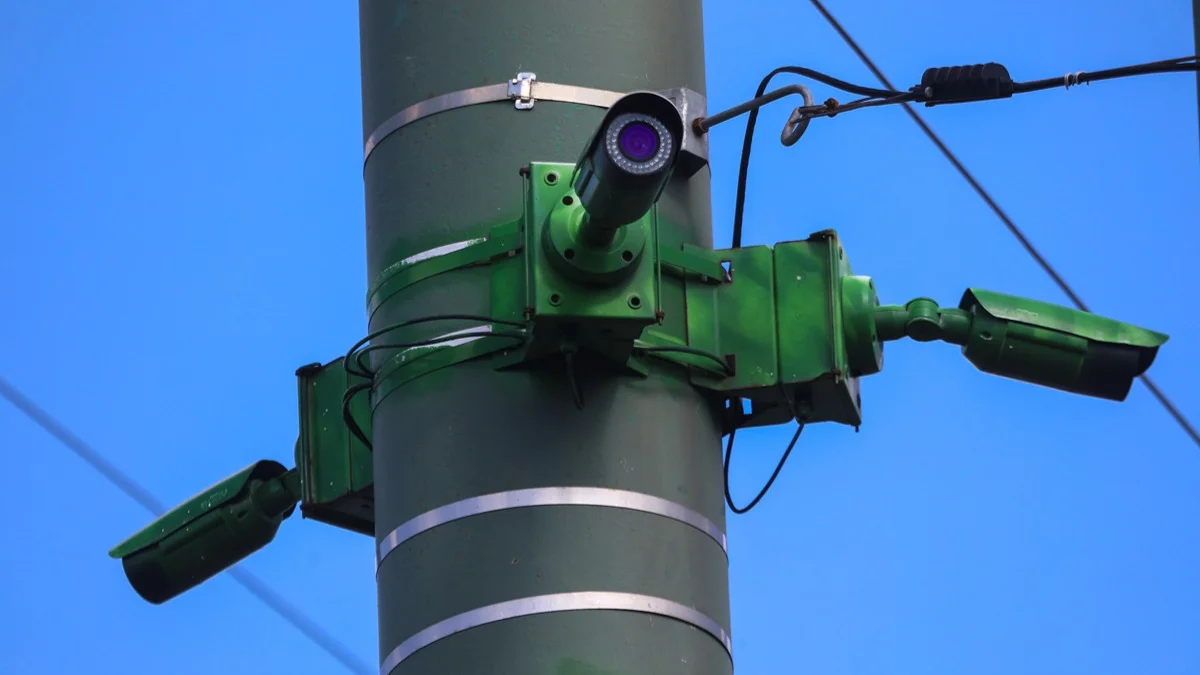
Photo: Roman Pimenov / TASS
18+. This material (information) was produced, distributed and (or) sent by foreign agent Vishnevsky Boris Lazarevich or concerns the activities of the foreign agent Vishnevsky Boris Lazarevich.
On February 18, at a meeting of the Government of St. Petersburg, the chairman of the Committee on Interethnic Relations and the implementation of the migration policy Oleg Captains reported on the implementation of the state programs of the State Program “Creation of conditions to ensure public consent in St. Petersburg” and tasks for 2025.
And he said that eight thousand city video cameras working under the Safe City program will be equipped with “functionality to recognize the ethnicity of people” in order to counteract the formation of enclaves of migrants and take preventive measures to prevent social stress.
The idea caused criticism even in quite loyal persons, to which captains replied that this was nothing more than a “harmless counter”.
What is called, there are doubts.
Opposition politicians and human rights activists gloomily ask whether the circulations were already bought for the same “harmless purposes” to measure skulls.
In 2025, within the framework of the specified state program to ensure public consent to “strengthen civil unity and interethnic relations”, about 120 million rubles were allocated from the city budget.
At the same time, among the main tasks of the Committee on Interethnic Relations for 2025, “Strengthening Migration Movement Control” and “Using the Safe City system” with the functionality of recognition of the ethnic belonging of persons are indicated.
Last year, as Fontanka found out, for 38.4 million rubles, the city acquired license to use computer software for the specified “recognition of ethnicity”.
The system operator, in addition to the place and time of shooting, can get a “biometric face template” and determine the ethnic group of a person “using heuristic algorithms”. With division into "the peoples of the Caucasus, the Central Asian peoples, the East Asian, African peoples, European, Indian peoples."
Another city committee - on informatization and communications - explains that “this functional will ensure a more accurate prediction of the need for resources to ensure order and security within the framework of mass events, as well as optimize the involvement of volunteers and law enforcement officers who speak various languages, And improve the quality of service of tourists and residents of the city. ”
The plans of the recognition of “ethnicity” were indignant even usually loyal to all the intentions of the authorities, the head of the Council for Human Rights under the President Valery Fadeev. Like, “the authorities of St. Petersburg and any other city already know where the enclaves are formed”, “In Russia, even in the passport, nationality does not indicate, and suddenly some television cameras will determine which person of national affiliation,” and in general all this “sows tension and interethnic discord. "

Oleg Captains, responding to these claims, told Fontanka that “cameras will exclusively collect the data necessary for analysis”, that this is a “statistical counter and no more” that “after processing this analytics, the information will still be verified or the information will be checked or the information will be verified or by the forces of the Ministry of Internal Affairs, or by the forces of the executive authorities, ”that“ there will be no binding to a specific person, the car will simply be considered the number of people ”, and that“ no one is embarrassing that In stores or shopping centers there are counters, how many people went there. ” And Mr. Captains said that all this is needed to combat the so-called rubber apartments. Like, “if someone rents an apartment in the house and a large number of citizens of some appearance lives illegally there, then you have to pay attention to it” ...
He asked to comment on these plans of the responsible secretary of the human rights council of St. Petersburg, in the recent past-a deputy of the Legislative Assembly of three convocations and a member of the Presidential Council under President Natalia Evdokimov. That's what she says:
COMMENT
Natalia Evdokimova, ex-member of the Human Rights Council under the President:
- When I first met information that street cameras in St. Petersburg will now determine the ethnicity of people, I thought it was a fake. I also decided that our people are very creative, to compose such fakes. But then I read the interview of Caperova and realized: "We were born to make a fairy tale by past."
Immediately came to mind the story of Mikhail Zhvanetsky “The turnstiles”, published back in 1979. Remember? “At the end of each street, put the turnstiles. Of course, you can walk like that and health, but this is a recklessness - where I want, I go there. At the end of each street, put the turnstiles. Yes, just like that. Let them miss. No need to be scared. Only with a bang they are allowed to know. And on duty in bandages. Let them stand and still pass. Their very presence, the very look ... You go on them - the face burns, after them - the back burns. And they do not ask anything ... for now. This is the whole effect. And already disciplined ... "
Of course, in 1979 they did not yet know about such opportunities of cameras. But what a visionary!
As for the so -called rubber apartments, back in 2013 they tried to fight them. They adopted amendments to a number of laws, including the law on the right of citizens of the Russian Federation to freedom of movement, to the Criminal Code, the Code of Criminal Procedure and the Code of Administrative Offenses, strictly forbidden to prohibit fictitious registration, up to criminal liability.
True, the mechanism, how to monitor all this and identify, was not developed. So this norm remained empty. Well, now the mechanism has appeared. How many employees of the Ministry of Internal Affairs will be imprisoned for monitors to track the movement of people with an “wrong” appearance!
As for the Constitution of the Russian Federation (has not yet been canceled), paragraph 2 of Article 19 says:
“The state guarantees the equality of the rights and freedoms of man and citizen, regardless of gender, race, nationality, language, origin, property and official position, place of residence, attitude to religion, beliefs, belonging to public associations, as well as other circumstances. Any forms of restricting the rights of citizens on the grounds of social, racial, national, linguistic or religious affiliation are prohibited. ”
It somehow does not fit with decisions taken by the Government of St. Petersburg ...
Indeed, it is badly knitting.
Whatever you say about the "harmless counter", there is "sorting" of citizens by their ethnic origin. With the provision of this information to the bodies and with the ability to use it as you like and without any control.
And in the fight against "rubber" apartments this will not help, especially since people can live in them and quite Slavic appearance. Or “non -Slavic”, but have nothing to do with migrants (Russian citizens, Ingush or Avars, Yakuts or Kalmyks, Buryats or Chechens, and so on).
Here the problem is not at all that it is not possible to fix the “rubber” apartments, but that the Ministry of Internal Affairs, as a rule, does not want to engage in a long and difficult clarification, is fictitious registration in them or not, and the adoption of measures: it is troublesome, And you, as a rule, will not receive new titles and posts for this. It is much easier to monitor the Internet in search of posts of “politically unreliable” citizens ...
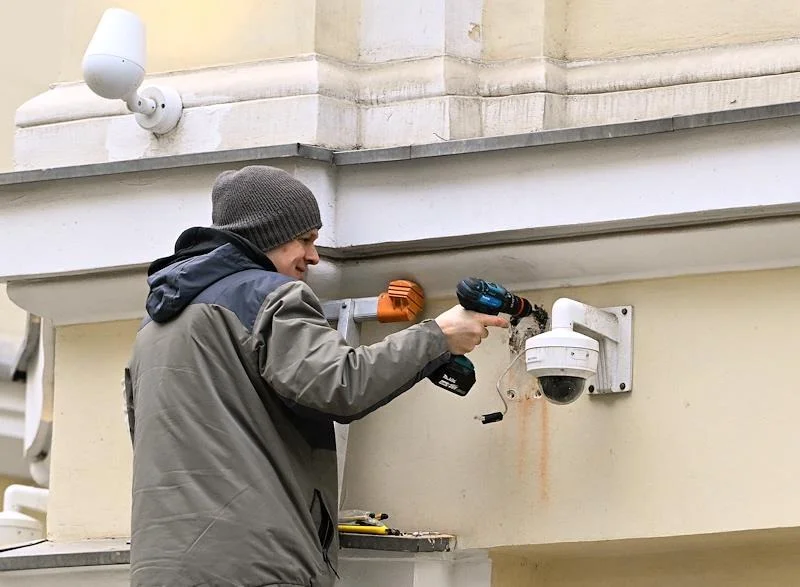
In recent years, it is not difficult to see the “security mania”, which, suffering from which, the authorities (especially in large cities) hang the clusters of the cameras on almost every pillar and motivate this with the need to ensure order and security.
Perhaps the conversations about the “digital concentration camp” are somewhat exaggerated, but the total and expanding surveillance of people, obviously threatening with violations of their rights and the introduction to their private life, is not at all harmless action.
Moreover, there is, as they say, "selective use."
On the one hand, for example, with the help of these cameras, dozens of civilian and political activists were delayed without any reason in the Moscow metro before public actions or after them. And on the other -
There are many examples of when for some reason in the really necessary (criminal) cases (as at the time of the murder of Boris Nemtsov) are supposedly non-working.
For reference: in 2024, state bodies and state -owned companies purchased video surveillance systems and photographs for 130.1 billion rubles, which is almost twice as much as last year.
At the same time (four years ago, at a meeting of the Moscow City Duma, this information was cited by the head of the Yabloko faction Maxim Kruglov) In May 2019, the city council of Mecca of modern technology San Francisco banned the police and other law enforcement agencies using the person recognition system on their territory.
Under the pressure of the inhabitants of Toronto - the economic capital of Canada, such a giant as Google, having the full support of the authorities, was forced to refuse to introduce a similar, even more integrated observation system.
But in China they are watching everywhere and after everyone.
And the last. The specified state program for ensuring public consent (on which the budget of St. Petersburg annually spends 8–9 billion rubles) in the section of target indicators provides for an increase in the “share of citizens who positively assess the state of interethnic relations in St. Petersburg”, from 62.5% in 2024 already up to 65% in 2029.
Giant growth, of course, but it is not achieved either. Moreover, according to Mr. Capinov, now there are only 43%of such citizens, and, in his opinion, to “guilt”, including terrorist attacks in Crocus and in Dagestan.
But the introduction of mass digital recognition of “ethnicity” will definitely not improve the situation.