
Translated material
Perception to bayonets
Will there be a new war? This is perhaps the main question and the main alarm of Armenia in 2025
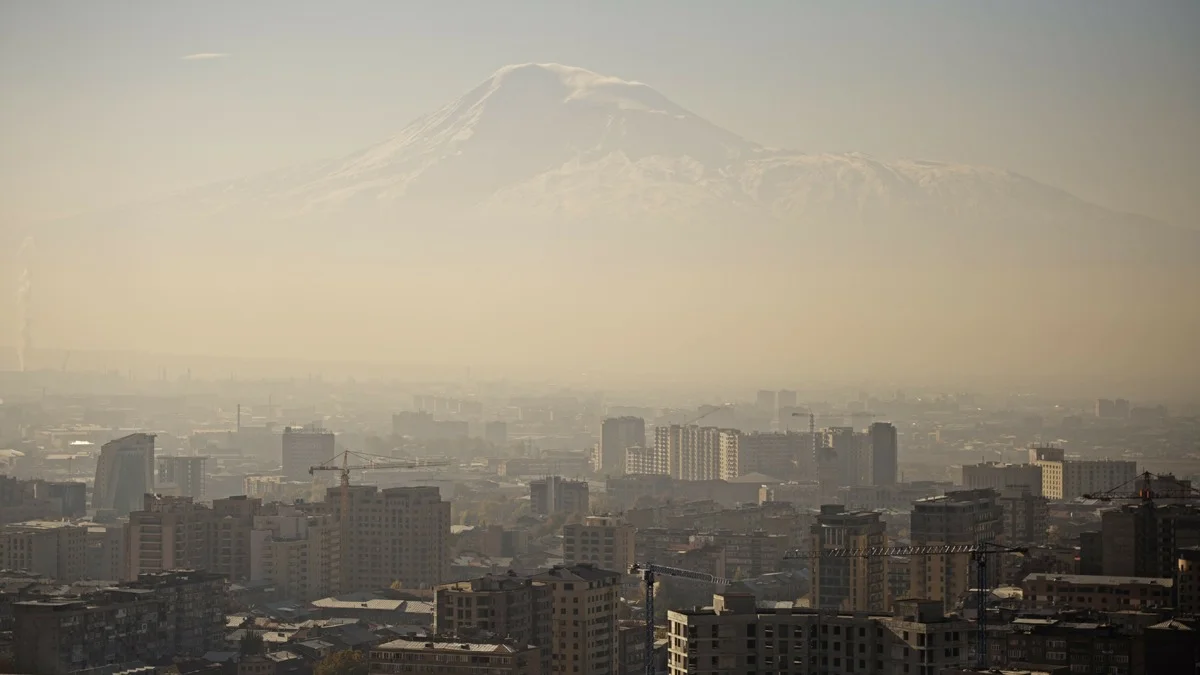
Photo: James Morgan / Robert Harding / East News
Will there be war? This is the main question that now sounds on the streets seems to be safe and welcoming Yerevan. Visitors, immersed in their concerns, sometimes naively amazes: "You have not ended there yet?!" In fact, the conflict due to Nagorno-Karabakh once at the beginning of 1988 overshadowed the expectations of the Gorbachev perestroika and eventually let it down. Hundreds of thousands of Armenians were then expelled from Azerbaijan, like ethnic Azerbaijanis - from Armenia. By the beginning of 1994, when in Russia everyone was not up to that, the Armenian detachments captured the deserted buffer zone around the Nagorno -Karabakh, and the endless negotiations “On Settlement in International Mediation” began. Doesn't it remind you?
The generation later, in April 2016, Azerbaijan undertook massive reconnaissance in battle. In the fall of 2020, when the attention of the “international community” overwhelmed Covid, Brexit and Trump in their first version, Azerbaijan during the bloody 44-day war managed to break through the defense of Armenians in Karabakh. The drones thundered for the first time for the first time - then the Turkish “Bayractars”. Next, a series of painful “escalations” using the Turkish and Israeli military developments showed how obsolete the Armenian army of a typically Soviet-Russian model was.
At the beginning of 2023, Baku changed his tactics by installing the blockade of Karabakh with pickets of protesting “ecologists”, behind which the Azerbaijani special forces stood. In September 2023, Karabakh fell, and the Armenian population went completely into exile.
The Russian “peacekeeping contingent” demonstrated amazing passivity, even when its representatives were killed as if by chance (and there were no wounded). Having gone to the borders of the Republic of Armenia itself and capturing several strategic heights, Azerbaijan set a lot of requirements for “establishing peace” (everywhere we need quotation marks), the crown of which “demilitarization and denazation” of Armenia became the crown of 2025. It sounds acquainted? So will there be war again ...
In fact, everything is simpler than it seems. Azerbaijan is not at all a monster of "Eastern despotism", just as the Armenians are not endowed with some sad "wisdom of centuries." The ancient ancestors of the Armenians in the era of Hellenism or Byzantium were fighting feudal lords, like all the highlanders. But then the heroes ended over the centuries of the Arab and Turkic-Mongol conquests. The peasants remained who had to go to work in the cities, and there already - like Fernan Brodel - from Venice and Yaroslavl to Manila, the market paths of the era. Add here the factor of the Archaic Armenian Church with your own alphabet and monasteries, where manuscripts and miniatures were written. In the 19th century, a modern intelligentsia will arise from the veneration of scholarship, which found that the ancestors were wow! Almost the Hellenes, although, more precisely, still Celts.
Armenian nationalism is structurally similar to the Irish-the same demographic catastrophe in the historical homeland and the expulsion of the majority of the nation in the diaspora, the combination of the persecuted version of Christianity with the national idea, and the radicals up to the republican bombers.
By the way, the famous party of Dashnaktsutyun (literally - “Revolutionary Federation”) goes back to the Russian “People’s will” and still performs under the red flag, and behaves today, like the Communist Party.
Azerbaijan could be proud of the no less vivid Turko-Persian heritage and, moreover, the intelligentsia impressive modernism. Live longer than Sergo Parajanov (who belonged to this great cosmopolitan?), He is early as Ashik Kerib - and would become a visual poet of the Azerbaijani heritage, which remains in the legends of the Ukrainian, Georgian and Armenian cinema. At the beginning of the twentieth century, the Azerbaijani intelligentsia creates a serious democratic and enlightenment movement at the junction of tsarist Russia, Shah Persia and the decadent Ottomans. Not from scratch there is a "Popular Front of Azerbaijan" during the years of perestroika. They picked up power, although they could not hold among the devastation and horror before the Armenian offensive of the early 1990s. And then Heydar Aliyev, great and terrible, returned to Baku covered by Darkness Baku.
Aliyev-father is remembered as a flatterer under Brezhnev. But he could become the heir to "dear Leonid Ilyich." But in Moscow they understood that the Azerbaijani, who began serving in the NKVD in 1940, could not but be creature Lavrenty Beria. In 1969, the KGB General had to be appointed first secretary of the republic, mired in corruption and problems. Like Beria, Heydar Alievich was distinguished by a business grip and a grip in general-but he could have charmed the interlocutor, as he would later captivate Margaret Thatcher, who in the 1990s needed to provide the future for British Petroleum on the Caspian oil fields. Understanding that there will be oil, there will be money, Aliyev-father pushed Karabakh into the category of strategic expectations. Meanwhile, Azerbaijan, where the Soviet military once built airfields and tracking stations on the border of Iran, became an unspoken partner of Israel. Financial and “friendly” interests in Russia, of course, have not gone anywhere either. The only postage brand with V.V. Putin was released in Azerbaijan, where he is tactful of the same height next to the shoulder Heydar Aliyev. With such a heritage, power was handed over to Aliyev Jr.
The post -Soviet Armenia had their own, quite provincial attempts to imitate a powerful neighbor. But how to plant a personality cult in a nation who has Charles Aznavour?
In the spring of 2018, the Yerevan regime of imitators fell with ease that struck everyone. Moreover, the authorities went to the opposition journalist-probe Pashinyan. It was clear on the move that Putin (much more Lukashenko) would not accept “Nikola Vovaevich”. What will they do with him?
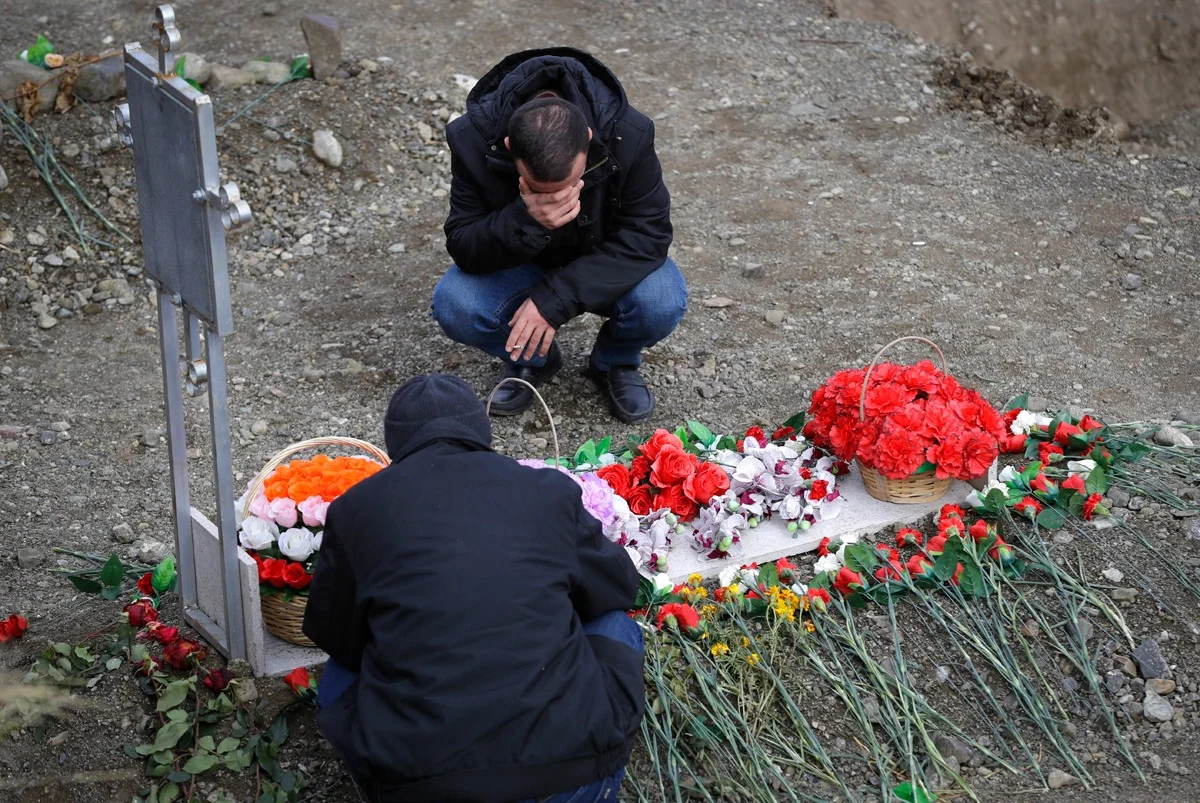
The Azerbaijani offensive in Karabakh was overdetermined, as American political scientists are expressed. Preceded by the aggregate of factors. But Pashinyan was amazed to amazed, and the Armenians turned on the centuries -old survival instincts. The latter is their main "military secret."
Despite the brutal defeat, in 2021 normal elections were held, in which the former parties of the authorities arranged a lot of noise, but voters did not convince. Economic growth is obvious, no matter how you count. Why is this a separate question. Typically, the economy’s locomotives are called an IT sector with its world ties and the side effect of sanctions on Russia (both from smuggling and from the arrival of reserves). I suspect everything is easier:
Armenian enterprise freed from the press of corruption and political blat. The budget is filled more than ever, and this allows you to build a line of concrete fortifications on the boundaries.
On the "smart" weapons of the twentieth century there is a "stupid" simple and not too expensive answer. However, modern weapons are also purchased, and in France (thanks to grandfather Charles!) And in India. Why not? The inexpensive Indian apparatus recently reached the moon, unlike the expensive Russian.
Actually, that’s all that you need to know about the situation at the beginning of 2025. The details of domestic and foreign policy will leave experts. The year will be dangerous. In Baku, Moscow, Ankara and a lot of where they are no worse than us understand that Armenia has passed the lower point and moves, if not to parity, then to sufficiently resistance. How to stop it? Hence the “discursive” pressure of Baku, that is, the streams of threats, the judgment of the Karabakh leaders, the requirements to change the Constitution and the emblem of Armenia, return to Armenia half a million ethnic Azerbaijanis (but, of course, not Armenians to Azerbaijan), curses towards France and more. The next escalations on the borders and even the front war are possible. Much will depend on changing layouts in Russia, Ukraine, Iran, Europe, and even more so in Washington. Therefore, on the streets of Yerevan, I answer: "We hope for God, but we ourselves do not flatter."
George Derlugyan,
Professor of Sociology, New York University in Abu Dhabi