
Translated material
The Germans try their voice
Germany is described before the elections in medical terms: “paralysis of the economy”, “loss of political consciousness”
Having barely recovered from the blows that Covid inflicted, the country faced the influx of not only the Syrian (consequence of the war), but also Ukrainian refugees (consequence of SV), with expenses to help Kyiv, record inflation and rising energy prices (consequence of anti -Russian sanctions). And as if the Germans were not enough, the new US authorities right now decided to reconsider the principles of military cooperation with the old light, literally by force, pushing Germany into a large political arena and demanding that she have tried to avoid a place for many years. “It is very important that people in Germany are proud that they are Germans,” Ilon Musk is trying to teach the Germans the “loudspeaker” of Trump.
For many years, they avoided talking about their historical greatness, which scrupulously built the largest economy on the continent, the Germans are reluctant to go under these Sofites. On February 23, they have to choose not only the path of internal development, but also the future of Europe, for which it is time to rethink their position in the world arena.
Old problems
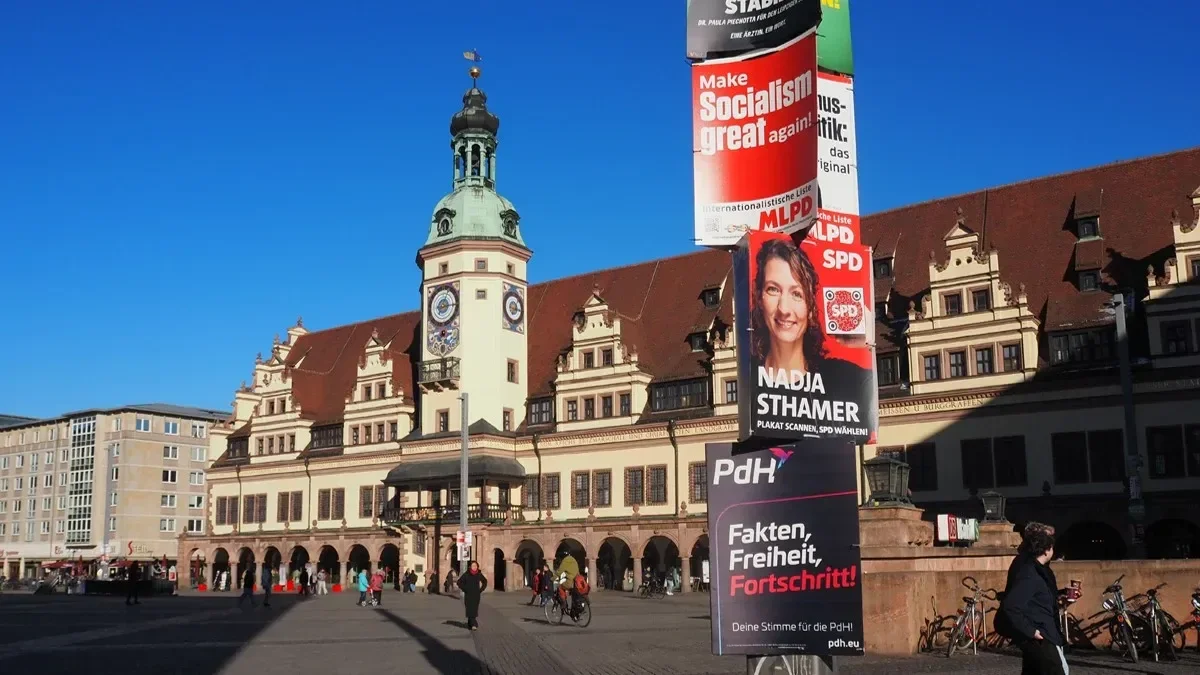
The latter before the election Working week in Germany turned out to be the coldest this winter. On the streets of Leipzig - unusually deserted and chilly. The most stubborn agitators on the streets are supporters of the “left” (Die Lienke) and the current chancellor Olaf Sholts with his Social Democratic Party of Germany (SDPG/SPD).
- Hello! You have already decided who you will vote in the elections for? - The young, dark -skinned agitator with the symbols of the “left” to the middle -aged married couple, which is walking in the center of the old city.
“We always vote for SDPG,” the woman answers, wrapping himself in a scarf.
“True, you are satisfied with what Scholz does?” - the agitator is sincerely surprised.
- I am a child of the “workers' outskirts”, for whom else do you order to vote? - the lady smiles politely. - My parents and I - we made this country as you see it.
SDPG and CDU/CIS (Union of Christian Democrats and Christian Socialists, CDU/CSU) are two oldest parties in Germany. SDPG has existed even since 1863.
After the reunification of the country in 1990, it was they who led Germany to the position that it now occupies in the world: 3% of the global GDP, 61,940 dollars of GDP per capita (in Russia 38 961), a high level of social support of the population.
Simplifying very strongly, it can be said that all the election disputes of these two political mastodons were reduced to one thing: who to cut more from the budget pie - business, which, thanks to support, will create more jobs and bring even more money to the treasury (HDS/CSS) ; Or spend more on social support for the population, which, feeling this help, will work better, and will increase domestic consumption, which, again, will turn into the replenishment of the federal budget (SDPG).
Looking ahead, it can be noted that the “Ukrainian question” added the current economic disputes of acuity. Olaf Sholts, who firmly intends to continue to help Kyiv, offers to do this by increasing external borrowing. Those. In fact, opposes the so -called “European brake” - the rules according to which the EU countries do not have the right to increase external debt without good reason. The leader of Christian democrats (CDU/CSU) Friedrich Mertz, in turn, believes that Germany should only rely on his own forces and sees strong economic incentives for Germany in increasing defense costs.
In the old years, probably around this, the basic election battles would be fought. But now the Germans are concerned about completely different problems.

Migrants & ko
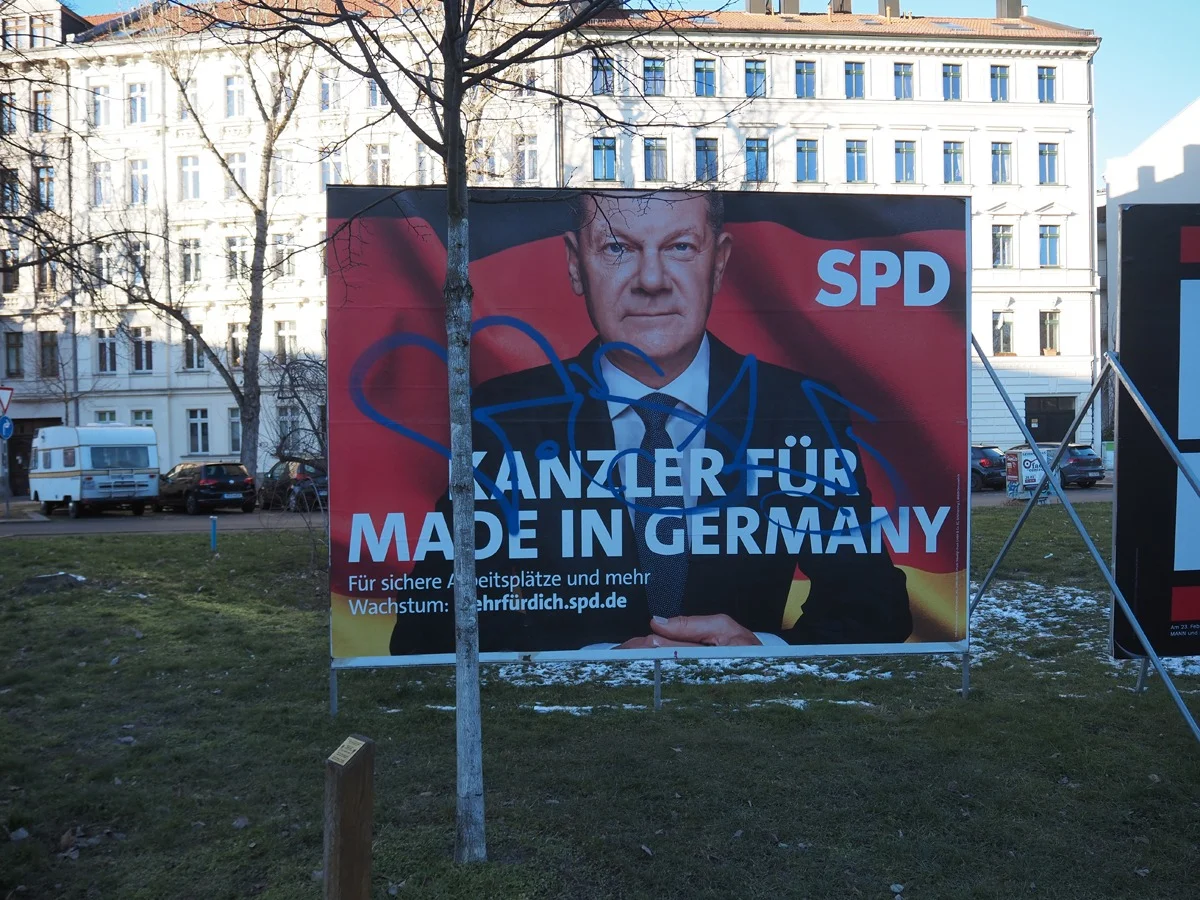
In the old residential area of Leipzig, the face of Alisa Vaidel, the leader of the ultra -right “Alternatives for Germany” (AFD), looks from the election poster at visitors to the auto -stained black eyebrows.
- Damn the morons! - Curses on unknown vandals an elderly gentleman with a gas station in his hands. “As if they know how to rule the country.”
- Do you think she knows? - the young man from the car at the other column nods towards the billboard.
- Nobody knows. Because this is no longer Germany, ”the first retorts irritably.
29 out of 41 registered party were made to participate in the current elections. Of these, 10 can be called “heavyweights”, but the main struggle for mandates is expected to unfold between six: in addition to the already named SDPG and HDS/CSS, these will be free democrats (FDP), “green”, “alternative for Germany” (Adg ) and the "Union of Sarah Wagenknecht" (BSW). Sociologists evaluate the chances of entering the Bundestag “Left”, “Pirate Party” and Die Partei as insignificant.
And if, on the "economic agenda", the programs of political associations fit into the smooth course of the main industrial giant of Europe, with temporary rolls to the right, then to the left, - -
That migration question became a reef, which, with a run in 2015, a ship called "Germany" flew in, and it is already difficult to not notice the leak.
STATISTICS
Almost 14 million migrants (15.2% of the population) now live in Germany;
Only 77% of the Germans communicate in German;
In 2024, Germany spent 13.7 billion euros to support migrants (mainly from Ukraine, Syria and Afghanistan);
According to the head of the Federal Criminal Police Department (BKA), Holger Munh, in 2023, the share of foreigners in the total number of crimes committed amounted to 37%.
Only in the last three months have shocked the country:
Council at the Christmas Fair in Magdeburg (five dead),
The attack of a migrant with a knife on a kindergarten (two dead, including a two -year -old child),
Intentional hitting a demonstration in Munich (two dead, one of them is a child).
The main cultivator of the anti -migrant agenda is an “alternative to Germany”, which is called the “Russian project”. It began in 2013 as a party of Euroskeptics and was a phenomenal success: in 2017, the ADG received 94 out of 706 mandates in the Bundestag, gaining 12.6% of the vote. In 2021, against the background of Covid, the popularity of the ADG decreased slightly. But after the influx of Ukrainian refugees and the growth of Germany’s expenses to help Kyiv, interest in the right populists grew greatly: in the land elections in 2024, the party showed a stunning result: in Thuringia it became the first, in Saxony and Brandenburg - the second.

Frightened by such a success of the right, “old” parties of Germany erected the so -called “Brandmauer” is a fire wall: they agreed not to join the coalition with the Adg.
This means that even in case of victory in the upcoming elections, Alisa Weidel will not be able to become the Chancellor of the Federal Republic of Germany. For this “political invention”, the Vice President of the United States Vance at the recent Munich conference subjected German politicians to harsh criticism, suspecting in insufficient legitimacy.
After the crushing victory of the “right” in the land elections, it became clear that something needs to be done. To begin with, Scholz introduced border control on all the ground boundaries of Germany, actually questioned the idea of united Europe. And then he completely rushed into a tour of Central Asia.
In Uzbekistan, Sholts signed a unique migrant exchange document: Germany agreed to open the doors for legal and qualified migrants from Uzbekistan, and in return Uzbekistan undertook to help Germany with the deportation of ... Afghan refugees.
According to the DPA agency, in Germany in 2024 there were 225 thousand people to be deported. Of these, at least 23 thousand are citizens of Afghanistan, who simply have nowhere to expel from Germany: Berlin does not have diplomitions with the Taliban. To solve a similar issue with “problematic” Syrian refugees, the German official delegation of one of the first went to Damascus after overthrowing the regime of Bashar Assad.
Such activity of usually phlegmatic and indecisive sholz spurred Christian democrats: they brought to the Bundestag meeting such a reform of the migration law that the ADG faction voted for it in full force. Still: the CDU proposed, in fact, to deny the Schengen agreements and not to let into Germany even those foreigners who legally entered the EU territory.
Illegal migrants were proposed to be placed in special camps with a restriction of their right to receive asylum.
The parliament did not adopt the law, but this did not prevent the stupor from heading the election race.

“Germany can no longer be a home for illegal migration,” says Friedrich Mertz.
"Enough open doors for illegal migrants!" - Widel echoes him.
But at that time, as a stroke, applause is greeted at election rallies throughout Germany, the leader of the ALISA Vaidel ADG does not even reveal his place of residence, explaining this by fear of threats from the anti -fascists.
“In Germany, many people think how she is,” the seller of flowers in the market nods a post from Vaidel from opposite Bayerische Bahnhof in Leipzig.
- Just about them (ADG) they say a lot: “fascists”, “Nazis” ... People do not want them to be called the same. Therefore, they do not show the species, and they themselves will vote just like that - you will see.
“We must help those who are running from the war, but it is important that integration work,” Scholz convinces voters and recalls that Germany experiences a huge shortage of workers. In principle, this position coincides with the opinions of “green”, “left”, “free democrats” and even the odious “union of Sarah Wagenknecht”, but the success of the CDS/CSS and ADG, which in all prevailing the first and second place in the elections shows that it shows that it shows that it shows that it shows that it shows that In fact, the Germans think about solving the migration issue.
Russia is a new stumbling block
In these elections to the German Bundestag, Russia has only two allies: ADG and the Union of Sarah Wagenknecht (BSW), who settled in the extreme left part of the German political scene.
The Union arose just yesterday-in September 2023. Not even a year has passed since BSW scored from 6 to 8%in the land elections. Journalists, having rushed in the financial documents of the party, found in them as if ties with Russia, but in the party they reject all the accusations.
“We must stop meaningless escalation,” says Sarah Wagenknecht. And the leader of the ADG even proposes to cancel the sanctions against Russia, to return to the purchase of Russian hydrocarbons - by the way, the entire “economic” part of the alternative for Germany fits the entire “economic” part of the election campaign. There are no other ways to increase the welfare of the Germans there.
But the majority of German parties going to the elections occupy anti -Russian positions of varying degrees of hardness. From the temperate shovel - “we are open to the dialogue”, to the radical estate, which in October 2024 called on the Bundestag to give Ukraine the Taurus cruise missiles with permission to beat them around the Russian Federation.

“I am not afraid of a nuclear war with Russia,” Mertz said in November last year, who was 70 years old in 2025. Last fall, the Bundestag deputies did not support his idea with the Taurus.
Meanwhile, the leader of the CDU/CSS does not hide disappointment with indecision of European foreign policy.
“I cannot get rid of the feeling that the threats of the use of tactical nuclear weapons have a significant impact on the West. Fear is the mother of all cruelty, ”says Merts.
His anti -Russian militancy, with which he began the election campaign in the fall of 2024 (February elections - early, the next had to pass six months later), had its fruits. The Germans are clearly disappointed with a too soft shovel, which all four years of his chancellor maneuvered between bad and very bad decisions on all issues - from the migration crisis to helping Ukraine.
A survey conducted by the Institute of Market and Social Research by INSA shows that 40% of respondents consider the Merets a more suitable candidate for the post of head of government and therefore vote for the CDU/CSS. While SPDG and Scholtsa are supported only by 28%.

The disappointment of the Germans is understandable: the economy is not growing, the social expenses of the state have reached unthinkable sizes, migration problems and assistance to Ukraine strengthen the split in society. And as if all of the listed by Germany, the United States, under the leadership of Trump, force Europe to completely help Ukraine take on.
Therefore, on February 23, German citizens will have to choose not only the ruling party - for themselves, but also a policy that will stand at the origins of the formation of a new collective security system in Europe.
Leipzig