
Translated material
Edited monument
More than 50 years ago, visitors to the Stonewell Inn bar resisted the police. Today Trump erases the mentions of trans-people from the history of a turning point for LGBT move
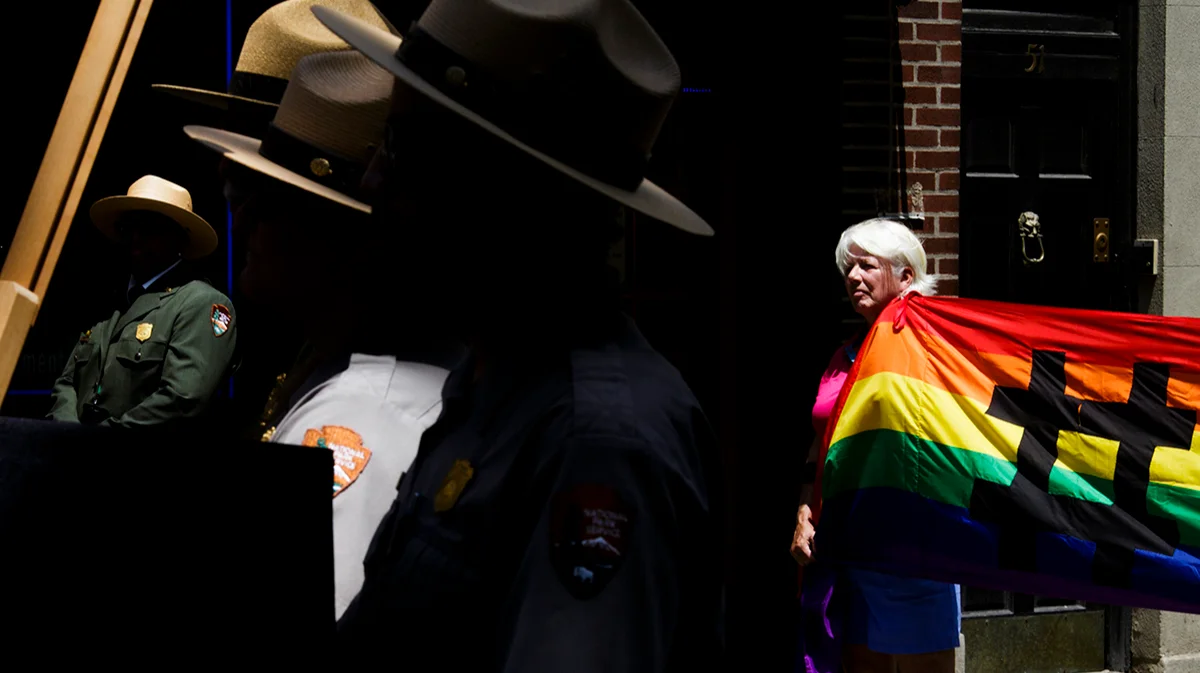
The opening of the National Monument Stonevoll with the participation of federal officials, representatives of the state and local authorities, as well as leaders of the LGBT community in New York, USA, June 27, 2016. Photo: Justin Lane / EPA
The Trump administration deleted almost all the references to the transgender and non-warar people from the site of the Stonollol National Monument, which plays a special role in the history of the Rights of the Quire-human rights. The historian Rustam Alexander explains what is the importance of this precedent and why think that in developed democracies the rights of the Quir-loves are protected is a dangerous delusion.
The Stonevollsky monument, located in the Greenwich-Villije area in New York, unites the Stonevoll Inn two-story tavern, a small Christopher Park and Christopher Street Street. It was here on the night of June 28, 1969 that visitors to the Stonewell Ton Tavern, which had a reputation as the place where the marginals from all over Manhattan gathered, as well as Quir-loves, made the police strict resistance, which came here that night to once again mock visitors . These events have become a turning point in the struggle for the rights of LGBTK+ people in the USA and in many European countries. In 2016, Barack Obama declared Tavern Stonevoll a national monument as a sign of respect and support for the movement for the equality of LGBTK+.
Many, including Quir-people, may not know about these events, as well as about the existence of this monument. Some still think that in Western countries, including in the USA, LGBTK+ people have always been protected, that this is some kind of given and an integral part of the life of a democratic society. And even more so, many are convinced that support for LGBTK+ people in these countries is unchanged.
But this is far from the case. The LGBTK+ people's rights movement began to develop relatively recently, only in the second half of the twentieth century, and in some countries, for example, in Russia, much later. In the USA-in the country in which Quir-people have a lot of rights and freedoms today-until the 1970s, total homophobia reigned at both the state and public levels. People suspected of homosexuality were dismissed from the civil service, they were not allowed to serve in the army.
In most states, there were laws on “sodding”, and official psychiatry considered homosexuality to mental deviation, which doctors tried to treat with electric shock, lobotomy and other inhuman forms of medical intervention.
Many Quir-loves lived a double life, hiding their homosexuality. The golden underground bars in large cities were almost the only places where homosexual people could behave openly and meet the same as they. You can even say that the situation with the persecution of homosexual people in the United States in those days was much worse than in some countries of Western and even Eastern Europe.
In 1969, police raids in New York at the bars where Quir-Ludges gathered, were common. Everything happened at the same scenario: the police flew into the bar during the party, beat the guests, mocked them, and then built them on the street to humiliate and arrest again. But on June 28, 1969, during the next raid on the Tavern Stonewell, something went wrong.
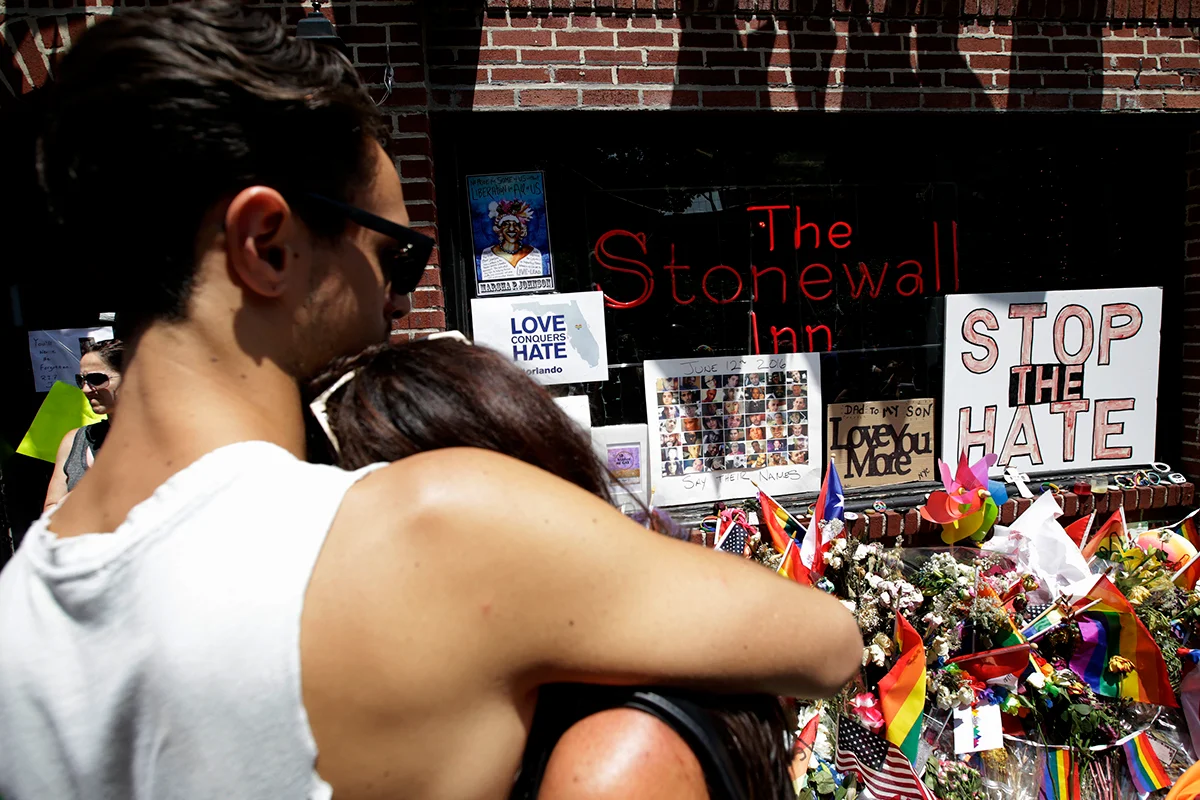
That night when the police appeared in Stonevoll, visitors to the bar suddenly rendered a decisive rebuff. They began to throw everything in the police that fell by their arm - that even had to barricade inside. However, the guests of the institution broke through the barricades, set fire to the building and attacked the police with fists. The next evening, thousands of other protesters came to Stonevolla, and clashes with the police continued. After these events, participants in the riots-Quir-Luda, residents of Greenwich-Villidge and other marginalized groups, tired of bullying by police and government-began to unite in political groups to develop further plans to combat homophobia and discrimination.
The Stonevoll riots subsequently became an important symbol of the resistance of Quire-human ones against social and political discrimination. Before these events, informal groups of gay activists already existed in the United States, but it was after the events of 1969 that new more radical groups appeared, ready for decisive action. Quir-loves realized the need to unite.
People who recently were afraid to hold their partners in the hands of public places and generally talk about their sexuality openly, began to organize public protests, demanding civil rights and freedoms.
They entered into confrontation with homophobic politicians, tore off the conferences of doctors at which the methods of “treatment” of homosexuality were discussed, and organized other political actions. One of the most important achievements of the post-Stonoll activism was the exclusion of homosexuality in 1973 from the official list of psychiatric diseases.
The Stonewol events were important for Quir-activism in Canada, Australia, Great Britain and in Western Europe. It is interesting that the news about the Stonevoll events could not break through the “iron curtain”: most Soviet people did not know about them, and protests in the USA did not have any influence on the life of Soviet homosexuals.
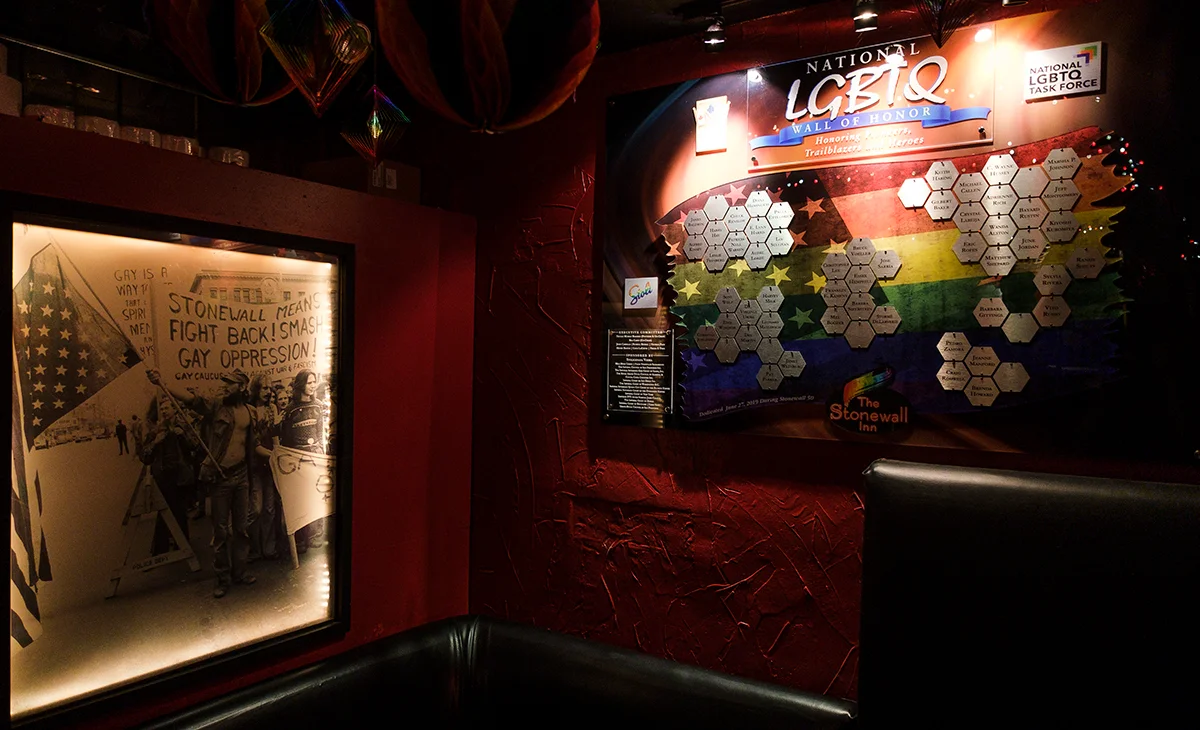
Although the achievements of the Quirry move, which originated in the Western countries in the late 1960s, including after the Stone Volol riots, certainly improved the quality of life of the Quire-loves, achieved progress in the struggle for equality and their recognition is not final and unshakable. Quir-loves can still be attacked and criticized by homophobes, and all their achievements-the opportunity to live openly, make a marriage and a civilian union and, in general, be full-fledged members of society-can be canceled, despite the previous decades of activism and victims.
Transgender and non-warar people were active participants in the Stonevoll movement, and the actions of the Trump administration to wash them from a historical narrative-this is just an attempt to cancel the rights and freedoms of Quir-loves.
So the movement for equality did not end - it continues.