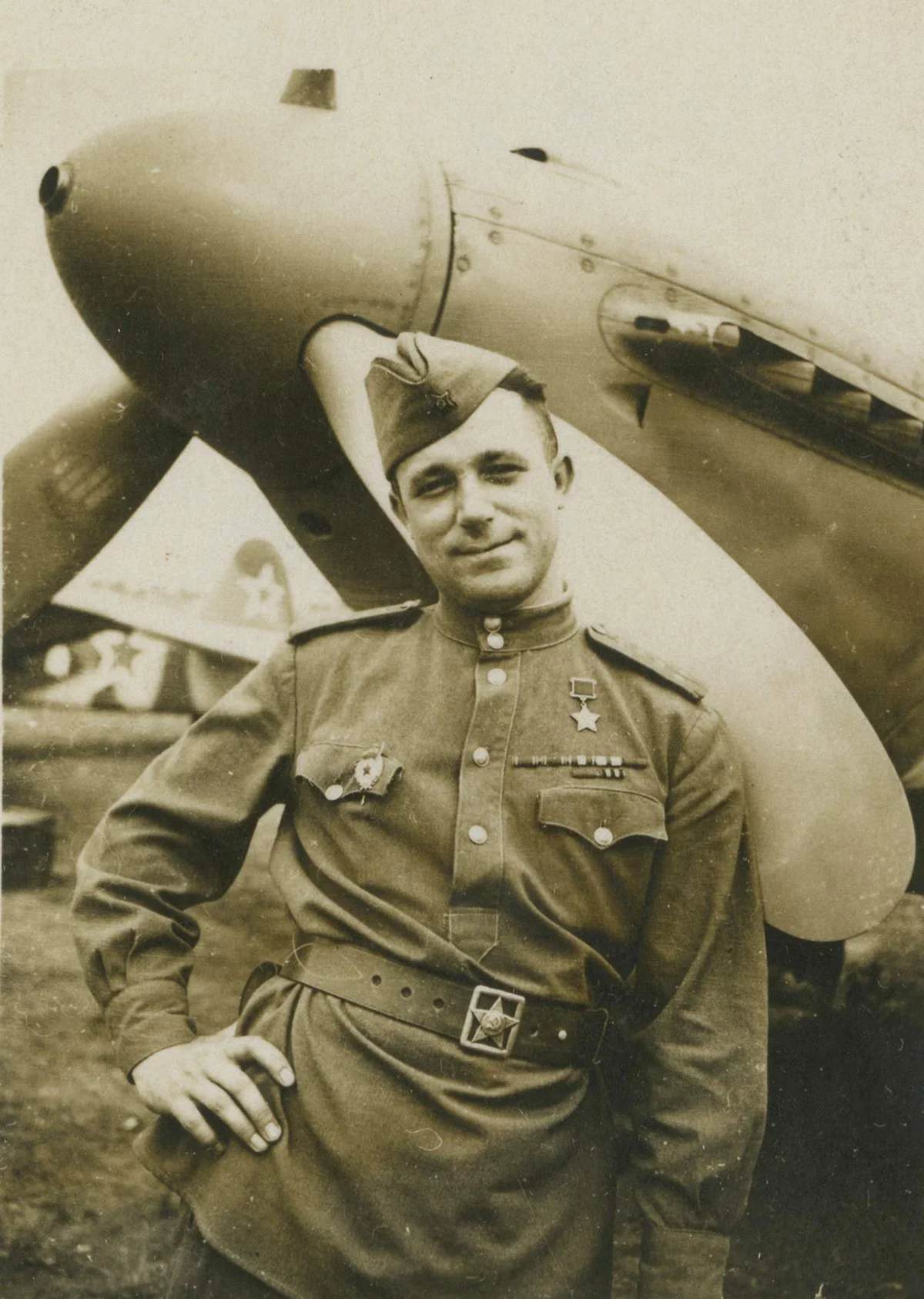
Translated material
Real maestro and grasshopper
The prototype of the two heroes “only the old people go into battle” was the pilot Vitaly Popkov. He really created a “singing squadron” and shot down the Messer. And the film is now banned in Russia
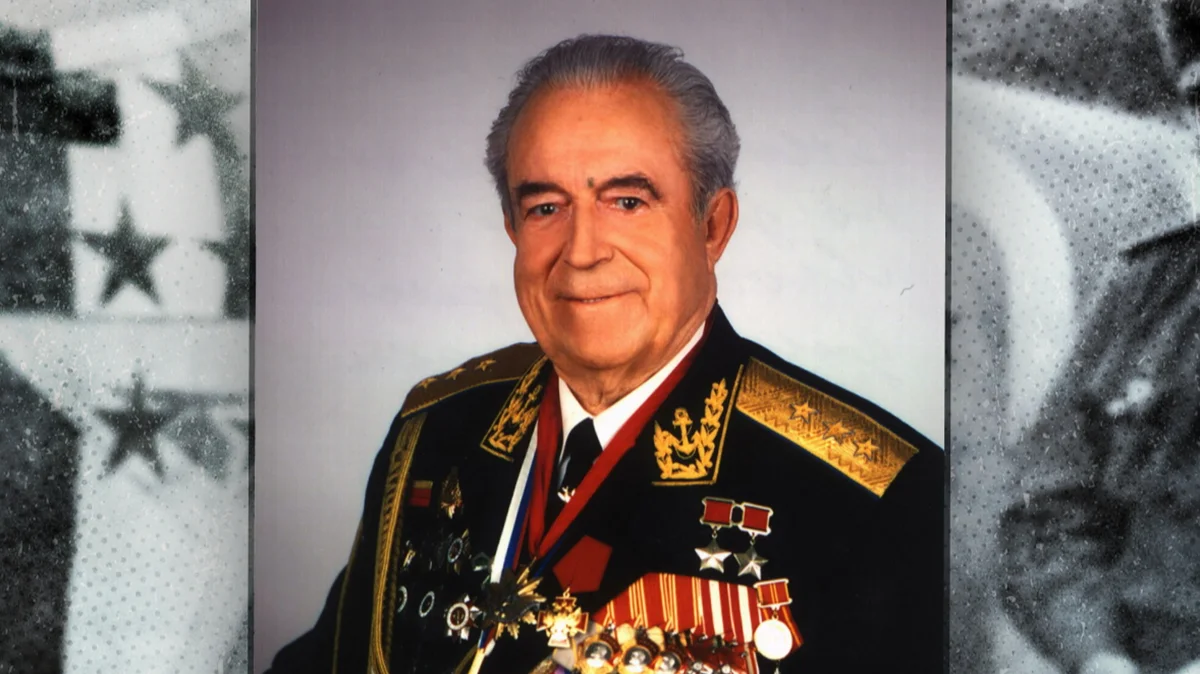
On February 6, 2010, at the age of 88, the Hero of the Soviet Union, a military pilot Vitaly Popkov, who became the prototype of Maestro Titarenko in the famous film “There are only“ Old Men ”, died twice.” He took an active part in the preparation of the picture at the stage of the script and later helped the cinema to the screens. The commander of the “Singing Squadron” did not live to see the time when one of the main films about the Great Patriotic War was banned in Russia. Much in the film was taken from Popkov’s personal biography.
"The mechanic drove me out of the plane!"
This is not to say that the life of the colonel General of Aviation Vitaly Popkov was divided into two stages: before the appearance of the film “Only“ Old Men ”and after. In Soviet times, few people knew the real name maestro. Yes, in fact, Popkov was not an exclusive prototype of the cinematic hero. This is a collective image, but it was Popkov that became its basis. Moreover, two heroes at once: captain/Major Titarenko and the "yellow -pointed" of the grasshopper.
Vitaly Ivanovich Popkov was born on May 1, 1922 in Moscow. His father worked in the special garage of the Council of People's Commissars: he drove the first persons of the state. In 1927, Popkov Sr. was transferred to the Office for the provision of special facilities in the Caucasus. Following Joseph Stalin, who loved to relax in those parts (the cottage in Sochi "New Matsesta" and as much as five in Abkhazia), other members of the Central Committee and the government reached out there. So there was someone to carry special garages. It was there, in the Caucasus, Vitaly met with Vasily Stalin.
“We were then 10-11-year-old boys ( Vasily Stalin a year older than Popkov. - Approx. Ed. ) And both were engaged in air circle,” Popkov told reporters in 2003. - I even at their cottage, where Joseph Vissarionovich was resting, was. Quite often I saw him. He never spoke to me, but he treated the sweets generously. Then my family and I went back to Moscow, and our friendship with Vasily was interrupted. They crossed already at the front in 1942. The regiment, in which I commanded the squadron, was part of the 8th Air Army of the Stalingrad Front, and Vasily Stalin commanded the 1st special air group in the same army. Then we scattered us, but we no longer lost communication. He in many ways, mainly in his personal, helped. For example, he ensured that my future wife of RAA, the senior lieutenant of the medical service, was transferred closer to me.
Once Popkov knocked out at low altitude. The pilot managed to unfasten and pull the parachute ring. A stream of air and parachute, and Popkov himself pulled out from the cab.
The opened parachute burst, but caught on the tree, and the pilot fell into the swamp. It saved his life. Heilled, wounded, he did not drown in a quagmire only because he managed, pulling himself up in the sling, to get out on a solid ground.
In the hospital, Popkov performed several plastic surgery. Among his saviors was the senior lieutenant of the medical service of Raisa Volkov. They fell in love with a friend and on May 9, 1945 played a wedding. Immediately after the Victory Parade. The young witness was Vasily Stalin. Vitaly Ivanovich and Raisa Vasilievna lived together for more than half a century, raised two daughters.
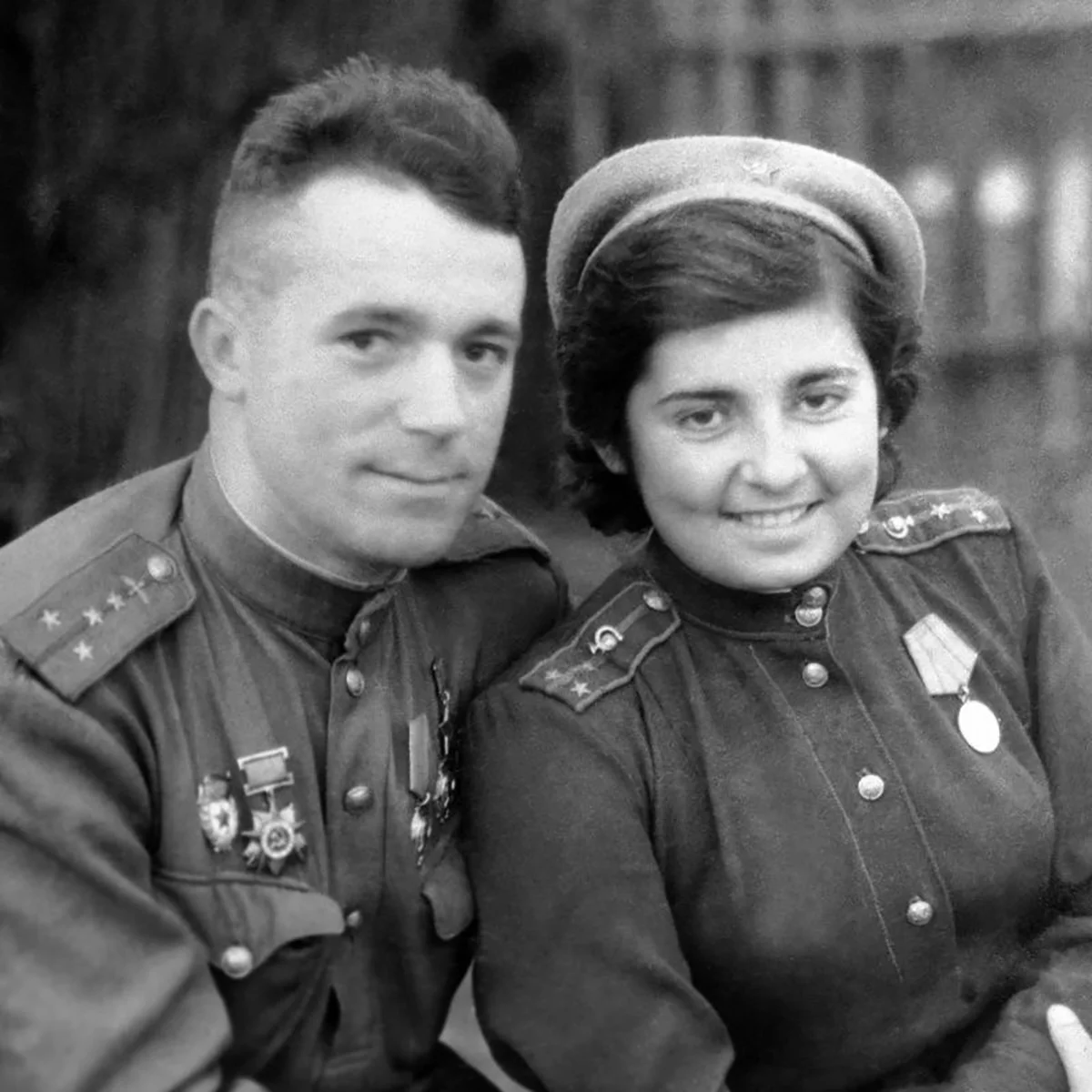
Popkov’s real service differs from the one that takes place in the film “Only“ Old Men ”go into battle.” Unlike Titarenko, who in the film appears as a pilot-As, who began the combat path in Spain, Vitaly Popkov came to aviation by an 18-year-old kid in 1940.
“I was a graduate of the pre -war“ bad ”release of pilots, when the People's Commissar of Defense Semyon Tymoshenko gave the order to release pilots not to lieutenants, but sergeants,” said Popkov. - So I came to the aircraft regiment sergeant in an ordinary soldier's overcoat and cotton tutorial instead of leather raglan. I looked quite miserable, and when I got on the plane, the technician simply drove me out of the car and did not allow me to the plane. I prove to him that I am a pilot, and he is to me: “Why are you a pilot! Sergeant!" It was a shame to tears.
In this state, I appeared in front of the regiment commander Vasily Zaitsev. And the one to see how I fly, I sent me to the first educational flight. I, angry, think: I'll show you now! And then also the best girls appeared at the airfield: look at a newcomer. Well, I showed the class: I swept right over their heads at low altitude, dived, entered the corkscrew, showed other figures of aerobatics, although this was not required at all. It was necessary to just take off, make a couple of circles and calmly plant the car.
He landed, pleased with himself, and I think: he probably surprised the commander. And he arranged for me such a variety for not only risks, but also those who were at the airfield. “If you collapsed, what explosion would be?! - yelling Zaitsev. “Do you think one would suffer?!”
Only a month later, they allowed. And it was necessary to happen that during takeoff, the right wheel of the chassis broke off. I fleeed the flight program normally, but I had to plant the plane on the belly. And taking into account my past “feat” ... “You will be on duty along the airfield until you turn blue,” Zaitsev said. So I was on duty for everyone, and for some time I was not even considered a pilot. When it got warmer, so as not to go crazy from longing for flights, I began to catch the grasshoppers. So the nickname for me is a grasshopper and stuck. Well, then what happened to the film happened.
"Bear, jump!"
On that day, most aircraft of the regiment were in “Acceleration”. Who was accompanied by the bomber who flew away to reconnaissance, who was simply aimed at barracking. In general, there were few aircraft at the airfield. And then two “Junkers-88” (German bomber) appear, accompanied by two Messerschmit-109 (fighter). These planes could not inflict human losses. But the airfield field was capable of completely plowing. And then how to take off or land in a strip, plowed with pits?
“The closest to me was the plane of the regiment commissar,” Popkov said . - Well, I jumped into it. I was lucky then, because the Germans went to the turn and were far from me, so I managed to take off. And then very successfully in the sight of the "Junkers" hit. Well, I knocked him down. After that, the "Messers" inhabited me, I had to twist. But while I distracted their attention, I managed to take off a few more cars from the airfield. The Germans saw that the alignment was not in their favor, and dumped. But the phrase, which Lenya Bykov used in the film, really sounded. The regiment, which was not even in his pants, but in his underpants on the plane jumped up and soared, then ran to the commissar to congratulate (in the film the grasshopper took off on the plane of the maestro and it was he who came running to congratulate and reward the limfank.). And the commissar tells him that it was not he, but Popkov shot down a German. He turned to me and that one incredulously asks: "A grasshopper, or what?" And this nickname has already taken me out that I take and blurt out: "I would have shot down the rest, but you scared all the Germans with your lower underwear." This was immediately laughed in the film regiment, but in reality there was a very dangerous phrase. I will never forget what silence was established then. And lasted two minutes. But then the commissar breathed out and sortingly asks: "On the VID (Order of the Patriotic War) or to decorate the star?" (The commander of the flight regiment had the right, at his discretion, to reward any medal or orders of the Red Star and the Patriotic War of the 2nd degree, other orders demanded the approval of higher authorities.) The commander also exhaled and said through his teeth: “Make it on Lenin (Lenin’s Order was. the highest order in the USSR), deserved! " Then he turned and left. And I realized that only without hitting me, the tornado rushed.
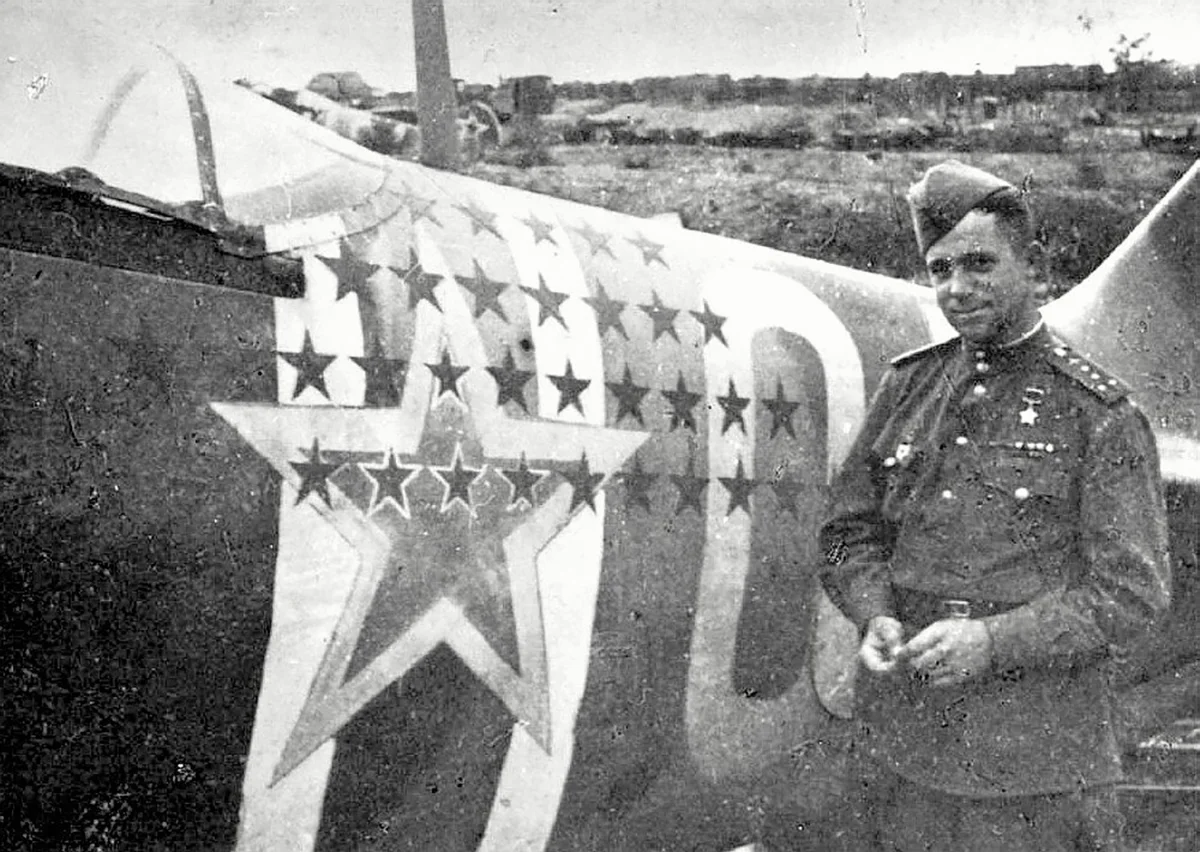
After that case, Popkov was allowed to fly, and he quickly proved that a real pilot. In just six months, he made more than a hundred combat sorties and shot down 13 enemy aircraft. In the fall of 1942, he is trusted to lead the squadron.
“By the end of 1942, I shot down 13 enemy aircraft, received the title of senior sergeant, was presented to the title of Hero of the Soviet Union and appointed to the post of squadron commander,” Popkov said . - The situation has developed a paradoxical: I am a squadron commander, and at the same time just a sergeant. And in my subordination, lieutenants, captains and even major. Although, despite the difference in rank, I was respected. After all, if anything, I could enter the same captain or major by physiognomy. True, it was a rarity. The squadron was friendly. They always went to dancing together. The guys brought their friends to me, represented me as a commander, which aroused interest among girls. They were even more surprised if I asked one of the subordinates to give up my partner on the dance or two. The guys did not resist, gave way, and the girls were shocked, they say, what is the sergeant: even officers are inferior to him. At the beginning of the 43rd, together with the first star of the hero, the title to the younger lieutenant finally raised me. Then I had the idea to create something like an ensemble on the basis of a squadron. I myself played well on the pipe, I could portray something on the saxophone. Vano, Starley from Tskhinvali, on the drums such topics brought out that the sisters from the medical unit were running out. Kolya from Vologda on the guitar simply masterfully played. Well, the captain of the Sterletsky, simply a bear from Odessa, was a brilliant organizer. This, in general, is not to me, but it is the merit that in the 11th air division of the 1st Ukrainian Front appeared a “singing squadron”, which Leonid Utesov himself gave planes! It was Mishka who gathered us in a jazz band at the end of the 42nd.
By the way, in the film, the head of Titarenko Skvortsov directs his burning plane to the enemy echelon. In life, it was Captain Streletsky. I yelled to him to jump, but the bear never jumped out ...
"Leonid Osipovich advised ..."
Utesov really presented two aircraft built with his money.
“The music among the pilots has always been held in high esteem,” said Popkov. - And the saying that the maestro says in the film: "Who said that there is no place for the song in the war?" - Quite appropriate. I also loved music, especially jazz, and when he became the squadron commander, he began to organize a real jazz orchestra, picked up the guys who knew how to play musical instruments. We wanted to play jazz, since then it was a rather fashionable musical direction. This is already in the film focused on folk songs. Perhaps it was necessary, it looked very patriotic. But we still tried to play jazz. Although, of course, folk melodies, front -line songs were in the repertoire, and for some time - the Odessa thieves. It was Leonid Osipovich to us. A long friendship connected us with him. Both I and the guys have repeatedly been in short -term leave for the shot down aircraft of the enemy. Often they came to Moscow, went to concerts of Utesov, Shulzhenko, Ruslanova. We met everyone. But Leonid Osipovich was especially warm to us. Several times we invited him to the front, and he never refused - with his ensemble he gave concerts in our regiment. Once he gave us 41 records of jazz music and Odessa thieves' songs. We were delighted. At first, they just listened, and then began to learn.
Once we were present in Moscow at his concert. Before the start, we went into the dressing room, sat, talked. The concert begins, and Utesov announces that his very good friend is sitting in the hall-the pilot-AS maestro, and asks me to rise on stage. I went out, and Leonid Osipovich holds out a pipe for me and says: “Well, since you are here, let's conduct it!” Of course, at first I was embarrassed, but Utesov insisted, and I had to conduct. I waved one verse, and then transferred the Office to Utesov. I was then 23 years old. When he left the stage, the hall exploded with ovations.
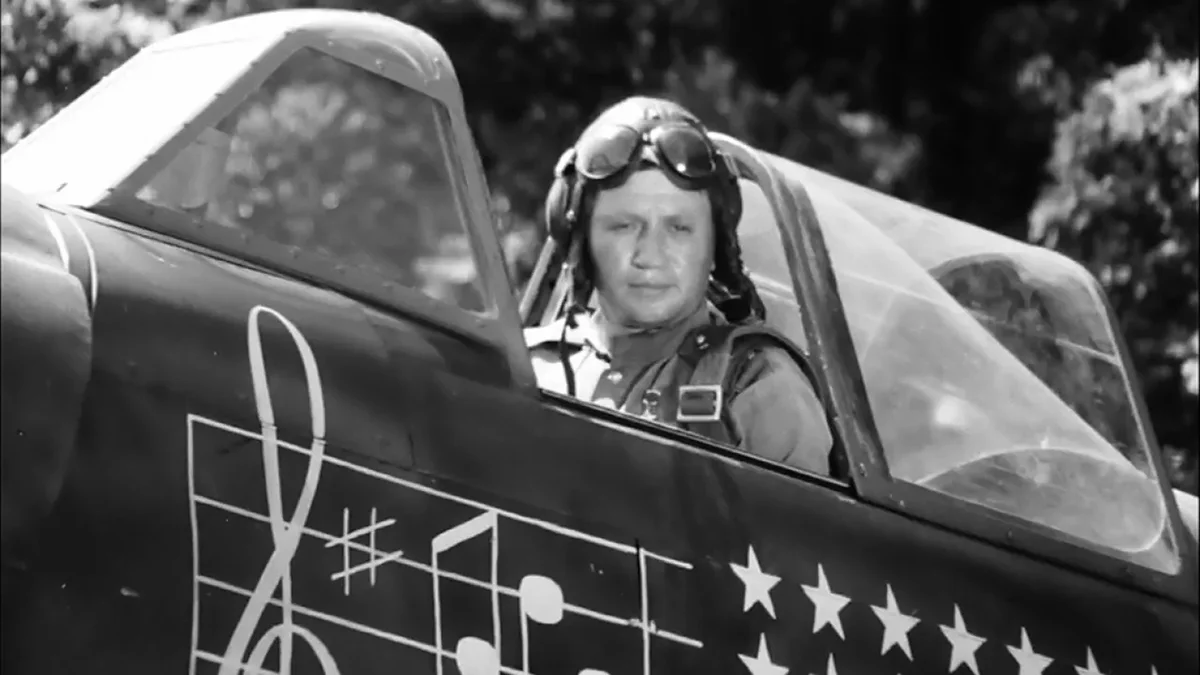
Few people know that Utesov gave our squadron two fighters built with the money earned by his ensemble. In the regiment, it was considered an honorary to make a combat sorting on such an airplane. On one of them, the inscription “Funny guys” was made, on the other our comrades painted the head of the lion. By the way, there is a legend that only the Germans painted animals on their combat vehicles. Ours were also fond of this. For example, I had a tiger’s head on an airplane. And young pilots painted a bristling cat.
As Vitaly Popkov said, the homegrown jazz band was supported in the political department of the army. But they were obliged to give concerts in every liberated city.
So the “Singing Squadron” was born. But the allegations that they met Leonid Bykov and Joseph Kobzon during the war, are not true.
“It happened in the late 60s in Hungary,” Popkov later recalled . - After the war, our aviation part was deployed in this country. In August, a group of artists led by Joseph Kobzon came to our unit on the day of aviation, and with them the figures of the Cinema and the Arts of Ukraine. There was Leonid Bykov among them. He immediately became interested in the history of our unit, went to the Museum of the Air regiment, where he learned about the "singing squadron." Lenya literally attacked the regiment commander with questions that yes, how, he introduced me to Bykov: “Here is a real commander“ singing ”(I then rested with my wife on Lake Balaton, and by the arrival of the artists was called to the unit). We met, Lenya invited me to a restaurant. At first I was stitched, I was not a lot of money after the vacation. But he took on all expenses.
Bykov was very meticulous. He literally knocked out of me the episodes of our military life for the future script of the film. And he admitted then that for a very long time he wanted to make a film about pilots, but there is no good scenario. And here is such an unusual story about the "singing squadron." In fact, the film by Leonid Bykov is an artistic and very true film review about the life of the pilots of our 5th Guards Fighter Aviation Regiment. When we parted, he promised that he would certainly make a film about us. But the film starred without me - I was in service abroad. And work on the tape did not begin immediately, about a couple of years later. In addition, as you know, the film was originally put on the shelf. And I had to take a direct part in that he would be released.
The film "cut" the Inspectorate of the Ministry of Culture of the Ukrainian SSR. The Republican Minister (the film starred at the Dovzhenko film studio in Kyiv) considered that everything stated in the film is a fiction.
“I then served in the Main Inspectorate of the Air Force, as a inspector general came to Kyiv to check the Air Army,” Popkov recalled. -Somehow after work I called Bykov. He was very delighted with my call, offered to meet. It turned out that the film was shot, but the Minister of Culture does not give up the good. I will not talk about all the ups and downs, but it ended that we came to the Bykovo, we came to the Ministry of Culture of Ukraine, met this official and watched the film. I was delighted with what I saw, barely restrained emotions, recalling combat friends and experienced. And the minister (I do not want to give his last name) was unhappy: what kind of film is this, he was indignant, here the pilots die without returning from tasks, and living songs sing. This could not be in the war. I ask the minister if he was in the war. He replies that he was not, but he is still sure that this does not happen in the war. My confessions did not convince him that the prototype of the protagonist is me, the commander of a real singing squadron. Then I had to contact the Deputy Minister of Defense, the Commander -in -Chief of the Air Force Pavel Kutakhov. We were long -standing friends. He is also a fighting pilot, Hero of the Soviet Union, in those years - a deputy of the Supreme Soviet of the USSR. In general, he told him about the film, Kutakhov watched him and was satisfied. But he didn’t have a conversation with the ministry, after which, as Pavel Stepanovich said, he turned above. After some time, the film was nevertheless released, however, some of it was still cut out.
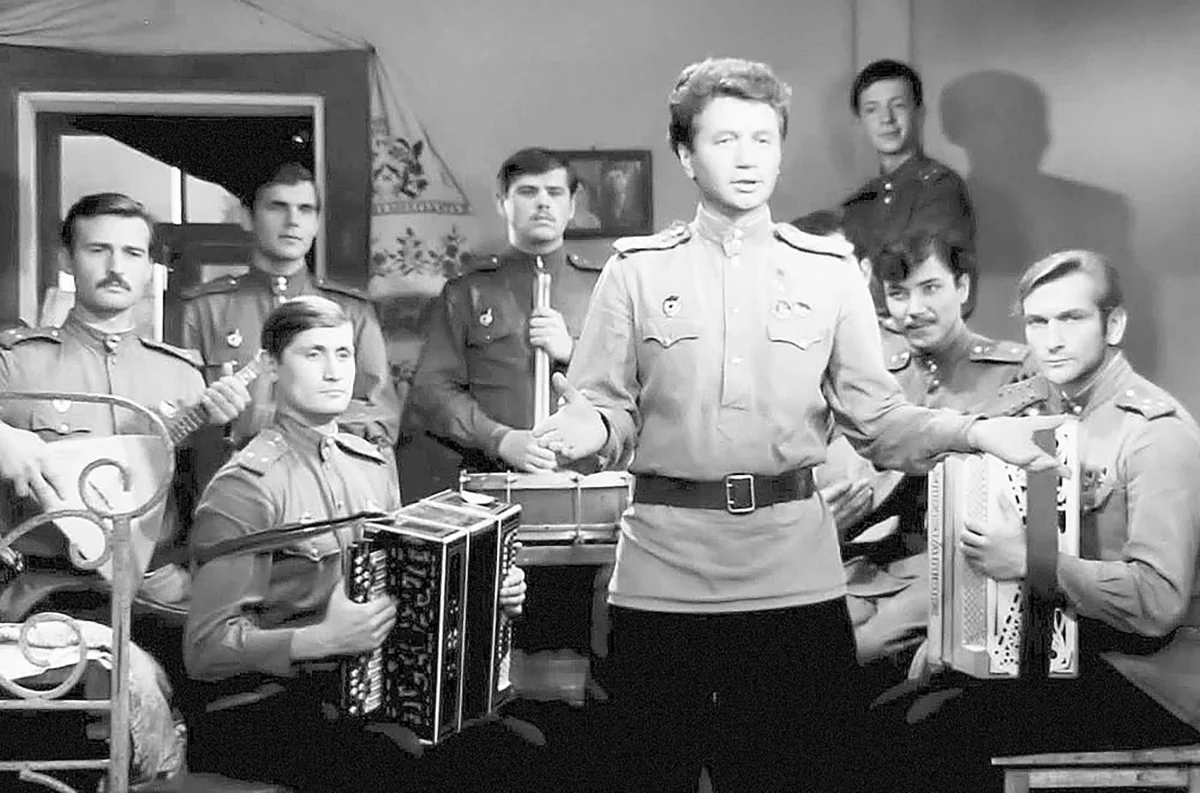
The film “Only the Old Men are going into battle” quickly became the leader of the rental. It was watched by 44.3 million people, which was a complete surprise for Goskino. The idea was instantly born to remove the sequel.
“Bykov was offered to shoot the second part of the picture“ ONE Old Men are going into battle, ”recalled actor Vladimir Talashko (in the film - Captain Skvortsov). “But he said: how will I shoot, if I don’t have a grasshopper, no Juliet, there is no captain Zoe?” Even the legend was already invented that my hero Skvortsov did not break, but got into the concentration camp and fled. But the honesty and decency of Leonid Fedorovich did not allow him to remove the sequel - he understood that this topic could not be specified. Bykov was a special person. Incredible decency, modesty. Even painful, I would say. He blushed at 50 at the age of 50. He knew how to blush at that age!
Until 2022, the film “The Old Men” was shown to battle ”on all Russian TV channels on May 9. But for almost three years now, as cut off. And for the song “Nich Yak Misyachna”, which Captain Skvortsov performs in the film, faces a fine. Already in post -Soviet times, monuments were erected to the heroes of the film: Captain Titarenko in Kyiv and Makarych mechanics in Kharkov.
In 2001, Vitaly Popkov shot down a trolleybus. В больнице он познакомился с доктором медицинских наук, специалистом по болезням летчиков Ниной, которая стала его второй женой. Маэстро летал на истребителях до 1979 года. Дальше — преподавал, защитил диссертацию, стал профессором. В 1968 году сержант Маэстро уже стал генерал-лейтенантом авиации. Из армии уволился в 1989-м. До самой смерти занимался общественной работой. Был вице-президентом Союза офицеров запаса России, вице-президентом фонда «Золотая Звезда», почетным членом Американской национальной организации летчиков «Золотые Орлы», почетным членом Международной ассоциации летчиков-истребителей — участников Второй мировой войны. После смерти на могиле на Новодевичьем кладбище установили памятник — самолет с пропеллером и словами «Будем жить».
И до самой смерти любимой его песней была «Смуглянка».