
Translated material
Instagram or death
Michael Cunningham's new novel “Day” is about a dream, lost time and a deceptive ideal against the background of Pandemia Covid
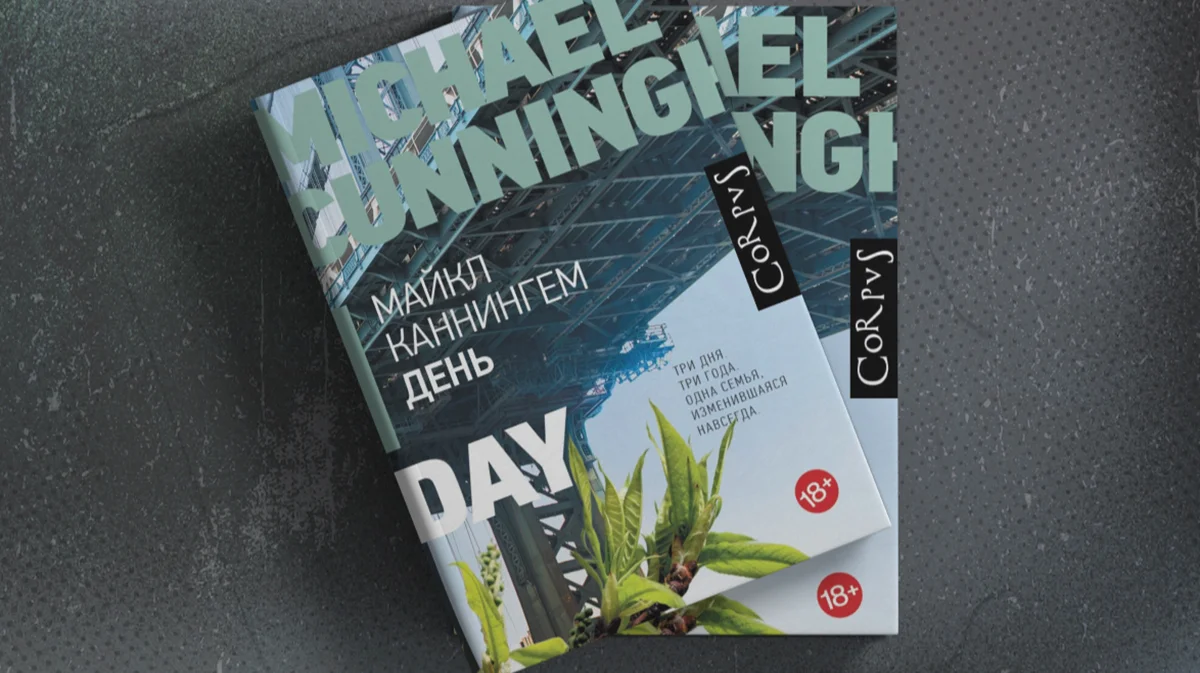
American writer Michael Cunningham became famous at the turn of the millennia, when in 1999 he received the Pulitzer Prize for the novel "Clock". It’s not easy to be his fan-the prose writer works painstakingly and does not please novels often (the previous one came out in 2014). The action of the new book "Day" (Corpus Publishing House) takes place against the backdrop of covid pandemia. And one of the main characters is an invented person who exists only on Instagram. Sorin UREM believes that such relevance helps Canningham to talk about “eternal” topics - dreams, disappointment, the Susynchron of an aging person with a changing world and death.
The events of the book fit a day, however, scattered over the years: morning 04/05/2019, day 05.04.2020, evening 04/05/2021. Under one roof, the old rocker Dan Burn live, over the years from a wild beast, who turned into a home, his wife Isabelle Walker, a fighting career with a caradess, their children - a ruffy Nathan and a fantasist Violet. The soul of the house is the brother Isabelle Robbie, who recently parted with her boyfriend and discovered himself in a middle-aged, unsuccessful and having little chance of arranging his personal life (right in the middle of the Russian edition, a black hole gapes-Corpus was forced to shake one of the most lyrical scenes of the book due to laws against LBBT - approx. Brother Dan, Ex-Lines and artist Gart, look at the heroes, and his girlfriend Ches with the baby Odin. Ches intends to educate a common child alone and constantly repels the Gurt in love, who has matured to the family over the years.
Dissatisfaction unites them all. Dan dreams of reanimating a musical career in order to interest his wife again and achieve his son’s respect. Isabelle is thinking about divorce, but unhappy with work. The printed glossy magazine, on which she spent 10 years of her life, bends, and does not go out to dilute the aging team with juman blood - there are no people who want.
Glossy number for the antediluvian year on the summer shelf. The stretched T -shirt Ramones (Dan is faithful to himself), like Mikhail Gorshenev. The lonely aging womanizer (gart), the seduction techniques of which have long ceased to work. All this is the nature of the book and its main conflict. A vain pursuit of Tesla of our time, not making a discount on sore knees.
The long -formed people who, no matter how puffed up, are not able to jump out of themselves, and they can only be behind the scenes. Cunningham gathered a novel from secondary characters who dreamed of being protagonists.
The book is written. A few hours. Further - a pause per year. For the reader - a moment of an inverted page. But for heroes twisted by vanity, time flies unnoticed. And then suddenly rises to his full height, demonstrating disappointing results. “The transformation apparently took place with elusive gradual,” writes Cunningham about Dan, who really became such from a rocker pretending to be a regular family man. But these words concern all the heroes. The reader, on the other hand, prose writer offers ambiguous results of transformations.
What will Gart and Ches come to? Will Dan be able to write a hit and embody youthful dream? Will they be able to save the family with Isabelle in conditions of self -isolation? Will Robbie retreating his fate retreat on cool changes? But the main events take place inside the heroes, which differently meet the changeable nature of things. Cunningham describes the clock of their life in detail and looks through the little things through a magnifying glass. They are important across the atmosphere of everyday drowsiness - and deeply reflect the characters and attitude of protagonists.
Robbie invents Wulf, a charming 30-year-old guy who confidently building his fate. He works as a pediatrician in a free clinic, rents an apartment with a cute neighbor who has become a friend and travel companion. Wulf knows who he is, where he goes, and knows how to enjoy the moment. Robbie leads his “his” account on Instagram, collecting subscribers and likes. In a beautiful “April” photograph, you can discover blouring autumn leaves, but the audience will not pay attention. The parallel universe of online lives according to other laws, although it convincingly pretends to be the usual world.
Cunningham's virtuality is a reflection of universal problems. When Robbie reports that Wulf is a variation of an older brother invented in childhood, it becomes clear that the illusion is needed to protect. Robbie should soon move out of his sister and is intensively looking for housing - his “fortress”. “Instagram exists outside the spatio-temporal continuum,” the hero thinks. The obsessive idea of Isabelle to escape into the wilderness and change the name (“throw off this life like an old coat”) is the same desire to hide from the power of time and perishable reality. Death is one of the main characters of the “day”, although it does not appear on the stage until the last third of the book. It reminds of herself with water, which constantly seeps into the attic of Robbie, the very autumn leaves in the “April” photo, the aging of the heroes, which have gone out of fashion with hobbies, decaying a family, finally, Pandemia itself.
In this sense, “Day” is a corporate text of Cunningham, which in creativity constantly reflects death.
The new novel is largely similar to the same titled “clock”, but it is definitely not inferior to them in quality and poetry - and looks even more slender.
The glossy images from the magazine Isabelle and the post -free mainstream of Instagram with their inherent cult of youth, static and thorough processing are seductive precisely by their artificiality. This is the illusion of the ideal. The chase of Isabelle for success in the spirit of the “American dream” - the embodiment of the same eternal human desire for a happy and forever stopped moment, the flight from death.
In addition, Robbie reflects that Dan, who believes in an indispensable fair reward for efforts, "chuckling over religion, does not understand how tightly the memory of ancestors-Protestants sits in him." But the ideas of almost all the characters about the world go back to the same American dream that grows from the synthesis of the ideas of education and Protestantism, and the image of a happy, “settled” life suspiciously resembles a Christian paradise. The disappointments with which the heroes face at every step, in general, are inevitable.
Cunningham criticizes the mainstream both for the American and global culture the idea of a difficult path to personal happiness, which allegedly can come once and for all and recoup costs. The idea of the role of hyperinformation online in its distribution in the novel shines, but does not really reveal, although this would add an additional layer. After all, Instagram not only reflects Robbie's aspirations, but also aggressively imposes (an excess of content and the popularity of short, “fast” formats) to him a picture of reality, reinforcing it with the illusion of public opinion (due to the abundance of likes). The pressure of info, overflowing with unimportant samples, only enhances frustration.
Toward the end of the book, Robbie finds himself in the Icelandic wilderness, which turns over his understanding of reality: “For the first time in my life, I fully realize the splendor of this world ... grass, glacier, river and heaven ... Heaven sing. It is only necessary to listen ... reverent, but not prayer [hum], as if God or a goddess sings for himself ... The sky sings, the river flows non -stop to a waterfall of kilometers one and a half from here - this is what is happening, but nothing more ... I stayed with him [time [time. ] alone would not say that he was happy. No, I’m not that unhappy, just here the idea of happiness as a whole seems to be a sweet trifle, a trinket. ”
The flight from death and the captive pursuit of the world for impossible stability Robbi contrasts the dialogue, which are essentially contemplation, research and creativity. An important compositional element - the book begins with the scene where Cunningham shows the house of the heroes through the eyes of the owl. The novel also ends with non-human optics (mixing Isabelle and furniture in the room; not pushing the house from the landscape). The ability to switch to such “natural” vision stems from the adoption of mortality - the necessary condition for inclusion in the dialogue with the world. Then, perhaps, it will turn out to do without the dominant ideal images that obscure reality from a person and will certainly disappoint.