
Translated material
"These are not negotiations, but extortion"
The United States proposed to Ukraine three options for a transaction on natural resources. The latter is “catastrophic”, writes The Economist
Listen to the audio version of this text on "Radio Medusa"
Since the beginning of negotiations on the conclusion of an employment agreement , Washington offered Kiev three options for the transaction: “bad”, “the best [of the proposed]”, as well as “catastrophic,” the article of The Economist magazine said. The publication calls the deal "a proposal that Ukraine cannot refuse."
According to Ukrainian sources of The Economist journalists, the idea of a transaction arose in the Ukrainian side in September 2024. Then the President of Ukraine Volodymyr Zelensky proposed granting the United States the rights to mining in exchange for future assistance in ensuring security and invitation to NATO. However, US President Donald Trump turned this idea upside down, demanding the resources and infrastructure of Ukraine as compensation for the help that Washington had already provided to Kyiv.
According to the interlocutors of the publication, since the negotiations, Ukrainian officials met with three groups of replacing each other negotiators from the United States, each of whom promoted its version of the transaction.
So, the first , “bad” version of the transaction on February 12, Zelensky was presented by the head of the US Treasury Ministry of Finance Scott Immort. According to Financial Times, the American minister demanded that the President of Ukraine sign an agreement with the requirement to compensate the United States $ 500 billion due to the natural resources “here and now”. Zelensky, said in the article of the publication, “was very angry” in negotiations with Besent.
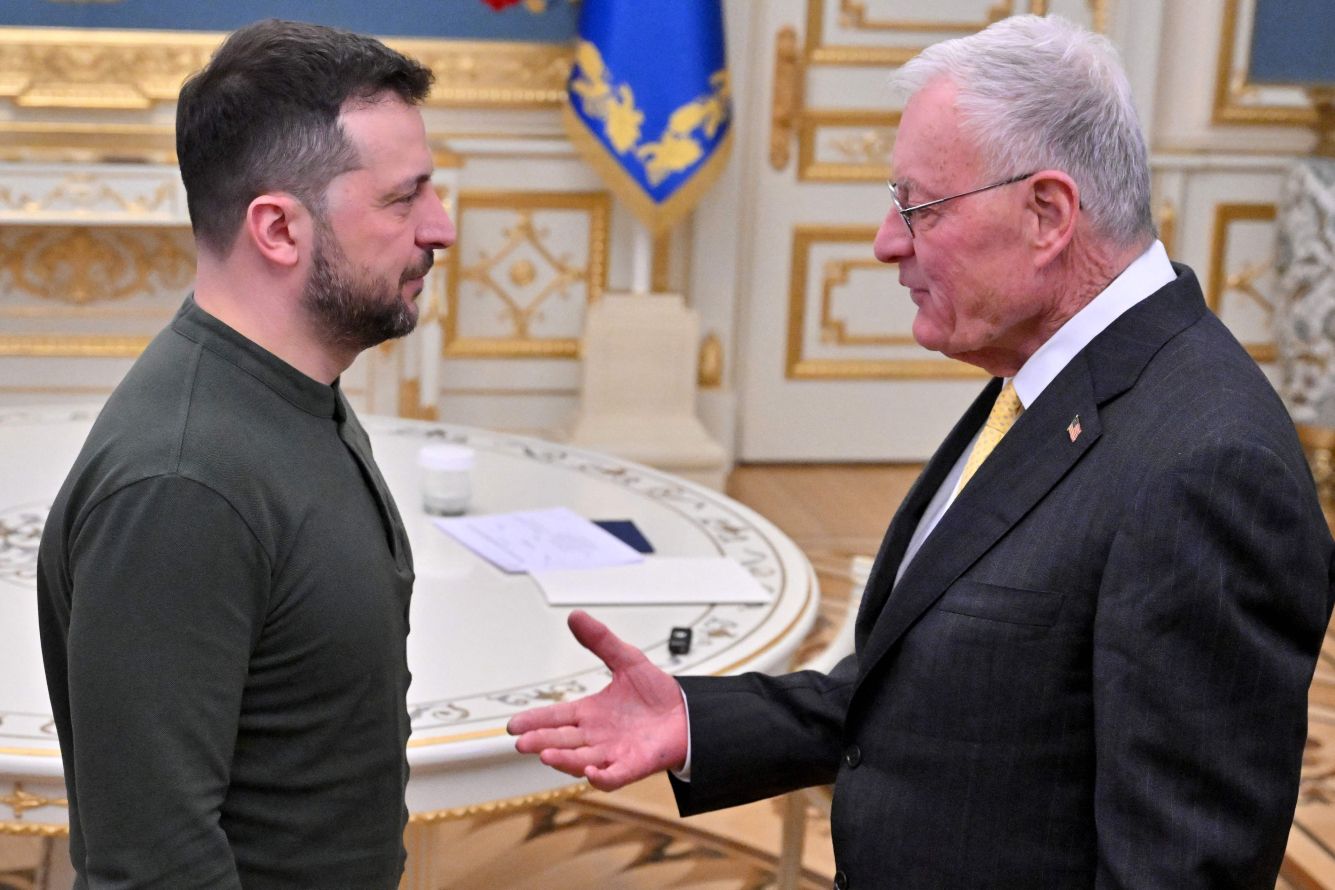
The second version of the transaction-“the best [of the proposed]”-the Ukrainian side was presented by the special Supervisor of Trump in Ukraine and Russia Kit Kellog and vice-president Jay Di Wence at the Munich Security Conference. Like the first version, according to The Economist, the second did not contain promises to help Ukraine with defense, except for the paragraph of the protection of resources obtained by the United States. But, as a source in the Ukrainian government noted, in the second version "there was no such obvious attempt to present this as a payment of imaginary duty."
In response to the second option, Ukraine made a counter proposal , the essence of which The Economist does not disclose. However, on February 20, Kyiv was “dumbfounded” by the third, “catastrophic” version of the agreement, behind which the US Minister of Trade Howard Latnik is standing. “Ukraine said that it is necessary to forget about all previous negotiations and get used to the thought of transferring resources in return for small benefits. Agree or leave - and lose the war, ”writes The Economist.
According to this version, the United States requires Ukraine to transfer 50% of future state revenues from natural resources and infrastructure, including ports, to the new investment fund owned by the US government. Contributions to this fund will continue until the total amount of the fund reaches $ 500 billion. “[This amount] corresponds to Trump's highly high statements about how much America spent on the aid of Ukraine since the beginning of the war. With current levels of state revenues, this will take hundreds of years, ”notes The Economist. One of the Ukrainian officials, who talked with the publication, noted: “If we sign it in our current form, tomorrow we will be thrown out of the office and we are linked by an angry crowd.”
Ukrainian sources of the publication deny that negotiations by agreement have come to a dead end. However, according to them, it is not always clear which of the three negotiation groups they should talk. The US Department of Finance insisted that he was responsible for negotiations, even when Kyiv was presented with a version of the Latnik agreement. In general, according to Ukrainian officials, the meetings of the representatives of Ukraine with the Trump team are so confused that they began to watch documentaries in search of tips on the style of negotiations with the US president.
At the same time, Ukrainians are afraid that if they accept the last proposal, they will push Vance. They would prefer to return to the “more fair” project of the transaction, submitted by the US Vice President and Trump’s special bearer. “Then we had real, productive negotiations and we moved to the agreement,” Ukrainian interlocutors of journalists said.
Ukrainian sources of The Economist suggest that the “catastrophic” version of the agreement was proposed by Kyiv “as a punishment” for the fact that he rejected the previous options for the transaction. “As soon as he [Trump] saw that we did not agree with Wans and Kelllog, he sent a very high -ranking guy who operates only with numbers, without emotion and sympathy,” said one of the interlocutors of journalists in Ukraine. According to him, implicit threats were expressed by the Ukrainian side with a patronizing tone: “The Americans said: this is a love of agreement. We care about you, but you do not want problems. ”
Another problem of negotiations between Ukraine and the USA is that the goals of the joint investment fund are completely unclear, writes The Economist. In the first version, it was reported that the fund will only claim state revenues received by Ukraine from resources, and finance the long -term restoration of the country after the war. In the third draft of the transaction, Ukrainian sources of the magazine say, the United States want to have the right to own assets and investments, which is more like a seizure than an investment agreement.
On February 23, Zelensky said that he would not sign an agreement by which Ukraine will be $ 500 billion $ 500 billion. According to him, he does not consider Washington's help to Kyiv duty. The President of Ukraine also noted that the parties are moving in negotiations with the United States and the transaction does not include the condition on 500 billion.
According to The Economist, the discussion of the transaction parameters continues. One of the Ukrainian officials in an interview with the publication noted that this is "not negotiations, but extortion." The other called them "rude", but he added, "this is not the worst that could be." “Everything else that happens later will be worse,” the source said.
In Kyiv, fears are growing that in response to the next refusal to sign the draft agreement, the United States may try to deprive Ukraine of military support, disconnect Starlink’s satellite communication system or accelerate bilateral negotiations with Vladimir Putin.
Ukraine and the United States are at the final stage of negotiations under an agreement on natural resources, Olga Stefanishina, Deputy Prime Minister of Ukraine, said on February 24. According to her, the negotiations "were very constructive" and "almost all key details have already been agreed." “We strive to complete them as quickly as possible to move on to signing the agreement. We hope that the leaders of the United States and Ukraine will be able to sign and approve it in Washington as quickly as possible to demonstrate our obligations for decades, ”added Stephanina.