
Translated material
UN Security Council resolution on Ukraine: the war is called a “conflict”
Resolutions adopted by the General Assembly are more stringent
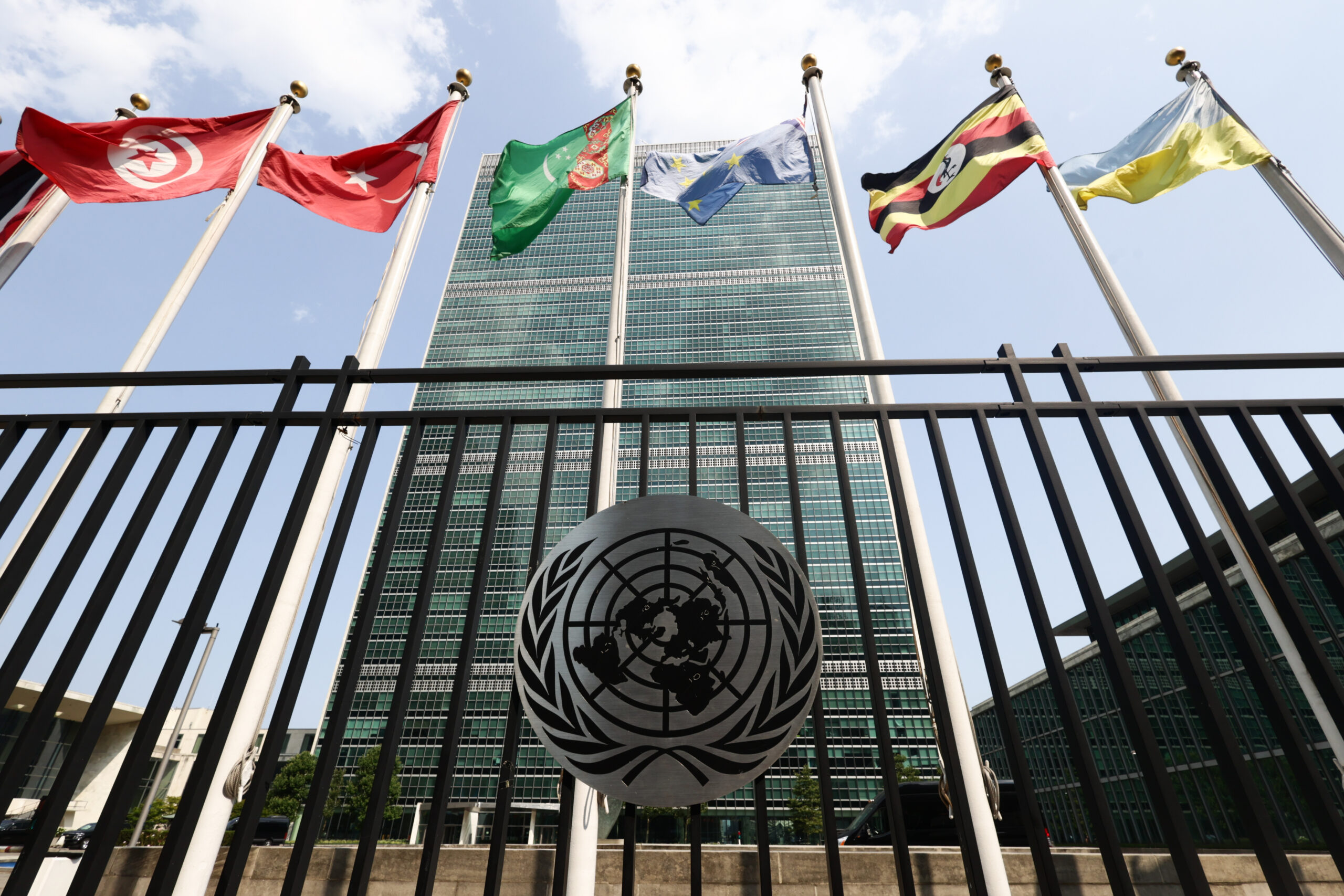
On the third anniversary of Russia's full-scale invasion of Ukraine, the UN adopted three resolutions at once. Two of them were first supported by the General Assembly: one was proposed by Ukraine and European countries and contains a call for Russia to withdraw its troops, the second was prepared by the United States, but with amendments from the European Union. The third resolution - the original American version - was adopted by the UN Security Council.
In order not to miss new texts from “Layout”, subscribe to our telegram channel
Resolution from Ukraine and the EU - a demand for Russia to withdraw troops
The resolution, proposed by Ukraine and European countries, calls for “de-escalation, an early cessation of hostilities and a peaceful resolution to the war against Ukraine, marked by enormous destruction and human suffering, including among civilians.” The text of the resolution also refers to Russian aggression against Ukraine and demands that Russia withdraw its troops and stop attacks on civilians, as well as on civilian objects and critical energy infrastructure.
Ukraine and Europe also talk about the need to hold the Russian side accountable through an independent investigation and “prosecution at the national or international level.”
The resolution proposed by the United States contained nothing about Russian aggression
The original version of the American resolution, entitled “The Path to Peace,” called the war a “conflict” and made no mention of Russian aggression or called for recognition of Ukraine’s territorial integrity. The US calls for an “immediate end to the conflict” and the establishment of “lasting peace between Ukraine and Russia.” It also expresses “condolences for the tragic loss of life during the conflict between the Russian Federation and Ukraine” and emphasizes that the main goal of the UN is “the maintenance of international peace and security and the peaceful resolution of disputes.”
European countries proposed three amendments: replacing the word “conflict” with “full-scale invasion”, adding a sentence that the UN is committed to “the sovereignty, independence, unity and territorial integrity of Ukraine within its internationally recognized borders, including its territorial waters”, and replacing the words about “durable peace” with the words “a just, lasting and comprehensive peace between Ukraine” and Russia in accordance with the UN Charter and the principles of sovereign equality and territorial integrity of states.” Representatives of Russia proposed continuing the phrase “immediately end the conflict” with the words “including by eliminating its root causes.” The General Assembly rejected the Russian amendment, while it supported all three European ones.
In order not to miss new texts from “Layout”, subscribe to our telegram channel
93 countries voted for the Ukrainian resolution, 65 abstained from voting, and 18 voted against, including Russia, North Korea, Belarus, Hungary, Israel and the United States. 93 countries voted for the amended American resolution, 73 abstained, and eight were against. In the second case, Russia again voted against, but the United States abstained from voting.
One of those who supported the Ukrainian resolution was Serbia. Later, the country's President Aleksandar Vucic said that this was done “by mistake” and that in fact Serbia should have abstained.
“I think Serbia made a mistake today. I apologize to the citizens of Serbia for this and take the blame for this on myself. <…> As for the American resolution, we voted exactly as we should have, we abstained. In my opinion, we should have abstained from the European resolution as well,” Vucic said. He explained the “mistake” by saying that, due to his heavy workload, he did not have time to deal with the resolution prepared by Europe and Ukraine.
In response to this, the press secretary of Russian President Vladimir Putin, Dmitry Peskov , said that the Kremlin “certainly heard, certainly accepted” Vucic’s apology. “Indeed, technical errors do occur. And of course, we are very impressed by such a prompt reaction from the head of state,” Peskov said.
The Security Council adopted the original American resolution
After voting in the General Assembly, the United States was able to pass its “neutral” resolution to the UN Security Council. This time, none of the amendments passed: they either did not get the required number of votes, or Russia vetoed them. The original version was supported by Russia, as well as nine other countries, five countries - Great Britain, France, Denmark, Greece and Slovenia - abstained. In total, the Security Council includes 15 states, there were no votes against.
“[This is] a historical statement that looks to the future, not the past. A resolution focused on one simple idea: ending the war,” said acting US Ambassador to the UN Dorothy Shea.
The official representative of the Russian Foreign Ministry, Maria Zakharova, pointed out that France and Great Britain, which have the right of veto in the Security Council, did not want to use it, and therefore this resolution “without condemning Russia, with a call for peace, sets the right framework” and has an advantage over the General Assembly resolution. Der Spiegel recalls that France and the UK have not used their veto power since 1989.
The UN Security Council adopted the first resolution on the war in Ukraine only on the third anniversary of the full-scale invasion
This is the first resolution on a full-scale war between Russia and Ukraine adopted by the Security Council in the three years that it has been going on. Before this, all attempts to adopt any resolutions were blocked by Russia, a permanent member of the Security Council with the right of veto.
Resolutions condemning Russian aggression were adopted only by the General Assembly, in which no one has the right of veto.
At the same time, resolutions of the UN General Assembly are advisory in nature, and resolutions of the Security Council are mandatory for implementation by all UN member states (although in reality they are not always implemented). The Security Council can impose sanctions, approve military actions and take measures to maintain international peace and security. The General Assembly only expresses the opinion of the world community, but cannot directly force states to implement their decisions.
Let us remind you that earlier “Layout” talked about the peace plans that different countries proposed to end the war in Ukraine . We also wrote that informal contacts are already taking place between Russians and Ukrainians about achieving a truce.
Photo: UN building in New York. Jakub Porzycki/NurPhoto via Reuters
Support “Vestka” - it’s important and safe →