
Translated material
"I will write about your film, but so as not to be imprisoned"
Film critic Ekaterina Barabash lives in Russia and openly opens against war. Now she is under house arrest
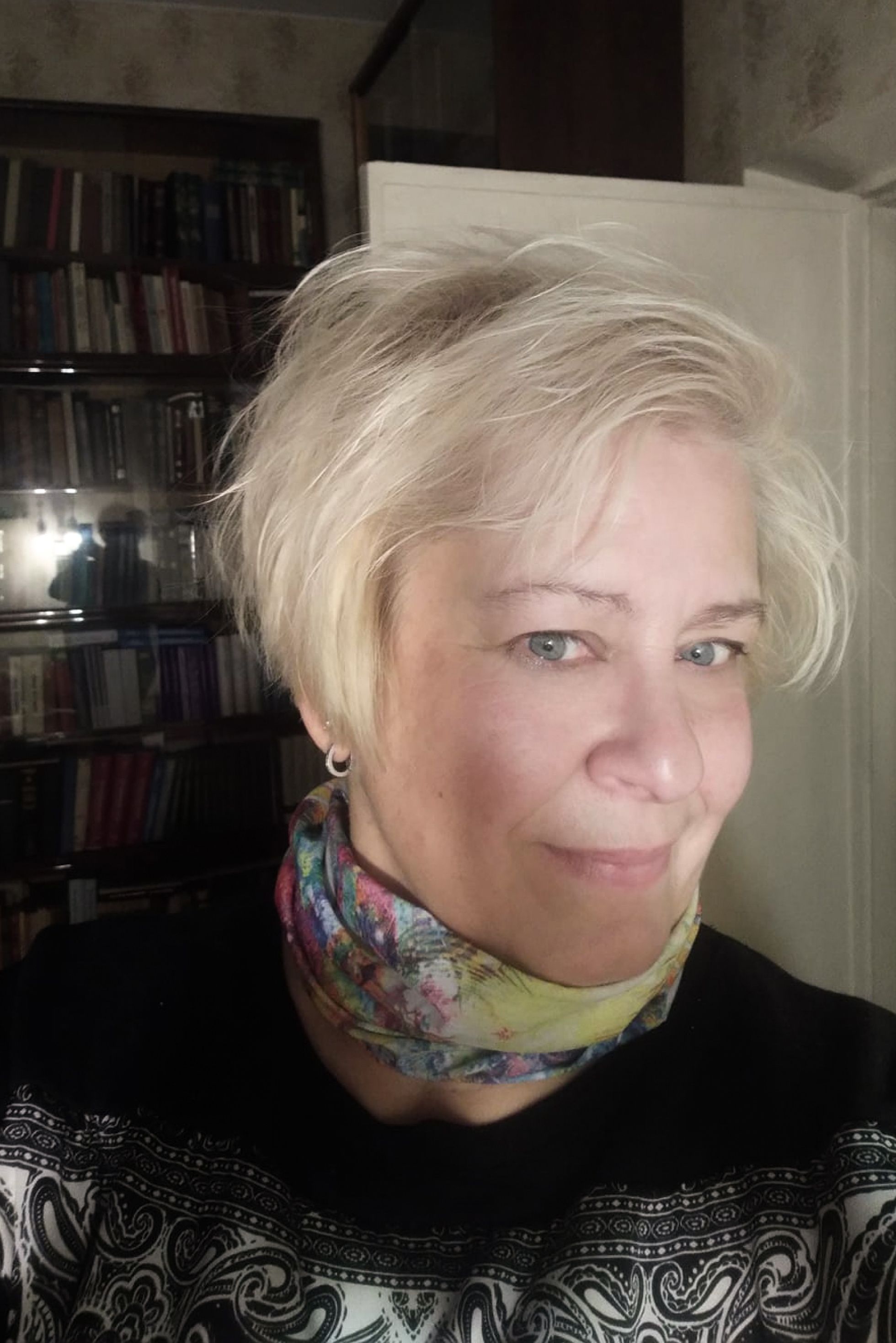
The court sent film critics to Catherine Barabash under house arrest until April 25. Barabash and her whole family - from Ukraine; The journalist remained in Russia because of older parents, but did not hide her anti-war position either in social networks or in the texts for Republic. We talk about her work and beliefs.
“Bastards-they see, you need Ukraine-di-round, Ukraine is a good neighbor. Therefore, you have risen on someone else's land with your tanks, beeters and future glare in uniform and with machine guns? Therefore, you, the creatures, bombed the country, smashed entire cities with the ground, killed a hundred children, shoot just peaceful people, keep Mariupol in the blockade, deprived millions of people forced to leave for foreign countries? For the sake of friendship with Ukraine? "
This is the first of the four posts of Catherine Catherine Barabash on Facebook, because of which a criminal case was opened on her. The journalist is accused of spreading "fakes" about the Russian army. She was detained in Moscow on February 25, she spent the night in a temporary detention center. Today, Dorogomilovsky District Court sent Barabash under house arrest until April 25.
“Katya Barabash I know and read, it seems, all a conscious life,” Khonkocritic Anton Dolin told Medusa. - She has a wonderful syllable and a clear mind - the two best, most important properties for a journalist and critic. Of course, in half the cases, we categorically disagree on all issues of aesthetic property, but in ethically there have never been any discrepancies. In general, in the domestic departure of film critics, decency is not considered a priority either for the shooter or the writer. And Katya was always important, not only “how” the movie was made, but also what and to whom it reports. Perhaps that is why it was and remained on its own: honesty and sequence above all. If in one word to define a drum as a person and as an author, then this is “independence”. A rare quality that, one must think, has made a completely peaceful profession of Katya risky. ”
Barabash was born in 1960 in Kharkov, in a family of philologists, but almost immediately moved with her parents to Moscow - her father, a famous critic and researcher of Ukrainian literature Yuri Barabash, became deputy chief editor in the Literary Newspaper. The journalist still connects a lot with Ukraine: she speaks the Ukrainian language, until a full-scale war collaborated with the magazine “Ukrainian Tizhenya” (“Ukrainian Week”). Her son, also Yuri, lives in Kyiv with his family.
In different years, Barabash wrote for Rossiy newspaper, independent newspaper, Forbes. From 2011 to 2016, she was the observer of the Interfax news agency, where she analyzed cinema and cultural life from a distinctly opposition position. For example, how she described the policy of the Russian Ministry of Culture under Vladimir Medinsky: “The attitude of the authorities to culture and cinema in particular - what to the call girl: we are money - you perform all our whims.”
In 2016, the drum was fired from Interfax. According to the journalist herself, this happened because she publicly criticized the Russian authorities, and also supported Ukraine and Maidan. Barabash recalled that one of the leaders asked her a direct question: “What is more expensive for you, your freedom of speech or work in Interfax?”
Two years later, she bitterly wrote on Facebook that during the dismissal she did not have enough support for the professional community. “My native guild of film critics did not react - they say, hands off our Katya. Not a single liberal publication extended my hand to my help, did not make a defiantly beautiful gesture - like, you are so with her, and we will pick it up, and come, Katya, to work for us. ”
After Interfax, Barabash collaborated as a freelance author with different media - such as, for example, the site “Such things” and the Russian Service of International French Radio (RFI). Since March 2022, she regularly writes about cinema, series and theater for the publication of Republic. Its first material, published there, is a column on the reaction of Russians to a full -scale war; She came out with the subtitle "Russian intelligentsia does not want to consider herself involved in the tragedy." “The main question in intellectual circles today is no, not“ who is to blame? ” or “What to do?” “But“ I have to do with it? ”-the journalist reasoned.
Barabash writes very often - only in 2025, 16 of its texts reached the Republic. At the same time, she admits Facebook that she does not always understand why cultural journalism is needed during the war: “I don’t know how to write about cinema, about the theater, about traveling when children's bodies are extracted in Kiev when someone’s parents sob daily.” She talks about the war extremely straight, while remaining in Russia. The journalist takes care of the 96-year-old mother; Her father died on November 28, 2024 at the age of 93.
“Mom went to the 97th year,” Barabash wrote on February 23, two days before her detention. - I see how she does not want to live without a dad, and now I have one main task: to prove to her that she is obliged to live for two. For the sake of this every minute proof, I myself live. "
The journalist has just returned from Germany: she illuminated Berlinale for Republic. According to her colleagues from this publication, the drum was held for three hours at border control at the Russian airport. In recent months, she has been detained more than once on the border due to the place of birth in the passport. She talked about one of these episodes in November last year. “I asked the escort:“ What do you like in me so much? ” - “You have the birthplace of hmm ... that.” “I was born in the Soviet Union,” I reminded proudly. “Yes, but still in Ukraine,” the escort answered a little sorrowfully. ”
Documentary Vitaly Mansky, who participated in Berlinal with the film “Foundation” about Lviv during the war, described on Facebook his meeting with a drum at the festival: “When they parted, she almost shouted after your film, but so that they do not imprison”.
The text of the drum about the “Foundation of Time” and another documentary about Ukraine in the Berlinal program - the “Time of Time” by Katerina Erma - was released on February 21. “Probably, the film would have turned out to be different, Vitaly did not decide to stand up to the camera,” she wrote about the work of Mansky. “But Lviv is his homeland, and he takes it off, as it can only shoot a person in love with his city forever, for whom this war is not just a bloody terrible crime, but also a gradual sadistic murder of all the most expensive that is in life.”
"Jellyfish"