
Translated material
No more in IT
The industry is experiencing a stage of large abbreviations: both people and investments. Because it's not up to miracles
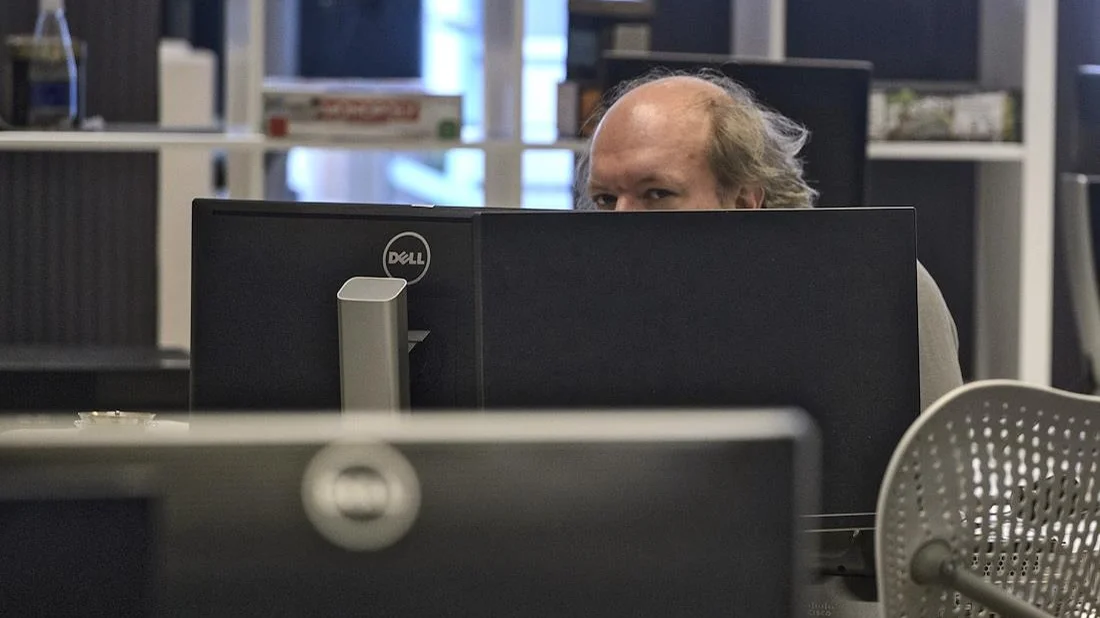
Photo: Dmitry Azarov / Kommersant
The Russian IT sector is experiencing large abbreviations. Sber, VK and others dump “ballast” with might and main and reduce staff. The FORK-Tech integrator indicates a 20% market reduction by the end of the year. The sphere, which until recently seemed the most promising, begins to collapse. ITSHNIK is no longer an elite.
At the time of some next financial crisis, an anecdote appeared in Russia: "Who are you?" -"Top managers." - "Come out of here." -Top-top-top. "
We are waiting for the current version about ITSHNIKOV.
Since the mass spread of the Internet, the market in a wide sense has experienced several jumps. At first, ITSHNIKHNIKS were considered system administrators and site designers on popular content management systems. The programmer was a rare occurrence. And even if in this category there were completely different entities, in the eyes of the layman - this is the one who can configure the computer.
The popularity of "classmates" and the appearance of VKontakte gave rise to a boom in social networks. What gave investments - everyone wanted to repeat phenomenal success and jump into the last car.
Everyone tried to do their social services - from Google and Yandex to unknown companies. Attempts to build worthy competitors failed endlessly, but in one way or another were accompanied by a stream of investment that seemed endless.
In addition to the development, new services gave rise to new professions. Type of managers involved in social networks. Advertising networks - targetologists. And so on. Since the Internet climbed into all spheres of life, representatives of very different specialties could reckon themselves to ITSHNIKS. A lot of industries appeared inside the Internet. From Gamdev (game developers that not only programmers, but also designers and writers) work on advertisers: hybrid advertising companies are also IT.
Further - more. Mass services with high loads, big data, video hosting transforming into online cinemas. Messengers. And communication services. Endless B2B products. From the enterprise management systems to the automation of the first line of support. Smart devices. All that you use at home or at work somehow concerns modern technologies.
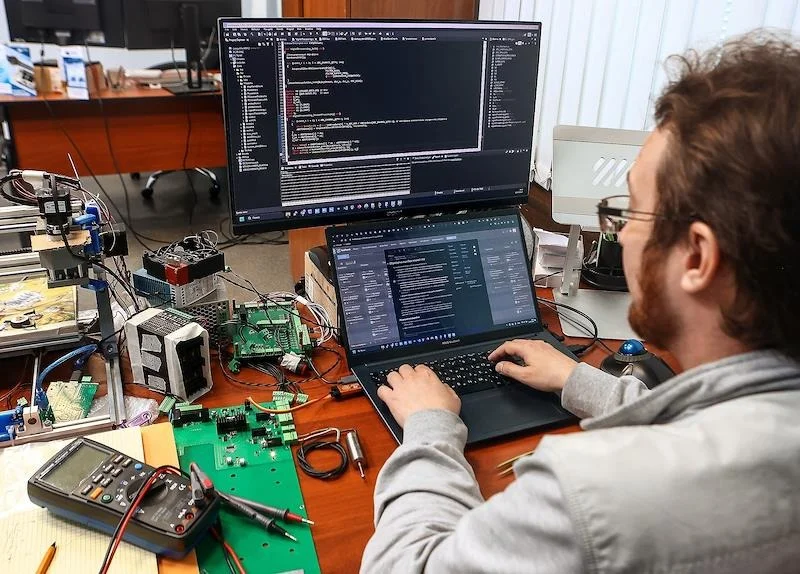
To understand that it is not only programmers, just look at the structure of the abstract business. Programmers - they are different. The part is programmed by the "muzzle"-front-end, part-invisible to users of the backing end. All this happens on the servers that someone sets up. These people need to lead, set them tasks, write technical specifications. These are all separate professions. All this farm should somehow look and make sense. And here one person cannot be bypassed. Product managers, interface experts. And this is also not the end. Everyone needs to pay a salary and think about how to beat off costs. So, including a cleaning lady and office manager, a small IT company is 50 people whose content costs a penny.
But what about endless startups that five people make? All of them use public infrastructure - from cloud services to the development media, on which, in turn, thousands work.
All of the above (and the list is far from complete) is people and money. The latter are not only the sky -high figures of venture and institutional funds, but also the internal money of companies. Even if you are selling shawarma, you have expenses for it. And the less business, the more carefully you weigh, what to spend on and how to return them. It’s easier with large companies: a million there, a million here, it didn’t work out here-they wrote off at losses and forgot (if, however, there is no matter of survival).
If the first boom in the industry was based on private investments that are strict to spend, the state of the state began to spoil the clearing. Endless injections into no one needed projects warmed up the market, shopping companies close to the state, and gave rise to a whole direction of business: “Create a company and sell“ Substance ”. All this created jobs and flooded the market with money. In some places there was exhaust - there were a lot of convenient and good services in the country. But crazy money tends to end.
Now about people. It is clear that such injections required a stream of personnel. The request coincided with the growth of the popularity of online education, and all these services with endless courses are also an IT infrastructure that someone created. The promises of the Golden Mountains and endless happiness were rained from commercials. Learn Pyton for a month or become a designer for two and get a fabulous salary, employment is guaranteed. The factories are standing - only ITSHNIKES in the country. But this story had two sides of the coin. On the one hand, worthy education schemes allowed many to get a profession and work - in the mass of companies there were tasks for which specialists of this type were required. From writing plugins for existing services to drawing buttons. On the other hand, miracles still do not happen. And the list of positions of younger personnel is not endless, and not to become a professional in a short time.
In theory, the scheme, of course, is working. We are increasingly plunging into virtual reality, more and more processes go into digital space, this leads to the emergence of new jobs, new professions and to an endless stream of investment, the direction of which changes with current trends. Yes, old specialties disappear:
The cashier replaces the self -service terminal, the courier - the robot, the taxi driver - the autopilot. But these pieces of iron generate a good margin, and you can retrain, compensate and so on for surrender.
In practice, as always, it is more difficult. Returning to the money - ultimately for a banquet pays the consumer of these endless services. Some for the subscription, some for the service. Maybe he doesn’t pay, but he looks at advertising. And the advertiser hopes that a penny was lying around in the spectator's wallet. It is impossible to subsidize and make discounts forever. The same story with business. The integration of some complex system needs money so that it pays for herself-sales are needed. There are no prospects - no investment, no development. You do not have to be an economist to understand: the fall of welfare begins to ruin many chains and business processes. The less you spend in the store, the less the developer of the logistics system will receive. And he will also spend less in the store.
With people involved in the IT industry, a similar story. Without touching the fashionable theory that specialty of the type of younger programmer, designer or copywriter today successfully replaces artificial intelligence, at the moment when the market is blown away, companies begin to cut the bones - and all the optional, unobvious, not bringing money here and now falls under the knife . There are no funds for development, there are no funds for experiments. The task is to survive and not fall. Despite the fact that the possibility-both financial and technical-normally pay the conditional ChatGPT or Photoshop or deliver some server of the last model also does not cause joy.
The Internet, the IT industry seemed a miracle due to the rapid growth and interest in the sphere. At some point, the IT-Schools were talked about as a separate caste: still, a sought-after, highly paid and non-banal profession. But if the country is experiencing an economic crisis, not to miracles, and everyone quickly begins to feel. Even those who recently considered themselves elect.