
Translated material
Such a contemporary
Tabakova Theater presented a performance about his own “contemporary”: pure propaganda in the theater in pure
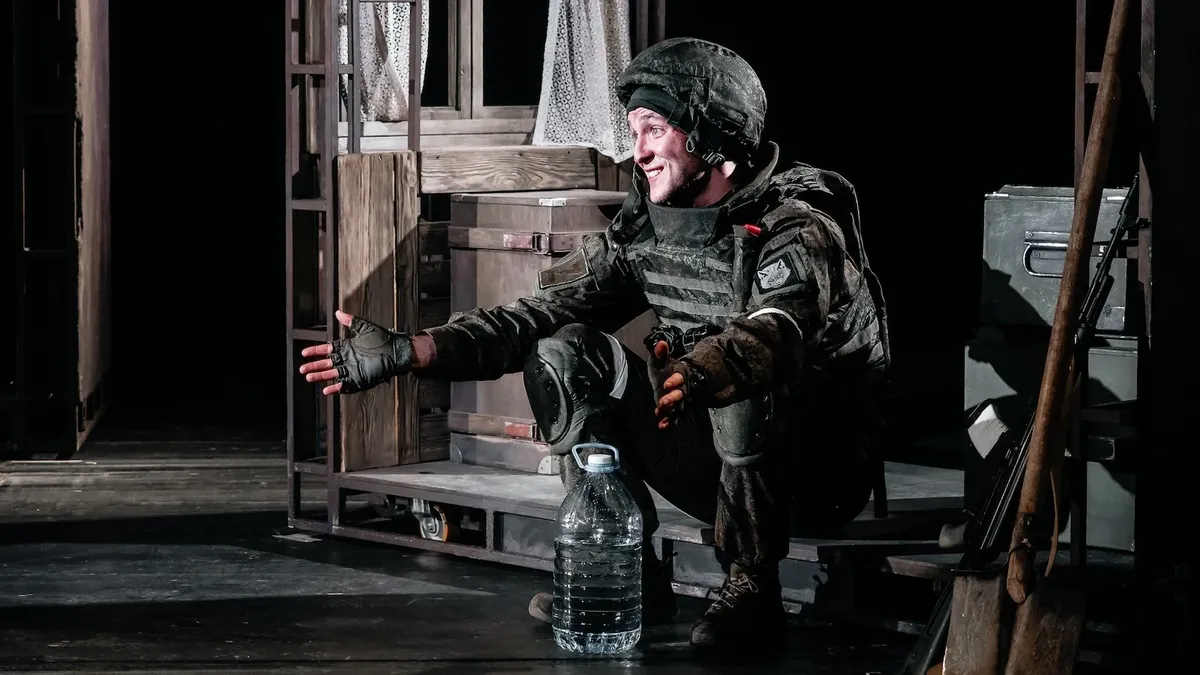
The scene from the play "Call Silence". Photo: Tabakov.ru
The theater of Oleg Tabakov, both scenes of which are closed for repairs, has been playing its performances since the beginning of the season (although usually such the theaters-spectators move to the palace on Yauza). The Tabakerka also represents its new performances in “Contemporary” - and in these premieres it involves the artists of both troupes. All this is adjusted to the project “That“ Contemporary ”. Although how “contemporary” with the advent of Vladimir Mashkov is the question is open.
On February 22 and 23, the first joint work of two theaters was presented on another scene of “Contemporary” - a performance about their call sign. Officially, this is the premiere of "Snufflery", but with the artist of "Contemporary" Nikolai Klyamchuk in the title role.
“This is a monologue, based on the story of a real person, our contemporary,” the production says. “Our contemporary”, which is discussed in the play, is the volunteer Artem. The genre of the performance was designated as “Documentary Drama”, since the stories of a real person who went to a special operation of his own will - Artem Vasilyuk became the basis of the production. In the final, we will see him in real photographs that are related to the events of the performance.
The play for the premiere was specially written by Oleg Antonov - it has a Tabakov Theater since 2023. With the appointment of Vladimir Mashkov, Antonov began to manage the Little Technical Union in the “Contemporary”, and there the theater congratulated him on his birthday as his inflated on February 20. Together with Sevastyan Smysnikov, for whom the “call sign” became a directorial debut, Oleg Antonov traveled to Tauridu.Art, where the Laboratory “Actual Drama of a Special Military Operation” was held. “In total, 12 plays were written in the laboratory, according to which performances were staged in 12 theaters of Russia as part of the project“ Own. Unreliable stories. " The productions were supported by the Presidential Fund of Cultural Initiatives, ”the performance press release says.
The Call Silence was one of the first performances in Moscow about him. And he released his theater, which was one of the first, at the end of March 2022, posted a huge letter Z. on his facade.
Then, the “Tabakerka” noted that the initiative of such a “rebranding” belongs to Vladimir Mashkov. He suggested Sevastyan Smyshnikov to go to Taurida with Oleg Antonov in order to gain material for the performance.
“The guys - Sevastian Smyschnikov and Oleg Antonov - met with participants in a special military operation, in particular with Artem Vasilyuk. He somehow very sincerely began to talk about his life. I met him too. This is an amazingly sincere, open guy, ”said Vladimir Mashkov at a press conference, which was arranged before the“ call sign ”press scraise.
I must say that not every premiere on the big stage collects as many journalists and television cameras as this one on a small one. But here the topic of the performance obliges, and the level of speakers - except for Smysnikov and Mashkov, as much as the whole deputy minister of culture of the Russian Federation Sergey Pershin, who talked about the cultural policy of the country in the field of his: from the creation of films, performances and music to the preparation of conditions for returning fighters.
“When the country changes, culture changes. Here is a special military operation became the point of restarting our industry. There is no doubt that soon our fighters will return home, and it is important for us to help them return to a peaceful life. It is important for us that the era of courage is replaced by the era of creation. We are obliged not only to meet them, but also to create the conditions thanks to which they can find themselves, ”the Tabakerka press service quoted Pershina.
After the press order of the journalists, not only the participants in the performance were waiting for the journalists, but also the participants of his, who were ready to share their impressions of the production and answer questions about the “special operation”.
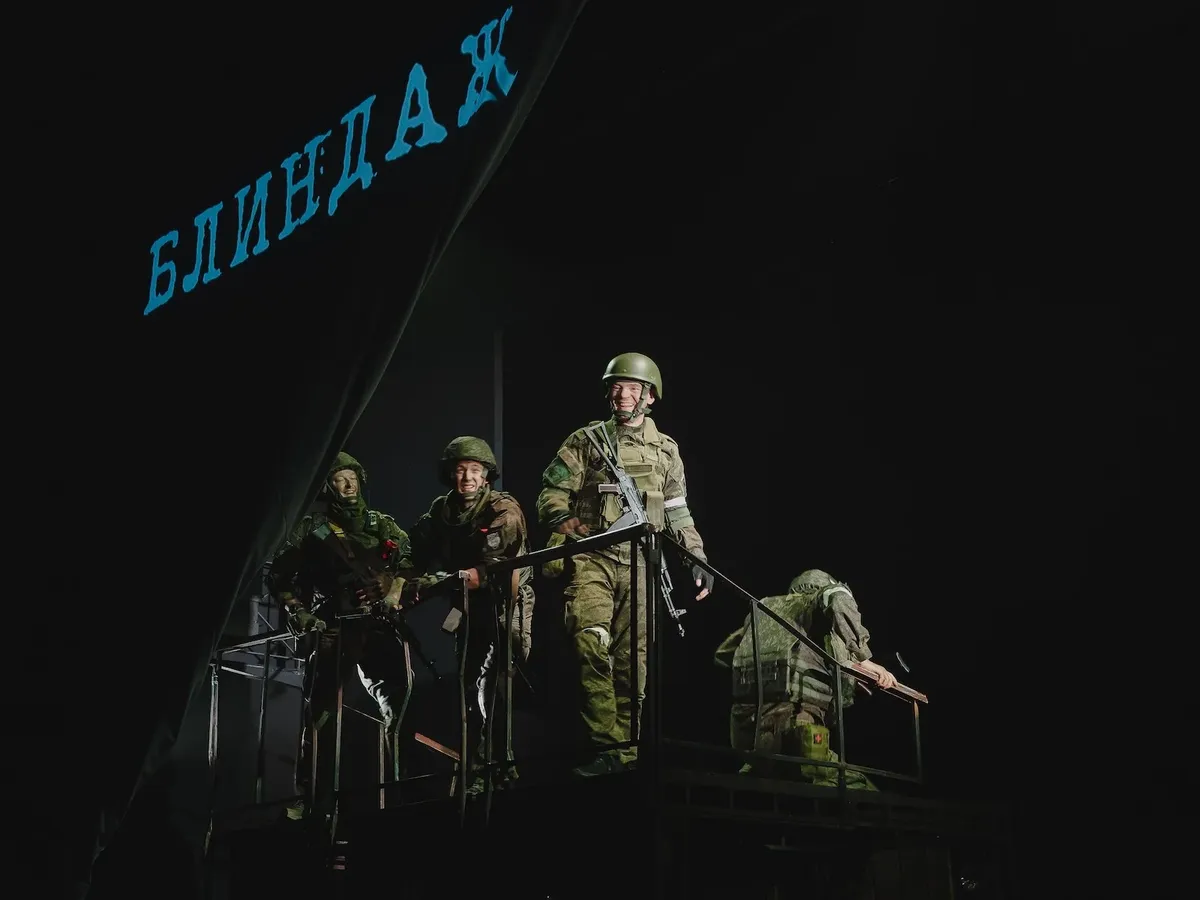
The performance opens powerfully: on the left, a curtain appears on the stage, which is painted in black-borded colors, like smoldering coals. After a couple of seconds, the letters begin to blaze on it: “Silence”. And then: "Dedicated to the defenders of the Fatherland." When the projection goes out, four shadows are on the curtain - male silhouettes in helmets and machine guns.
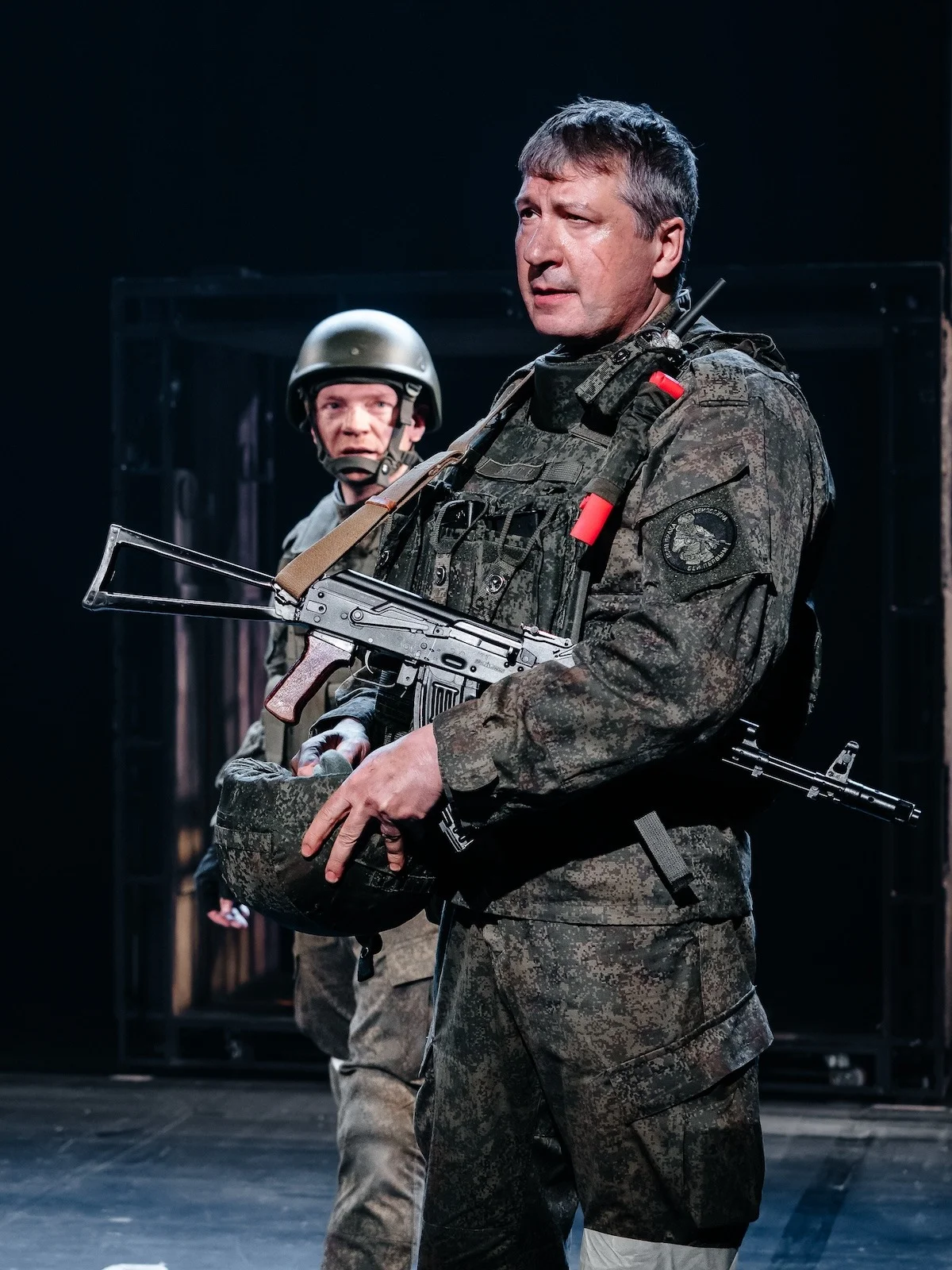
The action begins in the trench, where the protagonist Artem introduces us to our colleagues and the commander of Batei (Dmitry Brodetsky). There we also learn some rules of military life and specific terminology. So, the “two hundred” are killed, “three hundredth” are wounded, and “five hundredth” are those who want to leave with the front line. For Artyom, the “five hundredth” are traitors. From such even assistance on the household, not comme il faut. But such “traitors” are supposedly simply taken away from the advanced. And the main character is indignant: what these “five hundredths” used to think, because they were asked about everything before sending them. At the same time, Artem himself at one moment asks the question: what is it - to shoot a person? If the enemy goes to give up, is it possible to shoot at him? But all the nascent doubts are broken by the loud cry of Bati, requiring such reasoning.
Artem tells himself to himself: he served as a fireman and back in 2016 wanted to go to the Donbass, but his girlfriend Galya (Anastasia Timushkova) was against it. She was waiting for the apartment, which Artem had to give from the Ministry of Emergencies, wanted children. Asked reasonable questions: why do you need Donbass?
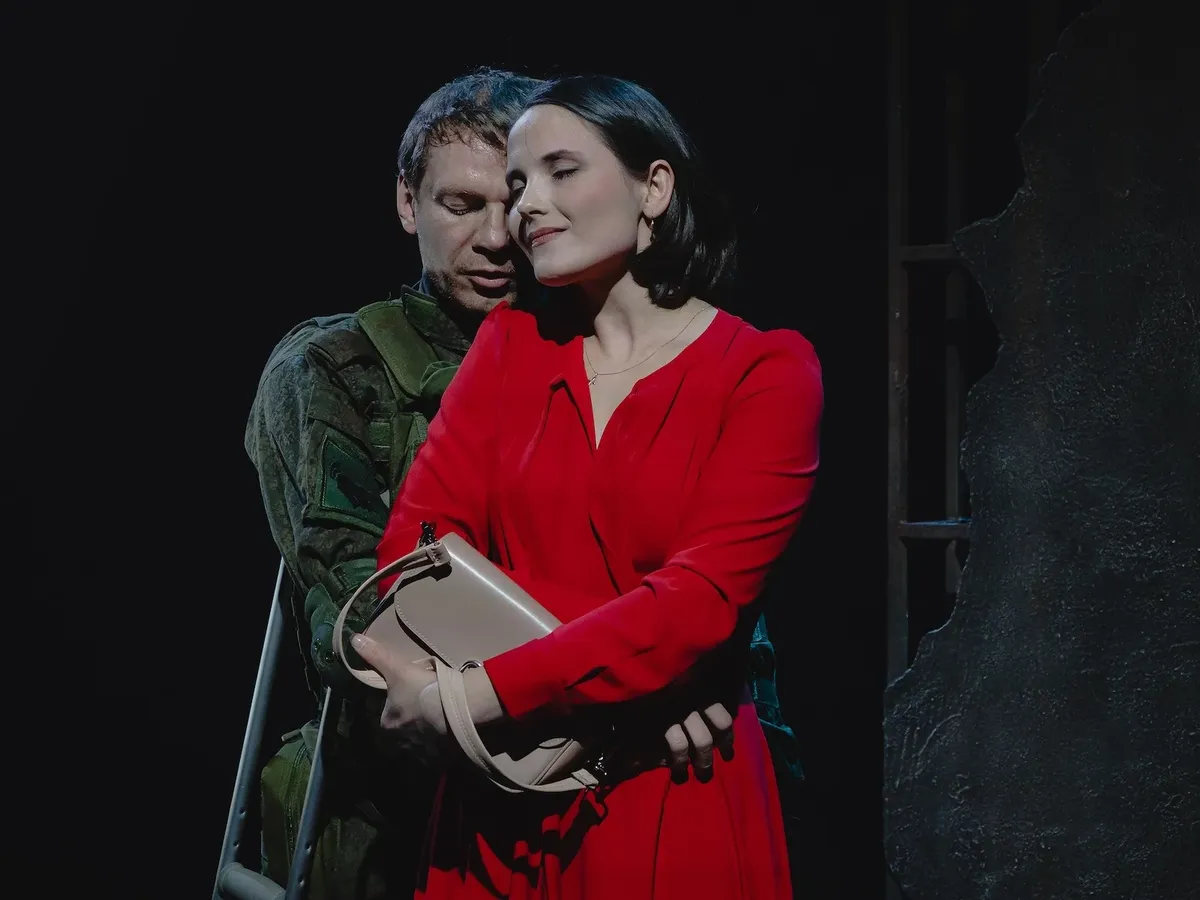
Why are you not worried about other world problems (since you are so compassionate - remained with brackets)? And if you are crippled there? To dissuade Artem then happened. But now he suffered for his honesty - he could not, like everyone else, was silent and was fired from the Ministry of Emergencies. Such are Russian realities. When Galya found out about this, she immediately threw Artem, because the prospect of the apartment looming on the horizon disappeared once and for all. Galya left, by the way, to some guy with whom Artem was twisting behind him. “A woman is about life,” Dad will teach. “And a man is a warrior, he is about death.” Therefore, they say, it’s right that the girl was discouraged to go to the Donbass. But you are well done that you still came to his.
In general, Artem is such a positive hero. Even the plots on regional television were shot about him, where he said that the main thing in the fireman is kindness.
“This guy is a volunteer. The most important thing is that he himself went to help his homeland. All the events that were with him before, during and after - this is a great story of a person, how he changed and what happened to him. Such guys are probably a real Russian person with his thoughts, his fears and his faith, ”says Vladimir Mashkov.
In the play, by the way, Artem, not without pride, says that he is a volunteer - that is, he went on his own good will. And not like a "mobile".
In one of the battles, Artem wounds in the leg, and the colleague takes him on himself. “Throw me,” says Artem Comrade. “Not Heraaaa! NO HEARAAAAA !!! " - he hears in response. And all this looks unnatural to the limit. No, no one denies humanity and feat. But it is unlikely that they are performed so pathetically in the moment - and here, like in heroic cinema. By the way, the battles in the play are also shown as in the militants: the scene flows red light, shots sound sharply and eagerly, sparks fly, two -level tires come in motion, soldiers are running ... There are several such scenes in the play.
Attention was paid to peaceful - that is, the inhabitants of the territories in which fights are going on. On the stage is a simple peasant who, among other things, tells the heroes familiar to us with machine guns, they say, anyway, under the Russians or under Ukrainians. And they are wondering: is this adaptability really characteristic of our human nature? But it soon turns out that this peasant is a gunner, and he is not averse to taking revenge on his neighbors, who seem to him unreliable Ukrainians. We will also talk about a grandmother who treated one of the soldiers with pies. But an experienced dad will order the pies to destroy - you never know what they could mix there.
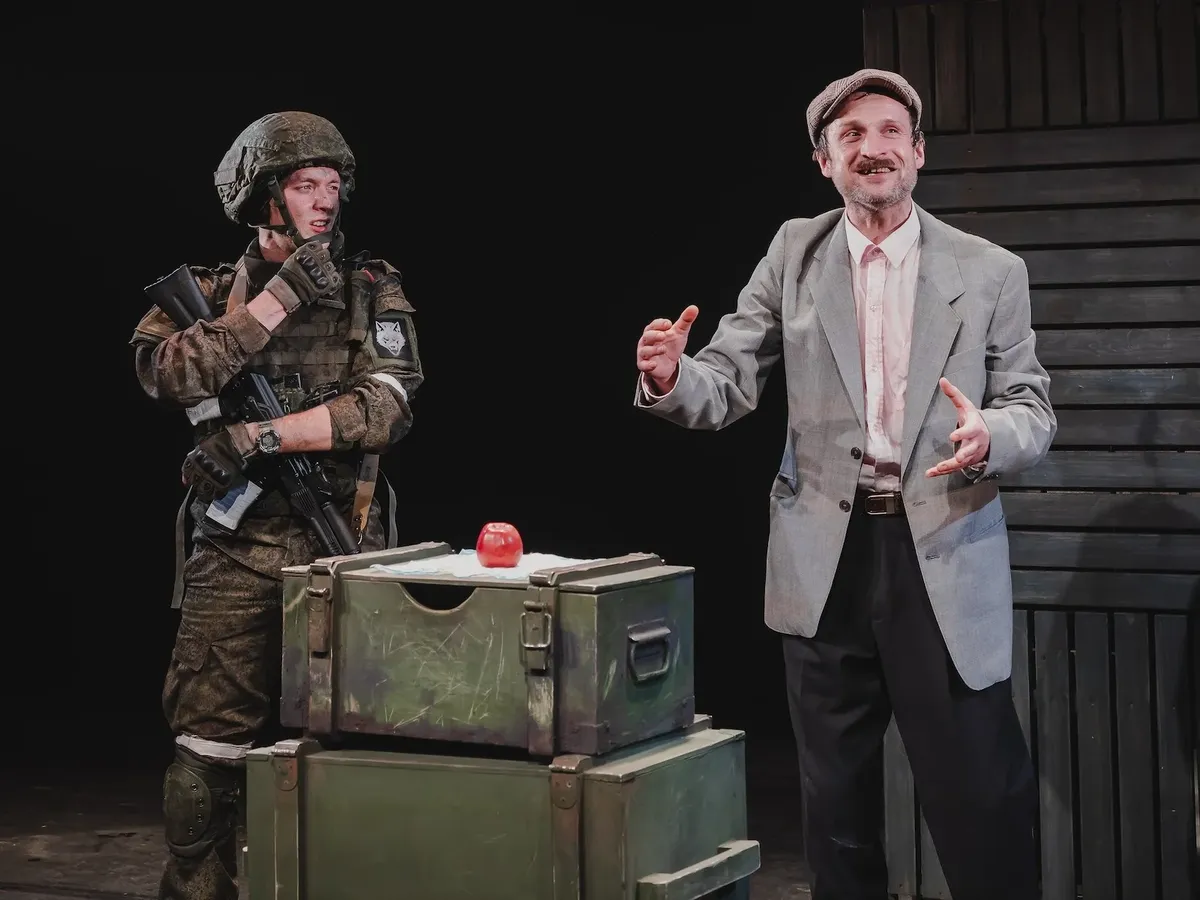
In general, the heroes do not hide that they are fighting against the “crests” and “fascists”. That is, they do a good deed. And the authors of the performance put the characters on a par with the participants in the First World War and the Great Patriotic War-at the same narrow curtain at one moment they include a military chronicle, and in the staff of 1914 the 1943 and 2024s are replaced by 1914. And the artists in one of the episodes are wondering: those soldiers felt the same as we are now? The military spirit of the fighters support the letters of schoolchildren who read out loud. Here the sixth grader thanks the soldier for the peaceful sky above his head - and it is immediately clear that this child does not live in the border territories. There are also about the fight against the Russian language in Ukraine in the performance. In a word, as in a manual. But it emphasizes: special operations are worse than in all previous wars, including Afghan and Chechnya. It is worse, because the military means are now more modern, perfect, accurate and powerful.
What is not in the "call sign" - this is human feelings, sincerity and credibility.
The characters, except, perhaps, Artyom, turned out either “white” or “black”. The latter belongs to the same Galya or colleague trying to establish Artem (“Take alcohol, women - we’ll finish”). And to the first - the wise dad and volunteer Katya (Arina Avtushenko). She falls in love with Artem on the phone, while he lies in the hospital, quickly divorces her husband and soon becomes the wife of Artem. Everything is smooth, cloudless and romantic. Spouses live in Crimea in Katya’s house, but here we find out that Artem began to drink. It ended for him with a loss of leg (it was faster to cut it than to restore it, the other wounded were waiting for the doctor). "Do you know what I experienced there?" - The question that Artem began to use as an excuse for his alcoholism. The fact that this is the disease, Artem himself does not doubt - he has enough willpower to go to the clinic, but it is hardly possible to stay there without a drop of alcohol.
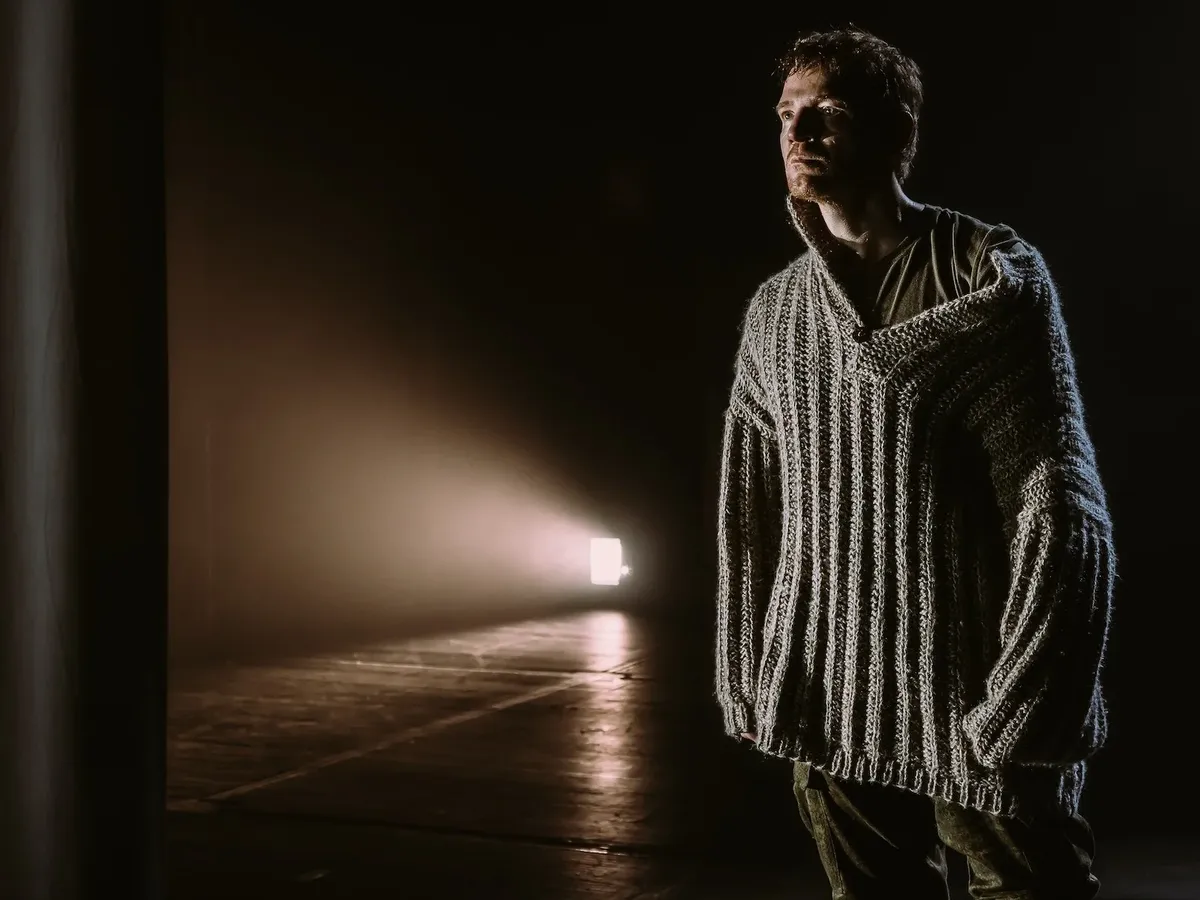
However, the newly-made husband recalls: "Katya survived so much because of me!" (Although what Katya survived, except for a divorce and his drunkenness, remains incomprehensible). The performance will end not without pathos. The shadow of the fighter will come to Artem - the very one, without half the skull with whom he flew to the hospital, where his leg was amputated. This fighter will instruct Artem on the true path - we will not spoil the details.
"At the end of this confession, the viewer will only have one question:" Would I be so? " - It is said in the annotation of the performance. But the questions remain completely different: “Was it worth it? Why was he forced to get out of the abyss of alcoholism? How will the echo of war respond in his future life? ” These are questions that I have as an ordinary person. And as the author of the text, I think: "What is the goal of the performance?" It was not possible to reflect the horrors of hostilities. To show the scorched field that remains inside the person who has passed this and so closely seen death, also did not work out. In addition to the tantrum of Artem, who arose also somehow suddenly-as if nothing more. The creators of the play went along the top: he worked at the Ministry of Emergencies, the girl left, left as a volunteer, sat in the trenches, found out a couple of rules of the war, lost his leg ... And this ended for him, married, washed down, played, but overcame himself. All this fits at 1 hour and 20 minutes of stage time.
Where is the human? Why are such cardboard heroes (this applies to Artem to a slightly lesser extent)? Why not create a good and deep human story about such a “our contemporary”, as stated in the description of the performance, without fixing this with pseudo -Pisatriotic tinsel from the “Tuditing”? All these issues so far remain rhetorical.
Sofya Yeletskaya