
Translated material
Dad came to spank you
Why are some countries “adults”, and from others emigrate “children”, tired of hyper -beams and co -dependence
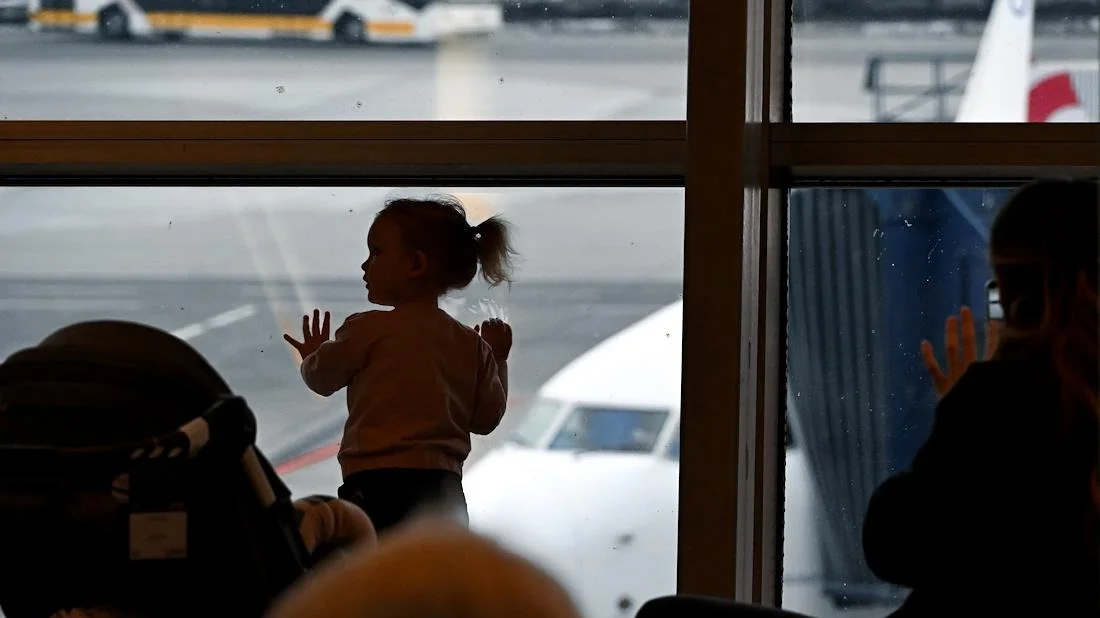
Photo: Anatoly Zhdanov / Kommersant
When in 2022 the Russians began to go massively to Georgia, as a result of the year, amounting to more than a third of the entire immigration stream to the country, this caused bewilderment of officials. Not Georgian - who were quietly rejoiced at the influx of educated and solvent young people and the growth of GDP - but Russian. In unison propaganda, they then ironic a lot over the “Veterans of the Upper Lars”, who were waiting for several days on the border, so that as a result there were “frozen khinkali for breakfast” and “earn on a lobio pot”.
Such remarks resemble the captivity of the parent watching how their child tries to break out into adulthood and donates the comfort of a family apartment in Moscow for the sake of “odnushka” for the Moscow Ring Room and diets from those very “frozen khinkali”. But in the case of Russia, the analogy acquires a more radical shade - because the parent is clearly with the signs of a hyper -peel and even an abuser.
And the “outcome” from him to neighboring Georgia seemed a release, the causes of which were covered in the indifference of the host side to your person. Relocans, of course, encountered Tbilisi's streets with graffiti in the spirit of “Russians - get home!”, But even in such nuances they saw positive: “I treated it with understanding and rejoiced that Georgia was such a free country where people could express their opinion,” the anonymous Petersburgenka told “papers” (recognized as a “foreigner”).
This is not Stockholm syndrome, but rather post -traumatic growth.
After a person regulated by the prohibitions of life in autocracy, even acts of xenophobia values as manifestations of political freedom, simultaneously enjoying the lack of a state as a “figure of a father”.
It is characteristic that in 2022, Georgian politicians talked about the surge of emigration in predominantly pragmatic categories: GDP growth, registration of individual entrepreneurs and the purchase of real estate. For the sake of such a “state optics,” the Russians, in general, moved.
“Perhaps it is better for the Russians to stay in their world, where a good national leader always makes the right decisions, encourages good officials and punishes the bad ones, and only cares about the common good. Or, perhaps, it's time to grow up, ”wrote in the introduction to his 2012 book“ Democracy in Russia. Assembly instructions »Political scientist Grigory Golosov.
This quote introduces a curious idea that the described paternalistic “world” - where, as is known from the Soviet joke, “not fools are sitting” - this is a dimension of children's and immature. And the political growing up of a person occurs when he refuses the leadership authority and is aware of his civil liability, constitutional rights and obligations. So society gradually proceeds to the method of organization known as democracy. And it was on the democratic trajectory (according to international experts) that Georgia was in 2022.
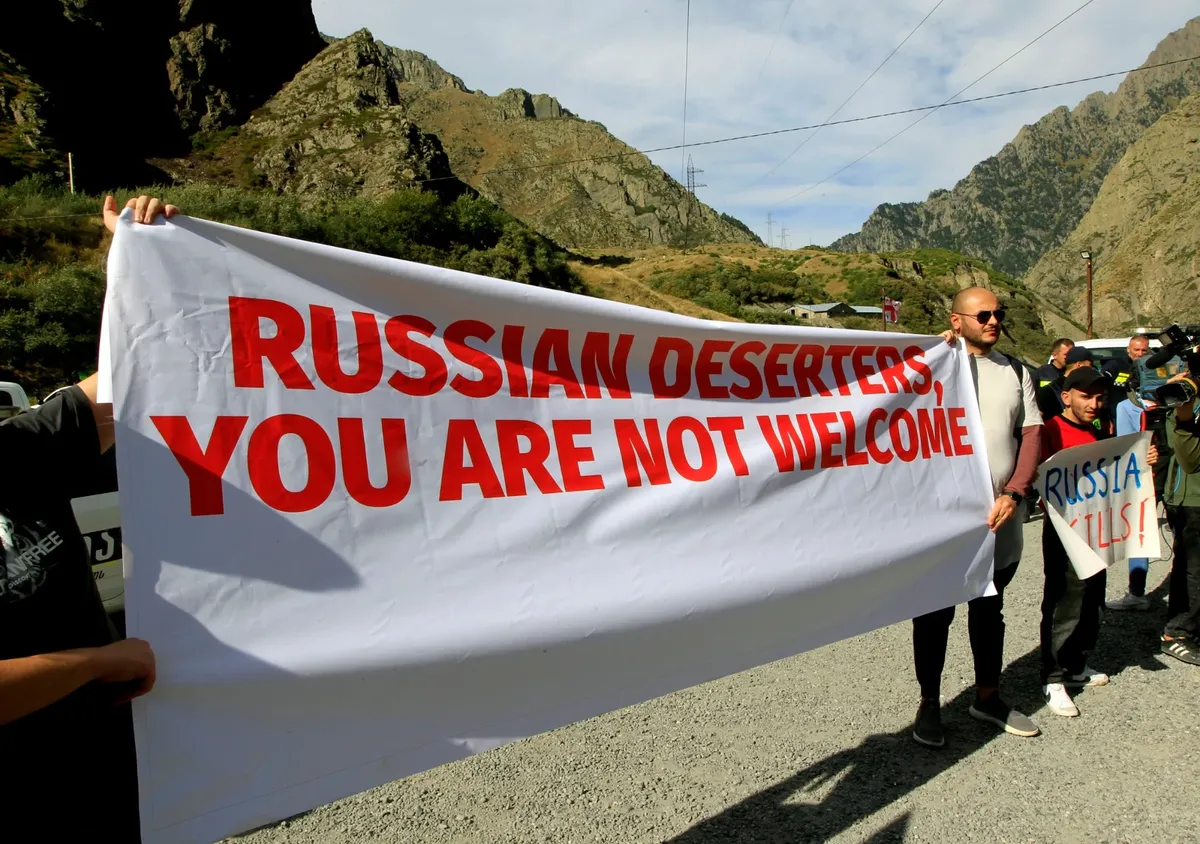
The shift with this "adult" trajectory began to occur in parallel to the invasion of the Georgian Politicon of purely "children's" concepts, so familiar to the Russians. At first, “foreign agents” appeared, then the “global party of war” and “propaganda of LGBT **”, talking about sovereignty, traditional values, protection from foreign influence and benefits of Western sanctions, and the president, meanwhile, was “elected” the football player without higher education - against the backdrop of a strict suppression of political repressions, was increasingly. And the Russians from Georgia began to leave more and more actively.
Because it is difficult to avoid parallels with events in Russia in 2011-2012, when the recitation of “angry townspeople” in the Bolotnaya Square of their maturity and readiness for “growing up” from a hybrid regime for normal, not sovereign democracy, came across an offended misunderstanding of the authorities. For these authorities, the citizens seemed to be a spoiled ungrateful teenager, who in a fit to the rebellion of those who forgot about the generosity of the parent in the “fat zero”. And in the punishment of a negligent offspring, it was necessary to discipline - let him understand who to listen and read, with whom to sleep and from whom to take money. So in the Russian Federation the same “foreign agents” appeared, the same “propaganda of LGBT”, laws on rallies and other products of the “enraged printer”.
And wait for trouble when the government begins to speak with a high -pairing language of moral categories and ideology - the country of political infantilism comes in the country.
In this context, the statement of Vladimir Putin is indicative of 2020 that the time has not yet come in Russia for the change of power: “Now, indeed, the stability, calm development of the country can be more important. And then, when the country gains more self -confidence, resources, fat, what is called ... "
This is an example of the thinking of a co -dependent parent, seeking to control the life of his child and believes that without instructions from above he will disappear (which is characteristic, the first “Putin’s children” have already stated universities). Such an archetype is ridiculed in the famous Making Plans for Nigel song of the British group XTC, which tells about a certain Nigel, for which his parents have already managed to plan his whole life and determine him the position of a medium -sized manager in the industrial British Steel: “We just need this hand of help ... He should be happy in his own way in his own world ".
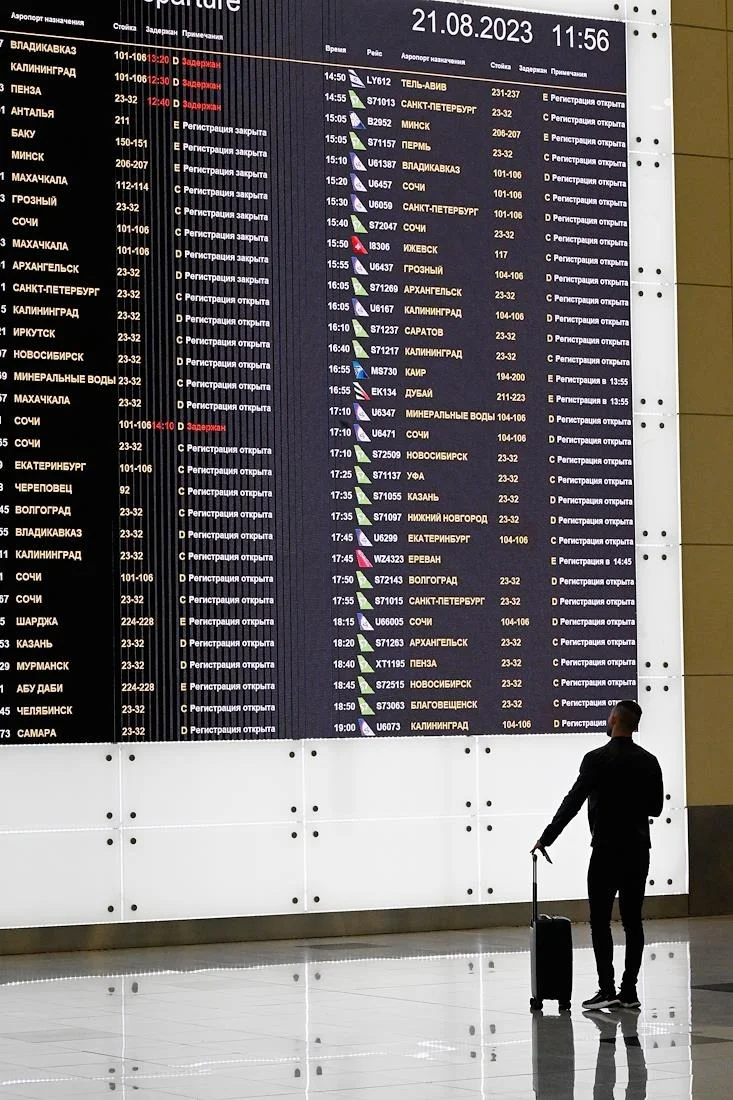
To be Nigel for a long time, you can go crazy, which often prompts the inhabitants of authoritarian states to leave their "happy worlds". It is not at all propaganda against the “foreign agents” and disagreement with traditional values, but the extremely natural need to independently decide where whose agents are and what traditions are valuable. That is, the need for growing up, for the sake of which you can stoically withstand the lunch of frozen khinkali.
And when the emigrant chooses the destination for moving for political reasons, he is implicitly guided precisely by the “adulthood” of countries formed from the key features of the democratic system, in which the government strictly limited in powers is mainly boring things like fulfilling the budget. The person is headed by a person whose name can inadvertently and forget, because in the media he does not appear so often and does not deal with demagogy about the “fate of the Motherland”, where the president is a nominal figure, and ordinary people enter the parliament through social and political movements that no one tries to plug, prohibit or recognize something undesirable and foreign.
If you continue the parental analogy, then such regimes are liberal parents who require children to periodically show the diary (pay taxes) and the rest reliable for their consciousness. This is a modern Germany in the book of British publicist John Campfner entitled "Why the Germans make it better: notes from an adult country." The “adulthood” of the Federal Republic of Germany, according to the Campfner, consists in the consensus of the system that is based on social cooperation and the conservative, smooth and disradical of the political process, the opposite of which is the populism of the Brexit UK.
Therefore, in Germany 2025, a colossal public skepticism gives rise to take -off parties like an “alternative for Germany” and the “Union of Sarah Wagenknecht - for Reason and Justice”. In an exemplary-harmonic, adult moderate environment, actors suddenly appear, intending to appropriate black and white definitions to the same “mind and justice” and give simple answers to infinitely complex questions regarding migration or gender policy. Their activity is a kind of invitation of the Germans to collective nostalgia for childhood, a call to “adults” citizens to recall childhood when the world seemed happier and easier, and parliamentary speeches were clearer and more incendiary.
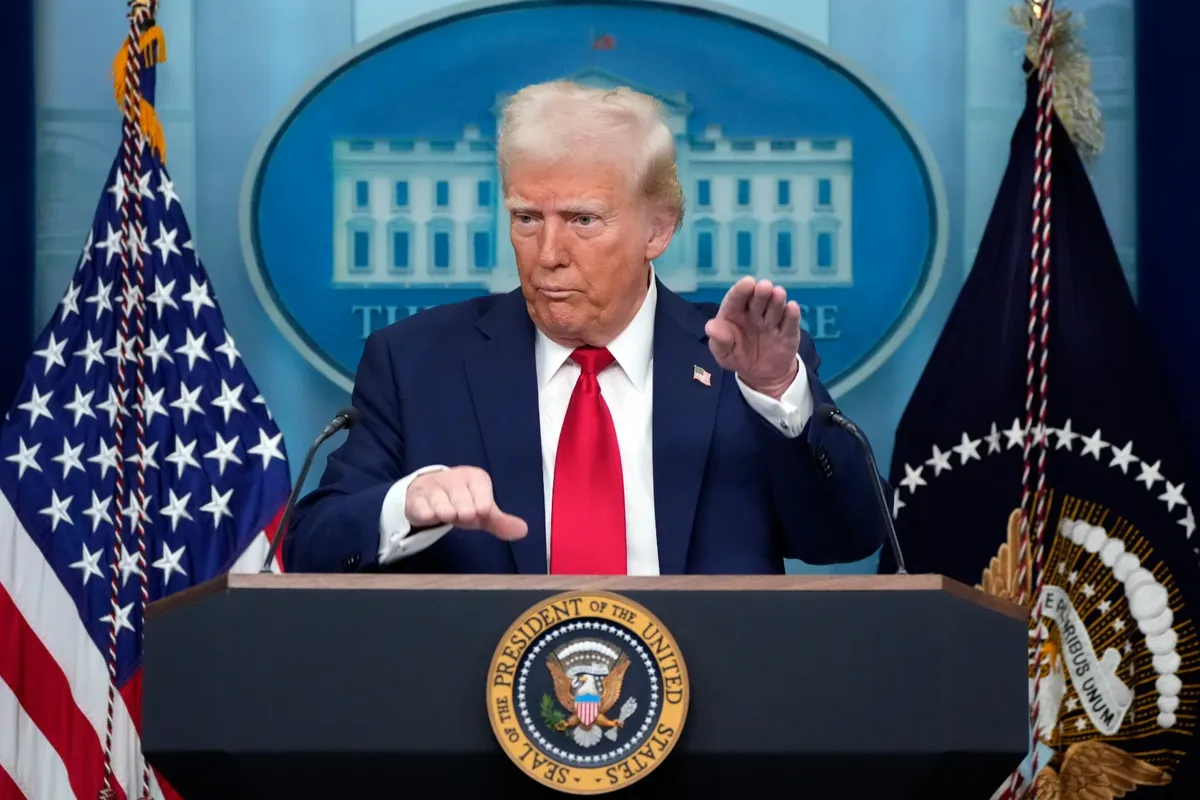
This is a dangerous temptation that worked well in the United States, including led to the re -election of Donald Trump. I was horrified by the October performance of TV presenter Tucker Carlson at the election event in support of Trump in Georgia, during which the favorite interviewer of the Russian elites said: “There should be the moment when dad returns home ... and he is angry. Dad is angry, but he is not vengeful. He loves his children, no matter how naughty they may be ... They live in his house. But he is very disappointed with their behavior. And he will have to teach them ... you ( America. - Ed. ) Was a bad girl, and now you will be very slapped. ”
A similar role is clearly cute to Trump and his vice president, who is hoping to restore the “Father-Know-Better” nation to the United States. According to the Columnist The Atlantic, Gel Bekerman,
The success of Trump's image as an evil, but fair father revealed in the Americans the need for paternalism and Daddy Issues, that is, his father's complex.
Politically, this is very dangerous, because before our eyes, authoritarian infantilism is cultivated in the citadel of liberal democracy - and many alarming attributes are accompanied by that we observed in Georgia or Russia. From pragmatic rhetoric about international cooperation or budget, the focus is increasingly shifting in the populist plane inhabited by the “enemies of America”, “crazy Marxists” and “left radicals”, managerial decisions gain an increasingly radical character and are increasingly blocked by “flagrantly unencomance”.
And it’s good when there are working courts, parliament and still an “adult” society that can oppose abuses and having levers for this. But for young democracies, the immersion of the population in childhood is often fatal. “Then we felt like a child born in hungry Africa, who was suddenly brought to the chocolate store. Yes, then he will have acne, allergies, but he got drunk with this chocolate and was happy. So we, the whole country in the early 2000s, burst hungry into a chocolate store and gobbled up all the chocolate. And we still make the consequences of this gluttony, ”said Ksenia Sobchak in an interview with the Afisha about Russian zero.
Children tend to idealize reality and ignore its sad nuances, indulging in escapism and indulging at momentary desires, that Jean-Jacques Rousseau, discussing civil state, called slavery. But there were other philosophers who fiercely criticized the individualist interpretation of freedom in liberal democracies and believed that it does not allow to achieve a state of “maximum power” in society - for which obedience and lack of doubt in the leadership are necessary.
This idea can be found in the essays included in the Twilight of the idols of Friedrich Nietzsche, where genuine freedom is described as indifference to severity, deprivation and her own life, when it can be sacrificed “for their business” and when combat instincts dominate the “instincts of happiness”. It develops by Ernst Jungar in the essay “Worker” (Der Arbeiter, 1932), where the liberal state of the Germans in the era of the Weimar Republic is characterized as imposed freedom and “dry soil”, through which the German genius that requires order and organization cannot break through.
Each time you hear such “children's” arguments against liberal democracy, combined with calls for “leaving” Marxists, radicals, “foreign agents” and other enemies of the people, count seven years from the year of publication of Junger's work. To evaluate what consequences such a worldview sometimes leads to.