
Translated material
"Russian World" without a cross
The Ukrainian priest was convicted of 14 years for espionage and taken away from the occupied Zaporizhzhya region to the colony in Saratov - in violation of all laws
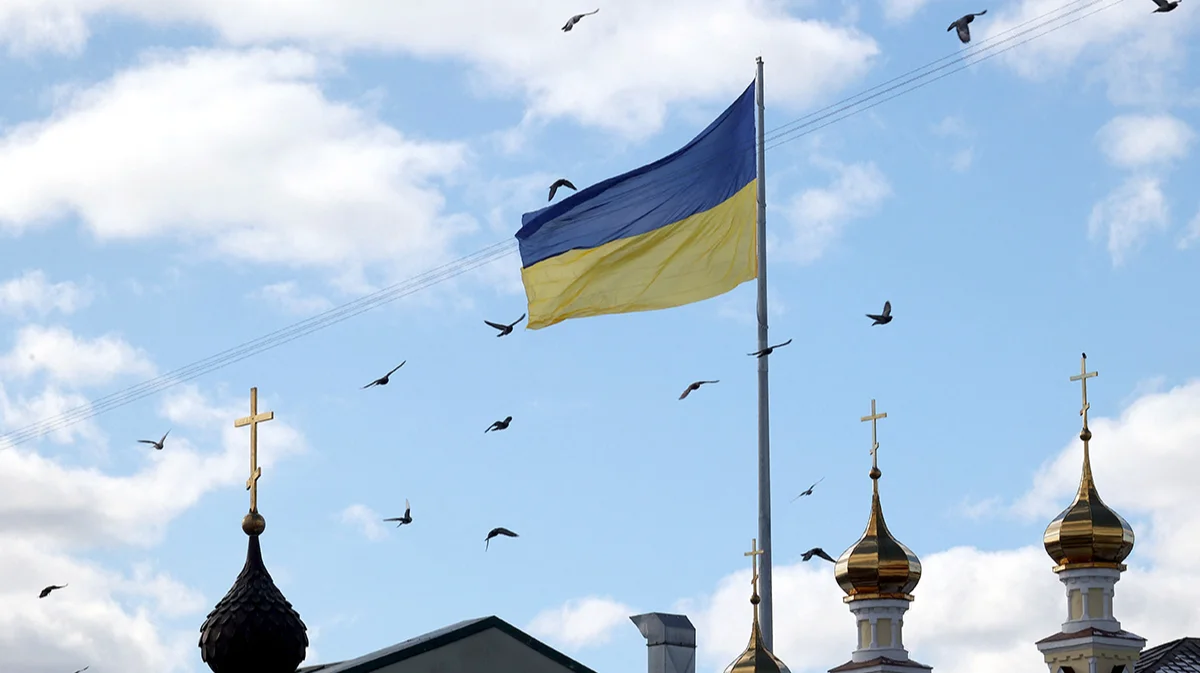
Ukrainian flag on the background of church domes, Kharkov, Ukraine, February 20, 2024. Photo: Vyacheslav Madiyevsky / Ukrinform / Abeacapress.com / Scanpix / Leta
In the territories of Donbass and the Azovs controlled by the Armed Forces of the Russian Federation, clergy and church activists are repressed, whose faith does not like the “new government”. The New Gazeta Europe is studying the case of a convicted person of the Solid regime of the Zaporizhzhya Priest of the UOC - the Church, which in Moscow until recently, was called "canonical".
Non -recognition of Gundyaev is "espionage"
Stage convicted by the Russian authorities on charges of "espionage" Fr. Konstantina Maksimov-a 41-year-old priest of the Ukrainian Orthodox Church (Moscow Patriarchate considers it to be its integral part)-from Crimea to a maximum regime colony in the Saratov region took place in February. As it was possible to find out the Norwegian human rights project “Forum18”, on February 3, the priest was taken out of pre -trial detention center No. 2 of Simferopol, and on February 11, they put a fireplace No. 23 of the UFSIN in the Saratov region in the village of Kamensky on February 11.
February 25, at the end of quarantine, about. Konstantin was transferred to a common camera and included in the detachment No. 10. The colony is located more than a thousand kilometers from the city of Tokmak in the Zaporizhzhya region, where the priest lived and served.
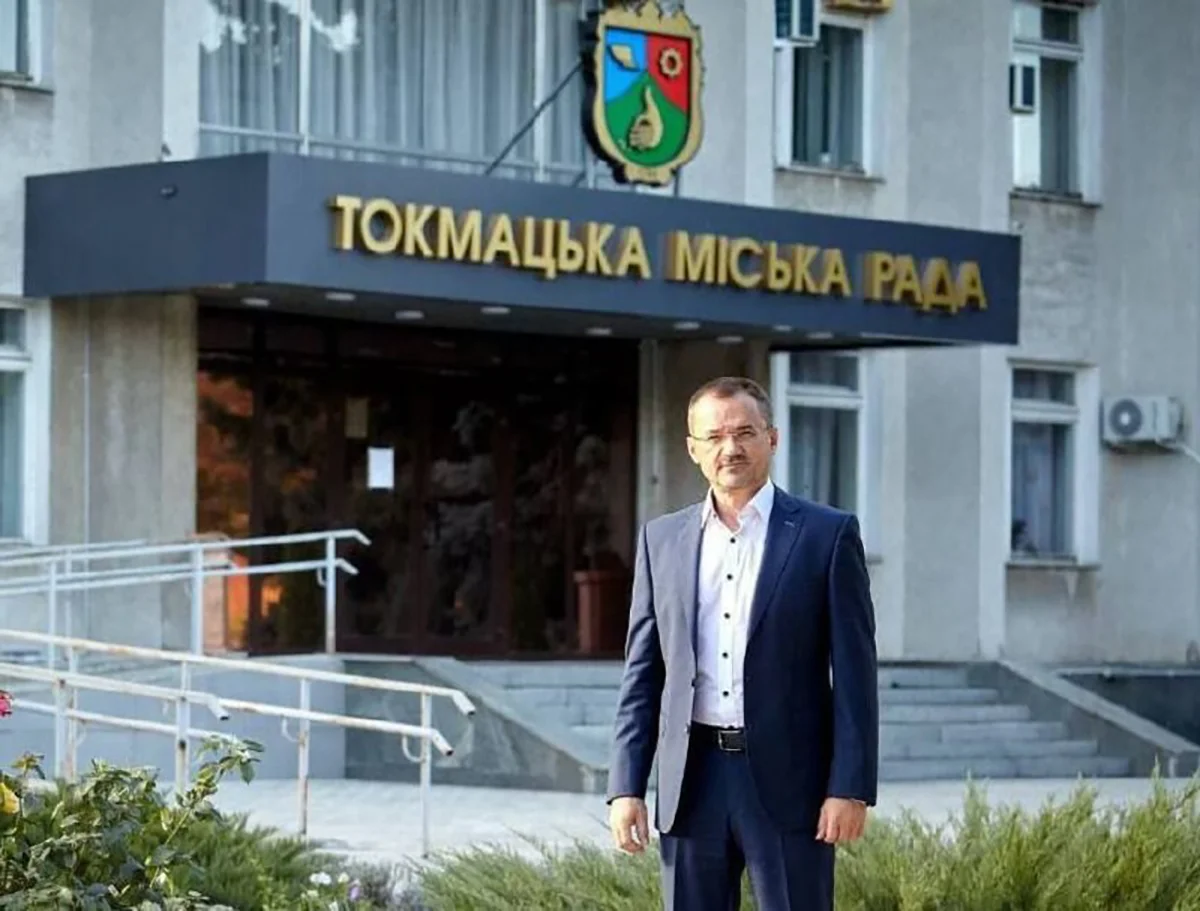
The large industrial center is 85 km south of Zaporozhye, Tokmak was one of the few foci of fierce resistance of Ukrainian troops and local militia to the Russian offensive in March 2022. On March 2, the siege of the city began, and a few days later the Russian troops took control of it, and part of the local administration was arrested. After a couple of months, it became known about the death of the mayor of the city, 57-year-old Igor Kotelevsky, who has held this post since 2009 and beloved by the townspeople. He refused to cooperate with the "new authorities."
Despite the fact that the city turned out to be Ofrontov and most of the population left it, the priest Konstantin Maksimov continued to serve in the temple of the Assumption of the Blessed Virgin Mary in Tokmak, who received damage during the shelling of the city. The temple is part of the Berdyansk Diocese of the UOC, headed by Metropolitan Ephraim (Yarinko). He did not make contacts with the new administration and became a refugee, for which on August 17, 2022 he even received a reward from the Primate of the UOC, Metropolitan Onufria (Berezovsky), was erected to the rank of Metropolitan.
In cooperation with the Russian authorities, the Moscow Patriarchate began its annexation of territories occupied by Russian troops. According to the Patriarchate (it is not easy to verify this information in conditions of hostilities), on May 1, 2023, an illegal collection of the clergy of the Berdyansk Diocese of the UOC took place in Berdyansk. Illegal because, according to the charter of the diocese and the UOC, such meetings can be convened and conducted only by diocesan bishops or bishops performing their duties. It is still unknown who exactly convened and held an illegal meeting - most likely, this issue should be addressed not to the clergy, but by the Russian administration. According to the Russian Orthodox Church, 76 of 86 clergy of the diocese signed an appeal to Patriarch Kirill (Gundyaev) at the meeting on the “transfer of the diocese” into the direct subordination of the Russian Orthodox Church, which grossly violates the charters of both the Russian Orthodox Church and the UOC. Providing the wide autonomy of the Ukrainian Church in 1990, the Russian Orthodox Church refused to somehow change the borders of dioceses in Ukraine or to appoint ruling bishops there-only the decisions have the right to make the Synod of the UOC in Kyiv.
Nevertheless, regardless of their charter and the norms of canon law, which prohibit the bishop to appoint a bishop already occupied by another bishop, the ROC Synod on May 16, 2023 “transferred” the Berdyansk diocese into “direct canonical subordination” to the patriarch, having committed an act of church aggression and captured a “canonical territory”, which is characterized by church law, which is characterized by church law. "Split." The Synod has appointed Bishop Luke (Volchkova), the “manager of the diocese”, who previously managed the Iskitim diocese in the Novosibirsk region. In response to these actions, the Synod of the UOC accused the priests of the Berdyansk diocese who signed the appeal to the Patriarch of the fact that they “sow the turmoil and temptation”, and promised to ban them in the service for a split. Before the story with the Berdyansk diocese, Patriarch Kirill has already annexed the diocese of the UOC in the Crimea and in the Donbass, but they changed jurisdiction with their bishops. In Berdyansk, Moscow first went to the appointment of a “parallel” bishop.
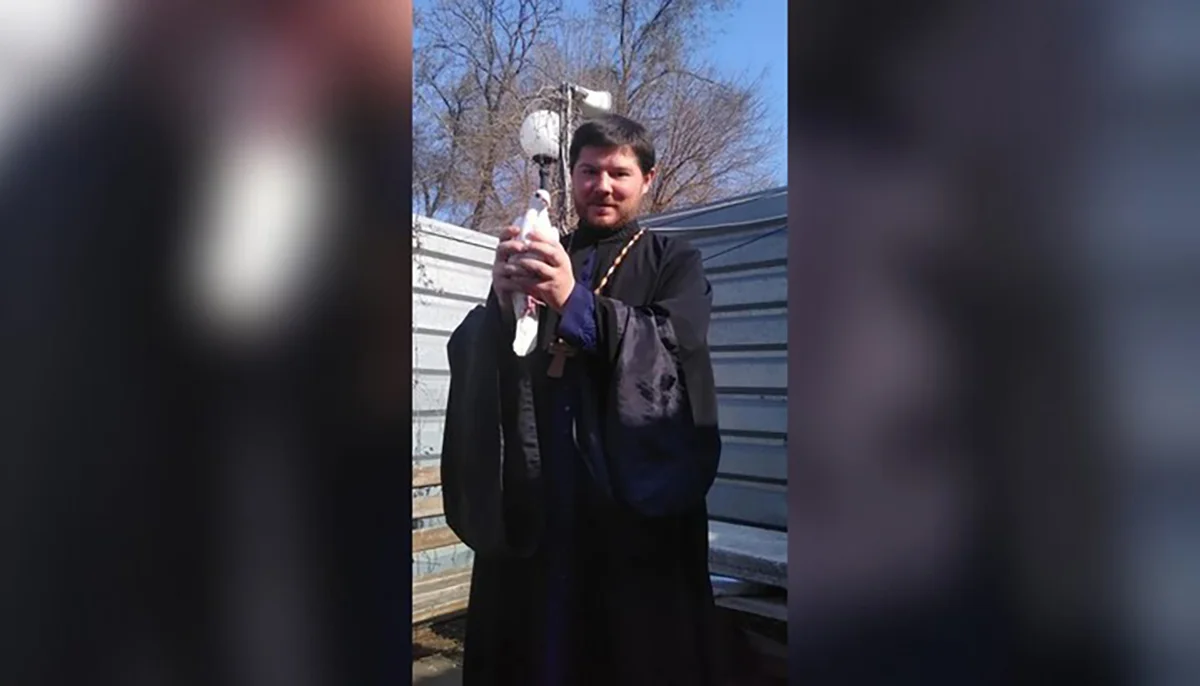
Among the five priests who dared at the Berdyansk meeting to refuse the signature under the appeal to the Patriarch, was Fr. Konstantin Maksimov. Despite the pressure and threats, he remained in the jurisdiction of the UOC, that is, in canonical subordination to Kyiv.
Moreover, according to rumors, he refused to accept Russian citizenship that the authorities and the new, illegally appointed bishop obliged all the clergymen of the diocese.
Obviously, in the “excessive” pro -Ukrainian position, the authorities saw the signs of “espionage” - in the same May 2023 Fr. Konstantin was detained at the Chongar checkpoint (this is it, the “reunification of Russian lands”: between the Crimea and the Zaporizhzhya region, which the Russian Federation declared its regions and introduced into the Constitution, there is still control, identical to the border). First, the priest was taken to the IVS of Melitopol, and then, after the initiation of a criminal case, they transferred to pre -trial detention center No. 2 of Simferopol, where he spent a long 21 month.
The trial began on June 6 of last year, and on August 2 the so -called Zaporizhzhya Regional Court held his exit meeting in the Supreme Court of Crimea, where he issued Fr. Konstantin is a sentence under Art. 276 of the Criminal Code of the Russian Federation (espionage): 14 years in a maximum security colony. The verdict claims that the priest collected information about the location of Russian air defense systems in Tokmak and allegedly transmitted them through the Internet to the SBU employee.
About about. Konstantin is not known so much - he was not a promoted media person and is practically not represented in social networks. Born in 1983, in 2003 he graduated from the Poltava Missionary Theological School, and in 2006-the Pochaev Theological Seminary in the Ternopol Region. After the ordination of the priest, he was appointed to the rural church in the Donetsk region, graduated from Donetsk University. During the hostilities in August 2014, the priest’s house was destroyed by a projectile, and he and his family moved to Zaporozhye, actually becoming a refugee. He was appointed to the church of the village of Ternovataya, and in 2021 he was transferred to Tokmak. At the checkpoint, Chongar was part of the volunteer humanitarian mission.
O. Konstantin appealed to the decision of the so -called Zaporizhzhya court, and on November 14 last year the court of appeal in Moscow, headed by judge Pavel Melekhin, examined his complaint. The collegium "did not find arguments in favor of the appointment of a milder punishment." It is assumed that the meeting in Moscow was held in the absence of the defendant himself. The priest’s native priest is still shocked by what happened, his mother Svetlana, living in the territory controlled by Ukraine, shared her hope with journalists that her son would be included in the list of exchange of prisoners of war. The last time she saw her son in December 2021. Svetlana has great difficulties in correspondence with him, but was able to find out that a priest of the Russian Orthodox Church came to him in the Simferopol pre -trial detention center, who communed Fr. Konstantin.
Territory without the right
Article 76 of the 1949 Geneva Convention on the protection of civilians in wartime obliges states that control the territories of other states, to use in relation to the population living in these territories before the beginning of hostilities, the legislation of those countries that controlled these territories before the war, that is, in the case of the Zaporizhzhya region - the legislation of Ukraine. Accordingly, the persons convicts under this legislation may serve their sentences only in the territory of their country, even if it is controlled by another state. However, since the fall of 2022, the Russian Federation considers the territories occupied by it in the southeast of Ukraine as “new subjects of the Federation”, denying any occupation or annexation. But it is clear that the Russian interpretation does not cancel international law, and from its point of view, Ukraine has sovereignty and its territorial integrity is protected by this right.
Earlier, at least 13 Jehovah's witnesses were reported, who were convicted in Crimea, and 11 of them are serving a sentence in the international recognized territory of the Russian Federation. For example, in January of this year, the court in Sevastopol sentenced 53-year-old Sergei Zhigalov and 55-year-old Viktor Kudinov to 6 years in prison for organizing the activities of an “extremist” community (Jehovah's Witnesses in the Russian Federation received this status in 2017, and since then hundreds of believers of this denomination have passed through the pre-trial detention center and camps).
Also, convicted activists of the Crimean Tatar or Muslim organizations of Crimea, as a rule, are serving a sentence in “mainland” Russia.
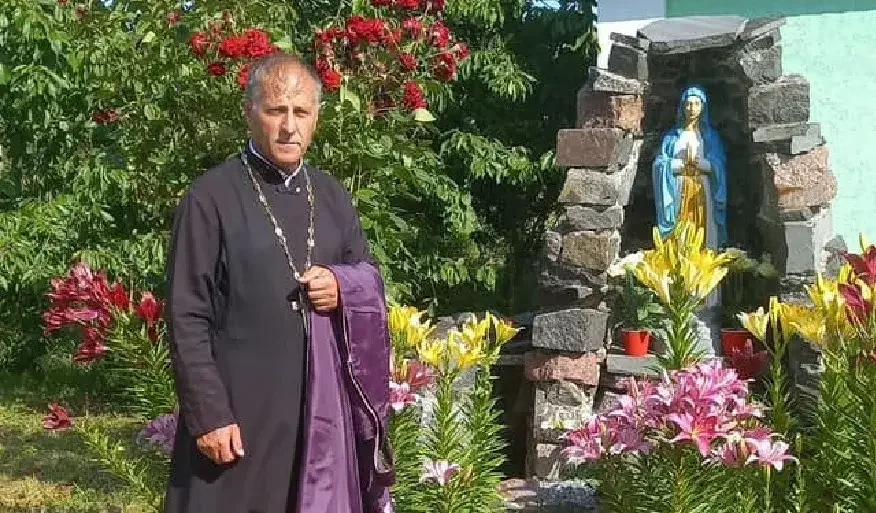
A number of other religious organizations are also prohibited in the territories of Crimea and Donbass controlled by the Russian Federation, which are not only freely registered in Ukraine, but also play a key role in the Ukrainian confessional landscape. We are talking about the autocephalous Orthodox Church of Ukraine (PCU), the Ukrainian Greek Catholic Church (UGCC) and some Protestant denominations. In the “Constitutions” of the “DPR” and “LPR” of the era of their unrecognized “independence” the “dominant” role of the Russian Orthodox Church was spelled out-in the wording resembling the legislation of the Russian Empire ... In November 2022, the Greek-Catholic priests Ivan Levitsky and Bogdan Helets disappeared, and all five communities of the UGCC were in this region "Liquidated" by the Russian administration. Only after almost six months, after the significant efforts of the Vatican and other international intermediaries, priests were exchanged for Russian prisoners of war. The fate of the 59-year-old priest Pets Stepan Podolchak, abducted by unknown in the village of Kalanchak in the left-bank part of the Kherson region controlled by the Russian Federation, turned out to be more tragic. On February 15, his corpse was found in a roadside ditch on one of his streets. According to Ukrainian human rights activists, Russian security forces presented Fr. Stepan is suspicious of extremist activity, for some time he was kept in a filtration camp in the vicinity of the village of Chaplinka. The head of the Ukrainian military administration, Kalangala, Svetlana Fomina, now in Kherson, said that about. Stepan courageously served in Ukrainian and openly prayed for Ukraine until the day of his detention. Activists of Protestant and Muslim communities, which were not part of the Russian centralized organizations of their faiths, collided with similar problems in the controls of the Zaporizhzhya and Kherson regions.
In the fresh report of the Office of the UN High Commissioner for Human Rights on the situation in Ukraine (in its international recognized boundaries), cases of “arbitrary detention, torture, including sexual violence, and disappearance as a result of the detentions of civilians in the occupied <lo” territory ”are listed. The management collected evidence that a number of civilians in this territory were detained "for recognizing legal religious practice or free self -expression of religious beliefs." Crimea, Donbass and parts of the Zaporizhzhya and Kherson regions, controlled by the Russian Federation, have become a kind of exemplary landfill for running in the “values of the Russian world” - and already to everyone who is in the subject, obvious how these “values” are refracted in the field of religious life. The totalitarian ideology of Moscow is absolutely incompatible with any freedom of conscience or religion.