
Translated material
"It was fun in Russia"
A big conversation of the New Evrop with Pet Shop Boys-about Petersburg of the 1990s, a performance on Red Square, Putin and Stalin
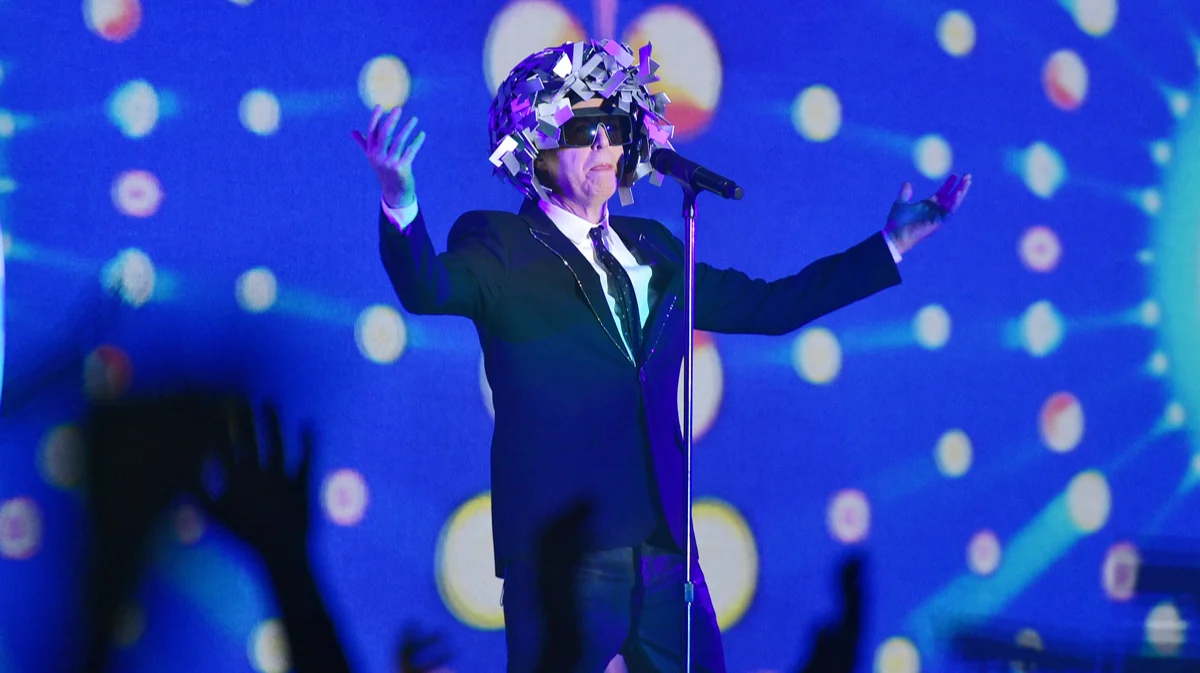
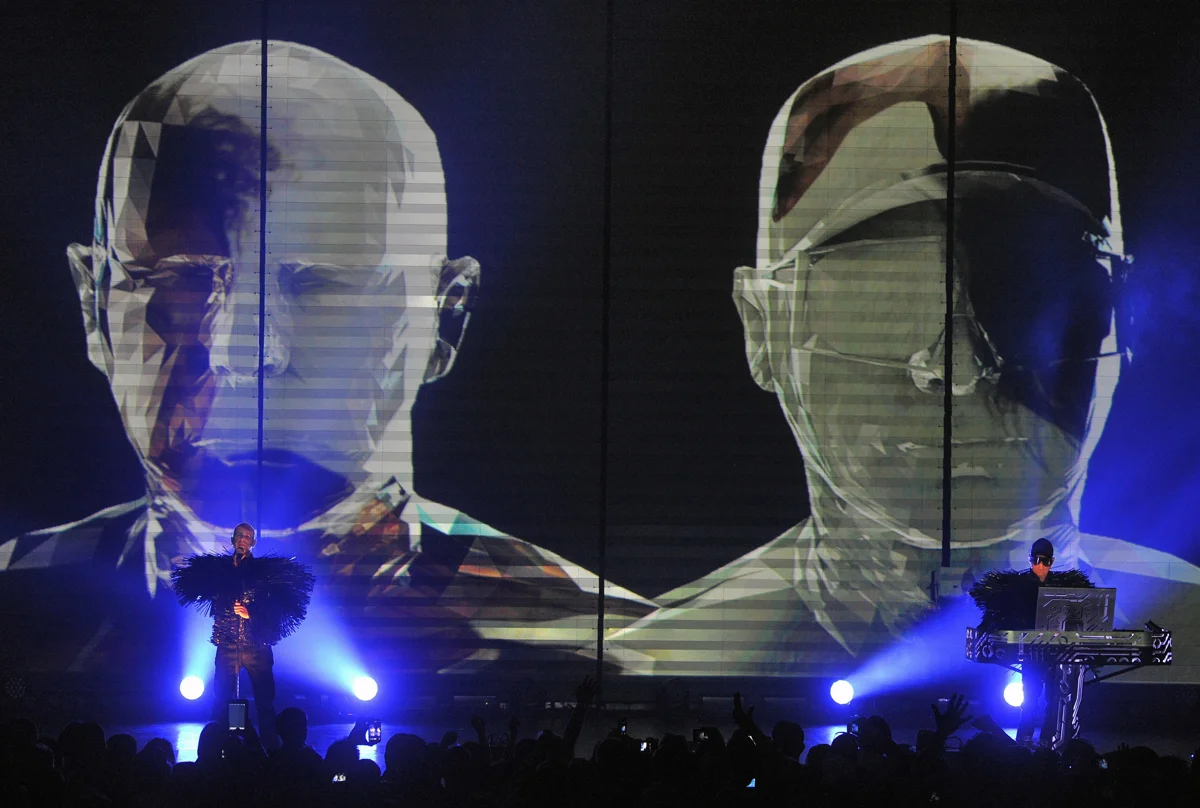
Participant of the British group Pet Shop Boys Neil Tennant while performing at a concert in Moscow, December 8, 2016. Photo: Peter Kassin / Kommersant / Sipa USA / Vida Press
- Alas, they do not release our notes there, although, as we all know, we are the most popular group in Russia. What I never believed in. - Who told you? .. - I can't remember. However, this does not prevent me from constantly telling people about it.
This is a fragment from the book of 1990 Literally, consisting of dialogues of the participants of the duet Pet Shop Boys. And it is unlikely that the thesis about the "most popular group" was an exaggeration. The Western Sint Pop experienced an explosion of popularity in perestroika Russia, which led to the emergence of new subcultures and dozens of Russian-speaking performers-detractors. Like their Western colleagues, in Russia they were often considered a “pop”: in contrast to “serious” pop music (mainly rock, about “constrained by one chain” and “change”). Nobrow idea-that there is no strict division into “high” and “low” culture-will come to Russia only in the late 1990s. Then Zemfira melodically packed from the face of a lyrical hero dying of AIDS, and Boris Akunin will become an intellectual in the “low” detective genre. And the Western pop culture by that time will have been talking to the audience on “high” and “serious” topics for a long time, experiment with a non-standard composition and used in election campaigns. Pet Shop Boys, it seems, remained in the folk memory somewhere next to Joy, Bad Boys Blue, Modern Talking and other “Retro FM” legends from the 1980s. But they are extremely unfair to consider the authors of one hit - it's a sin - and put on a par with commercial, producer projects like Joy. They are more than worthy of a fresh nobrow look as “Supermissive Pop-Duet”, according to the work of which books are written by the “battleship“ Potemkin ”” Eisenstein and entrenched in charts with songs about Tatcherism, nationalization of industry and references to Lenin routes. Russia has always occupied a special place in the lyrics and public statements by PET Shop Boys - especially in recent years, when the duet is more active than all Western artists about political repressions in the Russian Federation and writes songs about Putin and Navalny. The soloist of the group Neil Tennant, a historian by education and a former musical journalist by profession spoke about the reasons for this interest in Novaya Gazeta Europe.
The wild spirit of freedom, St Pete and parties with Sobchak
Russia is important because of our experience there, and I personally have been interested in it since I read a book about the revolutions of 1917 in childhood. I was fascinated how the Soviet Union replaced the Russian Empire-another empire that released a lot of energy, but quickly rolled into the dictatorship under Ivan the Terrible of the 20th century, Stalin. I read a lot about Soviet culture, especially about the work and struggle of Shostakovich, Prokofiev, other musicians, artists, writers and directors. This interest fed the texts of my songs, for example, My October Symphony :
Shall I REWRITE or Revise
My October Symphony?
Or as an indication
Change the Dedication
From Revolution to Revelation?
Or our first chitus single West End Girls:
In EVERY CITY, in EVERY NATION
From Lake Geneva to the Finland Station
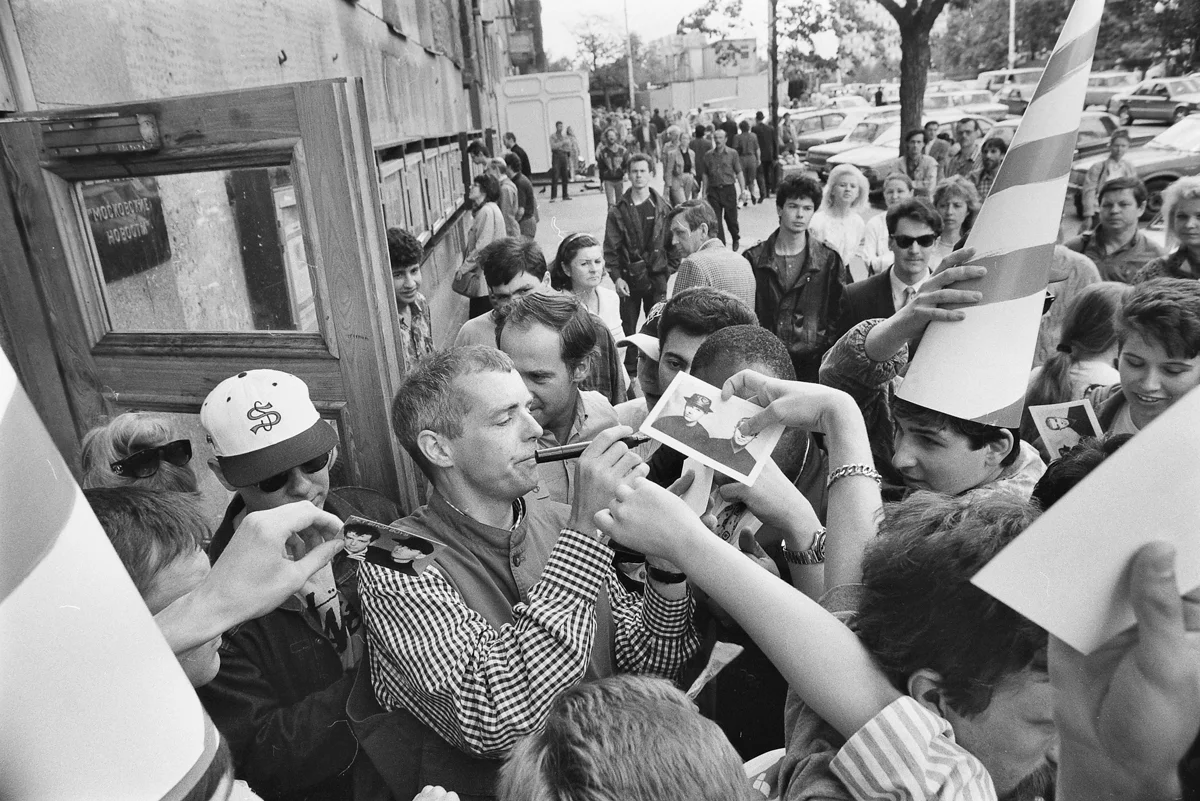
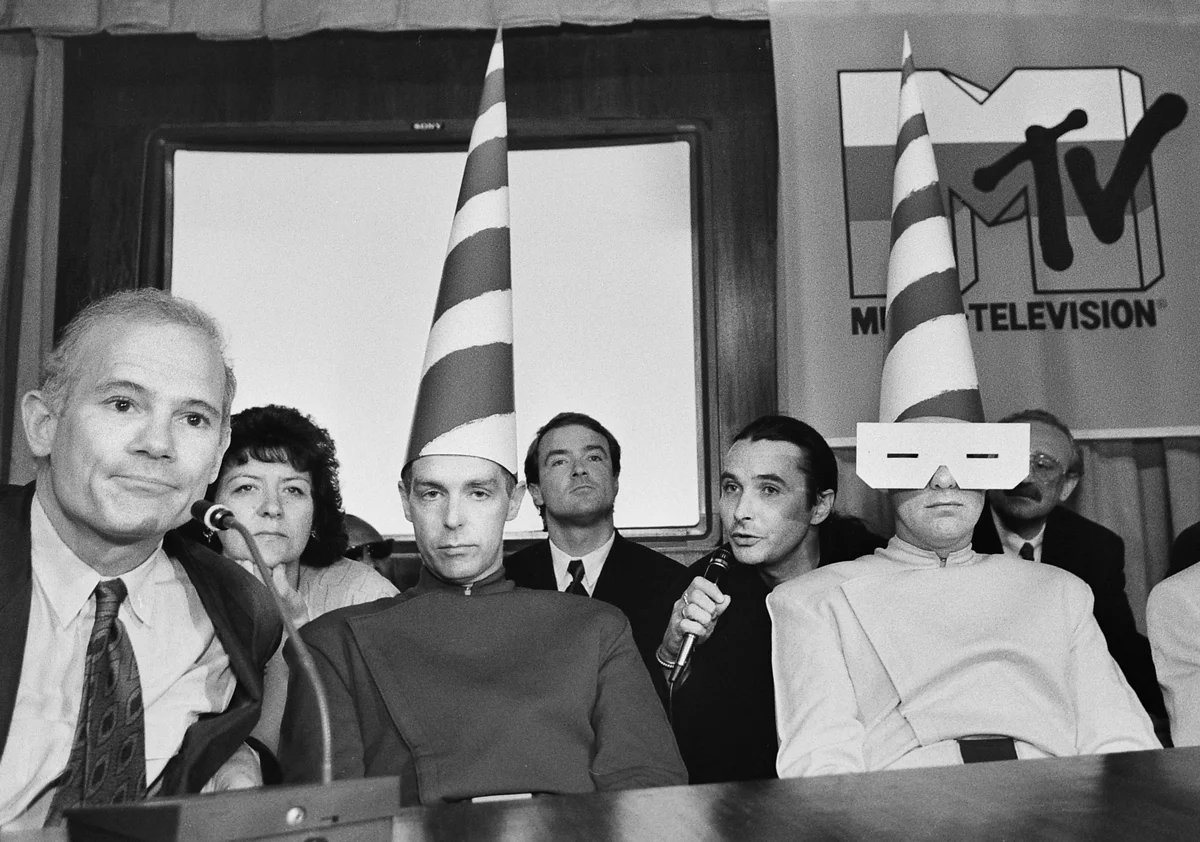
The first contact of Pet Shop Boys with Russia took place in 1987, during the first program for the exchange of Soviet and British adolescents. When the youth who came from the USSR asked who they would most like to meet in London, they replied that Pet Shop Boys! So we learned that we have a Soviet audience. And in 1993, we first went to Russia to launch MTV Russia. Then part of the Go West clip was shot on Red Square.
Russia was politically and economically “went west”, so it seemed appropriate and funny to include Lenin statues indicating in the video, indicating in the western direction
(We also were surprised to find that the Go West melody is very reminiscent of the Soviet anthem).
I remember how we were met at the airport and taken to the hotel on the limousine, on which - as we were told - previously carried Gorbachev. In those days in Moscow, there were still three road stripes, one of which was intended for the VIP-Person, and it was very exciting to see the Russian capital for the first time, entering it on the Gorbachev limousine. A few years later, I returned to Moscow to record a choir for a new song , partly inspired by the changes that we saw in Russia on our first visit:
All I Want
IS What You Want
I'M Always Waiting
For a red letter day
And in the late 1990s, we began to regularly attend St. Petersburg and give concerts there along with Moscow. It was so exciting to walk along the streets that had such a great historical significance, but it was also impossible to ignore the victims of the economic problems that followed the collapse of the Soviet system, for example, old women who sold their property. And while politicians argued about the right economic approach, we met young people who open their own business and enthusiastic because they can now travel abroad. The clubs were fun, and the wild spirit of freedom hung in the air.
Once, when we could not catch a taxi, the police took us back to the hotel from a gay club! We really loved to start new acquaintances and hang out with them. A friend of my friend, a young girl who was the daughter of the disgraced mayor of St. Petersburg-her name is Ksenia Sobchak-was part of a club party. Brian Ino lived for some time in St. Petersburg, we went to the opening of his exhibition in the Russian Museum and dined with his family in their apartment. A few years later, our friend Sam Taylor-Johnson ( in Russia is most famous as the director of the film “Fifty Shades of Gray” .- Approx. Ed. ) There was also a large exhibition in this museum, and we arranged a small crazy party for it. It was fun in Russia! We even thought to write down the album in ST Pete (as the expans were called). I remember a wonderful white night when we rode a boat through the St. Petersburg canals, ate caviar and drank wine.
When Putin came to power more than 25 years ago, it seemed that this could be a positive event: he planned to challenge the oligarchs and take up the economy. But when I asked a friend in St. Petersburg what he was thinking about Putin, I heard a monosyllabic answer: “Stalin”. I suggested that he was pessimistically exaggerating, but it turned out that I was optimistically mistaken.
Concert on Red Square and turning the wrong place
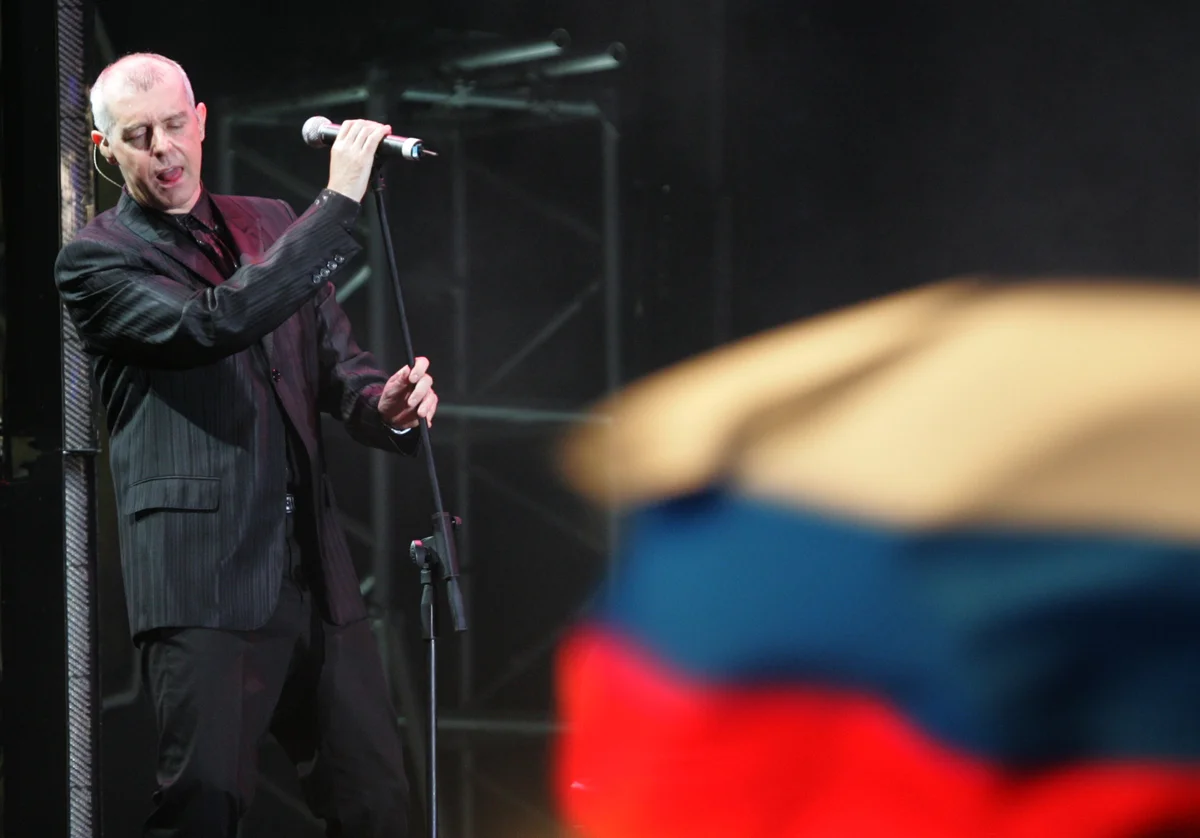
In 2005, we performed on Red Square, heading the Russian part of the Live 8 international event in support of the campaign “We will make poverty history”. Obviously, Putin gave permission to hold a concert next to the Kremlin. That day it really felt that Russia was part of the free world, but this feeling did not last long. In the 2000s and 2010s, Moscow and St. Petersburg were permanent destination in our world tour, and we saw how all these cities were rich and rich.
But at the same time, violations of human rights, controlled elections, the presidency transferred to Medvedev and back to Putin, sliding to the dictatorship were caught in the eye. Independent media were seized or closed. The legislation was adopted against gays and terrible homophobia was encouraged-the British TV presenter Regina Yates made a chilling film about homophobes in St. Petersburg, which attacked gays. The police, of course, were no longer going to bring us to the hotel from the clubs, and the same Ksenia Sobchak, with whom we hung up there in the 1990s, was appointed Putin official candidate in the presidential election!
In the new world of social networks, we are constantly voicing our views on Putin's Russia and the growing number of victims among the opposition,
Navalny is only the most famous case. In the UK, Russian emigrants were poisoned and killed, how did Putin get away with Putin?
The tradition of Grozny and Stalin continued, the latter according to the results of the survey was recognized as the greatest Russians of all time. Was Putin to blame - or did the Russians prefer Autocrat?
Cyberatii regularly took place in Estonia, a border conflict in Georgia and, of course, the problem of Ukraine. We had Estonian friends who kept us aware of what was happening, and it seemed that citizens of the former parts of the Russian and Soviet empires saw in Russia a nightmare of the past, where they did not want to return when the possibility of joining the EU and NATO. Putin, in general, acted as a NATO sergeant-speaker, designating ambitions to restore the empire-through the same famous comment about the "largest geopolitical catastrophe." He lives in the 19th century, where the lands are still annexed, as happened with the Crimea.
Meanwhile, we and other Western musicians continued to perform in Russia, and from time to time I wrote songs inspired by Russian themes. For example, London about two young Russians arriving in the British capital:
We Came from the Far North
Summered in Crimea
Deserted the Armed Force
Had to Disappear
Made it to the free west
on a chartered Flight
so we coup see What
We Trained to Fight
Or kaputnik-with a superficial view of a guy, angry due to parting, but in fact about Putin and former Soviet republics:
I'll Never Recognise
Your New Independence
I'll Say You Wish
You Hadn't Lost All You Had
And then Suggest
an intervention is Needed
by someone Like me
Who Knows You've Gone Mad
And on the same EP Lost there is a song called Living in the Past, representing Vladimir Putin's view of the world:
I Arrive in the City
Wherey've unveiled a Bust of My Predecessor
Still Much Discussed
We Tried to Forget HIM, HIS CRIMES WERE CATALOGUED
But in the New Circumstances
Once AGain He's A GOD
The past isn`tve pass
That's How Long It Lasts
I Want Them To Fear Me
Like EVERYONE FEARED HIM
Arrested and Shot butll They Reved Him
Like Him i'll Win
I won't be eclipsed
I Want Men to die with my name on their lips
The past isn`tve pass
That's How Long It Lasts
The past isn`tve pass
That's How Long It Lasts
Temporary farewell to Russia, "memorial" and rhetorical issues
We often ask ourselves why no one is worried about tens of thousands of young Russian soldiers who die in Ukraine? Why people do not march the streets, as it was in the USA in the 1960s and 1970s because of the Vietnam War. There, the Americans lost about 58 thousand military and were in confusion as a result - and Lindon Johnson did not run for a new term. The war in Iraq to this day remains the subject of great controversy, and, it seems, in the UK Tony Blara will never forgive participation in it. The Ukrainian war is Putin’s personal project, so why don't people protest in huge quantities? The problem is the completely understandable fear of the police violence or do they just care?
Can Russians really be content that their country is now the younger partner of China, and its allies are Iranian theocracy and crazy despotism of North Korea? Is there something more sad than the North Korean soldiers sent to die in Ukraine and who did not explain what they were doing there at all? Will Ukrainians ever be able to forgive their neighbors for thousands of dead young citizens who defended their country from the revived imperial project?
Our last two concerts in Russia took place at large private parties-the annual corporate party of an industrial concern in Yekaterinburg and in 2018 in St. Petersburg on the 50th anniversary of a successful businessman, whom we first met in the 1990s when he was a young party-player and a beginner entrepreneur. Now he is an exile ( it is obviously talking about Oleg Tinkov . - Approx. Ed. ).
And if it’s very briefly, the reason why we are so interested in Russia is that we observed the optimism of its “discoveries” and the tragedy of its “closure”.
This is an exciting country with a richest culture and many resources - and there is no reason why it cannot be a peaceful, successful and prosperous part of the world. Russian fans at concerts always seemed to us the same as in other countries, so why Russia lives with fantasies of exclusivity?
Is it really impossible to avoid the repressive past, and Putin is just another autocrat? Is it really a country locked in a cycle of political violence? It does not come out to think otherwise, reading news about the criminal case due to the anti-war drawing of a 12-year-old girl. To be a gay activist in the Russian Federation now means to bear punishment for extremism. We believe that Russia deserves the best fate.
It seemed very important-and we wrote about this in social networks-that at the end of 2021 the Russian court decided to close the "memorial", formally for refusing to mention the status of "foreign agent". A couple of months before the invasion of Ukraine, a discussion of Stalin’s crimes was no longer allowed. All my adult life I noticed that avid liars accuse others of their own atrocities, like Putin, who called the Ukrainians “Nazis”. Although Putin himself became - and perhaps always was a fascist: he isolated external and internal rivals, militarized society through propaganda and raised the leadership principle above all.
In order for Russia to be cured of the Putin Cancer Tumor, a revolution of views, rejection of Putin and Stalin, an honest discussion of the history of Russia and the USSR (for which the Memorial was liquidated), similar to the denactification of Germany, and the payment of reparations were liquidated.
Then Russia will be able to become a peaceful and prosperous country located in Europe and connecting it with the East, rejecting its past - as a bully that mocked its neighbors and its own citizens. This is a huge task, which will begin with the withdrawal of Russian (and North Korean) troops from the territory of Ukraine and the arrest and the court over Vladimir Putin. We can only hope for this Red Letter Day.
On May 18, 2022, we published this statement , and it is still relevant:
“We have been in Russia many times and wrote songs with Russian topics. Now it is inconceivable that we can come or perform there. But we are looking forward to the day when fascism in Russia falls, criminal politicians will appear before the court, though the neighboring countries will not endure threats and invasions, and new Russia will be born. I hope we will still be here to see this. "
It is difficult for me to imagine that someone really interests what we think about Russia, but you asked!