
Translated material
Microsoft introduced AI model for creating game worlds. She will not replace the developers - she can only help them (but this is not exactly)
Industry representatives called the system of useless
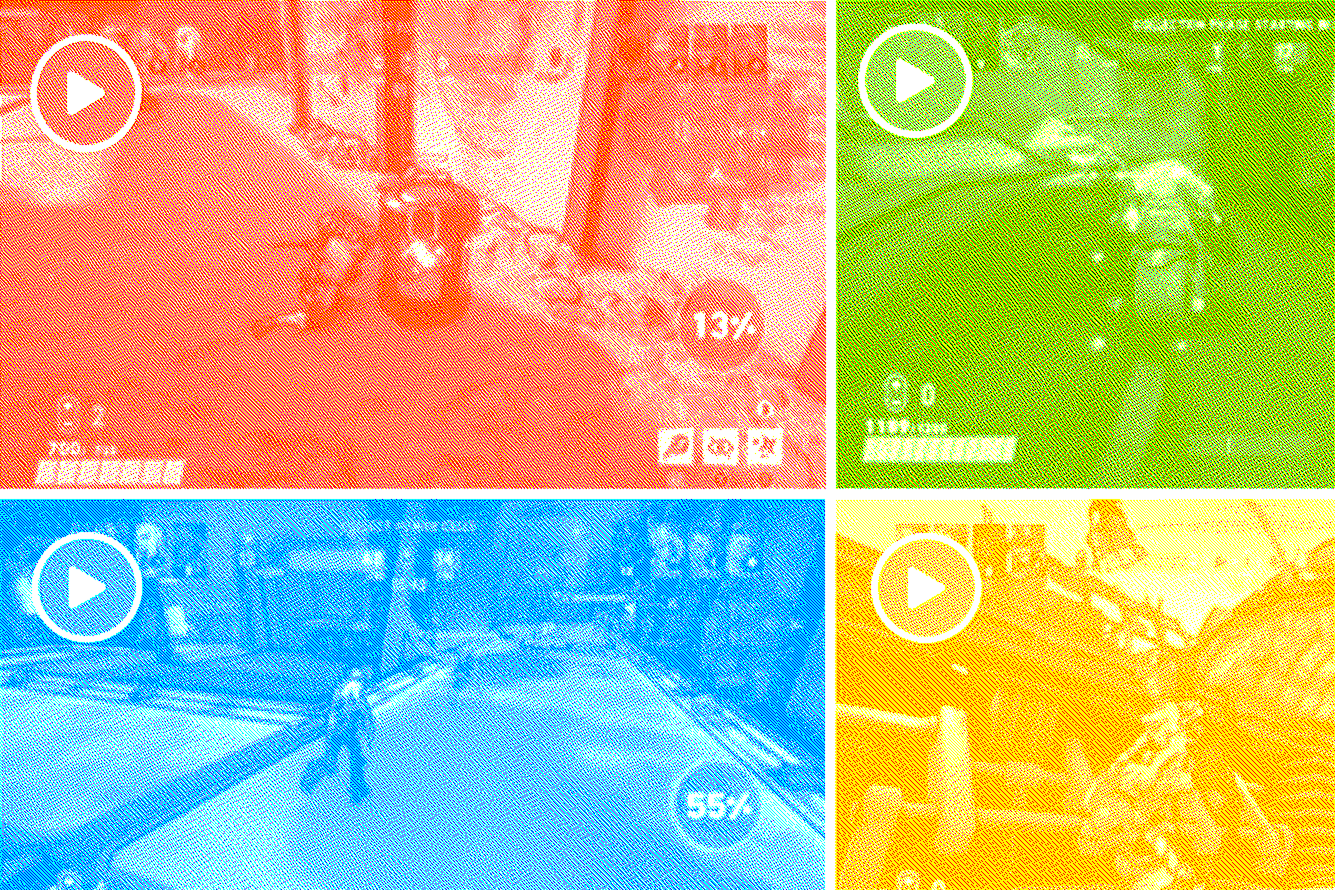
Microsoft in mid -February presented its first artificial intelligence model, capable of generating a gameplay based on a visual series. Researchers immediately emphasized that this is not an independent AI, which will completely replace the developers - rather, Muse will become an assistant, accelerating the process of creating new projects. The system will help in the prototyping of gameplay mechanics, testing ideas, and in the future - in preserving old games. Medusa tells how the new model can help developers and whether it has competitors.
The new generative model is called Muse. The developers came up with a special definition for her - World and Human Action Model ( Wham ). They argue that this system is able to “understand” how three -dimensional worlds are arranged, including how they react to the player’s actions and how physics works in them. Thanks to this, Muse can generate and visualize a variety of gameplay, modeling various game situations.
The Microsoft Research research unit worked on Muse together with the Ninja Theory studio. To teach the model, they used the multiplayer game Bleeding Edge, released in 2020. This is not the most successful project of British developers, but it allowed researchers to access the notes of ordinary people gameplay. Thanks to this, the system studied on the real actions of the players in certain situations and on how they interacted with the virtual world.
In the article published in Nature magazine, the creators of Muse said that at their disposal there were records of approximately 500 thousand game sessions - this corresponds to about seven years of continuous gameplay. The largest version of the model has 1.6 billion parameters and is able to generate an image in a resolution of 300 by 180 pixels with a frequency of about 10 frames per second. Examples can be found on the Microsoft Research blog .
The new AI model is not intended for the full creation of games and is not able to completely replace people with any of the development stages. In fact, now the system only visualizes the possible gameplay based on the specified parameters. But, according to researchers, it can simplify or speed up certain processes. For example, using MUSE, you can check the performance of ideas and prototype new game mechanics.
Now, if the game designer wants to test a new character for the game, he needs to attract a team of programmers and artists to write code and create the necessary visual materials, explains Engadget. But in the end, the idea can be recognized as unsuccessful, abandon all ready -made developments and start the whole process again. This is a very laborious and expensive part of the development of video games, the publication notes. With the help of Muse, the studio will be able to check the viability of prototypes without attracting additional resources.
Researchers have determined for themselves three key requirements that the WHAM system must meet: stability, diversity and stability. The first parameter implies that the model generates game sequences taking into account the dynamics of what is happening. That is, the character must perform commands from the controller, not pass through the walls and generally observe the physical requirements of the world.
Diversity means the ability of the model to generate various options for the gameplay based on one industrial process . The stability indicator is the ability of the system to respond correctly to user modifications. For example, if a new object or character is added to an already generated game sequence, the model should save it and take into account the further generation of gameplay.
The Nature article says that during tests, Muse stability indicators varyed depending on the conditions and specific elements added to the sequence. But in general, it can reach 85%, which can be considered a rather high indicator. In practice, this means that developers will be able to quickly receive relatively accurate information about how new content will affect the gameplay of an existing game.
Microsoft is not pioneers: other companies have similar developments. And the AI-model Nvidia generated the game five years ago
Microsoft argues that Muse is the “first one of its kind” AI model, although this is far from the case. For example, in October 2024, the Israeli startup Decart presented its development called Oasis. This model is able to generate interactive game worlds in real time. Moreover, Oasis perceives commands from the keyboard and mouse, and also simulates the physics and general rules of the game universe.
The model was taught in the video recordings of Minecraft gameplay, so the worlds that it generates are visually similar to this game. Given this, Muse can not even be called the first AI system, in the training of which Microsoft projects were used, Engadget notes .
So far, the development of Decart is far from the ideal: Oasis generates a picture in low resolution, the system often gives errors, and the function of creating a world in a screenshot from another game does not work well. But the main thing is that the model has no “memory”. If you stand still and just turn the camera, the surrounding landscape will constantly change. Nevertheless, at the early stage, Oasis is a working model that can generate a gameplay with an acceptable frequency of personnel.
In December 2024, the Google DeepMind division spoke about a similar development-Genie 2. This model can generate virtual worlds based on one text industrial or image. It takes into account various scenarios of the player’s behavior, can simulate the physics of objects, lighting and various effects - for example, reflection or smoke. Also, using Genie 2, you can create different animation for virtual heroes.
The model can add non -game characters to the world and prescribe complex scenarios of interaction with them. In addition, during the generation, Genie 2 takes into account the position of the camera (view from the first or third person, isometry ) and is able to memorize those parts of the world that disappear from the user's field of view (and restore them if necessary).
NVIDIA is also developing this direction. Her model Gamegangan was able to generate a completely working version of the PAC-Man game back in 2020-without a basic game engine and access to the source code. As TechCrunch clarifies , technically, other developments can be used to create virtual worlds. For example, the AI model of the Openai Sora, designed to generate video.
Microsoft hope that Muse will help with preserving old games. Other developers believe that the company simply flirts with shareholders
In the Microsoft Research study, another area is mentioned in which Muse can be useful. The creators of the model believe that it can help in preserving and restoring old games. This is a really serious problem that is often discussed in the industry recently.
According to the study of the Video Game History Foundation , published in 2023, 87% of classic video games released in the United States are under threat of disappearance. This means that they are not available in modern digital stores and the only way to launch them is to find an original carrier (for example, a disk or a cartridge) and the appropriate equipment. Some of these games are available on pirate resources, but this cannot be considered a full and reliable way to preserve.
Some companies launch their own programs to preserve old games. For example, the GOG digital store has such a project . Now in his catalog is more than a hundred classic games, and in the future he will be replenished. For example, soon a Fear shooter from the Monolith Production studio will be added to it, which was closed in February 2025. At the same time, GOG not only sells old games, but also guarantees that they will be launched on modern computers. In the future, a digital store also plans to adapt all projects from the catalog to the requirements of the new iron.
The preservation of video games is hindered by copyright laws. In the case of some projects, it is not known who is the copyright holder. Or the rights to them have become the subject of judicial (and not always completed) proceedings. All this becomes a serious obstacle to preservation. In addition, part of the old games is simply impossible to add to the catalog: the source code is lost, and even the companies that developed them cannot restore them in the original form.
Part of these problems can solve Muse. Researchers believe that AI model can simplify and accelerate the optimization of old games for the possibilities of modern game systems. So far, Microsoft is only studying the capabilities of Muse in this area and does not share details. The authors of the study only clarify that they want to test the system on old games from the catalog of developer companies included in the game division of the Xbox Game Studios.
These statements caused criticism among representatives of the game industry. Michael Cook, senior teacher of the faculty of computer science at the Royal College of London, believes that there is still no method to determine what exactly is fixed by AI-model during the training. So, artificial intelligence is not able to reproduce the game in its original form, regardless of the number of teaching materials.
Cook as a whole doubts that the Muse project can grow into something serious. In his opinion, this is too expensive and impractical, which will need a huge number of educational data. In other words, in order to engage in prototyping for a particular game, it should already exist in the market for some time and be relatively popular.
The authors of the study note that they interviewed 27 developers of eight studios in order to better understand their needs. However, Wired journalistsdiscussed the announcement of Muse with several representatives of the gaming industry, and all of them criticized the new development of Microsoft.
“This is a classic XBOX problem-they lose talented developers, but at the same time they are so strongly invested in generative AI that they do not see the trees of the forest,” one of the developers of AAA-IGR commented on anonymity. According to him, he is not allowed publicly talking about Muse.
“They do not understand that no one needs it. They don’t care that nobody needs it ... Internal discussions of such things are calmed down, because everyone is afraid to oppose and lose work in this time unstable for the gaming industry, ”the interlocutor of the publication added.
“It seems to me that the real target audience of this model is not the developers of the games, but the shareholders to which Microsoft wants to show that II has completely devoted itself. Although the company has not yet created a single product that is really in demand by anyone, ”another developer said. He also asked not to disclose his name, as he is now discussing the transaction to include his game in the Game Pass signature service, owned by Microsoft.
Mark Berredzh, director of the British studio Creative Assembly, claims that computers cannot extract the same knowledge from the learning process as people. “Prototyping is not only the result, but also the path itself, and you need to go through it to learn all the necessary knowledge,” the developer said. “Quick prototyping is the most important skill that cannot be simply discarded and hoping that this will not affect your preparation level.”
Mikhail Gerasimov