
Translated material
Zhdanov-on-blood
How Russian historical propaganda in Mariupol works, processing the tragedies of residents in the "heroism" of their own soldiers
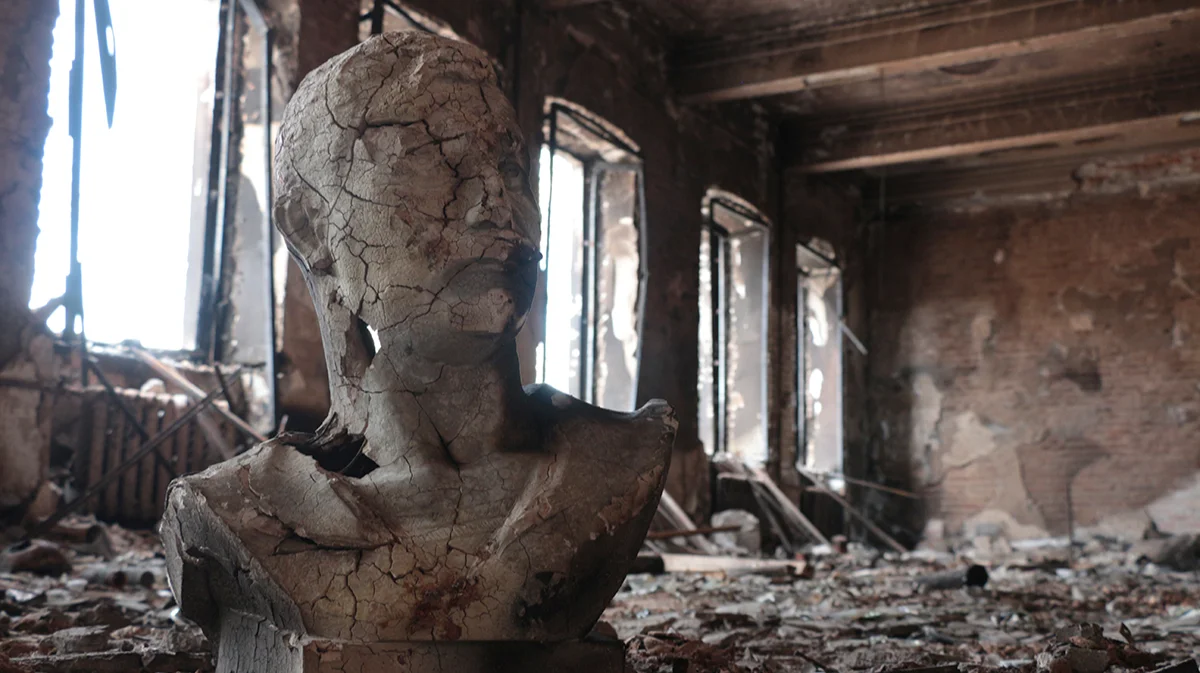
The view of the hall of the Mariupol Museum of Local Lore, which burned after shelling, Mariupol, April 28, 2022. Photo: AP / Scanpix / Leta
Mariupol is the only large Ukrainian city that in three years of “Switch” Russia managed to capture and hold. At the cost of defeating the infrastructure, the mass outcome of the inhabitants (according to various estimates, from 280 thousand to 430 thousand) and their death (according to Ukrainian estimates, at least 20 thousand). Based on the satellite images of the five city cemeteries, Human Rights Watch it was possible to establish that in the first year more than 10 thousand new graves appeared there, despite the fact that only about 2 thousand people had to carry their lives.
The answer to the tragedy was an active memory policy, replacing the losses of the glory of the new Fatherland. Russia actively erects or restores monuments of the Soviet era, a little less often - Putin or pre -revolutionary. However, he strives to consolidate in every possible way: she has always been here. The historian Konstantin Pakalyuk says about how, in a destroyed city, the front of historical propaganda was launched.
Zhdanov and "Correct" Ukrainian child
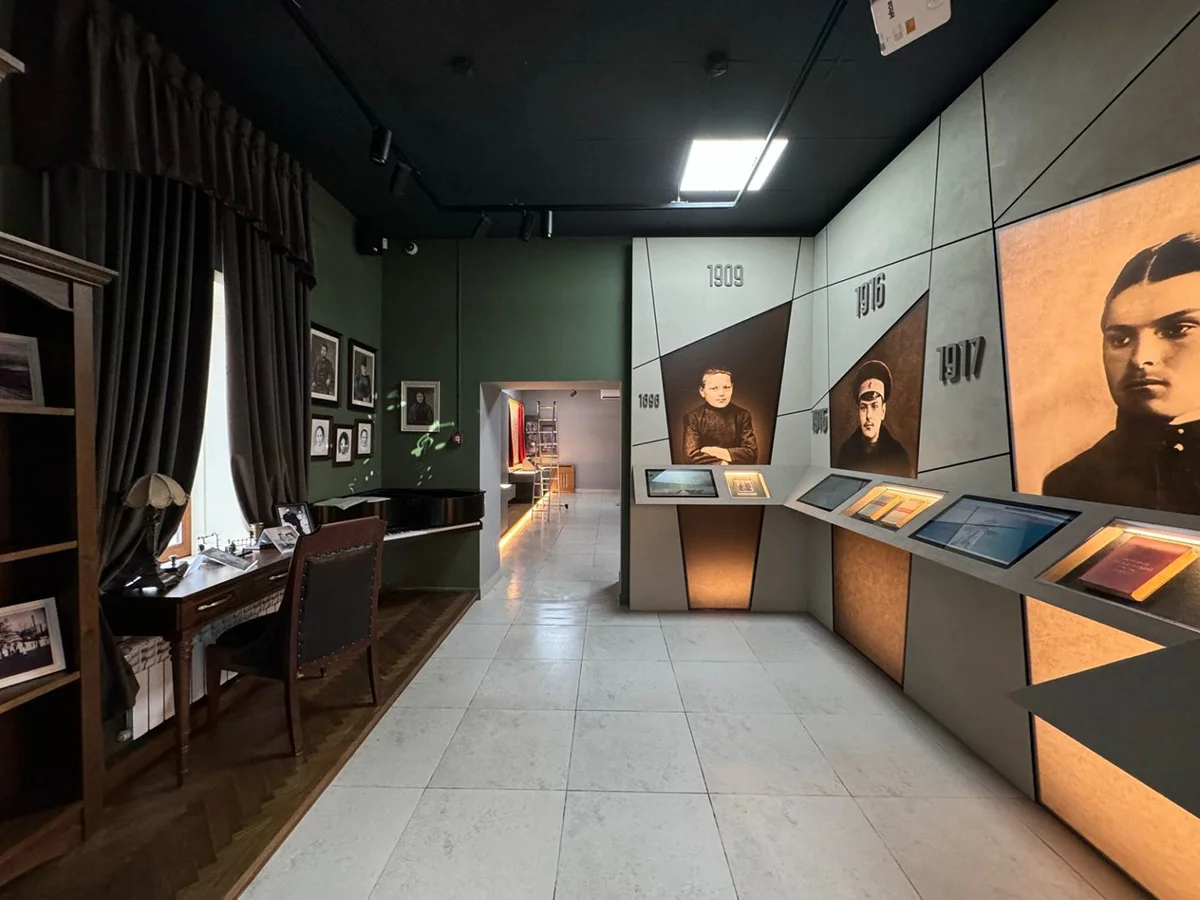
At the end of 2023, Putin instructed the Government of St. Petersburg to consider the creation of the associate of the associate of Stalin-Andrei Zhdanov, whose name the city bore in 1948-1989, in the “liberated” Museum of Mariupol. In less than a year and a half, and in the house where the Zhdanov family once lived, the exposition opened. The first tour was held by the director of the defense and blockade of Leningrad, Elena Lezik, whose branch was this museum.
Closing the event, the Russian media focused on the presence of the grandson of the title hero - they say, this is an example of celebrating family memory. True, she turned out to be elitist and obviously annoying by state patronage. “We at one time survived the 1980s, when the memory of Andrei Alexandrovich was virtually trampled,” said the grandson, implying either the return of his historical name to Mariupol, or the retraining of the Zhdanov museum to the Museum of Folk Life. Or maybe he hinted at the “offensive” mention of political repressions, including the fact that his grandfather “heroically” signed the shot lists of innocent?
Judging by the media reports , there is nothing in the new museum about Zhdanov’s participation in Stalinist crimes. His family story flows into a story about activities in the state and military field as one of the leaders of Leningrad during the blockade. And this makes it possible to move on to the history of Mariupol, however, modern: as Z-editors of Victory “liberated” the city. “Residents of Mariupol also experienced the hardships of blockade terrible days. These memories will forever remain in the memory of our people, ”said Oleg Morgun, the head of the occupation administration, inadvertently equalizing the Nazis and Russians.
The children were also drawn into these historical and political games by organizing an exhibition of their works. The local media released the plot with a younger school student who made a layout of his destroyed house, near which he placed a tank and a trench with a Soviet red star.
On the camera, the boy told how during the blockade of Mariupol he was hiding in the basement from the shells, how scary and hungry and how he rejoiced when the Russian soldiers gave him food. He completed the story by calling for the world and the wish of the victory of the Russian army.
"Horror is not in ruins"
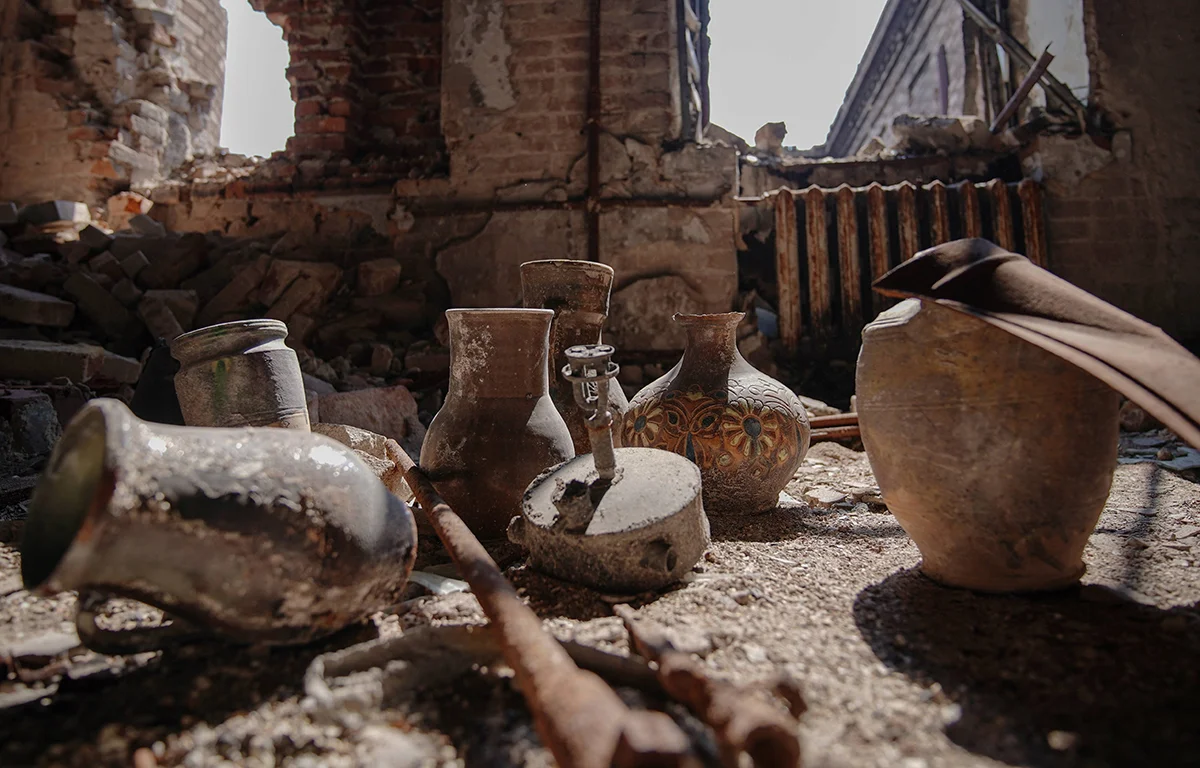
Local museums were less fortunate. In the spring of 2022, during the assault, the museum of Mariupol burned down , having lost almost the entire collection: out of 60 thousand exhibits, about 2 thousand were left . Mostly books and Polovtsian stone women. The Art Museum named after Arkhip Kuindzhi was badly damaged by the Russian bomb, but the director managed to hide the collection of paintings, which was soon taken to Donetsk. In the Russian media, the Ukrainians and the "Azovites" were traditionally entrusted for destruction.
“But the worst is not the ruins themselves. The worst thing that they tried to turn the history of people, their city, their land, all that they lived into ash, ” wrote the official“ Russian newspaper ”. You can’t say better.
In the fall of 2022, the Russian Historical Society (Rio) took up the restoration of both museums and even attracted the means of philanthropists for this. True, two years were not enough. Currently, the authorities report that the reconstruction of the local history museum is about to end. And about the artistic - silence.
By the way, another object of culture, namely the drama theater, was a little more lucky: they promise to open it by the end of this year, however, only 65% of the work was completed by the beginning of 2025.
In the summer of 2023, the Museum of Local Lore of Mariupol started a page on VKontakte, where he talks about the history of the city, reposts the materials of Russian federal departments, and also occasionally recalls “Svo”. So, under the third anniversary of aggression, he erupted with a post on the uniqueness of the Mariupol military operation, because in 86 days the “allied troops of Russia and the DPR took the“ sea gates of Donbass ”with the balance of forces with the units of the Armed Forces of the Armed Forces of the Armed Forces of the Armed Forces of the Armed Forces of the Armed Forces of the Armed Forces of the Armed Forces of the Armed Forces of the Armed Forces.” There was also the story of the local “hero”, 40-year-old Nikolai Dupac, who back in 2014 went to the “militias”, fought near Donetsk, and now he came to his hometown with weapons in his hometown, on whose streets he died.
In the meantime, the museum history of Mariupol is developing temporary projects. So, in early February 2025, an exhibition on the history of Russian military medicine from the Patriotic War of 1812 to “Swate” was opened at the Mariupol University of Mariupol. The money was given by the Russian Historical Society ( chairman Sergei Naryshkin; not to be confused with the Russian Military Historical Society of Medinsky. - Approx. Ed. ) And the Presidential Fund of Cultural Initiatives.
Another Museum of the “Battle Field”, dedicated to the “Svo”, planned to open in November 2024. At the beginning of the year, his opening was announced by the Secretary General of United Russia Andrei Turchak, and the local “United Russia” and State Duma deputy Zurab Makiev took up the project. This multimedia museum was supposed to be placed in the house of non-profit organizations, and the exposition was supposed to unite two heroic- “liberation” stories-1943 and 2022.
In the summer, the Donetsk Canal removed the plot that the museum would open the doors on the third anniversary of “reunification”, and the inhabitants were already invited to bring exhibits testifying to recent events. However, the lack of subsequent news suggests that the project, to put it mildly, dragged on. It is easier to revive Soviet apologetics than to take on much more fresh topics.
Occupant Kutuzov
The propaganda thesis about the current war, which corrects historical injustice and restores the “natural course” of history, requires real reinforcement. What could be more convincing than propaganda, albeit cast in bronze?
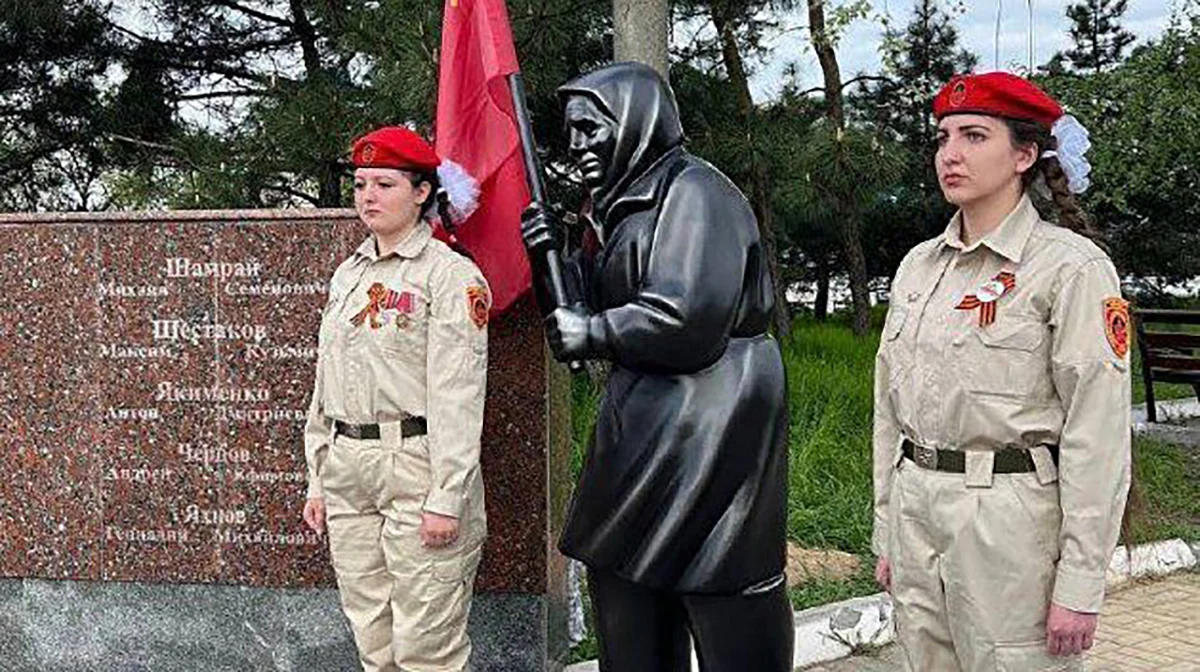
The love of the Russian authorities for self-sinking in solid material forced to establish the first memorial sign in early May 2022-even before Mariupol was completely captured. The currently forgotten grandmother with a red banner came to open the curator of internal politics, the deputy head of the presidential administration Sergey Kiriyenko, but placed it not anywhere, but near the stele with the names of Mariupol residents-the heroes of the Soviet Union.
Much more logic was in the installation of a bust of General Roman Kutuzov, which appeared in April 2023. At the beginning of Svo, he served as the deputy commander of the 8th Army, and actually commanded the 1st corps of the “DPR”, which played one of the key roles in the capture of the city. He died in June near Popasnaya.
The Warrior wrote that Kutuzov almost personally took the soldier into battle. True, in recent years we have not found traces of the formation of this heroic image.
Yes, and in Mariupol he met pompusively, with the participation of the head of the "DPR" Denis Pushilin and Andrei Turchak, but not in the central square, but near the building of the Mariupol school, simultaneously named after him.
Apparently, it takes time that yesterday, Ukrainian schoolchildren under the strict leadership of teachers perceive the Russian narrative as the only true one and learned to consider the winner of the person who destroyed their city.
Maybe for the same reason they are in no hurry to perpetuate the same Donetsk separatists? Although there are promises. At the end of February, 2025, the occupation head of the city Oleg Morgun met with storm gum volunteers, promising to consider installing the monument to the heroes of the 2014 militia. True, it will be difficult to tie this story to Mariupol. Then, almost 11 years ago, the separatists briefly captured him, but were promptly expelled by the Armed Forces.
No place for tragedy
It is much easier to mark the occupied Mariupol “with their own” monuments or restore the Soviet, partly returning them, partly transforming the former symbolism - in order to confirm Russia's centuries -old presence - they say, it was always here, just for a short while.
Of course, first you need to clear the city and its surroundings from the "unnecessary" Ukrainian heritage. We coped with this quickly. In the spring of 2022, the monument to the hetman Sagaidachny was destroyed, and they also removed the cross from the memorial to the soldiers of the Second World War-due to the fact that it was established by the Azov fighters. In the summer, the monument was demolished by Vasily Slepak (the opera singer and the hero of Ukraine, who fought in the right -wing sector corps and died in 2016). In October, a monument to the victims of the Holodomor was dismantled , sending it granite slabs for processing.
At the same time, they took up purely Russian symbols. In mid-September 2022-that is, even before formal annexation-with the participation of representatives of the authorities of St. Petersburg, the occupation authorities opened the equestrian statue to Alexander Nevsky. Someone here will see the echo of the newly passed 800th anniversary of this ruler, but do not rush: his image has long been used to mark the boundaries of the Russian/Russian space and even state presence abroad. And this tradition was formed in pre -revolutionary times, however, then preference was not given to monuments, but to the personalized temples.
In general, one can not build a new one - it is enough to restore the old, Soviet, and present Mariupol as always living Soviet heroic memory. Moreover, in May of 2023, Putin appropriated him the title of city of military glory, and this title must be consistent.
Back in 2022, the restoration of the Local Park of Victory and MiG-17 Monitor Park began . The next reconstructed the monument to the Azovstali employees who died in the Great Patriotic War, pilots , steatra , sailors , artist Kuindzhi, as well as a large-scale memorial to soldiers-liberators in the Primorsky Park. True, the latter is partially. Successful restoration work reported in 2024, but even now they are not completed . In addition, in the past year, the monument to the heroes of the Civil War was also restored .
In the Russian media, all this seems to be an example of the special care of the new authorities about the history and protection of historical memory.
In the current year, the Russians are not going to stop the 80th anniversary of Victory. Near the Zhdanov museum they promise to put his bust, and the city is to decorate with a steel of military glory.
The only exception for mournful memory was made by the Russian Orthodox Church. In November 2022, a worship cross in memory of the dead civilians of the city was consecrated on the territory of the St. Mikhailov Cathedral. The opening of a full -fledged monument in another place was also discussed, however, as we understand, the WHO is still there.
The church is a convenient and faithful ally of the Putin authorities, which is allowed a little more than the rest, in the case of a conversation about state crimes - whether it be Stalinist repressions or civilian victims of the occupied city. It is understandable: it is possible to pray for ruined souls, but to ask who the criminal is a criminal article.
The invaders turn collaborators into heroes
The most strange incident occurred under May 9, 2024, when local publics flew around the news that the Russian Guard was restored by a monument in honor of the Mariupol football players who participated in the local “death match” during the German occupation in 1941.
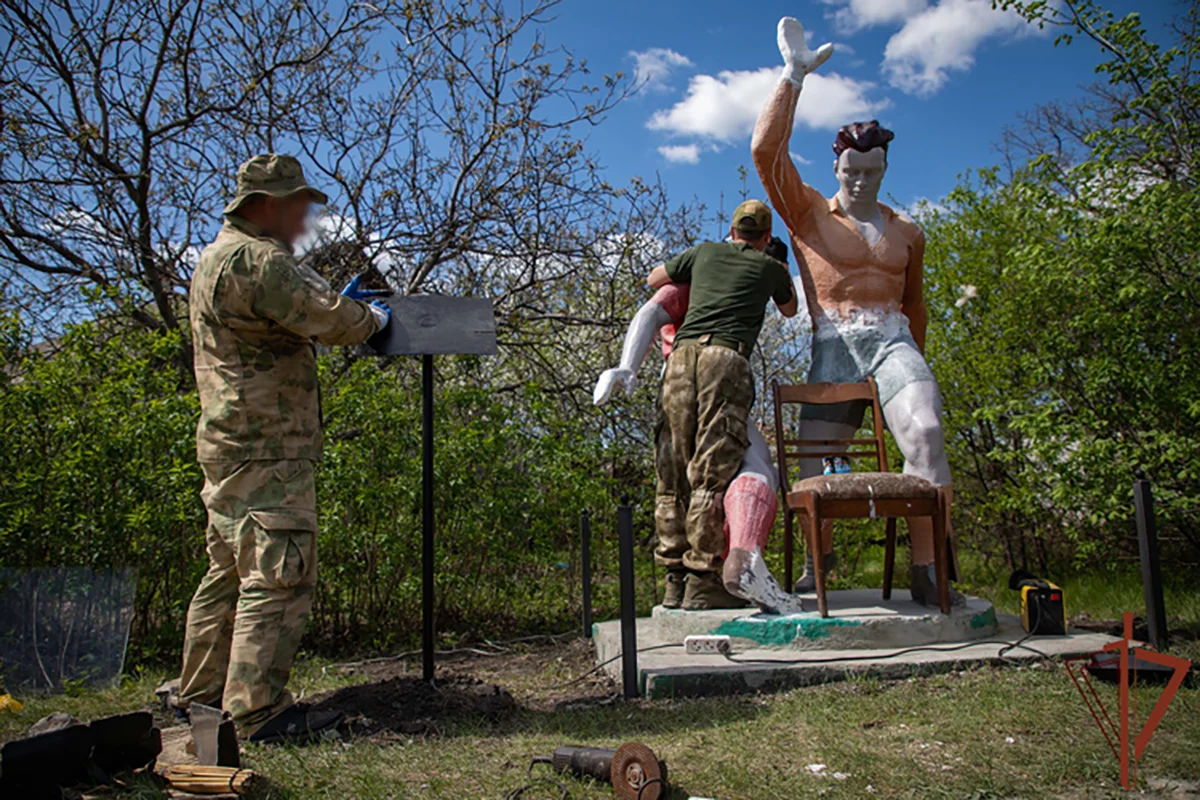
Three things are notable here.
Firstly, a completely obvious claim to the competition of symbols, since many have heard about the mythologized (and essentially invented ) story about a similar match of 1942 in Kiev with the participation of the local Dynamo.
Secondly, no monument had previously existed: the Rosgardists simply found a kind of garden sculpture of football players, painted it and “reinforced” it.
And thirdly, they did this not in Mariupol itself, but in the snowy, which has been under occupation since 2014.
If you delve into history, then such a match really took place : it took place at the end of October 41st, three weeks after the occupation. Soviet football players of the Ilyichevets factory team won, and some later got into concentration camps. With the Germans, the independent team of Mariupol, by the way, existed and further participated in games with other collaborations clubs.
Foreign recipes for Russification
For the Russian authorities, solid stalls or bronze forms are more important than living people, but it will be unfair to say that the authorities committed the authorities and museum workers. At least closely connected by the Ministry of Higher Education and Rio are looking for ways of local integration into scientific circles.
So, in the fall of 2022 in Mariupol, the department of Rio opened. Of the Russian scientists, the director of the Institute of Archeology of the Russian Academy of Sciences, Nikolai Makarov, came there. The Executive Director of RIO Konstantin Mogilevsky emphasized that their task is to “contribute to the speedy and complete integration of Mariupol historians into a large Russian family.” Recall that even according to Russian laws, Mariupol at that time was part of Ukraine. Almost a year later, the Rio youth club appeared at a local university. And in the 2024th instrument of the integration of Russian and living in the occupation of historians, the 1st Interregional Forum of Museum Workers was performed , whose Russian participants went to Mariupol to educate “local Aborigines”, how to do a museum business.
A much larger event took place at the end of September 2024. On behalf of Putin, all the same Rio held a large conference “History of New Russia”, where historians from all over Russia tried to call. The lack of a program in public access is noteworthy, apparently, not everyone wants to glow in the occupied territories.
Of course, the Higher School of Economics again stood out, represented by the director of the Institute of Regional Historical Research, Ekaterina Boltunova, quite famous and respected even in the Western Academic World. Among other things, with a lecture on the construction of the historical memory and intellectual heritage of Maurice Halbvax and Pierre Nora, she jumped to the site of the Donetsk Center for Ethnopolitical Rehabilitation. This militia-Tank, led by a former KGB officer Yuri Nikolaev, completely uneasy , is openly set to “ethnic cleansing of Ukrainians” in order to turn them into Russians-so far only by methods of culture.
The above story of the student shows that the movement goes to this direction. And the recipe is simple: enjoying solid forms and abstract images, not seeing living people behind them.
All this memorial activity in urago-heroic tones is part of wider attempts to hide the tragedy of war and turn the destroyed city into a tourist object. Projects have been developed since 2023, the authorities even report on increasing tourist flows, however, at best, only vacationers from the “DPR” manage to attract.
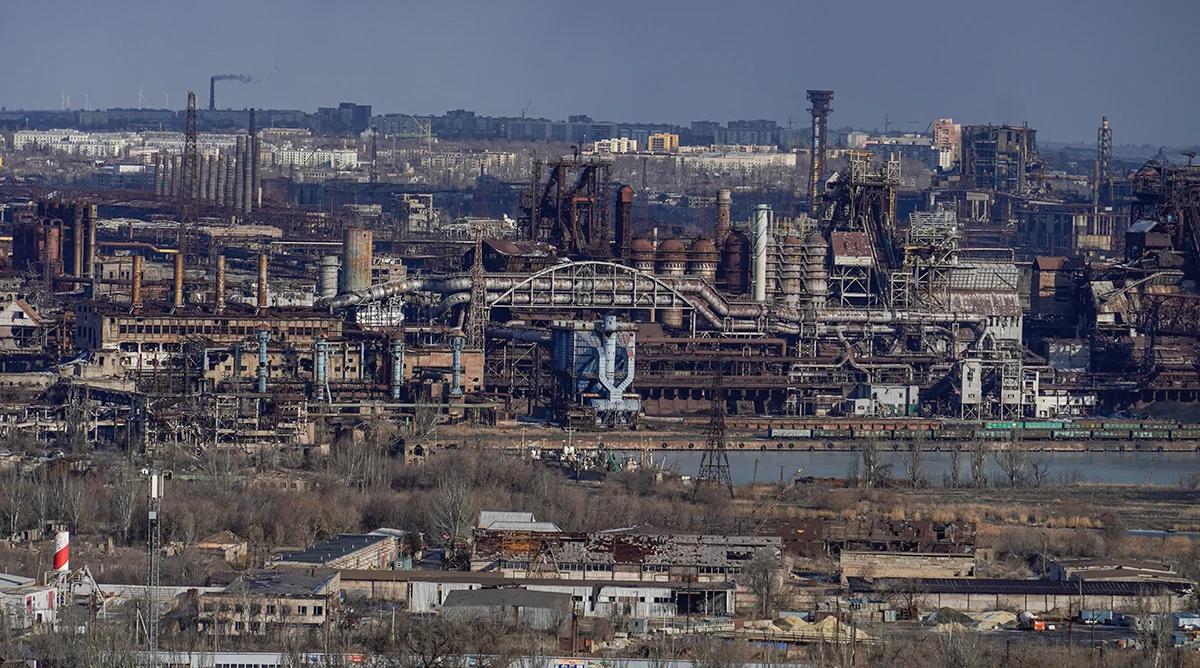
The Azovstal factory destroyed during the assault is proposed to be turned into an industrial park, where there will be existing small enterprises and an industrial steel museum. To kill a living enterprise in order to earn money on morally not burdened tourists with the help of his corpse - yes, it looks like a symbol of the cultural policy of Putin's Russia.