Translated material
"Erarta" against everyone
How patriots attack the largest private museum of contemporary art in Russia
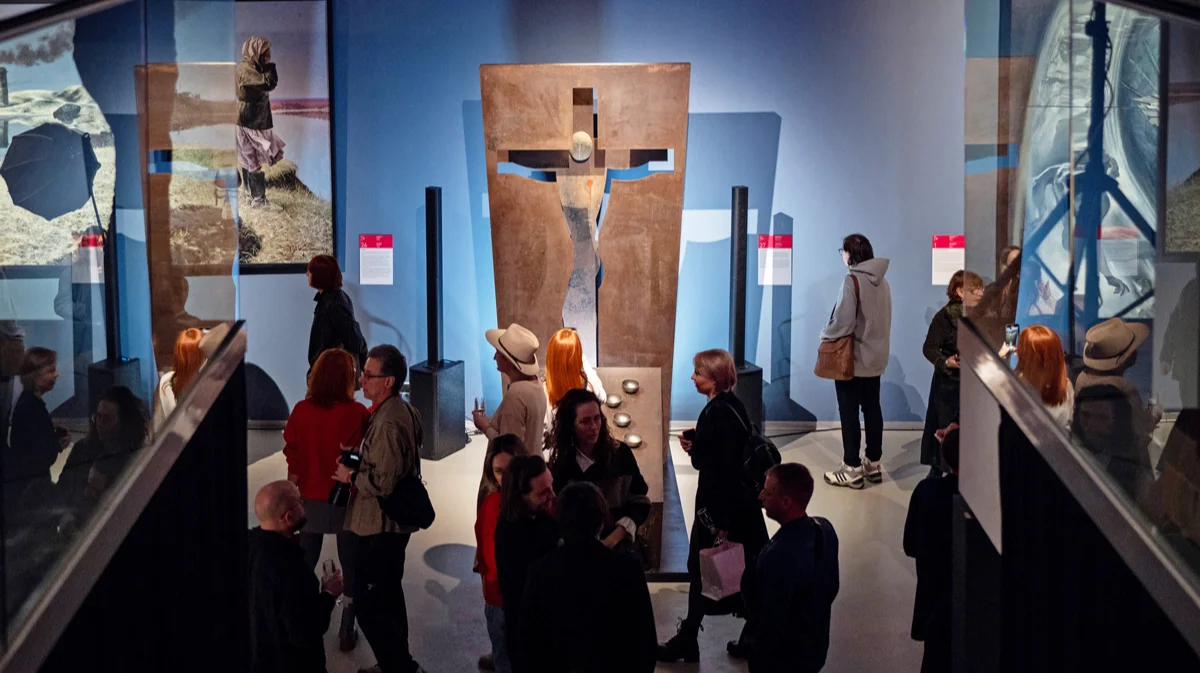
Visitors at the opening of the exhibition "Erarta Prize-2025" at the Museum of Contemporary Art "Erarta", St. Petersburg, February 6, 2025. Photo: Alexey Smagin / Kommersant / Sipa USA / Vida Press
In January, the leader of “Fair Russia” Sergei Mironov, at a press approach in the State Duma, called for dealing with the exposition of the St. Petersburg Museum of Modern Art of Erarta. The deputy noted that what was happening there, in St. Petersburg, in the president’s homeland, is unacceptable, ”and demonstrated photographs of several works that struck him the most. On the eve of this high -profile performance, Erarta was visited by the chairman of the Coordinating Council of Youth of Opened Russia Anastasia Pavlyuchenkova. Impressed by the “Factory of Russophobic images”, on January 20, she made several publications in her telegram channel and quickly collected the responses of friendly authors who recalled other “anti-historians”: Yeltsin Center, the Gulag Museum and the Soros Foundation, musicians who performed in Erart and now recognized by foreign agents, and even Soviet display artists. From these comments, Mironov’s message made a hastily, the purpose of which, Pavlyuchenkova specified, was not a call for the closure of the museum, but “restoring order”.
It is not the first time that Erarta is trying to restore Erarta. Polina Troitskaya tells what and to whom the largest private museum of contemporary art in Russia did not please.
Against "Erarta"
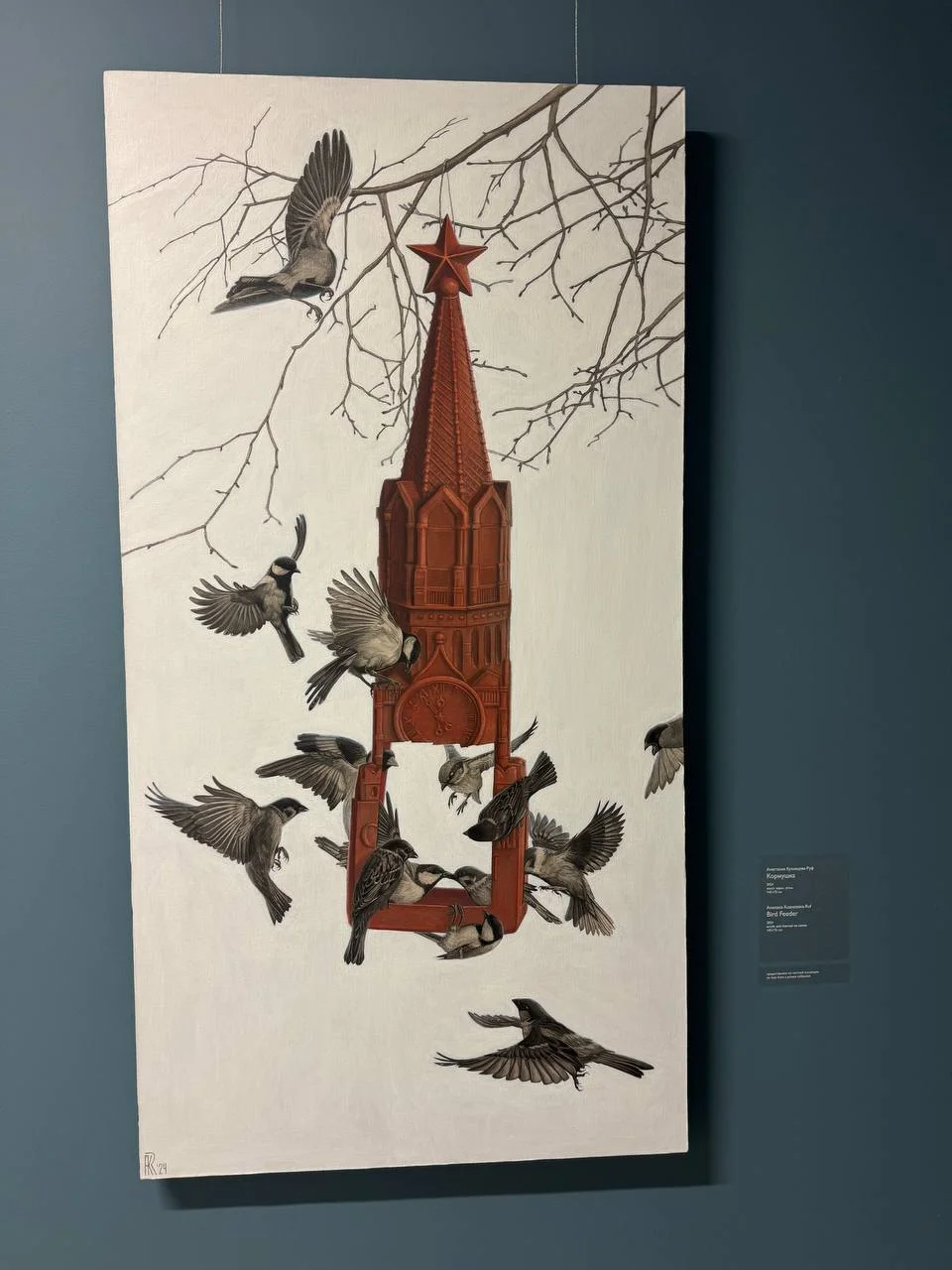
The interactive object of Evgenia Kondratiev Welcome to Russia is a nesting doll from the outside, an iron maid inside. Surrealistic sculpture “Elder Brother”-an egg in a thorns crown of barbed wire and a microscope-river directed at it-the author of which Julius Rybakov is a non-conformist artist, a dissident and human rights activist (this is Oleg Volkov convicted in 1976 the inscription on the wall of the Peter and Paul Fortress “You will be crucified” Does not know the shackles "). The painting “Store” of Anastasia Kuznetsova-Ruf, on which the bird feeder has the shape of a Spasskaya tower, and “Pluto’s baptism” Alexei Sergeyev, who draws quite optimistic cosmic prospects.
Mironov presented photographs of these four works at a briefing as a kind of evidence of an ideological crime. Everything is like a selection: the depreciation of the nesting doll and the Kremlin as national symbols, a sabotage against the demographic program and, probably, an insult to the feelings of believers and not believers in aliens. Of course, it is strange to call a souvenir nesting doll invented by the national symbol, invented by à la Russe style artists at the turn of the XIX - XX centuries in the image and likeness of Japanese and Chinese multi -component toys. Yes, and the filling of the Kondratiev option - the “Russian soul” - is quite safe, as it has soft rubber spikes. The “elder brother” of Rybakov is the author’s repetition of the work of 1987, which does not reflect on the theme of fertility, but metaphorically depicts the strictest supervision of totalitarian states and transnational corporations even over those who have not yet managed to “hatch”. In other works, you can indeed see hints of corruption, non -ism and the expansion of the Russian Orthodox Church, however, a violation of the law is not the creation of art, which affect problematic topics, nor such an interpretation are yet. Since the only true artistic method in Russia is not proclaimed, in any art object, if you wish, you can see the threat and demonstrate in this way vigilance, prevention and adherence to the presidential course and taste (it is noteworthy that the young Lieutenant of the KGB Vladimir Putin was engaged in the work of Rybakov in 1976).
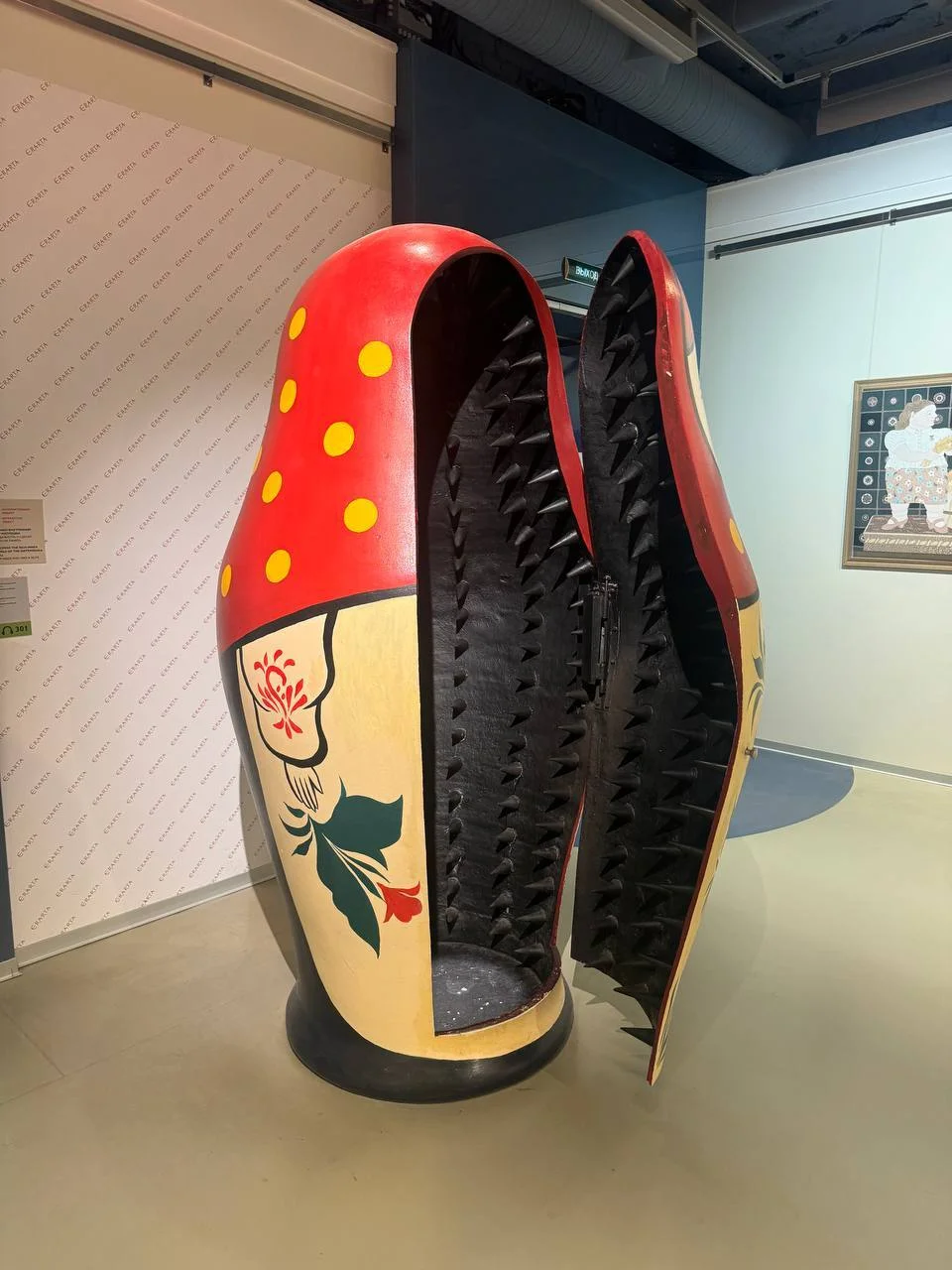
The deputies of the New People party, nevertheless, supported the museum: Ksenia Goryacheva noted that the fate of Erarta depends on the city of Petersburgers and guests, and the rash closing at the whim of several people can “be a tragic page” in the history of St. Petersburg; Dmitry Pavlov went to study the exposition personally, bought a museum subscription, climbed into the “Matryoshka” and urged everyone to follow his example, because “art lives thanks to the dialogue, a variety of opinions and emotions,” and private initiative should be maintained.
Boris Piotrovsky, vice-governor of Petersburg in culture and sport, commenting on the situation, admitted that he had not seen the scandalous “nesting doll”, although he was definitely in Erart more than once, but understands “bewilderment about some exhibits” of the museum.
In his opinion, the relevant authorities should decide what to do with controversial works, which citizens should turn to if they feel the need for this.
Piotrovsky emphasized that it is necessary to work with the problem “subtly and neatly”, because it is important to maintain “the opportunity to express it that we exist today”. At the same time, he called on to go to state and federal museums, as well as to friendly private museums, whose expositions "do not cause such issues." However, “Erarta” was also considered friendly. In 2021, for example, the Russian Society “Knowledge” held the educational marathon “The Art of Cognition” there, and the ambiguous exhibits then, including high -ranking culture officials, did not cause indignation.
In 2013, supporters of deputy Vitaly Milonov already attacked Erarta, trying to disrupt the lecture of the Hermitage Director Mikhail Piotrovsky “Museum as a Mirror”. Mostly, their provocative statements concerned the Hermitage exhibition of the Jake brothers and Dinos Chepmens “The End of the Fun”, which in those days the prosecutor's office checked for extremism after numerous complaints. Extremism was not found then, but Piotrovsky, at a lecture at Erart, that in the comments of the media explained : “The world is very complicated, the art is very complicated. The Hermitage shows a variety of art options that exist. ”
Since then, the political climate has changed, and Piotrovsky himself has repeatedly demonstrated loyalty to the regime. Nevertheless, although he did not openly support Erartians, the rejection of contemporary art in a recent interview explained all kinds of intolerance and, in principle, the inability and unwillingness to see art as such, even classical. Piotrovsky knows what he was talking about: in recent years, they complained about the Hermitage, not only because of Ronald McDonald and carcasses of Yana Fabra, crucified by the Caps, but also because of the abundance of naked hugging figures in painting and sculpture. His son Boris Piotrovsky also knows about this, but on duty is forced to delegate the examination of works of art to the regulatory authorities.
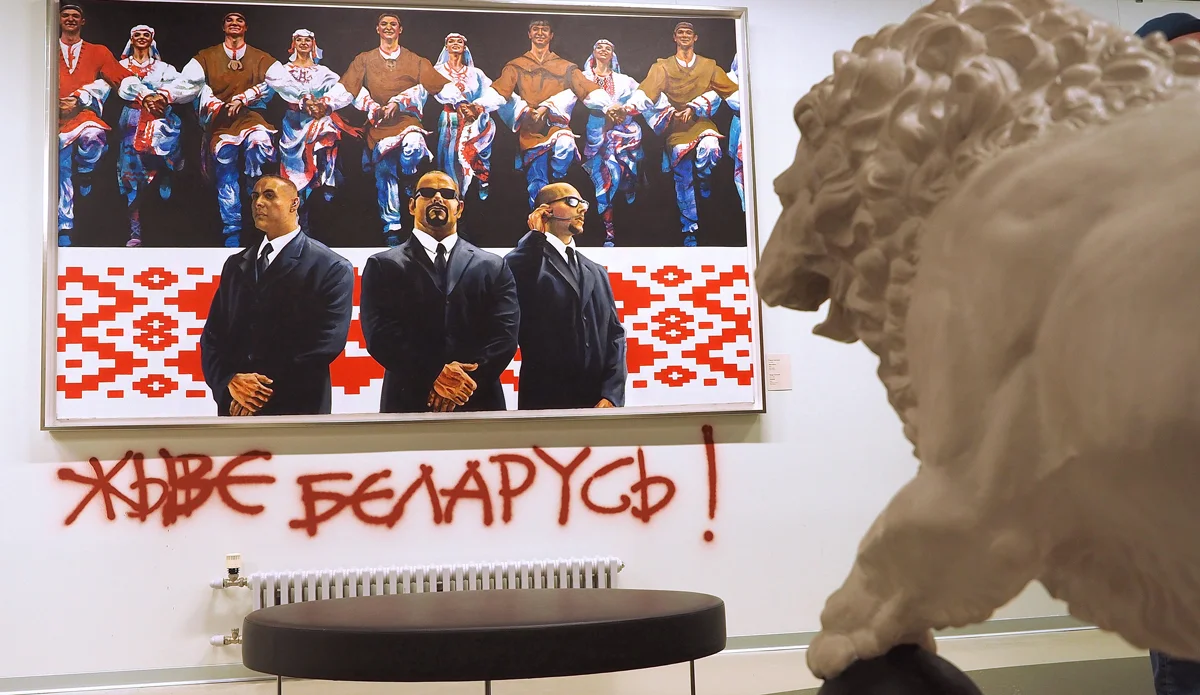
Last year, Erarta was already tested. Then the reason for drawing up the protocol was the inscription "Live Belarus!" Under the picture "Festival" by the artist Sergei Grinevich. A few months later, the Vasileostrovsky District Court terminated this case on “propaganda or public demonstration by Nazi attributes or symbols” (the slogan “Life Belarus!”, Conducted by the raising of the right hand, is prohibited in Belarus), but not due to the insolvency of the accusations, but due to the expiration of the statute of limitations to administrative responsibility. The work was exhibited in the museum since 2016, and the inscription under it was made in 2020, when the slogan was actively used by protesters against falsifications in the presidential election in Belarus.
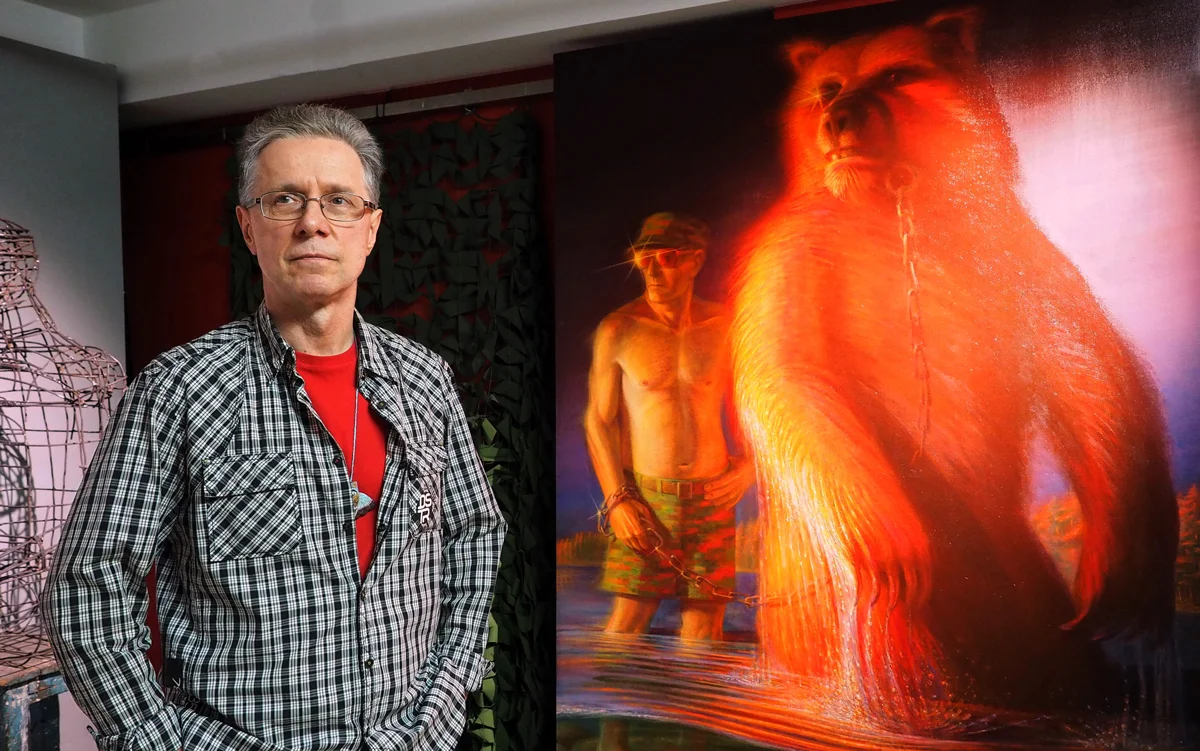
In 2023, in the center of the scandal was the painting by Vadim Grigoriev-Bashun “Bathing of the Red Bear”, presented at the annual exhibition “Erarta Prize”. Then the displeased visitor considered that the work of 2020, which depicts a bear, led by a chain by a man reminiscent of Putin, discredits Russia, the president and “Switch”. The case was not brought against the museum, however, Grigoriev-Bashun, who has been working with the topic of war for the past fifteen years, has been increasingly having to deal with the abilities and transfers of exhibitions (its first cancellations, however, occurred immediately after a full-scale invasion of Ukraine, since the leaders of a number of museums considered the work “War of War” at the same time).
"Erarta" against
The enemies of the Erartians are not only the ingratiating officials and zealots of morality, but, oddly enough, and the advocates of a good taste represented by a professional artistic community. The museum is held apart: does not build a dialogue with the state, does not follow the institutional mainstream, does not try to please experts and, despite the presence of gallery function and pool of artists, does not seek to be part of the already separate market of Russian contemporary art. Potential conflicts and sharp statements of deputies also do not comment.
Erarta is a private institution with its logic: the collection and exhibition plan here are formed according to internal subjective criteria, and interaction with visitors is built without looking at fashion formats like art-media. There are no familiar benefits for visitors to special categories - discounts are laid only for children and pensioners, but not museum workers or participants of “Switch”. A one -time ticket is more expensive than a subscription for the whole year, for the acquisition of which it is necessary to fill out a questionnaire and take a picture - a passage to Erarta is carried out using facial biometrics.
Thus, the base of visitors is formed and a minimum threshold arises, which can hardly overcome both vandals and usually privileged representatives of art testing.
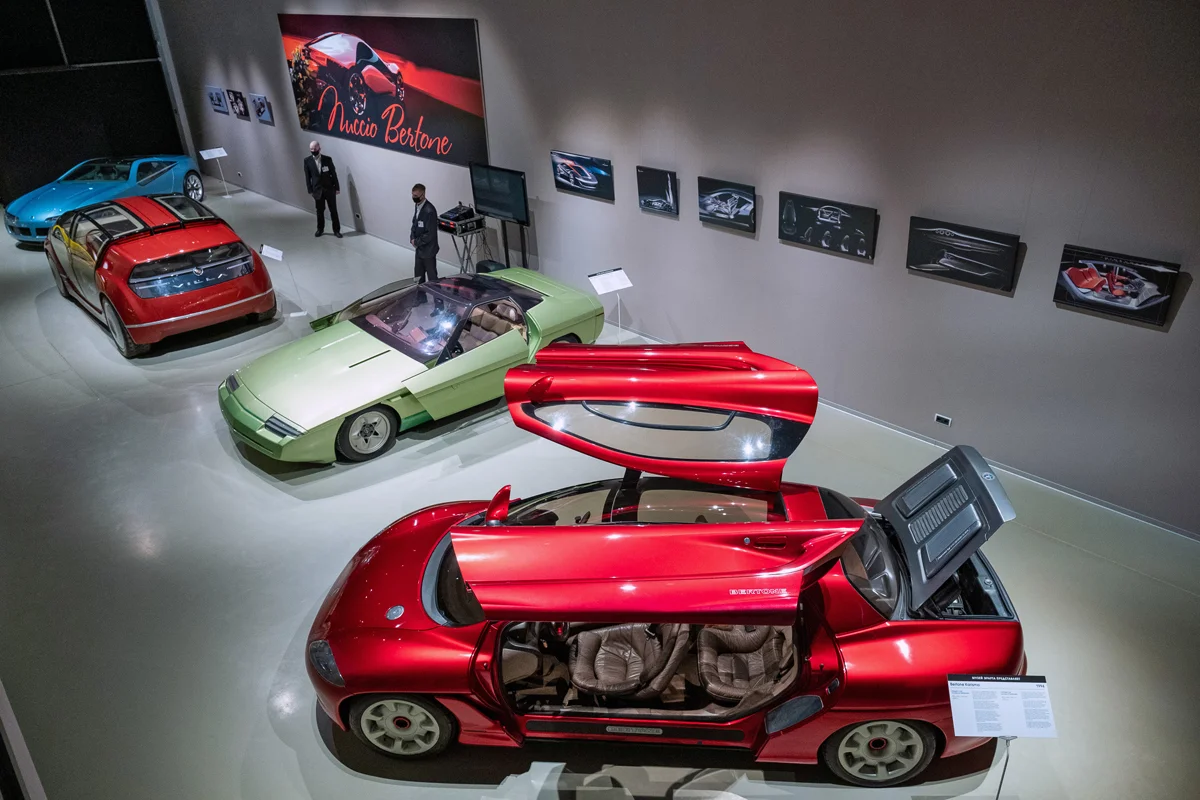
Despite the fact that personal exhibitions at Erart are carried out by many famous St. Petersburg artists, and work from constant exposition is not advanced contemporary art-it is quite comparable with the collection of the Museum of Art of St. Petersburg of the XX-XXI centuries and the collection of non-conformist art museum absorbed by it, the professional community is hardly ready to recognize and even more so to love "Erartu." The museum is accused of omnivorousness, which, however, can be explained by the marketing course: let everyone find art for themselves. The exhibitions of Oscar Rabin, Valery Lukki and Vladimir Ovchinnikov, the retrospectives of the Dagestan contemporary artists and the Ural post -perestroika avant -garde, and also the rare models of the Lamborghini supercars, glamorous photographs, hyperrealistic images, generated only as neuroset, as well as salon things, and salon things, were shown. designed for the sale of an unpretentious public.
In addition to such exposure unevenness and unwillingness to instill in the viewer, galerists, curators and artistic critics cannot forgive Erart's lack of intelligible museum design, which is undoubtedly important to show “real” contemporary art. The stereotype that the museum in a row has been hanged in the kitsch frames, it seems, on the day of the opening of Erarta, and since then, probably, many experts of the museum have not visited.
The hostess of the museum, Marina Varvarina, is the figure as non -public as her brainchild is ambiguous. They do not seek to fit into the hierarchy of modern Russian art. The widow of businessman Dmitry Varvarin, who was killed in 2000, either because of the Orimi concern, or because of the participation in the same year in the Governor's campaign of the National Patriotic Patriotic, Yuri Boldyrev, she opened Erarta ten years after his death. The museum was based on a personal collection, so reproaches in the taste are justified.
Varvarina, however, at the opening of the museum emphasized that “the heart approach is not amateurish,” and this principle remains unchanged. “We did not have a goal of impressing a narrow group of specialists. Like ten years ago, in the focus of “Erartians” is a spectator, ”she said in one of the last interviews. The authors who are sincerely happy to exhibit in the museum, despite the distance from the professional art community, are still a lot. And the point is not only about the financial capabilities of the site (the prize prize fund is really great), but also in the huge audience that the museum attracts, and in humanistic values that are unobtrusively promoting.
"Erarta" for everyone
At the Erarta Prize, which is open now, explication is often appealed to digital metrics: how many work gained likes and comments on social networks, how many people “responded”. Popularity here is not just an argument, but the evaluation criterion: the award is awarded according to the results of the audience vote. However, the presented works, even if their level jumps strongly, is not so simple and superficial.
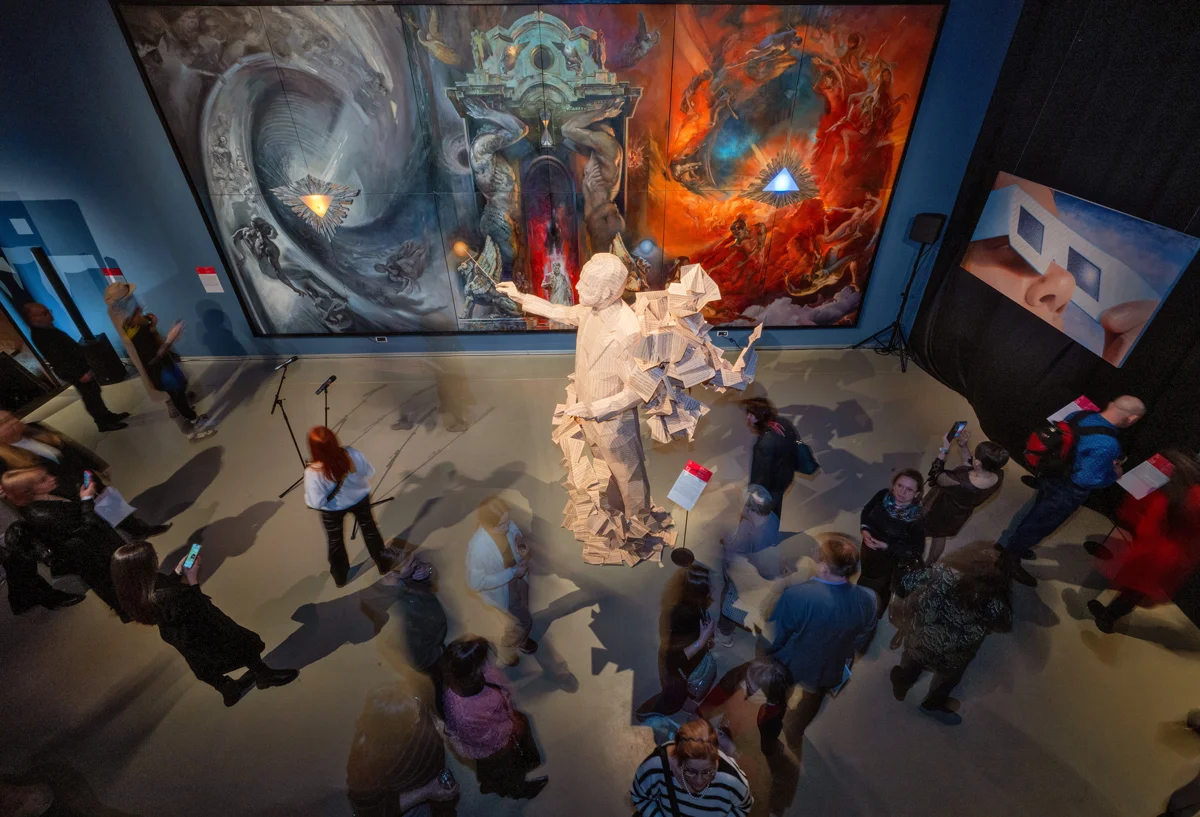
The texts to the exhibition are not burdened with philosophical and cultural references, however, they explain, for example, what is and what is bad for mealing, why you need to sort garbage and that any war is death and destruction, and not a reason for heroic pathos, loaded with Christian symbols. The prize, temporary exhibitions and permanent exposition suggest reflecting on other issues that are difficult by current standards. To love the homeland is virtue, but what if this love is not mutual? The crowd makes a person bolder, but at the same time more cruel. Freedom exists - but how available is it?
The history of Russia is rewritten again and again, erasing not only collective, but also private memory - under these conditions the work of contemporary artists become documents, evidence of time.
Here is the exhibition “In the Shadow of Ararat”, on which Armenian and Turkish artists enter into dialogue, despite the historical conflict. Here is just one of the halls of the constant exposure: the “borders of the empire” by Nikolai Polisky, predicting the inevitable disappearance, immediately a large fragment from the Nobel lecture by Joseph Brodsky (“The world is likely to be saved, but a separate person can be”), the “secret evening” Andrei Filippova, criticizing Soviet rituals, and the paint of Aleksai Bazanova, who depicts, according to Audio Gide, "the most important conflict of modernity is the impossibility of communication between a person from flesh and blood and a state machine." Here the girl, lingering at one of the work, by chance, asks the satellite: "I did not think to discuss it today, but still - they were a patriot?"
You can reproach Erarta in populism, but contemporary art by its nature is democratically and critically charged. Few cultural institutions can afford to speak sensitive topics with the viewer in the language that he understands-not in a bird, accessible in a closed art environment, not on the Ezopov and not on the state-owned new heine. The disunity and lack of mutual support within the art community only enhance its vulnerability.
It is noteworthy that at the opening of Erartes in 2010, director Alexander Sokurov expressed "anxiety for the fate of the Motherland, and in connection with it - for the fate of a private museum, which may suffer in the case of political cataclysms."
In 2019, Marina Varvarina presented her book “Valley of Paints” (in Erart, several unacceptably rainbow halls are dedicated to this project). Based on the theory of the color of Johann Wolfgang von Goethe and psychological techniques like the Lusher test, she composed a geopolitical fairy tale about the Union of Red, the United States of the Orange, the Kingdom of the Blue and other colorful states that guarded their monochrome boundaries and prevented the influence of neighbors, because “ancient predictions stated that the spontaneous mixing of all colors would end Brown advent and end of color. ” Some heroes nevertheless violate the taboo and discovering for themselves not a terrible bright and diverse world - it is this knowledge that turns out to be the most effective against the brown threat.