
Translated material
Military power "Europe"
The EU summit decided that it makes no sense to count on the United States, and decided to build his defense. And Hungary was isolated
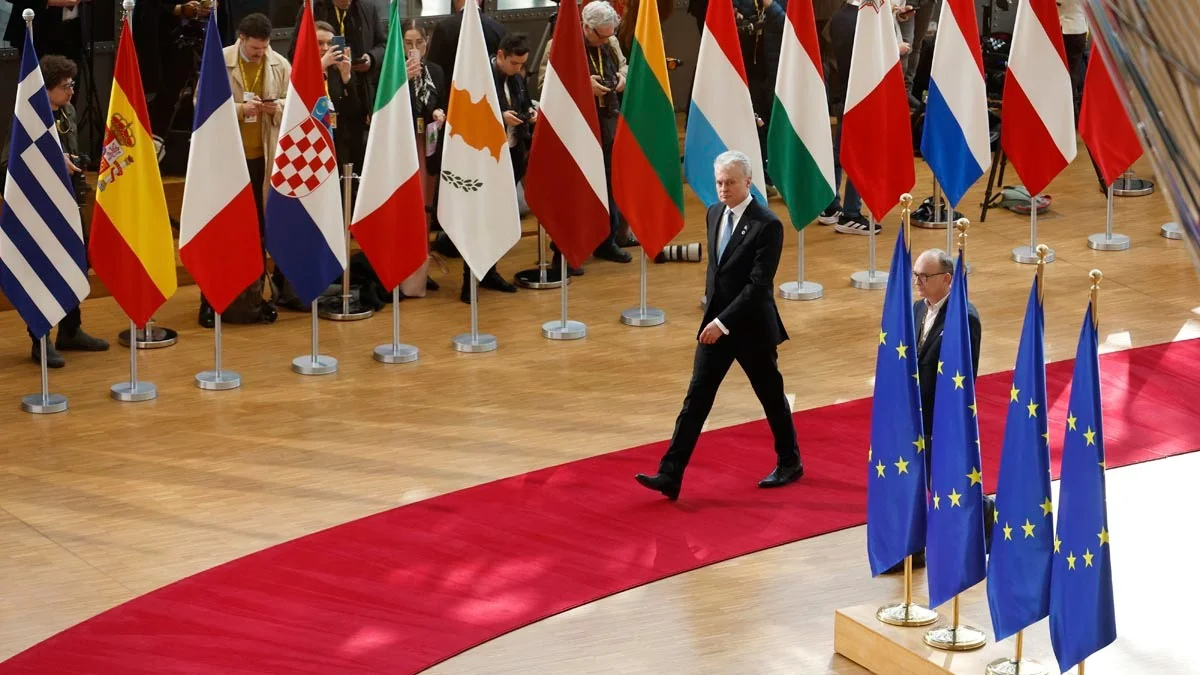
Photo: AP / TASS
The heads of state and governments of the European Union countries held an extraordinary summit in Brussels in order to officially confirm the course of turning Europe into a military power at the level of this association with all the ensuing financial and economic consequences. The course that is declared at the recent meetings of the leaders of the Coalition countries in Paris and London.
Ukraine is only part of the problem
The EU policy on the support of Ukraine after the Trump team turned towards the abandonment of American promises to Kyiv and the allies were also on the agenda. But rather, as part of the problem and a specific reason. This topic is said by little new, with the exception of the next numbers of help, assumptions and tactical intentions. The main idea is that even after the world in Ukraine in the new geopolitical situation, Europe should be an independent pole of power, and not just the window of the world and prosperity under the US military umbrella.
And in a year or two it is unattainable, given that over eight decades of the “peaceful project”, especially in three decades after the destruction of the Berlin wall, the defense muscles of Europe have weakened, Europeans were used not to spend money on “iron” and the army, and their military-industrial complex remained a patchwork of dozens of national production with their tasks and their own standards. Weapons were bought in America and counted on its protection as the main support of NATO.
To increase the European military fist, you need time, a lot of money and the corresponding structures. “Europe of Nations” - the dream of law -Popopulistic parties and the movements of the entire continent - in this case is not an option. Therefore, at first, along with the strong-willed decisions of certain states of leaders, the finished mechanisms created as part of the EU, the "large seven" and NATO. To the extent that US membership in the last two does not hurt.
On Thursday, March 6, the leaders of the EU member countries discussed how to use the organizational and financial capabilities of the Union in this. And about how, within the framework of the laws, structures and rules of the EU, it is still possible to help Ukraine in order to soften the consequences of the sudden turn of Washington.
One of the first before the summit on the way to the meeting room to journalists was the head of the EU diplomatic department Estona Kaya Callas. She immediately placed the priority of the agenda of the Extraordinary meeting of the European Council.
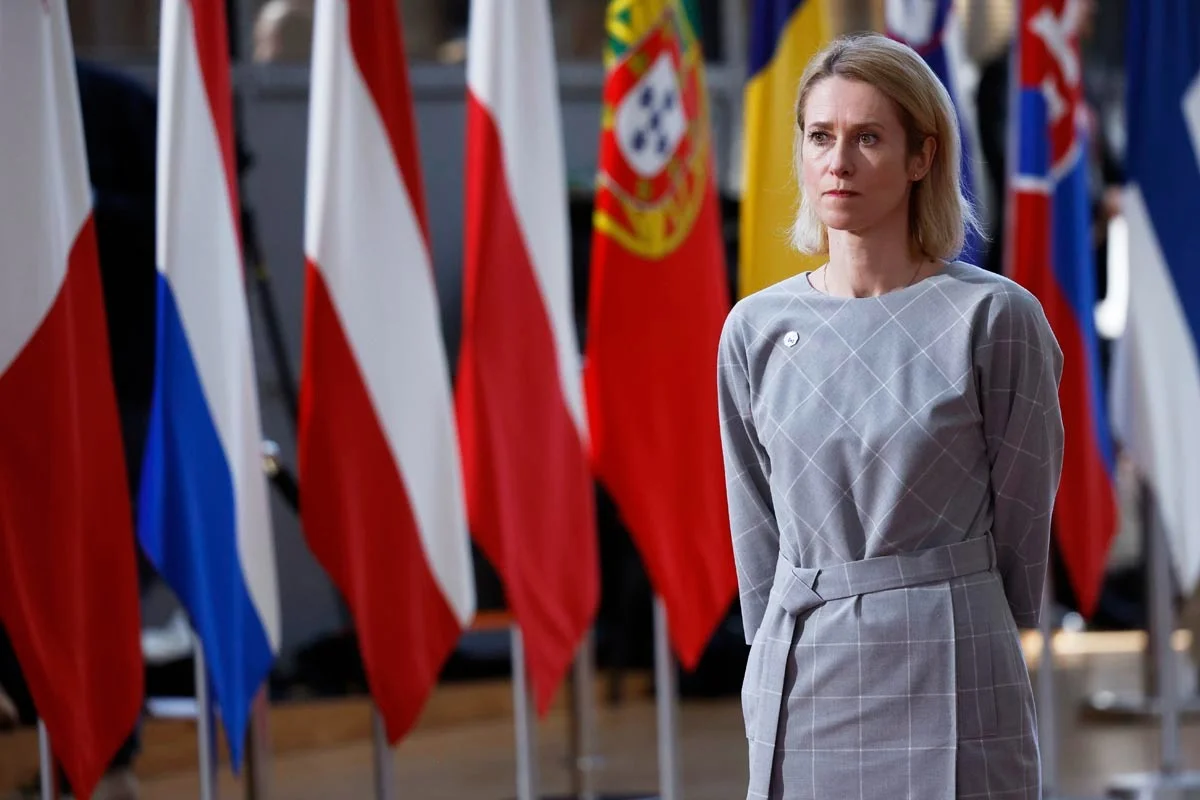
* Firstly, the course to strengthen the EU's own defense capabilities. First of all, financing of defense. All options are on the table: from grants from the union budget to the redistribution of "cohesion funds", originally intended for pulling up less developed regions, as well as a change in fiscal rules. She made it clear that the work is no land and the continuation should be at the next summit on March 20 and 21.
- Secondly, of course, Ukraine: a political agreement on its support for the European Union so that it can "finish this *** on its own conditions."
It was already obviously clear that the Hungarian Prime Minister Viktor Orban would not support such a political agreement. That is why, for its adoption, which, according to the EU law, requires consensus, provided for the formula of the “coalition of those who wish”. So that one country could not block everyone else. For the Slovak Prime Minister Robert Fitzo, who is also usually against the EU initiatives in support of Ukraine, a clause was added to this document that Slovakia and Ukraine themselves agree on a possible resume of the transit of Russian gas.
The further move and results of the summit showed that the prepared script was generally executed. All 27 EU members adopted the final “conclusions”,
The bulk of which is devoted to the long -term exchange rate of Europe to strengthen its own defense potential, which would allow it to protect her interests autonomously, without the United States.
Specifically, only three of the most banal points are included in the main document, and the substantial part about the support of Ukraine by the European Union is designed as an application that the leaders of 26 countries, except for Hungary.
Formality is important to the European Union as a legal basis for the disposal of common money. In contrast to states where determining can be strong -willed decisions of leaders or governments. The final decision allowed the majority to state the unified will of Europe to build a powerful defense autonomous from the United States. And also to talk about almost monolithic solidarity with Ukraine: Orban was in isolation.

This made it possible to say that it was on the right side of the story and that Europe actually isolated itself - from the USA, China and Russia, with which Hungary is all right. And that for all the planned projects, along with the support of Ukraine, the EU may simply not have enough money.
Zelensky was invited with honor
The presence of Vladimir Zelensky at this EU summit was first expected only virtual, according to remote communication. But then (apparently, given the resonance from his verbal fight with Trump in the Oval office), it was decided to increase the status of the Ukrainian president. Belgium organized his audience with the king of the Belgians of Philip. Zelensky also met with NATO Secretary General Mark Rutte.
Zelensky practically did not communicate with the press in Brussels. A few minutes before the working lunch, which began the summit, the President of Ukraine went to journalists along with the chairman of the European Council Antoniu Koshta and the head of the European Commission Ursula von der Lyain. He did not answer questions, only pronounced the words of gratitude for the convocation of the Extraordinary meeting of the European Council. “In emergency, we need special measures,” he said.
The lunch, which lasted almost two hours, was completely busy with his conversation with the leaders of the 27 countries of the Union and the heads of his institutions. According to the results of the conversations, no decisions were made that day, their content was not announced and was not commented in detail.
At a press conference, von der Lyain only mentioned casually that it was a question of both urgent military assistance and long-term cooperation between the EU and Ukraine in the defense industry.

Immediately after Lanch, Zelensky left the Palace "Europe" to meet with the king and in NATO. And the European council only at dinner, which lasted almost until midnight, returned to the topic of Ukraine, discussed what the president told her, and how the EU should act with other members of the emerging coalition without the United States.
Zelensky called only after he left the walls of the European Council.
“First of all,” he wrote to social networks, “silence in the sky (...), as well as silence at the sea, that is, the stop of all military operations in the Black Sea, can be established and completely controlled, which will guarantee a calm and safe shipping can be established.
The next morning, after the Costan summit with von der Layen, they held a video conference with the leaders of Great Britain, Turkey, Canada, Norway and Iceland. Partner countries (that is, NATO minus the United States), a senior EU official told reporters, "expressed determination to contribute to joint efforts to support Ukraine, as well as the intensification of cooperation in the field of defense." They also emphasized the "importance of NATO [role] and the need for close complementarity of the whole work."
Europe remains an ally of Ukraine
The part of the final document, which concerns Ukraine and for which the leaders of the EU voted, contain the same formulations as in all previous documents, starting in 2022: Ukraine realizes its right to self -defense, and the European Union supports its independence, sovereignty and territorial integrity within international recognized boundaries. European leaders considered it important to repeat them and confirm against the background of the statements of the Trump team about the unrealistic of the negotiation position of Kyiv.
The European Council also emphasizes that “there can be no negotiations in Ukraine without Ukraine” and “no negotiations that affect European security, without the participation of Europe,” because “the security of Ukraine, Europe, transatlantic and global security are interconnected”.
The EU insists that “any truce or ceasefire can only take place as part of the process leading to a comprehensive peace agreement” and “accompanied by reliable and reliable guarantees of security for Ukraine”.
True, the EU still does not have a single understanding of what guarantees should be. If the peacekeeping contingent, as Paris offers, then from whom, when and where? The head of the government of Italy George Melony, in an interview with journalists, considered the best guarantee to the distribution of the 5th article of the NATO Charter to Ukraine without its membership in the alliance ... The generalized opinion of the EU expressed Costa. “The best security guarantee is Ukrainians themselves. They have been resisting for more than three years, ”he said at a press conference.

Ukraine, capable of effectively protecting itself, is an integral part of any future security guarantees, European leaders say. And the EU and its members undertake to contribute to the preparation and equipment of the Armed Forces, the development of the defense industry of Ukraine, which will cooperate with the European military -industrial complex.
The EU again mentions the principle of “peace”, which requires Ukraine "to be as strong as possible." Moreover, even before the beginning of peace negotiations, and during their conduct, and after.
As for specific assistance in the near future, in 2025 the EU will provide Ukraine with 30.6 billion euros, it is also expected that payments from the fund for Ukraine have reached 12.5 billion euros, and 18.1 billion euros as part of the G7 ERA initiative will be repaid at the expense of unforeseen profit from frozen Russian assets. There are readiness of individual countries of the Union, in addition to this year already allocated for this year, urgently intensify the supply of air defense systems, ammunition and missiles, the preparation and weapons of the Armed Forces of the Armed Forces. According to Koshta, several member states have already announced their obligations in the amount of up to 15 billion euros.
“We are with Ukraine from the very first day. We have already provided more than 135 billion euros in support of Ukraine since 2022. Our support is unshakable, if *** continues, in any future peace negotiations, in restoration, in accession to the European Union, ”the chairman of the European Council assured.
Although the summit did not give a certain answer to the question that now worries many: is the European Union capable of mobilizing, to replenish the gap formed due to the cessation of military assistance to the United States to Ukraine? Most likely, yes. In terms of volume, but not in nomenclature and quality. According to experts, despite all the intentions and potential,
It will be difficult for Europe to replace the proper amounts of specific air defense systems and missiles for them, as well as all intelligence information provided by Kyiv by Washington. This is already affecting the battlefield, and some forecasts are completely catastrophic.
Brussels and Kyiv should recognize that transatlantic cooperation is not the best days, so their diplomacy should correspond to new realities, leave all the options for relations and find a way to work with Washington when possible. And this is aware of in Europe, which is reflected in the restraint of rhetoric conflict against the United States. Not only in connection with today's support of Ukraine, but also in connection with the future of transatlantic relations. At heart hoping that the “Trick Revolution” is not forever.
An arms race again?
The second, but the main part of the final document adopted at the summit, as well as the main theme of this extraordinary collection of leaders of the EU countries, is devoted to a large project of European remilitarization. The idea of European defense identity was in the united Europe for more than 70 years, then intensifying (mainly with the presentation of France), then fading. But the Cold War was really cold, and under the American nuclear umbrella, European countries felt relatively carefree.
In March 2022, when after the start of hostilities in Ukraine, Europeans suddenly in practice felt their failure in the sense of defense, their leaders gathered for a summit in Versailles to declare the determination to strengthen the EU defendant. Autonomous within NATO, where the first violin is still in the USA. After coming to power in Washington, the Trump teams were wary and, according to Koshta, they conducted Branstorming, instructing the European Commission to prepare proposals for European defense.
In early March, the first package of proposals was ready, and European leaders under the impression of America’s “Ukrainian U -turn” accepted it without usual delays in this environment.
The heads of state and governments, firstly, decided to invest in priority areas, taking into account the lessons of military operations in Ukraine and in full accordance with NATO plans. These are air defense and missile defense, artillery systems, rockets and ammunition, drones and control systems, military mobility, artificial intelligence, cyber and electronic war. Secondly, we decided to mobilize more state and private means for defense needs, to create a new European fund up to 150 billion euros to support member states in the acquisition of urgently necessary weapons. Thirdly, we decided to expand the practice of joint investments, joint procurement for the standardization of techniques and procedures.

“This is a turning point for Europe,” Kostya said at a press conference after the summit. - And today we showed that the European Union is accepting a call. Build Europe defense and stand with Ukraine shoulder to shoulder. Because, in the end, what we all want, what we all deserve, for which we all work is peace and security. ”
“Europe is faced with obvious and real danger,” said the head of the European Commission von Der Layen at the same press conference, presenting the Rearm Europe plan, a plan for Europe gaining military potential necessary for the confrontation of today's threats. It will make it possible to invest not only the military industry of the EU countries, but also in the Ukrainian defense industry or purchase weapons that will immediately go to Ukraine.
The plan can mobilize up to 800 billion euros. This is not about ready -made money, but about the instruments of their receipt. She will present specific legislative proposals at the next meeting of the European Council at the end of March.
Among the main elements of the plan von der Lyain called:
the temporary provision of member states of greater fiscal flexibility, which gives space for investment in defense (this unprecedented measure can unlock up to 650 billion euros for the military-industrial complex);
the provision of 150 billion euros in the form of loans to accelerate joint procurement of equipment from European manufacturers, which will help reduce the fragmentation of the arms market;
voluntary redirecting to defense needs from other articles of the Union budget, for example, intended for pulling up less developed regions of the EU, to defense;
Attraction to defense projects of the European Investment Bank, private investment, facilitating access to the financing of innovative startups and medium capitalization companies ...
But at the same time, in the Brussels structures they avoid the words "arms race". According to Kaya Kallas, the EU should not underestimate its own power when it comes to Europe, economic power ...
The action continues
At national briefings and during the approaches to the press, a wide range of ideas, sentences and opinions sounded. The longest and rich in ideas was the briefing of France President Emmanuel Macron, who, along with British Prime Minister Kirmer Seminer, took upon himself the role of the coordinator between the EU, not included in him by NATO and the USA members. He did not rule out the opportunity to meet with Vladimir Putin. He talked about probing the idea of revealing his own umbrella of nuclear deterrence over Europe. In close cooperation with NATO, of course.
The German briefing was as usual shorter and emotionally land. Although Germany was represented at the summit by the departing chancellor Olaf Sholts, in Brussels on this day, the likely future head of the German government Friedrich Mertz was active. He met with Macron, as well as with the heads of the Brussels structures of the EU. Of course, they discussed both topics of the summit. Germany will have one of the main roles in Europe.
And in the afternoon, before the police cordon, on the way to the European Palace, where the leaders of countries gathered, the journalists were waiting for the human sea, surrounding a hundred-meter panel of the yellow-blue flag, recalling the main occasion, due to which a record number of meetings at the top have been taking place in the world.
Brussels