
Translated material
Why Ostrovsky is interesting to read
Interview with Kirill Zubkov
Alexander Ostrovsky, for all the accessibility and clarity of his work, was a very complex and controversial figure: at different periods he acted from conservative and radical democratic positions, and his numerous plays, aimed at the most undemanding audience, were at the same time published in the best magazines and to this day remain examples of high literature. Ivan Martov talked about the creative path of the great playwright and the enduring relevance of his legacy with Kirill Zubkov, author of the recently published book “Alexander Ostrovsky: Playwright, Society, Modernity.”
All of us, since February 24, 2022, have found ourselves in the face of advancing barbarity, violence and lies. In this situation, it is extremely important to preserve at least the remnants of culture and support the values of humanism - including for the sake of the future of Russia. Therefore, the editors of Gorky will continue to talk about books, reminding our readers that there is still a place for thought and fiction in the world.
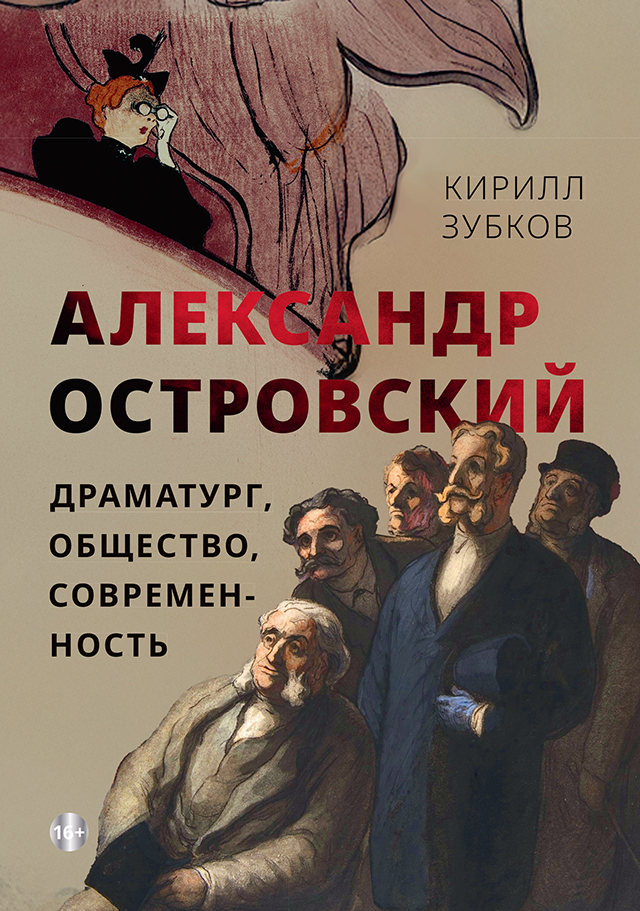
Kirill Zubkov. Alexander Ostrovsky: playwright, society, modernity. M.: Ruthenia, 2024. Contents
 Obsession
I became interested in Ostrovsky as a schoolboy. I started reading his plays on the advice of my literature teacher Nikolai Aleksandrovich Guskov and became so carried away that by the end of the tenth grade I had read almost all of them. Although I did not begin to study Ostrovsky seriously right away, I always touched on him in one way or another in my research. In many respects, Ostrovsky turned out to be one of the central figures of Russian literature of his time. You come across his name no matter what you do. I wrote about censorship, and Ostrovsky had a rather tense relationship with the censors. He studied the history of literary prizes - and he was the first Russian writer to receive such a prize. He studied domestic literary magazines - Ostrovsky carefully chose magazines to publish his texts. And the magazines, in turn, had high hopes for these publications. Here I must make a reservation that I am not a theater critic, I study literature. It is impossible not to take into account the theatrical nature of Ostrovsky’s work, but the focus of my research is largely on its literary aspects.
At some point I realized that I needed to do something about this obsession. It was time to take on a book about Ostrovsky himself, in order, firstly, to get rid of him once and for all, and secondly, to finally tell everything that came to my mind when I read his plays. In 2023, when Ostrovsky turned exactly 200 years old, I honestly re-read his collected works, leaving a lot of notes in the margins. When I looked through my notes, it turned out that they were quite enough for a full-fledged study.
Three words
The subtitle of the book - “The Playwright, Society, Modernity” - was not invented for nothing. Three main themes of my work are formulated here. The playwright is, of course, Ostrovsky himself. The fact that he worked in the dramatic genre, on the one hand, imposed very specific restrictions on him, but, on the other hand, gave him very great opportunities that his contemporaries, who wrote novels and poetry, could not use. The restrictions included much stricter censorship (the theaters were watched especially closely) and the almost guaranteed presence in the theater of poorly educated or even illiterate spectators. Ostrovsky could not use subtle hints and allegories - the general public did not understand them. But this was also an advantage. For example, Leo Tolstoy once decided that from now on he would try to write “for the people.” He really began to write in many new ways, and declared everything that he had created before to be harmful and immoral. But Ostrovsky did not need to completely remake his plays in order to adapt them for mass audiences. He wrote for everyone - from peasants who came to the city to earn money, to wealthy merchants and the intelligentsia.
Let's understand the concept of society. As a playwright, Ostrovsky was always very democratic. He was interested in representatives of various social strata. Accordingly, he inevitably had to offer something interesting to any viewer, regardless of his income and level of education. The evolution of Ostrovsky’s work can be traced based on how differently he imagined the auditorium in different decades, for which audience he wrote and what reaction he expected from them.
We are still hypnotized by the ideas of criticism a century and a half ago - Nikolai Dobrolyubov saw in Ostrovsky a denouncer of the oppressors, Apollo Grigoriev - an exponent of the national spirit. These categories are outdated, and it is more interesting to read Ostrovsky through the prism of more nuanced ideas about society as a dynamic, moving phenomenon.
Modernity is a rather controversial part of the subtitle. It is believed that Ostrovsky was not particularly interested in current processes in society, but, on the contrary, described things that were more or less permanent: national character, patriarchal merchants, and so on. This is what Ivan Aleksandrovich Goncharov said about him, for example, in an unfinished article , which is often quoted. “Old Russia lived for a thousand years, and Ostrovsky erected a thousand-year monument to it,” Goncharov wrote. “He did not and will not follow the new Russia - in its renewed children there are no more Ostrovsky’s heroes.” But I think that Goncharov was talking here primarily not about Ostrovsky, but about himself, how he perceived himself in the 1870s. His description does not suit Alexander Nikolaevich at all. In my opinion, Ostrovsky always tried to write about cutting-edge things, and in different senses of the word.
Firstly, I am talking about current historical events. There is, for example, a famous letter from Ostrovsky to the historian Mikhail Petrovich Pogodin, where he talks about his new plays. “...it is better for a Russian person to rejoice when he sees himself on stage than to be sad,” wrote Ostrovsky. — Correctors will be found even without us. In order to have the right to correct the people without offending them, you need to show them that you know the good in them; This is what I’m doing now, combining the sublime with the comic.” This line is usually quoted in the context of Ostrovsky’s socio-ideological evolution and supposedly indicates his closeness to the Slavophiles. But for some reason no one pays attention to when this letter was written. And it was written during the Crimean War - difficult, unsuccessful. People in those years really needed at least some kind of consolation. And if we read Ostrovsky’s plays based on the events during which they were created, we will find a huge number of parallels with modernity. Thus, one can find responses from him to Karakozov’s shot, the regicide, the Russian-Turkish War of 1877-1878, the Paris Commune, and so on.
The second meaning that I give to the concept of modernity is, as they say now, modernity. That is, some characteristic social, technological and other processes of that period: the active spread of nationalism, the emergence of new means of communication, the intensification of various kinds of political struggle, and so on. Ostrovsky's plays constantly feature means of communication and transportation: from a steamship to an electric bell. But it’s not just about technology: he writes about the emancipation of women, political radicalism, and how to imagine national unity and national identity in modern conditions.
Between the lines
We know very little about Ostrovsky as a person. He extremely did not like to share his thoughts and feelings with others. Tolstoy, Dostoevsky, Turgenev and other famous writers of that time freely expressed their beliefs on the pages of their diaries and in personal correspondence. Ostrovsky's letters have been preserved - two whole thick volumes - but it is unlikely that anything frank can be found there. He discusses the issues of staging plays, tells who, where, whom and how he played; complains about his health and happily talks about his favorite fishing. But it is almost impossible to find out from these letters what he thought, say, about the abolition of serfdom. So it remains to judge Ostrovsky’s views only by his work. Meanwhile, Ostrovsky, judging by his plays, was an intensely and painfully reflective person who went through a very difficult and contradictory ideological path. In this respect, he is somewhat reminiscent of the same Dostoevsky or Leo Tolstoy.
It is believed that Ostrovsky wrote only about the merchants. This is not entirely true. He started with the merchants, but later touched different social groups. I didn’t write only about people of other nationalities. Most likely, this was due to censorship restrictions: the state was afraid that theatrical productions would offend the feelings of Tatars, Circassians or someone else. In Ostrovsky's plays there are nobles, workers, and intelligentsia. The interest in the merchant class was probably due to the fact that in the 1850s, when Ostrovsky’s career was just beginning, it remained a very traditional class (Russian merchants would begin to actively adopt Western culture towards the end of the century). There were few writers among the merchants - of the famous ones I can only remember Nikolai Polevoy - and their life was of little interest to writers. It was important for Ostrovsky to show this social layer, which has not yet been covered by literature. Moreover, the merchants played a very important role as the main economic actor connecting different social groups. This means that, speaking about him, one could touch on various aspects of the life of an entire country. In addition, it seems to me that young Ostrovsky himself was a fairly conservative person, so the merchant class appealed to him. But, I repeat, we can only deduce this from his works.
Evolution
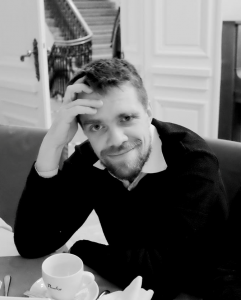 Kirill Zubkov. Photo from personal archive
The early Ostrovsky was a rather conservative author, looking for the moral and religious unity of the people and, as befits a true conservative, did not approve of all kinds of individualism, since he saw in it a threat of atomization and further collapse of society. For example, at that time he was clearly very skeptical about the ideas of women's emancipation. His early heroines often look like caricatures of George Sand's characters.
Then Ostrovsky’s views changed greatly. The Crimean War apparently had a great influence on him, after which he began to lean more and more towards liberals and publish in more or less liberal publications. Now he was looking for national unity in some common feelings, experiences, compassion for others. Looking at the unfortunate victim of society Katerina Kabanova, the audience should have sympathized with her, and these common feelings, apparently, should have brought them closer together and contributed to the creation of national unity.
In the second half of the 1860s and early 1870s, Ostrovsky gradually became radicalized - a phenomenon not very typical for representatives of educated society of those years, which in general became more conservative after the Polish uprising of 1863. He moved from liberal views to radical democratic ones. Soviet researchers would say “revolutionary-democratic views,” but this is inaccurate. Judging by some of his works about the Time of Troubles, Ostrovsky was not a revolutionary, but he clearly proposed a radical, that is, literally radical, restructuring of social and political life. He saw the oppressed people as the agents of this perestroika. At the same time, Ostrovsky became a big supporter of emancipation and “rebellion” - here he did not mean speaking out against the government, but resistance to established social norms. For example, in the play “Warm Heart,” the heroine is clearly portrayed in a positive light, choosing her own lover, taking control of the house, pushing aside her powerless and insane father, and so on. Now an emancipated woman for Ostrovsky is not a pitiful caricature, but a moral example. The playwright encourages the viewer to gain self-esteem, respect themselves and others, and rationally understand the surrounding reality.
In the last decade of his life, Ostrovsky became disillusioned with these views and began to be critical of various kinds of global projects and of modernity in general. In his opinion, the historical obstacles that prevented the development of the country and society were overcome, the “dark kingdom” was over, but this did not make it any better. It turned out that modern capitalist international culture is no better. In the same way, it can humiliate people, deprive them of reason and freedom of choice, inevitably leading to death, as happens in “Dowry.” Moreover, art, including Ostrovsky’s beloved theater, can easily participate in deceiving people.
Habitat
Ostrovsky was between the literary and theatrical worlds not only in his work, but also in terms of acquaintances. He communicated a lot with various kinds of writers, although it is believed that these connections, for the most part, were quite superficial and not very significant. Apparently, he did not have close friends among writers, but he did have ideological and partly aesthetic allies. This can be seen in how he moved from the rather conservative and nationalist-leaning magazine Moskvityanin in the early 1850s to liberal publications like Library for Reading in the second half of the 1850s, then to the radical democratic Sovremennik and to Otechestvennye zapiski by Nekrasov and Shchedrin, with whom he clearly had much in common. Thus, Shchedrin in his later works was very fond of using Ostrovsky’s heroes, for example Glumov, a character from the play “Enough Simplicity for Every Wise Man.”
For Ostrovsky, stage writers played an important role. Listing his predecessors in literature, he mentioned such authors as Sumarokov, Shakhovskoy, Polevoy, who in his time were considered not very important figures in the history of Russian literature, but were undoubtedly important figures in the theater. In addition, in his later years he constantly tried to act as a mentor to young playwrights, wrote plays with them and generally supported them in every possible way. The most famous of his co-authors was Nikolai Yakovlevich Soloviev. Among Ostrovsky’s closest acquaintances there were many actors and theater workers in general, which did not bother him at all.
"Idiot" backwards
During Ostrovsky's time, the play was perceived more as material for the theater than as an independent literary work. Although there were rare exceptions - for example, Gogol’s “The Inspector General”. In most cases, even if the play was a success, the playwright's name was not remembered by the audience. A very indicative example in this sense is that of Nikolai Polev, which my colleague Andrei Fedotov cites. His magazine was closed due to a negative review of Nestor Kukolnik’s jingoistic play “The Hand of the Almighty Saved the Fatherland,” which Nicholas I really liked. A few years later, the story was forgotten, and they began to say that the ill-fated play was written by Polevoy himself. This was not the case with Ostrovsky. He became the first playwright who managed to combine two fields: literature, which exists for the stage, and serious literature, which is published in magazines and read by the educated segments of the population. Thanks to the magazines, his plays were remembered and associated with the name of the author, thereby remaining in the repertoire, they were staged again in other cities and are still staged.
As for the audience's reaction, this is the most important problem in the history of studying Russian theater. There is almost no evidence of how poorly educated spectators perceived theatrical productions. Only occasionally do we come across some anecdotal evidence that does not give the overall picture. Such, for example, is the story of how in one Moscow tavern an actor who played the role of merchants in Ostrovsky’s plays dined for free, since the innkeeper really liked his performance. The episode is interesting, but not indicative. The only thing by which we can reliably judge Ostrovsky's reception is that his plays were a great success. On the posters his name was usually written in large letters - another important detail, from which it follows that the name of the playwright was in itself a good advertisement.
It is unlikely that Ostrovsky experienced a contradiction between the desire to write something important and moralizing and at the same time entertain the audience, making them laugh or tensely follow the plot twists. After all, it is perfectly normal for a playwright to want his plays to appeal to a wider audience. Let us recall the same “The Inspector General”: Gogol, although he interprets the play as a parable on a spiritual and religious theme, adds farcical episodes to it. In Ostrovsky's Balzaminov trilogy and in his later plays, such swings from serious to funny occur very often. For example, in the play “A Warm Heart,” the heroine suffers from the betrayal of her lover and almost dies from shock, and local jokers, dressed as robbers, catch travelers in the forest and drink them with champagne until they lose their senses.
If we talk about my personal preferences, most of all I was interested in writing about the play “It’s not all Maslenitsa for the cat.” A rich merchant's clerk starts a riot and begins to blackmail his master by saying that he will commit suicide if he does not increase his salary. Beforehand, the rebel drinks heavily to gain courage. The merchant is scared and confused: he believed that everyone around him, a rich man, fears and respects him. These two extremely insecure people engage in a psychological duel. As a result, the hero steals the merchant’s bride thanks to his desperate courage. It is interesting that the clerk who threatens the merchant with suicide is called Hippolyte - just like the hero of the novel “The Idiot,” which was published just a couple of years before the play. Dostoevsky's Ippolit also threatens to commit suicide, but if in the novel it looks like an existential tragedy, then Ostrovsky turns out to be a very funny scene with a drunken brawler. In The Idiot, rebellion is obviously doomed to failure, because it is a rebellion against the universe. Ostrovsky's rebellion may not change the social order as a whole, but it still leads to a positive result - the greedy merchant is put in his place, and young people find happiness.
This play was created during the Paris Commune. The idea of a rebellion, which, although not very effective, at least gets rid of the power of a despotic nonentity, is very reminiscent of the story of the commune that saved France from Napoleon III. At least, that’s what they wrote about the Paris Commune on the pages of Otechestvennye Zapiski, where the play was published. Of course, Ostrovsky did not depict Napoleon under the guise of a Moscow merchant, but something in common between these figures can be traced. This is a typical Ostrovsky: a funny play with absurd characters, but in it one can find parallels with important and topical events - both literary (Dostoevsky's novel) and historical (events in France). To read it adequately, it is enough to understand a little about what was happening in literature and the world at the time when it was created.
***
Why is Ostrovsky interesting for us today? In my opinion, his plays may be useful in some way even now. It is clear that this type of drama and this type of playwright is in many ways outdated, but that is not what we are talking about. Unfortunately, now many people who consider themselves intellectuals lack Ostrovsky’s democracy, his attitude towards a respectful, interested attitude towards those who are contemptuously called the “gray mass”. Many intellectuals around the world are infected with elitism and snobbery, self-righteous and unable to treat, for example, service workers or factory workers with respect. Of course, I don’t consider myself free from these vices. Ostrovsky, with his aesthetic and political democracy, in some ways may turn out to be not just another exponent of long-outdated values that do not correspond to our time, but a current reference point.