
Translated material
The degree of lobbying
Which of the deputies most strongly influenced the regulation of the alcohol industry
Photo: Oleg Harsseev / Kommersant
The economic crisis inevitably leads to the redistribution of the market, where the weak leave, and the strong ones consolidate their dominance. In this regard, not just money comes to the forefront, but above all an administrative influence - it is it that allows you to rewrite the rules, adjust it to yourself and lead a new order.
We decided to understand the mechanism of industry lobbying and start with the alcohol market, whose regulation in recent years is becoming tougher. In particular, the profiles of four deputies were drawn up, which either related to the industry or initiate laws that radically change the rules of the game.
Sergey Altukhov and wine tourism
For the United States Sergey Altukhov, the First Deputy Chairman of the Committee on Financial Markets, this convocation in the State Duma is the first, but he already managed to prove himself as an innovator and lobbyist of key economic industries.
In politics, he is known primarily as a representative of the IT industry: he began his career in Microsoft, where he grown to the head of the regional unit. Later, already in the civil service, he actively developed a digital economy, including promoting the concept of innovative development and the creation of an IT park of the Krasnodar Territory, where Altukhov has grown to the vice-governor.
In the State Duma, Altukhov continued the course on digital reforms: he participated in the development of the bill on the national crypto platform, which will regulate digital currencies, the development of mining rules and support the digital ruble. However, unexpectedly for many, his interests went far beyond the limits of IT - towards the alcohol industry.
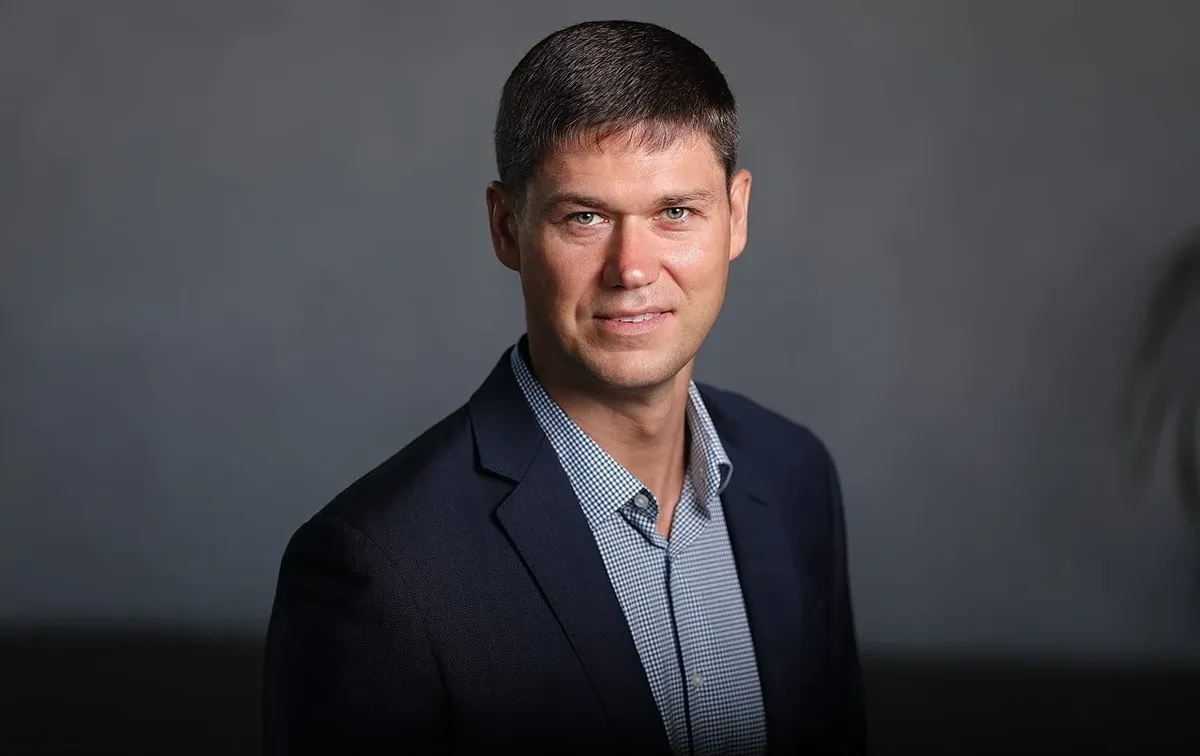
In 2022, Altukhov headed the Expert Council to improve legislation in the field of alcohol and tobacco. The council included large market players, including those whose production were localized in the Krasnodar Territory. Among them, for example, was one of the largest domestic producers of wines, the head of Abrau-Durso Pavel Titov, the son of a special representative of the president for relations with the international organizations of Boris Titov.
Altukhov quickly addicted to Russian manufacturers.
At the beginning of 2023, he attended the presentation of the Russian Wine guide, and already in May became the co -author of the law on the introduction of passports of grape plantations.
This law has fixed uniform technological standards for the production of wine, fortified wine, sparkling wine, cognac and cognac distillate.
The law was signed and entered into force in June 2023, and already at the beginning of 2024, Altukhov became a co-author of the Law on the Development of Rural Tourism, which also encouraged wine tourism. The explanatory note to the bill explicitly indicated the need to create favorable conditions for visiting the places of production of agricultural products and “its tasting” for “travelers”. In October 2024, the law was signed.
The next step of the deputy Altukhov was the struggle for advertising of domestic wine. Together with his colleagues, he introduced a bill that proposed to allow external advertising of wines in the regions of their production. The explanatory note to the bill reported that the removal of advertising restrictions will contribute to "an increase in the production of high -quality winery products" and will "increase the recognition of Russian -made wines."
“Everyone supports the opinion that this will give a new impetus for the development of wine tourism and create conditions for acquiring adult consumers with the specifics of domestic winemaking,” the deputy said.
The bill has not yet been adopted, but is considered already in the third reading.
Robert Kochiev and his family business
For the communist Robert Kochiev, the current convocation in the State Duma is already the second. For the first time he ended up in parliament in 2015, and even then they wrote about him as a lobbye of alcohol business. He himself did not hide this, stating that one of his priorities was the support of manufacturers in his native North Ossetia, where 22 alcohol plants and about 100 liquor enterprises worked at that time.
However, Kochiev’s public parliamentary career looked very passive: in two terms, he signed only under 7 bills and just twice in the State Duma on the merits of the laws adopted, preferring, probably, to promote the initiatives useful to his voters.
In the new convocation, Kochiev’s lobbying activity went on decline, but his attention must have switched from protecting the interests of the alcohol market to protect his own assets.

In January 2023, the Federal Tax Service for the North Ossetia officially recognized Kochieva and his sons Rudolf and Batrase by the beneficiaries of the Alcoholic Enterprise "Paradise", in respect of which bankruptcy proceedings were introduced due to debts worth about 3.5 billion rubles. In the framework of this case, it was found that the Truk was transferred billions of rubles to the accounts of controlled companies (LLC Orpheus, LLC Peresvet, TD Kupoke LLC, etc.), after which they were bankrupt, and the property was reissued for new legal entities.
The bankruptcy trustee of the “angle” Natalya Borisova, in his statement to law enforcement agencies, claimed that Kochiev and his environment controlled the money withdrawal schemes.
As a result, last year, the deputy and his sons Rudolph and Batrase were brought to subsidiary liability for the debts of a whole group of interconnected enterprises, among which, in addition to the above, Istok LLC, Gigant LLC, the First Alcohol Manufactory LLC. This decision was confirmed already on January 31, 2025 by a decision of the sixteenth Court of Appeal. As indicated in the document, “the causal relationship between the illegal actions of Kochiev R.R., Kochieva B.R., Kochieva R.I. And the impossibility of complete repayment of creditors' claims is that the systematic withdrawal of funds to the account of controlled organizations served as the basis for the impossibility of fulfilling obligations to pay taxes and payments for bank guarantees. ”
Rudolf Kochiev himself found himself on the verge of bankruptcy-the corresponding statement submitted the OFK Bank, now under the control of the DIA.

In addition, Batrase Kochiev, also a communist deputy, but so far, the parliament of North Ossetia, has become accused in the criminal case of the deliberate bankruptcy of Rakurs LLC. The resolution on August 15, 2024 was issued by the head of the Investigative Department of the IC of the Russian Federation for the Republic of North Ossetia-Alania, Lieutenant General of Justice of the Trees.
Against the backdrop of the growing administrative and criminal pressure and reaction of the press, Robert Kochiev began to actively use the Duma rostrum to denounce the “corrupt” employees of the tax authorities, prosecutors and heads of the Rosalkolletabakcontrol.
The culmination occurred on February 19, when during a plenary meeting he publicly turned to the Prosecutor General Igor Krasnov, the chairman of the Investigative Committee of Alexander Bastrykin and the head of the FSB Alexander Bortnikov, demanding to prosecute the “gang” of officials, allegedly causing the budget to “hundreds of billion rubles”.
The former head of the inter -regional department of the Rosalkoltabakcontrol for the Central Federal District Irina Golovnaya and the current first deputy head of the Federal Agency Elena Afanasenko fell under the deputy “blow”.
According to Kochiev, these officials not only “destroyed the industry”, but also have foreign citizenship and real estate abroad. “Someone has in Cyprus, someone in Switzerland, someone in the UAE,” he said from the rostrum.
It is noteworthy that this performance was held during the discussion of the bill on the transfer of confiscated nemarkized goods for humanitarian purposes.
In general, the lobbying potential of Robert Kochiev seems to be close to exhaustion, and the ability to use a mandate to protect personal interests is almost zero.
Anatoly Bifov and Separators
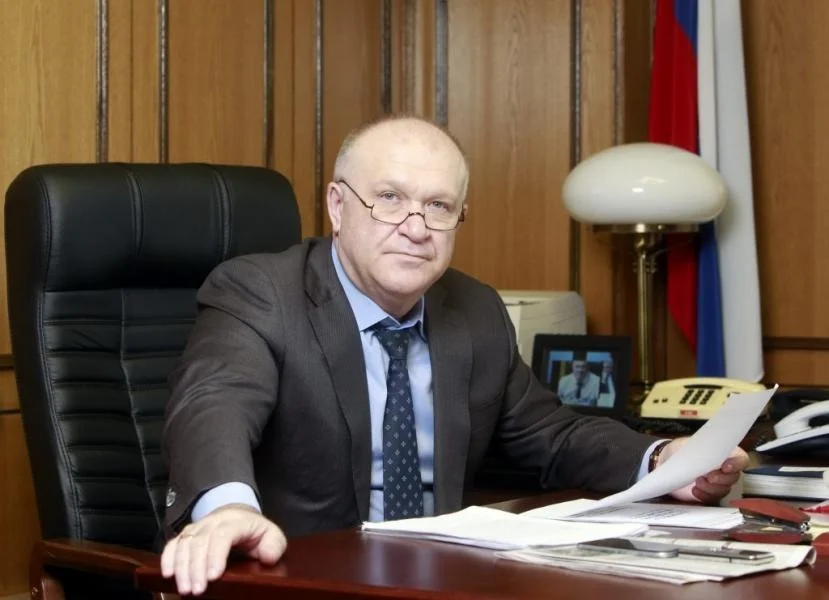
Another communist Anatoly Bifov sits in the State Duma for the third convocation. In the past, he was a member of the Committee on Agrarian Policy, and now he focused on issues of property, land and property relations. At first glance, his activity is far from the alcohol market, and outwardly he does not demonstrate interest in lobbying the industry. However, biography and family ties draw a completely different picture.
Despite the official distance from the strong alcohol market, the name Bifov has repeatedly surfaced in the news associated with Kabardino-Balkarian alcohols.
Back in 2015, a large -scale check of alcoholic enterprises began in the republic, during which it turned out that the region’s plants underwent almost 25 billion rubles to the budget.
One of the objects of the audit was the Mineral Plus enterprise, owned by the deputy’s brother, Zaur Bifov. According to the materials of the investigation, the plant evaded 850 million rubles of taxes from 2011-2014. However, the General Director of the company was responsible, and the Bifov family itself escaped sanctions.
It is noteworthy that in the same period, from 2011 to 2014, the other brother of the deputy, Ruslan Bifov, headed the Office of the Federal Tax Service for Kabardino-Balkaria.
According to one version, in order to avoid the onset of negative consequences, the Bifov family had to redistribute shares in enterprises.
Like his colleague Robert Kochiev, Anatoly Bifov seems to need a deputy mandate not only for lawmaking.
Ildar Gilmutdinov and beer foam
For United Russia Ildar Gilmutdinov, First Deputy Chairman of the Committee on Nationalities, this is the fifth convocation in the State Duma, where he has recently positioned himself as a champion of internal political stability and interfaith consent. However, in parliament he is also known as an active participant in the legislative work regulating the beer industry.
In the last convocation, he advocated relief for brewers, offering to remove fines for the release of beer in a plastic container with a volume of more than 1.5 liters and allow the export of such products to countries where there are no similar restrictions. The initiatives looked like protecting the interests of medium -sized brewers, which could expand their influence in the country and enter foreign markets. It was time to scatter stones when the brewing industry received more freedom and opportunities.
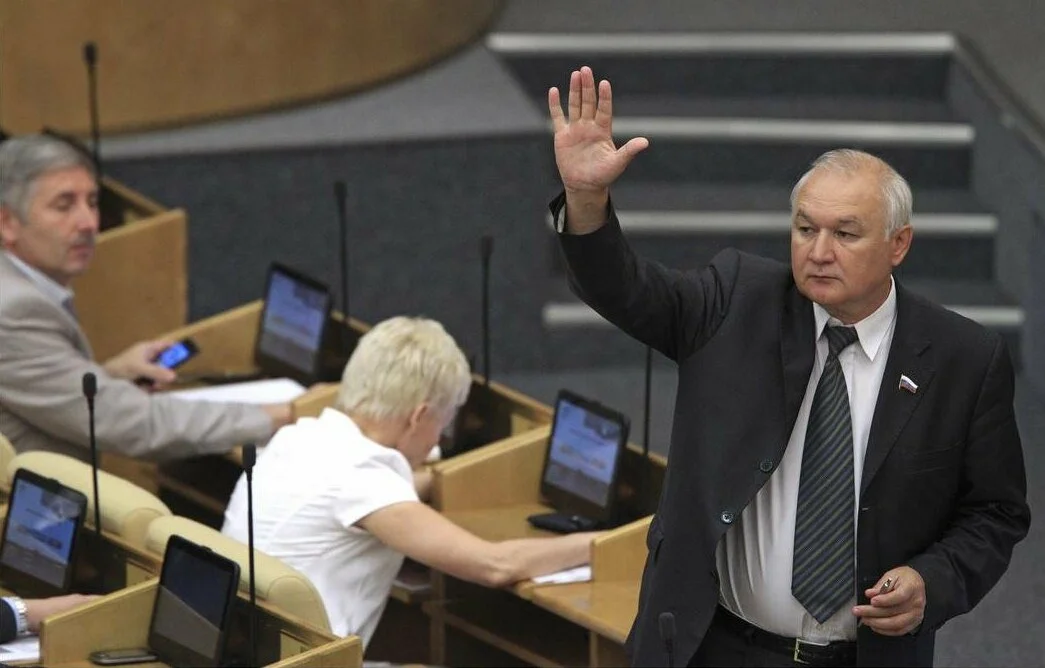
In the current convocation, taking into account a change in the political context, the time has come to collect stones. Solely Gilmutdinov introduced a package of bills that put the entire industry under tight control. The introduction of a register of beer manufacturers, cider, pora and meads, a six -fold decrease in the production threshold, after which control through EGAIS is required, mandatory accounting for sales through the EGAIS system even for cafes and restaurants, the possibility of unscheduled business checks is far from exhausting the list of measures taken against the market participants at the initiative of the deputy Gilmutdinov.
But, despite the external state coloring of the restrictions introduced, in essence, the interests of large breweries were promoted by law and the market was cleaned from their small and medium competitors.
In the market, in particular, the bill was clearly perceived as lobbying for the interests of the Baltic and Ab Inbev Efes, which have long worked in conditions of hard regulation and only benefited from new rules.
These innovations attached fines and criminal punishment for violations, which was considered by small players as a coercion tool. Gilmutdinov himself, however, believed that his initiatives did not put pressure on the market, but cleanse it of "gray" products.
Andrey Sukhotin
PS
Last week, we sent requests to the deputies mentioned in the text, as well as to the State Duma Commission on deputy ethics and to the Prosecutor General of the Russian Federation. If we get answers, be sure to publish them as an addition to this material.