
Translated material
To lessons with a knife
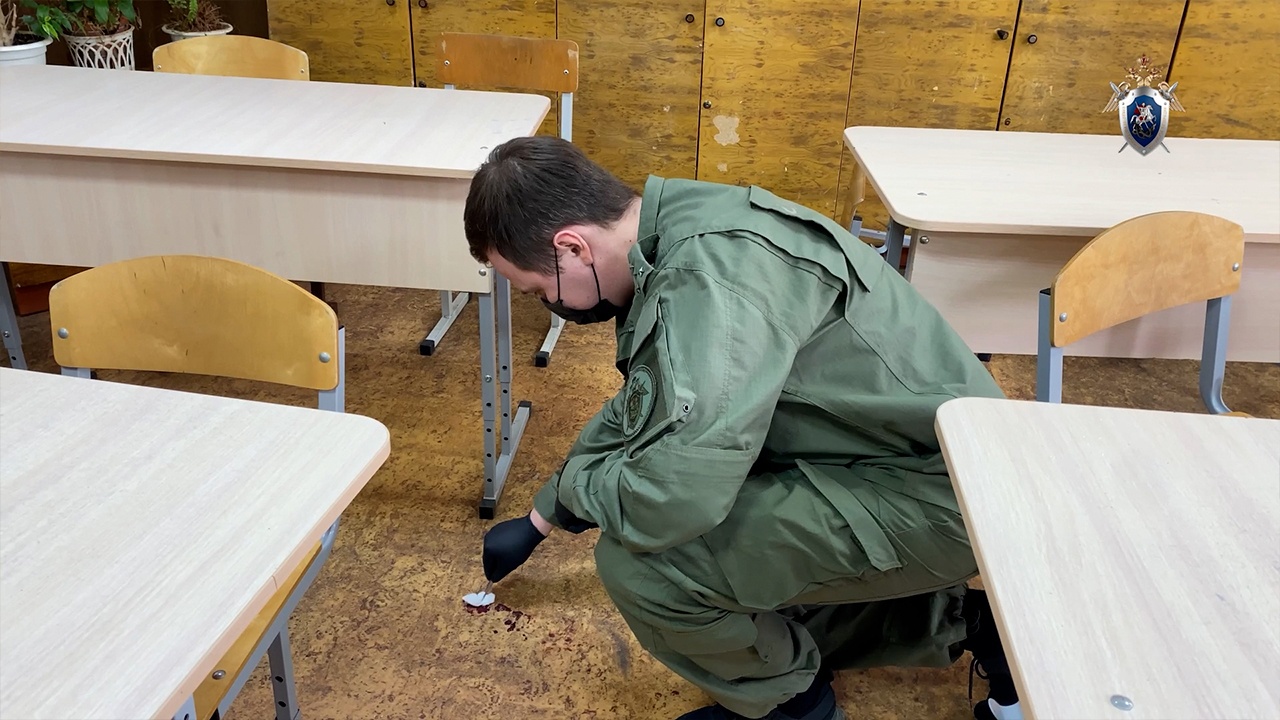
Attack in the Nizhny Novgorod school. Dossier on disagreements
A student of the Nizhny Novgorod school attacked classmates after persecution.
In Russia, a base of citizens opposing the war is being maintained.

Attack in the Nizhny Novgorod school. Dossier on disagreements
The text of the copyWidth PX Height PX
The url has been copied to your clipboard
No Media Source Currently Available
0:00 0:54:11 Download the media fileEvery fourth Russian was subjected to persecution at school, this follows from a survey of the All -Russian Center for the Study of Public Opinion. 89 percent were victims of bullying from classmates. A third of the respondents also reported the persecution of teachers. Judging by the stories of classmates, there was a 14-year-old Maxim from Nizhny Novgorod, who came to school with a knife and attacked peers. What is known about this story?
Comments the founder of the Assistance Fund for adolescents Alexander Slavyanskaya:
- The general situation, frankly, is now quite nervous and not very favorable. But if adults somehow extinguish this tension, somehow distracted, then adolescents express their emotions differently, and often these strong emotions lead to a breakdown. I would also say that the general psychological situation in Russia, the situation of confrontation, fishing for internal enemies, reveals not the best features in people. This contributes to bullying, provokes it, respectively, provokes a response. We can consider the bullying precisely the grass, that is, the organized systematic persecution of one or more people by a group of classmates, classmates. Often, teachers take part in this persecution, or not noticing it, or highlighting one of the students, finding his weaknesses for which you can catch on. Thus, they either provoke grass, or give a silent permit for it.
Teachers often take part in the persecution
I think this is due to two things. The first is the qualification of the pedagogical composition. By the nature of the activity, I often communicate with teachers and adolescents. Probably, 80% of teachers are people who do not understand teenage psychology, or so burnt out that they give out some spontaneous reactions, completely wild. One of the girls told me that the teacher of especially slow -down can hit her hands. This is due either to security, or with burnout, because no one particularly supports teachers from a psychological point of view. The second reason: the lack of psychological assistance for students. On the one hand, there are unprepared, burnt teachers, on the other hand, complex children who need psychological support, psychological correction. Both sides, deprived of support, collide. This is a huge problem that is regularly popped up in Russian schools over the past 10-15 years, but, unfortunately, no one does anything. Why is the problem of school bullying not solved systematically? This is not such an unhealthy task for the authorities, this is a solved task. But it requires serious systemic efforts: the adoption of laws, normative acts, the allocation of budgets, the preparation of school psychologists, and so on.
No system efforts
This is not the first time we are talking about school bullying, school jokes. terrorist attacks in schools, suicides. After each such event, loud speeches begin by deputies, public figures: let's ban this, we will forbid it. Then this wave calms down, and everyone forgot. No system efforts. Probably there is no desire to make these efforts, to allocate money for these efforts. And you understand very well where Russia's budget is now spent, and these are completely not social problems. - says Alexander Slavyanskaya .
The bill on countering school persecution is frozen in the State Duma. Here is the opinion of the founder of the Travel.net program Olga Zhuravskaya:
- School persecution is not only an educational issue, but also political. Why inhibit the adoption of this law? Why can't they legally determine what bullying is? The same people who opposed the law on domestic violence created the injury of the bill against persecution, explaining that there is interference in the affairs of the family, someone will tell their parents how to educate their child. There is no intervention in the affairs of the family in the bill. The concept of school bullying and other concepts that need to be fixed are defined there. If school persecution will be fixed in the law, we can come and show: the law determines that school persecution is: a lot for one, length in time, there is no desire to solve the problem peacefully, there is a desire to continue the conflict, and psychological or physical trauma is obtained as a result. And further according to the classics: what to do, who is to blame. We want preventive school persecution to be a duty, not the choice of schools. So that every parent can ask how they work with persecution at school.
Russian law enforcement agencies lead the base of Russians opposed to the war. This publication RTVI was announced by a member of the State Duma Committee on Security Andrei Alshevsky, commenting on information about the existence of a certain “register of opponents of Svo”. Sergey Davidis, project manager "Help Political Products. Memorial":
- I have come across this kind of accounting since the beginning of the tenths. Activists, any noticeable, when crossing the border, under other circumstances, met with some special attention, which gave reason to believe that they are on special accounting, are in some registers, not public, not based on the law.
It is difficult to assume that the Russian state would not take into account opponents of war. The state usually does not confirm this. But since it does not store its data too well, there were a certain number of leaks from the database of regional KSB departments, CPE, where there were indications that they belong to a certain group of FBK supporters, groups of supporters of extremism and terrorism. Unexpectedly, there is nothing unexpected in the fact that there are no one who is negative about the aggressive war, unfortunately, there is no. Like other accounts that existed before with respect to various kinds of oppositionists, it simply began to be done absolutely secretly.
It began to be done secretly
And there were a certain number of court decisions related to the recognition of the illegality of inclusion in these accounts, but this was possible because the state admitted that it included someone in these accounts, firstly. And secondly, a certain restriction of rights flowed out of these registers. That is how people learned about it.
Generally speaking, the constitution directly prohibits the collection of information about private life. Well, here the person went to a public action against his, he was detained, after which they listed. They cannot look into the head of a person, we are talking about some manifestations of an anti -war position. Formally, if we are talking about administrative offenses, they can take into account. But this should not in any way limit the rights of people.
This happens for political reasons
In itself, conducting preventive accounts is aimed at forming law enforcement agencies before a person committed a crime, a list of who needs special attention. Such a practice for real risks of committing a crime is carried out by law enforcement agencies in all countries. The problem in Russia is that this happens for political reasons for people who actually do not commit crimes. - said Sergey Davidis.
Comment of a lawyer of the human rights program The first department of Yevgeny Smirnov:
-Many who pierced themselves in different services found information that they were put on some kind of professional science in some distant region. All this is done in order to monitor the movement of a person, to spoil his life, because the information in this database is an obstacle to getting to some kind of state position or a good job. In Russia, all dissent love to cover with general articles: terrorists, extremists. These labels are hung on those who do not agree with the policy pursued by the Russian authorities. And hiding behind good intentions, people are included in these bases. That is, they write that they do not come to the opponents of the political regime with a warning, but come to those who are considered "prone to committing extremism." Well, it seems that the Constitution does not prohibit it, and even many international treaties urge to deal with these crimes. It seems to be formally everything according to the law. But you begin to peer, and you understand that there is a pure policy.