
Translated material
Berlin Forrest Gump
The story of Gregor Gizi, the most age -old deputy of the new convocation of the Bundestag and the flagship of the German left. He began his career in the GDR, and now protects Germany and Europe from the ultra -right
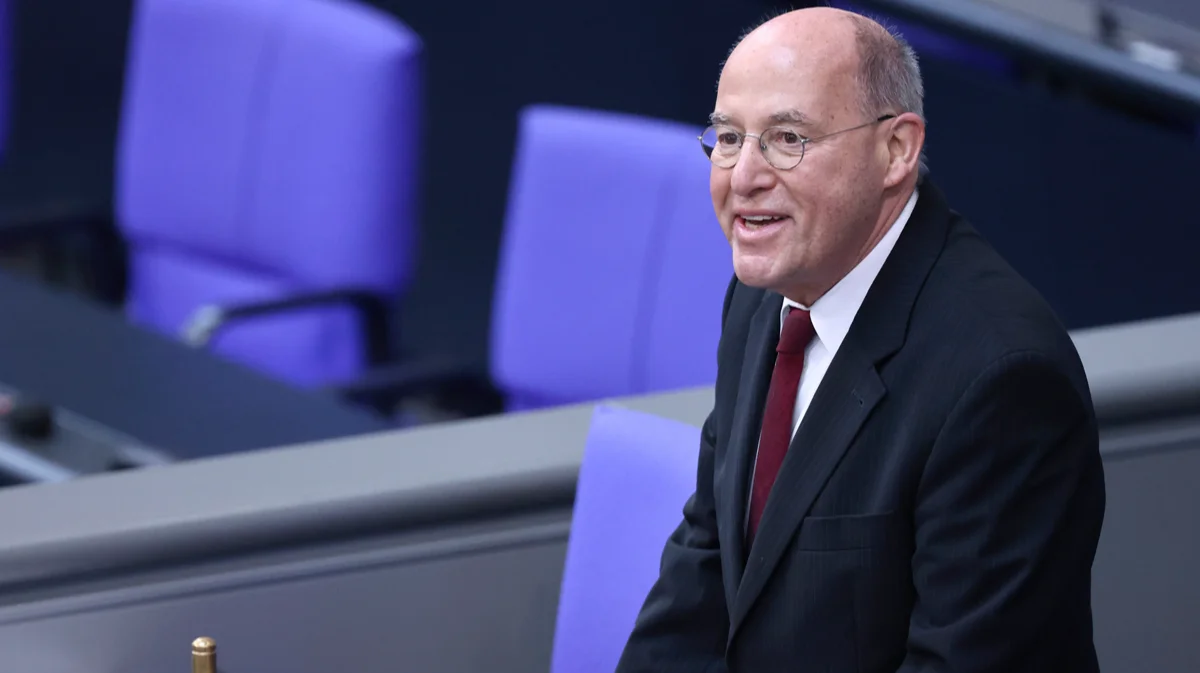
Gregor Gizi acts with a speech at the opening of the meeting of the Bundestag, Berlin, March 25, 2025. Photo: Hannibal Hanschke / EPA
On March 25, a new convocation of the Bundestag, formed according to the results of the February elections, begins work in Germany. By tradition, the “oldest” deputy opens the first meeting, and this time he became 77-year-old Gregor Gizi from the Die Linke party (“left”).
True, in order to give Gizi the word at the first meeting, the previous composition of the German parliament had to reform this tradition: now the criterion for determining the “oldest” is not age, but work experience. If the old norm acted, then the honor of the Bundestag was honored by the deputies from the Alternative for Germany (AFD). As an honorary president (Alteerspräsident), Gizi opened a meeting of the new convocation, despite the AFD protests, whose leader - Alice Weidel - defiantly left the hall. The factions Vaidel Gizi paid special attention in speech: “Inside us there is also a movement that doubts democracy. <...> We must resist the spread of right -wing extremism, racism and anti -Semitism, ”Gizi said from the rostrum of the Bundestag. Gizi has been continuously remaining a deputy of the German parliament since 2005. However, his political career is much longer. Starting his way as a lawyer of dissidents in the GDR, after the fall of the Berlin wall, Gizi managed to gain popularity as a politician. As a result, he repeatedly saved his party when she experienced crisis times. The past elections to the Bundestag were not an exception, in which Gizi’s experience helped the “left” in a difficult confrontation with the ultra -right and defended his place in parliament. The New Gazeta Europe tells how Gregor Gizi managed to first become a significant figure in the GDR, and then find his place on the new general German political scene and why left-wing forces are still relying on it.
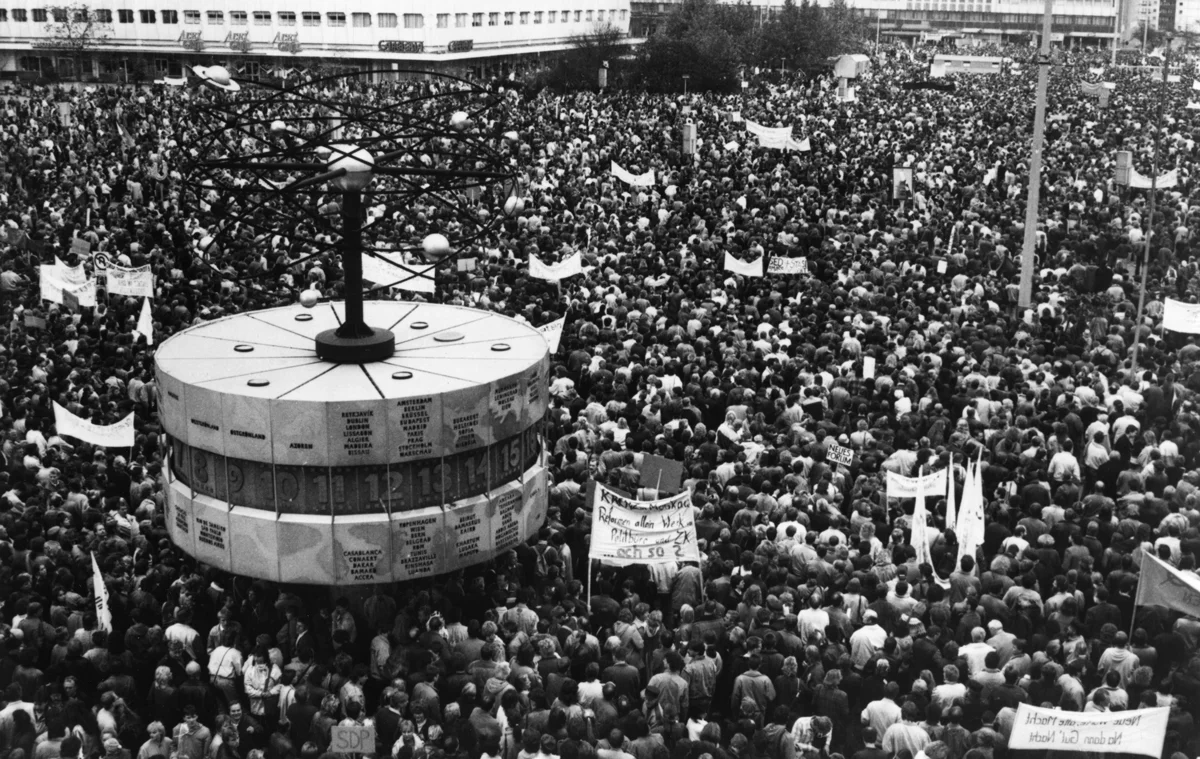
Berlin, November 4, 1989, less than a week before the fall of the Berlin wall. A half -million demonstration gathered for Aleksanderplatz, first agreed by the GDR authorities. Protesting residents require compliance with the constitution - guarantees of freedom of speech and meetings.
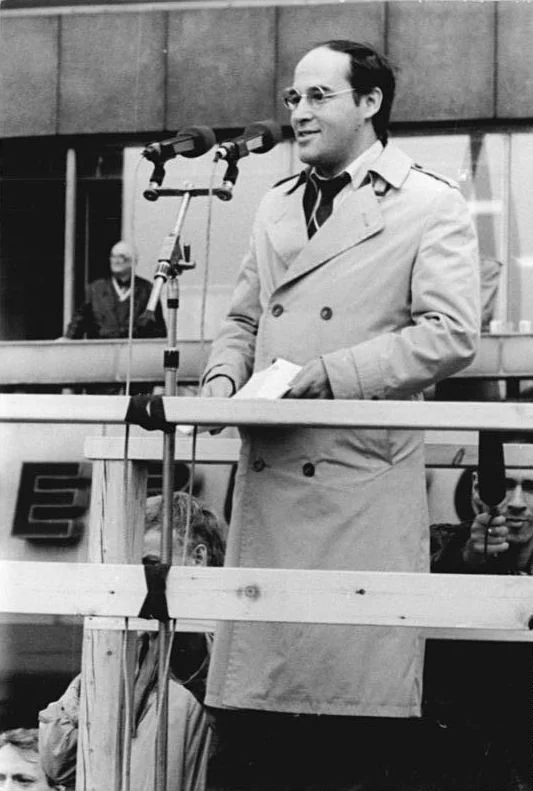
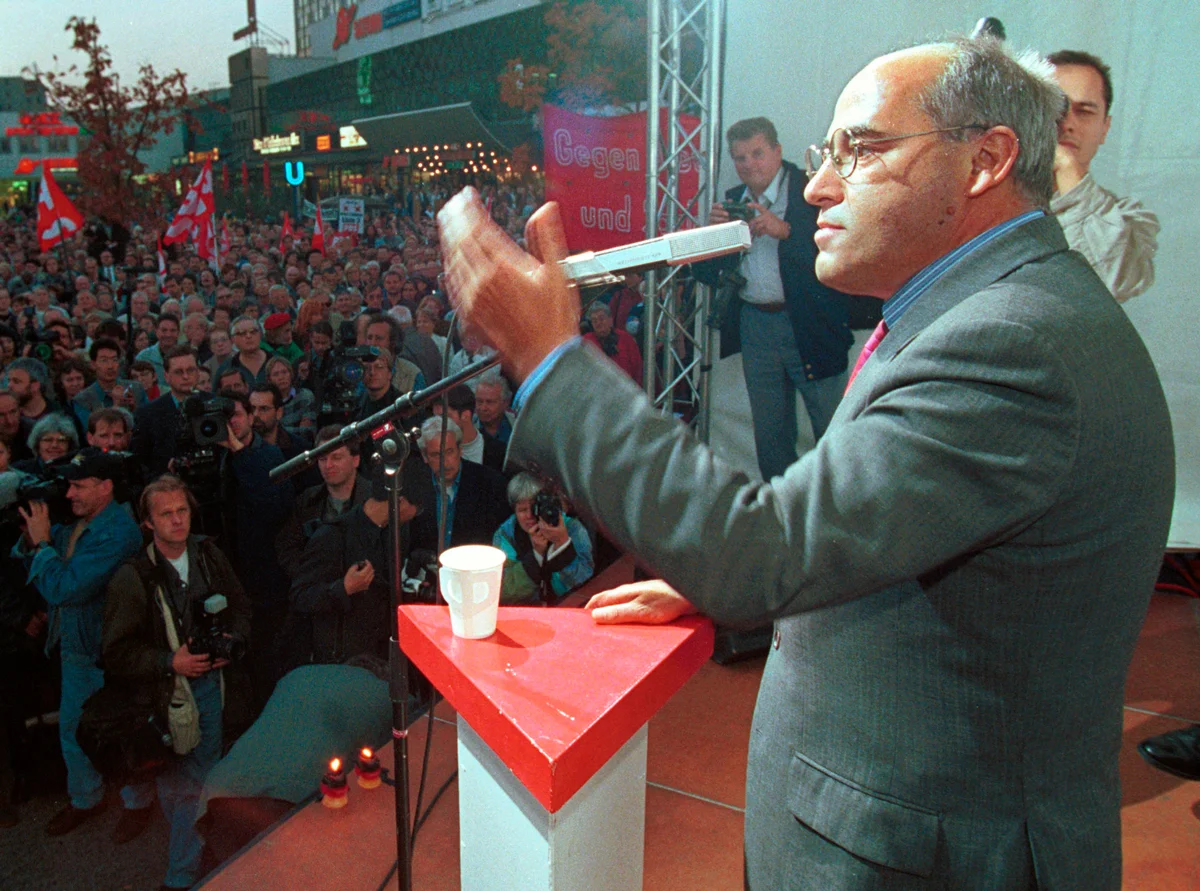
A short bald man in an elegant trench coal and round glasses rises to the tiny rostrum, built on the body of a truck. This is Gregor Gizi, a well -known lawyer and prominent member of the GDR of the Socialist Unified Party of Germany (SED), which should speak before the protesters on behalf of the country's leadership.
At first, Gizi is nervous and riding, in his hands he has a piece of paper: “Dear friends, usually I say freely (without a piece of paper). But this time he recorded his speech in order to then remember exactly what exactly said. ” An awkward pause. The audience laughs and applaud. Gisie smiles embarrassedly: the joke was a success, and he continues. He says that he supports the requirements of the protesters, and believes that the socialist republic needs more freedom and democracy.
“The words“ I would prefer not to talk about it on the phone ”should remain in the past,” Gizi jokes about the ubiquitous wiretapping. And this joke in the central square would be unthinkable a few months ago, but the young politician and all Eastern Germany during this period are experiencing historical events. The old GDR is rapidly changing under the pressure of protesters, and no one knows how it all ends.
Before putting a piece of paper in a pocket and getting off the rostrum, Gizi says: “From the Russian language we took only the word DATSCHA. I believe that it is worth taking two more words, namely: Perestrojka and Glasnost. ” The area meets with applause. With this speech, Gizi's path into big politics began.
Party member, defender of dissidents
In 1989, Gregor Gizi was definitely not a “clean leaf” or a man from the street. He was born in 1948 in the family of a convinced communist, a participant in the anti -fascist resistance of Klaus Gizi. Gizi Sr. found the creation of the GDR, was a deputy of the People’s Chamber, then the Minister of Culture, and then worked as a state secretary for church affairs and a diplomat.
Gregor's mother-Irene Lessig-came from the German-Jewish merchant family, who owned a factory in the Russian Empire. It was also associated with politics and culture, heading the Main Directorate for International Relations at the Ministry of Claus Gizi. Simply put, the family belonged to the elite of East Germany.
Sister Guzi Gabriel became an actress and director, and Gregor himself in a childhood tried himself as an actor of voiceing, so that he could well become an actor, but instead he decided to be a lawyer and a speaker.
“My privileges were, firstly, the personalities of my parents, and secondly, their education, thirdly, thousands of books at our house and, most importantly, guests that came to us,” Gizi said about his childhood, bearing in mind that foreigners often visited the house of his father.
In 1966, Gizi graduated from school and entered the SED party that was ruling then in the GDR, then studied the right at the Gumboldt Berlin University, and in 1970 he left the lawyer's diploma. Immediately after graduation, 23-year-old Gizi began working as an assistant judge in Berlin, and soon became a lawyer, one of the few private lawyers in the country. In addition, also the youngest.
As a member of the party and a native of a respected family, Gizi defended the critics of the regime and dissidents in the courts, and this unusual decision made him famous in the GDR, because Gizi did not occupy any posts in the party. Among his customers were Professor Robert Heveman, publicly (including in the Western press) criticizing the Party and personally, philosopher Rudolf Baro, who offered a “communist alternative”, and many others.
According to Gizi, his task as a lawyer was in mediation between state leadership and clients. “Therefore, I always went to the Central Committee of SED, to the department for state and legal issues,” he says, insisting that he did it as a lawyer, in the interests and with the knowledge of his customers.
The connection with the party elite of the GDR is not the only thing for which Gizi reproaches today. About politicians, they also say that in the framework of his work, the young lawyer was not only a guest in the Central Committee, but also an unofficial employee and informant in the Stasi State Security Service.
The accusations of work on the security forces will be pursued by Gizi all their lives: they are first nominated in the 1990s, and again -in 2013.
According to the DW publication, after the unification of Germany, the Stasi Archives Center came to the conclusion that there are many years of contacts between the GISI and the special service. And the Der Spiegel magazine announced the discovery of “honorary letters and memorable coins in honor of the 35th anniversary of the Stasi”, which were awarded to a certain freelance employee hiding under the names “notary” and “Gregor”. The Stasi Archives Center believes that these pseudonyms belong to Gizi.
The politician himself denies everything and claims that he never collaborated with the special service, and he considers attacks to be the machinations of competitors. According to Gizi, he honestly did his work and achieved the best conditions for customers. For example, the result was that his client Heveman was released from house arrest.
It was not possible to finally prove in court Gizi’s communications with special services. The politician repeatedly sued the ZDF television channel, then winning , then losing . In 2016, after the next surge of interest in the past, the prosecutor's office of Hamburg suspected him of giving false testimonies, but in the end she closed the investigation to lack evidence that the lawyer worked for the headquarters and lied under the oath.
Resignation with "bonus miles"
In the winter of 1989, at the sunset of the GDR, Gizi unexpectedly discovered himself in the chair of the chairman of the Socialist Party. After the collapse of the Berlin wall, the "new" party leadership windowly lost control of the situation in the country. General Secretary Egon Krenz resigned, and transformation began in the party: Gizi, who had not previously held serious positions, was elected in the party, and the SED itself was reformed in the Party of Democratic Socialism (PDS).
At the party train, which appointed his leader, Gizi advocated cooperation between Germany and the GDR in the complete preservation of the sovereignty of the latter. In both parts of Germany at that moment there was a discussion, whether the country should be unified and in what form.
In March 1990, the GDR took place the first free elections to the parliament in which the Western Conservative Bloc defeated , the second place was taken by Social Democrats (SPD), and PDS turned out to be only the third, gaining 16% of the vote.
In the same year, the unification of Germany ended, and in December new elections were held, now common to all of Germany, and PDS received only 2.4%on them. But, despite the crushing defeat, democratic socialists were able to go to parliament thanks to the concessions: the West and East of Germany were considered separately. In order for the Eastern Party to go to the Bundestag, it needed to overcome the barrier of 5% only in the lands of the former GDR. PDS managed to do this: Gizi and sixteen comrades became deputies.
In 1993, Gizi left the post of chairman of the party, and at the beginning of the zero left the Bundestag, where he led the PDS faction for a long time. After working in the federal parliament, the politician tried himself in Berlin city policy: in the framework of the Red-Red Coalition (Social Democrats + PDS), he became a senator for economics in the city government.
However, the triumph - the socialists re -rule Berlin - turned around a scandal. It turned out that Gizi used “bonus miles” accumulated during official flights for personal purposes. The politician recognized the mistake and stated that he was resigned. “[I] distance from voters with his behavior and began to perceive privileges for granted,” Gizi said .
However, as Novo-Europe, Artem Stasyuk from Dresden, member of the Die Linke party told, this event was not capable of destroying the Gizie career. Against the background of other scandals in German policy, embarrassment with “miles” is not the worst thing that can happen, the interlocutor believes. “Gizie was punished. He left, but no one forbade him to return. He is a very cool speaker, and this outweighs everything, he needs a party. People love him and are ready to forgive a lot, ”he says.
Savior of the party
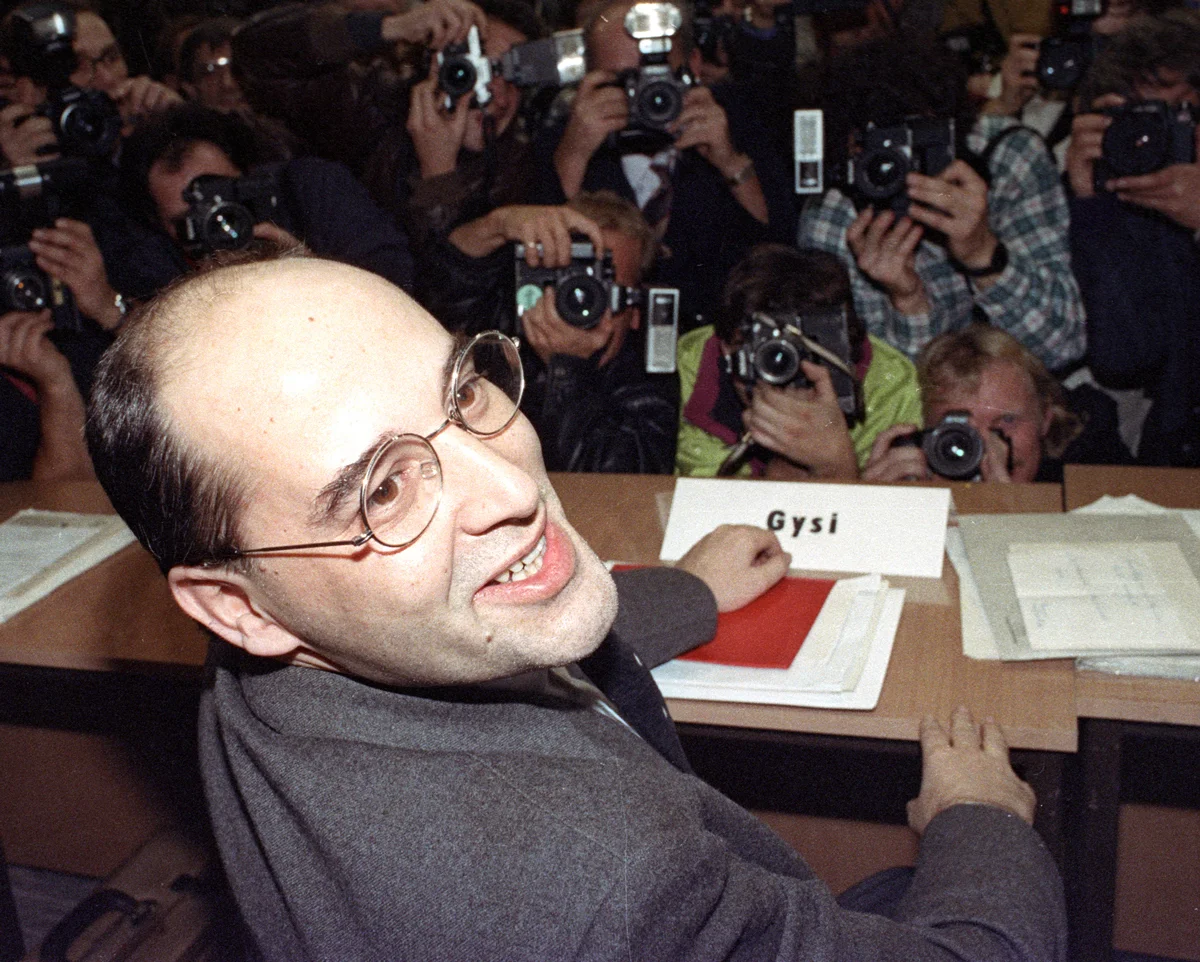
In 2004, in retired, Gizi suffered a heart attack, but already in 2005 he returned to the Bundestag. By this moment, a new transformation began in his party, and in the upcoming elections, Gizi as a veteran could help comrades.
At that time, PDS, active mainly in East Germany, began to get closer to the Western left and more radical social democrats, in particular with the group of the former SPD leader Oscar Lafontaine, the current wife of Sarah Wagenknecht. In 2004, Lafontaine left SPD, disappointed in the party and Chancellor Gerharde Schroeder. In turn, PDS revised its program and conducted personnel permutations and a merger with other left ones. So over a few years, the Eastern PDS has turned into a general German Die Linke.
Gregor Gizi was useful to the reformed left in that thanks to his media could easily win a single -mandate district in Berlin. This type of deputy mandate is extremely important, because any German party needs to gain at least 5% of the vote or have three direct mandates to form a faction in the federal parliament. To win in a single -mandate district is expensive and difficult, so even one such victory is a serious step forward. In addition, this improves overall statistics and frees places on the party list.
In the elections of September 18, 2005, the left received 8.7% of the vote and restored their positions. And Gizi, enlisted the support of 40% of voters in the Tsoptov-Kepenik district in Berlin, returned to the parliament with a direct mandate. Since then, he has remained a deputy for twenty years.
As the Novo-European, on the basis of anonymity, told an employee of the Luxembourg, Affected Rosa Foundation, Gizi, a man who communicates a lot with the press and seeks to win the sympathies of not only convinced left, but also voters with other political preferences.
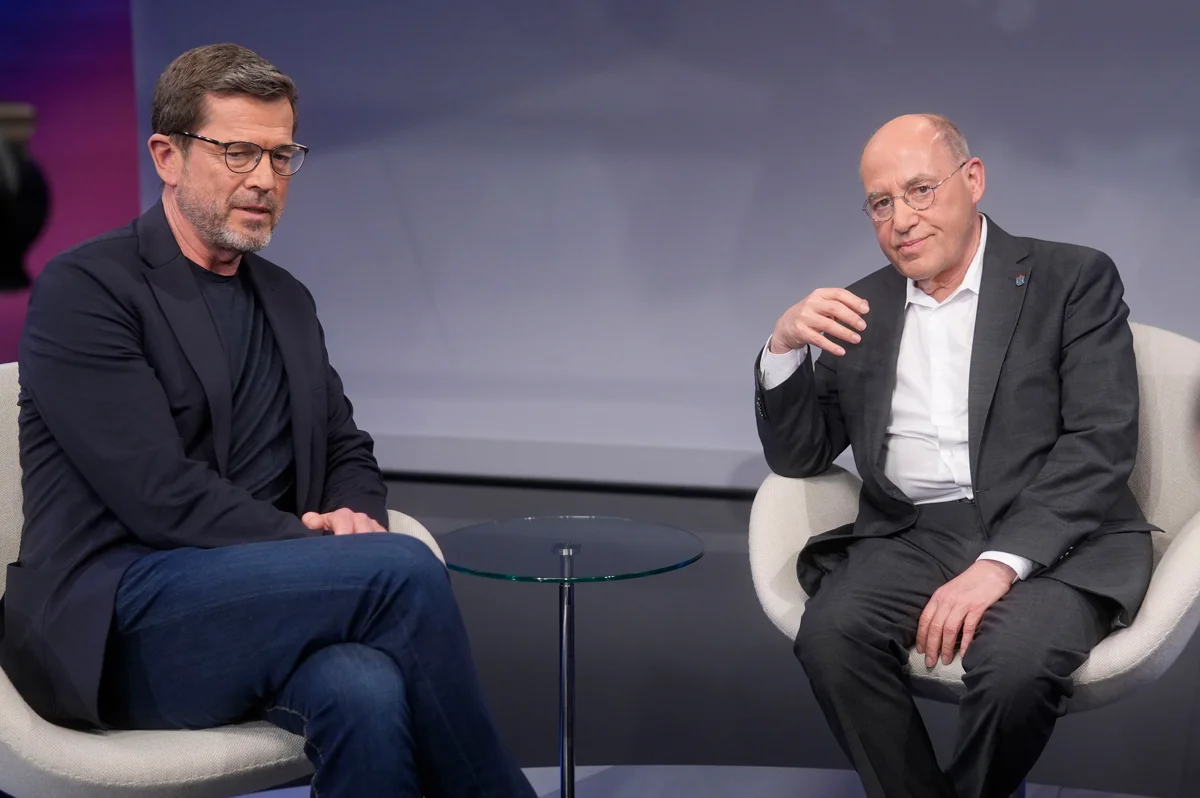
For example, Gizi is conducted by a weekly podcast Gysi Gegen Guttenberg, along with the former Minister of Defense, Karl Gutenberg from the Right -Conservative Christian Social Union (CSU). Regularly gives an interview, performs on stage and looks equally appropriate in court, protecting the climatic activists of the “latest generation”, and on the Achaensky carnival, releasing sharp jokes towards the respectable public.
“Of course, now he has already grown old, but in the past twenty years he has been the best speaker in the Bundestag. He takes steps towards the liberal press. He says that our socialism will be with private property and entrepreneurship, ”says the fund employee.
All this makes Gregor Gizi a charismatic politician who does not lose popularity. That is why, according to Artem Stasyuk, Gizi has long been going to rest, but he does not succeed.
“Whenever Die Linke ended up in a particular crisis, he again returned as the“ Savior of the Party ”, because his direct mandate is simply necessary”,
- says the activist.
For example, in the 2021 parliamentary elections, the Left Party went to the Bundestag and received a representative office only thanks to direct mandates. According to our interlocutor from the Luxembourg Rosa Fund, many then seemed that the left party no longer needed, because both social democrats and “green” work successfully on its main topics. In addition, many voters were disappointed in Die Linke. “It was difficult to find a common language about coronavirus and foreign policy. We never left the topic of the working class, but it seemed to many that we retired from pressing issues, ”says the representative of the fund.
Operation "Silver Locon"
In 2018, the Berlin edition of Tagesspiegel compared Gregor Gizie with Forrest Gamp, the hero of the novel and the film of the same name: wherever he appears, decisive events take place. But, unlike the hero of books and films, Gizi is not accidentally in the center of events: on the contrary, he is the only one who understands what is happening, the newspaper writes.
In the winter of 2025, Die Linke was again on the verge of collapse: polls promised her only 3%, the party survived a split and a crushing defeat in the eastern lands. “If we fly out of the Bundestag, Olaf Scholz will remain the left. Let me, but this is too much, ”Gizi joked about this, hinting that the new parliament will be with a strong skew to the right.
Understanding the difficult situation with the success of the right forces, Gizi decided to save the situation with his two elderly colleagues: with the current head of the parliamentary faction, Ditmar Barch (66 years old), his protege, and former minister-president of Tyuringia Bodo Ramelov (69 years old).
Their task was to win direct mandates for the “left” again and thereby provide them with a party representation in the Bundestag.
“We have dinner together, we will drink wine, we will consult. If we come to a positive conclusion, then we will launch the Operation “Silver Locon”. I will inform you about the results, ”Gizi told reporters, hinting that the gray -haired masters are going to save the party.
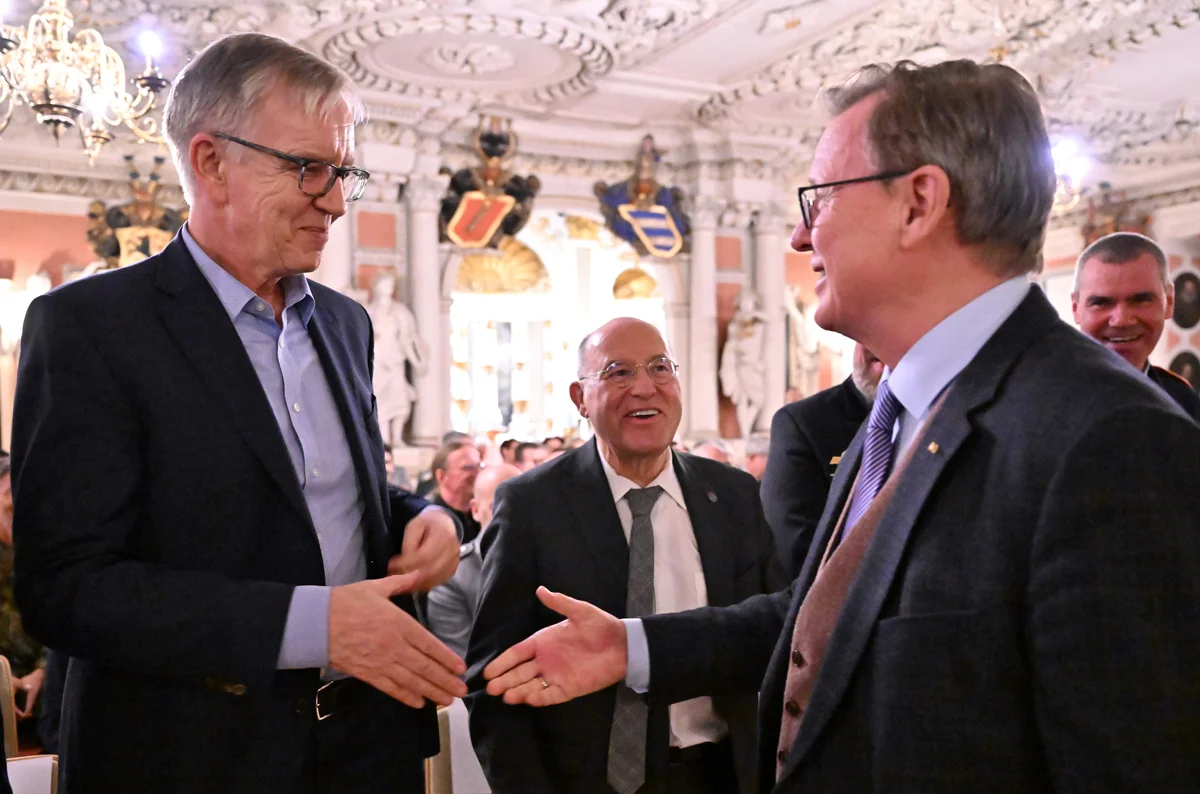
The operation was successful. Instead of the necessary three direct mandates, the “left” received six and suddenly overcame the five percent barrier, gaining 8.7% of the vote.
As an employee of the Rosa Foundation Luxembourg explained, it worked because the Three Gizi - Bark - Ramelov and the party leadership acted in harmoniously as one team. While younger left -wing candidates worked with youth and social networks, three politicians at a respectable age were able to attract the older generation to their side.
“The fact is that some voters are scared away by our young leaders like Heidi Rykhinnek with her tattoos. The Silver Locon plan was a counterweight: Gizi, Bark and Ramelov seemed to be such statesmen, to whom older voters can entrust the management of the country, ”the interlocutor says.
Now the future of the party is in good hands, the representative of the fund believes:
“It can be seen that Gizi is tired, he is already 77 years old. I don’t think that he will go for one more period and that it will be needed at all. There were fifty thousand of us in the party, but there were one hundred thousand.
Now Die Linke is more than ever. In the elections in Berlin, we can fight for the first place, so that the revival of the party has happened. ”
Gizi is a person who helped the party, but no longer a political leader, says Artem Stasyuk. In public perception, and in fact, other people have been leading for a long time, he believes. Активист говорит, что у него самого, как и у многих других однопартийцев, отношение к Гизи менялось со временем. Он то относился к нему с симпатией, то разочаровывался. Однако, отмечает Стасюк, Грегор Гизи обладает одним важным свойством: «В переломные моменты он всё-таки очень удачно понимает, какие изменения происходят в обществе и в мире в целом».