
Translated material
On the verge of peace
Hamas and Israel are discussing the conditions of a possible ceasefire. At the same time, the fighting in the gas sector continues. Will the remaining hostages be released?
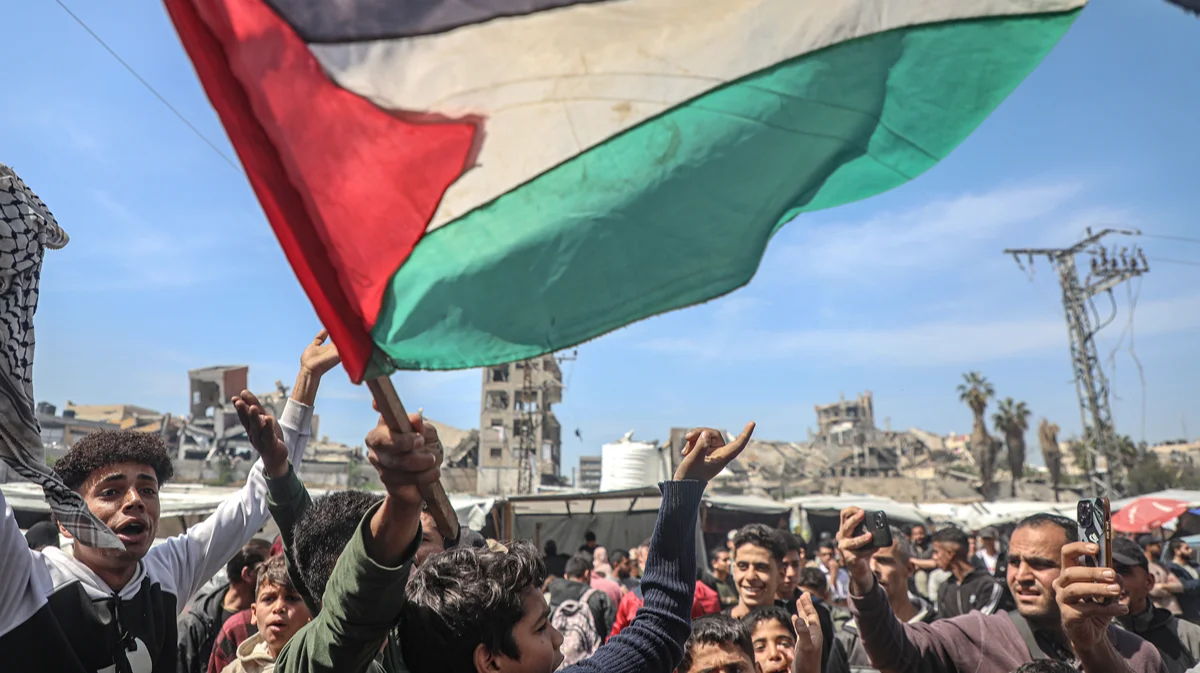
Palestinians for protest against the ongoing war between Israel and Hamas, Gaza Sector, March 26, 2025. Photo: Mohammed Saber / EPA
On Monday, one of the leaders of Hamas in the Gaza Strip Halil Al-Haya said that the group approved the draft agreement aimed by Egyptian and Qatarian intermediaries. A senior terrorist said that the group supports the resumption of the ceasefire in the gas sector and the proposal to free five more Israeli hostages in exchange for a 50-day truce.
“Two days ago, we received an offer from the intermediaries of Egypt and Qatar. We reacted positively to him and accepted him, ”said Al-Haya, who leads the Hamas group in the negotiations in the video message.
The office of the Prime Minister of Israel Benjamin Netanyahu said that he had consultations at the proposal of intermediaries about the ceasefire. The prime minister’s office also reported that the Israeli counter proposal was agreed with the United States, but did not provide additional details. Representatives of the United States did not publicly comment on this issue.
During the first stage of the truce, Hamas freed 25 living hostages and handed over eight bodies. It is believed that the militants still hold 59 hostages, of which 22 can be alive.
“At the moment, Israel continues limited military operations in the south and north of the gas sector in order to further pressure on Hamas in negotiations on hostages,” says Military Expert David Gandelman, “New-Europe,”. - Different options are discussed, from five to ten hostages in exchange for several weeks of ceasefire. There is still no agreement. If the Israeli government decides that further negotiations are hopeless, it can proceed to a wide ground operation with a purely military rather than negotiation targets. But so far we are not there. ”
“Judging by the leaks, Hamas agreed to the Cultivated plan of the Whitkoff,” says the military observer David Sharp. - Initially, out of 22 living hostages, 10-11 freedom were supposed to receive freedom. The terrorists also gave up to 30 bodies of dead hostages. For this, Israel released many terrorists out of prisons. The fire was supposed to stop for 45-50 days. At this time, it was planned to negotiate the second phase of the transaction, implying the adoption of already permanent decisions. At the same time, Hamas conducted direct negotiations with the United States on the liberation of the Israeli soldier Alexander, who has American citizenship. The terrorists also proposed to return several bodies. Israel did not suit this option at all. ”
“Regarding a possible truce, there is a proposal to continue the first stage,” Israeli military journalist Sergei Ausleder tells Novi-European. - If they decide to go by extending existing agreements, this, in fact, will become a variant of the plan of the specialized US President Stephen Whitkoff. So far, Hamas proposes to release five living hostages in exchange for 50 days of ceasefire. The hostages must be freed in five stages - once every ten days the terrorists will let go of one Israeli. Israel does not suit such an initiative. Jerusalem requires a freight relief of 11 hostages and the transfer of half of the bodies of people who died in Palestinian dungeons for 40 days. Also, for those unfortunates who remain captive with militants, security guarantees should be provided. ” It is likely that for each hostage, militants will require the liberation of hundreds of terrorists from Israeli prisons.
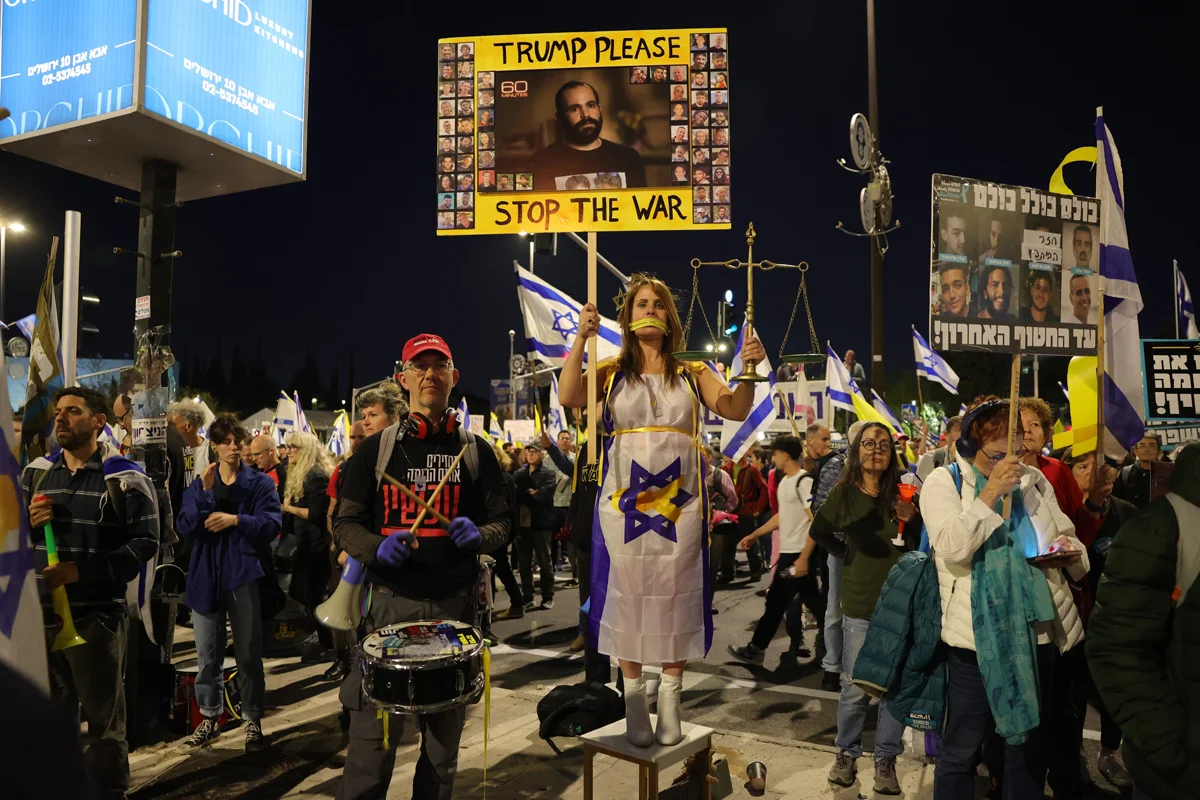
“The oncoming demands of Israel have become known,” confirms David Sharp. - This is primarily a one -time liberation of 11 living people. After that, on the fifth day, Hamas should provide Israel with comprehensive information about the terrorists of the living and dead hostages remaining in their hands. And on the tenth day, 16 bodies of the dead will be transferred. Deliveries of humanitarian assistance are resumed for this, many terrorists will come out of prisons, and the truce will last 40 days. ”
Israel also requires the disarmament of the Hamas military wing and the leaders of the group leaders.
Who benefits?
According to Sergei Ausleder, the ceasefire in this situation will benefit Hamas and will not be beneficial for Israel. At the same time, military operations in the gas sector are resumed. From the south of the Exclar in the area of the city of Rafiah, the DSAL (Israeli Defense Army) enters. A tank team was additionally transferred to this direction to strengthen the existing army group.
“After Hamas refused the proposal of Steve Whitkoff to release half the living hostages and transfer 11 bodies of the dead, Israel accused Hamas of refusing to extend the first stage of the transaction and on March 18 resumed gas blows,” a military expert, a former employee of the special services and police of Israel, Sergei Middal, recalls “Novo-Europe”. - At the same time, Qatar and Egypt do not leave an attempt to reach agreements between the parties even during the continuing military operations. However, to Israel, apparently, the proposal for the release of five hostages in exchange for 50 days a truce seems unfair. Benjamin Netanyahu does not agree to any compromises and is ready to only follow the initial plan of the Whitkoff to release 11 living hostages. An additional important requirement is security guarantees for all Khamas Israelites remaining in captivity and the admission of representatives of the Red Cross. ”
What will they do?
According to Sergei Migdal, from March 18, the IDF actually conducts artillery and firing, firing at Hamas in exclus and pointily destroying the leaders of the terrorists. During the end of the ceasefire, five members of the Politburo of the terrorist group and the head of the Hamas government were liquidated.
“During the ceasefire, the Israeli special services accumulated a solid bank of goals, in which, among other things, there were places of frequent finding the leaders of terrorists,” said David Sharp. - As a result, during the time of the ceasefire, five members of the Politburo Hamas, the head of the government government, and soon the successor who replaced him in this post, and many other prominent militants' commanders were destroyed. In total, at the beginning of the war in the Politburo Hamas there were twenty members. Today, apparently, there are two of them. The press attache of Hamas and the “Islamic jihad” and even a couple of fictitious journalists, who were in the wing wing of Hamas as snipers, were destroyed. At the moment, the head in the Gaza Strip Muhammad Sinvar and the commander of the city of Gazzeddin al-Khaddad remained from the highest link in the group of the group. ”
“During the truce of Hamas and the Islamic Jihad, they tried to shell Israeli peaceful cities with missiles,” adds Sergey Migdal. - All these missiles were intercepted by the air defense for the ISCAL or fell in uninhabited terrain, and sometimes in the gas sector itself. The Israeli troops entered the Corridor Netsarim, separating the northern part of the exclus from the central and southern, and also expanded the buffer zone from the south and north of the sector. The DSAL issued the order to all the inhabitants of the city of Rafiah and the Tely-Es-Sultan district to move to the center of the gas sector to the special humanitarian zone of Al-Mavashi. Apparently, a large -scale ground operation in these settlements is planned. The IDF will completely take and clean Rafiah. Until that moment, the terrorists did not dare to collide in a stupendary battle, maintaining strength for a decisive battle.
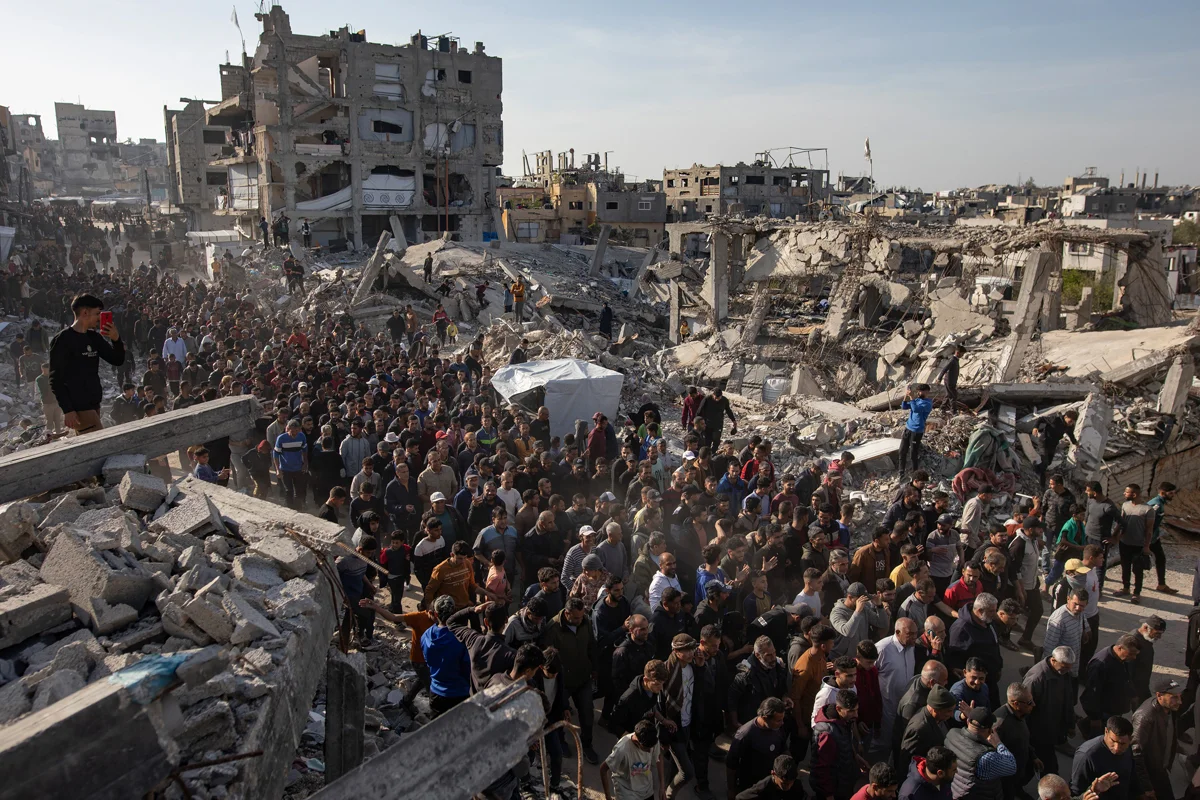
However, now they obviously have to fight seriously. In the center of the sector, there are still refugee camps, which the Israeli army did not enter with a large -scale operation. ”
David Sharp evaluates the current forces of terrorist groups in the gas sector of about 20–25 thousand militants from Hamas and up to five thousand Islamic jihad. For almost two months of the ceasefire, the terrorists replenished their strength, conducted training, extracted lessons and mined many sections of the excan.
“The ground operation in the gas sector is currently limited. It is accompanied by intense airstrikes, ”explains David Sharp. - In my opinion, its main task is to provide pressure on the leaders of the militants in order to force them to adopt the Whitkoff plan in its original version. It is necessary to draw as many living people from the hands of terrorists. The stop of the transfer of humanitarian aid to the exclus is connected with the same. But it should be noted that during the ceasefire, products and goods there were accumulated there for many months ahead. At the same time, Israeli pressure is valid. After all, it is known about the rather massive demonstrations of the inhabitants of the Gaza sector who protested against the power of Hamas. ”
David Sharp says that the forces of the IDF, the GAZ sector entered deeper into the territory of the GAZ sector, advanced where they did not meet special resistance. Given the likely proximity of the conclusion of peaceful agreements, throwing troops into the bloody battles is short -sighted. However, Hamas has an obvious influence of how the IDF is building up the onslaught.
According to David Sharp, one of the Rafiaha Raine is already surrounded by Israeli military, and there is now filtration in order to search for militants. In another area, which was practically destroyed during the war, the forces of the IDF entered, not having met any resistance there.
After the expansion of buffer zones, the classes of the corridor Netzarim and the cleansing of Rafiah Dervam, according to Sergei Migdal, will continue to divide the exclus into separate sectors and then carry out the filtration of local residents there to identify militants. It is likely that the Israeli troops will move from the north and from south to center. After the ceasefire, up to 650 thousand local residents who left from there after the beginning of the ground phase of the war returned to the north of the ceasefire to the north of the Exclave. Now they will probably be squeezed back to the center of the sector in the humanitarian zone of Al-Mavashi, where the conditions for living hundreds of thousands of people are created, whose houses were destroyed during the conflict.
The war against Hamas began after the militants attacked the south of Israel on October 7, 2023, killing about 1,200 people and capturing 251 hostages.