
Translated material
"This is the future that is now cut off"
"This is the future that is now cut off." As Petersburgers have been defending the “thickets” for five years - the park will want to destroy the route for the highway for 10 billion
The residents of the Vasilievsky Island are fighting for the preservation of the unofficial park “thickets” for more than five years. The authorities plan to build a highway for 10 billion rubles in its place and at any time they can begin to cut down the trees. But activists do not give up.
“Paper” tells how “thickets” appeared - and how they can disappear.
"Place of association"
In the “thickets” steep slopes, river sand and direct access to a small Neva. Once upon a time the river itself passed through this place, but over time, a dancer was formed, and at the end of the 19th century the territory was fenced and built by a sleeve (in the Soviet years he was assigned the name of Kalinin). At the site of the future park, a landfill has formed, in the sand you can still find an old broken brick.
Already in the 2010s, the plant practically went bankrupt, it was handed over to Rostec and transferred to the Leningrad region. The fence that covered the exit to the shore was demolished.
- People discovered a beautiful place here with green maples, birches, poplars and shrubs. The Petersburgers opened a pearl in the city center, and many began to come here to fry kebabs or just relax in nature, ”a local resident Polina tells “ paper ” .
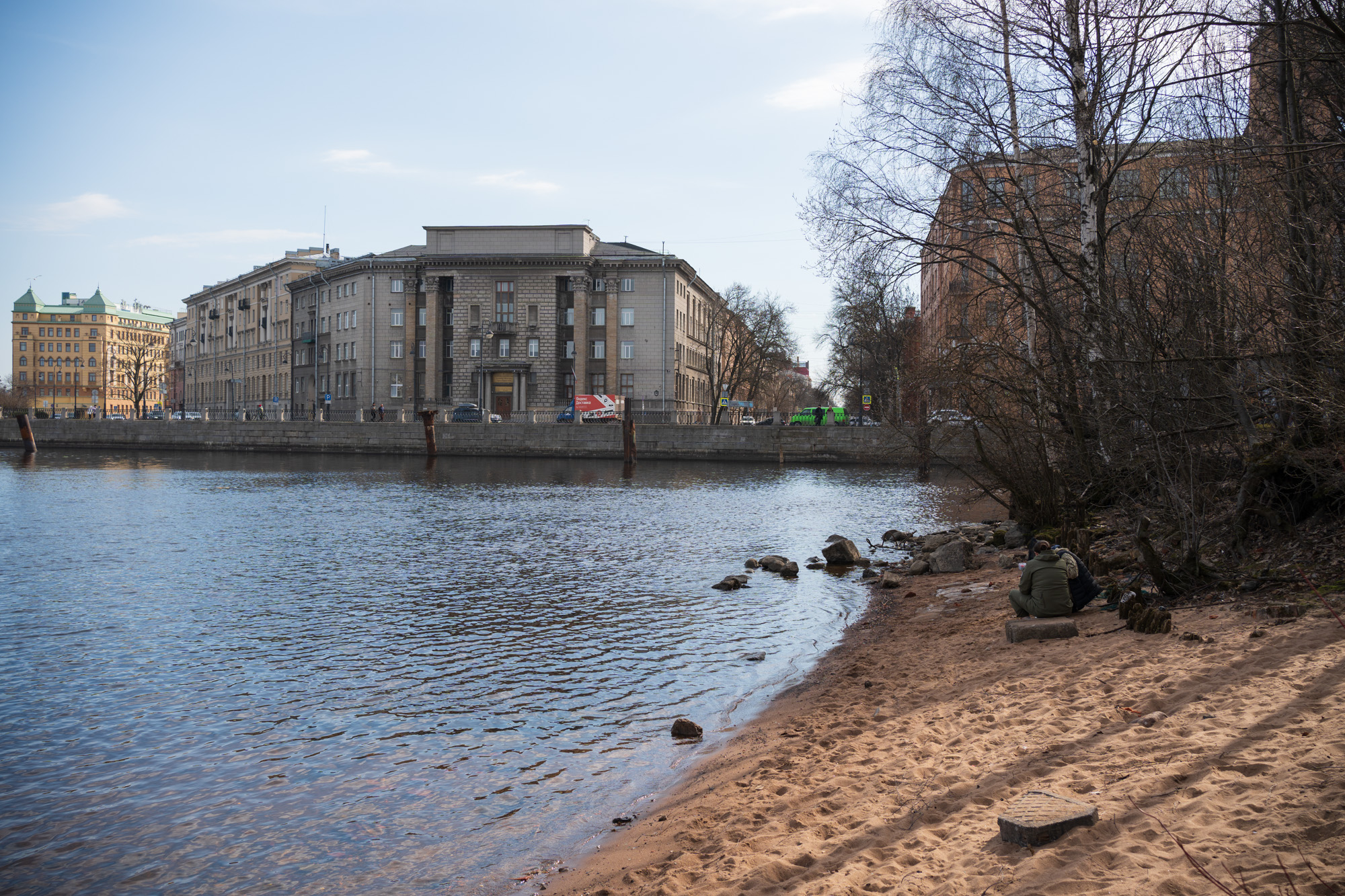
The place became even more popular during the pandemic, when official parks were closed due to quarantine. So the "thickets" appeared. As the locals recall, the name was invented by Maria Tinik, an eco -activist and the ideologist of the “Trees of Petersburg”.
True, the park did not appear official status. According to the documents, this is a wasteland, but in fact - one of the few green zones on the Vasilyevsky Island.
On weekends, mothers with strollers and dog lovers often walk here, and fishermen sit on the coast. At the same time, the city authorities are not engaged in the park: residents themselves ennoble it, gather on subbotniks and even hold small festivals. Polina recalls that one of the first events in the park was organized in 2022, and calls it a “piece of civil activism”.
- In that year, many were at a loss and did not know how to cope with life now. In the "thickets" the place of unification was formed, - she explains.
However, some local residents (their minority) note that not everything is so good with the park. For example, they indicate that in a small abandoned house in the park, drugs are periodically consumed.
"Paper" visited the park on March 30. On that day, you could see how families with children are sitting on one part of the beach, and a company of young people with drinking. At first they got along quite calmly, but subsequently the drinkers began to pester the vacationers and shout : "There will soon be a road - fucked up."
- [this] closed [place], there is no video surveillance, a common devastation around, there is a lot of metal underground and it is unsafe - how many times people fell here. In a good way, “thickets” need to be socialized, ”one of the local residents is sure.
"Lie down under their buckets"
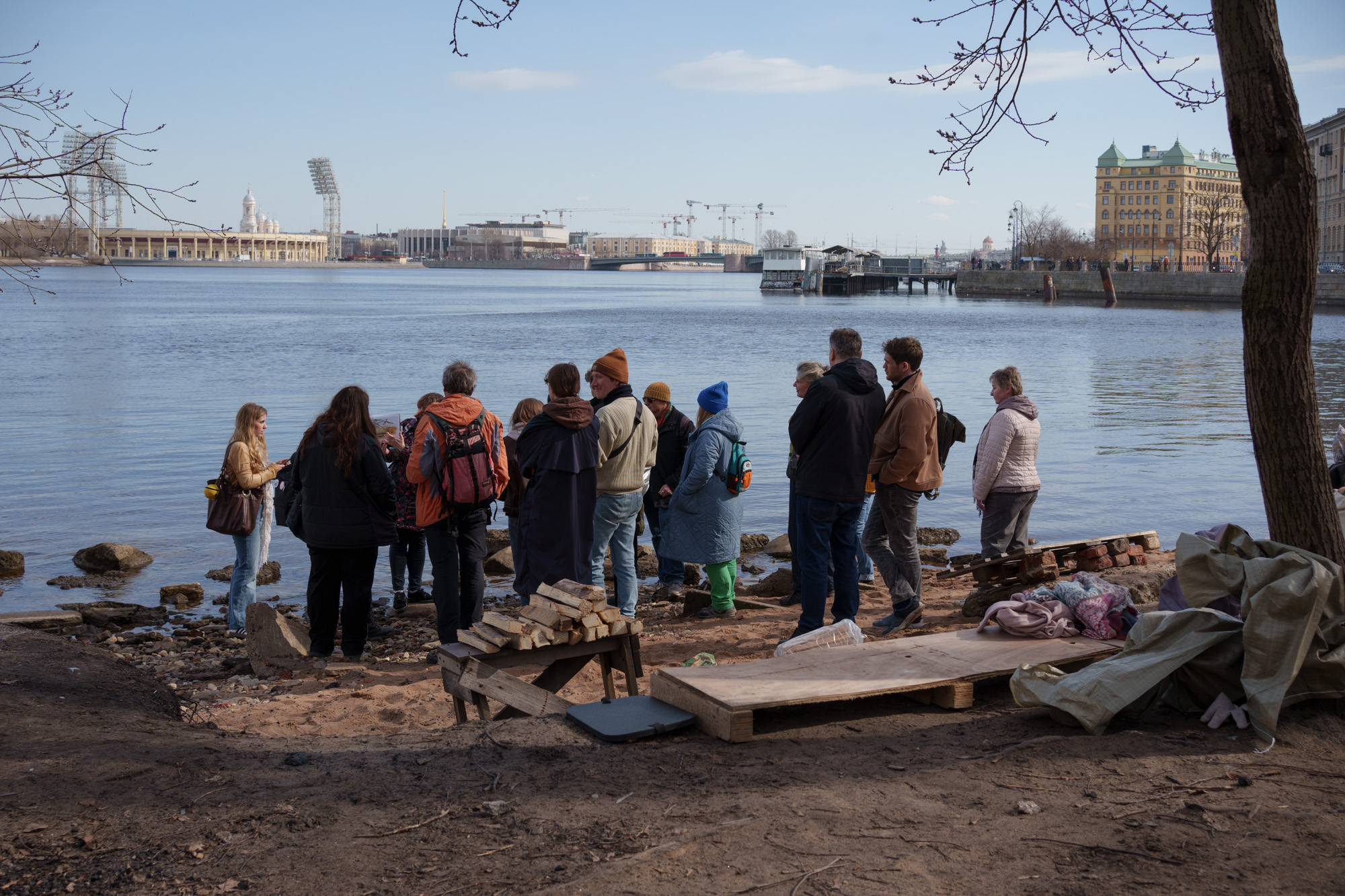
March 30 is warm, there are a lot of people in the park. However, these are the last relatively calm weekend for the company from a couple of dozen activists who have been fighting for the preservation of the park for several years.
Already in early April, the territory can begin to be fenced in order to cut down the trees and prepare for the construction of the motorway. Initially, the signing of the contract for these works was planned on April 7, but the authorities unexpectedly did it a week earlier.
Now activists are discussing further actions: someone offers to write to celebrities who “have weight in St. Petersburg”, someone-to seek the revision of the entire project. For example, back in August, local residentsproposed to remove part of the track in a tunnel or make a bridge on piles to save the park.
The first news about the construction of the highway connecting the two parts of the Makarov embankment appeared in March 2019. Then the authorities published an order about the draft road.
At the same time, activist Polina claims that they wanted to build the track for the 2018 World Cup. However, then they did without her, the politician Mikhail Amosov told activists (there were no this in open sources).
In August 2024, it became known that work on the construction of the road will nevertheless begin-moreover, within a year. And in September, Alexander Beglov openly supported the project - as activistsbelieve , this became the “final decision to destroy” the park.
Beglov emphasized that the highway is important for the "development of the transport infrastructure of the Vasilievsky Island." The governor also noted that the new road allegedly creates a “comfortable urban environment for Petersburgers and the transformation of the embankments”, because the project outlines a green zone with pedestrian and bicycle paths.
Activists are sure that the construction of the route will not radically change the structure of the automobile traffic. In 2021, the OTS Lab Bureau of Transport Planning came to the same conclusion: experts simulated the situation and found out that there would be less traffic jams after construction.
Despite this, the authorities obliged the tender for the construction of the highway (10 billion rubles), and for cutting trees in the territory (90 kopecks). Both contracts went to the Renaissance, a large construction company of billionaire Igor Bukato.
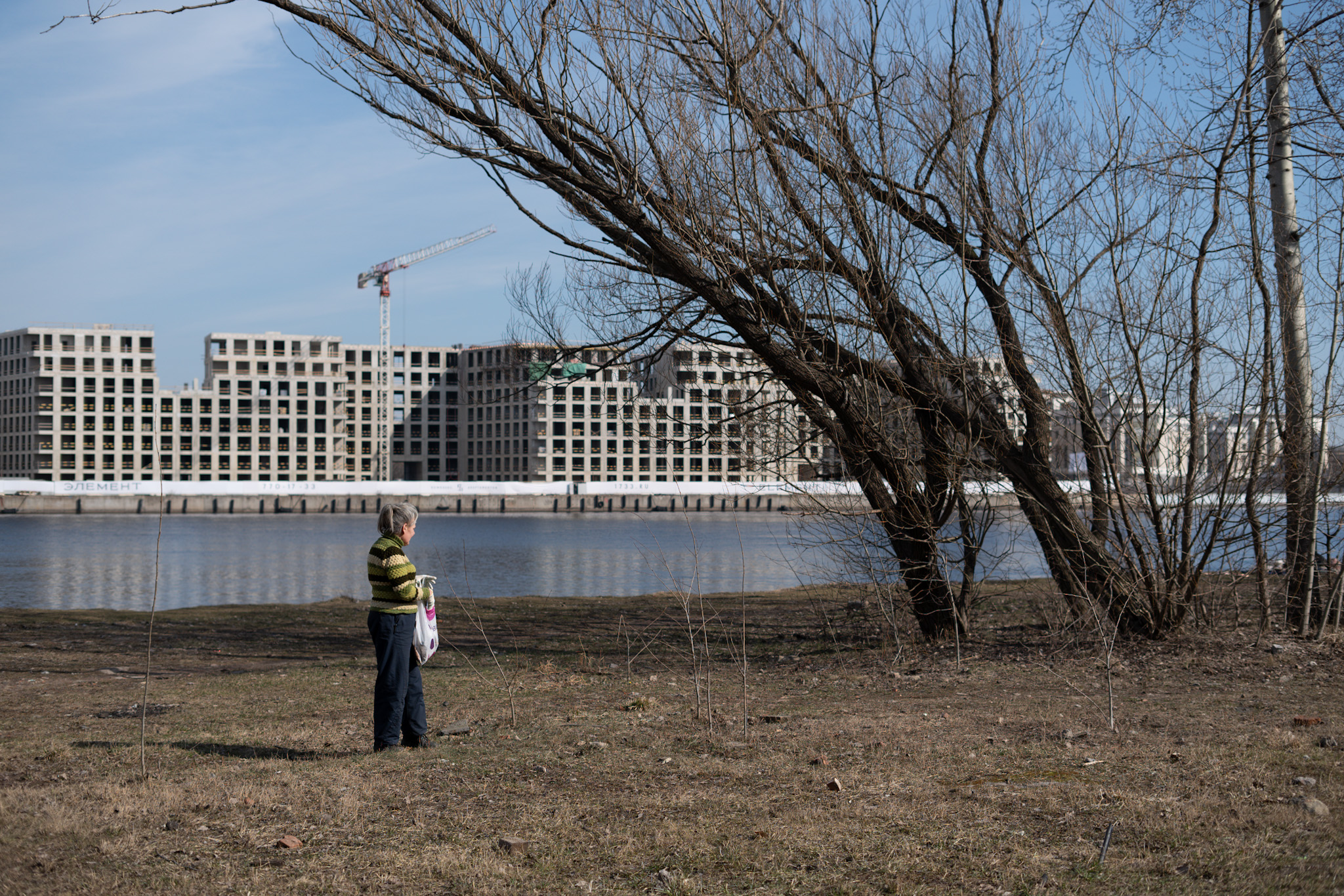
In total, about 8 thousand trees plan to cut down in the park, of which more than 250 are large. During these works, the developer will spend another 8 million on the protection of the territory. “This money would be enough for us to put lanterns, benches in the park and make a pedestrian wooden bridge through Smolenka. And they have eight million only to guard, ”said activist Alexander Kozich.
Her associates are sure that these works are illegal. They note that the project planning, which involves the construction of the route on the site of the park, was developed by the design organization of the Sevzapinzhtehnology NIIPIPA, which also belonged to Bukato until December 2022. In addition, according to activists, the developer still does not have a building permit and other necessary documents. The company’s press service did not respond to our request, adding that they would comment on the situation later.
- Five years of struggle were compiled in two months - April and May. From the first of June, according to their project, there should already be a fence here. During this time, you need to do everything that is possible, and then it’s hard to say how everything will turn out, ”Dmitry is convinced, who advocates preserving the park.
The activist is sure: there is still a chance to win, because there are departments that can stop the construction in theory - for example, the FAS or the Gosstroynadzor. Not all defenders of the “thickets” believe in this, but almost everyone is sure that “we must fight to the last.” Relative how this “battle” might look like, opinions diverge.
“They will put a fence and come here with saws.” What do you offer? Lie down under their buckets?
- Go to bed. On Nevsky, people lay down for excavators, laid down on a fountain - they wanted to protect. And whoever does not want, he will find excuses: the sun is not that, the weather is not the same, the air is not the same.
"The future that is now cut off"
Alexandra Kozich has been engaged in activism in the “thicket” for more than five years, she is sure: the construction of the road will become an environmental disaster for the region. Like the deforestation of eight thousand trees.
- Many of them are still little teenagers, but this is our future that is now cut off. Already now there is nothing to breathe, Vaska is terrifying, ”says Kozich.
In response to such claims, the authorities assure that the developer will make a green zone along a small Neva. And activists indicate that even in the best case, it will replace only part of the “thickets”. In addition, the defenders of the park note that the developer is going to do a dash (in the company itself is called the “expansion of the coastline”), which is why the water level may rise and the likelihood of flooding will increase.
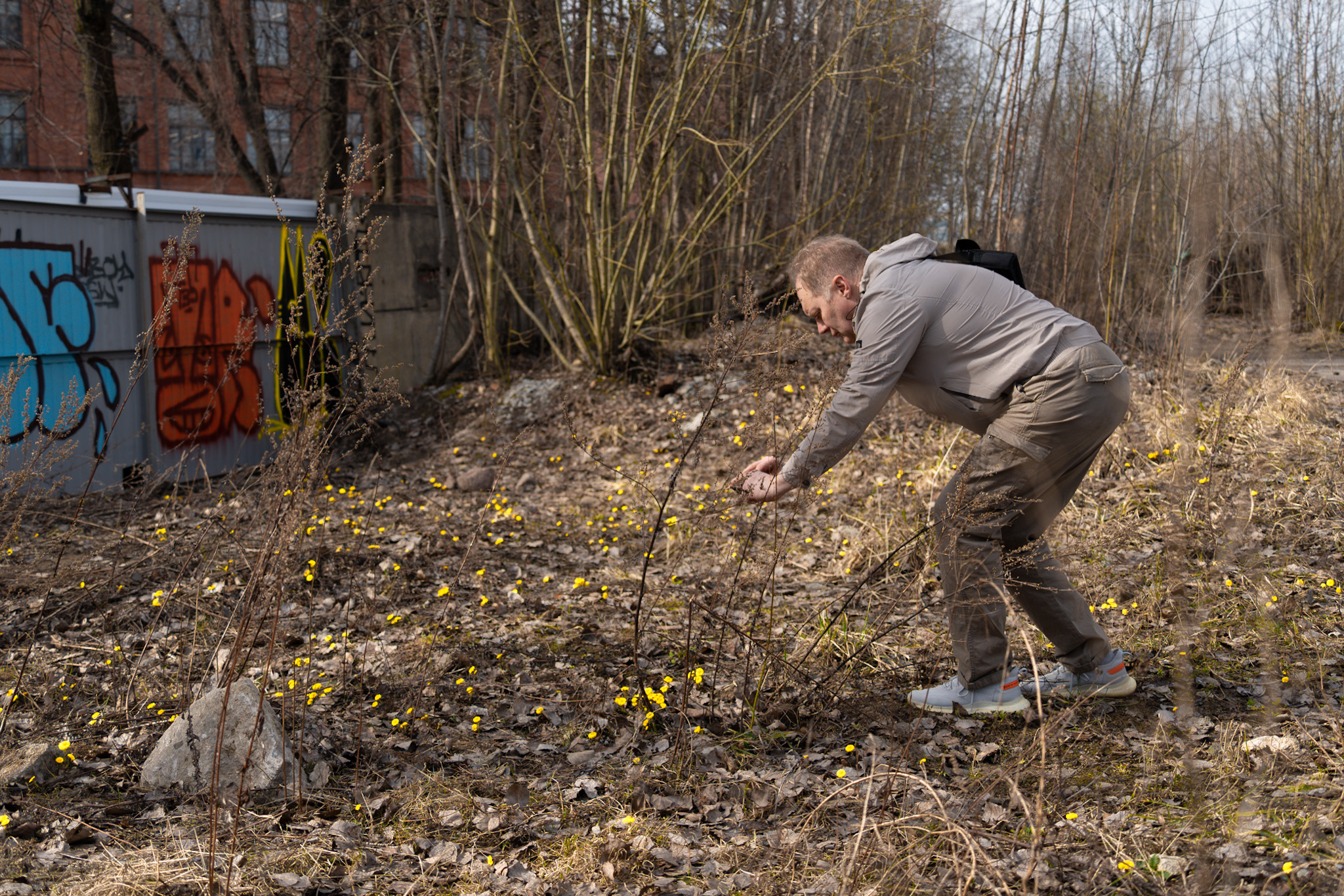
Biologist Taisiya Mikhailova, who conducted a tour of March 30 in the “thicket” , notes that due to the unusual relief, the root system of trees is visible in many places of the park and it needs to be studied in a good way. Like local plants as a whole.
- There are layers of rare bricks, by which, for sure, one could understand what was here [many centuries ago]. For example, one could put information stands and tell about the soils how our city appeared, ”the biologist explains.
Mikhailova adds that the construction will scare away local birds and negatively affect fish in the Neva. In addition, cats are also found in the park: they settled in an abandoned building nearby, and the “thickets” come for food - they are fed by local residents. When news appeared about the imminent start of construction, activists began to catch cats: the majority already managed to catch and attach, but five more were left - they are hoped to be taken from the park in the near future. The fact is that the construction in which cats live is also going to demolish. Activists are afraid that in these works animals can die.
"We will resist the end in the lost war"
“ The only Central Poland [on Vasilyevsky Island] is the Smolensk cemetery,” notes activist Evgeny Lastochkin. - People and fight for this place, because it is the only thing where you can take a walk with strollers and children.
He adds: “We can only approach the Neva along the embankment. [A] There is a sand, you can urinate your legs. We live among the water and cannot approach it. ”
Some activists admit that they would like the park to be landscaped according to the model of the New Holland, others (most of them), on the contrary, advocate maintaining the “savagery” of the place.
“Many people do not understand what is the value of untouched untreated nature,” says Polina’s defender Park. - Citizens are trying to sell artificial landscapes, but for the city and nature, those where a person does not walk is important.
Now activists are urging everyone who is worried about the fate of the “thickets”, regularly come to the park and monitor what is happening there. For example, whether information stands appeared about preparing work.
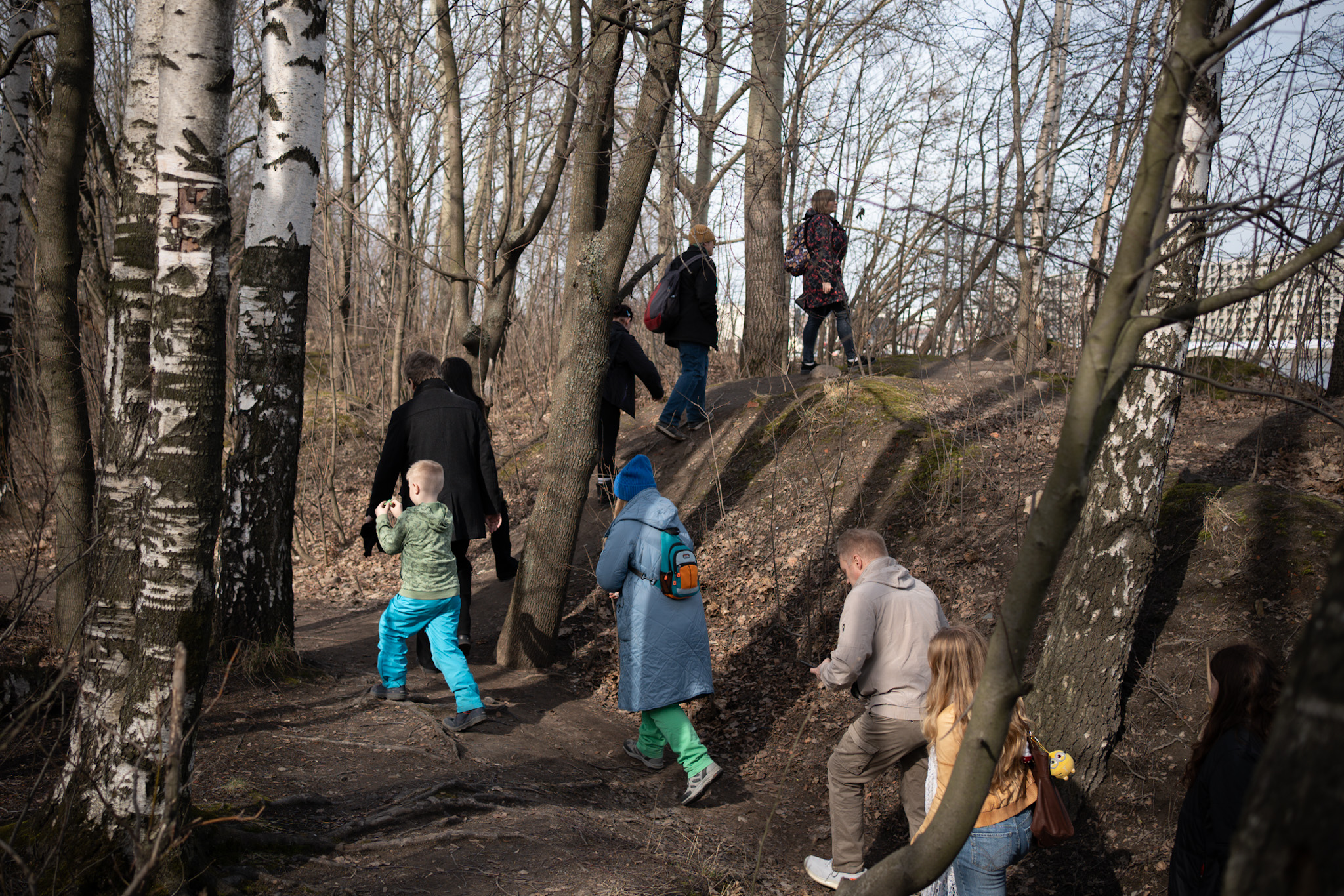
Igor - one of the local activists - in a conversation with “paper” notes that such steps help him feel unity with other Petersburgers. He adds that in a sense regularly comes to the “thickets” and removes the garbage “out of harm”.
-I really want to somehow resist something. And I'm here.
Alexandra Kozich admits that now there are only the minimum chances of saving the park. Hope is only that local residents, who are not yet interested in the problem, suddenly "wake up at the last moment."
- We try to make to the maximum, despite the fact that we understand that we have little hope. We will resist the end in the lost war. In addition, there may be other factors that we do not know anything - maybe they will cancel plans, investors will go bankrupt, and conflict will come in the interests of business. Now we are doing what we owe, regardless of the result, ”adds Polina.
The activist emphasizes: “This is the place where children can find out what Neva is, what sand is and how its waves move if the ship has traveled. Petersburgers not only accidentally threw it out of space, we, too, are part of the landscape, we grow here. People want our city to develop as a modern European metropolis, where a careful attitude to the environment is accepted. People who make decisions regarding St. Petersburg, apparently, somehow do not really love him. And we love. "
We figure out what is actually happening
Make a payment in favor of the editorial office "Paper"
What else to read:
- "The system is sharpened so that people do not interfere." How Petersburgers tried to protect the park and square with amendments to the general plan
- How has the appearance of St. Petersburg changed at Beglov? “Buyan clouds” were not built, urban protection lost independence, but there are more public spaces.