
Translated material
Spying - do it yourself
Spy scandals are shaken by Bulgaria, but politicians and special services try not to notice anything
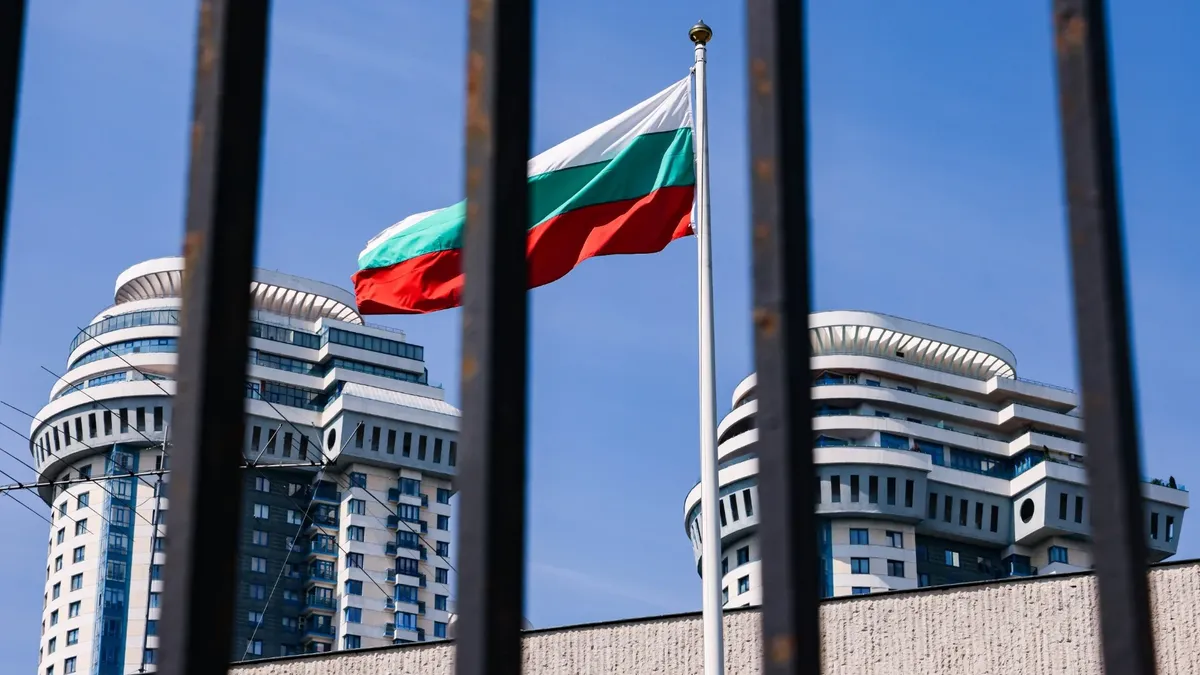
View of Moscow from the territory of the Embassy of Bulgaria. Photo: Anton Novoderezhkin / TASS
Spy games in London have long been not uncommon, but this case deserves special attention. In the center of the scandal - several citizens of Bulgaria, who for a long time mined intelligence in favor of Russia, until the British intelligence agencies stopped their activities. Now they pleaded guilty and expect a sentence. And what do they know about this in Bulgaria itself?
Under the cover of laboratory assistants and decorator
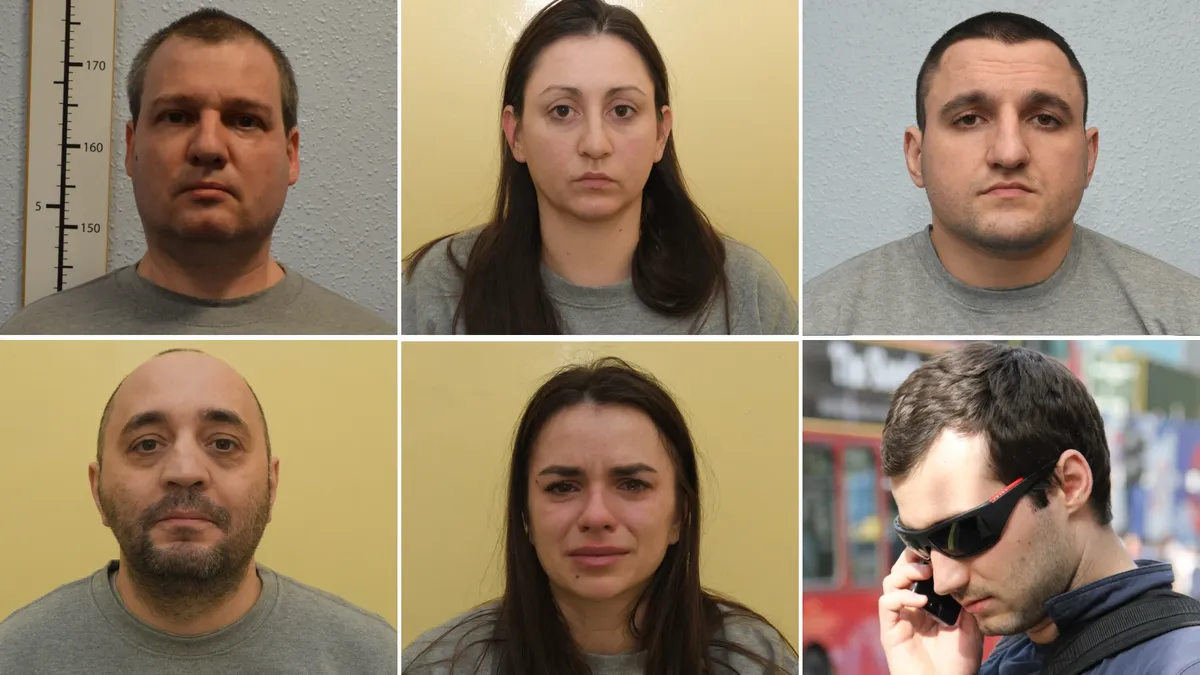
This story looks like a script for a postmodern spy thriller: six people with Bulgarian passports, the most peaceful professions that have never passed special training and in different ways, organize a whole reconnaissance network, monitor journalists and military facilities, and in their free time lead a quite ordinary life.
The main in the group was the 47-year-old Orlin Rossev , a former businessman who worked in the field of financial technology. According to the investigation, he coordinated operations and transmitted data to the curators. A huge number of special equipment for electronic surveillance worth tens of thousands of pounds were found in Rusev’s house.
His closest ally, medical courier beads of Dzhambazov and his partner Katrin Ivanova, an assistant in the laboratory, also ended up at the epicenter of the investigation. According to the British special services, they helped to recruit agents and maintain the logistics of operations. The list of the accused also includes Vanya Gaberova, a professional cosmetologist who seems to have been interested not only in skin care, but also in shadow work. This espionage ensemble completes the decorator Tikhomir Ivanchev and Ivan Stoyanov, a fighter of mixed martial arts. Each of them played a role in the secret activity of the group.

It is especially intriguing that secret activity, as it turned out, was coordinated by the Austrian businessman Jan Marslek - a man with an extremely foggy reputation, which is hiding from justice and, according to some sources, could find asylum in Russia. In the period from August 2020 to February 2023, Marsleklek and Rossev exchanged 78,747 messages in Telegram.
According to investigators, the group acted not only in the UK, but also in other countries of Europe - Germany, Austria, Spain and even Montenegro. Their activity included surveillance of well-known journalists-investigators, including Christ Grozev* and Roman Dobrokhotov*,
As well as observation of American military facilities in Germany, on which military personnel from Ukraine were trained.
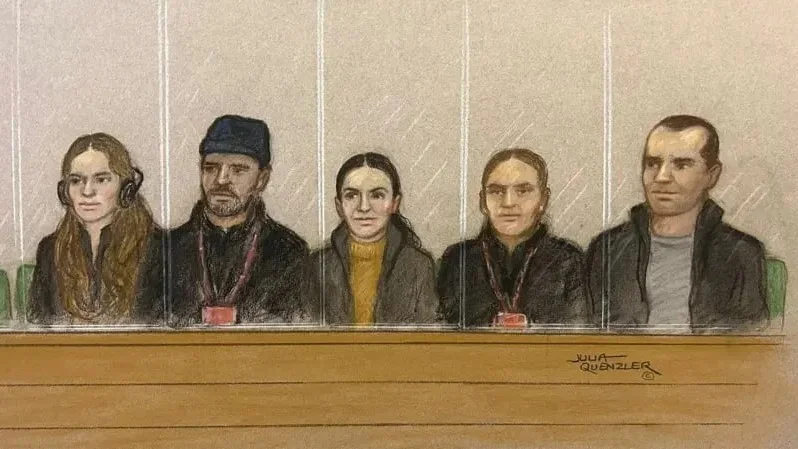
When British law enforcement officers opened this network, the accused denied their guilt. But during the trial, Rossev and Dzhambazov split the first, recognizing that they really collected intelligence. Later, Stoyanov joined them.
The remaining three - Ivanova, Gaberova and Ivankov - tried to deny everything to the end, but the jury of jury left them no chance: on March 7, 2025, the detainees were found guilty. Now all six are threatened with up to 14 years in prison. The sentences should be heard in early May 2025, and most likely the punishment will be harsh. The UK clearly decided to give a clear signal: they do not intend to stand spies here.
However, the epic continues: at the very end of March, the names of two more Bulgarians were published in the intelligence network, which was controlled from the UK, was an employee of one of the airlines of Kololin General and a certain Tsvetanka Donchev. The first, living in Sofia, used its work in the aviation industry to obtain information about private flights of persons of interest to spies. Doncheva (it is known about her that she worked as a cleaner in a cleaning company in Vienna) rented an apartment opposite the residence of Christ Grozev and photographed his house. She was also paid for the anti -Ukrainian propaganda campaign, including the placement of stickers at various objects in Vienna. Both women were not officially accused of committing crimes and, as far as is known, remain free. The investigation of their alleged activities within the spy network continues.
The Deputy Minister of Internal Affairs of Great Britain Dan Jarvis, according to BBC, announced in parliament that Russia will be included in the group of hostile states, cooperation with which is subject to advanced registration requirements.
People who carry out the instructions of the Russian state and its individual structures in Britain will be required to declare communication with Moscow from July 1: from that moment, a new mechanism for registering foreign influence (firs) will begin to work. The British government has so far decided to include only Iran and Russia in a group with advanced requirements.
Why Bulgarians?
About a third of the 240 seats in the People’s Assembly of Bulgaria are occupied by deputies of the Prochrevsky and populist parties - the Socialist Parties, the ultranationalist “Renaissance”, “Greatness”, as well as the platform “There is such a people” (IT).
For more than thirty years, Bulgarian society has been living in the conditions of democracy and a market economy, but the ghosts of the past have not disappeared anywhere. They do not roam Europe, as the manifestos once scared, but comfortably settled in consciousness, influencing the perception of power, economics and history.
Russia: friend, brother or just neighbor?
To Russia, the Bulgarian has a difficult attitude, as a distant relative with dubious views, but with money. On the one hand, the liberator, on the other hand, is an unpredictable neighbor who at any moment can recall that you have in his “zone of interests”.
Most Bulgarians are pragmatic: the main thing is that the tourists come, the gas is cheaper, and the policy remains somewhere far away. If someone believes that communism has gone, but promised to return, this is their business. For some, communism is a time of greatness, factories and social justice, for others - deficiency, repression and political control. Young people perceive it rather as an aesthetic phenomenon: the old panels look like the scenery for the film, and the sickle and the hammer have long turned into a retrosymvolic.
While the youth chooses freedom and the Internet instead of nostalgia for “stability”, and the older generation continues to reflect, “how good it was when there were no bananas,” the country balances between the past and the future. An excellent horizon of recruitment of young adventurers arises to perform such tasks as in London.
The country will forget its heroes
From the first days of the process in London, official Bulgaria demonstrated complete indifference to him. It was imperative that the authorities in Sofia did not want to step on the corner of a neighbor. Soon after the start of the court, the editor -in -chief of the investigation portal Bird.bg Atanas Chobanov noticed the “strange silence” of Bulgarian TV and state institutions on this subject. “This is very alarming, because in the end we have three large broadcasters who should compete, and if the influence of political and oligarchic circles in all three is really so much that it does not allow them to cover the investigation and the court, everything looks very bad,” the expert noted.
And this scandal, indeed, exposed a deep split in Bulgarian society. While the elites are arguing about geopolitics, many citizens feel clarified between the narratives of the Atlantic Loyalty and the Slavic Brotherhood. The process in London strengthened the political polarization in Bulgaria. Prospid Bulgarians, often supporters of the current government, reacted to arrests as evidence of the ongoing intelligence of Russia in Bulgaria and Europe, believing that Sofia should strengthen its counterintelligence activity. Pro -Russian fractions, including opposition parties and the media sympathizing with the Kremlin, undermined the significance of this story, representing it as a “set -in” by British intelligence aimed at discrediting Russia and its allies.
Ordinary Bulgarians rumors that a group of six fellow citizens worked for foreign intelligence, did not shock - people continue to save on vacation in Greece and restlessly monitor the growth of prices.
This story for them is like a secular scandal that someone broke the dress code at the premiere. There is an intrigue, but it is too far. No one wonders why there are so many people involved in ordinary work - from cosmetologists to decorators - suddenly turned out to be drawn to a spy detective.
Meanwhile, the parliament and the government are trying to get an end in this crisis. At the end of last week, the People’s Assembly was supposed to hear the Prime Minister Rosen Zhelyazkov, chairman of the State National Security Agency (DANS) of Flamen Tonchev and the heads of civil and military intelligence services regarding the spy scandal in the UK, but the hearings were postponed.
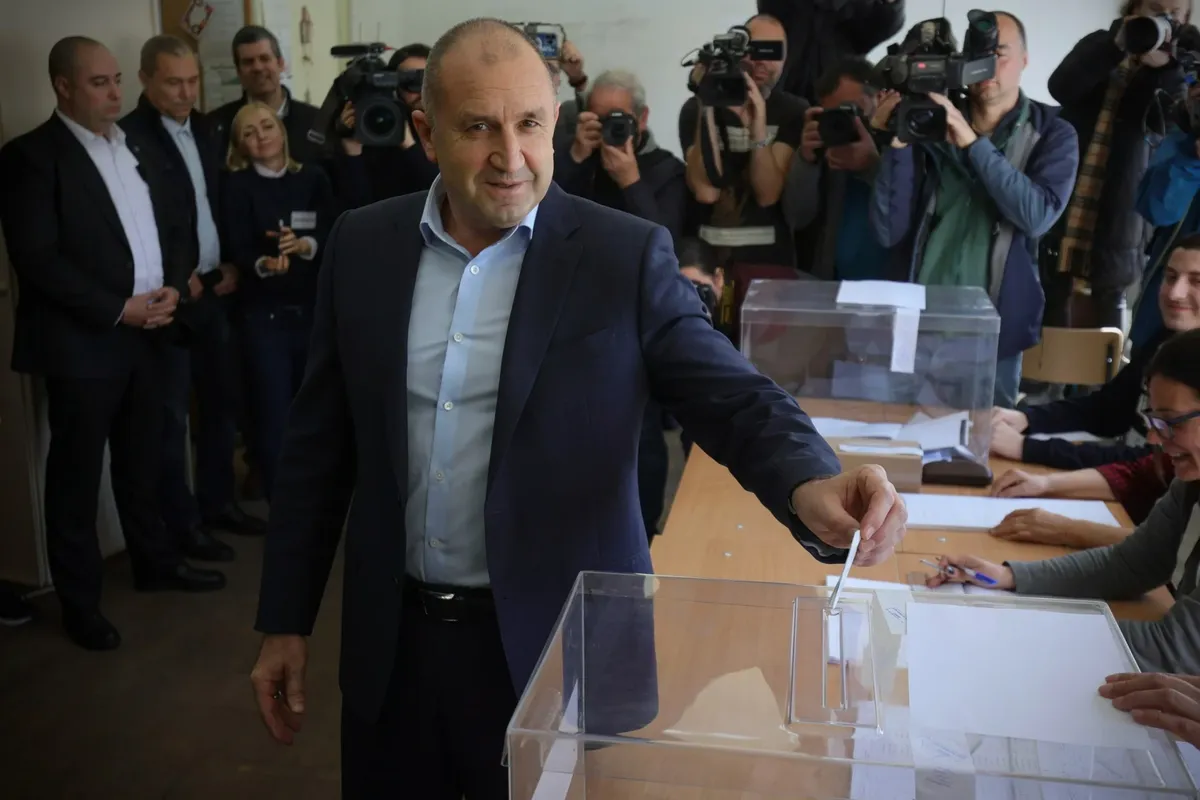
But this is not the whole picture. Already in early December, the British The Times published an article connecting President Ruman Radev and the former leader of the social party Party Cornelius Ninov with the accused of espionage by Bulgarian citizens. According to the newspaper, they allegedly claimed that they had “strong relations” with Radev and Ninova, as well as with the former deputy chairman of the State National Security Agency (DANS).
As Atanas Chobanov noted at the same time, “evidence of such ties is undeniable, since the messages were based on the messages exchanged with each other on their phones.” And only on January 31, President Radev made a statement that such statements "are not based on any facts and as absurd as the manipulative abuse of them." “Any fraudster can speculate with my name to get some personal benefit,” he said in another place. Cornelia Ninova categorically denied her acquaintance with the accused. As for the parliamentary request to the Prime Minister about the possible connections of a spy group with Bulgarian politicians, he remains unanswered.
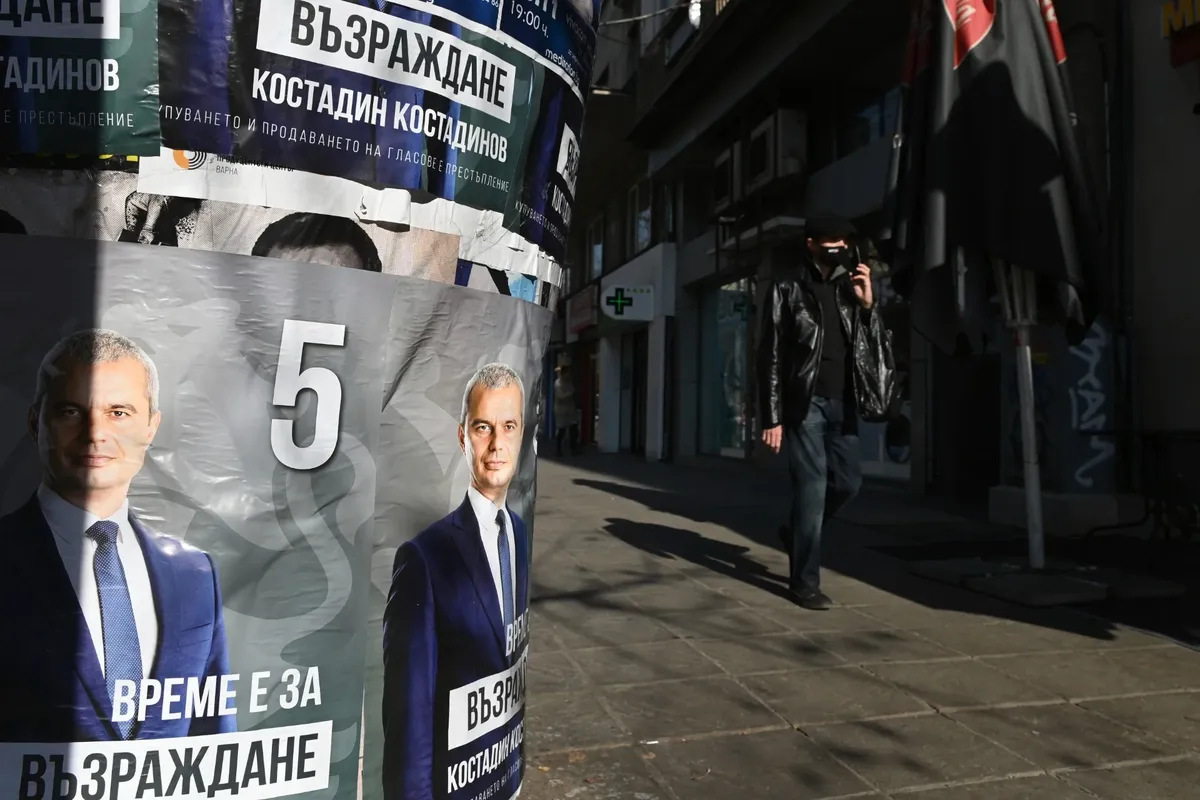
The pro -Russian opposition, in turn, demanded “evidence” and presented the case as an attempt to “draw Bulgaria into anti -Russian hysteria”. Her starting positions were expressed by the leader of the “Renaissance” Kostadin Kostadinov in a congratulatory letter to Donald Trump on the occasion of his election by the president, saying on behalf of the Bulgarian as a whole: “For us, Russia is a strategic partner and an ally, with whom we must have close relations.” According to him, the goals of the Renaissance party cannot be realized now, given the "colonial-communal status of our country." However, the election of Trump gives him the hope that "the moment is not far off the moment when we will again gain freedom to decide the fate of Bulgaria."
Where to take sabotage spies
The group itself acted extremely unprofessional: they left evidence of their activities in public places, often used communication channels that could be easily taken under control. However, according to experts, Erzatz-spying, amateurism in which London Bulgarians were convicted are not an accident, but a consistent strategy. One of the new models of Russian espionage, said James Apaturai, Deputy Secretary General of NATO, quoted by Foreign Affairs, is the recruitment of criminal personalities or simply ignorant young people and migrants.
In May 2024, the Polish special services detained two citizens of Belarus and Poland accused of committing arson. In particular, an attempt to aim the factory for the production of paints in Wroclaw was recorded. According to the Rzeczpospolit newspaper, 10 thousand euros were offered to the accused for this. A little later, nine more people were arrested on suspicion of sabotage and the commission of sabotage. Polish Prime Minister Donald Tusk said that these actions were seemed to be ordered by Russian services.
Around the same time, a fire occurred in the south of Berlin at the Diehl Metall Applications metallurgical plant. He is known for his developments in the field of air defense, including IRIS-T complexes, which are supplied to Ukraine. Commenting on this event, The Wall Street Journal wrote that, according to Western intelligence agencies, Russian sympathizers could organize arson. According to WSJ, the operation was attended by experienced professionals working under the guise of civilians, often involved in intelligence through social networks and messengers, especially through Telegram. This is suitable for the new GIG-Economics model for intelligence, in which the performers are hired as necessary, which can reduce the likelihood of their identification.
As noted by the same Foreign Affars, actions that at first glance seem insignificant, are also increasingly becoming part of hybrid operations against European allies of Ukraine. Placing stickers, drawing graffiti in key places in European capitals-all this is most often coordinated with online operations by which photographs from these places are distributed as evidence that Europe does not support Ukraine and that the governments of these countries, in fact, ignore the requirements of its peoples, continuing to support Kyiv.
Is it hopeless?
Bulgaria itself has repeatedly sent Russian diplomats for activities, according to the country's intelligence services, incompatible with their status: at least ten people from 2019 to 2021, in March 2022, ten Russian diplomats, who, according to the then Prime Minister Kiril Petkov, were involved in the “administration of hybrid attacks” on the highest echelons of power in the country. In June 2022, Bulgaria was forced to leave no less than 70 Russian diplomats and representatives of technical personnel - together with family members, they were gathered for a whole plane who specially flew from Moscow.
The history of the spring of 2021 was very loud, when a network of current and retired Bulgarian military from among the employees of the Ministry of Defense and Military Intelligence was opened. (According to the available information, 30% of the current employees of the State National Security Agency (DANS) worked under the socialist system.) According to the prosecutor’s office, the main figure in it is retired colonel Ivan Iviev, which was part of the leadership of Bulgarian military intelligence. A graduate of the Soviet intelligence school led the collection of information about NATO and the EU policy in the hot spots of Europe, the activity of the CIA in Bulgaria, the tasks of the NATO coordination center in Varna. The courier of Ilieva allegedly performed his wife. There are still no information regarding criminal proceedings on this case.
In March 2024, the Alpha Research survey data shows: 52% of the Bulgarians believe that Russia is still actively recruiting agents in Bulgaria.
Russia has always considered Bulgaria as a strategically important territory, and not as an equal partner, according to the famous observer, co -chair of the Atlantic Council of Bulgaria, Momchil Deutchev. Russia continues attempts to keep Bulgaria in its orbit, it incites internal conflicts in Bulgarian society - Russophiles against the Atlantists, left -wing against the right, conservatives against liberals. Russian structures finance the media and social networks that distribute anti -European, anti -democratic and anti -native ideas. Bulgaria has practically no political will to free himself from the Russian backstage, but more and more noticeable influence, the author continues. Today's Russian proxy parties are openly striving to destroy the freedom and independence of Bulgaria. The lack of opposition from this by the Bulgarian special services, which, instead of investigating cases of foreign intervention, in many cases play the role of a passive observer or even cover. The situation is very complicated by the one, it is noted in the article that Bulgaria has a "pro -Russian president."
Another famous analyst - Firefish Minchev also states: “We risk the collapse of parliamentarism and the establishment of the pro -Kremlin dictatorship ... Thirty -five years ago, the period of half -century Kremlin colonialism in Bulgaria miraculously ended. But it ended half, but half remained. ”