
Translated material
Thirty -one and one
The ministers of NATO countries tried to understand for two days whether Washington remains an ally of the rest of the alliance. Reporting "Novo-Europe" from Brussels
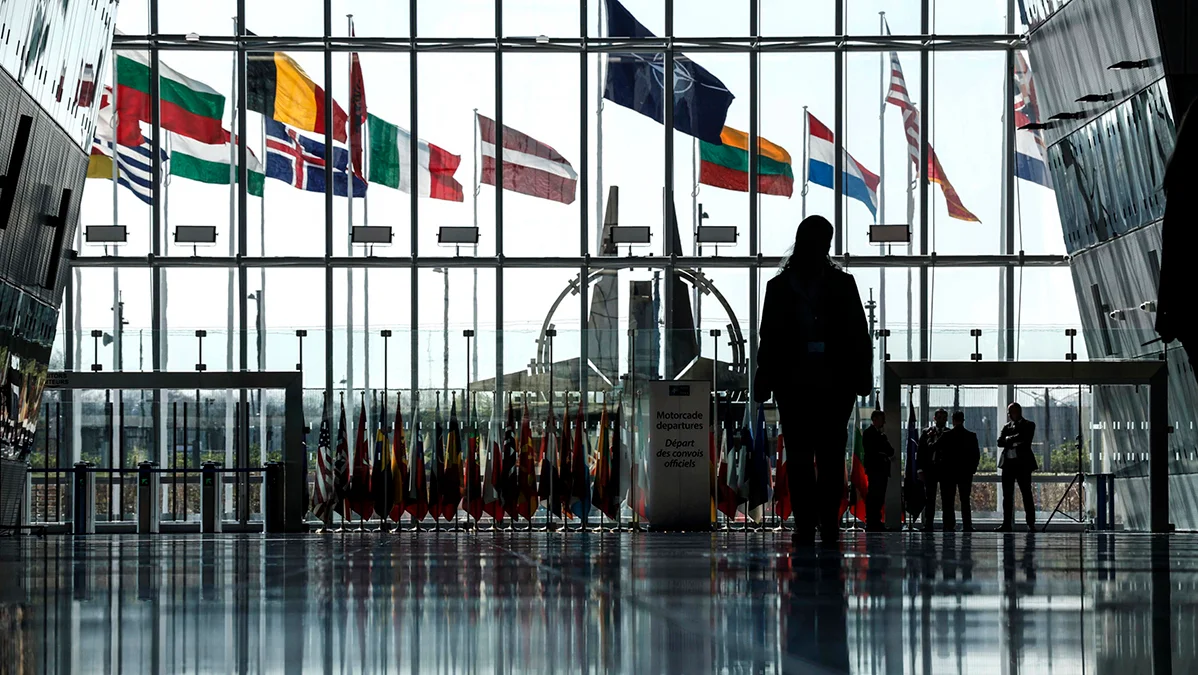
The headquarters of the organization of the North Atlantic Treaty (NATO) during a meeting of foreign ministers of the NATO countries in Brussels, Belgium, April 4, 2025. Photo: Giuseppe Lami / EPA-EFE
The US Secretary of State Rubio, who took office after the inauguration of Donald Trump, has finally made his debut at the NATO meeting. The meeting of the heads of diplomatic departments of 32 alliance countries, held in Brussels on April 3-4, was supposed to expand the understanding of what should be expected from the Donald Trump administration from the point of view of Euro -Atlantic unity.
One of the topics to which the USA and most other NATO members have significantly dispersed is relations with Russia. As follows from the statements that sounded at the headquarters of the alliance, they decided to do without a cardinal correction of the course: Ukraine will continue to help in various formats, and Russia-restrained, reflecting hybrid attacks and preparing for a possible direct military confrontation with it. At the same time, in Brussels, they expect that Vladimir Putin’s unpreparedness to the world will soon become completely understandable even to Washington, and then the White House will return to the previous tough approaches to Moscow.
The main among equals
For two days, participants in the regular ministerial meeting of NATO caught and analyzed every gesture and every word of their new American colleague - US Secretary of State Marco Rubio. They were interested in two main questions: as the Donald Trump administration later plans to build relations with Russia and whether it is committed, despite all the loud and sometimes contradictory signals, of the Euro -Atlantic partnership.
The ministerial meeting in Brussels coincided with the first during the full-scale war in Ukraine to a high-ranking Russian official-the head of the RDII Dmitriev, who was just appointed by the presidential and economic cooperation with foreign countries, to Washington, to Washington.
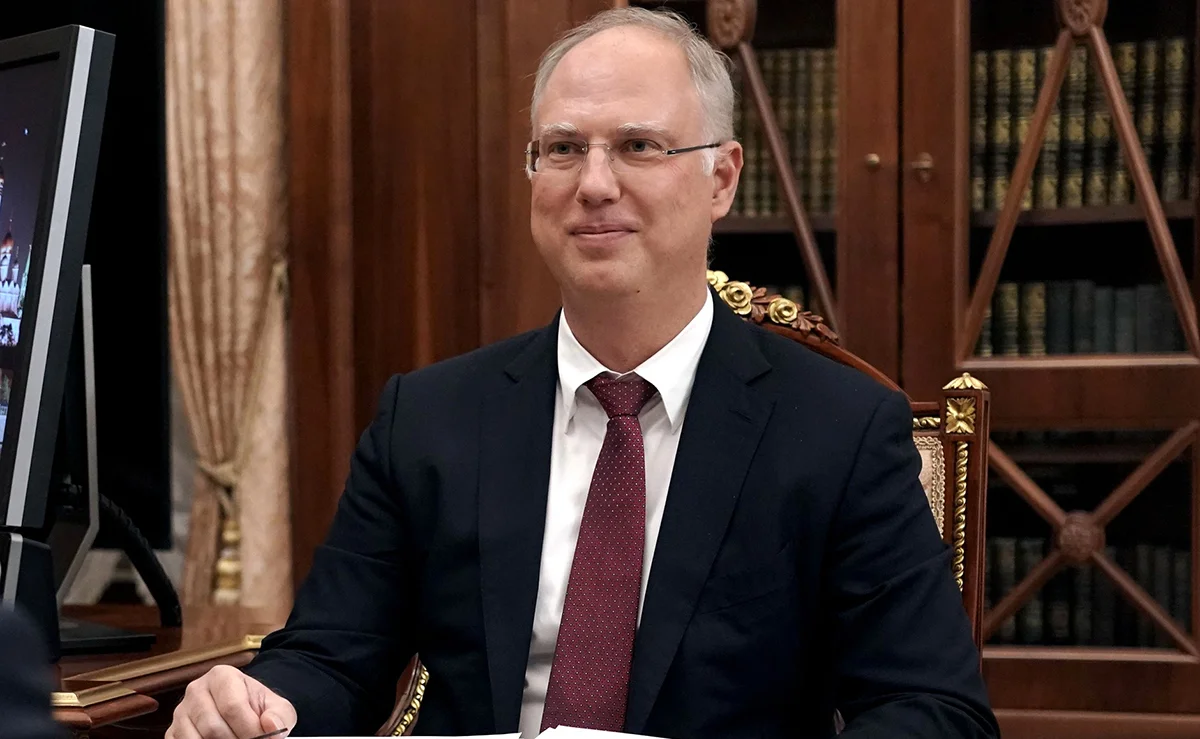
For a trip to the American capital and discussions there, possible business scores from Dmitriev even temporarily lifted the sanctions. The official himself called the restoration of the dialogue “difficult and gradual process”, but, as it was clear from the commentary in his telegram channel, was extremely optimistic.
Against the backdrop of such activity and on the other side of the Atlantic, more and more signals began to appear that sooner or later Russia would have to be restored. And we are not only about those who are not unreasonably considered “friends of Moscow,” - the authorities of Hungary and Slovakia. But, for example, Finland President Alexander Stubb, whom you can’t suspect in sympathy for the Russian Federation, stated this week: it is time to morally prepare for the fact that political relations with Moscow will have to be revived.
The union is destructive
The second question - about the fortress of the Euro -Atlantic Commonwealth - is no less acute these days. For decades, Washington both under the Democrats and the Republicans guided the thesis that free and democratic Europe corresponds to American interests. However, now it is difficult to talk about Euro-Atlantic unity, for example, due to Washington's unprecedented threats addressed to the EU and NATO-Denmark. Trump does not exclude the seizure of Greenland, parts of the Danish kingdom, and military methods. And his clarification that “there is every chance” to obtain control over the island without the use of force, did not reassure anyone.
These days , these days, the persistent questions of journalists, NATO Secretary General Mark Rutte tried not to escort the situation: he reminded that Greenland is an integral part of the Kingdom of Denmark, but immediately jumped on the joint protection of the Arctic from general threats like the activities of Russia and China.
It was even more diplomatic when he was asked about the global tariff war unleashed by Trump on April 2. He invariably replied that the discussion of duties was not included in the competence of NATO.
But many ministers did not wait until they have a more suitable platform. So, the Foreign Minister Jose Manuel Albares reminded the audience at the NATO headquarters, or rather to Washington, that Europe is standing for peace, democracy, equality, tolerance and freedom, including freedom of trade. Sweden Foreign Minister Maria Malmer Stenergard, communicating with journalists, decided to recall that it was the Americans for a long time that "talked about the importance of free trade." And her British colleague David Lammy expressed regret due to the fact that the United States decided to return to practices, "which we have not seen for almost a century."
Meanwhile, the head of the Norwegian Foreign Ministry Espen Bart Eide not only said that “protectionism is bad”, but also referred to the second article of the NATO Constituent Agreement . It recorded the obligation of the alliance members "to strive to eliminate contradictions in its international economic policy and to contribute to the development of economic cooperation between any of them and among themselves as a whole." According to the Norwegian, he drew the attention of Marco Rubio to this position, and he "probably understood the essence."
However, the general mood at the ministerial meeting was something like this: NATO unexpectedly ended up in a new reality. For example, it is not entirely clear how to talk about the famous article 5 of the NATO agreement - that the attack on one member of the Alliance is regarded as an attack on everyone - if the key player seriously conflicts with the allies in the person of Denmark and Canada , and if duties, then with all members of the alliance. And it will be extremely difficult to heal the wounds that have appeared in January even in case of winning the US elections after three and a half years of someone from the Democratic Party.
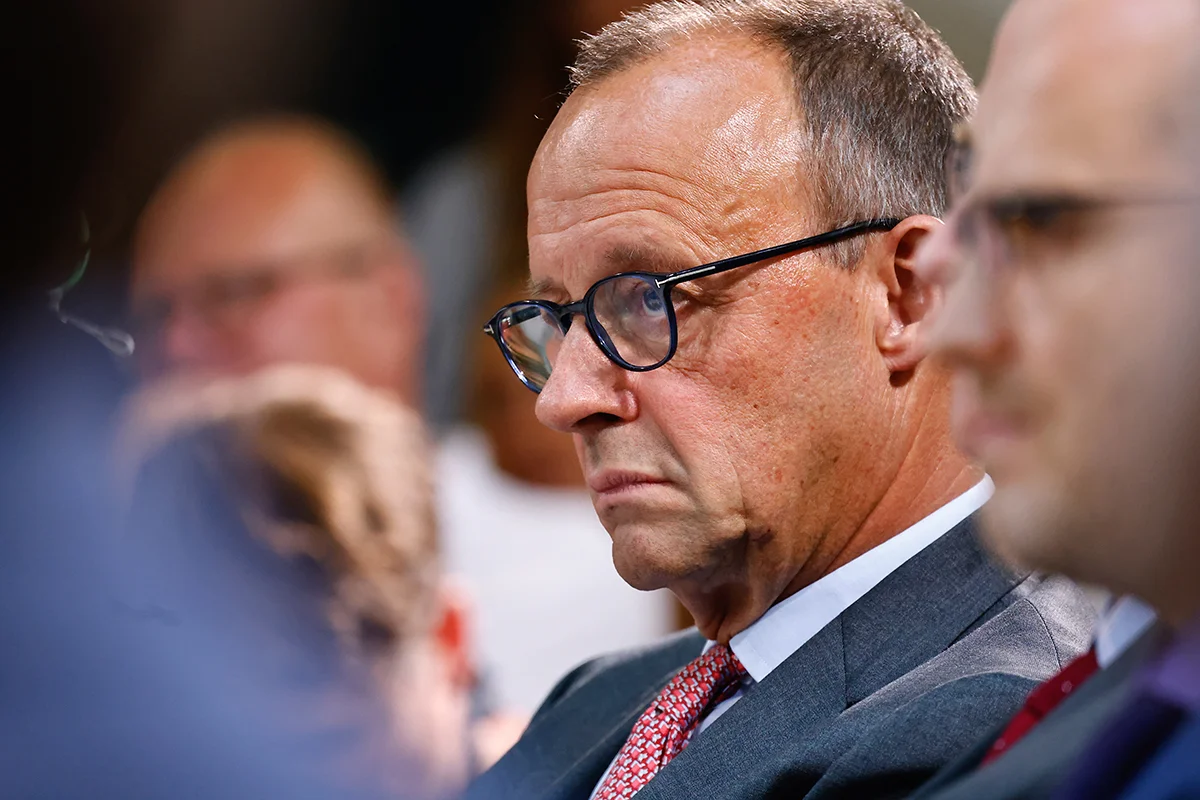
The key issue on the topic was asked in February Friedrich Mertz, who will soon become the chancellor of Germany: will we still “still talk about NATO in its current form” in a few months? And if the alliance becomes radically different, then what exactly?
Rhetoric against facts
The current approaches to NATO and in general, to relationships with the world, Trump developed not for years, but for decades. In 1987, hardly thinking about a political career, the billionaire bought out strips in three American newspapers to publish his thoughts that for decades they have been using the US generosity. “The world laughs at American politicians while we guard ships that do not belong to us, transporting oil, which we do not need, for allies that do not help,” he wrote then.
All the current steps - from the introduction of duties to pressure on the European NATO countries, so that they take responsibility for the security of the continent - are called upon to eliminate this, according to Trump, injustice.
The advancement of such a concept in February, the US Secretary of Defense Pit Hegset took up the headquarters of NATO. He extremely frankly conveyed to the allies the position of Washington: Ukraine’s entry into NATO and the return of the lost territories with it are absolutely unrealistic options, and Europeans should no longer count on the United States in ensuring their own security.
In Brussels, they waited for the Secretary of State to behave, given that he, unlike the Highset, is considered the "most pronovo" member of the Trump team. In 2023, Marco Rubio, for example, became one of the co -authors of the law prohibiting the US President to decide on leaving NATO without consent from Congress.
As a result, Rubio’s statements did not differ very much from the statements of the Hegset’s statements, but their form was completely different.
Having first appeared at the NATO headquarters on the morning of April 3, Marco Rubio said : the United States “have never previously been as active in NATO as now”, will remain in the alliance and want to make it “stronger and more viable”.
He called the unreasonable “hysteria in international and American media” about this.
The reports that the United States is reducing its presence in NATO, in recent days and weeks, have really been released regularly. For example, the NBC News television channel said that the United States may abandon the key post in NATO - the Supreme Commander -in -Chief of the United Armed Forces of the Alliance in Europe (Saceur). This position was the first to be received in 1951 by General Dwight Eisenhower, who soon after that became the president of the United States. And since then, not such a post has been held by the American. And The Washington Post reported plans to transfer American troops and weapons from Europe and the Indo-Pacific region.
Speaking these days before the journalists, Mark Rutte made it clear over and over again that we are talking about rumors and "questions in the style of" what if ... "." Some ministers commented on the topic in the same spirit. For example, the Estonian Foreign Minister Margus Tsakhkna pointed out that “we live in a new diplomatic era,” and called for the rhetoric from facts. And the facts, according to him, are such that the United States is still committed to obligations within the framework of NATO.
However, the interlocutor in one of the delegations placed the accents a little differently: Rubio's performances were inspiring, but he is only one player in the Trump administration, while there are others there.
Desire for 5%
Brussels meeting showed: no matter what politicians adhere to further, the rest of NATO members reconciled with the fact that in the case of an emergency, they will have to count on themselves.
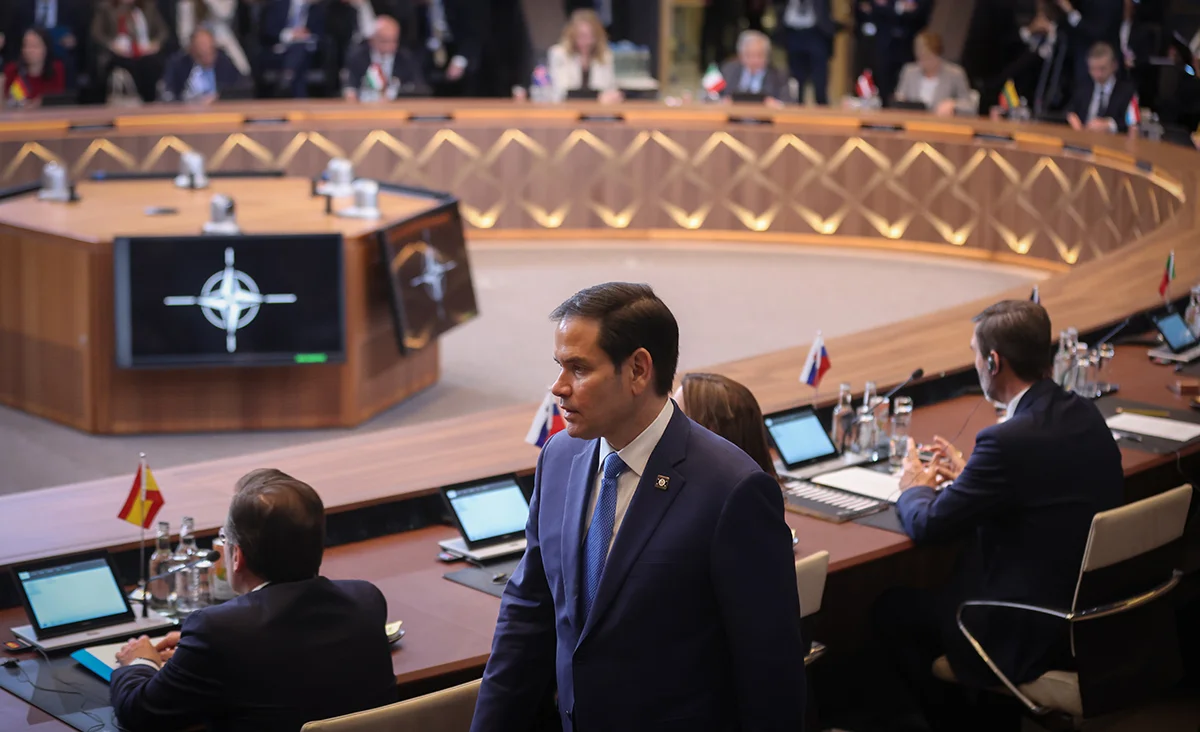
Upon arrival at the headquarters of NATO, Marco Rubio said that the United States has different “internal needs”, but the authorities give priority to the development of defense capabilities because of the “role that the country plays in the world”, and expect the same from their partners, “rich countries that can do more than now.”
Mark Rutte, who was present there, meanwhile, did everything possible to prevent Marco Rubio of a chance to doubt the good intentions of Europeans and Canadians. He even stated that “US allies on NATO are beginning to live up to Washington’s expectations:“ Over the past couple of months, the alliance states additionally sent “hundreds of billions of euros and dollars” to the defense, and this is “the largest surge in defense expenses since the fall of the Berlin Wall”.
“We see this everywhere in NATO. Look at Germany: it allocates an additional half a trillion euro for defense. European countries as a whole add 800 billion. Finland, Denmark, Sweden, Czech Republic ... Perhaps he forgot to mention someone, sorry ”
- Mark Rutte listed.
According to Novo-Europe, Maria Malmer Stenergard, "the United States for decades demanded more from Europe and Canada more investments in its own defense, and this criticism was reasonable." According to her, now the US allies in NATO "finally do what to do for a long time - to increase the costs of our security." “And this will surely make NATO stronger,” the Sweden Foreign Minister summed up.
A coordinated increase in the target indicator of defense costs will help to get to gain military autonomy from the United States from the United States.
Marco Rubio in Brussels confirmed that the United States would like to see five percent waste on defense in all NATO countries.
The United States itself last year spent 3.4% of GDP for these purposes. But in absolute figures, this is $ 967.7 billion, while all other NATO countries had a total of $ 507 billion.
Margus Tsakhkna in Brussels said that Estonia will reach a bar of 5% next year and everyone else needs to be guided by at least 3.5%. But such a result will be difficult to achieve: while the EU countries are awarded to these purposes 1.9% - this is lower than the current target indicator of 2%. Already a number of states have expressed unreasonableness to fulfill the ambitious goals of Trump. Although they have nothing against the very concept of increasing defense costs. Mark Rutte hopes that the consensus for a new purpose will be found in May-June.
The price will not stand
At the same time, the US allies in NATO express their willingness to invest more and more in support of Ukraine - after all, on this topic, Washington is not averse to self. While even under Joe Bayneen, the receipt of Kiev from the United States was amed by Kiev, many NATO members have increased support.
The interlocutors of Novo-Europe at the headquarters of the Alliance said: in 2024, 60% of military assistance to Ukraine (and it amounted to $ 50 billion with 40 billion planned) came from European countries and Canada. In addition, European states have taken on new obligations to support Kyiv, including the supply of air defense systems, tanks, infantry combat vehicles, artillery systems, drones and ammunition.
Talking at briefings about the efforts of NATO countries, representatives of the alliance claimed that in the event of the termination of Ukraine’s support from the United States, the remaining allies would be able to compensate for the losses. So, they paid attention to the recent contract of the British Ministry of Defense with Thales Corporation for 1.6 billion pounds ($ 2.1 billion), within the framework of which thousands of modern air defense missiles will be delivered to Ukraine. The fact that Sweden allocates the largest $ military aid of military assistance to Ukraine from February 2022. To the decision of the Government of the Netherlands, to send 3.5 billion euros to support Ukraine, of which 2 billion will go to Kiev this year. For the efforts of the UK and Latvia, in the framework of the “Drones Coalition” they headed, which allocated assistance to $ 2 billion to Ukraine for the recent opening of the Center for Analysis, Education and Education of NATO - Ukraine ( JATEC ). On the developing NATO program to provide assistance and training in the field of security for Ukraine (NSATU), which "provides direct needs for the battlefield."
At the same time, the United States does not yet refuse assistance to Ukraine. In particular, according to one senior representative of NATO, Washington, in spite of everything, was and remains the main supplier of Ukraine of intelligence information. The supply of weapons to Kyiv also resumed after a pause.
Attacks current and future
Talking about the scenarios of the development of events in Ukraine, the interlocutors at the NATO headquarters make it clear: it is good that the Trump administration is trying to get the question from the impasse, but so far there are no serious progress.
So, according to one high -ranking NATO official,
Intelligence does not see signals that the Russian military is in any way prepare for the cessation of fire. In addition, he added, a negative signal can be considered that, within the framework of the spring draft that began in the Russian Federation, a record 160 thousand people will have to take into the army:
Although they are not thrown directly in battles, they are in every possible way to sign contracts for military service. “If Putin had real plans for a significant reduction in the intensity of hostilities, for example, to establish a ceasefire, then it would not be necessary to increase the number of conscripts,” a source in NATO noted.
In addition, the participants in briefings for journalists said: probably, the Russian Federation will “continue to press” Ukrainian troops, although it is not worth waiting for a serious breakthrough of defense in the coming months. And do not hope that the current decrease in the intensity of missile attacks is forever. Russia, as claimed in the alliance, has focused on use, and quite efficiently, Drones-Kamikaze, but at the same time accumulates missile reserves, then to again use them in large quantities.
That is why NATO does not consider it necessary to change their approaches to Russia, which, as Mark Rutte repeated and many ministers, has been, remains and will be the main threat to the security of the alliance.
First of all, we mean conventional military threats. European officials continue to say that the Russian Federation can prepare an attack on one of the NATO countries. The other day, for example, the European Commissioner for Defense and Cosmos Andrhus Cubilyus said , suggesting: the attack can occur after five years or earlier.
The German special services make similar forecasts, as media reported in March. It is claimed that the problem will be especially acute in case of a truce on the Ukrainian front: Russia will accelerate its military potential and redistribute forces to other directions, in particular to the Baltic. Eide Eide, the head of the Norwegian Foreign Ministry, also called for the fact that in the event of a hypothetical end of the war in Ukraine, the Russian threat would not disappear, but transform.
Новые угрозы
Но если пока речь об этом идет гипотетически, то об атаках другого рода, гибридных , в НАТО рассуждают как о суровых реалиях сегодняшнего дня. Собеседники в штаб-квартире Альянса утверждают, что против стран-членов и их союзников ведется постоянная враждебная кампания, включающая в себя кибератаки, дезинформацию, политическое вмешательство, саботаж критической инфраструктуры.
В конце 2024 года зампомощника генсека НАТО по инновациям, гибридным и кибератакам Джеймс Аппатурай рассказал , что Альянс разрабатывает стратегию действий в ответ на гибридные атаки. Документ должны принять на июньском саммите в Гааге, о содержании предварительной версии «Новая-Европа» уже рассказывала ранее .
Предыдущая такая стратегия появилась в НАТО в 2015 году и, как пояснил «Новой-Европа» на условиях анонимности высокопоставленный чиновник Альянса, «настолько устарела, что уже совершенно не актуальна»: «Она не учитывает уровень угроз, их разнообразие, доступные технологии и количество игроков, атакующих союзников по НАТО».
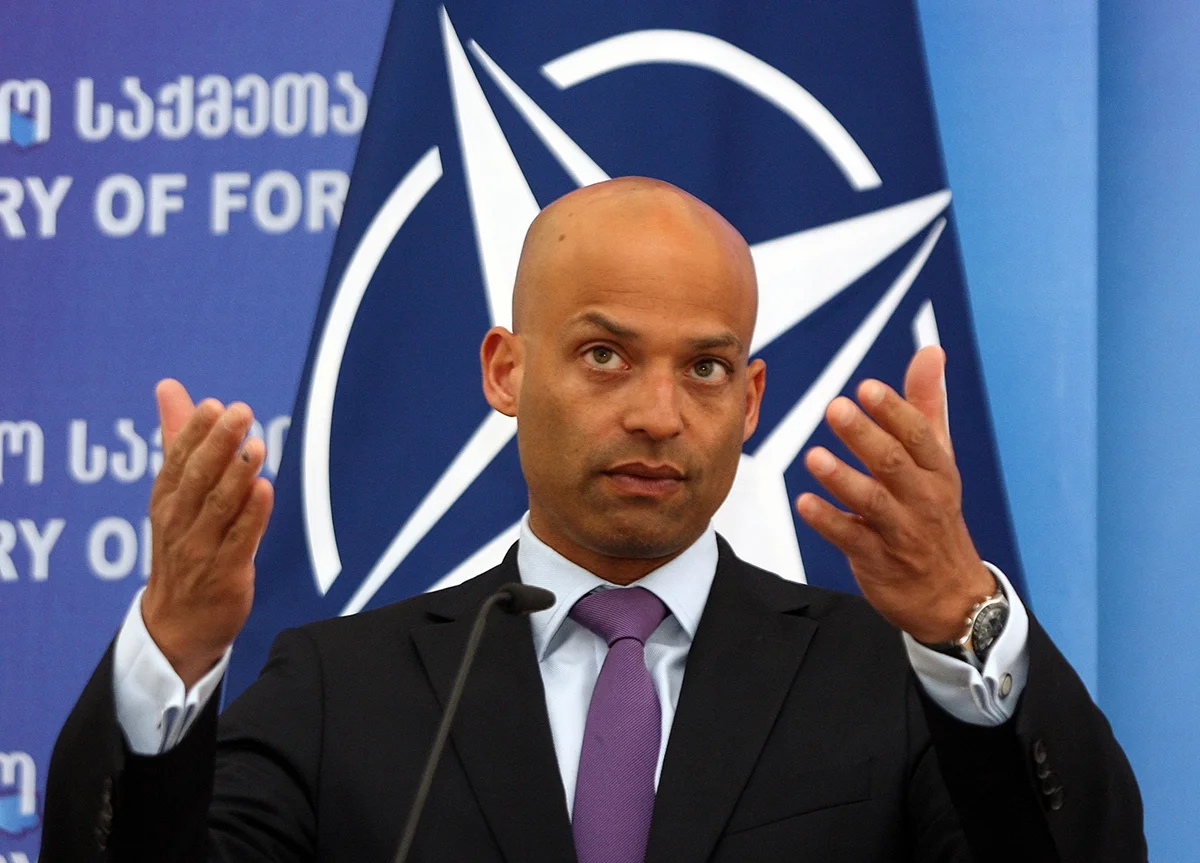
В то же время наш собеседник подтвердил, что
гибридное нападение подпадает под пятую статью устава НАТО о коллективной обороне, но ушел от четкого ответа на вопрос о том, при каком сценарии этот механизм может быть задействован.
«Простой пример: если бы 10 сентября 2001 года мы здесь обсуждали, какие события могут привести к применению пятой статьи, то, я уверен, теракт с захваченными самолетами, направленными на Всемирный торговый центр, никто бы не включил в такой список. Но на следующий день мы эту статью задействовали [это был пока единственный случай в истории]. Более того, если бы мы заранее исключили такой сценарий, то это могло бы затруднить принятие политического решения о применении пятой статьи», — пояснил логику натовцев источник в штаб-квартире Альянса.
По словам чиновника Альянса, НАТО не раскрывает публично, где проходят «красные линии» с точки зрения гибридных угроз, так как в ином случае «противники могли бы сознательно оставаться чуть ниже этих границ». О ком именно идет речь, в Альянсе не скрывают. Это, например, Китай, Иран, КНДР, Белоруссия, но в первую очередь — Россия .
«Мы видим тебя, Владимир Путин»
В целом представители НАТО утверждают, что «не ищут конфронтации с Москвой, но не могут не отвечать на российские угрозы». Один из них, подробно рассказав о том, как Альянс пытался сотрудничать с РФ, констатировал: именно Россия решила отказаться от этого партнерства. Он же посоветовал обратиться к статье 9 Стратегической концепции Альянса, принятой в июне 2022 года: «Любое изменение в наших отношениях зависит от того, прекратит ли Россия агрессивное поведение и будет ли полностью соблюдать международное право». Ничего подобного на горизонте в Брюсселе не видят.
«Мы видим тебя, Владимир Путин. Мы знаем, что ты делаешь», — заявил в пятницу по прибытии в штаб-квартиру НАТО Дэвид Лэмми,
выступая перед журналистами. И пояснил: атаки на энергетическую инфраструктуру и в целом на территорию Украины продолжаются, и Москва не проявляет никакой готовности к реальным переговорам.
Один из собеседников «Новой-Европа» уверен, что отсутствие тяги Москвы к завершению войны скоро должны будут осознать и США. «Трамп хочет положить войне конец и стремится к конструктивным отношениям с Россией, готов инвестировать в это [силы и время]. Но очевидно одно: у президента Путина нет желания участвовать в этом процессе», — отмечает он. И предсказывает, что если ничего не изменится, то «у России возникнут проблемы и с США: давление Вашингтона на нее существенно усилится».
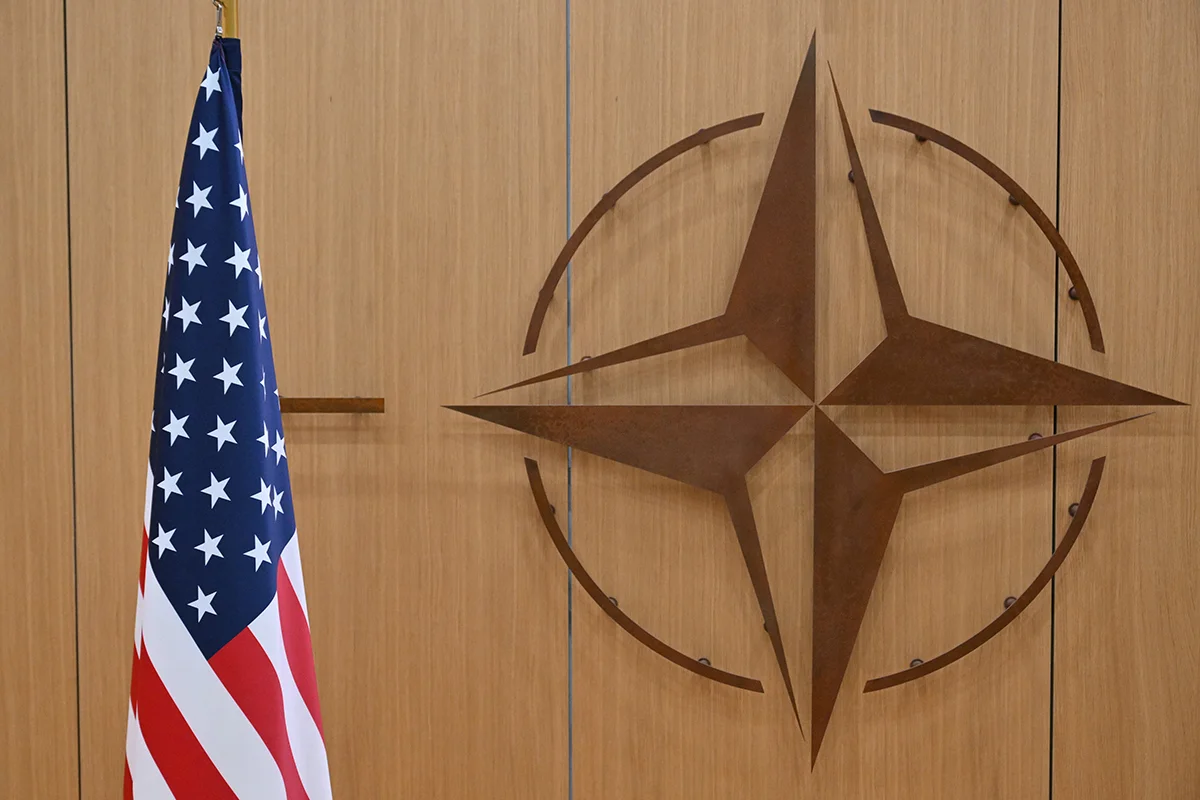
На это намекает и сам Трамп. На днях в интервью NBC News он рассказал , что был «очень зол» и «взбешен» после того, как Путин поставил под сомнение легитимность президента Владимира Зеленского и предложил ввести в Украине временное управление под эгидой ООН. По данным американских журналистов, глава Белого дома считает, что российские власти намеренно затягивают переговоры о прекращении войны.
По итогам заседания в Брюсселе Марко Рубио дал понять , что
в запасе у России «несколько недель», чтобы четко продемонстрировать готовность к миру: «Речь идет о действиях. Если вы заинтересованы в мире, то прекращаете бои и выдвигаете условия, на которых вы готовы положить конец войне.
И это должны быть разумные условия, а не бредни». Он добавил, что Вашингтон хотел бы как можно скорее понять, стремится ли Москва к миру, чтобы «соответствующим образом скорректировать свою политику».
В числе прочего в администрации Трампа рассматривают варианты жестких санкционных ударов по российскому теневому флоту и новых ограничений в отношении нефти. Будут ли они в итоге введены, сказать сложно: республиканец после возвращения в Белый дом полностью подтвердил свое реноме непредсказуемого политика.