
Translated material
Pushkin's "Muse" achieved the sympathy of the emperor, but died in poverty
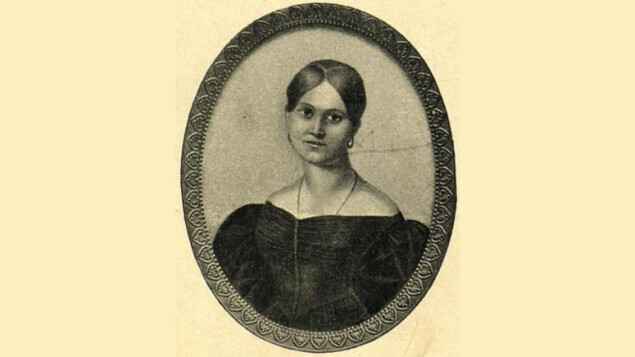
"Genius of Pure Beauty" Alexander Pushkin Anna Kern lived a complex, but happy life. Like many women of the same time, she was struck in rights and forcibly married to an elderly general. Wanting to be happy, she started novels and even at some point left her husband, for which she was nicknamed the "harlot." Years later, she found true love, but for her sake she had to sacrifice the inheritance and position in society. The noble symbol of the struggle against the patriarchy is in the material of the "cold".
She fell into an unequal marriage, she was called a "harlot", but she sacrificed everyone for the sake of happiness
Help "cold" to tell human stories
We put a person in the center of our journalism and talk about people who are faced with injustice, but do not lose their spirit and continue to fight for their rights and freedoms. In order to further cover human stories, we need readers' support - thanks to your donations, we continue to work, despite the pressure of the state.
- Foreign card
- RF map ↘︎
- Patreon ↘︎
- Translation
- Crypt
Monthly
Once
5 €
- 10 €
- 20 €
30 €
5 €
- 10 €
- 20 €
- Another
- Bank of the Russian Federation
- Foreign Bank
Card number:
5536 9138 6472 8742
Copulated!
Recipient:
Taisiya Bekbulatova
Copulated!
Recipient:
Projektas Šaltis
Copulated!
Account number:
LT613500010016198323
Copulated!
Swift bic:
EVIULT2VXXX
Copulated!
Bank:
Lietuvos Bankas (Bank of Lithuania)
Copulated!
Comment-nazing payment:
Parama įstatymų numatytais tikslais (Be Konkretaus Tikslo)
Copulated!
We ask you to indicate the comment so that we can accurately determine the receipt of funds. The phrase translates as follows: "Support for the statutory purposes (without a specific purpose)."
Sum: €
To sacrifice
When making a donation, you accept the privacy policy
Anna Poltoratskaya was born on February 22, 1800 in Orel in the family of a wealthy nobleman. Father Peter Poltoratsky, the landowner and official, was a despotic one, his mother was Ekaterina Wulf - on the contrary, she was kind, but weak -edged and painful.
Like many noble children, Anna studied in French, was fond of reading. The education of girls was usually more superficial than in boys. It was limited to one or two foreign languages at the basic level (most often only French), the ability to draw, sing and play on any musical instrument (usually piano). History, geography and literature were often not taught girls. As Anna herself recalled , she studied the Russian language only a month and a half a year. But dancing and the ability to keep themselves in society were dedicated to the most time.
The happiest country in the world once it was part of the Russian Empire, and now it is building one of the most successful democracies World 9 minutes of reading
The last Anna Poltoratskaya learned well: at balls and social events, the girl made a pleasant impression and constantly attracted the attention of potential gentlemen. The natural beauty also helped this: she had a slender physique, blue eyes and blond hair. However, the father was against boyfriends without ranks and ranks, so he often arranged scandals if the daughter twice agreed to a dance with the same partner.
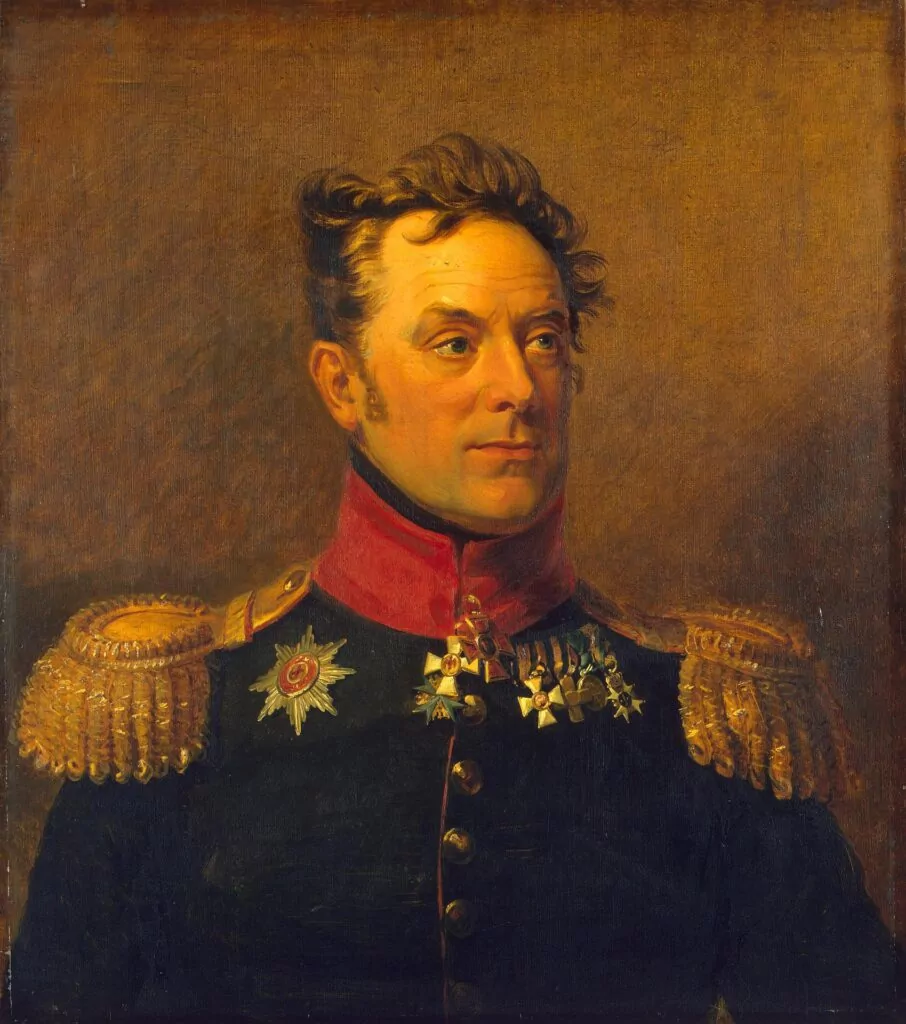
To solve the problem with the annoying grooms of his daughter, Peter Poltoratsky himself found her the future husband-52-year-old General Yermolai Kern-an Englishman by origin, the hero of the war of 1812. The girl could not argue with her father, because raising girls in noble families at that time was built on an undeniable obedience to the eldest. On January 8, 1817, when Anna was 16 years old, he and his 52-year-old groom got married contrary to her desire.
Gifts of the emperor
Anna Kern burdened the marriage by calculation: it was difficult for her to adapt in a new role, and she did not feel any feelings to her husband, so she quickly began to look for the attention of other men.
“My fate is connected with a person, whom I am not able to love and whom I cannot afford to at least respect. In a word, I’ll say right - I almost hate him, ”she wrote about her husband in her diaries.
However, the new status also gave opportunities. A few months after the wedding at the Poltava Ball, Anna Kern met Emperor Alexander I, who made a strong impression on. He invited Anna to a Polish dance, during which they had a small conversation.
The survivors envied the dead 80 years ago, the United States dropped an atomic bomb on Hiroshima and Nagasaki. That's how it was
World 15 minutes of reading
Getting such attention from the king was very prestigious not only for a woman, but also for her husband. Later, following the results of the troops, Alexander I sent Yermolayu Kern 50 thousand rubles. For comparison, Marshal Kutuzov received 100 thousand for participating in Borodino Battle, and Prince Bagration - 50 thousand rubles.
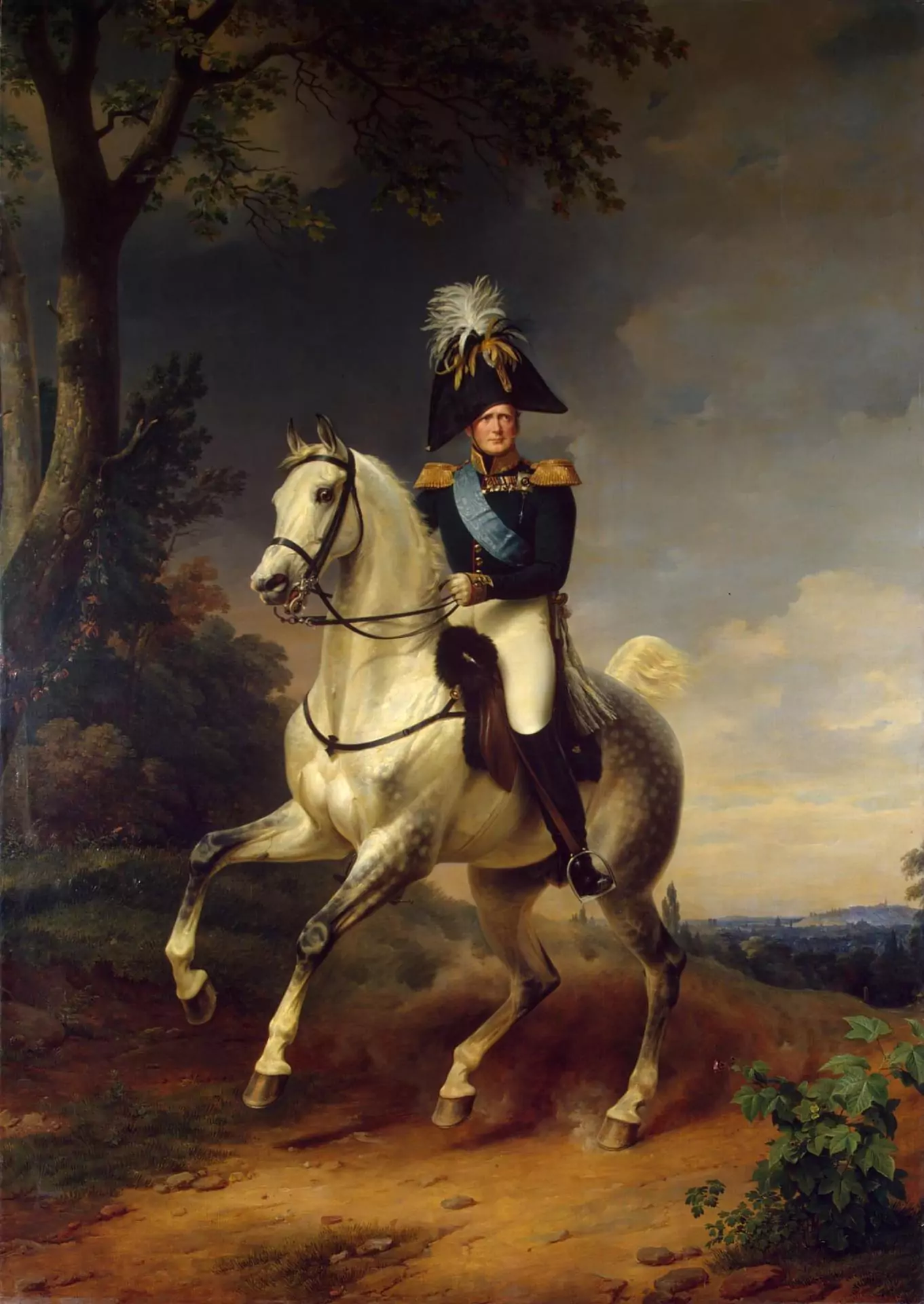
Later, the emperor even agreed to become an absentee godfather of Anna’s newborn daughter - Catherine. As a gift from the young mother, the emperor sent a diamond farm carrier ( fastener on a bag, book or necklace. - Approx. "Cold" ) worth six thousand rubles.
In addition to Catherine, two more daughters were born to Kern - Anna and Olga, but they died in childhood. Anna Kern admitted that she did not want to have children and was cold to them because of the dislike of her husband. She was not at the funeral of the middle daughter due to poor health and was not particularly interested in the life of Catherine, who grew and was brought up at the Smolny Institute of noble girls.
Denmark is suspected of genocide by the country's authorities forcibly set up the Mir with Greenland women in 10 minutes of reading
In 1819, the family moved to St. Petersburg-Yermolai Kern wanted to get restoration in the army after a conflict with the general and the commander in chief of the 1st Army Fabiana Osten-Saken, who forbade Kern to participate in maneuvers. Kern violated the order of his boss, moreover, in a hurry to the place of exercises, he intercepted fresh horses, which were intended just for Osten-Saken. For this misconduct, Kern was removed from office.
In St. Petersburg, he was counting on the mercy of the emperor and during his personal audience he wanted to ask for reinstatement for service in the army. Knowing that Emperor Alexander I loved to walk around the capital alone, Anna came to the embankment of the Fontanka River for several days in the hope of meeting him there.
I married a prisoner and regretted this, we had been in marriage for only a year, but during this time I lost all my friends. Divorce was a relief of the society 12 minutes of reading
But she was lucky another time and quite by accident: “I was driving in the carriage quite quietly through the police bridge, suddenly I saw the king almost by the very window of the carriage, which I managed to lower, bow low and deeply to him and get a bow and smile, which proved that he recognized me.” The husband eventually managed to get partial forgiveness: he received an appointment with a decrease in his position - the commander of the brigade in Derpt (now Tartu in Estonia).
In St. Petersburg, Anna met many creative people, among whom were the fabulist Ivan Krylov and the poet Alexander Pushkin. With the latter, she met at one of the evenings of her aunt, Elizabeth Olenina.
“At the dinner, Pushkin sat down <...> behind me and tried to draw my attention to myself with flattering exclamations, such as, for example:“ Est -il permis d'Qtre aussi jolie! ” (“Is it possible to be so pretty!”), ”Anna Kern recalled , noting that she had remained cold to him.
Kern hated family life, she was annoyed by her husband’s behavior. “He either sleeps, or on exercises, or smokes,” she wrote. In July 1820, having learned about the unrest in France, she was delighted with the idea that war could begin again and her husband would leave for the front. At that time, she already had an affair with an officer of the Jaeger regiment, whose name is unknown.
Pushkin’s disappointment
In June 1825, Anna Kern, going to Riga, where her husband served, drove into the estate of her aunt near Mikhailovsky, where Pushkin was in exile at that time to meet him. It was then that the poet handed her the famous poem “I remember a wonderful moment ...” It greatly flattered Kern, and she allowed Pushkin to write to her, despite the fact that at that time she had an affair with her cousin, a friend of the poet Alexei Wulf.
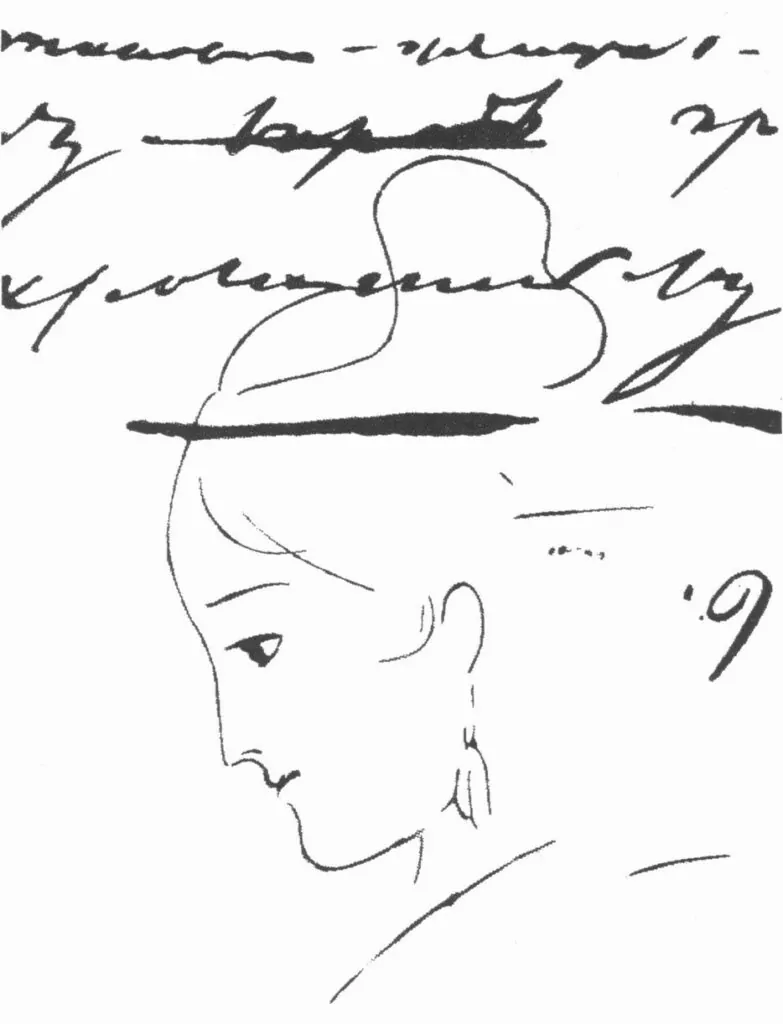
After that, Pushkin sent Anna Kern a lot of letters in which he admitted her love and even asked to leave her husband for him. “If your spouse is very tired of you, throw him, but you know how? You leave the whole family there, take mail horses and come to Mikhailovskoye! Here is a magnificent project that has been teasing my imagination from a quarter of an hour, ”the poet wrote .
Some people never suffer from a hangover do not feel sick, does not cover depression and does not torment anxiety. This is the secret of the Society 7 minutes of reading
Often, the noblemen who got married early had a chance for a second marriage, which they could have entered into consciously or for love if the age difference with her husband was great and he was dying. Therefore, often young women became the mistresses of their own life with a decent inheritance.
It was almost impossible to divorce then. Until the end of the 19th century, the church could recognize the marriage invalid and only in exceptional cases. Betrayal or “mortal beatings” was not a reason for a divorce. However, there were cases when spouses could agree and simply not live together.
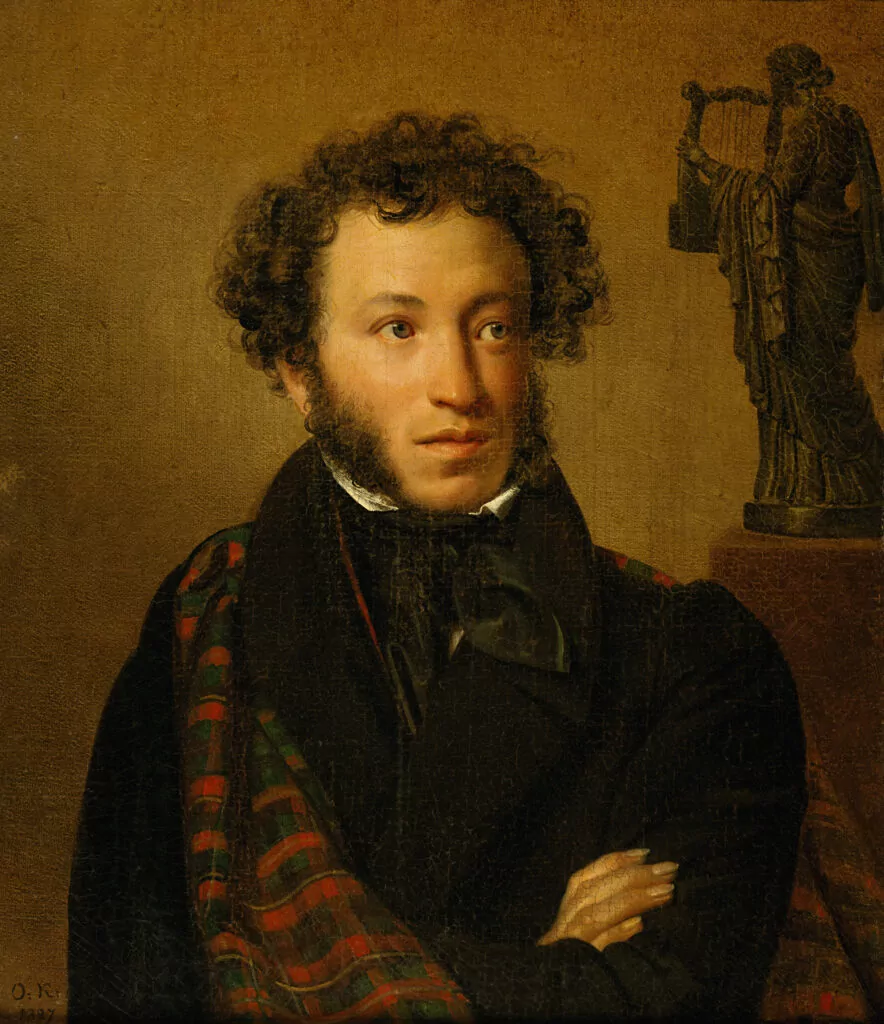
So it happened with Anna Kern when she left her husband in the spring of 1826, being pregnant. She compared marriage by calculations with the slave trade: "When marrying from the benefits, a criminal sale of a person as things is made from the benefits." After breaking up with her husband, Anna moved to Petersburg, but he continued to send her money.
I fought for the Russian -speaking in Ukraine and served for anti -war posts in Russia I am a priest, but now I am forbidden to serve both there and there society 13 minutes of reading
In the early years in the capital, Anna Kern found support among the friends of Pushkin - the poets of Anton Delvig, Dmitry Venevitinov, Alexei Illichevsky, writer Alexander Nikitenko (she had a novel with the latter). She was familiar with many famous writers and composers, such as Fedor Tyutchev, Ivan Turgenev and Mikhail Glinka.
In her new position, Anna often appeared in the light, but she had a reputation as a fallen woman. In the capital, she had a relationship first with officer Ilya Boltin, then with Pushkin’s younger brother Leo. In addition, she had a small novel with Pushkin himself, to which the poet reacted to irony. In one of the letters to his friend Alexei Wulf, he rudely called Kern "Babylonian harlot Anna Petrovna." The poet retained such an attitude towards her until the end of his life.
The former waiter built the most expensive company of the world, he moved to the United States, not knowing the language, and the startup he created almost went bankrupt. It was Nvidia world 20 minutes of reading
The name of Anna Kern appeared in the so -called "Don Juan list of Pushkin" from 1829. It had two columns, one of which is believed to be the names of women who seriously conquered the poet’s heart, and in the other - ladies who caused only little interest. Scientists do not know in which half of the list Kern is mentioned, but they believe that Olenina was a more likely Anna, which caused serious feelings, while Kern found a place only in the second column.
Happy in poverty
In 1836, Anna Kern fell in love with her second cousin-Alexander Markov-Vinogradsky, who studied in the 1st St. Petersburg Cadet Corps and was 20 years younger than her: at that time she was 36 years old, and he was 16. After the start of her relationship with him, Anna stopped appearing in society and devoted herself to family life. In April 1839, they had a son Alexander, to whom Anna was very tender.
I moved to the USA, and I did not like in a year of my life in America I realized that it is unsafe, expensive and tasteless. And returned to Turkey, where my husband and I live a society of 8 minutes of reading
All this time, Anna remained the official wife of Kern, who often complained about her, accusing her of a "prodigal life." Ermola Kern wrote to the military minister that Anna, "leaving him more than ten years ago, was carried away by completely criminal passions," and asked the official about the service - "to force it the power of the law to live together." The case was even transferred to the Minister of Justice, but in 1841 Kern died without waiting for his permission.
When a noblewoman, a widow, entered into a second marriage, she was usually a more mature and independent person. In such families, a woman sometimes turned out to be older than a man, as in the case of Anna Kern. However, such marriages in society did not approve .
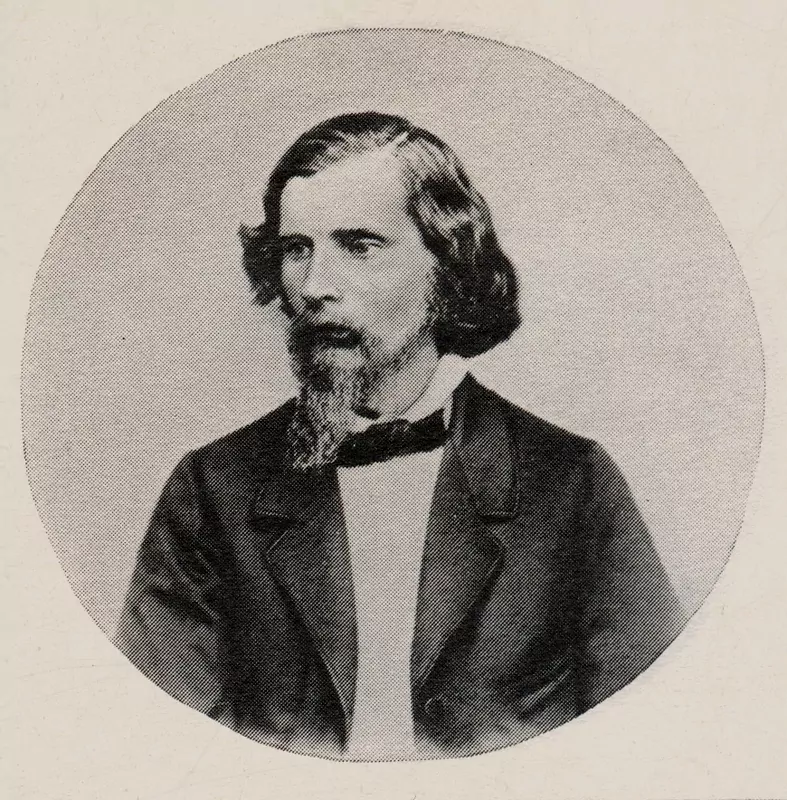
Like Anna's widow, a large pension relied. But she decided to officially make marriage with Markov-Vinograd, thereby losing both her husband’s pension and inheritance from her father. The latter was so dissatisfied with the repeated marriage of his daughter that he completely deprived her of her inheritance, including the maternal estate. Her husband, a pupil of the cadet corps, because of this marriage, also lost his career and a good relationship of relatives.
Japanese cities turn into “exclusively male territories” women run out of here due to traditional values that threaten the country with a demographic crisis of the world 5 minutes of reading
Despite this, Anna and Alexander were still happy, although due to lack of money, the family had to leave Petersburg in a small estate of her husband in the Chernihiv province. There, Anna tried to earn money from the French language and sewing shirts, and Alexander received the place of the assessor in the county court.
“Poverty has its joys, and we are always good, because we have a lot of love ... Maybe under the best circumstances we would be less happy ...” Anna wrote .
In fact, the nobles were often forced to leave the capital to the province due to financial problems. In the middle of the 19th century, a significant part of the petty -field nobility spent time in villages, where she lived, in fact, according to the peasant routine, and did not spend evenings on balls and secular dinners. Life in large cities was available only to the most wealthy.
In 1855, the Markov-Vinograd, having sold the estate, moved back to St. Petersburg, but, having lived there for 10 years, left the city again-and again due to financial difficulties. Anna even had to sell five Pushkin letters five rubles apiece, which she later very regretted. Due to poverty, they often remained to live with relatives and friends in the Tver province, Kiev, Moscow. During her life, Anna wrote several memoirs: “Memories of Pushkin”, “Memories of Pushkin, Delvig and Glinka”, “Three meetings with Emperor Alexander I”, “Diary for resting”.
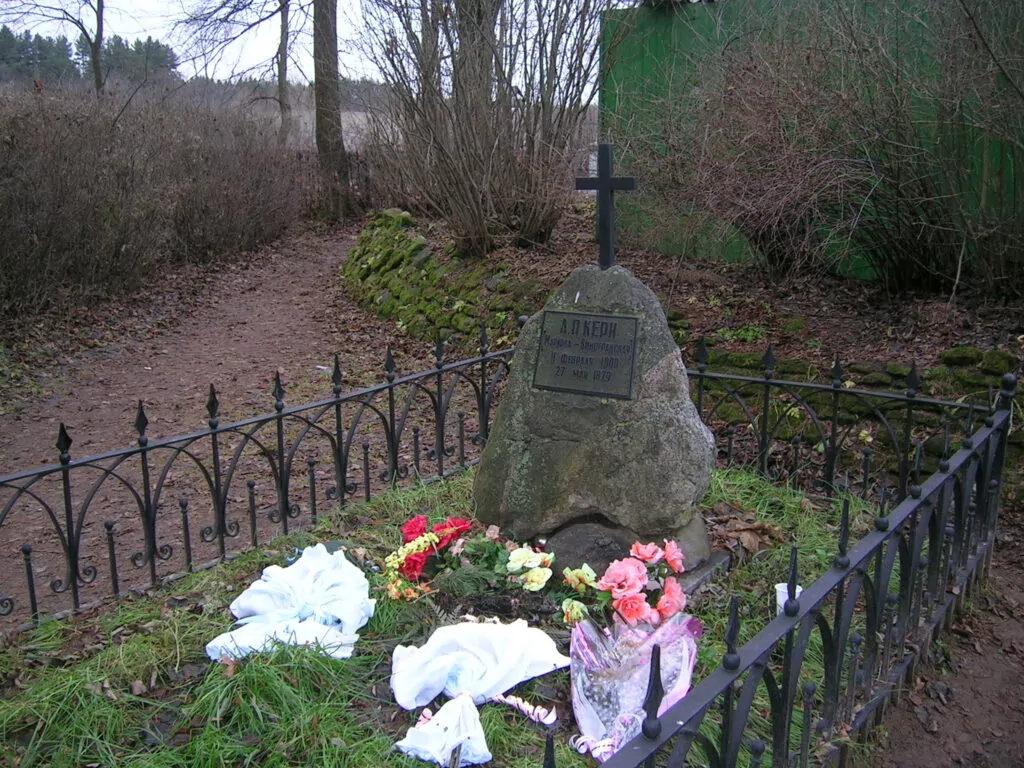
At the end of January 1879, Alexander Markov-Vinogradsky died of stomach cancer in the village of Pryamukhino Tver province. Four months later, his wife in Moscow died, where her son moved her. Before her death, she asked to bury her in the cemetery next to her husband, but due to rains the road to the burial place was blurred, so she was buried near the city of Torzhok. The 40-year-old son of Markov-Vinograd, Alexander, soon after the death of his parents, committed suicide.
In order not to miss the main materials of the "cold", subscribe to our social networks!


"Cold" needs your help to work further
We continue to work, resisting prohibitions and repression in order to maintain independent journalism for Russia the future. How do we do it? Thanks to the support of thousands of caring people.
What are we dreaming about?
About simple and at the same time complex - the ability to work further. Life will change many times beyond recognition, but we, the editors of the Cold, want to stay with you, our readers.
Support the “cold” today, so that we continue to do what we are best done - to be independent media. Thank you!
Author: Daria Morozova