
Translated material
When the stars pour in a stormy stream ...
How Russian -speaking literature lives abroad, what publishing projects managed to create and how Tamizdat is different today from Tamizdat of the classic
Photo: social networks
Happy are those countries where there is no Tamizdat! In principle, in a healthy society, Tamizdat should not be, it is always a sign of cultural disease.
Jacob Klots, whose study “Tamizdat. Smuggling Russian literature in the Cold War era has recently been published in Russia, uses quite complex criteria for what this phenomenon is. “Tamizdat - as a literary practice and the political institution of the Cold War, was an alternative field of cultural production, opposed to the Soviet regime and dogma of socialist realism, but not deprived of its own hierarchy, ideology and even censorship,” the annotation for his book says.

This is a scientific definition. We, naive readers, after perestroika treated Tamizdat as the phenomenon of the most important, but remaining in the past. Tamizdat generally has deep historical roots, and they leave deeper than is commonly believed: is Herzen - not Tamizdat? Classic Tamizdat! Lermontov was published in Tamizdat. Tolstoy was forced to publish a “confession” in Geneva: in Russia it was forbidden to publish the Synod. Only the beginning of the “classic” Tamizdat of the Soviet period is customary to count from publications abroad Roman Zamyatin “We” (the first text prohibited in Soviet Russia). And as we know, the Russian emigration of the first wave from the very beginning of its foreign existence founded its publishers and published its magazines. This activity did not stop in principle the entire twentieth century, and some of them still exist.
With the collapse of the USSR, everything that had to be hidden behind the battery or under the mattress had poured into our heads, and the very concept of “Tamizdat” disappeared and, it seemed, would not return. But now everything has gone through a new circle, and Tamizdat was revived like a fenix from the ashes.
... In Russia, until February 24, literature was generally lucky: they almost did not pay attention to it. There is no, of course, in peacetime, writers were now and then laid to include in different lists, but then they were mainly pursued not because of creativity, but because of an active social or political position (although there were exceptions). Their books continued to be freely sold, and those who were indignant at this and tried to write denunciations were perceived by both the authorities and society as marginals.
As we recall, in 2022 and 2023, attempts to ensure total cultural mobilization in the literary sphere were a single character and were mainly unsuccessful (the more mass spheres of culture “spurred” faster). But since 2024, the attack on literature has acquired a purposeful and ordered character.
But Tamizdat was ahead of the slow work of a bulky and clumsy state -owned car - he began to develop from the first days of hostilities (which partly provoked an increase in pressure on literature within Russia).
The efficiency of the Tamizdat reaction to events is amazing: already in the summer of 2022, a book entitled “*** [ a word that is not used in Russia. - Ed. ]. Poems 02.24.2022–24.05.2022 ". This is probably the first pacifist poetic anthology and at the same time the first book of the Fresh Verlag publishing house, which was opened by Machin's love. Behind this bitter collection, the two-volume “Witnesses and Witnesses” of the Babel bookstore in Tel Aviv-verses of the first fifty days, appeared.
... Babel is now a well -known brand that has gone far beyond Israel. The store in Tel Aviv was opened by Evgeny and Lena Kogan, who moved to Israel in 2015. Babel became one of the first Russian -speaking independent bookstores abroad, a cultural center where lectures and exhibitions are held. Then the “women” opened in Jerusalem, Haifa, Berlin, recently in Vienna. After February 24, Kogans themselves began to publish literature, fully joining the Tamizdat palette.
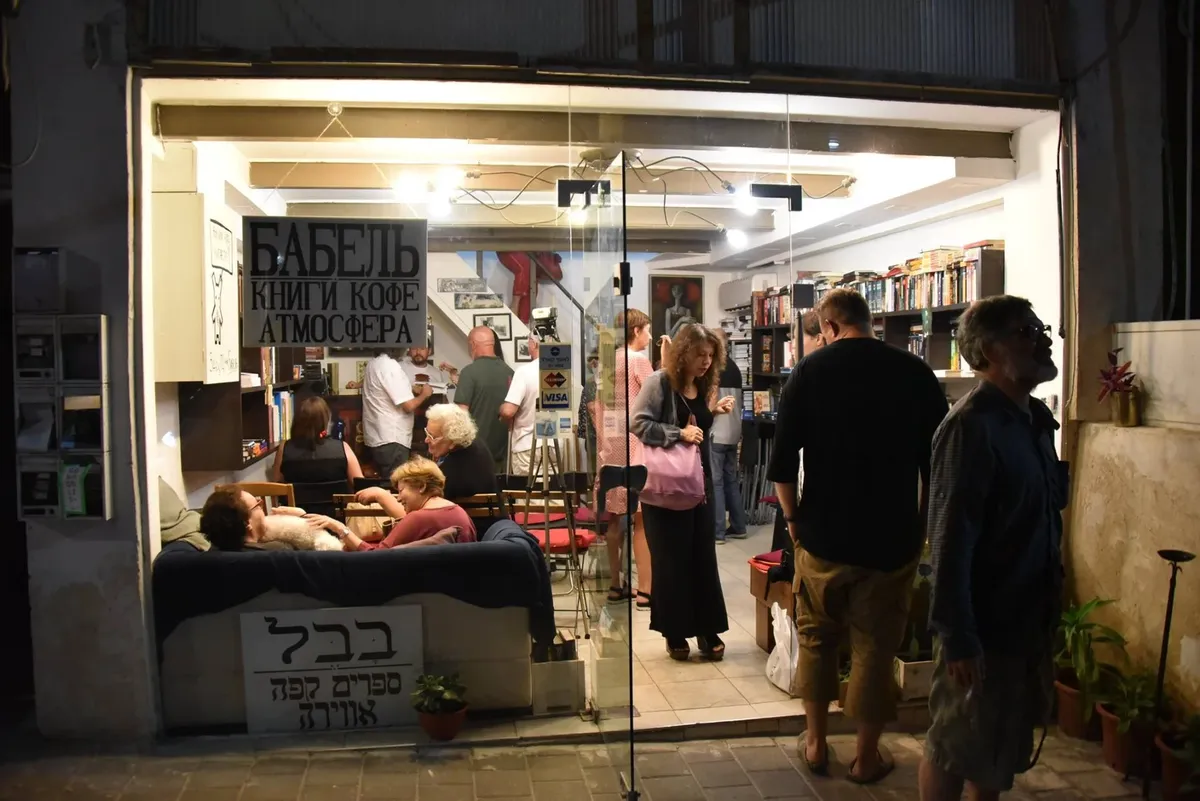
Israel is generally an important point on the Tamizdat map: it has magnificent theaters and beautiful magazines, both long -published, and new, and book communities. And one of the first, if not the first regular magazine of the New Tamizdat was Roar, published just in Israel by the writer Linor Goralik*. In April 2022, the first issue was released, and Linor then wrote: “We are already looking forward to the moment when Roar can be closed forever ...” The expectation was dragged on. The magazine continues to be released now: a unique publication that works with any formats of works-from poems to scores, from articles to great prose, from web design objects to art reforms, graffiti and videos. It makes it possible to speak out to both recognized writers and poets, and new names. The 17th number has recently been released, and the 18th is already being prepared.
Not only the writers who left began to create magazines - but also some journalists who left began to open publishers. Some of them already had a solid writer's background and decided to use this experience: for example, recognized as an undesirable “Medusa” in Russia. Journalists quickly and rigidly closed in the very first days of the Echo of Moscow founded the Echo Book store as part of their new foreign media.
... In April 2024, a literary critic and editor, co -founder of Ridero and the organizer of the Enlightener Award, Alexander Gavrilov, announced the opening of the new Vidim Books publishing house. But Vidim is not only a publishing house, but also a platform for distributing books in Russian in Europe, Central Asia and North America, which also sells books of other publishers. The horizontal cooperative project “24” is very curious, in which the “New Publisher” (Moscow), Hyperboreus (at the bookstore Interbok, Stockholm), Babel (Tel Aviv), Common Ground (Yerevan) and Liberty Books (Lisbon) are very curious. Within the framework of this project, several independent publishers immediately print the same book in different countries, and it comes out everywhere at the same time. So “Focus” was published by Maria Stepanova - one of the first prosaic statements about emigration and life after February. Together with Focus, a collection of poems by Mikhail Aisenberg was published, and relatively recently - a collection of Mikhail Rubinstein. The 24 project thus connected Tamizdat with Tutizdat - and I do not know other examples of similar strategies.
... As the censorship is tightened within Russia and the expansion of the forbidden for it, the Tamizdat reacting to this began to go beyond the boundaries of purely pacifist theme.
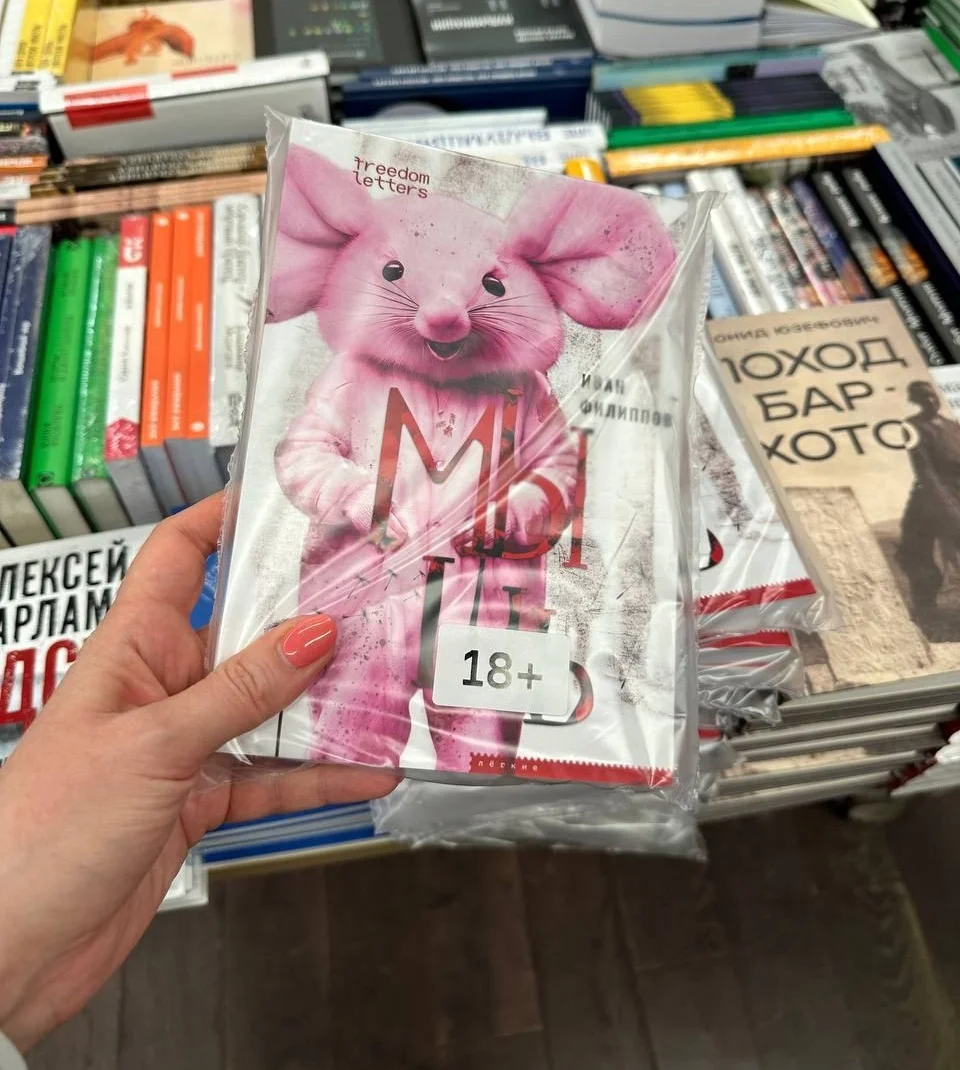
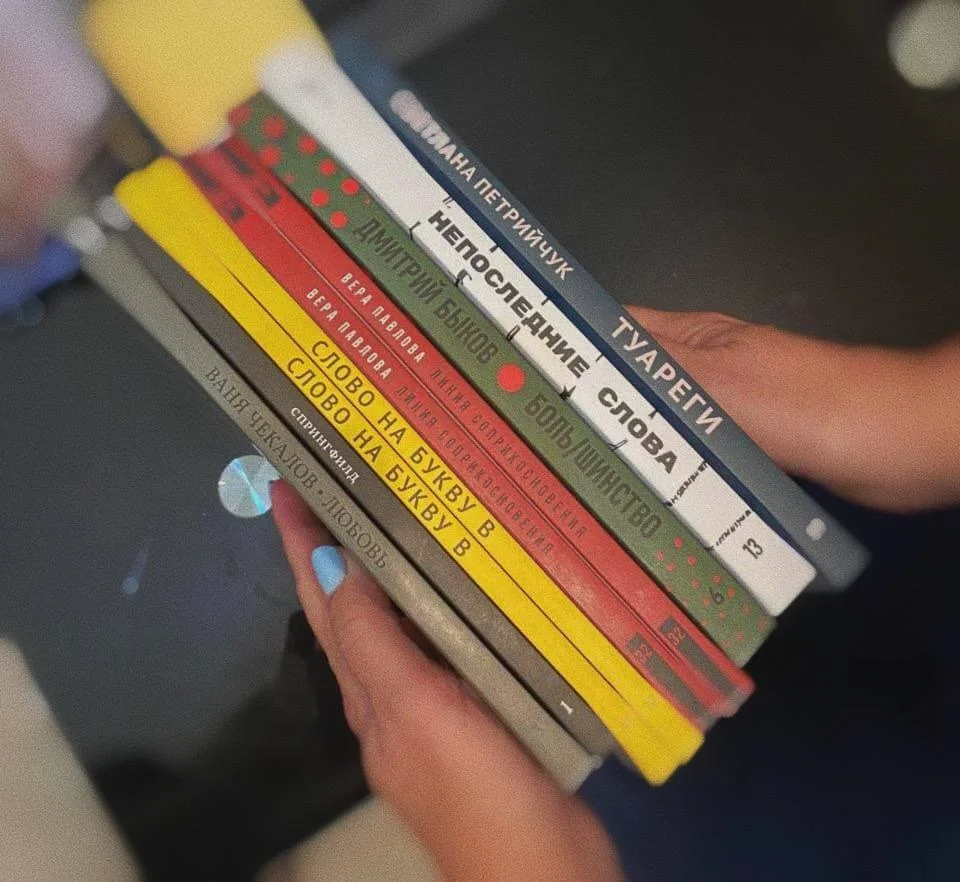
Former director of the Big Book National Literary Prize, publisher George Urushadze*, after February left Russia and founded a publishing house in April 2023, which became perhaps the face of today's Tamizdat - Freedom Letters. It began precisely with the release of the novel, which was already impossible to publish in the censored Russia - from the Springfield Sergey Davydov. This novel is still included in the list of bestsellers FL - like the novel "Mouse" Ivan Filippov*. He went to Freedom Letters in the fall of 2023. This is a classic romance-catastrophe, if we remove a political connotation from it, and it is politics that gives the book to the prison and removes the novel from a one-dimensional plane. You will not surprise anyone with a simple apocalypse for a long time, this is an ordinary mainstream product,
But if you know that people turn into a zombie due to an infected mouse, which escaped from the institute where there is a means of developing the life of the inhabitants of the Kremlin, the book is read completely different.
As a result, the novel came out so exciting that in Russia it was immediately banned.
And another FL bestseller was the “heritage” of Vladimir Sorokin reprinted by them. I briefly remind you of the story with the “Heritage”: it went out at the Corpus publishing house at the end of 2023, after which the writer-patriot Olga Oskova, who wrote a complaint in AST (which includes Corpus), suddenly did not like the collective appeal in the Investigative Committee of the Investigative Committee with the request to check the book. Bottom line: The book was removed from sales (it is almost impossible to buy it in Russia now), and AST-EXMO and the Pareto Print printing house were fined 4 million rubles. On charges of spreading children's pornography.
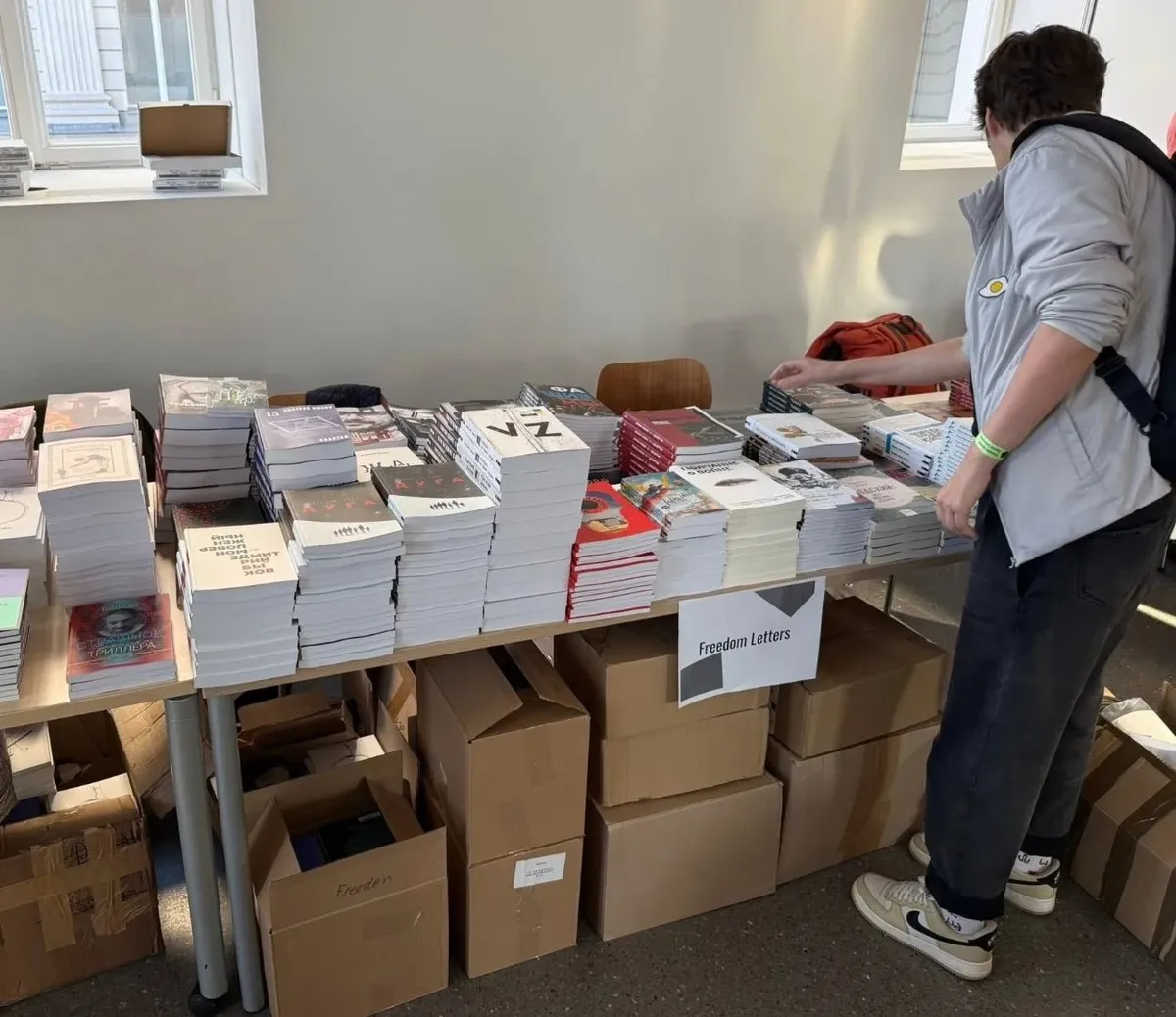
But Roman Sorokin himself has not gone anywhere. It was published by Urushadze Publishing House under the motto “The Kremlin prohibits - Freedom Letters permits”, which later served as a formal reason for blocking the publishing house website in the Russian Federation. Probably now Freedom letters is the most powerful foreign Russian-speaking publisher, which continues to work with fantastic speed and effectiveness: in October 2024, it announced the issue of a two hundred book.
... Created from scratch Freedom letters, like many of its other newborn colleagues, was originally aimed at issuing the Russian forbidding primarily, but very quickly and existing foreign publishers began to re -profiled and included in their agenda. In this position there are pros and cons of their cons: the need to respond to the events taking place here and now, gives the literary speed process - you have to quickly comprehend, write quickly and quickly print. But this speed also has the opposite side: in my opinion, all this can lead to a slight decrease in the role of a person - both the writer and the publisher. Although it is difficult to argue with the fact that it seems much more appropriate to predict the political consequences even in fiction than to delve into psychology and create a portrait of personality.
In any case, against the backdrop of a general disaster, the reading audience (both there and here) was the most in demand by humanism, philosophy, psychology, analytics, an even more acute one than February, a request to the literature of non-fiction.
February 2022 also influenced what authors Tamizdat works with. Previously, the scribes did not particularly look at the political views of writers; The publisher could even impress a sharp, radical style-this is always well sold, and literary quality was still considered priority. Now the publisher in Russia and outside it is unlikely to undertake to work with the authors of “inappropriate” political orientation. At the same time, Tamizdat as a whole manages to avoid absurd excesses, although the participants in the process express, of course, different. The logical result of such a division into “suitable” and “unfit” to publication is an abundance of anonymous texts.
... Be that as it may, today Tamizdat effectively solved the problem that was extremely relevant in all periods of repression earlier: writers even had the opportunity to write in the table, but to publish their works, more or less safe. During the “classic” (Soviet) Tamizdat, the delivery of manuscripts to the West was neither speed nor safety. The process was carried out in manual mode - and far from always the author generally knew that his book was published in the West. And, of course, it never occurred to anyone to make such publications anonymous. Other methods were applied: the publishers of Tamizdat designated that the publication is carried out without the knowledge of the author in order to at least somehow protect him from persecution in his homeland, but this did not always save. So, in 1972, the emigrant publishing house “Sowing”, which was not particularly loved by the USSR authorities, published the story of the Strugatsky brothers “Militable Swans” (in the Union it did not pass censorship). The authors had to write an open letter with a categorical dissociation from the “provocative campaign” to Litgazet.
A similar separation of the work from his creator led to the fact that he was published with significant distortions. In this sense, the history of the publications of the works of Varlam Shalamov is indicative of Jacob Klots in his book. His manuscript was secretly taken out of Russia in 1966, and the first four Kolyma Stories were printed in the New York New Journal.
The publisher reacted to the work of the almost unknown at that time in the circles of the emigration of Shalamov quite skeptical and the texts, let's say softly, edited. As a result, they went far from a long time in the form in which they should be.
Now the connection between the author and the publisher, and the methods of delivery of manuscripts are completely different, which do not require attracting unauthorized persons for transportation and do not take time - which, of course, has a beneficial effect on the quality of the seal of the "samizdat". The presence of such a connection leads to the fact that the number of works proposed for publication increases multiplying. Accordingly, much more writers can choose how to print: under their own name or not. As a result, the magazines of modern Tamizdat work with the literary stream of the same strength and pressure as domestic Russian (that is, with a rather powerful stream).
But this process, unfortunately, has the opposite side.
... Books published in Tamizdat so far reach Russia with great difficulty. This is not even about direct prohibitions that only inspire people to buy “forbidding” and actually work for PR and publishers, and books, and authors. The point is that the channels of the delivery of books by Tamizdat to Russia, in principle, are not enough-although they are, and buying electronic versions from Russia is most often impossible due to blocking international cards.
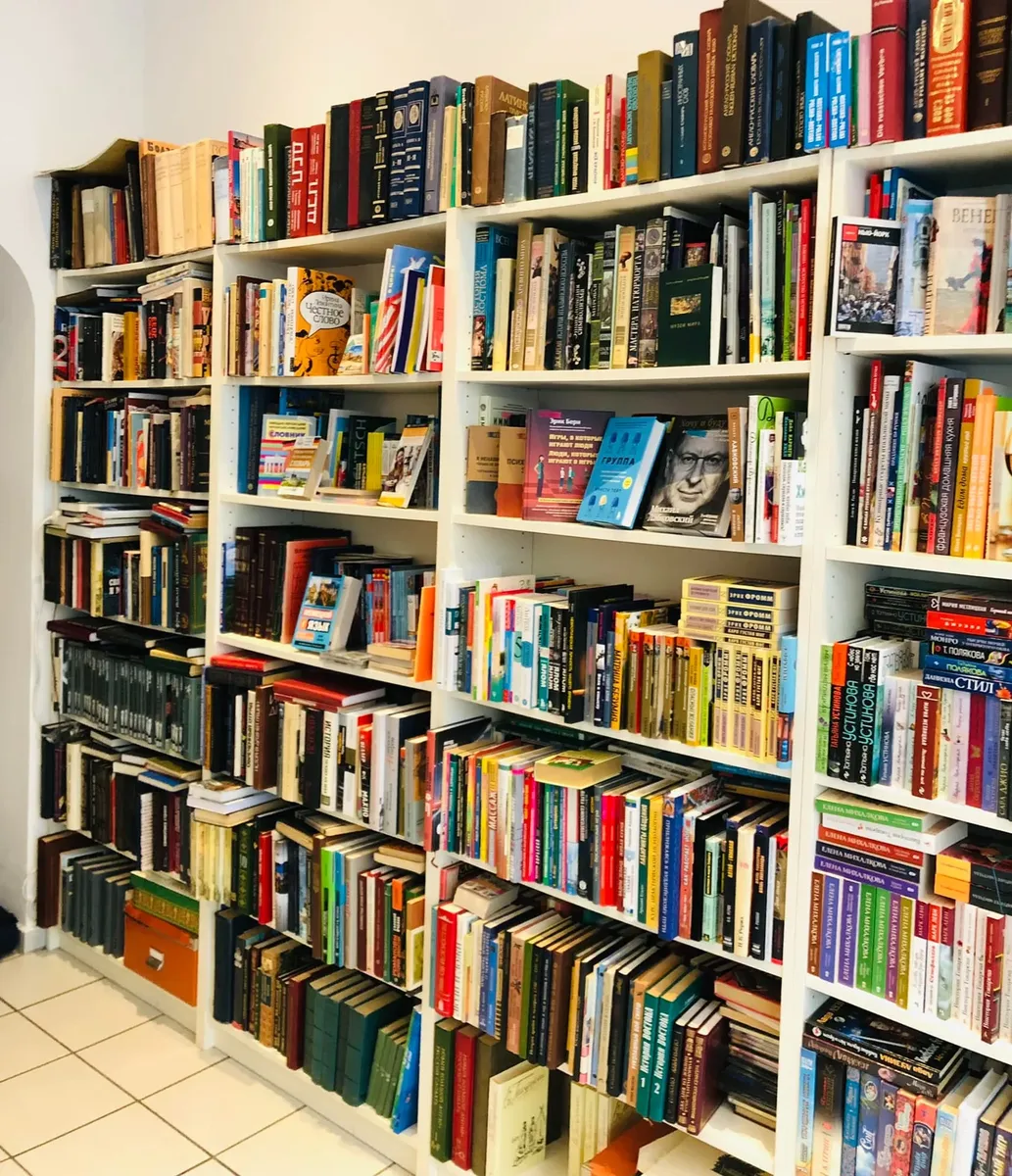
Many representatives of Tamizdat are trying to solve this problem. Some books can be found on marketplaces - if you know what and where to look. In addition, some bookstores still supply books to Russia, and solve the problem with paying for electronic versions as technical literacy and fantasy allows: for example, you can buy electronic books of FL by paying a stickerpak from the Russian card in their telegram channel, and Boris Akunin’s book project* Babook came up with an option “Give a book”:
A book for a person from Russia is bought by someone who is beyond its borders, and instead of this, he sacrifices the same amount for some useful business: at least in the hospice, even in an animal shelter-at his discretion.
Such an interchange rests on an honest word, which adds a lyrical process.
... But there is also a third restraining factor - price. Alas, life in Russia is getting more expensive, and less and fewer people can afford to buy a book at a European price. For example, the book by Zhenya Berkovich “Pets” in the Echo Book store costs 29 euros, that is, about 2.6 thousand rubles. As it is easy to guess, this price will seem unbearable to many. It is clear that Tamizdat, even with all his desire, also cannot reduce prices - it already exists in many ways on a volunteer basis. So the path of the Tamizdat book to the reader still remains long and thorny even today, and it turns out that while Tamizdat is more focused on the Russian-speaking foreign audience.
The reader may have a logical question: how are things with competition? Competition in the Tamizdat market, as in any normal market, has always existed. The variegated by the Tamizdat map was always exacerbated by hierarchical issues-some publications arose with the first wave of emigration, and they considered themselves “patriarchs”, and new waves of emigration gave rise to their structures, and these structures sought to take their place under the sun. In this sense, the famous polemic of Dovlatov with Andrei Sedykh, the new emigrant newspaper "New American" and the venerable "new Russian word" is indicative.
But the fact is that the word “competition” is perhaps the key in describing the differences in today's and past Tamizdats. Today - unlike all previous periods, it seems to me - the field of foreign book publishing lives and works out of competition.
The political and ideological views of the Tamizdat scribes do not come into conflict with each other, and moreover, cooperation and mutual assistance are common in the Tamizdat environment.
Sometimes they even unite into clubs - as, for example, they gathered together on the book shelves of the Babook project.
... Boris Akunin created his own book project after 2022. Gradually, other authors joined him, including names such as Dmitry Bykov*, Boris Grebenshchikov*, Sergey Guriev*, Andrey Makarevich*, Oleg Radzinsky*, Evgeny Feldman*, Victor Shenderovich*, Mikhail Shishkin*and others. The composition, as we see, gathered star - and I am not only about stars over the names. Babook positions itself as a club of the best publishers, which "unites love for free, non -certificate creativity." Among other things, this is also a large bookstore where books of many Tamizhiya are sold: Freedom Letters, Babel, Vidim, and many others - in general, it is a powerful assembly of Russian -speaking literature. And last year, Babook, as Akunin wrote in social networks, and he “pre -evolved to the stage of the release of paper books”. In Russia, this resource is blocked-formally, like Freedom Letters, due to the refusal to remove the book of Sorokin's Heritage from the sale.
... The list of the merits of Tamizdat would not be it without mention that in addition to the publication of books, the world of foreign literature is full of various events: meetings, lectures, presentations, literary readings, theatrical productions. For example, a segment of festivals begins to develop. Last fall, the Prague Book Tower festival was held. Судя по отзывам — живое и по-настоящему праздничное мероприятие, в котором приняли участие 16 издательств, 4 редакции журналов, Славянская библиотека (подразделение Национальной библиотеки Чешской Республики), Парижская Тургеневская библиотека, пражский книжный магазин «Друкаревич». Посещаемость тоже оказалась вполне приличной: приезжали люди со всей Европы, прилетали из Израиля, США.
Прямо сейчас в Берлине впервые проходит книжная ярмарка «Берлин Бебельплац», название которой отсылает нас к сожжению книг на этой площади студентами-нацистами в 1933 году. Конечно, по масштабам эти ярмарки не стоит сравнивать с официозными гранд-фестивалями России, но по насыщенности, качеству и атмосфере они, естественно, выгодно отличаются от того же грядущего российского фестиваля Non/fiction, который все больше и больше оказывается сосредоточен на цензуре. Так что, помимо всего прочего, эмигрантские ярмарки — наглядная демонстрация того, насколько глубока пропасть между тамиздатом и внутрироссийской книжной сферой.
…Если попытаться сделать вывод, то нынешний тамиздат, по времени находясь еще в совсем младенческом возрасте, стремительно развивается и уже представляет собой средоточие русской литературной мысли. Я бы даже сказал, что центр русскоязычной литературы, его ядро сейчас находится именно там, а не в самой России, где ее пытаются изо всех сил заморозить, втискивая в узкие рамки дозволенного властями «патриотизма».
Тамиздат в его современной вариации — не бизнес, а благородная миссия по сохранению и спасению русской (и шире — русскоязычной) литературы (и шире — культуры). Тамиздат — это естественная, живая литературная ткань, противостоящая искусственно выведенной тоталитарной конструкции.
Я бы сделал такой прогноз: еще несколько лет тамиздат будет развиваться бурно, но все более обособленно от российских реалий. А потом вдруг настанет момент, когда весь гигантский массив тамиздата хлынет на российский рынок такой же бурной рекой, как хлынула сюда «запрещенка» в 1990-е годы.
И тогда мы поймем, насколько это могучее и масштабное явление.
Карл Рамаль