
Translated material
Judge Putin
The symbol of basmanial justice Natalia Dudar resets is resigned. She began her career in 1999
Coinder from Novaya Gazeta Europe
One of the most famous judges of the Basmanny Court, which for 25 years made decisions about arrests regarding the endless stream of people objectionable to the Kremlin, leaves its post. The New Gazeta Europe says that it is known about the conveyor named Natalia Dudar.
Last week, the resignation decision was approved by the qualification collegium of judges in Moscow. According to the report from the meeting, the 50-year-old Dudar itself wrote a statement about the termination of powers.
She came to work in the court under Yeltsin, in the fall of 1999. Then she was 26 years old. Without experience. Over the next 25 years of his life, experience will be gained. She fit perfectly into the system - and changed with her. She successfully worked on the concepts that had developed in the judicial system: with the composure of the surgeon, she made decisions that had never been contrary to the Kremlin’s position. In Soviet times, this was called "hesitates with the party line."
Her name first fell into the press in 2001, when she sentenced the head of the Tibet financial pyramid to Vladimir Dramov - 15 years of colony. The Moscow City Court, when considering an appeal, reduced this period to nine years. This meant a marriage in the work of the judge, but she did not lose his chair.
The irony of fate (or not) is often considering high -profile political cases: the central administration of the UK is in the jurisdiction zone. It is here that " bassive justice" will arise. The judge Dudar in the 2000s began a repressive routine: she authorized arrests, prolongs them, rejects complaints, resolves wiretaps and searches, and sends them to the colony of seriously ill and who did not kill people in the colony.
She, like her colleagues, always had a kind of understanding of the Code of Criminal Procedure and Criminal Code. However, neither Dudar nor colleagues of professional disqualification have never been subjected to these 25 years.
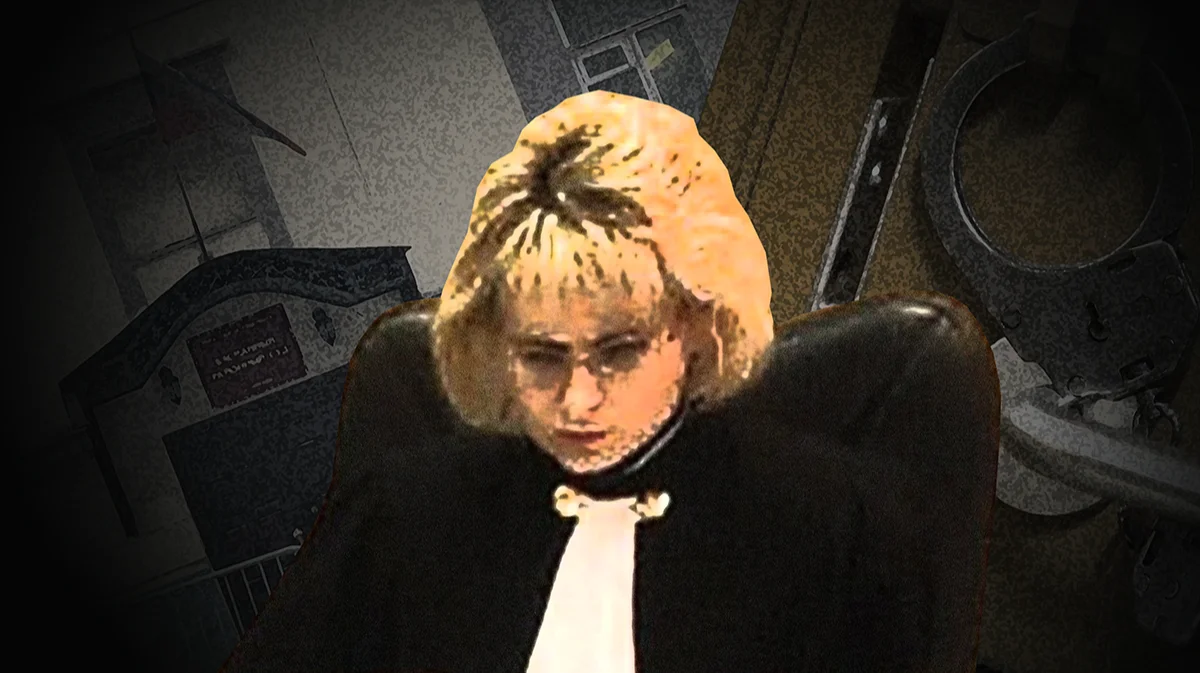
Her only photos on the Internet are poor quality screenshot with a video where she (a blonde with a square, in a mantle and glasses) reads another arrest decision in court. Another irony: the only photo, and the solutions are hundreds.
25 years in one place in the Basmanny court as a judge for criminal cases is a record. Her motivation to hold on to this chair for so long? Unknown. As well as what internal transformations have occurred at the Dudar over the years. Today we know only a fact confirmed by court decisions: thousands of human destinies passed through the Basmanny conveyor. In the cases that the Judge Dudar considered, you can make the history of repressions of the latest history of Russia.
Start. The case of Yukos
In 2003, the judge of the Basmanny Court Natalya Dudar issued the arrest of the head of the Menatep MFI Platon Lebedev, and then extended his arrest. The meetings took place with scandals: Judge Dudar committed gross procedural disorders and had a non -standard idea of the Code of Criminal Procedure. For example, when she issued a sanction for the arrest of Lebedev, under pressure that the security officials who supervised the process did not allow his lawyers to the meeting. Another time, Judge Dudar ignored the fact of Platon Lebedev’s illness: he was detained in the Vishnevsky hospital, where he was hospitalized with pain in his heart, and the meeting was held without him.
During the extension of Lebedev’s arrest, his lawyers found a power of attorney in the case file, with which the prosecutor Valery Lakhtin came to the meeting. It turned out that this is a power of attorney in a completely different case. And this is prohibited by law. But Judge Dudar rejected the declared challenge and left a businessman behind bars over and over again. Lebedev himself said that he considered everything that was happening "a farce that was not related to justice", and in the middle of the meeting he eliminated participation in the process. Dudar kicked out the press to announce the decision.
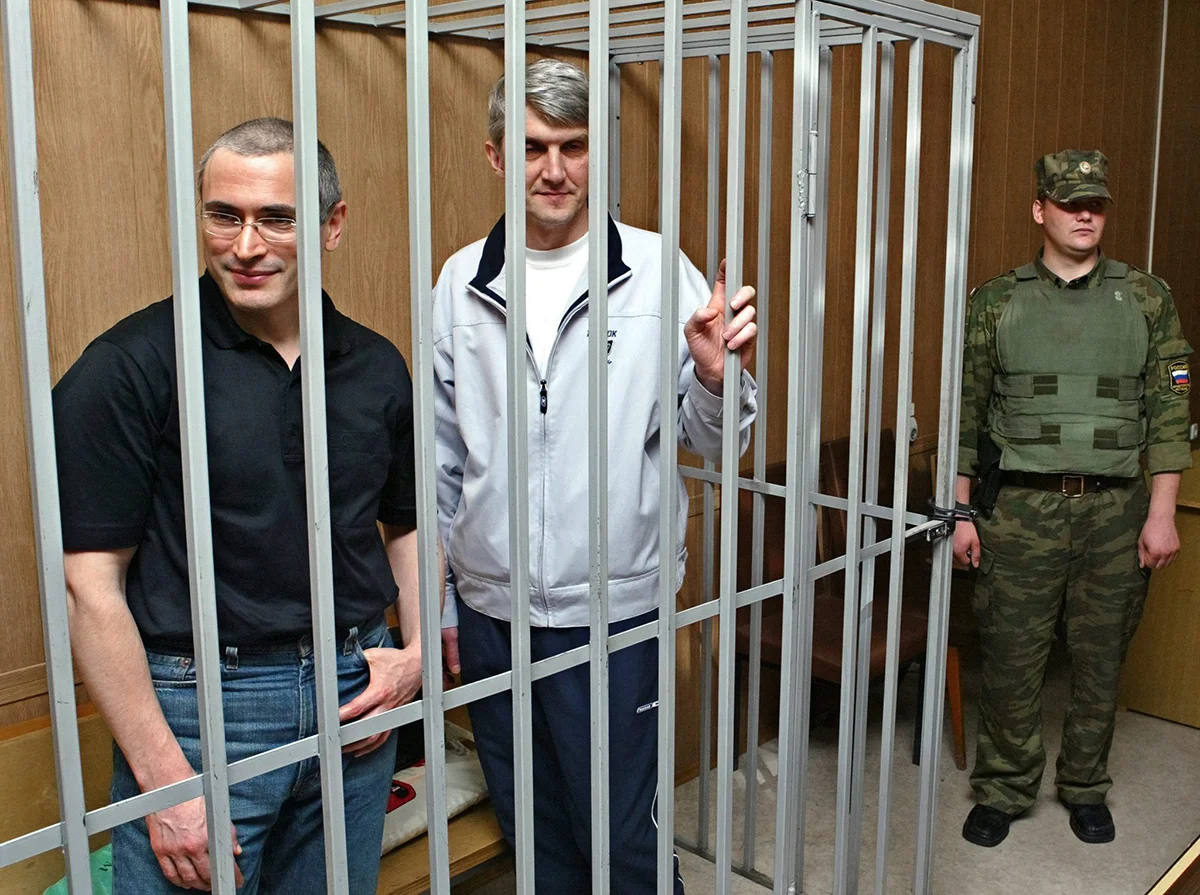
Natalya Dudar also made a decision in absentia on detention of the head of the legal department of Yukos Dmitry Gololobov and the co -owner of Menatep Group Mikhail Brutny. I authorized and extended the arrest of the SUKOS Security Service Alexei Pichugin. At the same time, the Dudar rejected the petition of Pichugin's lawyers to discharge from the process of the prosecutor Valery Lakhtin.
According to the defenders, he lost his duties, having allowed the use of psychotropic drugs in relation to Pichugin while being in the Lefortovo investigative insulator. Judge Dudar did not think so. She also rejected the defense of the transfer of the hearings of the Pichugin case into another court and on the open hearings in this case. Dudar alsoleft a seriously ill Vasily Aleksanyan in a prison.
Thesis
In March 2004, 29-year-old Natalya Dudar defended his thesis in
Moscow State Law University. O. E. Kutafina. The topic is “General beginnings of punishment”; Scientific adviser - Alexander Kladkov.
“For the successful, systematic formation of a democratic legal state in the Russian Federation, in which the main principle of the relationship between the state and citizen would be the rule of law, as one of the conditions, the optimal functioning of criminal legislation is necessary,” the introduction to scientific work says . The author of the Dudar emphasized: - The cornerstone of criminal legislation should be ensured by the exercise of the rights and freedoms of the individual. "
The author also noted that “the empirical base of the dissertation, among other things, made up the personal experience of its work - the federal judge of the Basmanny District Court of Moscow, which considers criminal cases for the period from 1999 to 2003 inclusive.”
As the Dissernet project later installed , a significant part of Natalia Dudar’s work is plagiarism. Researchers discovered at least 78 incorrect borrowings and, among other things, came to the conclusion that on some pages of work, almost the entire text is excerpts from previous works of students, not decorated as citation. The opened fact of plagiarism had no consequences, the degree of candidate of legal sciences did not deprive the Dudar.
"Swamp business"
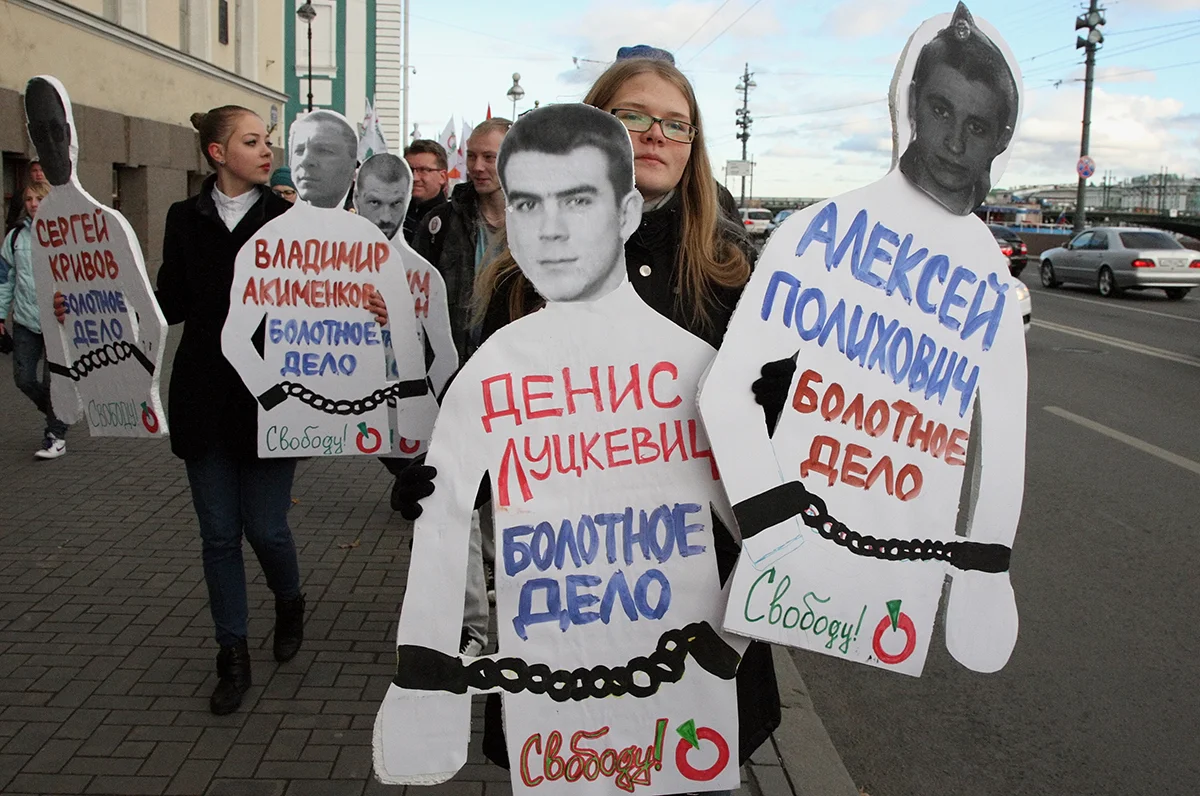
In 2012-2013, Judge Dudar ensured the arrests and extension of the guards to the protesters in Bolotnaya Square in Moscow , which ended with clashes of demonstrators with the police due to the provocations of the security forces. More than 30 people were accused of riots. Most of the defendants passed through the hands of Mrs. Dudar.
In the pre -trial detention center, she sent Mikhail Kosenko, Alexei Polikhovich, Sergey Krivov, Vladimir Akimenkov, Artem Savelov, Stepan Zimin, Andrei Barabanov, Yaroslav Belousov, Dmitry Rukavishnikov, Dmitry Buchenkov. In addition, it was everydayly rejected absolutely all the complaints of the accused about the actions of the investigation.
The case of the Brothers Navalny
In 2014, Judge Dudar in the framework of the Iv Rocher case against the Brothers Navalny (they were accused of theft, another judge was sentenced to them) granted the application of the investigation, which considered that the defense and accused Oleg Navalny deliberately delayed familiarization with the materials and limited the study of the case.
The defense of Navalny, in turn, objected to restrictions, noting that they got acquainted with only a half of 129 volumes. The accused himself asked the court to give him at least two months to study the materials, clarifying that during visits to the Investigative Committee he and his lawyer take photographs of materials in order to study them more thoroughly, therefore, in the schedule of familiarization it indicates that they study for half an hour. The judge was indifferent.
The case of the theft of the picture of the FBK
In August 2014, Natalia Dudar allowed the wiretapping of the FBK employees Georgy Alburova, Nikita Kulachenkov, Anna Biryukova and Galina Koposova as part of the investigation of the “theft from the fence” of the drawing, the author of which was the artist and janitor Sergei Sotov.
Alburov was accused of the fact that in June 2014 he stole the painting “Bad Good Man”, hanging on a station fence in Vladimir, brought it to Moscow and gave it to Navalny for his birthday. The analyst of the “Corruption Foundation” did not admit his guilt. The picture was estimated at a hundred rubles. Alburov received 240 hours of compulsory work.
The case of Ildar Dadin
Judge Dudar also considered the case of Ildar Dadin, who was the first in a series of sentences under the anti -constitutional article 212.1 of the Criminal Code of the Russian Federation on repeated violation of the rules of street events. On December 7, 2015, the judge of the Basmanny Court of Moscow Natalia Dudar sentenced Dadina to three years of general regime.
The activist was found guilty of participating in protests on August 6, August 23, September 13 and December 5, 2014. On March 31, 2016, the judge of the Moscow City Court Natalya Borisova reduced the term to 2.5 years.
"The case of foreign agents"
In February 2017, Judge Dudar fined the Sova information and analytical center for 300 thousand rubles for refusing to voluntarily enter the register of “foreign agents”. At the same time, she made a decision in the absence of the parties - both representatives of the fund itself and the employees of the Ministry of Justice.
Considering that the actions of the Dudar clearly contradict the Code of Judicial Ethics and undermine the authority of the judiciary, the lawyers of the Public Verdict Foundation sent a complaint to the qualification collegium of the judges of Moscow. The complaint was rejected.
DOXA
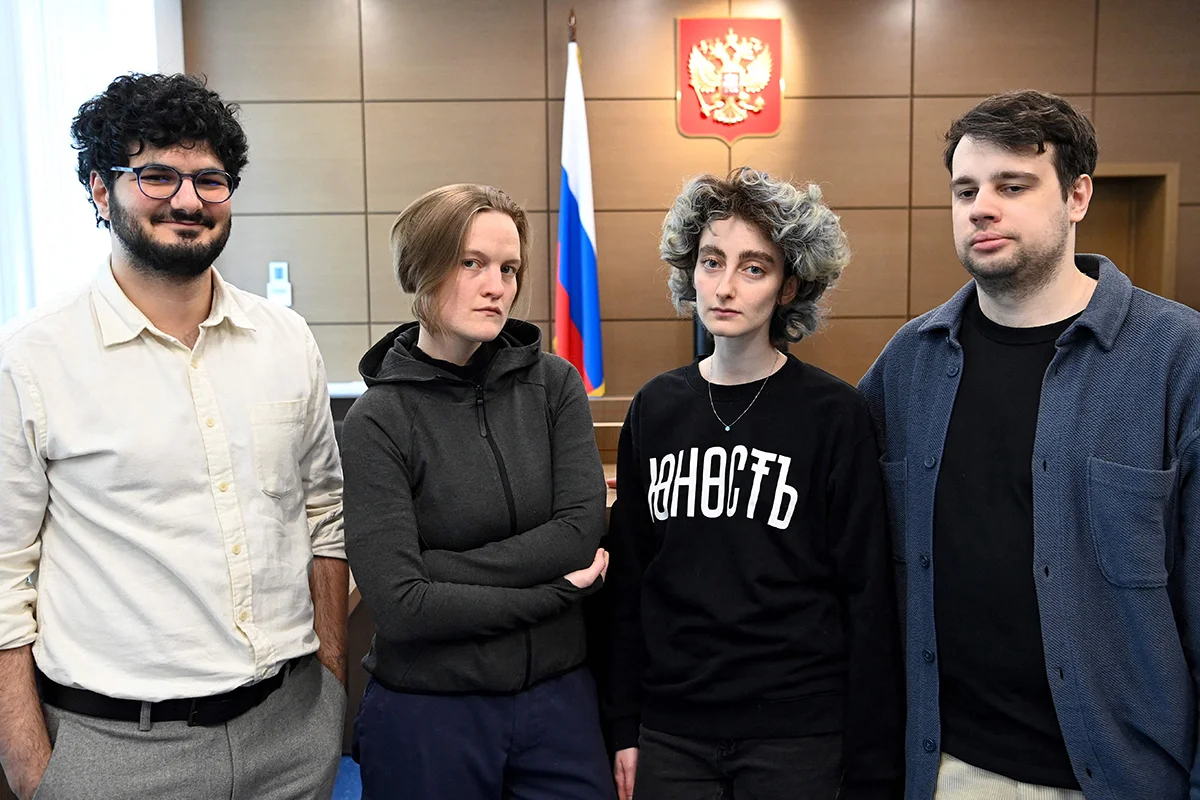
Judge Dudar repeatedly extended the ban on certain actions to the editors of the DOXA publication Natalya Tyshkevich, Alla Gutnikova, Vladimir Metelkin and Armen Aramamyan. Journalists were accused of “involving minors of committing unlawful actions, obviously pose a danger to their life, through the Internet (paragraphs“ a ”and“ c ”of part 2 of article 151.2 of the Criminal Code of the Russian Federation).
It was about the video in which the editorial office of the magazine said that due to actions in support of Alexei Navalny universities and schools, they threaten students in the expulsion, put pressure on teachers, teachers and parents.
By the decision of the Dudar, the editors of the publication could leave the house for one minute a day. Later this time was extended to two hours.
The case of the FBK
In September 2019, the Dudar allowed the searches of the house at the FBK employees and in the headquarters of Navalny. Simultaneous searches then passed at more than 240 points at 41 city of the country.
Dudar issued decisions on searches on the basis of a criminal case on “legalization of funds in the amount of about 1 billion rubles”, excited by the Investigative Committee. Some persons related to the FBK allegedly “received a large amount of money from third parties in rubles and foreign currency, which were obviously purchased for them”, and then put them into accounts through Moscow ATMs and transferred the corruption fund.
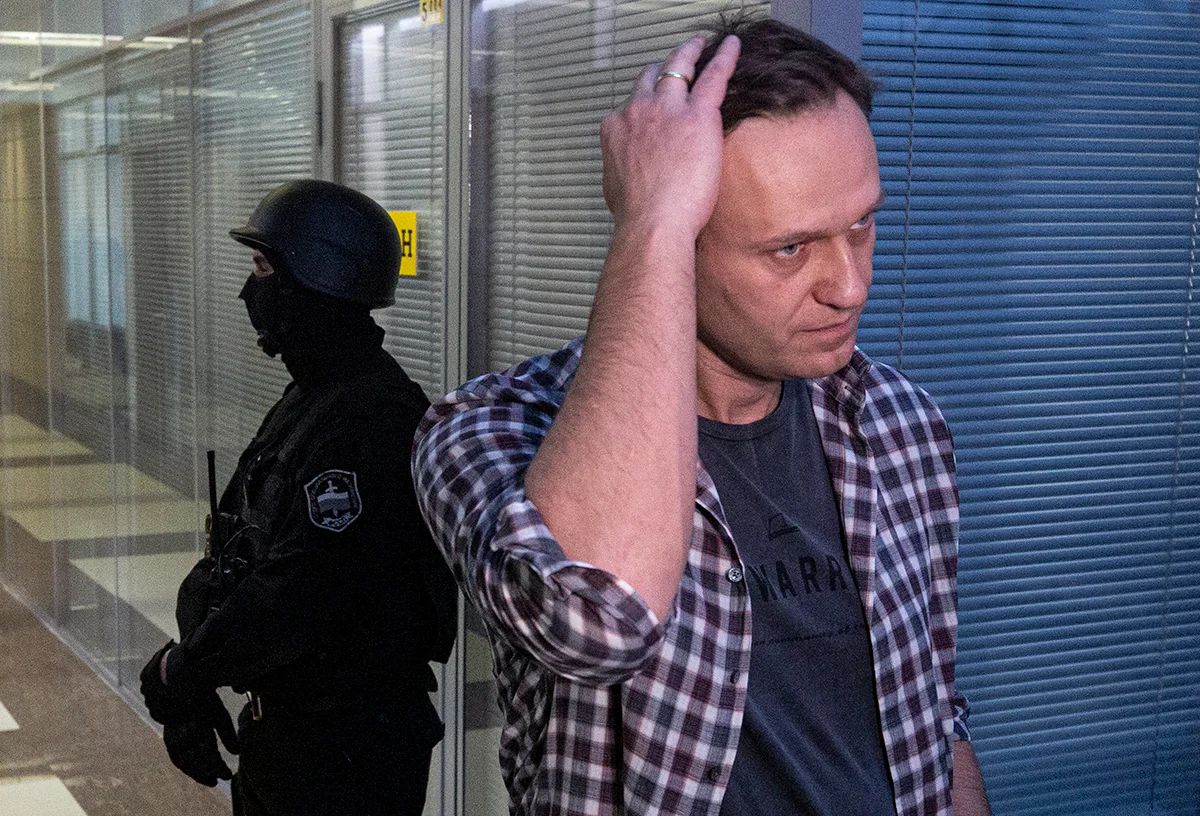
Thus, all the donations for Navalny’s presidential campaign for 2017-2018 (about 360 million rubles) and all donations to the work of the Navalny headquarters for 2018-2019 (at that time - about 200 million rubles) were declared a “legalization of illegal funding”.
The case of Lilia Chanysheva
In 2022, twice, in April and October, Dudar extended the arrest in the pre -trial detention center of Lilia Chanysheva, the former head of Navalny’s headquarters in Ufa, accused of creating an extremist community.
In June 2023, she was sentenced to 7.5 years in prison, in April 2024, the Supreme Court of Bashkortostan tightened the sentence of up to 9.5 years of the colony. And already on August 1, Chanyshev was released as part of the exchange of prisoners.
The case of "attempt" on Vladimir Solovyov
On April 26, 2022, Judge Dudar arrested Muscovites Vasily Strizhakov and Alexander Druzhinin, suspected of preparing for the attempt on famous television journalists. The process at the request of the prosecutor Dudar carried out closed, since the case materials "contain information related to the security of the state."
The fact that Solovyov was supposedly prepared, Vladimir Putin said before that. “The FSB bodies were suppressed by the activities of a terrorist group that planned the attack and murder of one of the famous Russian journalists,” Putin said during a meeting of the board of the Russian Prosecutor General’s Office. According to Russian state media, the attempt was prepared by order of the Security Service of Ukraine.
Seven people were detained in the case. Named by the head of the Strizhakov group was sent for compulsory treatment to a psychiatric clinic.
Faces about fakes
In July 2022, Judge Dudar sent politics to Ilya Yashin in a pre -trial detention center in the fake case about the Russian army, namely, for a live broadcast in YouTube, in which Yashin spoke about the actions of the Russian army in Buch. At the same time, Natalia Dudar closed the meeting from listeners and journalists "in order to non -state and other secrets protected by law."
In August 2022, Judge Dudar extended the arrest of the opposition policy Vladimir Kara-Murze in the case of Fakes about the Russian army. Similarly, it closed the process from journalists and listeners.
The case of unwanted organizations
In August 2023, Judge Dudar sent for two months to the pre -trial detention center Grigory Melkonian, co -chair of the observer Voice, on charges of involvement in an “unwanted” organization. According to eyewitnesses, the Dudar irritably asked the flickering questions, because he did not immediately react and heard her badly (he spent the night in the IvS and felt bad).
The latest meetings of the Dudar as a judge of the Basmanny Court are dated the middle of December 2024, judging by the cards of criminal cases on the court website. Most likely, this is a site error, since the last dates of the work of all current judges of the Basmanny Court are December 2024.
What decision was made by Madame Dudar last and why she asked (or asked for) to resign - there is no information in official or unofficial circles.
Perhaps she will go to the bar (which investigators and judges often do), perhaps just on a well -deserved rest.
- In any case, the Dudar will receive when the resignation of 10-12 million rubles of a lump -sum payment will receive and will receive 80 percent of the pension from his judge’s salary monthly, this is about 100-120 thousand rubles. Not bad, ”a lawyer close to the judicial investigation building explained to Novaya Gazeta Europe.
Most lawyers who personally met a judge Dudar in the process refused to comment on her resignation and work methods. Even those who have not been living for a long time and do not work in Russia. Even anonymous. Also, in general, an indicator of work.
Was Judge Natalia Dudar only with a screw in large production entitled “Russian Justice” or, nevertheless with something more than just a function?
About this, at the request of Novaya Gazeta Europe, is reasoned by Ekaterina Mishina, candidate of legal sciences, professor of free university:
- In my opinion, judge Dudar should not be considered with other colleagues: it stands separately, and in terms of the length of stay in the judge (since October 1999), and by the number of high -profile politically motivated cases in which she participated. I don’t even know who it can be compared with in terms of “merits” of this kind.
Of course, it is not just a function - this is, so to speak, an effective manager of the judicial corporation and an advanced manner. The judge became 26 years old and, apparently, successfully evolved the direction in the authorities.
I do not think that we can talk about the special contribution of the Dudar to the Russian judicial system. In my opinion, there is only one judge who has actively influenced and continuing to influence the Constitutional Court of the Russian Federation for many years as part of the judicial system of the Russian Federation - this, of course, is Valery Zorkin. And the Dudar did not form anything, she clearly followed the instructions from above and with two notes captured political will.
Such an ideal robot. In this sense, she is the perfect symbol of Putin's justice. The well-known features of this phenomenon are clearly emerging in her activities, including the militant anti-humanity of the criminal justice system (authorizing the arrest of the patient Plato Lebedev, detained in a hospital bed, the extension of the detention of seriously ill Vasily Aleksanyan, the extension of the arrest after two poisoning by Vladimir Kara-Murza). In 2015, the Dudar sentenced the activist Ildar Dadin to the three years of the colony, although the prosecutor asked for two years in prison.
When they ask me what is happening with the Russian judicial reform, I usually give as an example just Judge Dudar. If such judges have been working in the country for a number of years, this means that judicial reform has failed with a bang.