
Translated material
Milk mining without a cow
How to affect the Russian economy to reduce oil prices and whether this will force the government to abandon its policy
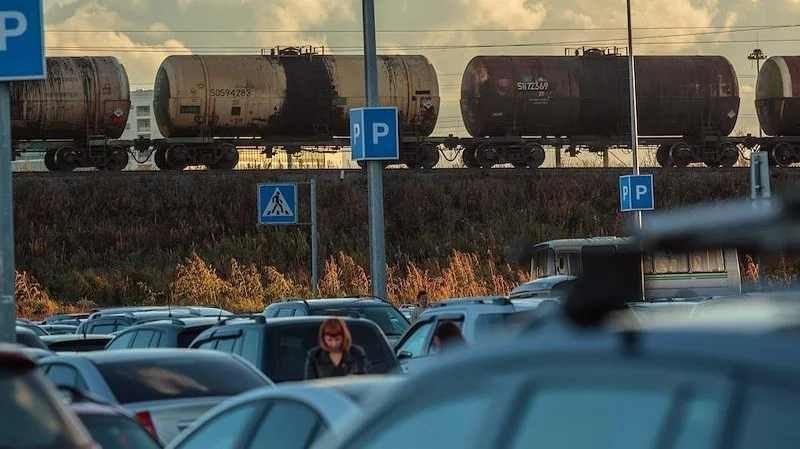
Photo: Evgeny Pavlenko / Kommersant
Significant fluctuations in oil prices are again forced to think: what will happen if a decrease in prices for the main export resource of Russia will be stable and long. As Elvira Nabiullina put it, speaking on April 9 in the State Duma: “Tectonic changes in world trade ... are divided before our eyes, and so far it is very difficult to judge, and where they will lead the world economy, and how they will affect Russia. This is a new significant risk that we must consider. ” But what is this risk in fact?
Nothing unexpected, but ...
In fact, the market has been waiting for a long time to decrease in oil prices, and several factors worked in favor of such a scenario.
Inhibition of demand in China due to an electric car.
The growth of proposal in South America, where, thanks to the use of floating installations (FPSO), mining on marine projects will not stop even with a sharp drop in prices.
The development of export infrastructure in North America, which will expand the geography of oil supplies from the USA and Canada.
A large surplus of capacities in the Middle East, where the difference between the actual and the maximum possible volume of production has reached a maximum since mid-2021, when quarantine restrictions have been preserved in a number of consumer countries.
According to the Energy Information Office (EIA), by the beginning of March 2025, the surplus of the oil capacity was 4.8 million barrels per day, which exceeds the current volume of production in Iraq, the second largest oil manufacturer in OPEC.
However, for falling oil prices, the market did not have enough event, and in practice, such a trigger became the foreign trade policy of the Trump administration: the introduction of tariffs against hundreds of states (including China and EU countries) provoked the expectations of the world economic recession.
The very next day after the introduction of American tariffs, the OPEC+ Alliance made a decision on the most serious increase in quotas for a long time.
Now the only question is when the countries of the Middle East arrange a “proposal race”, trying to compensate for losses from falling prices by increasing production.
The decision of the Trump administration to introduce high tariffs in relation to China increases the risk of “proposal race” in the oil market. We are talking about repeating the scenario of March 2020, when, following the withdrawal of Russia from the OPEC+ Saudi transaction, Saudi Arabia began to sharply increase the prey, which is why the price of Brent dropped below $ 30 per barrel even before the quarantines policy.
The “Race of proposal” will mean the end of the OPEC+transaction, which extended the era of high oil prices, but did not “overpowered” long -term trends.
Will the Russian Federation be able to take part in this race?
Big question.
According to EIA, in February 2025, the volume of oil production in Russia - without taking into account gas condensate and light hydrocarbons - amounted to 8.93 million b/s, which is 11% lower than in February 2022 (10.05 million b/s). From a formal point of view, this reduction was associated with the implementation of the OPEC+transaction, in which the quota of Russia until March 2025 amounted to 8.98 million b/s.
But a hypothetical increase in production in the Russian Federation may encounter several obstacles at once.
Firstly, in Russia the so-called pumping method of operation of wells prevails, which, unlike a fountain method (as in Saudi Arabia), is characterized by higher costs and more difficulty in regulating production volumes.
Secondly, the decisions of the Ministry of Finance to cancel the benefits in the field of oil production in some cases reduced its profitability.
Thirdly, an increase in the capacities of oil production (and the development of new deposits) will be difficult while sanctions in relation to oilfield companies will remain in relation to the Russian oil industry as a whole. (Trump administration upheld these sanctions.)
Thus, Russia, for the above reasons, will be more difficult to return to the previous level of production.
Where will the government get the money where
What could be next?
Option 1 . A sharp drop in prices will lead to a reduction in production in the United States, after which there will be a correction, following which the Brent quotes are stabilized near the $ 60 mark per barrel. Long-term increase in prices above this mark-adjusted for dollar inflation-will be doubtful due to the further distribution of electric vehicles: Chinese manufacturers will compensate for trading restrictions in the USA and Europe due to expansion to developing markets, which will lead to even more serious inhibition of oil demand. Accordingly, the Russian Urals variety will be even cheaper - with all the consequences for the budget and government expenses.
Option 2 . Everything may not be so bad yet, economists say from the Institute of National Economic Forecasting of the Russian Academy of Sciences. In the “quarterly forecast of GDP” of April 7, they suggest that Trump's tariff war will not have a significant impact on economic growth in Russia.
Such expectations are based on a hypothetical scenario, according to which the largest economies in a situation of tariff warfare and reduction in world trade will support their business and consumers with money, reducing taxes and increasing benefits, which in turn will spur economic activity and support global demand for raw materials that are the basis of Russian export.
If oil prices fall slightly-there is no reason to assume that the Government of the Russian Federation is not only refusing the policy pursued by it, but it will also be ready to somehow adjust it.
But if the oil is cheaper to seriously and for a long time, options are also possible here.
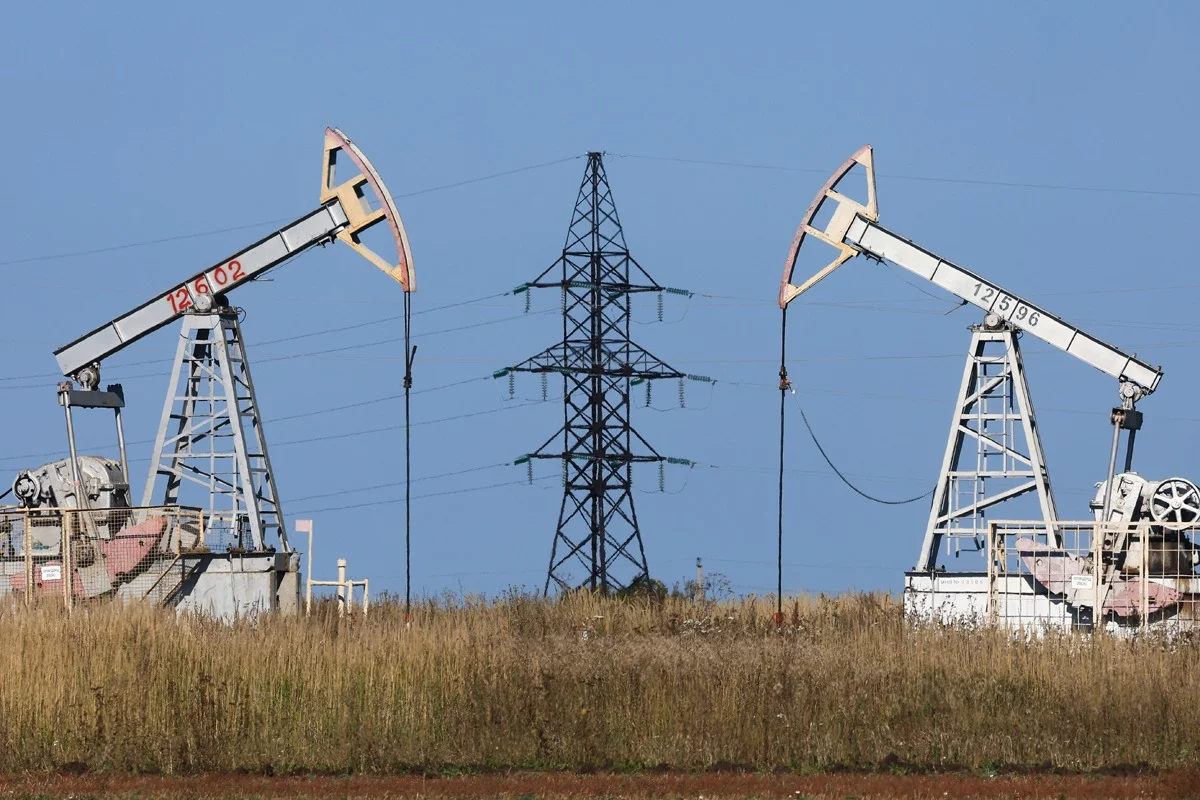
To begin with, this will mean the exhaustion of a growth model, which has formed after 2022 and reduced to pouring budget money into a series of manufacturing industries (metal products, for example) and expanding a loan for it, which to a large extent provided a general increase in GDP (and at the same time launched inflation). The Ministry of Finance will have to lay a reduction in expenses in the draft budget for 2026, taking into account the reduction in revenues from the oil and gas industry and the reduction in profits and income of all who is connected with this industry.
Plus - we will not forget that the reduction of export revenue in itself will turn into pressure on the consumer market: currencies will become less, it will become more expensive, respectively, the same thing will happen with imported goods.
Instead of falling out oil and gas revenues, the government will have to look for other sources of funds to continue their policy.
The conservative scenario of the development of events in this case suggests that the government will shift the tax burden to other sectors of the economy, compensating for the increase in taxes by improving the business climate, somehow observing the basic guarantees of property rights, refusing “nationalization” and taking measures to return foreign companies to Russia.
At the same time, a slowdown in the growth rate of budget expenditures will facilitate the Central Bank of the Russian Federation to struggle with high inflation. It will also lead to cooling in the labor market, where it is difficult to compete with the industries paid by the government in this sense to consumer sectors. Yes, salaries will stop growing, but the price increase may slow down.
If this does not happen, then the recession, which will be inevitable due to the reduction of budget expenditures, may subsequently go into protracted stagnation-without prospects for the growth of real income.
And the growth rate of the Russian Federation-economics will require high in any case-as one of the leaders of the Center for Macroeconomic Analysis and Short-term forecasting Dmitry Belousov: “On the current economic situation and some development prospects” noted in his new report “On the current economic situation and some development prospects”:
“To solve the accumulated social problems, the normalization of the reproduction of fixed capital and social institutions - the rates of economic growth should not be lower than 3-3.5% per year for 10 years. Moreover, the reserve for such an increase (in labor productivity, for example) is very large. ”
Economic lessons
The question is, what forms can the implementation of such a completely conservative scenario take?
To answer this question, you need to look back 150 years ago, when in Russia, in fact, economic growth began in its modern sense, to ask another question: what is the key problem of “launch” of economic growth for the “catch -up country”?
The fact that you have no savings for investment in the so -called Traded sectors producing goods with high added value. This is how in the Russian Empire the peasants living in natural farming, savings (in sufficient volumes) were not and could not be. Hidden in the cube for a rainy day - did not work.
But what to do?
At the macro level you need to increase the rate of profit, which will expand the possibilities of investing/accelerated development of the traded sector.
REFERENCE
The traded sector of the economy is part of the economy that produces goods and services intended for sale in the international market (export) or competing with imported goods within the country.This is all that you can sell abroad or what is competing with foreign analogues. For example:
Goods: oil, gas, machines, electronics, grain.
Services: IT development, tourism, logistics, consulting.
How is it different from an inaccurate sector?
- The inaccurate sector is that which is sold and consumed only within the country (for example, hairdressing services, housing and communal services, local public transport).
Why is this important for the economy?
The traded sector strongly depends on the exchange rate, world prices and competition, and its development often affects economic growth.
It earns currency (export helps to maintain a ruble exchange rate).
Creates jobs (for example, factories or IT companies).
It affects the welfare: if the traded sector weakens (for example, due to sanctions), the country loses income, and import prices are rising.
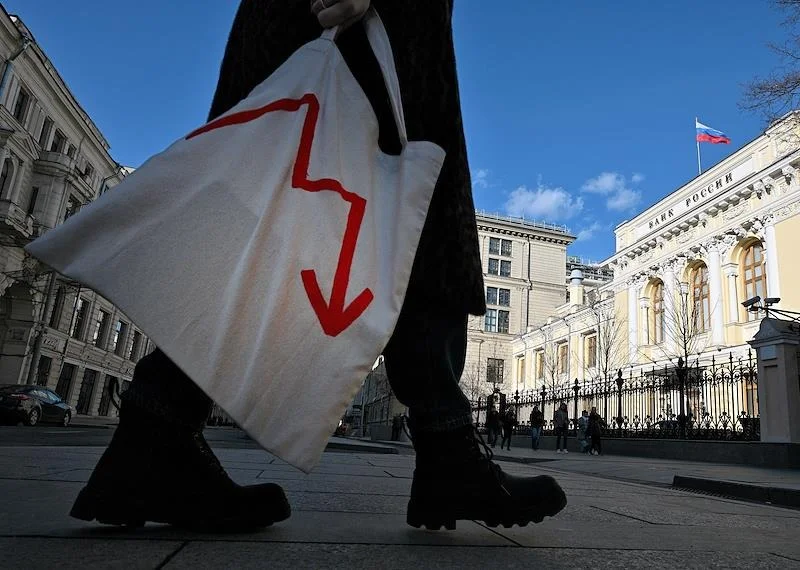
If we are talking about the economy like Sovetskaya, in which the government is a monopoly beneficiary, manager and investor, then you need to increase budget revenues. (Note, the Russian government is also fixed on this.)
How to do it? Again, from the point of view of macroeconomics, you will need to reduce the standard of living of the population in one way or another (or delay the growth rate of this level) and, accordingly, to reduce the price of labor (with a correction for productivity, i.e. Unit Labor Costs (ULC - labor costs for the production of a unit of goods).
REFERENCE
1. What is performance?Productivity is how many goods/services an employee or company creates per unit of time (for example, in an hour).
Examples:
If earlier the worker was collecting 10 phones for the shift, and after modernization of the line - 20, its performance increased by 2 times.
In IT: If the programmer used to write 100 lines of code per day, and 300 with new tools, his performance increased.
Why is this important for the traded sector?
The higher the performance, the:
cheaper production (you can reduce prices and compete in the world market);
More profit (you can invest in development or pay salaries).
2. What is ULC (Unit Labor Costs)?
ULC is the cost of labor for the production of one unit of goods.
Simply put:
If workers are paid 1000 rubles per day, and they make 10 parts, then ULC = 100 rubles/part.
If you increase salaries to 1,500 rubles. but the performance will remain the same (10 parts), ULC will grow to 150 rubles/part → production becomes less competitive.
3. How does ULC affect the traded sector?
Low ULC (cheap work or high performance):
The country can sell goods cheap.
High ULC (expensive salaries or low performance):
Prices are rising, export is sloping
If ULC grows faster than that of competitors, the country loses its market share.
Bottom line:
Performance = how much we produce during the time.
ULC = how much we pay employees per unit of goods.
The lower the ULC, the more competitive the traded sector (if we do not sacrifice quality).
If it is quite simple: we want economic growth in conditions of lack of savings and capital - at the cost of refusing consumption - we buy investments in production.
But in practice, you do not have many options for “economic policy” - and all these options have been used in Russia over the past one and a half hundred years.
1) You can introduce imported barriers or simply prohibit imports, in parallel with the maximum discovery of the country for the influx of foreign capital-as was done in the 90s of the XIX century.
Problem: such growth has restrictions. After the “external capital” builds everything that is possible (this is how the Trans-Siberian Railway was built for French money), it turns out that people are still not enough (the result of your ULC reduction policy), and the mechanisms of capital accumulation were either not created or destroyed (as happened in Russia in the 1920s).
2) In this case, you can play “price scissors”: we buy agricultural products from the peasants cheaply and sell prospectors expensive to them, that is, we reduce consumption in one of the sectors of the economy and due to this we finanize the other sector (Ivan Krylov described such a policy about “Trishkin caftan”), which, in fact, was engaged in the Soviet century in the 20s of the twentieth century.
Such a model works exactly until the moment when the peasants do not begin to reduce the performance of their economy (if you still don’t buy anything), which happened at the turn of the 1930s.
3) Then you have an option to sharply increase consumption taxation. In the USSR, this took the form of collectivization (and in the cities there were cards, normalization of consumption - from the point of view of macro it is also taxation of consumption, that is, a decrease in ULC).
Such a policy allowed Comrade Stalin to increase the share of savings in GDP almost three times - from 13% to 30% and “build industry”.
But the problem is that this card can be played once - yes, the peasants will leave the village in the cities where you will put them to conveyors,
But at some point, this human resource will end, and you get a drop in production volumes in the village (there is no one to work) with a simultaneous decrease in performance in the city (there is nothing to buy).
It would be possible to invest in agriculture - but you did not have any savings (you didn’t just reduce ULC!) And there is no capital. And this is the situation that the USSR encountered at the turn of the 1960s. The Soviet government plowed the virgin lands (did not help), raised products for products with a simultaneous increase in production standards (again reducing ULC) - that is, it tried to click again with “price scissors”, forcing the workers to buy products from the peasants expensive, and as a result received excitement in cities.
After thinking, the government of Nikita Khrushchev made a good macroeconomic decision:
Instead of replacing the work of capital, it replaced the “capital” “oil”. The influx of Nefteedollars allowed to “tear off the norm of savings from the floor”, and the income became the equivalent of capital, which in a hundred years did not work out.
Actually, oil plays this role for the “capital” for the economy now.
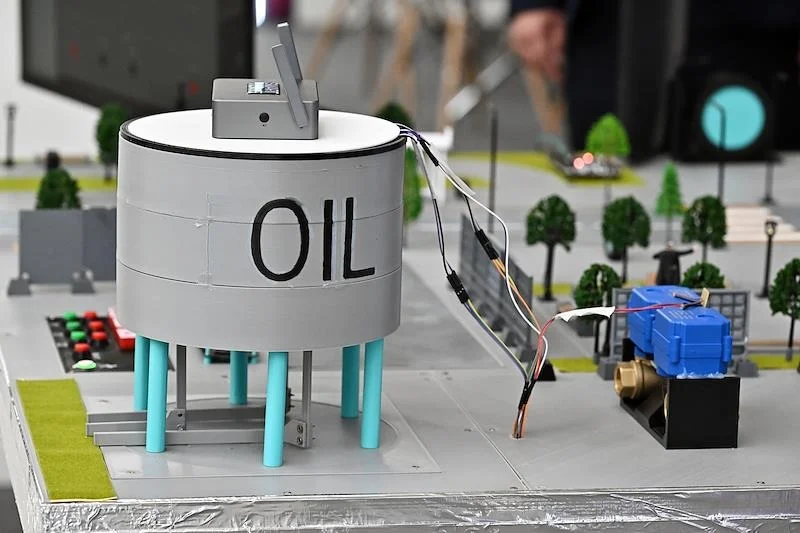
Oil as capital
And “without oil” no technology, industry, “real production” - this is all - they will not work. And if “this production” will “spin”, then you will have to “twist it” manually.
This thing exactly a hundred years ago was explained by the Soviet leaders by John Meinard Keynes himself during his visit to the USSR.
“-For industrialization, you need capital (not in the sense of money, but in the sense of machines, technology, know-how, along with mechanisms for updating fixed assets), but you do not have capital, you cannot attract it.
- Why? - his high -ranking interlocutors were surprised.
- Yes, because no one will give him ...
- Well, well, we fulfill our obligations on concessions ...
“What does these obligations have to do with it,” Keynes shook his shoulders, “concessions are a trifle, brought machines, put it, earned a little - they took it away, and capital is a different level ...
-So why not give something?
- And you look at yourself. People cannot open your mouth, they cannot influence the government, they can take away property at any second ... Well, what is the capital?
“Well, so we can handle it without your capital,” the interlocutors were offended.
“Cope if you have cheap or free work,” Keynes snapped. ”
That's the way there was a conversation there.
About fifteen years ago, the rector of the Massachusetts Institute of Technology Rafael Raif came to Russia. It is clear that for a conversation with the head of MIT they gathered a variety of science bosses, but something went wrong. Professor Reef, as they say, "did not fall into the audience." The head of MIT spoke about the democratic atmosphere of his university and the city of Boston himself, about the ability to use failures as a positive experience, about readiness for non -standard decisions. Well and so on.
And this was not quite what Russian partners wanted to hear. They were deeply uninteresting to discuss the democratic atmosphere of Boston, and Raif began to ask purely specific questions: “What technologies should be bought”, “How many money”, “What is the exit”, “How fast” ...
I understand, Ryf said, you need milk without a cow. But so, unfortunately, it does not work out.
Reef’s phrase about milk and cow is deeper than it might seem, and requires explanation.
«Молоко» — это капитал, а «корова» — механизмы его создания и накопления, и если страна на протяжении столетий испытывает нехватку этого самого капитала — значит, в этой стране нет таких механизмов, и неважно, что там написано в законах.
Капитал — такая штука, которая знает — может он сохраниться или нет, и если нет — значит, и создаваться, и накапливаться он не будет.
Капитала нет — но есть нефть, это и есть то самое «молоко без коровы», которое позволяет компенсировать нехватку капитала и снизить нагрузку на труд.Поэтому идея о том, что вот, мол, не будет дорогой нефти — начнутся какие-то реформы в пользу людей, идея очень привлекательная психологически, но мы помним, что в предыдущий раз, когда здесь сильно подешевела нефть, то все «реформы» — с точки зрения макроэкономики — были в первую очередь про то, как снизить цену труда, те самые Unit Labor Costs (ULC), затраты на рабочую силу для производства единицы товара.
И их снизили (ликвидировали сбережения) через инфляцию, и снизили стоимость труда по отношению к производимым товарам — именно здесь и появился избыточный капитал для инвестиций, а как только подорожала нефть — эквивалент внешнего капитала, так и нагрузка на труд ослабла, и начались «сытые нулевые». Но еще раз:
сытые нулевые начались не просто потому, что подорожала нефть, а потому, что хозяева страны, получив в свои руки то самое «молоко без коровы», снизили уровень эксплуатации труда. А если нефть подешевеет, то начнут они с того, что снова «нажмут на труд».
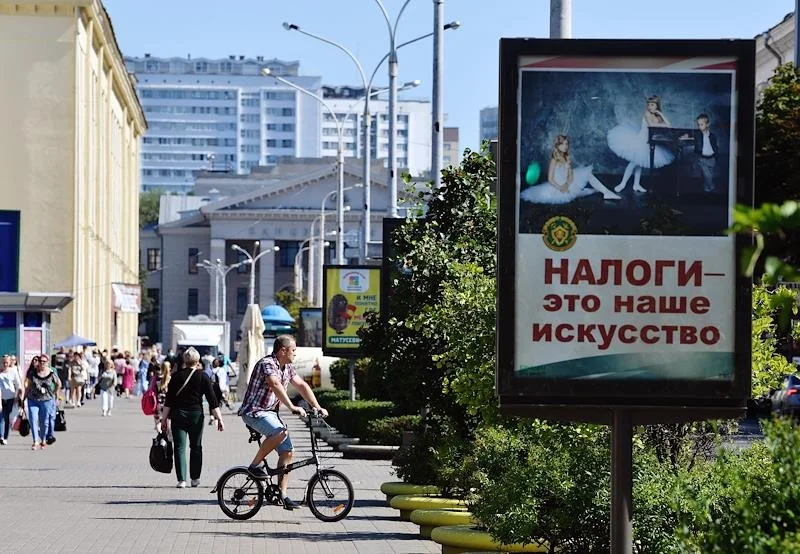
По заветам красных кхмеров (представьте себе!)
Мне могут возразить, что сейчас «нажимать на труд» может быть затруднительно: человеческий ресурс сокращается, безработицы в стране нет, как нет и крестьянской молодежи, которую можно заставить маршировать с лопатами на плечах под обещания светлого будущего, но есть горожане средних лет, которым даже правительству приходится за все платить.
Но макроэкономика отвечает, что «нажимать на труд», т.е. снижать затраты на рабочую силу для производства единицы товара, в городской экономике можно по-разному, РФ-начальство этим успешно занималось в «тучные нулевые», кстати, да так ловко, что кроме макроэкономистов на это и внимания никто не обращал
Самый «рыночный» вариант такого нажима — это ослабление/задержка укрепления реального обменного курса рубля: путем накопления валютных резервов, т.е. долгов стран — торговых партнеров, стерилизованного бюджетным профицитом (да, всех этих «фондов благосостояния». И где эти фонды? Кто помнит, как там они помогли вашему благосостоянию?).
Да говорили-то по поводу фондов совершенно другое. Но одно дело говорить, другое — действовать. Кстати, кто помнит, когда власти в нулевые начали собирать «фонды» — в аккурат тогда, когда валютный эквивалент зарплаты, столичной во всяком случае, начал подбираться к магической сумме в $1000 — и около этой суммы средняя в РФ зарплата с тех пор так и пляшет. Why?
Потому что, видимо, это и есть ограничитель части валютной выручки, которую власть готова отправить на потребление. Тысяча долларов на 70 миллионов занятых — вот 70 миллиардов долларов, максимум того, что начальство готово отдать людям.
Пусть даже $100 млрд — это всего четверть от экспортной выручки, не больше.
Другой вариант — вы удивитесь — это повышение депозитных ставок (да-да). Expensive? Ну и что, важнее: накопление депозитов означает перенос вашего потребления в будущее, а в будущем этого потребления может и не случиться.Вспомните, что там случилось со вкладами в сберкассах СССР?
Вариант три — сокращение бюджетных расходов, чем власти успешно занимались все десятые годы. Да, то самое «денег нет, но…». Это то же самое сжатие ULC.
Дальше — по мелочи, например, изменение/сокращение/ ассортимента товаров и снижение их качества. Раньше, отработав N рабочих часов, человек мог купить немецкий автомобиль, а теперь, отработав N часов, он покупает китайский автомобиль. (Вообще любые ограничения потребления — это и есть нажим на труд с точки зрения макроэкономики; это значит, ты не можешь распоряжаться результатами своего рабочего времени.)
Всевозможные ограничения в сфере самодеятельных подработок — все эти реестры, учеты, списки «самозанятых» и т.п., это все механизмы ограничения реальных доходов, закрытия возможностей и сокращение числа источников заработка. Опять же на макроуровне это будет означать увеличение объемов свободной рабочей силы:
не дали тебе зарабатывать самому — пойдешь туда, куда будет приказано (да еще и побежишь, расталкивая соседей локтями, чтобы не опоздать).
But that's not all.
«Нажим на труд» может потребовать запуска механизмов принуждения к этому труду, и таким механизмом принуждения может стать «семья» (которая сейчас всячески продвигается). Кто-то должен будет «работать за троих», и эти «трое» заставят его работать так, как это не может сделать ни один надсмотрщик, ни один лагерный бригадир. Собственно, результаты такого «давления семьи на труд» мы уже видим, просто не хотим замечать.
Пятьдесят лет назад красные кхмеры в Камбодже выгнали горожан на рисовые поля, что с точки зрения макроэкономики означало перемещение рабочей силы из сектора с высокой производительностью в сектор с низкой производительностью, и обернулось сокращением реального потребления в целом.
Ну, так сейчас мы наблюдаем по большому счету то же самое: уверенное перемещение городской рабочей силы в низкопроизводительные или вовсе непроизводительные с точки зрения потребительской экономики сектор А. И ничего, кроме бурного восторга получателей выплат/пособий/повышенных зарплат, не наблюдаем.
Но за рост доходов занятых в этих секторах расплачивается все остальное население (а не бюджет, кстати) — расплачивается через необходимость финансировать свое потребление по выросшим ценам.
Если не сокращать свое потребление (высвобождая ресурсы), то людям приходится брать кредиты, увеличивать свою трудовую нагрузку и искать возможности для дополнительного заработка, т.е. увеличивать предложение труда, и на макроуровне снижая те самые затраты на рабочую силу для производства единицы товара (ULC, Unit Labor Costs).
Чего, собственно, начальство от людей и ожидает. Снижение нефтяной выручки оно обязательно попробует компенсировать, сделав так, чтобы люди работали больше, а потребляли меньше. А вот что из этого получится — нам еще предстоит узнать.