
Translated material
How the "Easter truce" ended
Ukraine accuses Russia of more than three thousand shelling and other violations. Kyiv is ready to answer silence, Moscow does not make plans
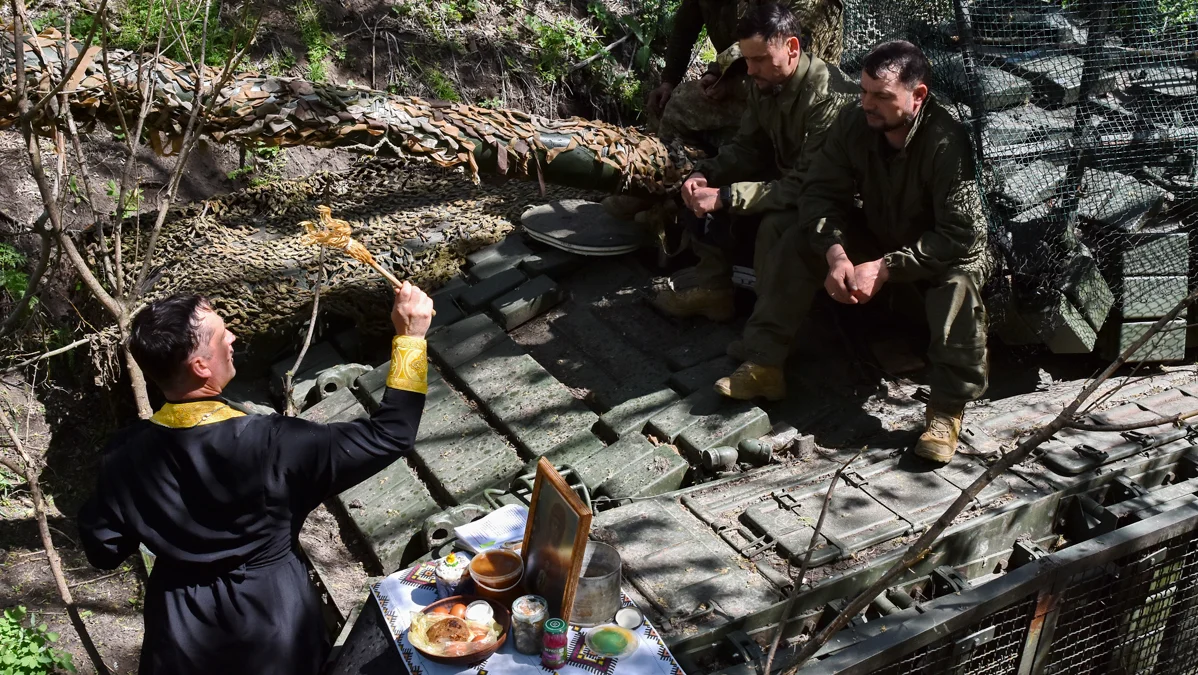
Military Capellan Sergey serves near the tank and its crew during the celebration of Easter near the front line in the Zaporizhzhya region, Ukraine, April 20, 2025. Photo: press service of the 65th separate mechanized Brigade of the Armed Forces / EPA
The Easter truce, announced by Russia unilaterally, ended. Throughout the weekend, the parties accused each other of violating the agreements. The Kremlin said that they did not intend to continue the ceasefire, while Vladimir Zelensky called on Moscow and further refrain from long -range strokes.
How the "Easter truce" has passed-in the review of the "New-Europe".
Updated
Vladimir Putin called the proposal about the moratorium on strikes on civilian objects “the subject for a thorough study, perhaps in two -way”:“We will analyze all this and will make the relevant decisions.”
“The fighting resumed. We said this from the very beginning of the truce. We always relate to a truce positively, so we made such an initiative. [...] We hope that representatives of the Kiev regime also relate to these, ”he said .
Spokesman Dmitry Peskov specified that we are talking about the readiness to discuss a moratorium with the Ukrainian side.
Where did Ukraine record violations from Russia?
What kind of "Easter truce"
Vladimir Putin announced the Easter truce on April 19, at a meeting with the head of the General Staff Valery Gerasimov. The Russian side promised to stop all the fighting from 18:00 Friday, April 19, to 00:00 Monday, April 21.
Vladimir Zelensky called this proposal “another attempt by Putin to play with the lives of people,” but later actually agreed to him. In addition, the President of Ukraine recalled that the initiative of the 30-day complete and unconditional ceasefire has been left unanswered by Russia for more than a month, and added that any agreements will be executed on a mirror-based basis.
Despite the statement about the termination of hostilities, the parties from the very beginning accused each other in violation of the ceasefire. So, as Zelensky noted on April 20, Russian troops “are trying to create the impression of a ceasefire”, but do not stop attempts to advance. “Either Putin does not fully control his army, or they only need a profitable PR,” he said.
By the morning of Easter, according to the Ukrainian president, the Russian army tried to create a "general impression of the ceasefire", but made "individual attempts to advance and inflict loss to Ukraine." Ukrainian troops “respond as the enemy deserves this,” he added then.
As Zelensky said after a truce, referring to the report of the Commander -in -Chief of the Armed Forces of the Armed Forces of the Armed Forces of the Armed Forces of the Armed Forces of the Armed Forces of the Armed Forces of the Armed Forces of Alexander Syrsky, in total, Russia violated the silence regime 2935 times. The army of the Russian Federation made the largest number of shelling and attempts to storm in the Pokrovsky direction, also a truce was not observed in the Kursk direction, he added.
In particular, on the morning of April 20, according to volunteer Yevgeny Tkachev, who evacuated civilians, the Russian army struck three drones to the village of Zarya in the Donetsk region. One woman received a fragmentation wound.
In addition, according to the 66th separate mechanized brigade of the Armed Forces of the Armed Forces named after Prince Mstislav Brave, the army of the Russian Federation used the silence regime to equip routes for the passage of its heavy equipment in the Donetsk region. The Armed Forces of Ukraine argue that on April 9, the Ukrainian military destroyed the KRVD complex (installation for deploying temporary roads based on KAMAZ.-Approx. Ed.), And because of this, the Black Stallion river in the Donetsk region was blocked. For this, the RF Armed Forces involved more than ten soldiers and a specialized machine, added there.
On the night of April 21, air anxiety was reported because of Russian drones in the Kiev, Odessa, Dnipropetrovsk, Zaporizhzhya and other areas, and the infrastructure object was damaged in the Cherkasy region. The Air Force of the Armed Forces of Ukraine said that on the same night the Russian troops attacked the Ukrainian regions with 96 drones and three missiles: so, in the Kherson region they struck the Onyx anti-ship winged missile, and the Nikolaev region was attacked with two X-31P anti-radar missiles.
What does the Russian side accuse Ukraine?
The Ministry of Defense of the Russian Federation also accused the Armed Forces of violation of the agreements. According to the Russian department, during the weekend of the Armed Forces of Ukraine, 444 times fired at the positions of the Armed Forces of the Russian Federation and carried out 900 strokes with drones. Ukrainian troops, as the ministry said , also attacked the border areas of the Bryansk, Kursk and Belgorod regions, as a result of which "there are dead and wounded among the civilians."
The occupation authorities of the captured Ukrainian territories also talked about a violation of a ceasefire from Ukraine. In particular, in the morning of April 20, the “chapter” of the Kherson region, Vladimir Saldo, stated that the Ukrainian military took attacks on several settlements of the region. There was no information about victims and destruction. At the same time, he admitted: "In a number of sites - silence, shelling is not carried out."
In addition, the “DPR authorities” reported the shelling of Gorlovka in the morning in Easter: at about 6:30, according to them, “four NATO caliber shells were released”, two inhabitants were injured . It was also reported about the impact on the occupied Donetsk.
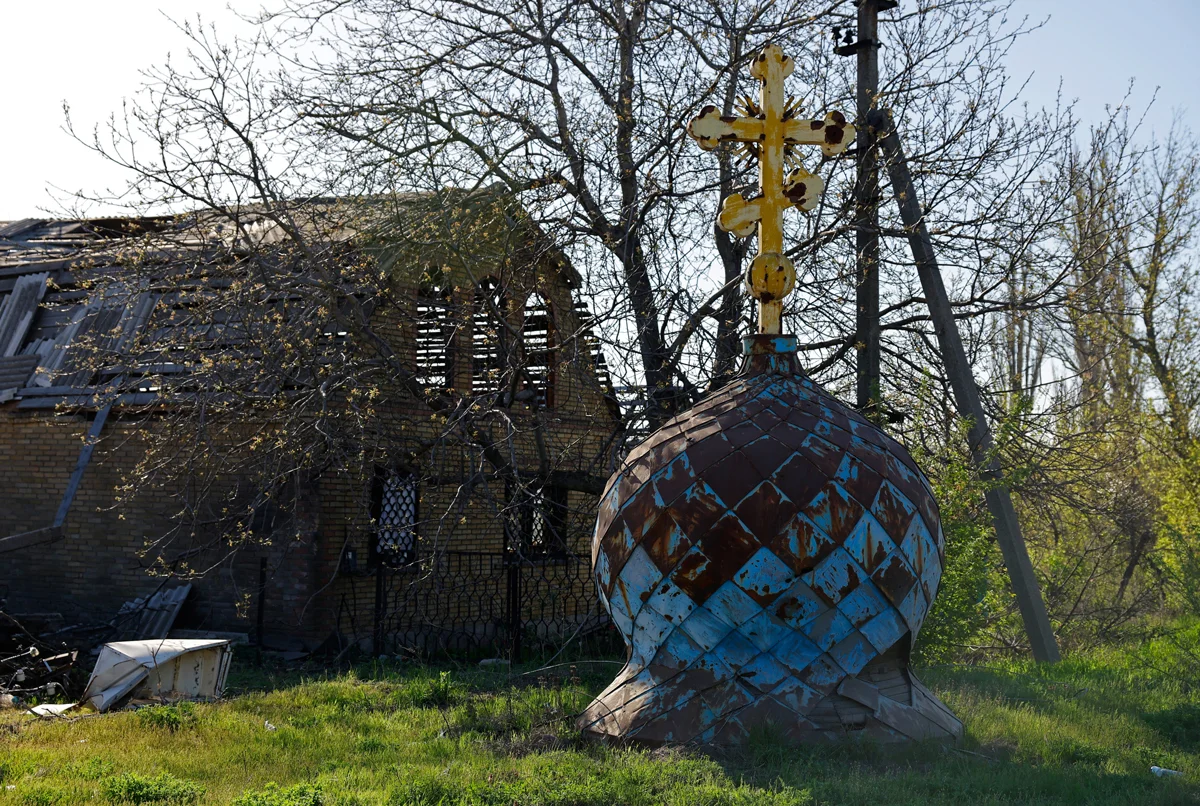
Why are the consequences of a short -term truce not clear?
From about 22 hours on April 19, the Air Force Telecase channel ceased to report air alarm. In addition, on this night, the Armed Forces of Ukraine did not talk about the movements of the Shakud drones, the launches of cabbage (guided air bombs) or missiles. Also without air anxieties, the night was on April 20, and Saturday itself.
In the morning of April 21, Zelensky again called on Moscow to extend the ceasefire - at least in terms of ban on long -range strikes. This format of silence is “easiest to continue”, Zelensky noted. He proposed to abandon any attacks on civilian infrastructure with long -range drones and missiles - at least 30 days with the possibility of extension.
Zelensky promised that Ukraine "will continue to act mirror: we will answer silence, we will respond to Russian blows."
The Russian side has not reacted to this proposal. However, on the eve of the Kremlin spokesman Dmitry Peskov told the state uniforms that Putin did not give a team to extend the "Easter truce." After that, neither the Kremlin nor Putin personally commented on the situation.
As the Russian military also admitted , there were places where a truce was respected: for example, near Soledar. However, as the founder of the investigative project Conflict Intelligence Team, Ruslan Leviev, said in a conversation with the rain, according to his data, there was no place for the entire length of the front, where complete silence came, but not a single civilian was dead and “in places was directly quieter”:
“The parties used the aircraft less, the air bombs were used less, but the artillery continued to shoot almost everywhere, and the battles went. <...> Judging by both parties, [among the civilian] there were seven wounded. Basically, they were injured from drunks, not from missiles or from artillery, ”he added.
The US State Department also stated on Sunday that he would welcome the extension of Easter ceasefire. “We saw the announcement of President Putin on a temporary ceasefire in connection with Easter. We still strive to achieve a complete and comprehensive ceasefire, ” said the representative of the State Department.
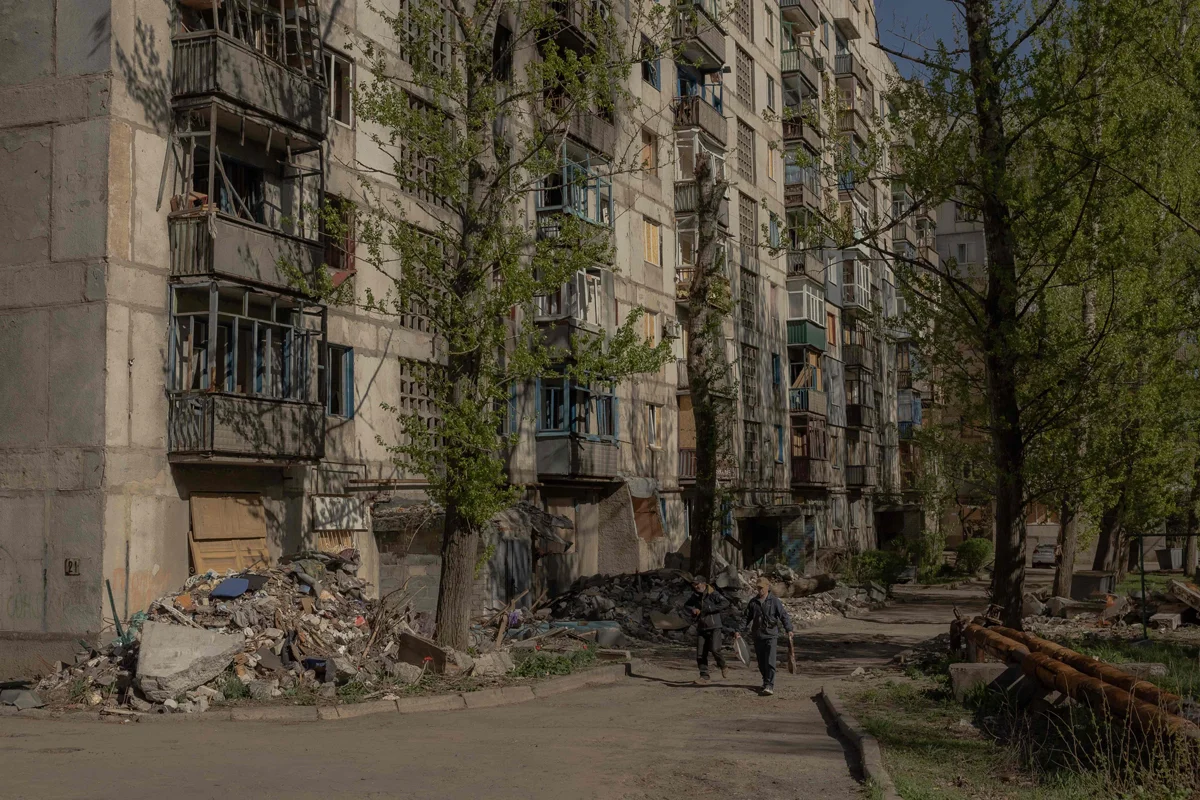
At the same time, US President Donald Trump spoke about a peaceful settlement and stated that he was expecting a “transaction” in the coming days. “I hope Russia and Ukraine will make a deal this week. After that, both countries will begin to conduct a big business with the United States that flourish and earn a fortune, ”he wrote on his social network Truth Social.
What kind of “transaction” we are talking about, Trump did not specify. Moscow and Kyiv have not yet commented on the proposal of the US president. At the same time, earlier, April 17, Trump said that he gave the Kremlin a term until April 20, that is, in three days, to a decision on the ceasefire. In response to this, Peskov stated that he expects from Ukraine and Europe “manifestations of orientation in the search for peaceful settlement”.