
Translated material
Antisystem pontiff
Pope Francis died the day after Easter. He prayed for the world and believed in the power of dialogue - even when no one heard him
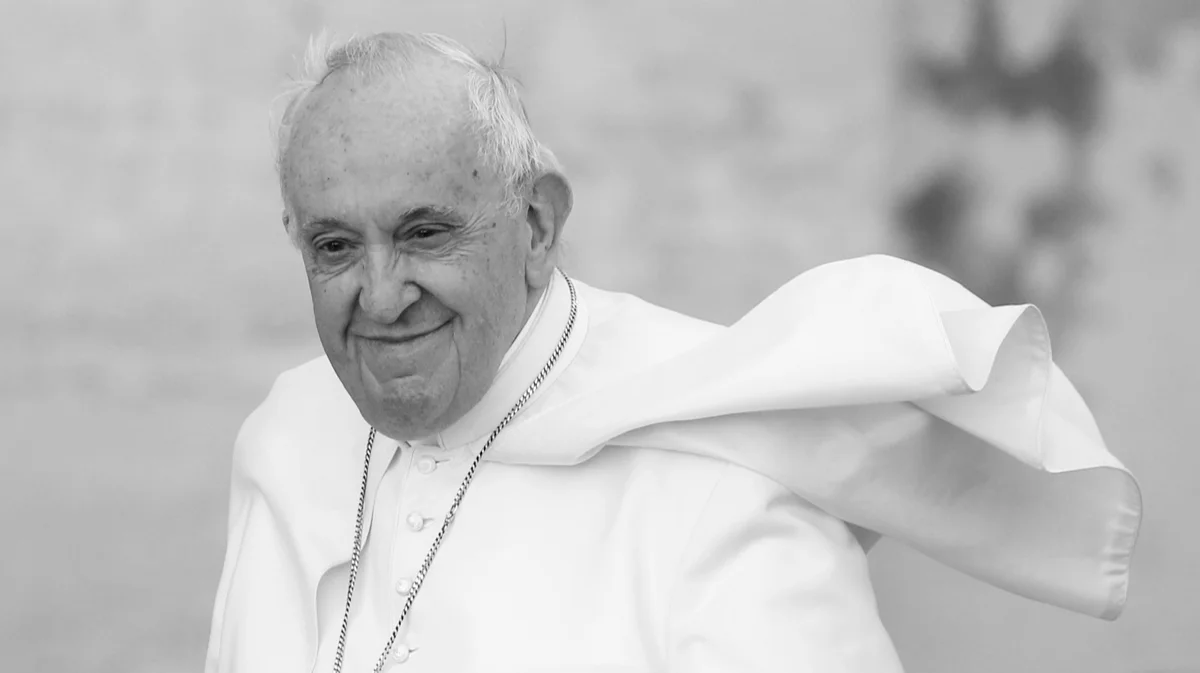
Pope Francis. Photo: Fabio Frustaci / EPA
April 21, on Easter Monday - the day when Christians celebrate the first morning after the resurrection of Christ, the pope of the Roman Francis died. The pontiff was 88 years old. "New Gazeta Europe" tells how he remembers.
Papa Francis went down in history as a pontiff first-prosecutor, almost a revolutionary. Firstly, precedents, when the new dad occupies the throne with a living predecessor, in the history of the Catholic Church there are only a few. Secondly, the Catholic Church has never headed the Jesuit-a pupil of the order with very specific philosophy and spirituality. Thirdly, the Roman high priest was a native of the Western hemisphere for the first time, moreover, from Latin America, the Catholic tradition of which is very different from the classical European one. It was in this environment in the twentieth century that the left theology was radical - “theology of liberation”, the postulates of which Francis often expressed, shocking the Roman curia. He positioned himself as an “anti -systemic” dad:
Throughout the pontificate, he continued to live in a hotel, did not like the palace and magnificent ceremonies, apologized to LGBT people and emigrants, traveled on a modest fiat, wore sneakers, ate simple food with the poor and so on.
Of course, the ill -wishers saw in this “populism” or even “poserity”. But in fact, Francis had a spiritual background, which became a habit: in absolute simplicity, he lived in Argentina, being a cardinal and the head of the national conference of Catholic bishops.
He was an older child in a large family of Italian emigrants who fled from the Mussolini regime and found a shelter in Buenos Aires. In this wonderful city of Horge, Mario Bergolo, the future Pope Francis, was born on December 17, 1936 and spent almost his whole life before the election to the papal throne. Having received secondary specialized education in the specialty of a chemist-technologist, he worked in a laboratory for quality control of food. According to rumors, his decision to go to the seminary at the age of 21 was the result of an unrequited love for the beautiful girl Amalia. In the first year of the spiritual school, Horcha Mario joined the Jesus Society (the Order of the Jesuits), which helped the future pontiff get a brilliant education. Already at the age of 25, he began to teach the history of literature and psychology in educational institutions of the Argentine Jesuit and soon received a degree in philosophy.
On the eve of his 33rd anniversary (“Age of Christ”!), In December 1969, Bergolo was ordained to priests, and then receives the appointment of the professor of the Theological Faculty of Buenos Aires and the rector of the Jesuits in Saint-Miguel, and then the rector of the Jesus Society in Argentina. The political history of this country in the twentieth century was very complicated, it laid an imprint on the character of Francis and its political tactics. He had to negotiate with the dictatorial regimes of Peron, Viola, Galteriri, and after strengthening democracy in Argentina, in 2005, they even opened a criminal case against Bergolo on suspicion of involvement in the abductions of opposition priests in the era of the board of Peron. The case was closed only after the papal intronization of Francis.
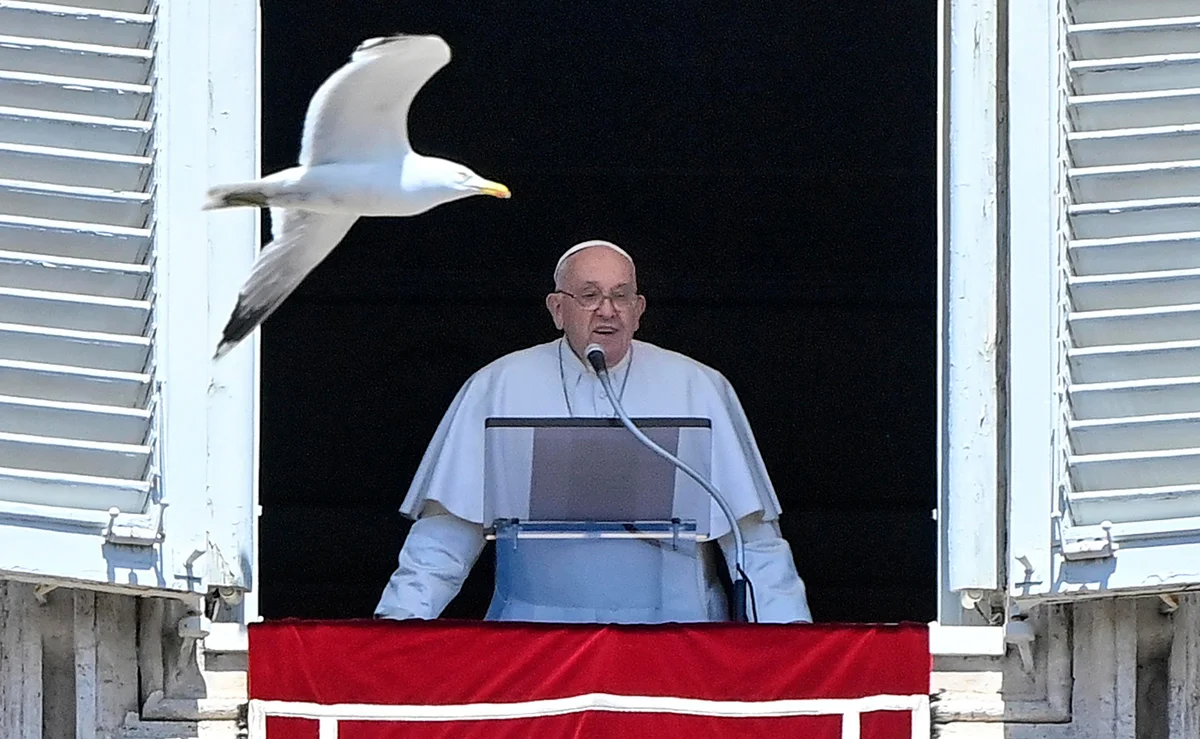
In May 1992, John Paul II appoints his future successor by the Vikar (auxiliary) bishop of Buenos Aires Archbishop. Five years later, after the death of Cardinal Koarrachino, Bergolo becomes the ruling archbishop of this archbishop, and soon the order of the Catholics of the Eastern rite (mainly Ukrainians), of which there are more than 300 thousand in Argentina. (It is curious that the successor of Archbishop Jorge Mario was the order of the order of Svyatoslav Shevchuk, the current Primate of the Ukrainian Greek Catholic Church, and Francis himself admitted that he read part of his cell prayer rule.) Already in 2001, Archbishop Buenos Aires became the right to participate in the choice of dad. On the Conclave closest after this, in 2005, when the dad was elected Joseph Ratzinger (Benedict XVI), Bergolo became his main competitor , gaining 40 votes out of 114 in the penultimate round of voting.
Finally, when Benedict XVI for various reasons, which is now hard to talk about, resigned, on March 13, 2013, Bergolo became the 266th Pope, taking a name in honor of Francis of Assisian.
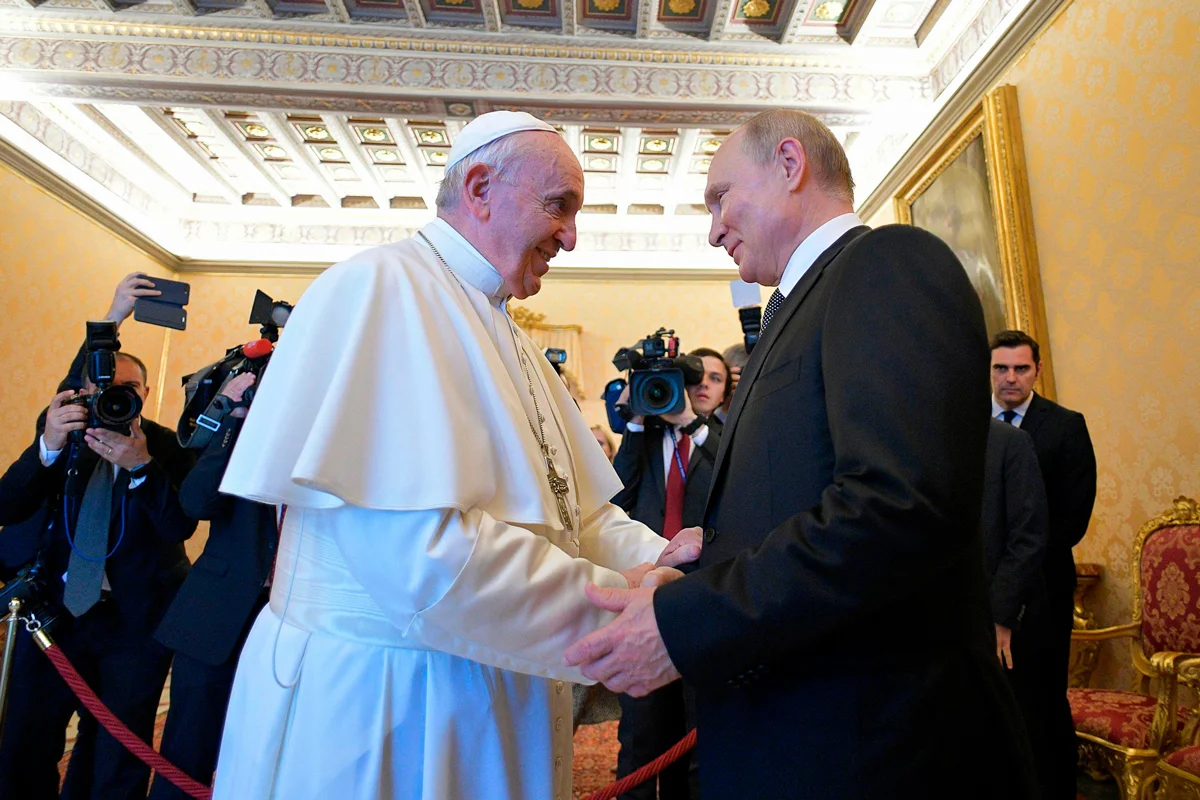
During his meeting with Putin in June 2015, when a “hybrid war” was going on in the Donbass for a year, the Crimea was annexed by the Russian Federation, Francis gave him a medallion with the image of an angel-peacemaker, which caused the Association Vatican with similar gifts that Pope Pius XII passed to Mussolini and Hitler. The first encyclists (program documents) of Francis were withstood in the spirit of the liberal Latin American theology and were devoted to decentralization of church power, migrant rights, and ecology; Later he began to appoint women to leading posts in the Roman curia and approved the "extra -service" blessing of same -sex couples.
At first, it seemed that the papa-Jesit would get a breakthrough in relations with the Russian Orthodox Church, which within a quarter of a century-after establishing the diplomatic media of the Holy See and the Russian Federation-torpedoed the visit of the Pontiff, the head of the city-state of the Vatican, to Russia. In February 2016, his “Historical Meeting” with Patriarch Kirill was held at the Havana International Airport-the first summit in the history of the heads of the Russian Orthodox and Roman Catholic churches. The rapprochement with the Catholics was the main covenant that his spiritual father, the Soviet Metropolitan Nicodemus (Rotov), who had a reputation as a secret cardinal and who died in 1978 at a dad’s reception, left Cyril. According to the results of the Gavana meeting, a streamlined, but quite ecumenical declaration was signed, which proclaimed a joint struggle of the two churches against persecution of Christians - primarily in the Middle East. Patriarch Kirill was so inspired by his “breakthrough on the Vatican Track” that he refused to send the ROC's delegation to the Ladoslavl Cathedral in the summer of the same year, speaking in the sense that “we are without the Greeks [of the main participants in the cathedral] we will solve everything.” This demarche led to the fact that the first in honor in the Orthodox world, the Patriarchate of Constantinople regained jurisdiction over the Orthodox Church of Ukraine (PCU), canceled the decisions of the 17th century, and provided this church Autocephalus (independence). The Russian Orthodox Church announced this “invasion” to its territory and began to actively promote anti-Ukrainian rhetoric, preparing the “spiritual-historical” soil for “sucker”. The next conversation of Cyril and Francis took place already in March 2022 in video conference mode and left a heavy sediment in the pontiff's soul.
As he later told reporters, about 20 minutes Cyril read on a piece of paper some reason to attack Ukraine, after which Francis told him: “Brother, we are not state clerks, we cannot use the language of politics, but the language of Jesus.”
Judging by the subsequent three years, Gundyaev did not hear Bergolo, and the expression of the latter about the head of the Russian Orthodox Church was the meme: "Altar boy [servant] Putin."
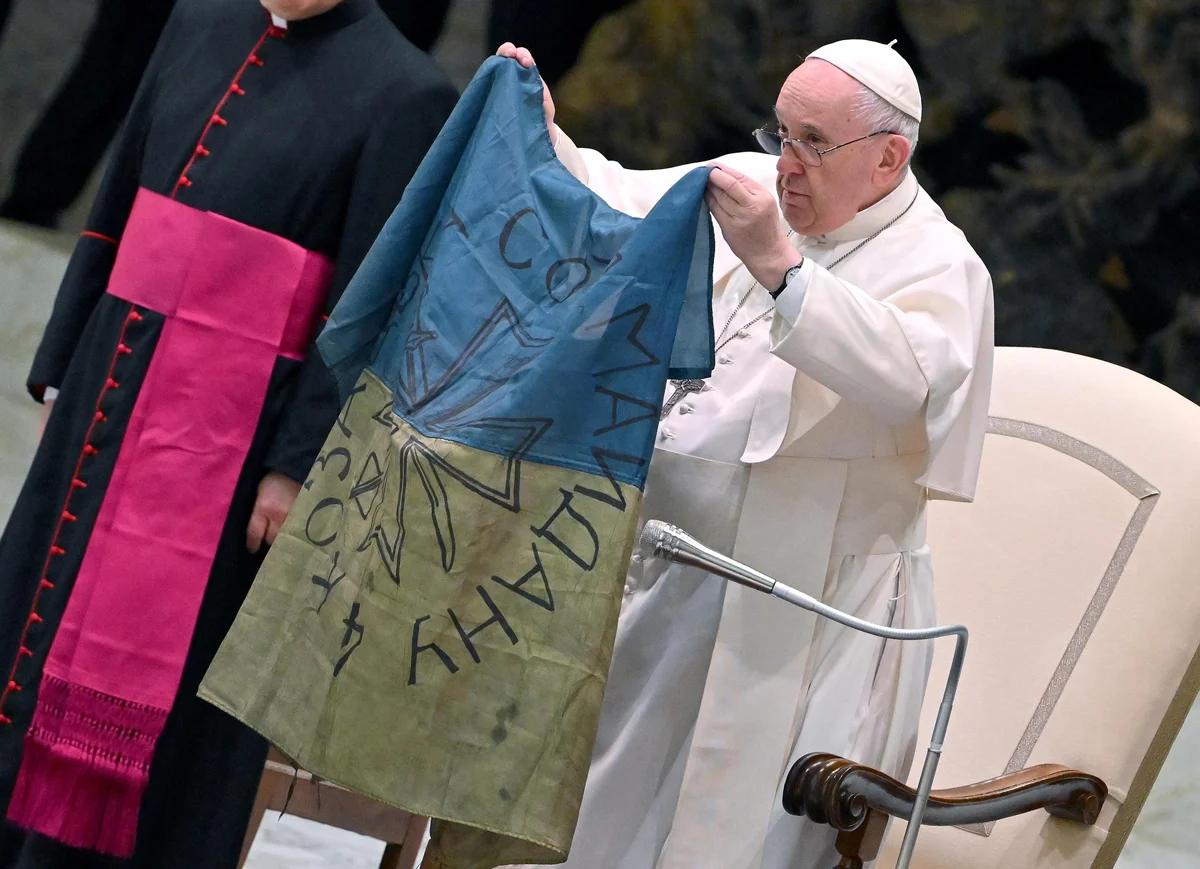
However, the statements of Francis in the “Svo” era fit into the heading “Not everything is so unambiguous” - it was not for nothing that the Vatican was not awarded the inclusion of “unfriendly states” in the Russian list. On the one hand, dad constantly pronounced with sympathy for the long -suffering people of Ukraine, which he handed the Mother of God, condemned crimes in Bucha and the destruction of Mariupol. On the other hand, in November 2022, Francis assured journalists that “the Russian people are a great people, this is cruelty [ during“ Switch ”. - approx. L.F. ] Mercenaries ... It is enough to recall Dostoevsky, ”and in August 2023 he instructed the participants in the Day of Catholic youth in St. Petersburg:“ You are the heirs of the great Russia ... that empire - a large, educated, great culture and great humanity. ” Finally, on March 9, 2024, in an interview with Swiss television, the leader of the Catholics called on Ukraine to “courage to raise the White Flag” and accused NATO that it “barking at the gates of Russia”, provoking it to the attack. Of course, in Ukraine (and in many Western countries), all this was perceived as a banal repetition of the propaganda cliches of the Kremlin.
It seems that the papation of the pope’s position is not in any special sympathies to Putin's Moscow. This is a special case of his “anti -systemicity”, if you like, “leftist”; He does not want to keep up with the West, even when he is right. The presenter of the conservative international Catholic Canal Rush Limbo once called Francis a “pure Marxist”. The Western press often contrasts the images of Argentinean Francis and Pole John Paul II, who was absolutely irreconcilable to imperial aggression, which was emanating from the USSR in his years, and willingly supported Ronald Reagan's narratives about the Empire of Evil. John Pavel II, now considered to be the saints, and Francis came from the opposite poles of the Catholic world and, accordingly, in the opposite way, understood the “theology of liberation”: the first as the liberation from the dictatorship of the atheistic totalitarianism of the Soviet empire, the second - as the destruction of the unfair world of capitalism with its dominance “golden billion”.