
Translated material
Lay out wolf
We have Altai cinema! In the MMKF program - the premiere of the Brutal Altai movie Epos "Wolves"
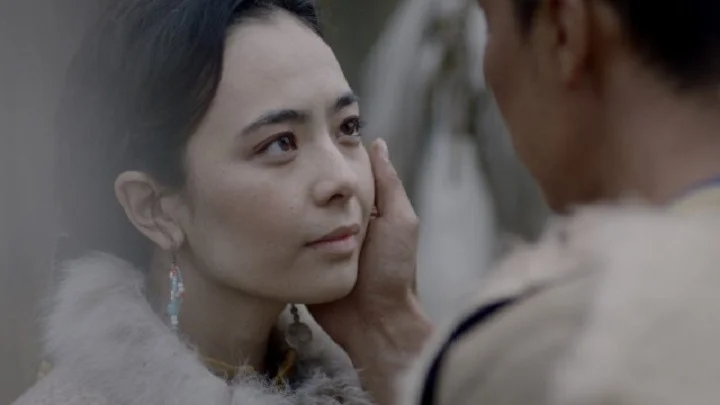
Frame from the film "Wolves"
The phenomenon of Yakut cinema has already become part of the world film space. Altai cinema quietly announced itself with short films, a modest but expressive picture of the “path” of Mikhail Kulunakov, which tells the story of one Altai family, where her husband is obsessed with the idea of cutting the path through the mountains. How obsession destroys human ties.
And the same Mikhail Kulunakov took off the brutal ethno-tragedy "Wolves". In the original story, he invented the national Altai mythology, which has a lot in common with the Yakutsk (for example, the coexistence of the three worlds: heavenly, earthly and underground), but there are also their perfumes, the first subjects, folklore heroes and legends that are partly preserved. One of these stories Mikhail Kulunakov was told by his grandmother. She told the scraps that he connected in one narrative.
Once an influential Bai, a landowner Kutus, decided to kidnap Kymyskai, the bride of the herd, poor Tokne. The bound girl is taken away by force. They accustom to the customs of a new house. After a short time, she will still run away. Together with Tokne, they will begin to live behind the ravine, to educate two sons (the eldest - from Kutus, the youngest - from Tokne). But the grains of enmity are sown. The revenge of the offended bai will be spent by force, to grow with irreversible tragic events, into which relatives and fellow villagers will be drawn.
Gradually, revenge swells, grows into a bloody theater. After the people of Kutus cut the cow tokne, and the cow's legs are thrown to his yurt, the reckless nephew of Tokne will figure out how to answer. At night, he and his friends will attack the big Otaru Sheep Kutus. They will kill one sheep after another - and so half of the Otara. And in order to take away suspicion from yourself, not only cut, but tear the carcasses like wolves. And howl with wolves. And become wolves.
The authors say that the film was shot according to the real events of the 19th century, which occurred in the vicinity of the village of Kaspa, Shebalinsky district and formed the basis of the historical novel of the Altai writer Kyuga Telesov “Katun in the spring”. Perhaps the director’s grandmother knew about the traditions transmitted from mouth to mouth.
But this whole story, in which romantic love, and the death of many characters, and the connection with totemic ancestors - seems to be a protomph. The legend is out of time, but tightly tied to the space of these mountains, hollows, and open spaces.
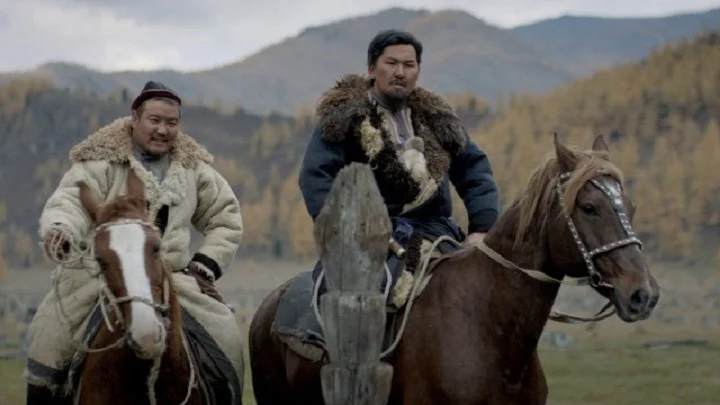
In the first part of the film, the events unfold slowly, with a ranking step, as in a tale. But gradually, from about the middle, an almost fabulous cute story turns into a terrible thriller, almost a horror. Yes, it is the national horror. How the sheep is torn, and the faces of people are sprayed with blood, as in punishment they are trampled by the hooves of one, they will cut the other. There will be an attempt by suicide, and cruel executions, and hunting ... for people, and one unexpected salvation.
The motive of the wolves is key here. People are worse than wolves, because they are ready to destroy each other not for survival. But for the authors, real wolves are children. Those very wonderful boys, the sons of Tokne and Kutus, whom mother affectionately called "luster".
Grounding in hatred, even if they survive, most likely, will cease to be people. These children are a harbinger of future disasters.
Unlike discreet, with the minimum budget of Kulunakov’s debut film “Trail”, “Wolves” - colorful, picturesque, with a scale - Epic.
Hydillic inhuman beauty The world of nature: green and ocher forests that covered mountains, crystal clean lakes, white cover. Olga Kulunakova’s camera seems to connect the mountain landscape with the sky. There are no gaps in this harmony. This paradise is opposed to gloomy, hopeless events and sins that a person is capable of. His immoderate anger and hatred. Inability to forgive. No, he does not deserve this beauty.
The design in the film is emphasized decorative. Elegant women's costumes - silk and fur, with ornaments, elegant buttons, glass, beads. Men have handmade needles, solid leather shoes. Folk festivities, male fights.
And a separate line - about the soundtrack of Azula Tadinov. The music connects the ancient motives with a modern sound, singing and crying a bowing voice-something like an ancient Morinhur-with electronics, plus a variety of percussion, catching up and “warming up” an action that imitates either deaf, then heavy horse stress.
The work is certainly bright. Mikhail Kulunakov told reporters that he felt obligated to his ancestors, primarily his grandmother, she did not accidentally tell him these legends. He is simply obliged to convey them to us.
More about the cinema
Larisa Malyukova leads a telegram channel about the cinema and not only. Subscribe here .