
Translated material
Or maybe he's crazy?
The psychotherapist is about the behavior of dictators and those who lead them to power. And the matter, for example, is not in Trump, just fascism lives in every
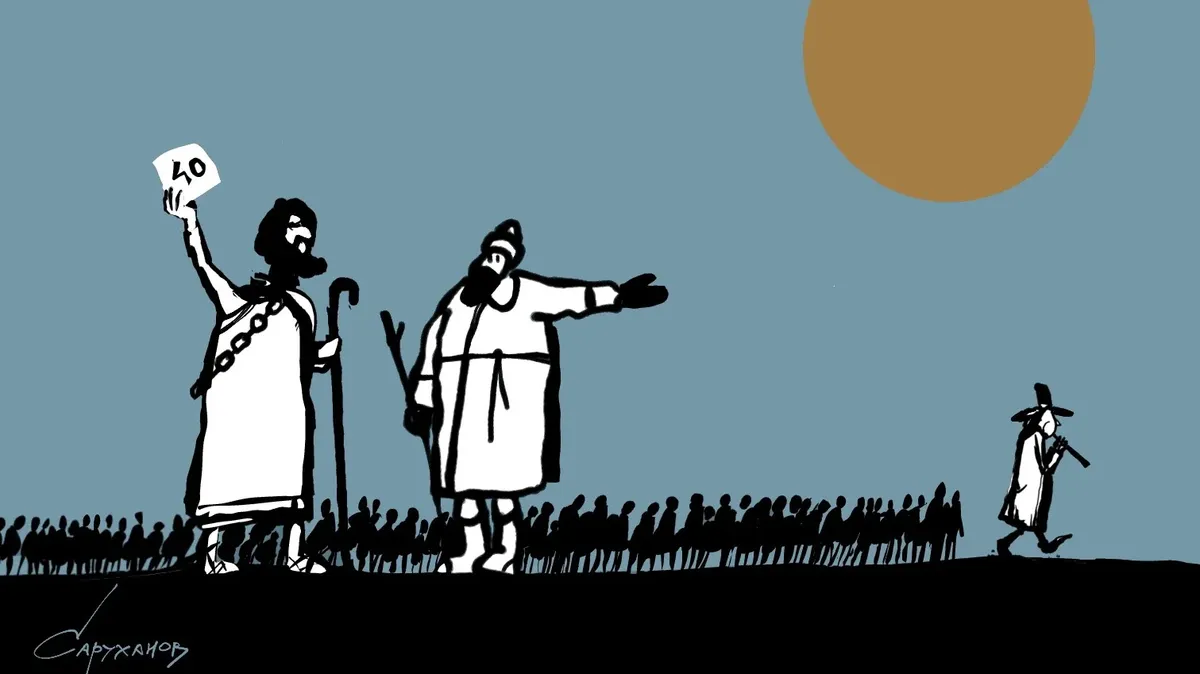
Illustration: Peter Sarukhanov / "New Gazeta"
In the history of the United States (as well as in the history of all other countries) there were dark periods: slavery, Indians genocide, Japanese bombardment, cooperation with the Pinochet regime ... Nevertheless, at least in recent decades, America has been a symbol of freedom and democracy. And not only a symbol.
America participated in the democratic arrangement of post -war Western Europe and part of Asia. Starting from the time of Carter’s presidency, has advocated observing human rights around the world. American politics in the time of Reagan led to the collapse of communist regimes in the countries of the Eastern Bloc. America carried out numerous humanitarian missions in many countries, including educational, carrying the values of freedom, democracy and human rights. My peers remember how, during the Soviet Union, their parents fell to the radios, listening to the Voice of America*, listening to the words and music, breaking through the noise that they tried to drown out.
Everything changed overnight and very dramatic after the new US president Donald Trump came to power. As everyone knows, the newly elected President of America began to refuse to protect his NATO allies, from investigating war crimes, banned the financing of humanitarian missions, which have been carried out for many years, and put pressure on the judicial system and the press. He threatens the war of Greenland and Mexico, claims to join Canada, and declares a trade war to the whole world.
Republican senators in the Senate Minnesota proposed a bill that proposes to recognize Trump's criticism with a mental illness (even the inventors of punitive political psychiatry and deputies of the legislative bodies of some non-democratic countries would envy such creativity). Elon Musk claims that the Great Britain government needs to be overthrown, and the TV presenter Fox News says on the air that "you have to burn several bridges in Denmark to take Greenland."
All this makes the impression of complete madness, the fact that the world suddenly rolled over. And of course
You might think that just Trump and his team have gone crazy. But it should be borne in mind that their statements and actions are not carried out in vacuum.
Indeed, in the 2024 presidential elections, despite the clearly populist rhetoric, unrealistic promises, insulting vocabulary against political opponents and a train of criminal cases, almost half of the US voters voted for Trump (49.9%). According to the CNN survey, conducted on February 13-17, 47% of the respondents approved the activities of Trump as president. And now, when discontent is gradually increasing with new politics, there is still no too active resistance in either the American Congress or the population of the United States.
What happened to America? And is the torch of freedom went out forever?
In order to try to comprehend what is happening, I want to recall the classic, but at the same time quite forgotten book of the Austro-American psychologist, nefordist Wilhelm Reich “Psychology of the masses and fascism”.
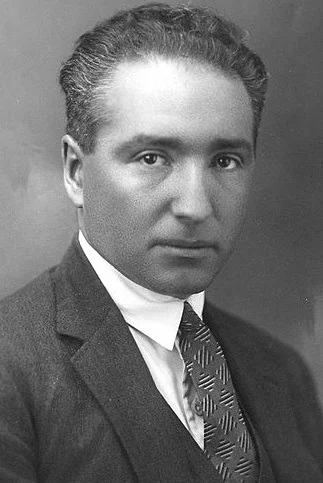
Reich was a contradictory personality. He entered the history of psychology as one of the founders of bodily-oriented psychotherapy. However, besides this, he was a member of the Austrian Communist Party and was actively engaged in social activities, including sexual education among workers (in modern representation, sexual education regarding contraception, prevention of sexually transmitted diseases, abortion, divorce possibilities, etc.). For his socio-political activity, he was expelled from the psychoanalytic community, and for sexually enlightenment-from the Communist Party.
In a later period, he began to develop the theory of all -pervasive biological energy - Orgon. Allegedly discovered it with the help of a microscope and other devices, began to produce the so -called orgon batteries that positioned as a means of treatment from various diseases, for which he was imprisoned in the USA, where he died.
Despite the sufficient doubtfulness of some of his ideas, we must admit that in the “psychology of the masses” he presented a wonderful analysis of why German society was enthusiastic about fascism with enthusiasm. This book is interesting, in particular, by the fact that even before Hitler’s final coming to power - from 1930 to 1933 - and long before the outbreak of World War II, the Jewish genocide, i.e. Before when the word "Nazism" has been fattened to today by connotations. It was published in 1933 and was prohibited by the Nazis at the same time. And the Jew and Communist Reich had to flee to Austria, and then to other countries.

In his study, Reich, “fascism” was not yet meant by German Nazism with its gas chambers, but in general a totalitarian political dictatorship - a type of leadership in which the interests of the authorities prevail over the interests of society, and the information is distorted for the sake of the political interests of the totalitarian system. However, despite the fact that a limited group of people and a separate clear leader who stands on the stands comes to power, Reich believed that the sources of fascism are indulged not in the personality of a leader or political elites, but in the psychological structure of the broad masses, which leads to power of the dictator.
"Fascism is not the work of some Hitler or Mussolini, but an expression of the irrational structure of the mass person."
What is this psychological structure?
The type of nature of people who maintain authoritarian relations in society, Reich called mechanistic-mystical. Its decisive feature is the mentality of the “little man”, enslaved, striving for power and at the same time protesting.
According to Rayh, the more helpless the “mass individual” feels, the more distinct his identification with the Fuhrer comes and the deeper the child’s need for protection is hidden in the feeling of his unity with him. This forms the psychological basis of national narcissism, the confidence of an individual in himself, which is based on the identification of himself with the “grandeur of the nation”. The individual feels himself in the Fuhrer, in an authoritarian state, and thanks to this he feels himself a defender of the "national heritage." “Mysticality” is manifested in the rituals that are practiced by followers of fascism, the “deification” of the Fuhrer.
“It is no coincidence that all fascist dictators come from the reactionary environment of“ little people ”. National Socialism was based on the psychology of an impoverished middle class. ”
The authoritarian structure of the personality, prone to subordinate and focus on authorities, from the point of view of the Reich, is formed in conditions of authoritarian family education, which leads to the formation of conservatism, fear of freedom. A person’s educated and connected by authority does not trust himself, so he refuses to take responsibility for his actions and decisions and requires that he is guided.
From a modern point of view, the most doubtful is the part of the theory of Reich, which claims that the basis for the emergence of an authoritarian nature is the suppression of sexual impulses. Reich believed that as a result of the moral holding of the natural sexuality of a child, a person develops swelling, timidity, fear of authority, humility, kindness and obedience in the authoritarian sense of these words.

Of course, now the theoretical constructions of the Reich regarding the sexual basis of the authoritarian nature seem far -fetched or, in any case, greatly exaggerated. In fact, these ideas were directly inherited by the Reich from his teacher Sigmund Freud, who deduced almost all human motivations from the depressed libido. As we know, strict prohibitions on sexuality have gone the past, but authoritarian and totalitarian regimes have not disappeared anywhere.
Although if Raikha’s idea of the role of sexuality is not hypertrophic, then in it you can find a particle of truth regarding those cases when for some people the projections of the alpha male and the ideal man fall on the Supreme Leader. So, according to the memoirs of contemporaries, it is known that Hitler’s unpretentious appearance caused sympathy in a huge number of women.
Psychological studies of authoritarianism showed that people more willingly make choice in favor of autocratic government in situations of instability and uncertainty. And as history shows
Strong leaders with authoritarian manners, promising quick decisions, usually gained particular popularity in societies that experienced economic or socio-political shocks.
Modern prosperous by external social and economic standards America is a new phenomenon that requires a new understanding. Are the sympathy for Trump a symptom of fatigue from freedom and its accompanying uncertainty, the absence of clear unambiguous guidelines, and not only in terms of economic well -being (after all, supporters of conservative views sympathize with Trump)? Do we not observe what the contemporary of Reich Erich Fromm called “a flight of freedom”, but now not in the conditions of the economic crisis, but in the conditions of economically stable liberal democracy?
Trump's populist rhetoric affects different trigger zones. This is both the need for safety (the fight against illegal migration) and the hope of raising the standard of living (stop providing assistance to other countries), and orientation on traditional conservative values (“there will be only two gender in America”), and the opportunity to raise its self -esteem, personally doing anything for this, but relying on the leader (“we will make America again great!”).
We will not compare the situations (the one in which Reich wrote his book almost 100 years ago, and the current one), but we reflect: what is the Austria-American psychologist warns us about? The fact that you should not think that any society or individual individual has absolute immunity from fascism. The fact that one should not be too seduced about human nature. Despite the gloss attached by civilization, a person in a more or less critical situation when choosing between general humanistic values and barbarism will most likely choose barbarism.
"There is not a single individual whose structure would not contain elements of fascist perception and thinking."
And when we have thoughts that there are simple solutions to complex problems, the temptation to solve them with purely forceful methods: to completely ban what we do not like, to deport or isolate people who, for some reason, cause us fears or hostility, entrust all the decisions to the leader who knows everything clearly better than us and will indicate an impeccably correct path, etc., we should be careful.