
Translated material
The most charming fox
Al Pachino turned 85: we recall his creative path and the main films
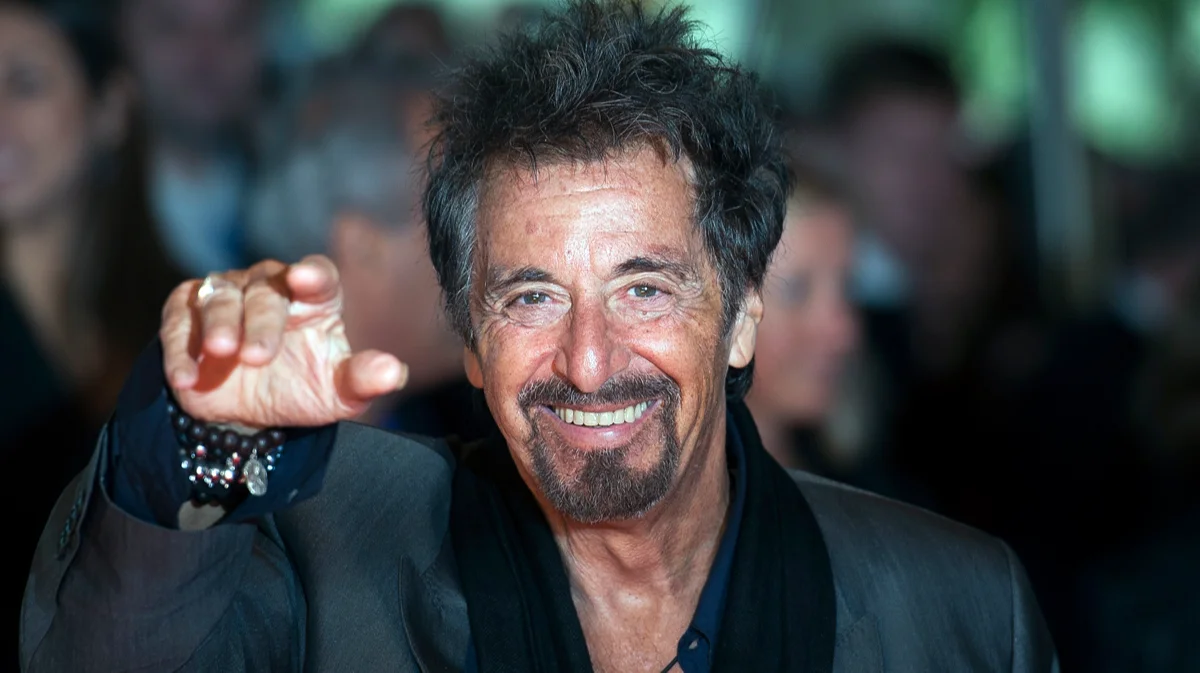
Al Pacino, 2014. Photo: Photo: Will Oliver / EPA
His name is Alfredo James. But everyone knows him from a diminivative, more like a teenager nickname: Al. Although on the street he was called "Sonny." Or "actor".
American dream
Al Pacino was born on April 25, 1940, East Harlem, then having a dysfunctional area, in the family of poor Sicilian emigrants Rose and Salvatore Alfred Pachino. Being emotionally “unless”, unable to withstand a heavy family routine, Rose left her husband and moved to the Southern Bronx to Kate and James Gerardi's parents, who, by prophetic coincidence, were immigrants from the town of Corleone in Sicily.
Two years later, a new misfortune happened: the United States entered the Second World War, and Salvatore was drafted into the army. Alfredo moved to his grandfather and grandmother. The latter, probably, in order to compensate for the optionality of the Rose, installed a hyperopeck over the boy and in every possible way limited his contacts with his peers. More friendly relations developed with his grandfather, but his father returned from the war noticeably alienated and moved to Kovin, California, and rarely met his son.
From a certain moment, the biography of Pacino more and more begins to resemble a typical Hollywood scenario about difficult growing up: hardships in childhood, discord with parents, rebellious character, teenage asociality, congenital talent, the desire for a dream by hook, a sufficiently take -off to the top. So, Alfredo began to smoke at 9 years old, to use alcohol at 13, did not refuse marijuana, but prudently avoided severe drugs, since his two friends died of heroin. The school was one of the main troublemakers and failed all the final exams except English. As a result, he quarreled with his mother and left the house. He worked as an assistant to the waiter, a mail clerk, a pedagogue of letters and a janitor.
The talent for the game, however, appeared more and more. Alfredo began performing in New York semi-underground theaters, joined the studio of the actor and director Herbert Berghof Hb Studio, which was located in Greenwich Willidge-the epicenter of the Bohemian life of New York. His life, however, still did not indulge: Alfredo often did not have a job, sometimes I had to spend the night on the street. In 1962, the mother died of leukemia, and a year later, his grandfather James was gone. However, Al held on his own. In 1966, far from the first attempt, he finally went to listen to the course of the legendary theater teacher and actor Lee Strasberg, the real trick of the stars (for example, James Dean, Paul Newman, Marilyn Monro, Jane Fund, Dustin Hoffman, Marlon Brando). Very quickly, over three seasons, Al received a recognition on Broadway.
"Cross Father": how to become a dragon
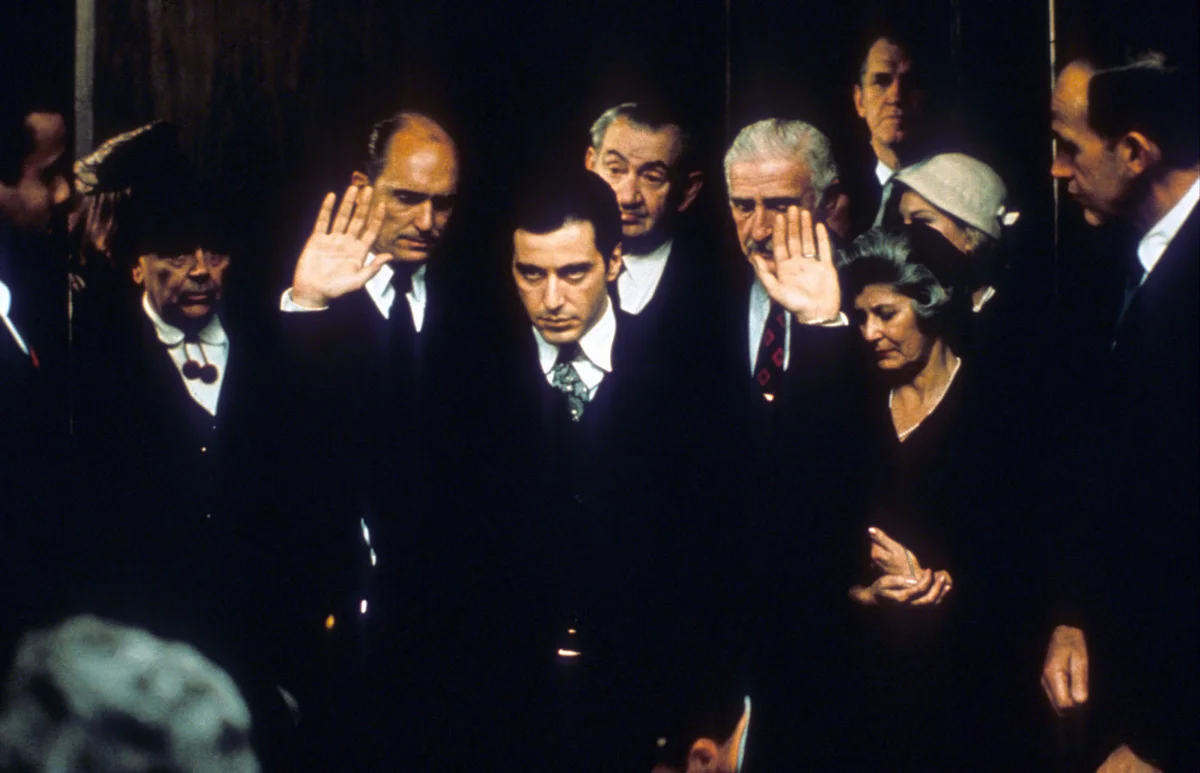
Invitations in filming began to come after theatrical success. Al Pachino received the first large role in 1971, playing a drug addict in a low-budget drama about the bottom of the New York society “Panic in the Nidl Park” (director Jerry Shatzberg). After this tape, he was noticed by Francis Ford Coppol and invited him to his new project “Godfather” to the role of Michael Corleone, refusing candidates such as Warren Bitty, Robert de Niro, Martin Shin, Robert Redford.
The Paramount Pictures manager was against, as Alfredo considered not tall enough for this character. The fears were groundless.
In all three parts of the saga, the godfather (1972, 1974, 1990) Pacino showed the amazing and tragic transformation of the hero - from the sincere and charming veteran of the Second World War to the ruthless mafiosi, capable of saying to the death of his own brother, and then to the helpless old man, whom life itself punishes. The actor embodies this transformation gradually - from the stage to the stage, from the film to the film, it gradually changes intonation, facial expression, plastic. However, with all the drama of the plot, it does not replay anywhere. Some kind of characteristic detail, halftones: for example, how he accepts the title of the godfather from subordinates in the final of the first part, as he says to his brother “you broke my heart” in the second, as he dies alone on the terrace of his house in the third.
It is not surprising that for the “godfather”, 31-year-old Alfredo was nominated for an Oscar.
From Don Quixote to the raider
In the mid-1970s, in the wake of the success of the “godfather”, Pacino became a favorite actor of the cult director Sydney Lyumet. Their cooperation began with the police drama "Serpico" (1973), based on real events. Alfred here is transformed in the fundamental cap Frank Serpiko, a kind of New York Don Quixote, opposing corrupt colleagues.
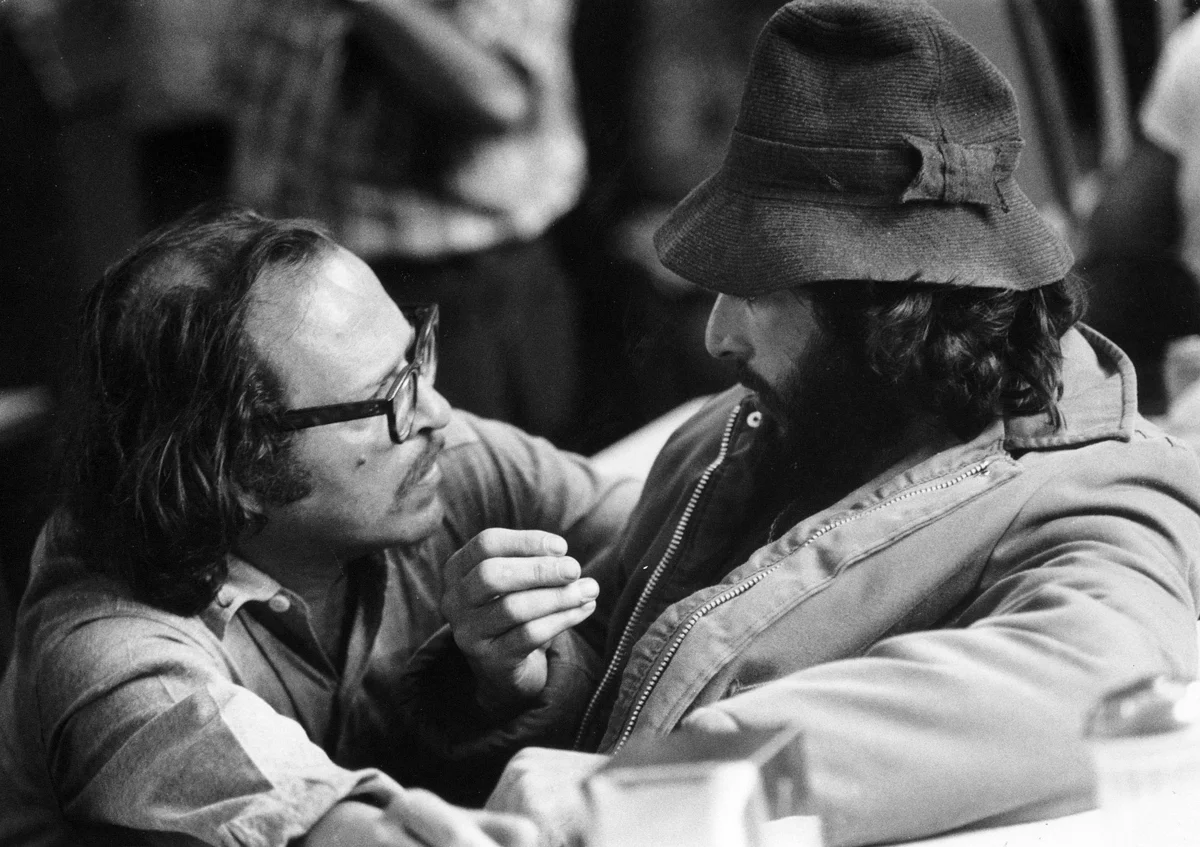
Here Pacino involves his performing arsenal to full power. Either he is embodied wit, a cheerful nightingaler, then he is a beloved and caring neighbor for everyone, and then - a typical “kind cop” who can talk to the suspect thanks to the correctly found words. But he goes against the authorities, and in the next scene it becomes a patriarchal home despot, humiliating his girlfriend. It turned out a multifaceted positive character, more interesting than arbitrarily charismatic villain. A rare case. The real Frank Serpiko, by the way, became an actor's close friend.
In the “Dog Half,” Lumet again relied on real events. On August 22, 1972, the veteran of the Vietnamese war, John Voitovich, and the accomplice tried to rob the bank in New York to pay for the floor correction for his wife-transgress.
The main character, however, is not John, but Sonny (just like that - a coincidence with the nickname Al Pacino in childhood). The actor again went beyond the standard framework, which, it would seem, should determine the plot. Yes, Sonny captures hostages. But he worries about them, does not want to kill, is able to worry about others and act for reasons of self -interest, but love - which brings him sympathy for the same hostages. At a certain moment, he even becomes almost the leader of the revolution, a general mood expressor when he jumps out into the street and shouts “Attica! Attica!" (A reminder of the bloody suppression of unrest in the Attika prison in 1972). The ordinary offender grows to the scale of the high drama.
Tempter
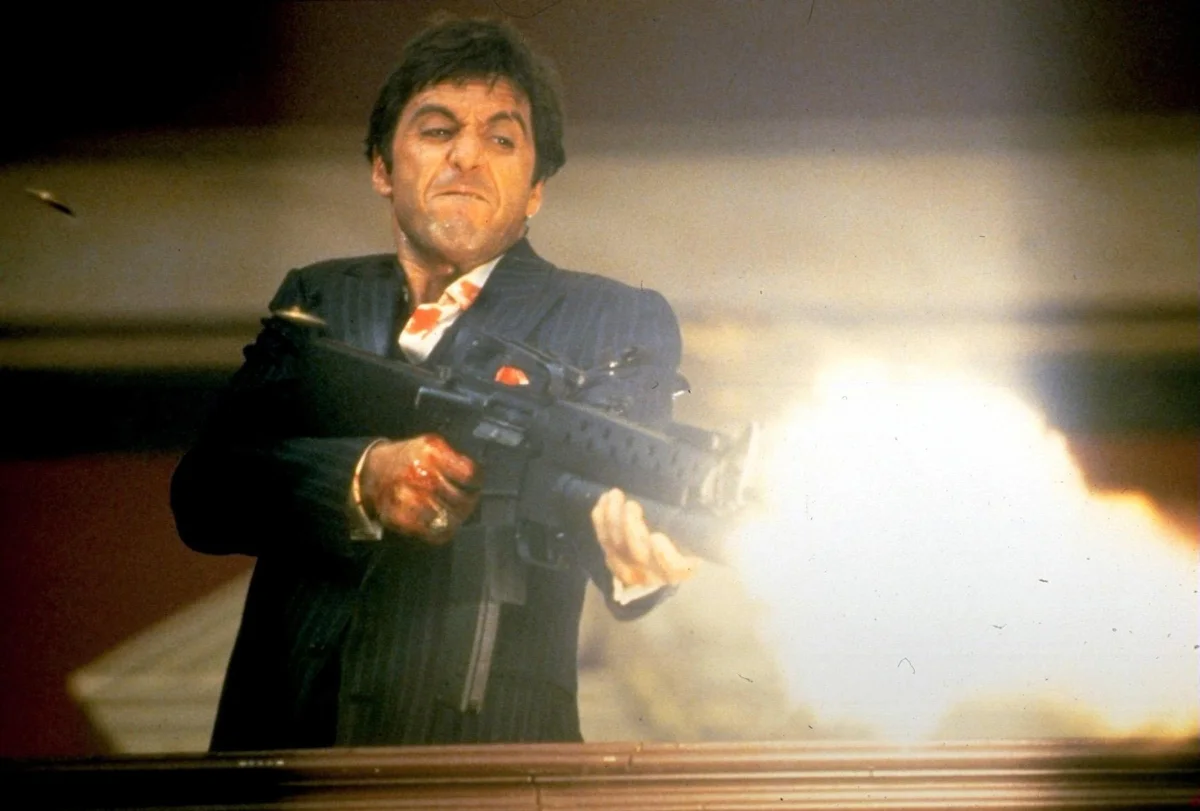
Not every actor receives a chance that you can call the second creative youth. After the breakthrough roles of the 1970s in the career of Al Pacino, a crisis was outlined; The actor even stopped acting for several years. The exception in this period of failures was the criminal drama “Face with the Scar” (Brian de Palma, 1983), where Alfredo brightly played the Cuban drug lord Tony Montana. From today, this film seems quite straightforward, even didactic: the villain was lucky for a long time, but then he got merit - shot as he, bandits, lies under the fake globe with the mocking inscription "World at your feet."
However, the work of Pachino himself is impeccable here: he again does what he does best - becomes a criminal king, an antihero of an epic scale.
However, this return occurred in the next decade.
In 1992, Pacino was invited to play in a remake of paintings by the Italian classic Dino Risi “The smell of a woman” (1974) based on Roman Giovanni Arpino “Grace and Honey”. American director Martin Brest turned the plot of Risi and Arpino into a rather simple melodrama, but it was Al who in the role of a blind retired military Frank Slade made a film an event.
The plot of the “smell of a woman” fits in 3 days, which the lieutenant colonel spends in the company of Student Charles Simms (Chris O'Donnell), hired by the relatives of Slade for supervision for a scandalous and restless old man.
Al Pacino got an extremely difficult task: to turn not just into a blind man, but into an officer and a gentleman, into a womanizer and a guelik, whose character hesitates from a dashing brawl to complete, suicidal despair. The episode in which Slade dances tango in a restaurant with a completely unfamiliar girl, went down in history, just like his performance in defense of Charles at a university assembly in a denouement. It is not surprising that in 1993, film academics finally awarded Alfredo a long-deserved Oscar for the best male role. By the way, in the same year the actor was nominated for the best male role for the “Americans” and became the first actor to receive two nominations in one year and won in one of them.
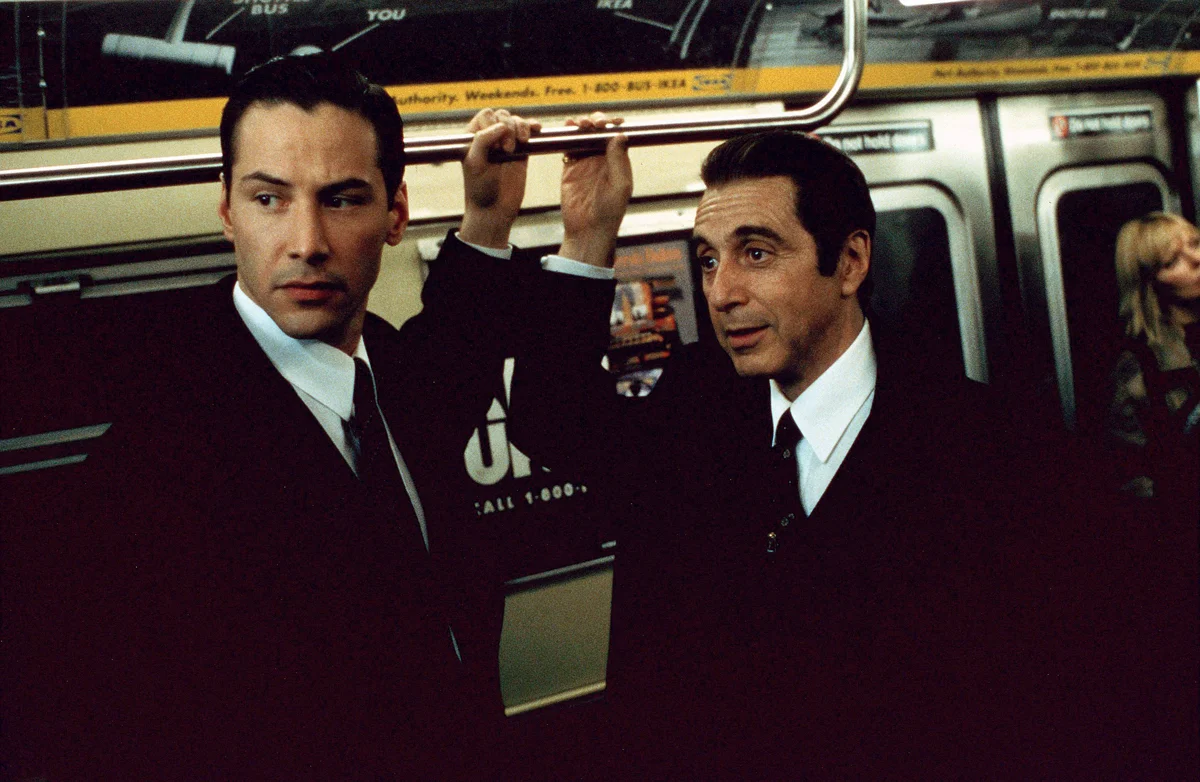
The protagonist in the "Devil's Lawyer" (director Taylor Hackford, 1997) - Keanu Reeves in the role of a super -assessed lawyer, who is hired by Lucifer himself. The latter, in fact, is played by the 67-year-old Pacino, taking the devil far beyond the established ideas. The entire arsenal of the techniques of Alfredo at hand: sexual, insinuating, deceptive, businesslike, witty, rustic, cynical. In a word, the ideal tempter, a shower catcher. The most charming fox in the earthly vale.
Forever young
In the 2000–2020s, the actor regularly confirms his legendary status. Even episodic roles among the new directors are publicized, in particular, in the criminal comedy of Stephen Sodelberg “Thirteen friends of Oesen” (2007). In addition to Pachino himself, in the role of a gambling magnate, stylish villain Willy Banka, the picture gathered a whole constellation of celebrities, such as George Clooney, Brad Pitt, Matt Damon, Andy Garcia.
Pacino found himself in a boom in cable platforms, which covered the film industry in the new century. The performance of the role of a supporter of euthanasia Jack Kevorkyan in the Bayopic of HBO “You do not know Jack” (2010) brought the actor the second prize of “Emmy” and the fourth “Golden Globe”. However, he did not forgot how to be funny-he portrayed the aging rock star in the comedy drama Danny Collins (2015) and received a nomination for the Golden Globe.
There are directors, even a minute appearance in the frame who has a dream of any actor. Pacino’s screen time in “once in Hollywood” Tarantino for more than a minute, and this short episode has once again revived interest in him. In the same 2019, Pachino played the head of the Teamsters trade union Jimmy Hoff with Robert de Niro and Joe Pesha in the drama of Martin Scorsese “Irish”. The first role has a Scorsese, and she brought Alfredo a nomination for an Oscar and the praise of critics. Peter Bradshaw in The Guardian called him “magnificent”, and Justin Chang noted :
“De Niro, Peshi and Pachino are at the top of their game, partly because they not only repeat the cult roles of gangsters that they played before.”
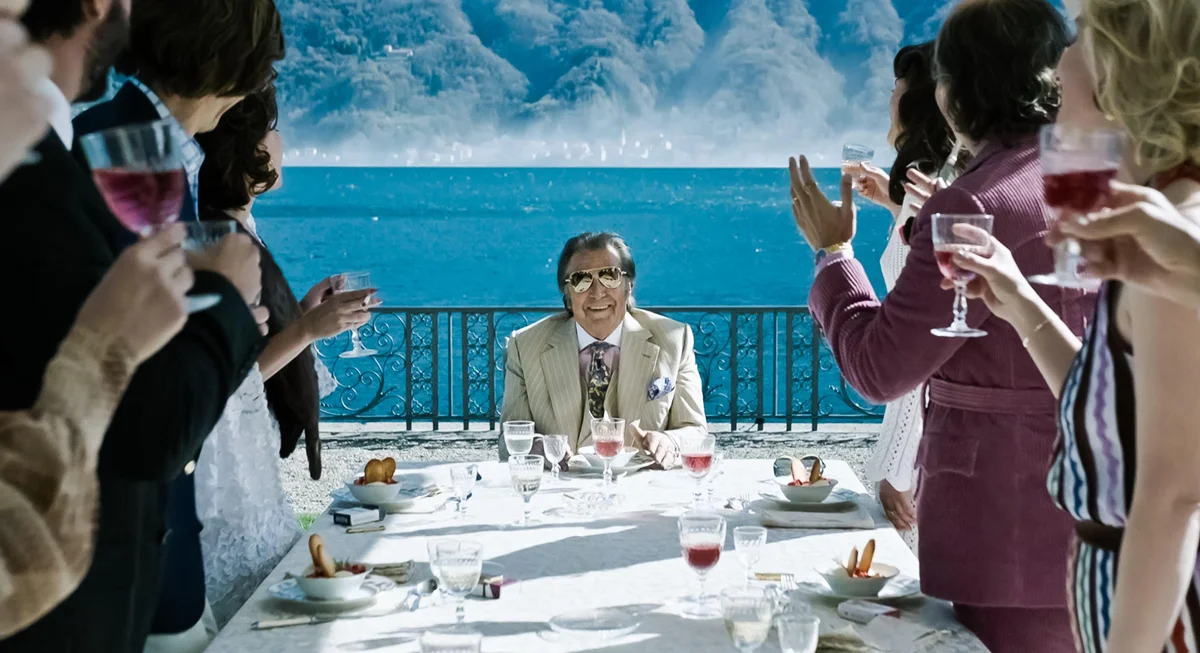
From the most noticeable works of the actor of recent years - the role of a fictional hunter for the Nazis Meyer Offerman in the series "Hunters" (2020) and Aldo Gucci in Bayopica Ridley Scott "House Gucci" (2021).
Passion
Actually, Al Pacino of those actors who are good at the instinctive, one can even say, physiological level: its very presence fills the frame with colossal energy. He does everything with passion - villainy or mix, suffering or saving. He is simply not able to spoil the role, whatever it may be. Therefore, it is still interesting to the directors and the audience. And again and again he is invited to their films by the most famous filmmakers. Fastulously beautiful, perfectly predatory. He is - cinema.
Hidden treasures: the outstanding roles of Al Pacino, which you could miss
“Panic in the Nidl Park” (Jerry Shatsberg, 1971)-an example of the social drama of “New Hollywood”, Debut Pacino, who almost immediately revealed his talent to play a character, equally attractive and repulsive.
“Life of Counting” (Sidney Pollak, 1977) - in this film adaptation of the novel of the same name, Remarque Al Pacino plays a motor driver who comes to a sanatorium for patients with tuberculosis to visit a friend and takes a sick girl from there at her request: a love story without a future.
In the film adaptation of the noir comic "Dick Tracy" (Warren Bitty, 1990), the director of Al Pacino was the director and Madonna himself; spectacular, but at the same time shallow cinema.
In the “Fight” (Michael Mann, 1995), Al Pacino first appeared on the screen with Robert de Niro (they both played in the second part of the “godfather”, but in different episodes)-it was their duet-conveying the film that made the film one of the most influential in the genre of the action-packed militant.
The thriller “88 minutes” (John Evenet, 2008) is good for the work of Pacino, who plays the professor, who was fighting with a dangerous criminal exclusively by the power of intelligence for an hour and a half.