
Translated material
The smell of Napalm 50 years later
On April 30, 1975, the Vietnamese war ended. We recall the seven main films about her
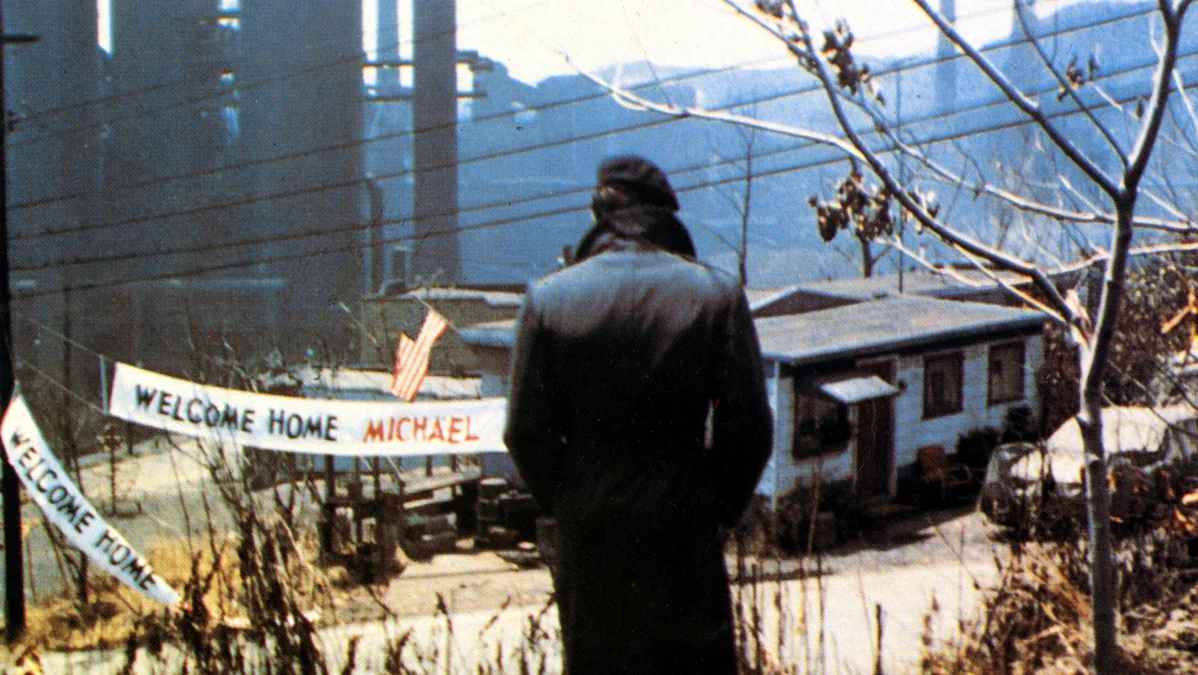
Robert de Niro in the film "Deer Hunter", 1978. Photo: Ronald Grant Archive / Mary Evans Picture Library / Scanpix / Leta
On April 30, 1975, the Vietnamese war ended with the surrender of the South Vietnamese troops in Saigon. She became one of the most cruel and long conflicts after the end of the Second World War.
It acquired a global scale in 1965, when the United States, which were connected by allied agreements with South Vietnam and sought to prevent the distribution of communism, began the systematic bombing of the northern regions and transferred troops to combat the National Front of the Liberation of South Vietnam (better known as Vietcon). The strategic miscalculations of the American military command on the one hand and the significant support of the USSR North Vietnam on the other led to significant losses among Americans. In the USA, war was not popular. In 1973, Washington signed Parisian peace agreements, according to which American troops were withdrawn from Vietnam. Without American support, the government of South Vietnam in Saigon lasted two incomplete years. The war caused a significant reflection in American cinema, and its height and completion came just on the formation of the so -called "new Hollywood" and the emergence of fresh generation of directors. We talk about the most significant "Vietnamese" films.
"Deer Hunter" (The Deer Hunter), dir. Michael Chimino, 1978
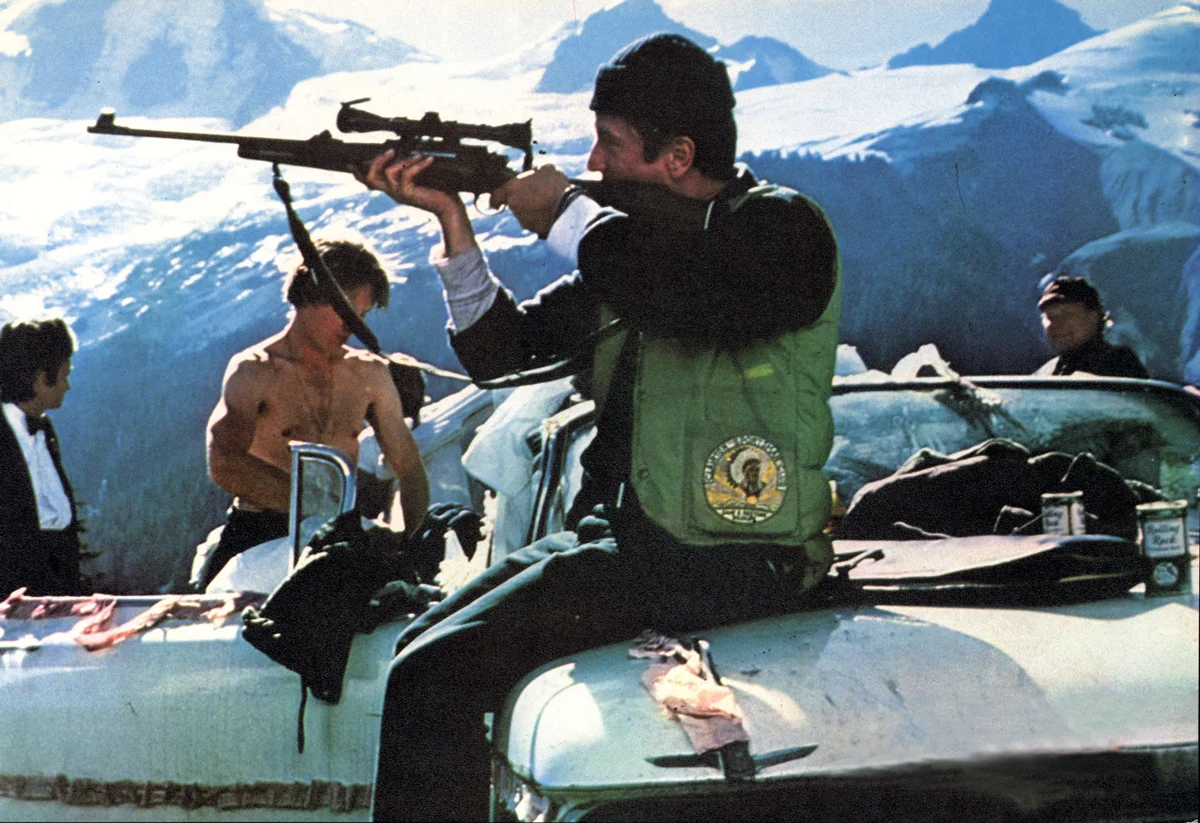
In 1968, three friends from the Pennsylvanian wilderness, whose life passes in the shadow of the pipes of the steel plant, was preparing to be sent to Vietnam. Michael Vronsky (Robert de Niro), Stephen Pushkova (John Savage), Nika Chebotarevich (Christopher Waken) connects not only Slavic origin, but also a passion for deer hunting. Stephen was engaged to Angela, Mike and Nick - close friends who live together and both love Linda (Meryl Streep). Having caught a bouquet at the wedding of Stephen and Angela, Linda accepts a spontaneous marriage proposal from Nick.
The film is divided into three acts as a performance or novel. The first chapter is the everyday life of young hard workers and their families. A poor life, gatherings in the bar, secret and obvious, friendly quarrels and reconciliations. The events of the second act unfold in Vietnam, where Mike, already being a “green beret”,, together with Nick and Stephen, are captured by the Viet Congors who locked them in a cage and force them to participate in the game in the Russian roulette. Comrades manage to escape, but the tests do not pass without a trace. So the third act is about the scars of war, visible and invisible.
Stephen in Pennsylvania is chained to a wheelchair and is shy to live with Angela. Mike avoids celebration in honor of his return. Nick had the worst of all: he got hooked on drugs and the same Russian roulette, for which he again arrived in Vietnam and spends the nights, putting a revolver to his head. De Niro, Savij and, in particular, Walcen play with amazing persuasiveness. This allows Chimino to go beyond purely anti -war cinema. He does not condemn and does not justify compatriots in Vietnam, but goes deeper, exploring the degree of devastation of human nature in the war.
"Apocalypse Today" (Apocalypse Now), dir. Francis Ford Coppola, 1979
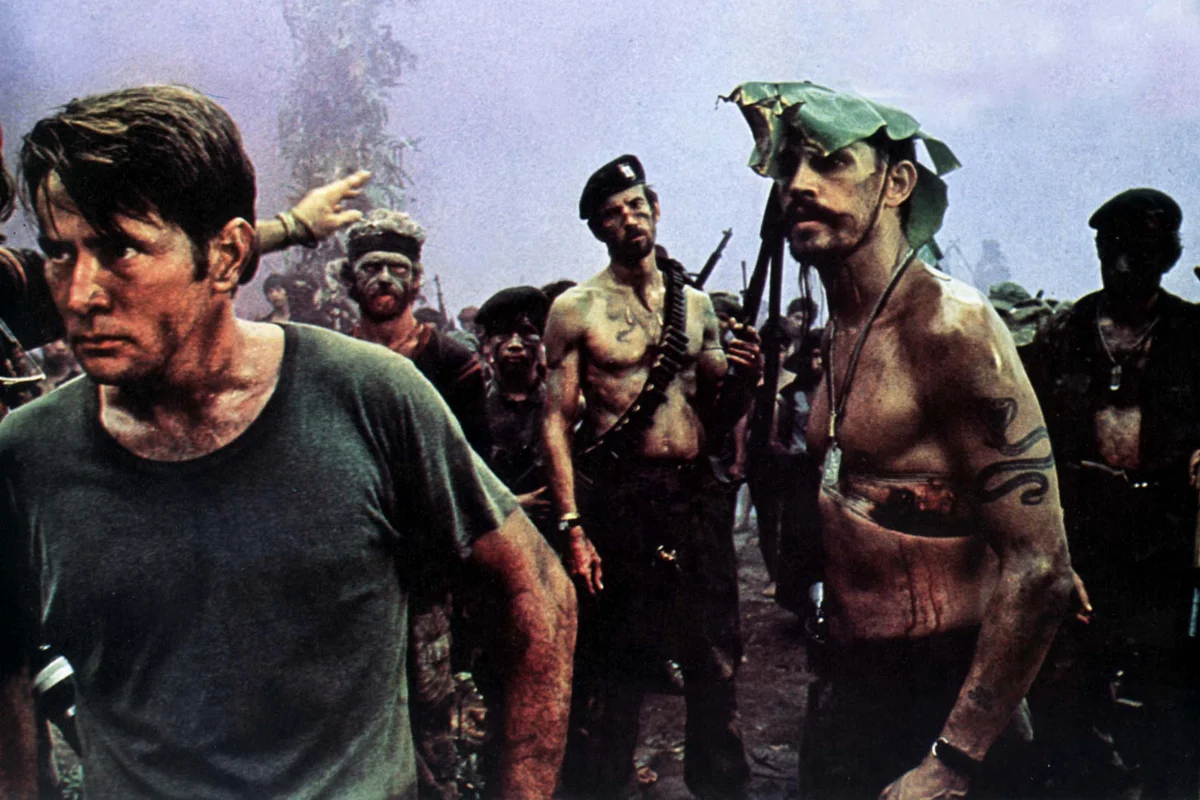
The way Coppola made his most significant film, what efforts and casualties it cost him and his team, in itself became the theme of several documentary paintings (for example, the film “The Heart of Darkness” of 1991. - Ed. ) . The existence of at least two versions of the “Apocalypse” - abbreviated and adapted producers for rental and three -hour author’s, which is especially important, without initial and final credits, complicates the situation.
It all starts with Napalm, burning in the jungle, and a helicopter flying over the flame. Captain Willard (Martin Shin) opens his eyes at the hotel in Saigon. The song of Jim Morrison "The end" sounds.
Formally, “Apocalypse Today” can be attributed to Road Muy: Willard, by order of the command, goes on a dangerous trip to Cambodia in order to eliminate Colonel Kurtz (Marlon Brando). But this is also a metaphysical journey: there is something between the dialogs and even between the frames, a certain component under the surface, like the current in the river along which the heroes float; It picks up imperceptibly, but it is impossible to resist it. Each stop and meeting on this path, from the flight of the Valkyrie Wagner, when attacking helicopters to a festively highlighted and shot bridge, is an increase in a degree of madness. The horror of the war breaks the specific framework, becomes infernal. This is what the dying colonel Kurtz in the denouement says: "Horror ... horror ..."
The hero Shin fulfilled the order, eliminated Kurtz, sailed with the only surviving, but distraught subordinates back to Saigon. The last images are again the face of Willard, the burning jungle and the helicopter above them. There are no titers or straight lines in hell. Hell is an eternal circle. Created by people.
The Apocalypse today won the Golden Palm Branch at the Cannes festival, but Oscar received only for the operator work - the American movie academia decided not to celebrate the main figurine “Vietnamese” film after the “deer hunter” for the second year in a row.
"Platoon" (Platoon), dir. Oliver Stone, 1986
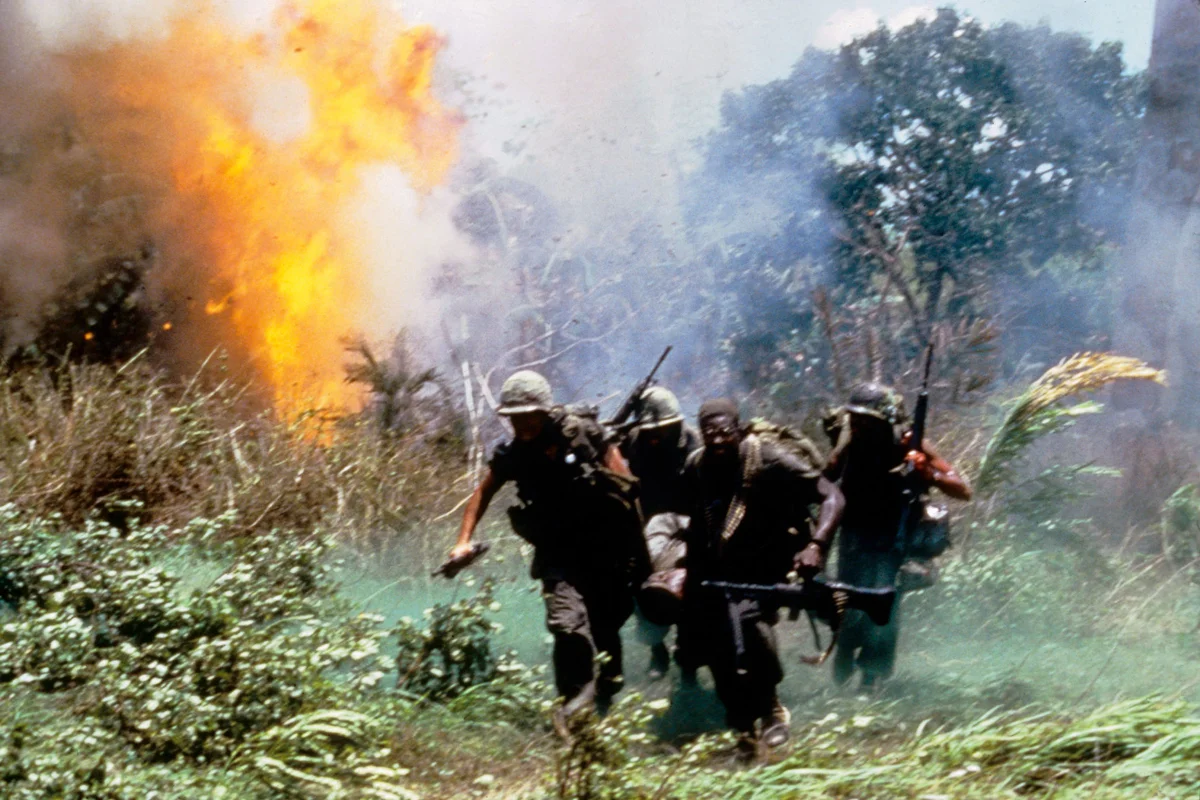
“Salt” is the first work from the trilogy about the war in Vietnam, shot by Stone: followed by “Born on the Fourth of July” (1989) and “Heaven and Earth” (1993).
The film based on the military experience of Stone talks about how the volunteer Chris Taylor (Charlie Shin) serves in Vietnam under the command of two macho, who profess diametrically opposite views on morality and war as such: the headquarters of Robert Barnes (Tom Berender) and Sergeant Elias Grodin (Willlem Defa).
Stone wrote the script based on his experience in the Service of the Infantry in Vietnam to contrast him with the vision of the war, presented in the "green berets" of John Wayne. In 1967, Taylor arrived in South Vietnam and enters the infantry platoon of the 25th Infantry Division, located near the Cambodian border. Although the platoon is officially commanded by the young and inexperienced Wolf Lieutenant, the soldiers are subordinate to its two older and experienced subordinates: cynical Barnes and more compassionate Elias.
Further, the full pain and dangers of the routine of war begins: patrols, night ambushes, shootings, battles, air strikes, wounds and death of recruits and combat comrades, cruel treatment of the local population. The confrontation between Barnes and Elias eventually pours a direct collision with fatal consequences.
Chris Taylor manages to survive, but his view of the war and on his own life was changed irrevocably. Mourning at the end of the dead friends, he admits that Elias and Barnes remained in his soul as the poles of good and evil.
"All -metal shell" (Full Metal Jacket), dir. Stanley Kubrick, 1987
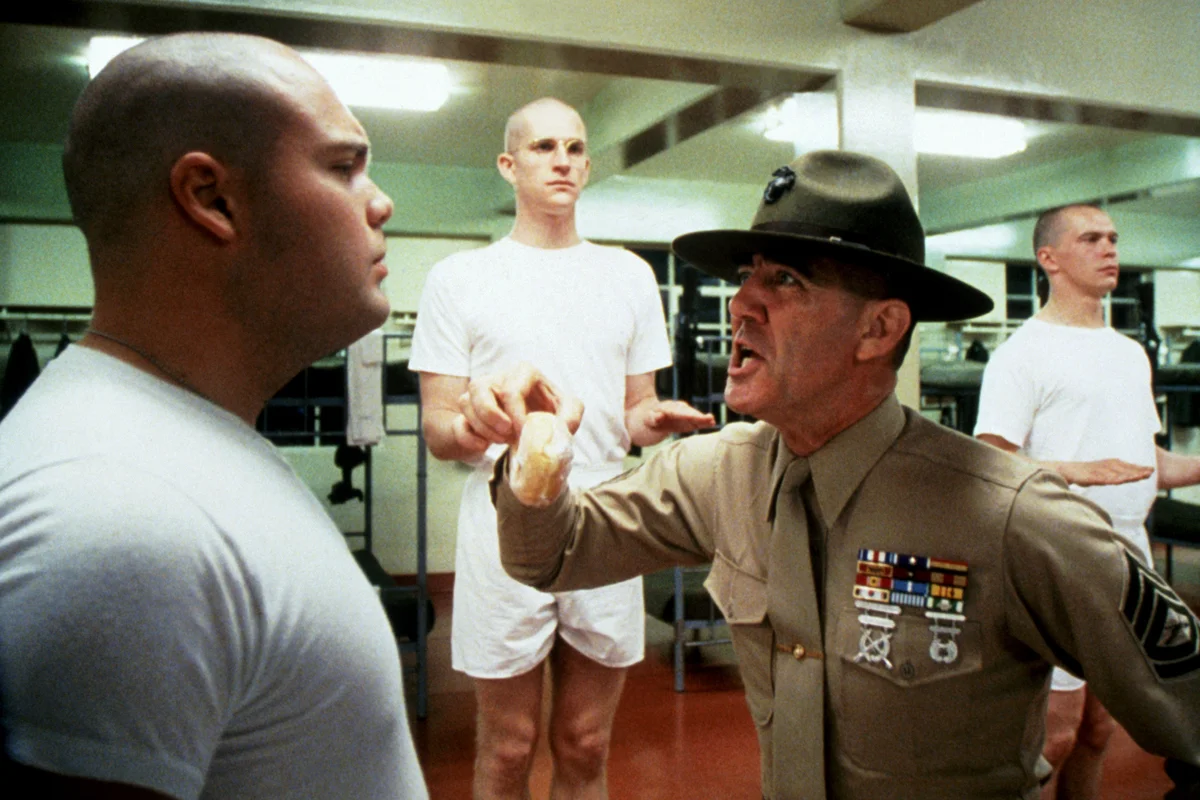
In the penultimate film, Kubrick is the narrative from the first person. The narrator is Marine and Military correspondent Jay Tee Davis, nicknamed "Magician" (Matthew Modayn). Before getting to the war, he went through a training course with the Lyuty Sergeant Hartman (Lee Ermi) - this plot is the first half of the film. Hartman seems to the recruits to the fits of hell, but only in this way, in his opinion, you can prepare the guys for real battles. The joker succeeds, and he is not afraid to dare a terrible sergeant, so that the latter appoints Davis the squad commander.
The opposite of the joker is the smiling, fat and awkward Leonard (this role became for Vincent d'Onofrio to be the start of his career). Jay is ordered to personally make sure that Leonard caught up with the rest. And the one really becomes more and more serious, concentrated and even sinister, until one day it becomes too late: one explosive bullet in the all-metal shell kills the sergeant, and sends the second with a shot in his mouth.
Already as a military commander, Davis becomes a witness and a participant in events in which the value of human life, both Americans and the Vietnamese, is reduced to zero. Degumanization is defined by Kubrick as the immanent part of the patriarchal order, which generates only the will to power and numerous cruel conflicts.
The film four times paid off at the box office (raised $ 120 million around the world). Jim Hall, who writes for Film4, preferred the segment in the study camp with scenes in Vietnam, calling him “much more amazing than the second and longer part”, but concluded: “The“ All -metal shell ”stands on a par with the“ Dr. Streinzhlav ”among the best work of Kubrick.”
“Good morning, Vietnam” (Good Morning, Vietnam), dir. Barry Levinson, 1987
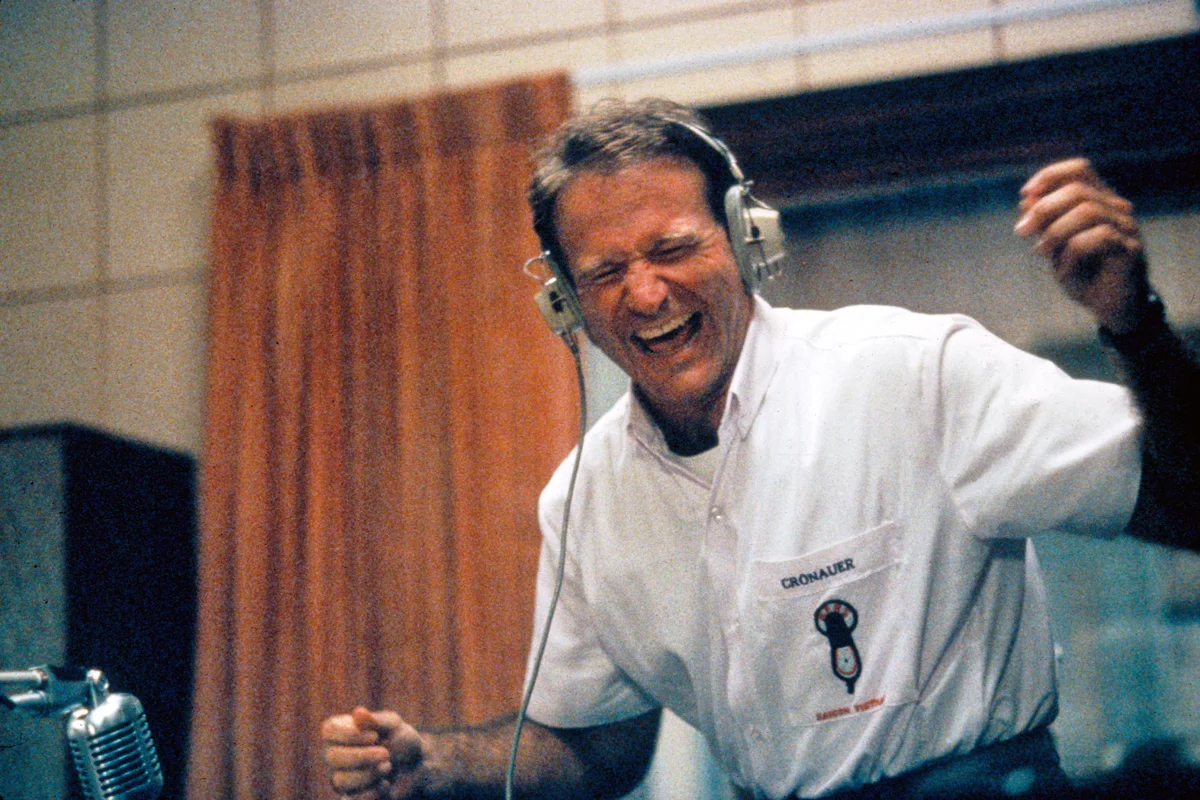
The radio host Edrian Kronauer (Robin Williams) arrives in Vietnam with the rank of ordinary Air Force to take a place at the American military radio station in Saigon. With his appearance, the program “Good Morning, Vietnam” ceases to engage in propaganda, promoted news and the day before yesterday. Suddenly from the receivers after a loud-dummy “Gooooooo Morning, Vietnam !!!” Jokes on the verge of a foul and a bright modern rock begin to sound. Edian's indefatigable energy is looking for other ways of exit. He almost instantly falls in love with a Vietnamese girl, is fraught with her brother and with a large company of Saigons. But not everything is as easy and fun as it begins: on the one hand, the manner of Kronauer, the leading programs annoying the bosses, on the other - his newfound friend actually hates the Americans and participates in sabotage, and war, no matter how much it is, it does not become less bloody.
“Good morning, Vietnam” was Levinson's breakthrough to world popularity. In addition to the whip plot, the most successful decision of the director was the choice of Williams for the main role. The actor fully reveals his comic talent, and when necessary, it becomes touching to tears.
As a result, Williams received the Golden Globe for the best role in a comedy or musical, and “Good Morning, Vietnam” entered the four of the most box office films of the year.
"Rescue Dawn" (Rescue Dawn), dir. Werner Herzog, 2006
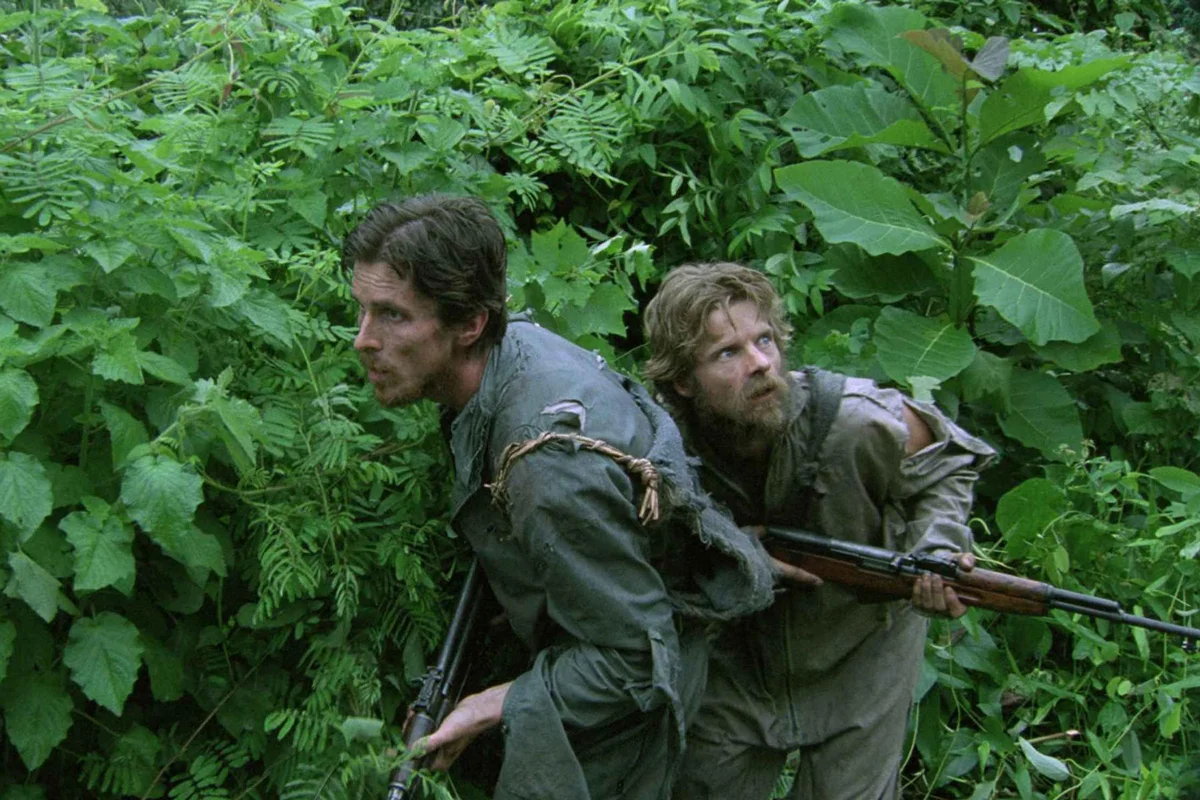
The film is based on the real history of the German-American pilot, Lieutenant Dieter Dengler (Christian Bale).
In February 1966, Dengler, flying from the USS Ranger aircraft carrier, was shot down on his Douglas A-1 Skyraider over Laos. He survived in a collapse, but was captured by the communist group Patet Lao. The province of the province proposed a condescension to Dengler if he signed a document condemning America, but he refused, so he was tortured and sent to a prisoner of war camp. There he met with his comrades on the conclusion, some of whom were prisoners for many years: American pilots Eugene Debruin and Dwayne Martin, a radio operator from Hong Kong, a Thai employee of Air America and others.
The screen Dengler immediately plans an escape, but receives reluctance support from other prisoners, although they all suffer from malnutrition and bullying by the guards. After a few months, the conditions become unbearable, and the prisoners decide to drive the plan of Diter. Dengler and Martin are sent to the Mekong River to cross to Thailand onto the raft, but are faced with thresholds and waterfall. After wandering, exhausted, they stumble upon the village, where the angry villagers decrease Martin. Dengler runs back to the jungle, and a few days later the American helicopter finally saves him.
In 1997, Herzog shot a documentary about a deengller called "Little Diter must fly." However, the “saving dawn” was a difficult challenge for the director, better known for experimental arthouse films. However, to shoot in the jungle for him was not VNOVA, and Bale fully worked the image of a man on the verge of survival. The reaction of critics is accurately conveys the review of Roger Ebert: “The Savior Dawn,” perhaps the most plausible film that Herzog shot ... There is nothing in it that we could not believe. ”
"For beer!" (The Greatest Beer Run Ever) dir. Peter Farrelli, 2022
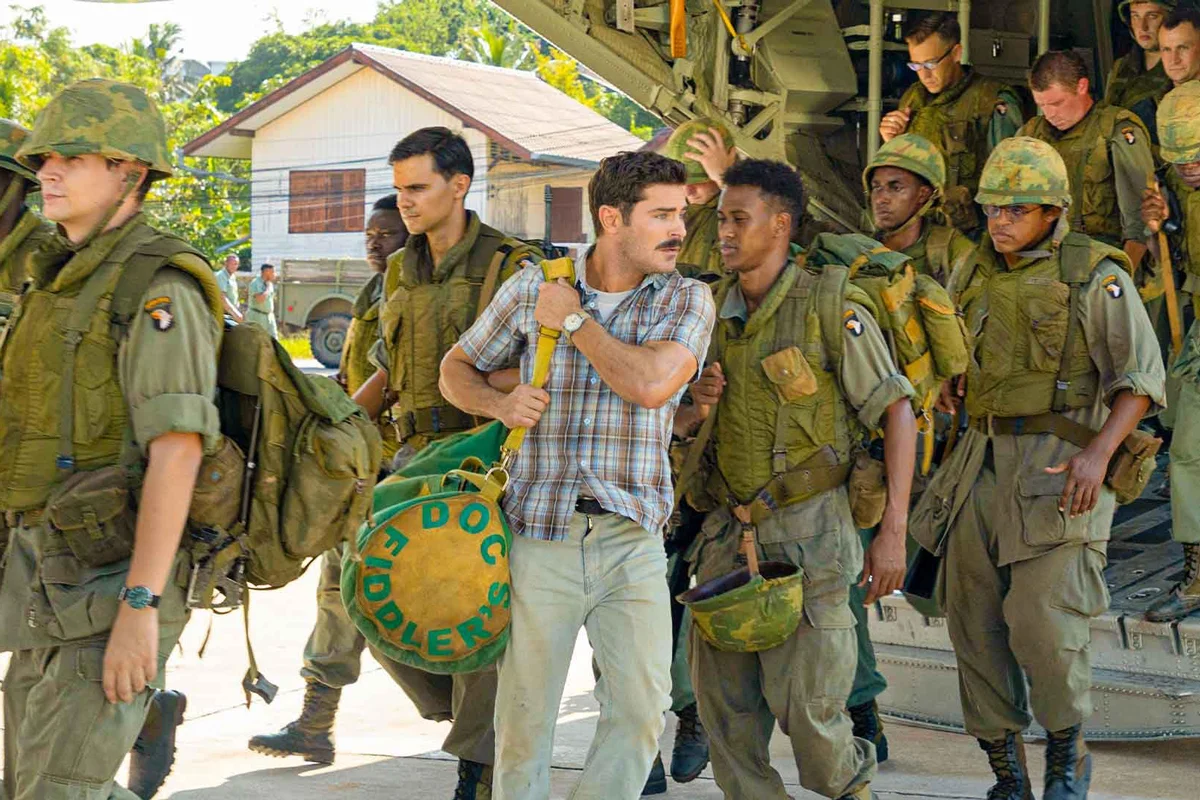
This film is written and shot on real events.
In 1968, the veteran John “Chiki” Donohee (Zach Efron) lives at his own pleasure with the Inwood family, New York. He is a drink and a lazy person, in a specialty - a motorist of the merchant fleet. His sister Christine is categorically against the war in Vietnam; At the same time, Chiki is Patriot and believes that the United States in this conflict is on the side of good. Upon learning that the old friend Johnny died in battle, Chiki with his friends visit his funeral and find out that another close scoop, Tommy, was missing. In the dispute about how to raise the spirit of the guys at the front, Chiki makes a crazy decision: to go to Vietnam and deliver a beer to his friends. And, contrary to universal doubts, he sits on the ship to Saigon with a large bag full of cans of beer.
His adventures are equally ridiculous and sad. Chiki first doubts himself, but finally gets to the war zone and distributes beer to the guys right in the trench under fire. With its determination, the respect of the star photorepector Arthur Cowts (Russell Crowe), who helps him to make his plan, makes respect.
Farrelli was able to show that even about the drama of the war can be talked with humor, while not forgetting about the pain that she causes.