
Translated material
Dark winds of reservations
We talk about the new cinema of the native peoples of the United States (while Donald Trump is fighting with them again)
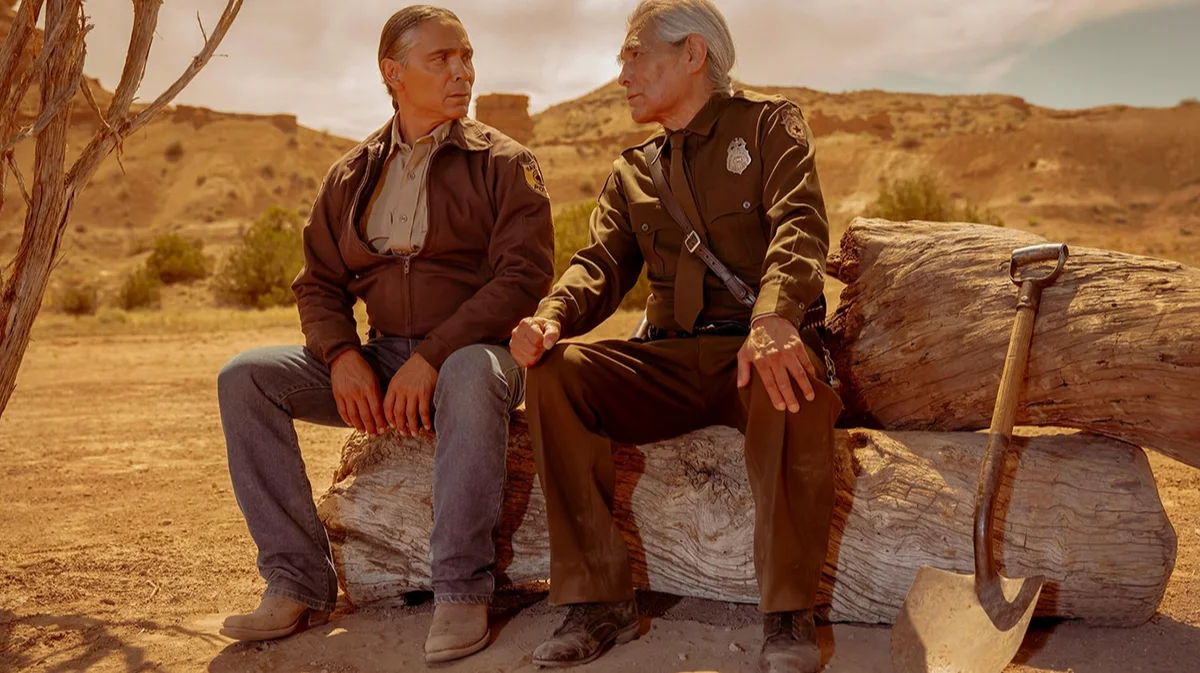
Frame from the movie "Dark Winds". Photo: imdb.com
Representatives of the indigenous peoples of the United States were one of the victims of the return of Donald Trump to the presidential post. He has been fighting with them since the time of the first term - in particular, when he reduced the territory of the national monument “Bear Ears”, sacred to five tribes, including Navajo. In March 2025, the Trump administration canceled the Decree of President Bayden, which obliges federal agencies to strengthen tribal sovereignty and conduct consultations with tribes. A significant episode was the desire to return Mount Denali-a sacred for the people of Atabascas in Alaska-the name McCinley in honor of one of the American presidents.
Behind all this is a long -standing struggle of communities representing the indigenous peoples of the United States, not only for political rights, but also for cultural self -determination. It is customary to consider the history and culture of indigenous peoples through the prism of the tragic experience of the genocide committed by European colonists. It was the colonialists who created the most recognizable images of the “Indians” in the Western mass culture: from wild barbarians, treacherously interfering with settlers, to mystical sages, deeply connected with nature. These paths firmly entered the canon of the Western genre, which became a kind of mythological foundation of American culture - the culture of “conquerors”, carrying enlightenment into the “wild” world. Despite the episodic attempts to illuminate the theme of indigenous peoples in a more humane manner, the mainstream of the last 30 years - including films such as “Dancing with the wolves” of Kevin Costner, “New Light” by Terrence Mallik, “Survived” Alejandro Gonzalez Inyarrite and “Flower Moon” Martin Scorsze, - the image continues: the image continues. The indigenous peoples as Stoic, but doomed to the disappearance of the nation. Especially for Novaya Gazeta Europe, Kocharyan, a movie researcher, collected reverse examples - when representatives of the tribes were authors of the films and told their stories themselves.
“Smoke Signals” (smoke signals), dir. Chris Air, 1998
The “smoke signals” of the director Chris Aira are considered the first full -length film, shot and written by which were the representatives of the indigenous peoples. The script was written by Sherman Alexy - a famous writer, in his novels honestly and with irony describing life in reservations. The film was based on his book “Lone Ranger and Tonto: Fist fighting in heaven” (his other work, “The Diary of an Indian for half a day”, was translated and published in Russia).
The main characters-adolescents Thomas and Victor-live in the Indian reservation of Kur-d'Alain, which they abbreviated simply “cut”. Thomas is a silent thug and a football player, Victor is an energetic, talkative geek. Together they dare to leave their native places and go to Phoenix, Arizona, to pick up the ashes of Father Thomas - Arnold.
This journey becomes for them not only by going beyond the reservation, but, in fact, a “foreign” trip.
“You leave the cut and go to another country.”
- Yes, but this is America.
- Yeah. What could be even more than a stranger than she?
The authors show life in reservation without embellishment - as part of a socially dysfunctional America, devoid of the usual benefits of civilization. The same direct manner tells the fate of Arnold: he was not an ideal father, suffered from alcohol dependence, which led to episodes of domestic violence. But instead of the tragedy, the film offers the viewer an emphasic, ironic look at everyday life. The comedy based on self -observation lives in dialogues, jokes, gossip - in what the authors themselves call "Indian humor". A striking example is a local radio station, where a couple of cars driving along the road are the news of the day.
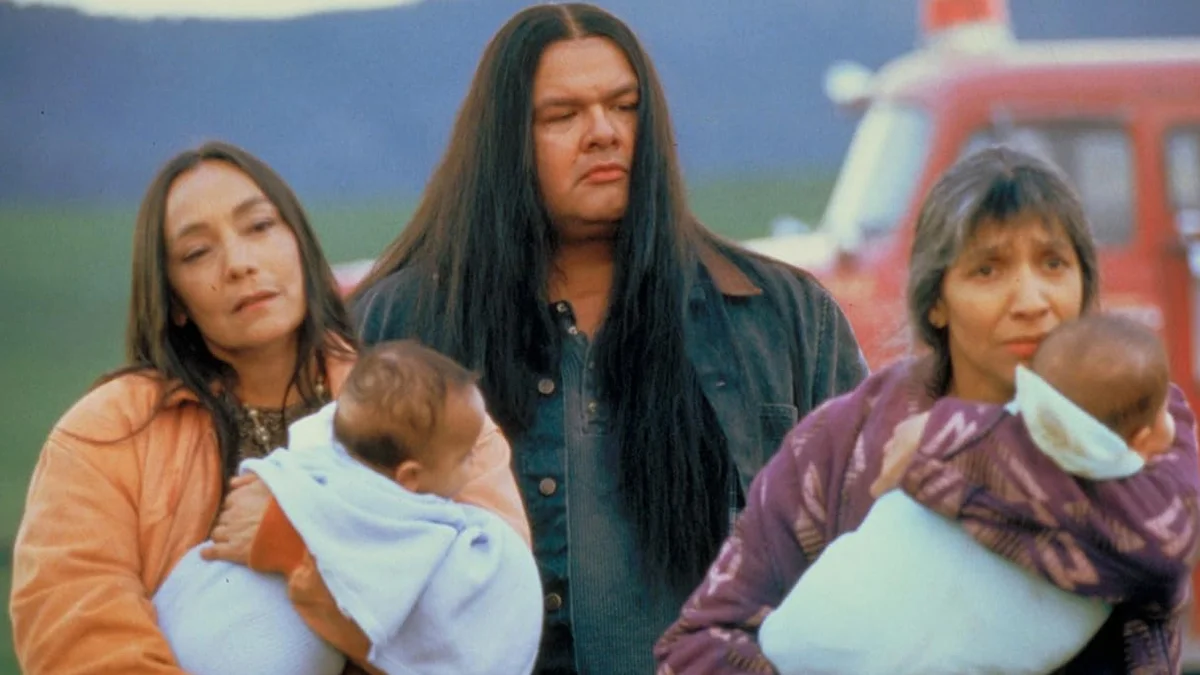
Outside the reservation, Thomas and Victor are faced with racism and bias. However, this hostility of white Americans does not become the driving force of the narrative. Much more important for heroes is your own reflection on a clash with other people's ignorance.
An indicative scene is an episode on a bus where two white adults take their places. At a fair request to give them seats bought by ticket, they get a dry answer:
“We are already sitting here, and you can’t do anything about it.”
In response, adolescents choose a form of peaceful protest - they begin to chant sarcastic slogans addressed to actor John Wayne, the famous “killer of Indians” from Hollywood westerns.
The film plays with stereotypes about indigenous Americans, adapts them, complicates and humanize. He shows these people not as symbols, but as living, contradictory, funny and deep. Destroying the cliches about “noble savages” and caricature barbarians, the picture offers the truth - through humor, pain, friendship and the path of growing up.
Rutherford Falls, series, 2021–2022
The story revolves around two main characters: Nathan-the heir and director of the museum dedicated to the founder of the town of Rutherford Falls, known as “Big Larry,” and his best friend Reagan, a representative of the fictional indigenous people of the minish. Their whole life is built around the work of preserving the history of their ancestors: for Nathan it is a matter of protecting the noble image of their family, for Reagan - an attempt to restore the lost elements of the cultural heritage of their tribe.
The plot trigger becomes the decision of the city mayor to demolish the monument to the founding father. The reason is very practical - the monument is located right in the middle of the road and caused many accidents. However, Nathan perceives this situation as a blow to the established historical narrative in which his family occupies a central place. He begins the struggle not so much for the monument itself, but for the traditional view of the history of the city.
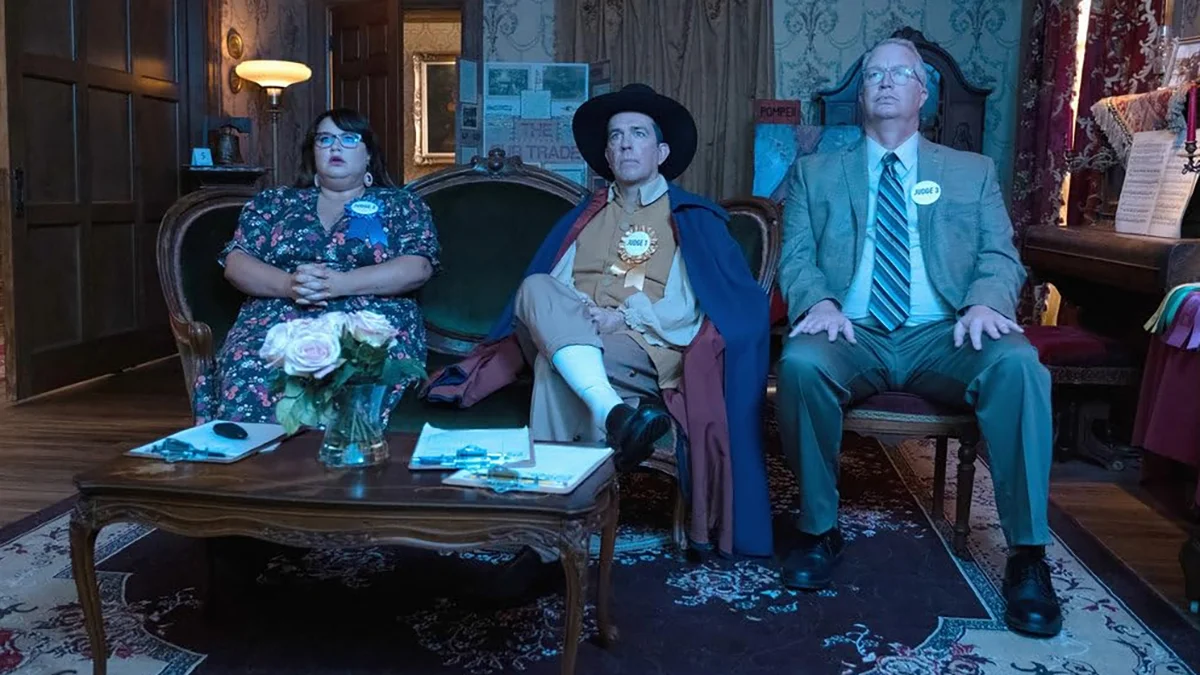
The series turns into a comic, but accurate allusion to numerous agreements once concluded between the federal government of the United States and the indigenous tribes. They often hid legal loopholes, which subsequently allowed to violate or bypass their conditions. In this sense, Rutherford Falls acts as a kind of antithesis to the “Flower Moon killers” Martin Scorsese, offering an ironic shift:
Here, representatives of the tribe, local officials and corporate bosses are entering into an unspoken alliance-not only to get rid of the monument to the founding father, but also to take advantage of the legal trick, to deprive Nathan of land and property.
The series, shot at the height of the mass dismantling of the confederation monuments, became a satirical statement about the need for historical revision. However, the seriousness of the raised topics did not allow the satire to completely subjugate the general style. On the contrary, it is at the junction of irony and reflection that the balance between the comedy and the reflection on the search for identity, historical memory and justice arises.
"Unknown country" (The Unknown Country), dir. Morris Maltz, 2022
Lily Gladstone - a nominee for the Oscar Award for the best female role in the film "Flower Moon killers." She became the first actress representing the indigenous peoples to receive a nomination for an Oscar, as well as the Golden Globe and the Awards of the Guild of Film Aactors of the United States for the best female role. In the "Unknown country" she not only played the main role, but also acted as a co -author of the script.
After the loss of the closest person - his grandmother - Tana goes from South Dakota to Texas. She goes alone, in her car, on endless American roads. We follow her throughout the way, plunging into her attentive, almost documentary perception of the world.
Filmed in a hybrid manner, the film combines elements of game drama and documentary. The camera captures the inhabitants of the American hinterland - those who are called "white Trees" in the dismissive manner. Tana listens to them, allows their voices to sound. These are white people, always former nearby, whose fate and words she decides not to reject, but to accept. She does not see enemies in them. But there is still a distance between her and others - the distance of experience, injury, injustice that her people experienced. This distance is transmitted through the rhythm of the road, the change of landscapes outside the window, the atmosphere of wanderings.
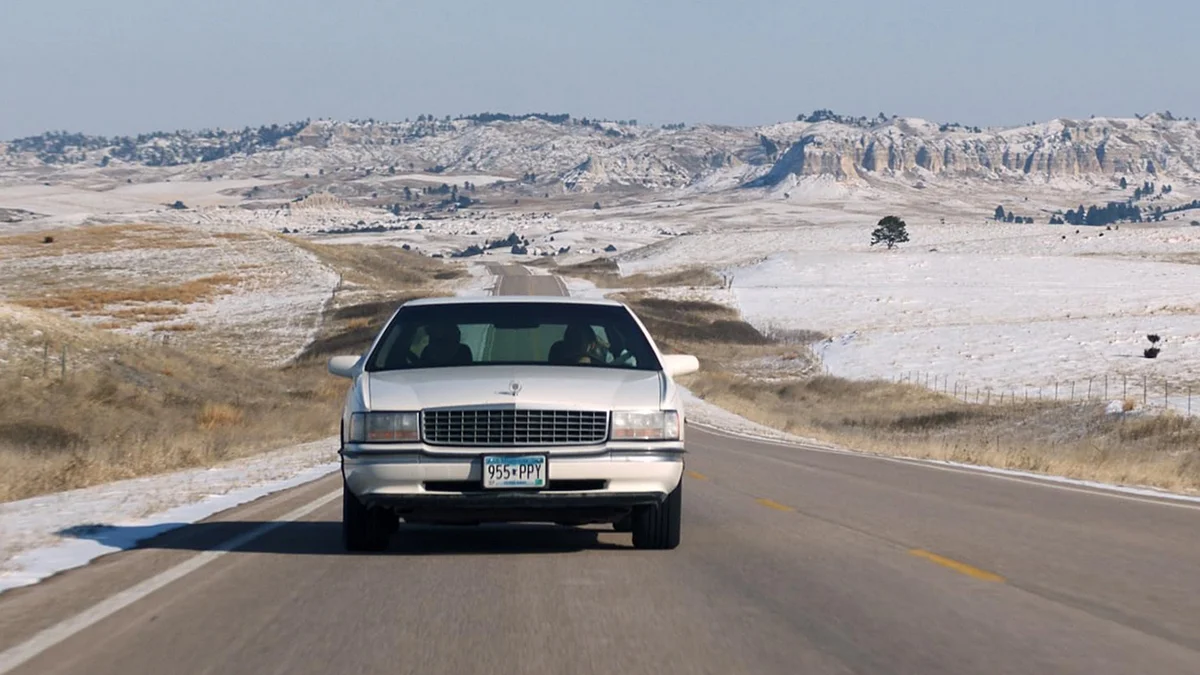
The camera notes not only faces, but also elusive symbols of the past - roadside motels, faded cafes, dance clubs, dilapidated public buildings. All this is the emblems of the outgoing America. Tana, young and full of life, goes forward, to the border with Mexico - to the place that had an important symbolic meaning for the grandmother.
Throughout the way, we are accompanied by the radio - the voice of time, sharp, anxious, restless. The news flow forms the sound environment of the film: on the air - conspiracy theory, violence, ideology, fear. This is America, talking to itself. Everything that sounds from there comes into resonance with Tana's personal pain.
Sometimes the heroine feels a threat - in intonations, in the behavior of people around, in strange trifles. But the "unknown country" is not a story about evil. This is a film about sorrows that penetrate a huge country, and about an attempt to release pain, restore the connection, survive the loss. This is the story of a young woman who, having gone through the past, seeks to find a way into the future.
"Dark Winds" (Dark Winds), series, 2022– ...
Showranner Graham Roland, a representative of the Chicasso tribe, who previously worked on series such as “survived” and “Jack Ryan”, headed a large -scale production under the auspices of the large AMC cable channel. The scenario team of the project consists entirely of the authors of root origin, and the main director was the already mentioned Chris Air (“smoke signals”). Producer support for the project was provided by George R. R. Martin and Robert Redford. Such a combination of creative forces and unique for the American mainstream setting made the series a real hit, which is already extended for the fourth season.
1970s. The action takes place on the ground of the Navajo tribe, not far from the valley of monuments. The main characters - tribal police, led by Lieutenant Joe Lifhorn - are investigating the murder committed in one of the roadside motels. It quickly becomes clear: this is not just a crime from the news report - it is guessed by elements of a ritual rite. In parallel, the bold robbery of the bank in the next town occurs. At first glance, these events are in no way connected, but as the plot develops, a dense texture of the tough and mystical world is revealed before the viewer, where terrible reality is hidden behind the silent views of local residents, and tragic circumstances are intertwined into a chain, behind which generic curses and pain of generations are appearing.
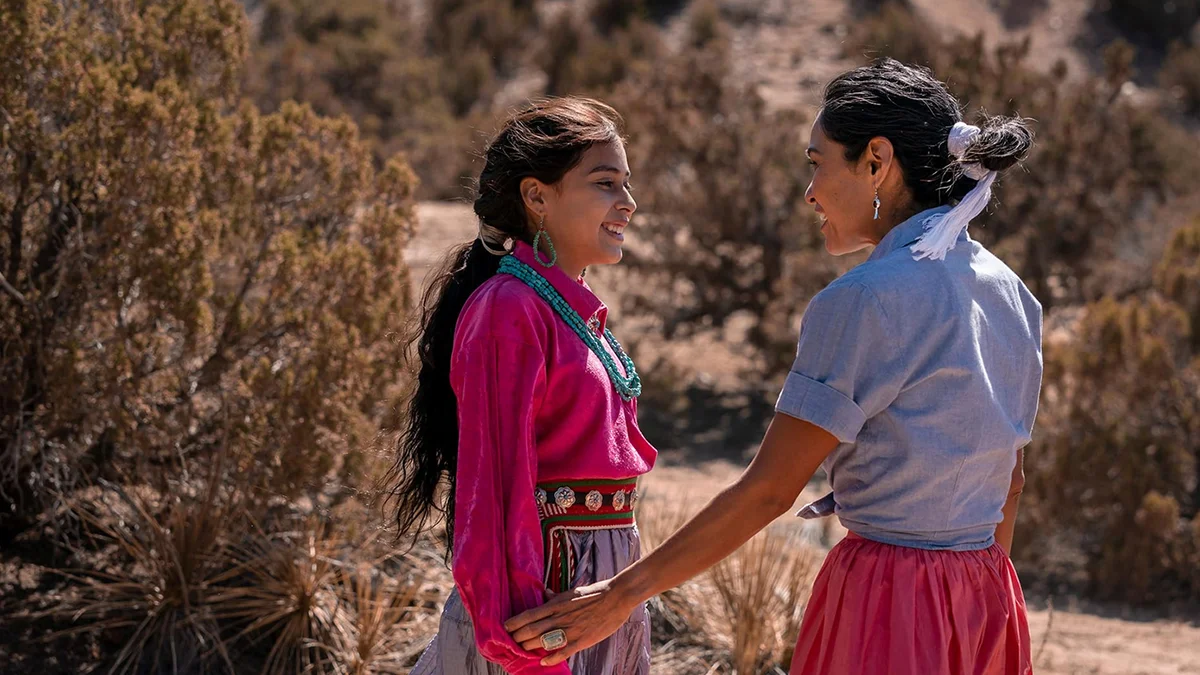
“Dark Winds” exist on the border of the two worlds - Western, with the sensation of the line of civilization, and a hero facing a difficult choice, as well as Neonuar, where “everything is not as it seems”, and moral ambiguity is an integral quality of most characters. Expressive stylistic solutions and a tense plot are gradually drawn by sharp contexts: land right, environmental disasters, forced sterilization of women, confrontation with the federal government and a deep division into "their" and "strangers". But what is the price of a potential revenge for offenders for the tragedy of the past? And who will pay for the elections made in the name of justice? One of the most powerful and original series of American television of the last decades is trying to answer these questions.
"Reservation Dogs" (Reservation Dogs), series, 2021–2023
The name of Quentin Tarantino “Resty Dogs” (Reservoir Dogs), which refers to the cult tape, became a dream project not only for Showranner Sterlin Harjoi, but also for Taika Waititi, who performed the project co -producer. The sector received enthusiastic reviews of critics, industrial recognition, including prestigious awards and nominations. The leading role-Beara (Bear)-d'farao UN-A-Tay, became the first actor from among the representatives of the indigenous peoples to receive the nomination for Emmy-the main American television prize. Success is confirmed by his role in the film by Alex Garland “under the fire”, as well as the appearance on the covers of the American media, where his face became a symbol of the presence of indigenous peoples in the cultural mainstream of the United States.
From the first episode, we find ourselves inside the chaotic world of adolescents living in the reservation in the east of Oklahoma. Young rebels are engaged in small robberies and hooliganism, trying to accumulate money to escape to California. Life in their native reservation seems to them a deadlock-not only because of poverty, social disorder or ubiquitous dependencies, but rather due to what can be called a “sensation”. A feeling of hopelessness and lack of future, which has already caused the tragic death of their friend. Each of them is trying to avoid the same fate in its own way.
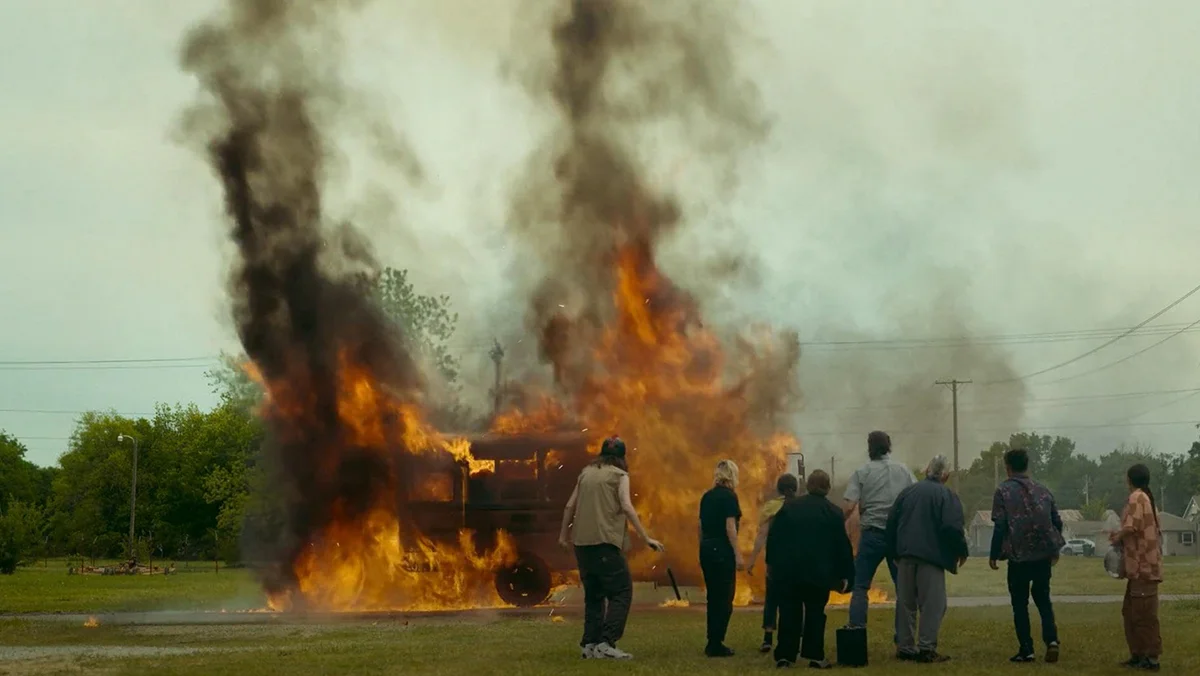
Adults, of course, are also present - but not as authorities. They at the same time seem absurd and deeply tragic. The dialogue between generations in the series is built through the third force - the power of the myth living in the daily routine of the reservation. This is not only a historical or cultural heritage, but also literally mythological figures, invading heroes. Among them is an imaginary friend of an Indian, who died in the battle of Little Bigorn and now leading philosophical conversations with a teenager. Or a woman with a deer’s legs is a mysterious, cold -blooded figure that changes the fate of the heroes and sends them to an intended path.
Each of the heroes by bit restores communication with their native land, with the surrounding people, family, friends, residents of the reservation. Passing through their own fears and prejudices, adolescents are growing up - at the same time, hope is in love with what they had to escape from.
With amazing accuracy, the authors found a balance between social and magical realism, creating a truly authentic cinema-perhaps even a new school inside American television.
“Dogs of Reservation” is not only the deconstruction of stereotypical ideas about the life of indigenous Americans, but also an attempt to reconstruct a feeling of love for their land, everyday life, people, for everything - bad and good - what surrounds them.
It is also an attempt to rethink the idea of sorrow, turning it into hope - an impetus to the new life of the whole nation.