
Translated material
Smart conception
How artificial intelligence changes reproductive technologies

Frame from the film "Space Odyssey of 2001". Photo: imdb.com
The Mexican Biotechnological Company Conceivable Life Sciences has recently announced that the first child was born with a clever system for injection of spermatozoa. The fertilization procedure, according to scientists, was “almost completely” automated. The New Gazeta Europe tells how smart technologies and AI use in the field of reproductive health and what they can give people who cannot have children for many years.
Automation Eco
In the 90s, the effectiveness of the percorporeal fertilization procedure (IVF) was increased due to the appearance of the intracitoplasmic injection of sperm ( ICSI ). In this procedure, the embryologist selects the most “high -quality” sperm, and then, using microdigu, enters it into the center of the egg. The likelihood of conception at ICSI is higher - 60–70% versus 30–40% with standard IVF.
In 2024, Conceivable Life Sciences has improved the ICSI procedure using artificial intelligence and robotics. Scientist Jacques Cohen and his team developed a special apparatus, which is controlled by AI and independently performs 23 stages of the fertilization procedure.
In particular, artificial intelligence chooses the most healthy sperm and determines its positioning before introducing into the egg. According to scientists, the accuracy with which the robot is able to immobilize, and then introduce a sperm, is not available to a person.
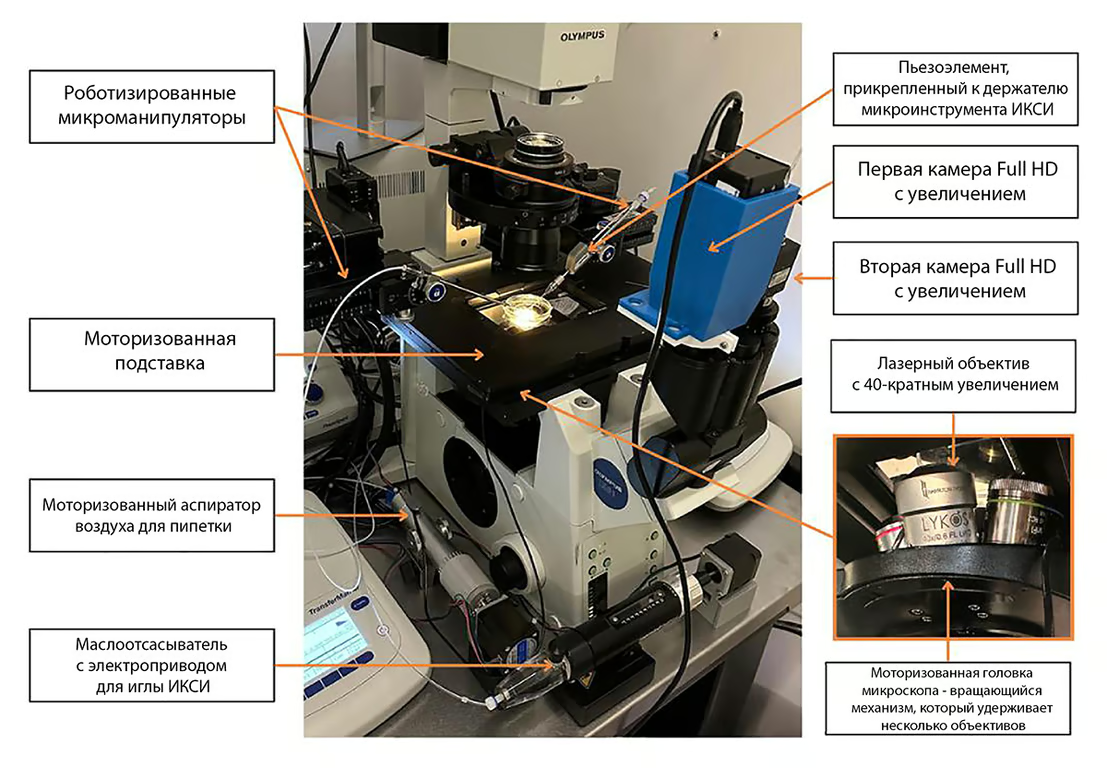
The first procedure was carried out at the Hope IVF clinic in Guadalahara using donor eggs: it was possible to get four embryo, one of which was implanted. The patient, a 40-year-old woman who had previously survived an unsuccessful IVF, became pregnant and gave birth to a healthy child.
Technology developers note that the update of the ICSI system will reduce the number of human errors during fertilization, and in the future will ensure the operation of a fully automated laboratory. This will make the procedure more accessible around the world. In addition, embryologists say, an automated approach will improve egg survival and reduce injection time. During the first operation, this procedure took a little less than 10 minutes per egg, but in the future the team plans to “significantly reduce” this time.
Selection and analysis of embryos
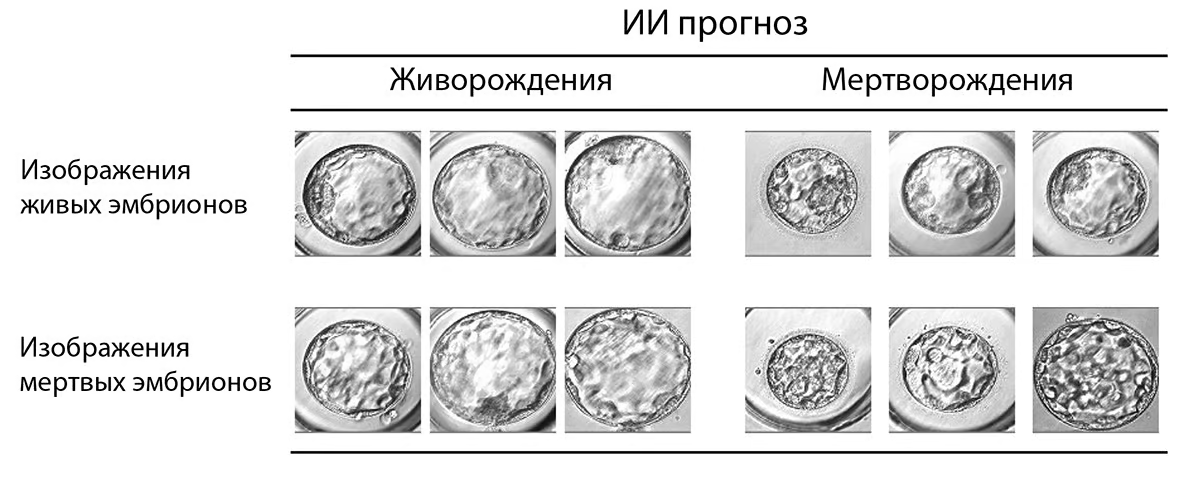
Researchers from the United States have learned to use artificial intelligence to analyze the images of embryos, assessing their viability and choosing the most promising for implantation. Scientists have developed an Inception V3 algorithm, analyzing thousands of images, identifying those external signs that are difficult to notice to a person. AI evaluates the quality of the embryo (good, satisfactory or bad), using deep training models that have trained on thousands of images. These models evaluate factors such as patterns of cell division, metabolic activity and genetic integrity in order to identify the most promising embryo. The average forecast accuracy is 90% higher than the accuracy of human forecasting.
Japanese researchers have improved the embryo selection algorithm for images, adding the patient’s age factor. Here, AI again demonstrates the best results than a person. Researchers believe that the introduction of such a system will increase the likelihood of successful pregnancy and reduce the number of necessary IVF attempts.
Selection of eggs and sperm
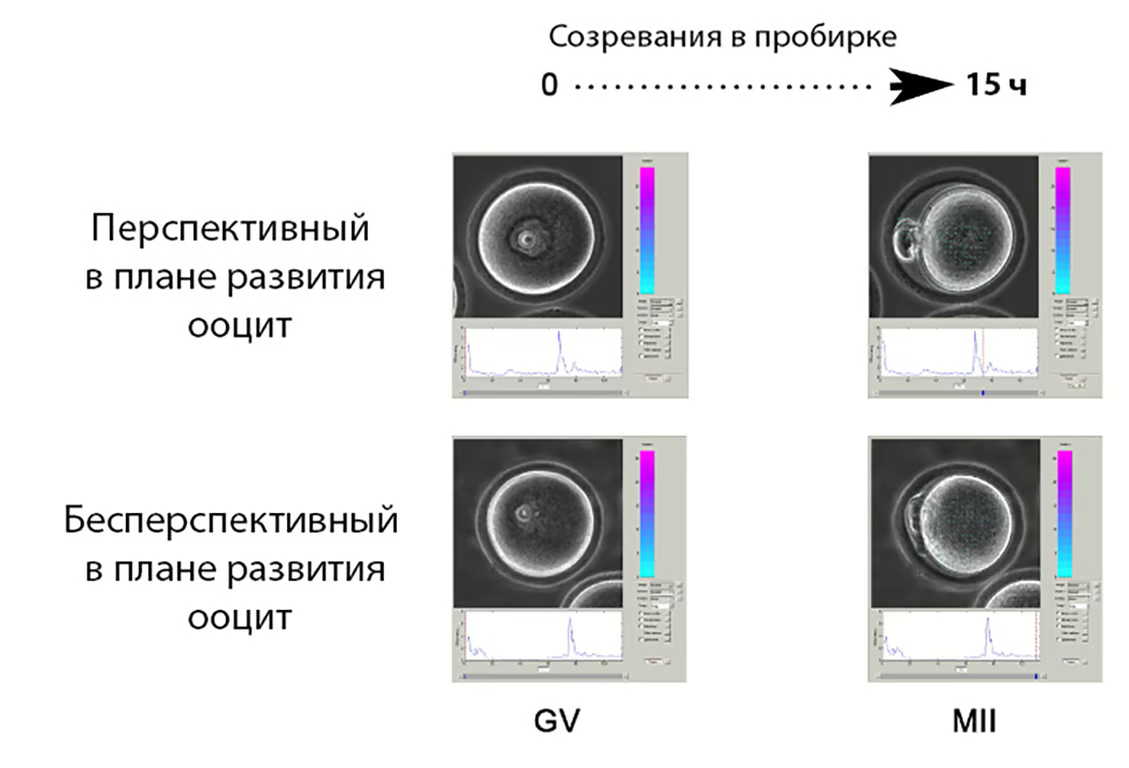
Scientists from Italy were concentrated on the development of the method of selecting healthy oocytes - female gametes, which provide the formation of an embryo after fertilization. They developed their own classification method based on an analysis of mouse oocytes during their ripening under a microscope. The system makes images of ripening oocytes every eight minutes, and then analyzes them using the Particle Image Velocimetry method (optical method for measuring instantaneous fluid or gas velocities), which calculates the cytoplasm velocity profile for each oocyte. Finally, these profiles pass through the neural network, and she predicts the mathematical probability that the gamete will be fertilized. The accuracy of prediction in mice exceeded 91% - now they plan to experience this technology in public.
Artificial intelligence technologies are also used for automated selection of high -quality sperm. Initially, the international group of researchers developed an algorithm that analyzed the external signs of sperm in images obtained using very accurate microscopes by interferical phase microscopy (IPM). As a result, the system selected high -quality spermatozoa with an accuracy of 90% and higher. Now it is offered to use it for Eco.
And in 2024, Canadian researchers presented a more advanced SID (Single-Sperm Selection Software) system for evaluating and selecting real-time spermatozoa. This automated software analyzes their mobility, including speed, trajectory and head movement template. Subsequently, the program combines these measurements for quantitative and qualitative assessment of parameters, and then offers the best option for fertilization.
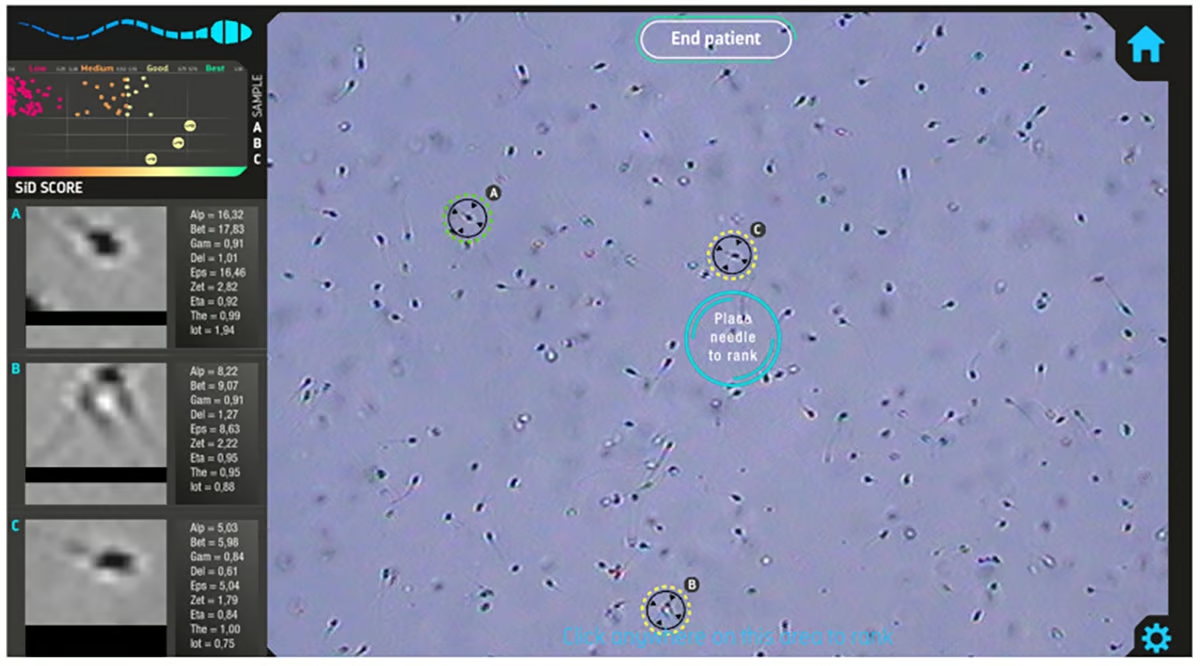
The authors of the development believe that the SID technique will significantly accelerate the process of IVF.
Currently, reproductive medicine already uses computer system analysis systems (CASA). They reveal the percentage of mobile sperm and determine their parameters. This system was improved due to an algorithm trained in chromosomal anomalies - now it allows you to identify the causes of infertility with an accuracy of more than 95% instead of 88%, as before. In addition, researchers complemented the method of patient survey in order to develop an AI system to predict the level of fertility in men.
AI for informing and diagnostics
In some regions, researchers launch projects of chat bots and AI-agents focused on communication on reproductive health and diseases-they are especially relevant if access to qualified medical care is limited. Thus, researchers at the University of Boston tested in South Africa the technology of embodied conversational agent (Embodied Conversational Agents (ECA) to disseminate information about sexual and reproductive health. The Gabby agent, who works as a virtual midwife, uses facial expressions and gestures inherent in local residents, and speaks at all adverbs. You can chat with it on the topics of family planning, the use of vitamins and healthy diet.
And as part of the Ghain Mena initiative “Salvation of the lives of mothers using artificial intelligence in rural areas of Marrakesh”
In Morocco, an AI -based application is developed that can diagnose pregnancy with high risk, which may have an adverse outcome for a mother or fetus.
It is deployed in 12 rural primary health care centers in order to reduce the maternal mortality rate by increasing the accuracy of the diagnosis of pregnant women.
Within the framework of the FADA: Fetal Abnormality Detection Algorithm, an artificial intelligence application is developed in Qatar, which will transform standard 2D-ultrasound scans into complex 3D images. This will allow doctors to receive a complete picture of the fetus to better diagnose possible anomalies in the early stages.
Prospects and restrictions of technology
Researchers note that existing AI tools can only be used limited in the reproductive sphere of medicine. They highlighted the following problems:
1. Limited methods of machine learning algorithms. Controlled training is currently using to avoid errors in the data. This algorithm uses marked data to develop models that can predict a certain result. However, data marking requires many hours of manual labor of specialists;
2. Limited medical data for training. Since reproductology works with confidential data, they often cannot be used for teaching AI;
3. Lack of large -scale and controlled tests to check the operation of algorithms. Most researchers are limited to the classification of the data obtained, but do not introduce them into working systems to use in medical analytics. This does not allow the use of AI, for example, at the stage of diagnosis of diseases of the reproductive sphere.
Nevertheless, researchers see great prospects for the introduction of AI in reproductology. So, if the problem of the “black box” (hiddenness of work and decision -making) in deep learning algorithms is resolved, they can be taught on non -marked data, and this will solve the problem of manual labor.
Researchers believe that in the future, the association of medical data from electronic medical cards, medical images, laboratory research, genetic information and medical records with advanced AI methods will change practical medicine. Perhaps a system for supporting decision -based on large data will appear, which will be updated in real time, helping doctors to make more reasonable decisions in reproductology.