Translated material
Useful and redeemed
An agreement that speaks more about politics than about the economy. What did Kyiv and Washington actually signed
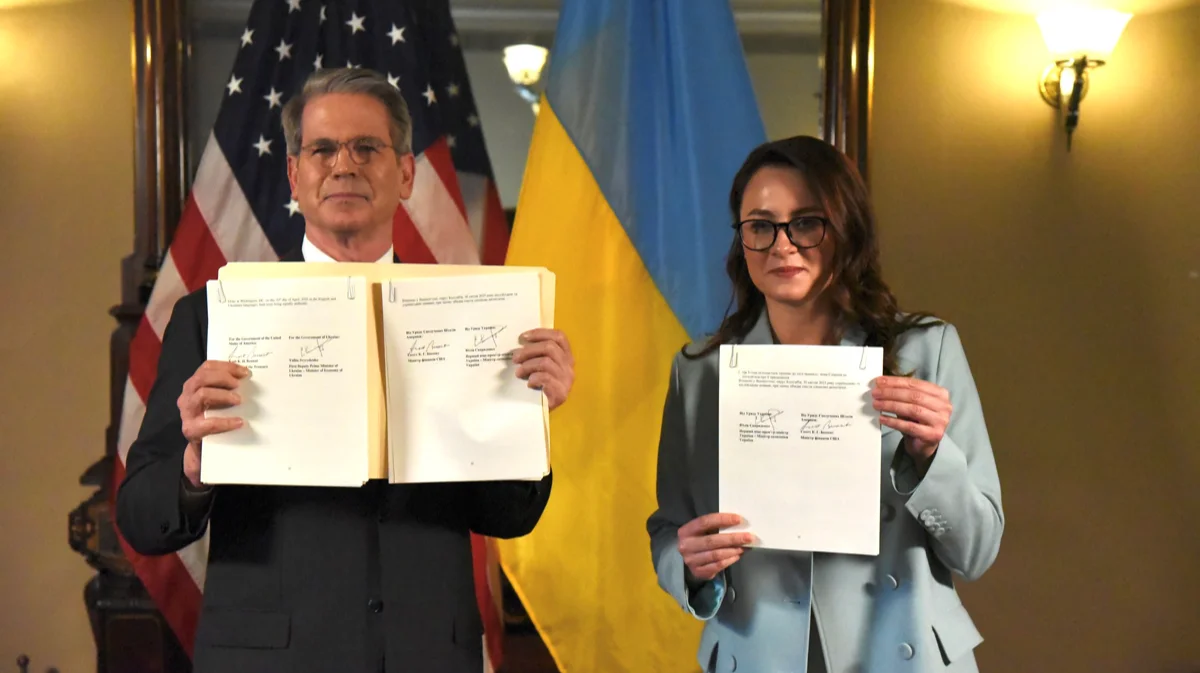
U.S. Finance Minister Scott Immotrot and First Deputy Prime Minister of Ukraine Yulia Sviridenko after signing an agreement on the “Subsoil”, Washington, April 30, 2025. Photo: Yulia Sviridenko / Facebook
On the hundredth day of Trump’s presidency, the “Subsoil” agreement with Ukraine was finally signed. This epic lasted more than three months, sometimes becoming the main plot of difficult Ukrainian-American relations. The New Gazeta Europe monitored all the vicissitudes and “oddities” of this process. Starting with the fact that the subject of the agreement in its various draft and rhetoric of both parties was constantly changing - “rare earth metals”, “minerals”, “bowels and minerals”, “infrastructure”. And ending that for some reason the economic, political and geopolitical significance of this “transaction” was incredibly exaggerated, and in the information noise accompanying it, one could hear opinions about it as a decisive factor of such diverse consequences as the end of the war, the safety of Ukraine and the colonial dependence of Kyiv on the United States.
We also recall that the signing of the agreement was the main reason for visiting Zelensky Washington at the end of February, which ended with a “historical” scandal in the oval office. And then the document is signed. However, it is now very difficult to say what it is essentially-the first step in the Ukrainian-American partnership of the Trump era or the political and media PR of the American president, which has no real consequences. The thing is that if you analyze the agreement from a formal point of view, relying exclusively on the text and provisions that are spelled out there, we can come to one conclusions. But if you look at it in a wider geopolitical context and try to see the prospects, conditions, time and possibility of its implementation, then the conclusions will be slightly different.
What can be pleased with Kyiv
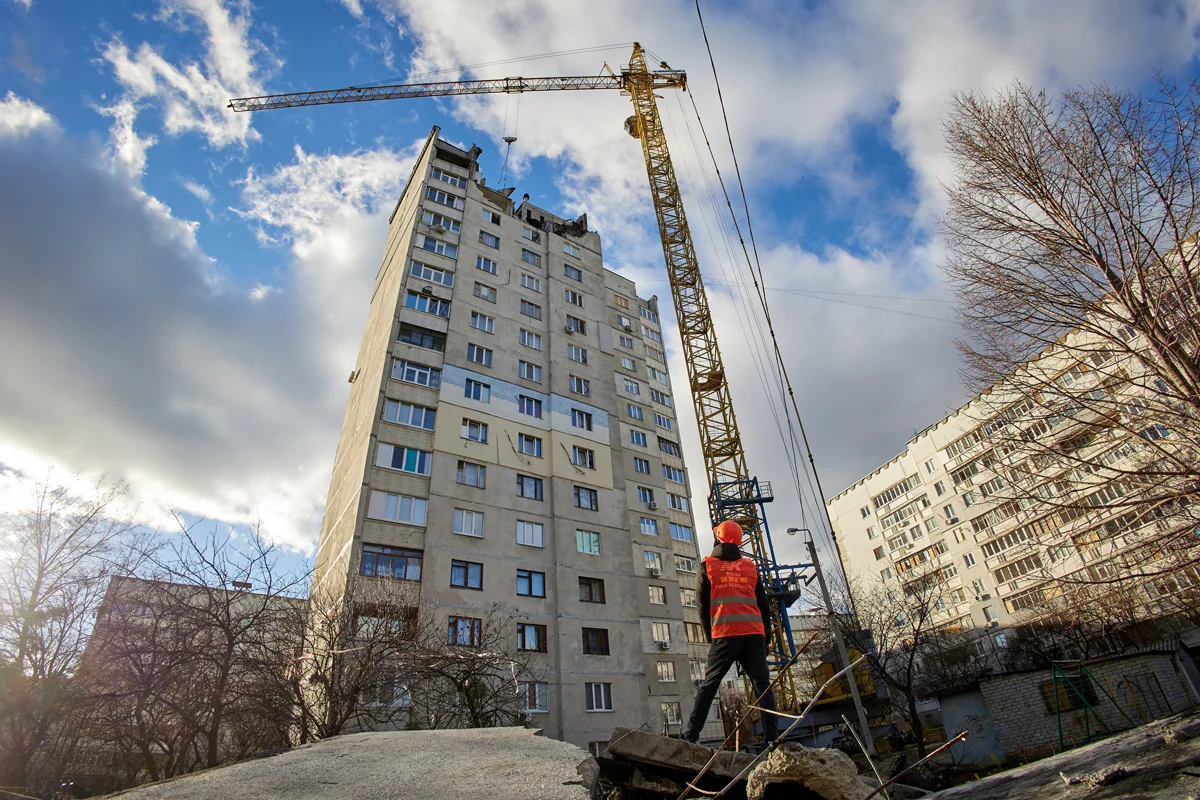
So, the document itself is entitled "Agreement on the creation of the US-Ukrainian Investment Fund for Restoration." The very word “restoration” itself, although it is purely symbolic in nature, should inspire Kyiv with some careful optimism regarding the future American participation precisely in economic restoration, and not the operation of Ukraine.
Indeed, Kyiv, at the cost of diplomatic efforts, as well as thanks to a coincidence of a number of circumstances that are not dependent on it (this will be discussed a little lower), it was possible to throw out all points from the draft agreements that could indicate its “coloniality”. We are no longer about the notorious debt, either at 500 or $ 350 billion, which the Americans had previously tried to enter into the contract, thus drawing back in the deposit number of compensation for gratuitous assistance to Ukraine during the Biden administration.
From the final agreement, points on the transfer of control and management over the Ukrainian subsoil, as well as the fact that American companies will have the right to priority access to new Ukrainian deposits disappeared.
Just a clear line between new and old is very important. The subject of the agreement is precisely the new deposits that are not yet licensed and are not developed in Ukraine. It is income from new licenses and mining, rental payments that Ukraine will be entered into a joint investment fund of 50 percent.
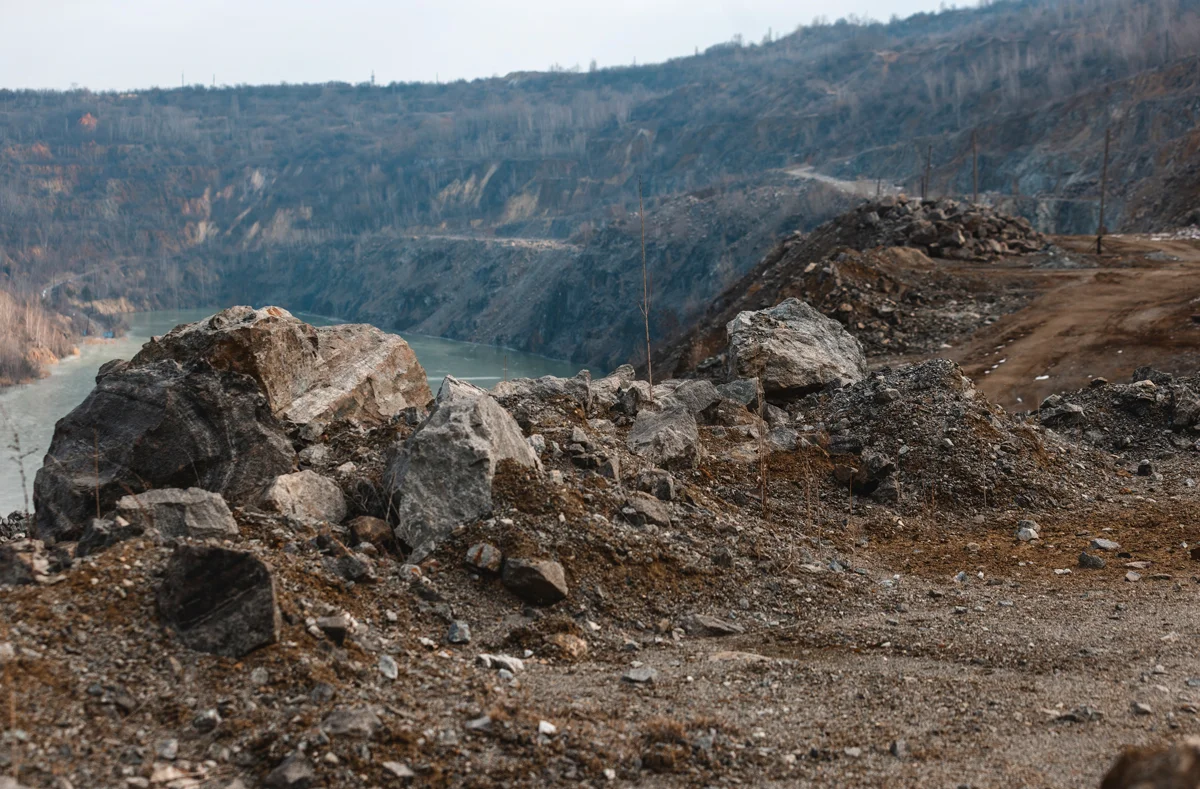
In addition, an exhaustive list of minerals is given to which the agreement extends: natural gas, oil, rare -earth materials, valuable and so -called non -ferrous metals - only 57 items. Iron ore, coal, granite, minerals of local value (such as sand, crushed stone and so on) do not fall under the action of this agreement.

Submarine stones of the agreement
Firstly, given the fact that the new deposits in Ukraine are not only not developed, but in many ways not yet explored, the question arises, where will the money come from for the general investment fund? This is incomprehensible. Will the fund be in a frozen state until the end of the war? However, the White House has already hastened to say that as soon as possible he wanted to proceed with the implementation of the agreement in order to "return the money to American taxpayers."
In this case, does this mean that Ukraine will contribute its “living money” either funds received from European donors, or the United States can contribute to the fund in the form of weapons, ammunition, technologies, and conducting military exercises? The cost of this weapon will be credited as the amount of the contribution of the American side. Such a source of replenishment of the fund is indicated in the contract, but nothing is said about guarantees and the amount of such assistance. What if the United States prefers exclusively the sale of weapons, which they recently made a small amount of $ 50 million? And the sale of weapons is not the subject of the agreement and is carried out separately, having nothing to do with the funding of the fund.
Secondly, despite the fact that American companies will not directly receive the right “first-hand”, it will move to the fund. And already through it, American business will be the first to buy the extracted raw materials. Therefore, here Ukraine is losing the opportunity to bargain for raw materials, and any new deposit or infrastructure project will initially be proposed for consideration by the fund. Then the question arises, and who will lead the fund? The management of the Fund on a parity basis and its structure so far remain at the level of informal agreements, although the Minister of Economy of Ukraine Yulia Sviridenko, who was the signator of the agreement, said that “the fund is created 50/50.
None of the parties will have a predominant voice, and this will reflect an equal partnership between Ukraine and the United States. ”
Thirdly, the agreement is very vaguely painted where the funds of the fund will be sent-projects to restore Ukraine and the return of funds to the founders of the fund. According to Yulia Sviridenko, the first 10 years, income and income of the fund are not distributed, but can only be invested in Ukraine - in new projects or restoration. However, these conditions will be discussed additionally.
Presumably, the concretization of these and other non -clear provisions will appear in the “technical” agreements that should soon be signed. However, the hundred days of Trump's presidency have already ended, the president was saluted about his confirmed ability to conclude transactions, and whether his administration will continue to be interested in a compromise dialogue with Ukraine is unknown.
And here we move to one important, if not more - fundamental reason why this agreement is still signed, and signed on the conditions generally acceptable for Ukraine, and on the other hand, why there is reason to doubt that the bowels of the bowels are so decisive.
Trump Foundation?
For 100 days of the presidency, Trump did not reach a single tangible result in foreign policy, except for chaos with raising - a decrease in tariffs in international trade. The Russian-Ukrainian war continues without any hint of at least a ceasefire, Hamas does not return Israeli hostages, Iran did not abandon the nuclear program. Even Ukraine, despite the fact that it bleeds in the three -year war and depends on American assistance, did not succumb to the frankly unceremonious blackmail of the new American administration and attempts to break Kyiv through the knee.
All Trump's promises turned out to be an empty sound, despite the victorious relations of himself and his team. And the voter, if he does not belong to the sect of fanatical fans of the president, there are very fair questions. However, not so much the voter who is primarily interested in domestic politics as the American and European establishment.
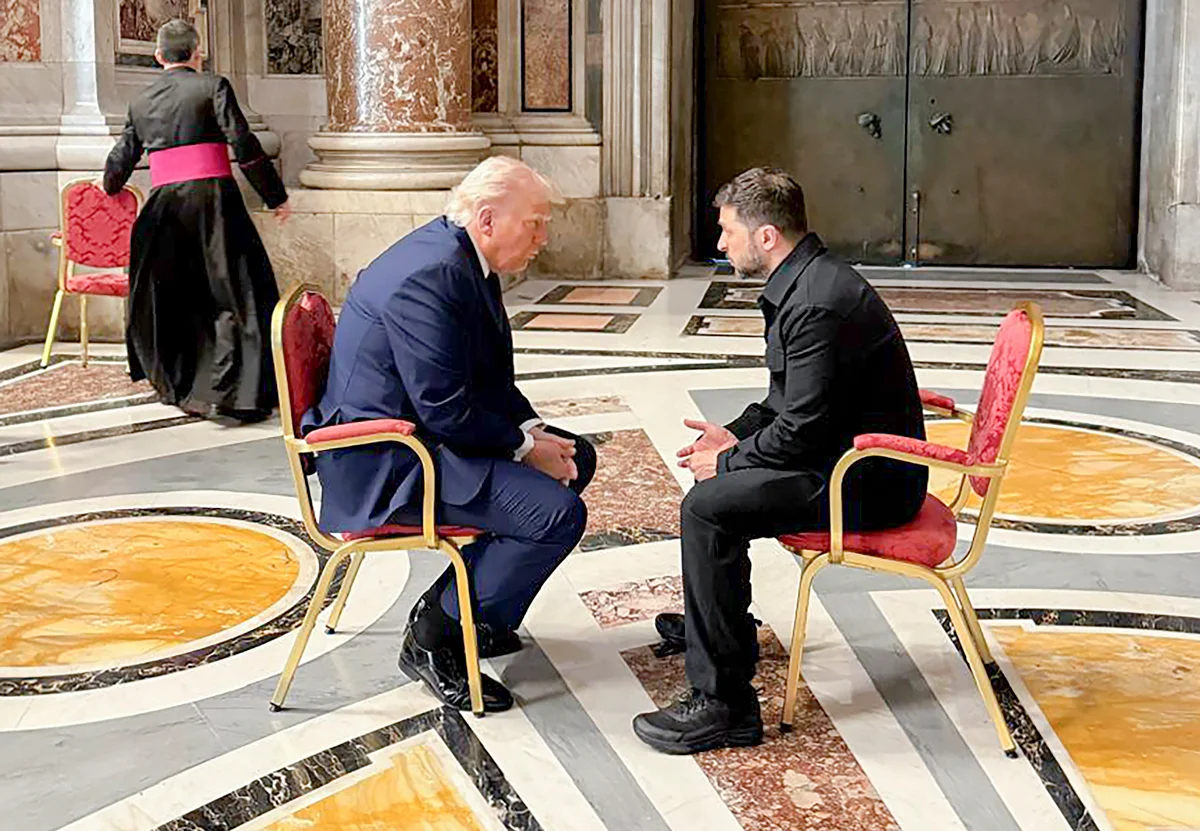
Therefore, Trump really needed to show some result. And the only possible chance was the conclusion of a notorious transaction. That's why the United States compromised in the “subsoil” agreement, agreeing with a number of serious remarks of Kyiv. Of course, you can amuse yourself with the hope that after the meeting of Trump and Zelensky in the Vatican against the backdrop of the next barbaric shelling of the Ukrainian capital, Trump understood the true intentions of Putin and changed his attitude towards Ukraine. Even if this is partly so, then, knowing how Trump quickly changes its position, it is unlikely that Kyiv should be much seduced about this. Moreover, most likely, the main factor in the US “bluntness” was the need to rush to complete the “100 days”.
Perhaps all this epic on minerals demonstrated a classic Trump strategy for negotiations - to set maximum conditions, and then reduce the bar a little, creating the impression of a compromise for the other side, which will be satisfied, which she managed to avoid the worst. Only for some reason in other international affairs Trump-especially in relation to the Kremlin, where, on the contrary, he immediately made concessions-does not use such a strategy.
Is the agreement good or bad for Ukraine?
It seems that the document should not be evaluated in such categories, because thereby we will again exaggerate its meaning. Yes, a number of inconsistent moments mentioned above are forced to worry about whether they will be acceptable to Ukraine in subsequent “technical” agreements. Yes, the document has no guarantees from the USA, which until the very last moment was an important condition for Kiev.
On the other hand, Ukraine stood and did not go to the transfer of its resources to external management for the sake of illusory promises. Also, this agreement Kyiv has somewhat corrected the Ukrainian-American relationship vector towards the resumption of partnership, in which the United States is also interested. The document can give a signal for other investors. Of course, the economic bonuses of the document for Ukraine, if it is implemented, will come far from soon.
But the same can be said about the “slippery” moments of the agreement, as well as the benefits for the United States, although the White House is sure that the agreement on minerals with Ukraine will serve as a model for further international agreements.
According to Bloomberg, this reflects Trump’s strategy - to use the influence of US foreign policy to obtain assets and profit from investment abroad.
To some extent, Kyiv can write down in an asset that indicative, albeit a symbolic fact that the term “Russian invasion of Ukraine” appears in the document, for the first time since he came to power of the Trump administration. Do not forget that the indirect consequence of the conclusion of the agreement was the decision to sell weapons to Ukraine, albeit for a small amount. In addition, the US State Department approved the sale of educational and technical support for Ukraine for F-16 aircraft, as well as related equipment in the amount of $ 310.5 million.
It turns out that the “Agreement on the creation of the US -Ukrainian Investment Fund for Restoration” is the game “Win -win”? Maybe. Nevertheless, it seems that this game is most likely simulating.