
Translated material
“Are you waiting for the Freikorps? It’s not him yet.” How they are again trying to make a “Russian party” out of the LDPR
The party must collect the votes of nationalists and the audience of z-channels in the Duma elections
By the 2026 State Duma elections, the LDPR may become the main “Russian party” in the country, several sources in the party leadership and federal authorities told VERSTKA. According to them, the presidential administration is discussing the possibility of making the LDPR an “assembly point” for nationalist-minded citizens and “passionate veterans of the Northern Military District” - in order to give them representation in the next State Duma. LDPR leader Leonid Slutsky is already actively using “right-wing” rhetoric, and the party says that this is a deliberate strategy and points to a “non-aggression pact” with “right-wing” movements like the “ Russian Community ”. Political strategists and pollsters still do not give a party with such an ideology more than 5% of the votes, and among the prominent participants in the war, not everyone is ready to cooperate with the LDPR.
In order not to miss new texts from “Layout”, subscribe to our telegram channel
To the Ministry of Natural Resources “for the benefit of the Russian people”
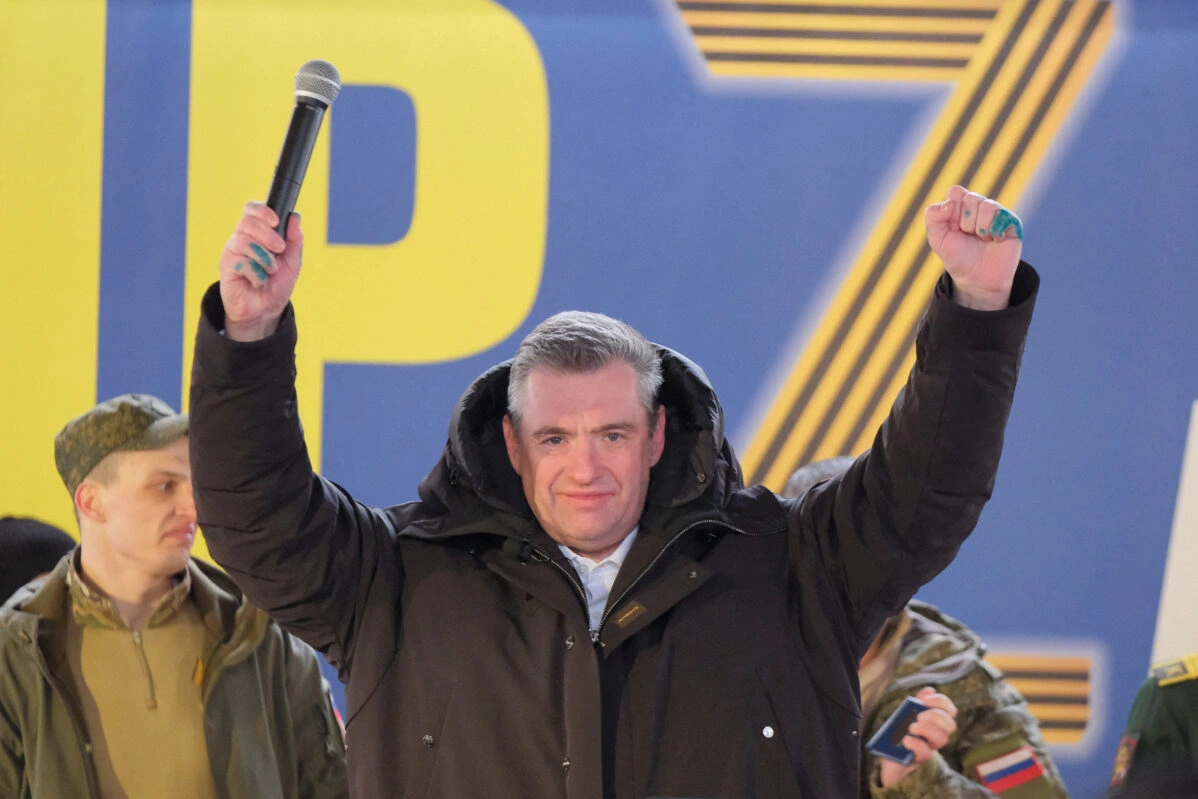
The May Day rally of the LDPR in Moscow was sharply different from similar events of other major political forces. In addition to the party's typical blue flags, several dozen people gathered near the stage held black, yellow and white banners of the Russian Empire with the LDPR coat of arms in the center. Party leader Leonid Slutsky devoted almost his entire speech to a detailed explanation of his slogan “Work for the Russians!” He demanded to stop “labor discrimination against Russians” in favor of migrants. In addition, he spoke about a “real, not fictitious” exam for knowledge of the Russian language for migrants. And he called for an end to their “uncontrolled residence” in the country. Slutsky called the LDPR “the most reliable party” for citizens of the Russian Federation. “Russia is for Russians, not for migrants!” - he said.
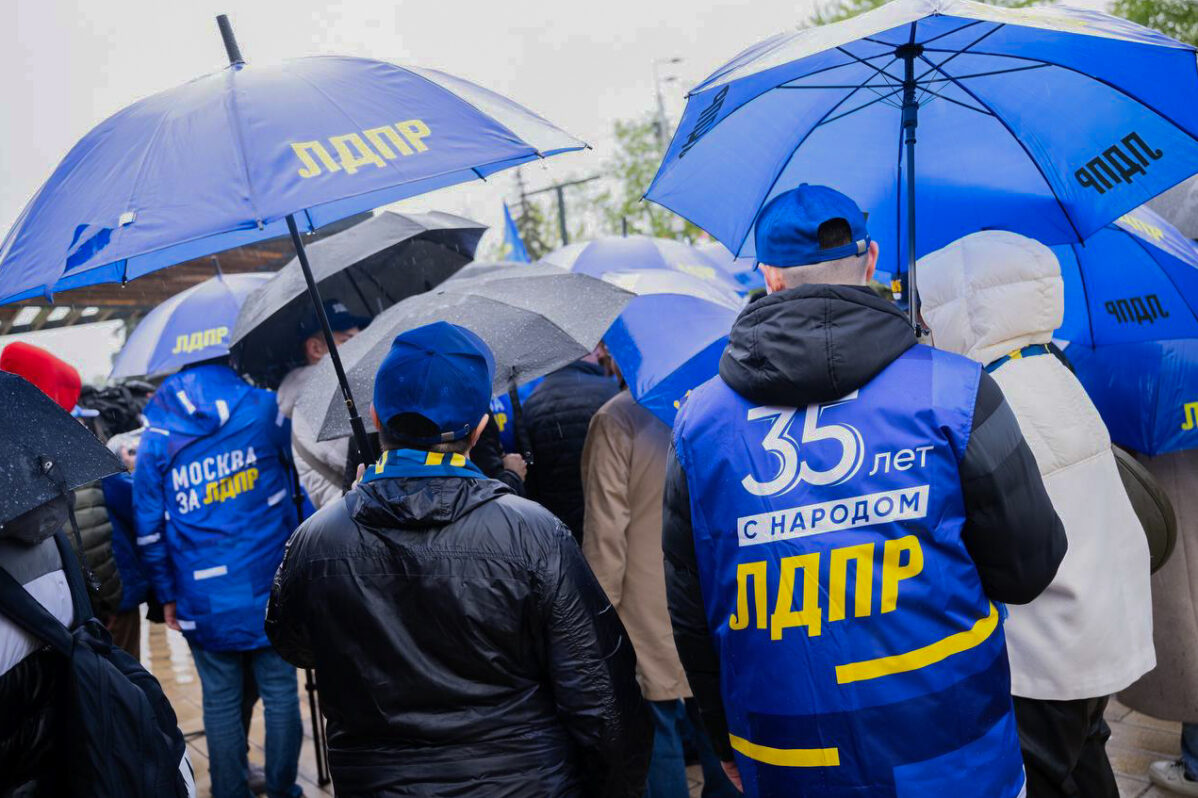
In April 2025 alone, the LDPR tried several times to play on a national theme. For example, on April 25, the party held a “Russian ball” at the “University of World Civilizations” founded by Vladimir Zhirinovsky . On April 30, Slutsky, bidding farewell to State Duma deputy Evgeny Markov, who was leaving for the post of deputy head of the Ministry of Natural Resources of the Russian Federation, wished him “efforts for the benefit of the Russian people.” A little earlier, on April 25, at an event in honor of Zhirinovsky’s birthday, Slutsky called for “returning greatness to the Russians” in order to “force respect for Russia.” In mid-April, the party announced an essay competition “Russia and the Russians.”
Recently, Slutsky has spoken several times about high-profile stories related to interethnic conflicts. For example , he stood up for “a schoolgirl in the Ryazan region who was attacked by gypsies.” “A Russian person on his own land should not tolerate alien ethnic communities next to him who sell drugs and keep the local population in fear,” commented Slutsky. A few days earlier, he spoke in defense of the “simple Russian man” Pavel Chervyakov from the Nizhny Novgorod region, who, as a security guard at a children’s camp, killed a man who attacked this institution. According to the LDPR, he was a drug addict; according to the court, he was drunk. Chervyakov, having fought off criminal charges in court, joined the LDPR.
This dramatic use of the “Russian card” is not at all accidental, two people who are members of the LDPR leadership and a political strategist working with the presidential administration tell Vorstka. “This is the party’s agenda for the 2026 elections, it has already been formed and has begun to be used,” says one of them.
The interlocutor of VERSTKA calls “the Russian theme and the construction of the Russian world” the “first in order of priority” theme of the LDPR campaign. “This will be seriously emphasized: illegal migrants and the fight against their ‘excessive employment,’” he explains. The next point is “expansion of the country’s cultural space”: “Russia without borders, creating favorable conditions for Russian culture. Russians, according to Slutsky’s formula, are those who recognize themselves as such by culture and language. It is desirable that these are Orthodox people, but not necessarily,” a source of “Vestka” in the Duma faction of the LDPR describes the doctrine.
All party representatives with whom “Verstka” spoke indicate that “everyone can see their own in this ideology.” They believe that such an ideology can attract both moderate voters who may like the idea of protecting culture and language, as well as more radical citizens. “It’s easy to disown the second one, but people with similar views can also vote for us,” said one of them.
“Another significant topic is the military service and the integration of veterans into civilian life,” says Vorstka’s interlocutor, close to the presidential administration. “Roughly everyone is doing this now, but the LDPR will focus on the national factor,” he explained. Finally, Slutsky will try to play the “regional card. “We have a slogan: “Russia is bigger than Moscow!” We tested it in presidential and regional elections. “He resonates with many people, even in Moscow,” another parliamentarian representing the Liberal Democratic Party convinces the “Vestka” journalist.
Vestka’s interlocutors working with the presidential administration say that they have been “discussing for some time” the “fundamental importance” of finding a niche for nationalist-minded people - “and a real one, and not as a diversion.”
“The problem of the conventional “audience of military correspondents” and the “war party” has been brewing for some time now. At first they began to be “highlighted” less and began to be “grounded,” but the question is not in the military officers, but in the public mood that was shaken. This is such a militant passionarity. And what happens to it is demonstrated by the Wagner march and the high level of its support. Social polls [meaning closed polls of the FSO - “Vorstka”] show that the number of such voters is quite large [the interlocutor refused to specify exactly how many],” says a political strategist working with the Kremlin’s internal political bloc.
An interlocutor of “Vestka”, close to Old Square, says that the outlines of the Duma campaign are now “actively discussed.” According to him, a “patriotic party” that could draw votes from the communists and at the same time accumulate an audience “protest enough to vote against United Russia could become such a project.”
How can a nationalist party get into the State Duma?
Expand ↓According to the law, parties can participate in the 2026 Duma elections in two ways. The first is to receive the so-called “parliamentary benefit”. In addition to the LDPR, the Communist Party of the Russian Federation, A Just Russia, United Russia and New People, which have factions in the State Duma of the current convocation, these are eight more parties whose lists won elections to at least one parliament in the Russian region. The second way is to collect more than 200 thousand signatures in support of the party list, the quality of which will satisfy the employees of the Central Election Commission.
No one has been able to successfully take the second path. Therefore, parties seeking to participate in the Duma elections are trying to get “benefits” through regional elections. The last chance to achieve it before the 2026 federal campaign is a single voting day next September. Then elections to the parliaments of 11 regions should take place. In turn, in order to participate in them, the party must be officially registered by the Ministry of Justice before mid-June, when these elections will be officially scheduled. And then - collect several thousand signatures to participate in regional elections or, if the party already exists, have its own municipal deputies, who, by analogy with federal rules, provide “benefits” for participation in regional elections.
According to the Ministry of Justice of the Russian Federation, of the two dozen organizing committees for the creation of new parties, only the “embryo” of the Conservative Party of Russia theoretically fits the goal of creating a “nationalist party.” But the organizing committee and leadership of this organization have neither well-known politicians nor large businessmen. The last time the Ministry of Justice registered any party was at the beginning of 2020, when the entire procedure was successfully completed by “New People” with investments of hundreds of millions in it from the leader and founder of the Faberlic holding Alexey Nechaev.
Experts from the Golos voter movement and political strategists have repeatedly pointed out that such complex and confusing rules were created specifically to complicate access to elected positions for independent candidates. In addition, during the entire existence of the Russian Federation, there have never been federal elections whose rules did not change compared to the previous campaign.
How the nationalists tried to come to power
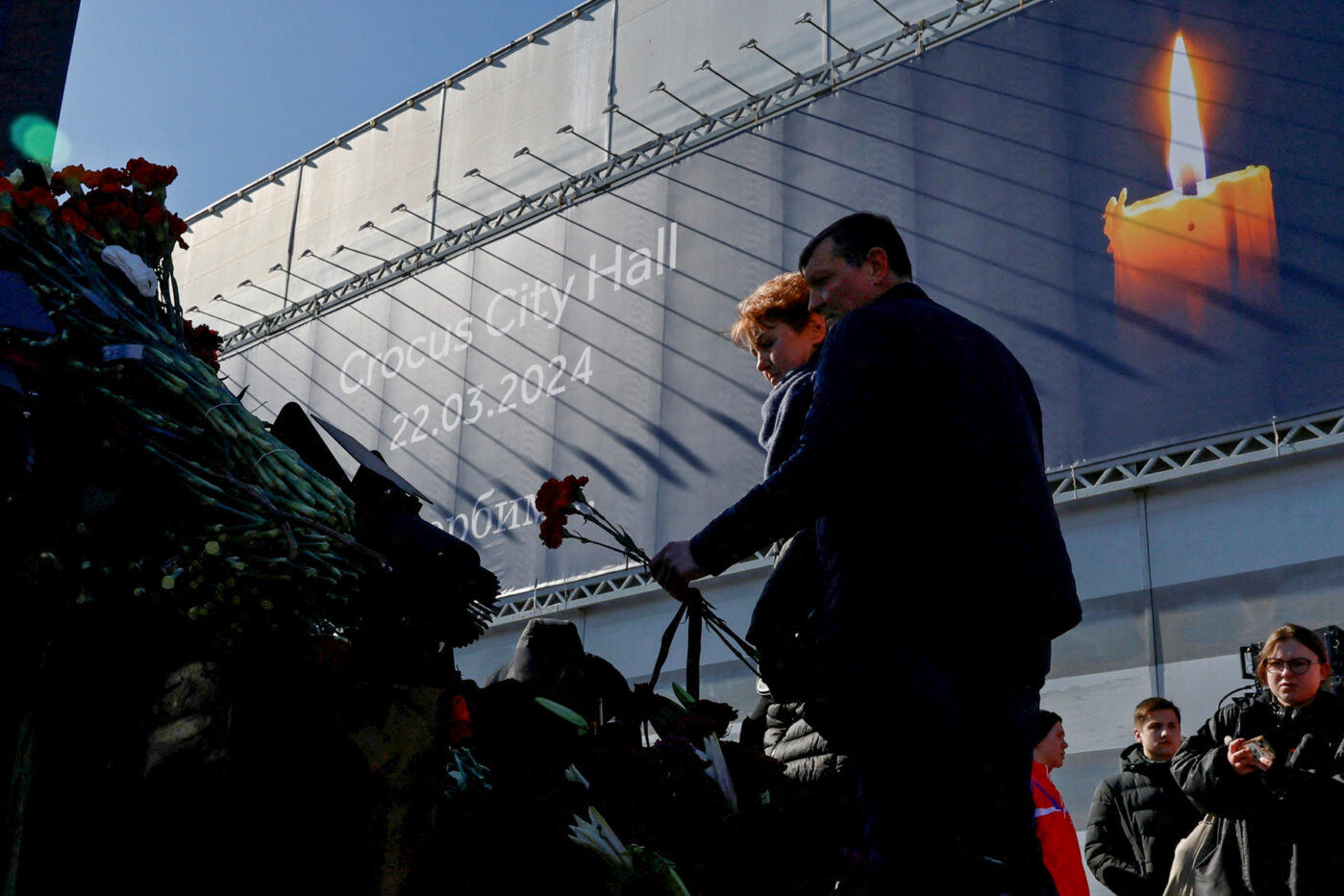
According to a VTsIOM survey conducted in July 2024, 60% of respondents believed that multinationality “makes the country stronger.” Only 7% of respondents had the opposite opinion. And 81% did not feel hostility towards representatives of other nationalities. This is another illustration that Russians are traditionally more concerned with “left-wing” social problems such as rising prices and accessibility of medical services than with issues of nationality. Moreover, even after the start of the war, a significant proportion of respondents (for example, in March 2024 there were 9%, according to the Levada Center) called the growth of nationalism a worrying factor. True, last year’s terrorist attack at Crocus changed the situation somewhat. Levada indicated that right during the survey, concern about migrants increased from 19% before the tragedy to 24% after it.
Pronounced nationalist movements in the Russian Federation have never received greater opportunities to legally, through parliament, influence the executive branch. The first serious attempt to achieve this was made by the Spas electoral bloc during the 1999 Duma elections. The first number on his list of candidates was Alexander Barkashov, the leader of Russian National Unity, the most massive far-right organization in Russia in the 90s and early 2000s. Then, at the end of the election race, the Central Election Commission removed Spas from the elections, but formally not for ideological, but for legal reasons. Information about about a quarter of all regional branches of Spas was recognized by the election commission as unreliable.
At the next State Duma elections, in 2003, the Rodina bloc, led by the charismatic and populist Dmitry Rogozin, entered parliament. “Rodintsi” received 9.02% of the votes and took 37 out of 450 mandates. The party took a nationalist and anti-migrant position, and Rogozin himself constantly spoke about the need to “protect the rights of Russians.” The project existed until 2006, when, under pressure from the Kremlin, it was merged with the Russian Party of Life and the Party of Pensioners into “A Just Russia”. A year later, after the new Duma elections, all the well-known “Motherland” nationalists failed to enter parliament. For example, prominent associates of Rogozin were no longer included in the next convocation of the State Duma: Andrei Savelyev, Mikhail Markelov and Alexander Chuev. From the “old” “Motherland”, among the “Socialist Revolutionaries”, only Vice-Speaker of the State Duma Alexander Babakov still remains in a major parliamentary position. He cannot be called a strictly ideological politician. During his career, he managed to visit not only Rodina and A Just Russia, but also in the ranks of United Russia, and even as a senator from the Tambov region, to which he had no direct connection before or after that.
Since then, the Kremlin has allowed only Vladimir Zhirinovsky to openly play the “Russian card” and only during campaigning. The LDPR used slogans like “We are for the poor - we are for the Russians!” before the elections, but this did not result in political decisions in the “right” direction. There were no politicians like Rogozin and, especially, Barkashov on the party’s Duma lists. And “Verstka” was unable to find successful legislative initiatives of the LDPR of a nationalist bent.
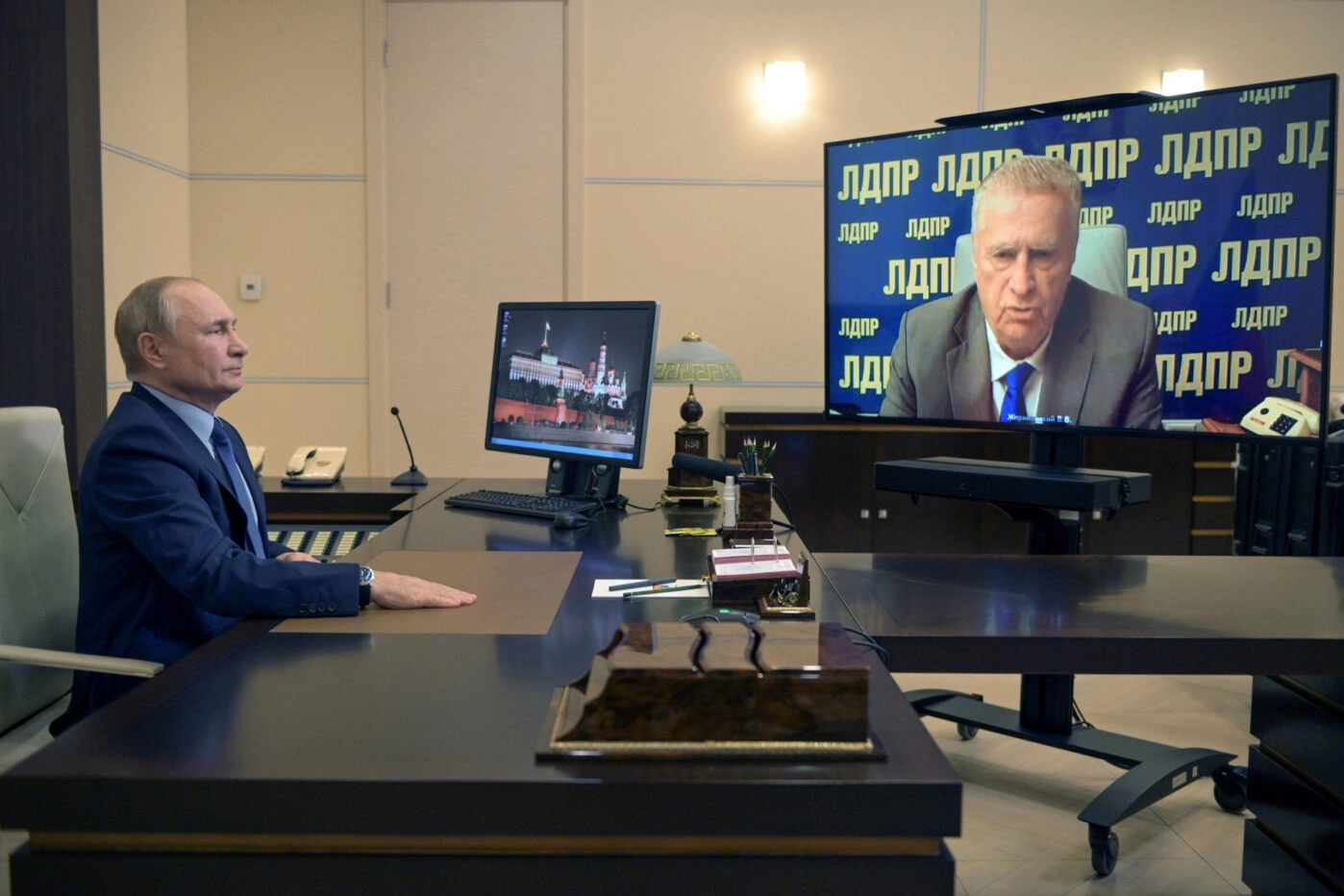
The political system in Russia is now even less suitable for “creating a successful movement of real nationalists from scratch,” a political strategist working with the Kremlin states in a conversation with Vorstka. “The clearing, fortunately for the official parties, has been trampled,” he believes, so the Kremlin will have to choose from existing parties for these purposes. “And they will inevitably have to work in this field. Moreover, the consensus that has formed since the beginning of the SVO obliges them to do this,” agrees another political strategist. “We are, of course, primarily about A Just Russia and the Liberal Democratic Party.”
But the Right Russia party “even their passage to the State Duma is in question”: the party during 2024-2025 consistently had the lowest ratings among parliamentary parties - about 3.5%, and local branches of the Socialist-Revolutionaries are massively losing representation in regional legislative assemblies. “The “Socialist Revolutionaries” had an extremely unsuccessful experience of cooperation with Yevgeny Prigozhin, a man with a “right-wing” flair. Mironov even boasted of “Wagner’s sledgehammer,” but after the rebellion of 2023, the “friendship” instantly ended. But who said that those “at the top” forgot about it?” - an employee of the presidential embassy in the Central Federal District sneers.
Other “right-wing” projects, like the re-established “Rodina” of State Duma deputy Alexei Zhuravlev, do not even have such support. Attempts at “right-wing” party building have already been made and have not resulted in long-term success, and now there are “little resources” for this, explains the interlocutor of “Vestka”.
“Since 2022, the LDPR, after the death of Volfych [Vladimir Zhirinovsky], many in the “pharmacy” [slang name for the presidential administration] are considering replacing the Communist Party of the Russian Federation as the party of the first opposition choice. If the LDPR is armed with a red-brown ideology, made it a defender of the interests of the regions and given it bright leaders, this may well work out,” a political strategist working with her describes the pattern of reasoning in the AP.
However, his colleague will clarify that the Kremlin is still far from making final decisions regarding the 2026 Duma campaign. “Preparing now is difficult,” he says. — Ideally, there will be no more war, but then the question of post-war reconstruction arises. There will be a lot of problems, which means the behavior will become more aggressive. But no one yet understands the limits of the possible.”
"They're Talking About Goblin"
Leonid Slutsky, despite all his public efforts, cannot be called a successful charismatic and populist, like Vladimir Zhirinovsky was. After his death in the spring of 2022, the LDPR had serious problems with positioning. For example, during the 2024 presidential campaign, in which Slutsky was the LDPR presidential candidate, the party almost used the image of the deceased leader more than his successor. Slutsky himself regularly mentioned Zhirinovsky, and party PR people went so far as to announce the creation of artificial intelligence based on the speeches and works of the party leader.
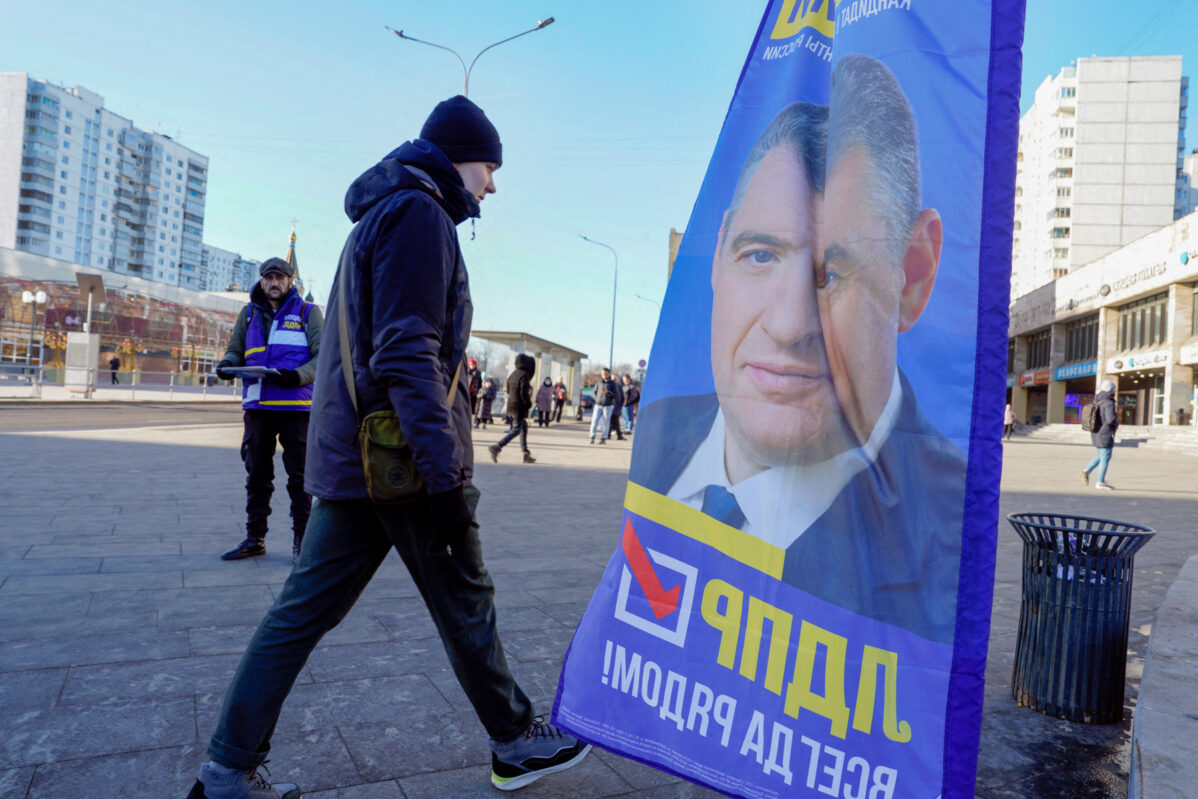
Slutsky’s position was initially so precarious that “he had to push his leadership.” “Strict directives came from the central apparatus so that a portrait of Slutsky should hang in a prominent place in the premises of each party branch. But there is an acute shortage of decent portraits and even just good quality photographs,” one of the State Duma deputies from the LDPR sneers. In addition, Slutsky had to fight the “intra-party opposition,” the leaders of which were State Duma deputies Alexei Didenko and Yaroslav Nilov. By 2025, both were removed from any official leverage over the situation in the party.
There have been no more prominent leaders in the party since then. The last representative of the Liberal Democratic Party, besides Zhirinovsky, to achieve political success is the ex-governor of the Khabarovsk Territory Sergei Furgal. In 2018, he unexpectedly won the elections for the head of the region and by 2020 he had become so popular in the region that his arrest provoked mass protests among residents. The personnel supply that came to the LDPR after high-profile scandals did not bring powerful bonuses. For example, the peak of achievements of the “weapons baron” Viktor But, who came to the LDPR after his exchange from the United States, was the mandate of a deputy of the legislative assembly of the Ulyanovsk region. “We have only vague rumors about fresh blood. They are talking about Goblin [blogger and famous dubbing actor Dmitry Puchkov]. But there are no active actions on the part of such celebrities yet,” explained a source in the party.
Cooperation between the LDPR and other well-known supporters of the “Russian world” cannot be called active either. “We have communication with [the “Orthodox oligarch” Konstantin] Malofeev and his TV channel “Tsargrad”, and with the “Russian Community” [the largest nationalist organization created after the start of the war, positioning itself as “people’s” and “mass”] we, rather, have a non-aggression pact,” an interlocutor in the apparatus tells VERSTKA LDPR. Malofeev indeed only occasionally supports the anti-migrant initiatives of the LDPR, and does not publicly mention Slutsky at all. Representatives of the “Russian Community” also have no obvious closeness with the party.
Outstanding pro-war activists are also in no hurry to join the ranks of the Liberal Democratic Party. For example, the former “Minister of Defense of the DPR” Igor Strelkov back in August 2022 called Leonid Slutsky “scum” and rejected the possibility of cooperation with his party. In April 2023, one of the largest Z-channels “Rybar” disseminated the reaction of its “colleagues” to Slutsky’s appearance at the funeral of “military correspondent” Vladlen Tatarsky i : “When Slutsky arrived, Maxim’s close friends began to leave the hall.
When Slutsky saw this, he said not to leave, because he would now speak words. And then everyone left completely.”
Some pro-war media personalities are ready to cooperate with the LDPR, but not as party candidates. “I am a social technologist, not in politics. I can help the party create a winning technology for a patriotic deputy,” Z-volunteer and former adviser to the Kursk governor Roman Alekhin told Vorstka. “Slutsky is a great guy, he was the first to pick up the topic. But there is a problem: the party is called liberal-democratic, that is, it is anti-conservatism and anti-traditionalism. Russian Liberal Democratic Party! This sounds absurd! As we say: either take off the cross or put on your panties. But Slutsky, as the leader of the patriotic movement, will be able to; I would be interested in such a project. But it should not be built on standard political technologies: benches, holidays in courtyards, but on social technologies, that is, on real work with people and for people,” Alekhine summarized in a conversation with a Vestka journalist.
After 2022, the largest Russian sociological services did not conduct federal open surveys directly on Russian nationalism or xenophobia. But indirect data does not give much future to Slutsky and politicians with his rhetoric.
For example, according to a study from October 2024 by the Public Opinion Foundation, only 1% of respondents believed that to solve demographic problems it is necessary to “reduce migration,” and in August 2024, 2% of respondents indicated that it is migrants who most often face injustice in Russia: the same number as “ordinary people,” and 1% less than the “children” option. Before the invasion of Ukraine, according to the Levada Center, there were gradually fewer respondents who believed that migrants were causing harm to the country (from 51% in 2013 to 45% in December 2021). However, the foundation’s experts then noted the growing popularity of the idea that the government should prevent the flow of migrants: over the five “pre-war” years, the share of those who advocated barriers for foreigners grew from 58% to 68–73%.
Some of Slutsky's direct initiatives found support among citizens. In August 2024, VTsIOM pollsters noted that 52% of respondents supported the LDPR’s proposed ban on the entry of families of foreigners working on temporary contracts. But here, too, 39% were open opponents of the initiative. “Helping” war participants is also not the strong point of the LDPR. According to two interlocutors of “Verstka” in the lower house, a spring survey conducted by a large Russian sociological company showed that 35% of citizens “see the greatest assistance to the front” from United Russia. The second party in this indicator is the Communist Party of the Russian Federation “with a margin of tens of percent.” The rest did not cross the threshold of statistical error. At the same time, “almost half” of the respondents did not delve into this question at all or found it difficult to answer. “People don’t care about helping the front,” stated one of Vverstka’s interlocutors, who cited these figures as an example.
“For now, this project looks like a dump for all the “right-wing” and pro-war slag that needs to be disposed of somewhere. In the electoral sense, they are corpses. Are you waiting for a real force like the Freikorps [mass paramilitary volunteer organizations] to emerge? It's not them yet. The Freikorps will not ask permission to beat anyone. It looks more like attempts by the authorities to prevent their appearance,” a sociologist who did not give permission to mention his name tells Vorstka. Pollsters and political strategists also do not believe in the high ratings of the “right party,” no matter what it is. “They don’t see more than 3–5%,” says Evgeniy Minchenko, head of the Minchenko Consulting Foundation. “In the end, it will turn out as usual: the loyal and systemic will come to power from United Russia, and with the help of the LDPR or some other party, which will be given a niche on the right, they will gather marginal parts at the ends of the spectrum. So far, there is no serious claim to power here,” summarizes the political strategist, who asked not to mention his name.
Cover: Dmitry Osinnikov
You can support “Layout” from any country in the world - it is still safe and very important. We really need your support now. How to help us →