
Translated material
Eternal return
On the project "Non-Being in the World" in the Akhmatova Museum for the 85th anniversary of Joseph Brodsky
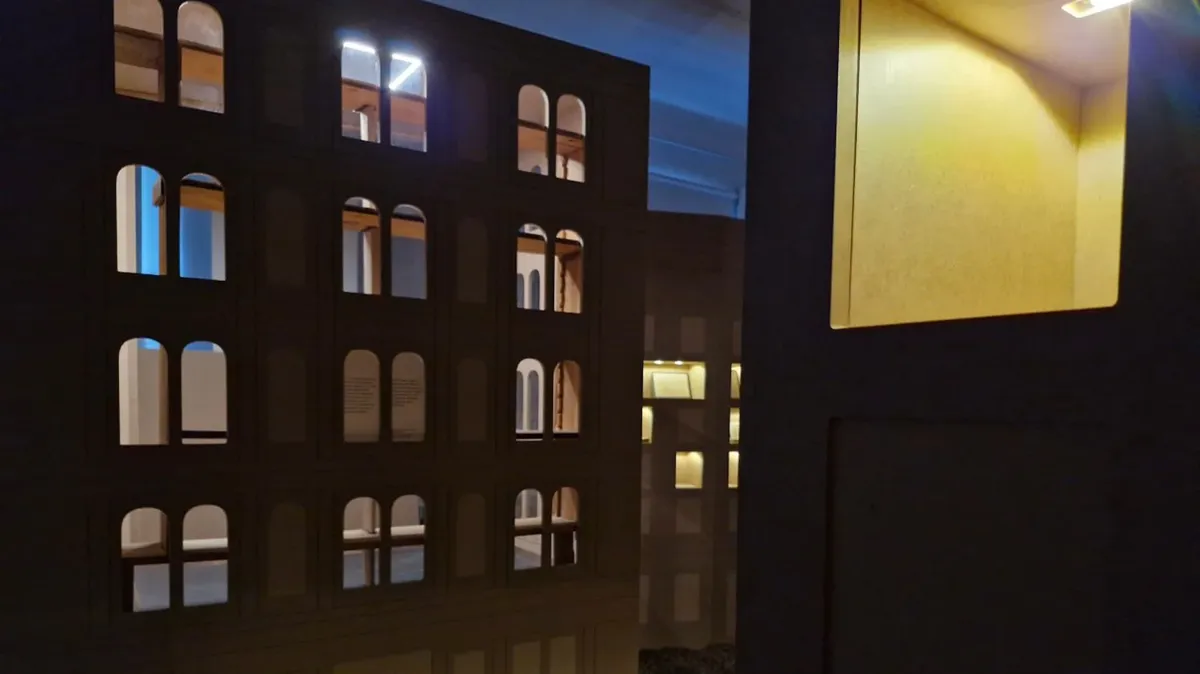
The project "Non -existence in the light." Photo: Telegram channel of the Akhmatova Museum
It is unlikely that the current anniversary of the Nobel laureate Joseph Brodsky will be celebrated at the state level by some vivid events-a Jew, a dissident, an emigrant and a US citizen was not needed in the USSR, and now he, for all his popularity, does not fit into the Z-old, who had managed to assign only his ODU “for the independence of Ukraine”. The Akhmatova Museum in the Fountain House almost from the moment of its founding keeps the memory not only about Anna Andreevna, but also about the singer of her “magic choir”, as Akhmatova called the group of young poets, which included Dmitry Bobyshev, Joseph Brodsky, Anatoly Niyman and Evgeny Rein.
Jew, emigrant, Russian poet
The project dedicated to the anniversary of Brodsky is not the first in the walls of the Museum of Anna Akhmatova, but the first so large, long and complex in composition. The first part is the exhibition “Non -existence in the light”, where documents, photographs, personal belongings of the poet are presented. The name was the phrase from the famous poem of Brodsky "still life." The exhibition will last until the end of June, and in early July the second part of the project will open, in which, according to the plan of the authors (curator - Pavel Kotlyar, architect - Anna Ilyina), the story will be told that it remains in the space of the poet after his departure.
Its biography (which, by the way, is rare for high poetry in the very reading country) is known almost by heart, and yet we will talk once again its main stages. Joseph Brodsky, Russian and American poet, essayist, translator, professor of six American and British universities, Nobel Prize winner, was born in Leningrad in 1940. At the age of 14, he unsuccessfully tried to enter the Marine School, a year later he threw school and became a student of a milling holder at the Arsenal plant. Later he replaced several working professions, as the worker participated in geological expeditions, he did not receive a certificate of graduation from high school. I read a lot, engaged in self -education, independently studied English and Polish, wrote poetry. In the late 50s and early 60s, he met a group of young poets and writers: Naiman, Rhine, Ufland, Okudzhava, Dovlatov, participated in literary evenings and meetings.
In 1964, he was arrested on charges of “parasitism”, sentenced to exile for five years and forced labor. Thanks to the wide public campaign in his defense, Joseph Brodsky returned to Leningrad a year and a half.

In 1972, the poet was forced to emigrate from the USSR. He spent two months in Europe, then moved to the USA, where he gave lectures at several universities and colleges. In 1987, he received the Nobel Prize in literature "for comprehensive creativity, imbued with clarity of thought and poetic intensity." He continued to write poetry, mainly in Russian, he preferred to write an essay in English. He passed away in January 1996 in New York, buried in Italy.
Now in the Great Hall of the Akhmatova house, rare exhibits have been exhibited from the collections of the Museum of the History of St. Petersburg, the private museum “One and a half rooms”, the Russian National Library, where a part of the written archive of the poet, the St. Petersburg Fund of the Museum of Brodsky and others is stored. The most interesting and rare items were provided for the exhibition by the poet’s friends - writer, editor -in -chief of the Zvezda magazine Yakov Gordin, art critic Era Korobov, poet and translator Mikhail Meila, historian of architecture, co -founder of the Millar Poles Museum Mikhail Milchik.
Pavel Kotlyar , curator of the exhibition:
“The idea, in fact, is uncomplicated: we wanted to show the life and work of the poet. We tried to submit documents in a consciously chaotic order, as if we were showing a photographic of his life, which is a kaleidoscope of memories, facts, and connections with creativity. But we do not set the task of reproducing the real life of Brodsky, something like-so he just came out of here! No, we are trying to talk about the mental map of Brodsky’s life in the topography of the city. ”
The exposition is arranged so that visitors to the exhibition seem to swim into the hall - Neva and its tributaries made of a mirror coating along which the exposition route is laid became the main organizing element. In the course of the course of this "river" on the right and left are the islands-the areas of St. Petersburg, on which there are conventional-owners. Looking through the windows and courtyards, visitors are considering exhibits-they, inconspicuous from the side, closely open the look of the viewer how the photography shots in the laboratory appear (Alexander Brodsky, the father of the poet, was a famous Leningrad photojournalist).
The only thing that, perhaps, overshadows smooth sliding on the mirror surface of the conditional “Neva” and the study of the Kaleidoscope of the life and work of the poet, is the material from which the islands with the houses located on them are collected. Architect Anna Ilyina poured the islands from expanded clay. As a result, a constant crack is heard in the hall and the rattle of expanded clay, along which visitors walk, and the mirror surface of the “Neva” is constantly covered with black dust.
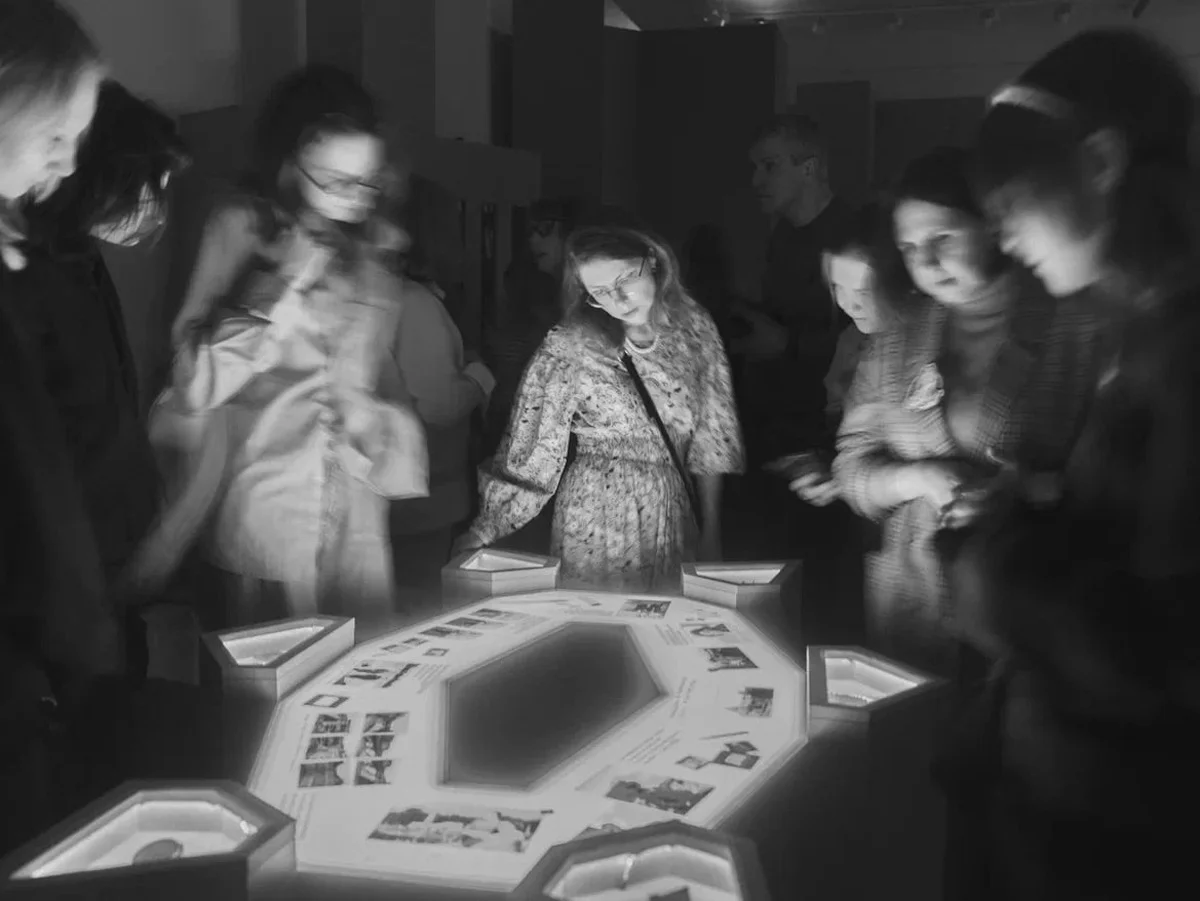
View from a distance that flew by
To the right of the entrance to the exhibition hall-the island of Kolomna with a House-Vitrine, sheathed cardboard. On the "roof" are Samizdat collections of Brodsky’s poems and his photographs signed for friends before leaving the country. Here is the drawing “Cat in Boots”, which was not known to the wide viewer, made by the poet and preserved by Mikhail Milchik. The composition on the “left bank” is “Vasilyevsky Island” with a window, resembling the tombstone of Joseph Brodsky from his grave in the cemetery of the island of San Michele. The "tombstone" was turned into a kind of reference point - this is both a place of birth and a place of repose. Here is near the birth certificate of Joseph, his children's photo, a message about the memorial service and the poet’s personal watch. On the reverse side is a lamppan label drinking in honor of the birth of Anna’s daughter and a poem in English dedicated to her.
Behind Vaska - the Peter and Paul Fortress, in one of the bastions a figure of a glass bear is visible, reminiscent of the Leningrad Zoo, and numerous photographs. If you look inside the "fortress", you can see a copy of the head of Peter I from the monument to the work of Shemyakin. Following-the Finland Station as a symbol of the most close to Leningrad-Petersburg of the "Nearby". In the slots of cardboard, similar to a series of vertical windows on the facade of the building, in non-stop mode there is a video from the life of a poet in New York.
On the other “shore” is the largest house-video, representing the house of Muruzi, where (in the rooms of the communal room) Brodsky family moved in 1955, and from where in1972 Joseph left the country. From this apartment after the death of his parents, the friends of Brodsky carried out and handed over some furniture items to museums: a desk and a bookcase got to the city history, to the library, archive, photographs transferred Yakov Gordin, and later transferred them to the Akhmatova Museum.
Brodsky’s coat hangs in a separate window: shortly before his departure, the poet gave it to a friend, Mikhail Milchik, and he later handed the coat to the museum of the history of the city. From his collection at the exhibition you can see a record, on the envelope of which poems and Brodsky’s drawing are preserved. Here is the little -known self -portrait of Joseph Brodsky from the collection of Yakov Gordin. On the floor, behind the "House of Muruzi", lies an exhibit that is exhibited for the first time - a broken board from the Greek Church, which stood on the site of the current concert hall "Oktyabrsky". The board was provided to the exhibition by the archaeologist and local historian Vladimir Khrshanovsky, who, like Brodsky, saw the demolition of the Church (“Now there are so few Greeks in Leningrad” - “Stop in the Desert”), walked along its ruins and retained a memorable artifact.
The famous “Crosses” recalling the reference of the poet - here, in a pre -trial detention center, Brodsky spent several months before the sentence of the court. But “Crosses” are not only about the link: according to the organizers, the exhibition is not arranged according to the chronological principle, events and artifacts occupy the place in the exposition of the place, as in human memory, they exist in parallel and at the same time. Therefore, next to Brodsky’s photograph in exile - his photo with the Nobel Prize, and in the next window - a copy of the New World magazine for 1987, in which his poems were published for the first time in the USSR. In the final - the poster of the evening dedicated to Joseph Brodsky, held in April 1989 in the recreation center named after Gorky. A peculiar “return” home, which in reality did not happen.
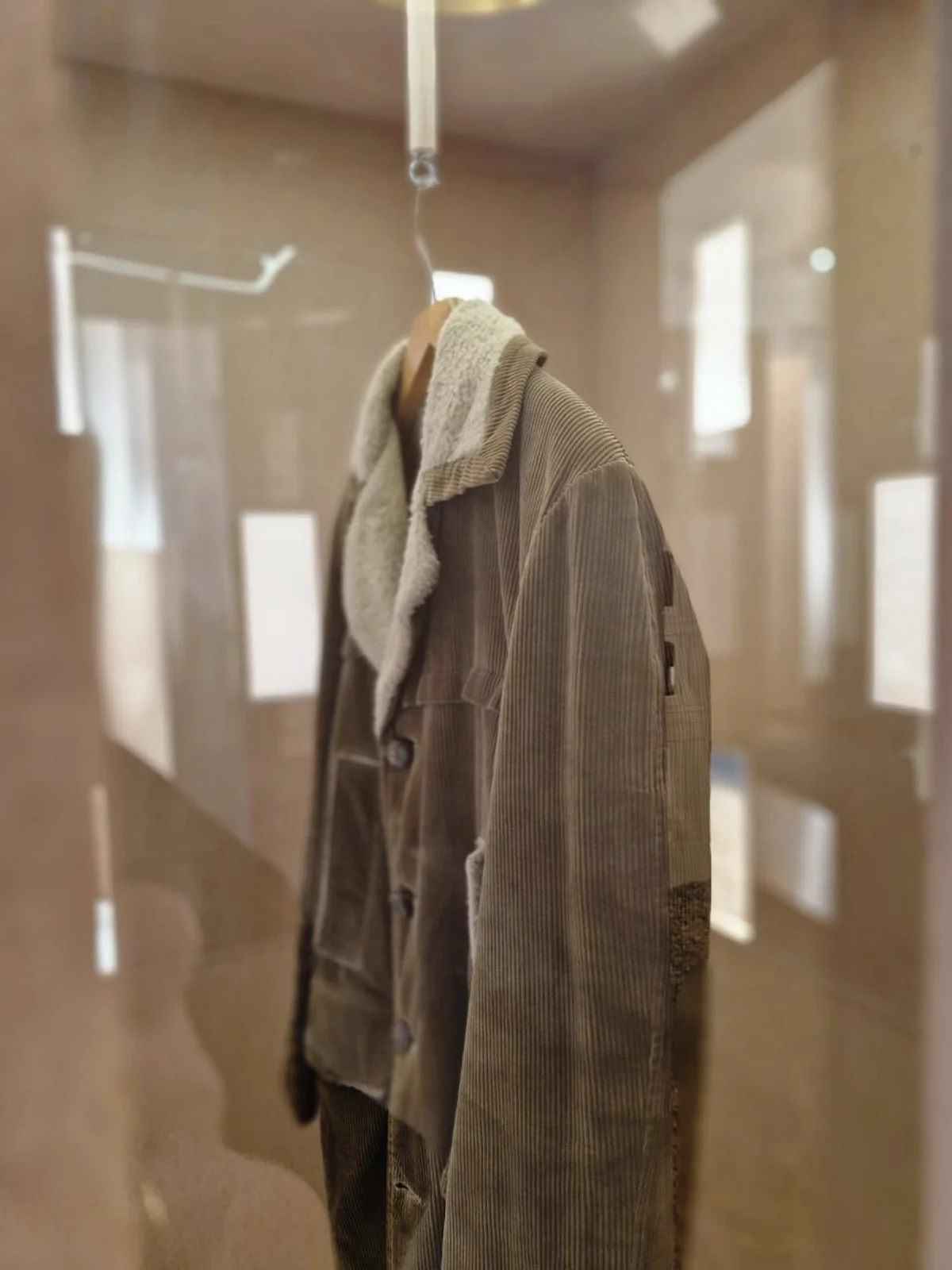
Save my shadow
Yes, the real return of Brodsky to his hometown did not occur, although the poet dreamed in the early 90s "to rush with Mikhail Baryshnikov on a ferry in St. Petersburg." This remained a dream, but one can still talk about his peculiar “return” to St. Petersburg. And it is connected, of course, with the Akhmatova Museum-perhaps only here such a large-scale anniversary project could take place for the 85th anniversary of Brodsky.
The museum in a fountain house opened in 1989, and the next year, by the 50th anniversary of Joseph Brodsky, he received a priceless gift-the poet Jacob Gordin handed his library and photographs here.
Nina Popova , first director of the Akhmatova Museum:
“That is, in the summer of 1990, we began to take shape of the personal belongings of Joseph Brodsky, for which we are immensely grateful to Yakov Arkadyevich,” says. - For Akhmatova, Brodsky is a beloved poet, friend, she put a lot of effort into his liberation from exile. And, as Brodsky himself later said, she taught him to be a Christian and forgive him. ”
In 1997, a year after the death of the poet, by the 25th anniversary of his forced emigration, the Akhmatova Museum opened the exhibition “Come out of love”. In 2003, the widow of the poet, Maria Satsetsani-Brodskaya, handed over to the Akhmatova Museum a large set of objects from the house to Saut-Hedley, and in 2005 the permanent exposition “American office of Brodsky” was opened in the museum. A few years later, things from the poet’s apartment in New York arrived in the fountain house.
In fact, the Akhmatovsky house for many decades has become the only museum of Joseph Brodsky in St. Petersburg. Although all these years, the museum’s employees, friends of the poet, his fans and admirers dreamed of opening the State Museum in the house where he lived.
Ten years ago, on the 75th anniversary of the poet, in an almost settled apartment in the house of Muruzi (the former neighbor still lives in one of the rooms), the first memorial exposition of Brodsky, prepared by the efforts of employees of the Akhmatova Museum. Now in this space there are “one and a half rooms. Museum of Joseph Brodsky ”is a private institution that appeared thanks to the entrepreneur Maxim Levchenko. Around this space arose their own environment, enthusiastic people gathered. And it seems that Brodsky really returned to Petersburg - although after death.