
Translated material
The forward had spring
May 6 Vyacheslav Starshinov - 85
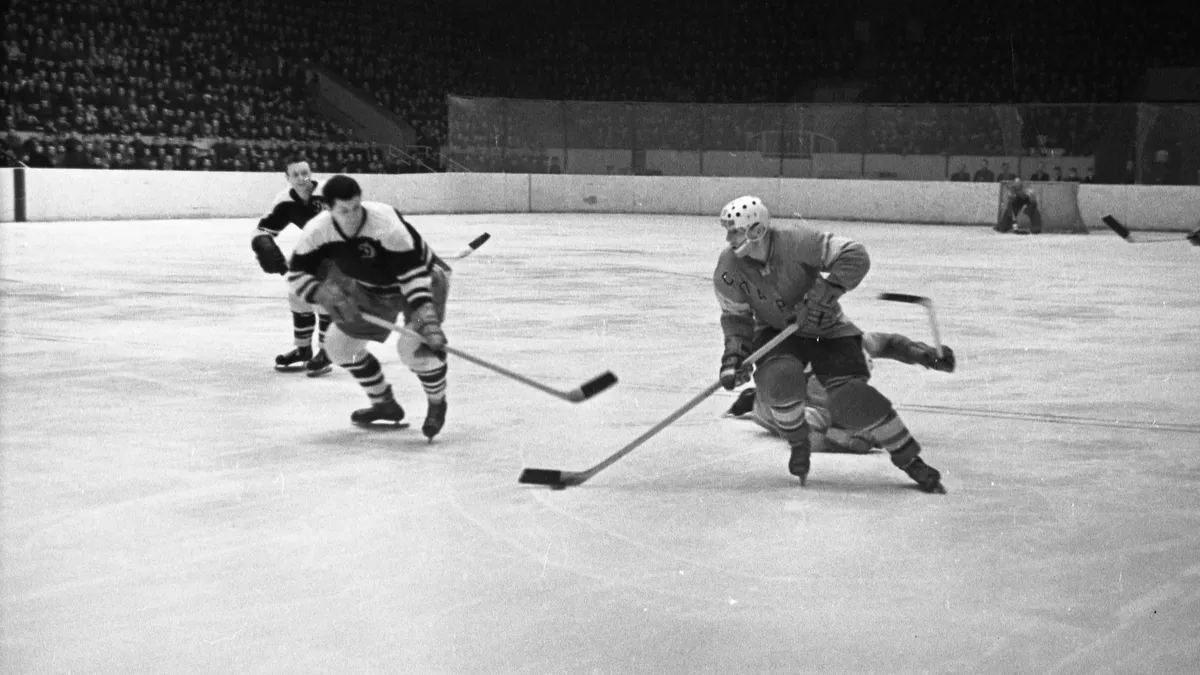
60s. The match "Spartak" - "Dynamo". Vyacheslav Starshinov leaves Stanislav Petukhov. Photo: Evgeny Uspensky
Once, in a conversation with Vyacheslav Ivanovich, I tried to put everything on the shelves and get to the bottom of what was the secret of the USSR national team of its golden era. Starshinov did not get up to Koturna, there was no pathos in his answers, on the contrary, he immediately landed the topic, saying that they won “physics” and playing: “Living for ten months together, you will involuntarily begin to understand each other without words.” The proportion of the irony characteristic of the great central forwarder in this, of course, was present. But only the share: “All the main actors of this phenomenon called the“ national team of the USSR ”were collected in one place. It doesn’t matter that in different teams - in Moscow, moving to the national team was simply moving from one base to another. And all efforts were aimed at one - at achieving the result. Everyone lived one goal. In a cage, but gold. I'm not talking about money. Money did not come first. And on the second too. "
Then he added “yes, it was present and“ the party said - it is necessary! ”, And“ Komsomol answered - eat! ”, And much more, but everything was not exhausted with slogans. If they carried out the Komsomol assignment, everything would quickly fall apart. The main thing was the inner rod that determined the life and game of each of us. That is why we lasted for so long at the very top. Without the internal fullness of each unique victorious series of the national team, it would never have happened. We, of course, felt that we win not only and not so much for ourselves as for the country and every person living in it. It is important for me that we were not only in the wake of fame, but we felt time with all the fibers of the soul. Yes, we knew the other side of life, but the dissident image of thought could not be by definition. We were children of our era. I suppose not the worst. "
Of course, he is a man of spring. To my question, when it ended, Starshinov replied that "in relation to hockey, but not only-after the 1972 Olympics in Sapporo. Then the time began, later called stagnation. "
... In the top ten of the great centers of domestic hockey, if you put everyone in the alphabet, the anniversary has a modest place: Almetov, Guryshev, Datsyuk, Zhluktov, Larionov, Malkin, Petrov, Strazinov, Fedorov, Shadrin. The rank here, of course, is impossible due to the difference in eras and circumstances, and the choice of “magnificent dozens”, of course, is subjective and addicted.
But Vyacheslav Ivanovich in this constellation colleagues in the role is the first sniper in relation to the domestic championship, and one of the best in the number of international titles. And in general, there are foremen of foremen. The Simvol man Spartak and the entire domestic hockey. A recognizable at first sight even those who have long forgotten about hockey and for whom hockey has remained in the distant past.
In the screensaver, which had long gone in the summer of the Soviet film magazine “News of the Day” there was a cut from signal shots for that time, and under the final a hockey player at number eight with a Spartak rhombus, shot down by an opponent, still frantically flew forward and pushed the puck into the gate - lying. Each scorer has “the same goal”, so Starshinovsky very accurately characterized that part of the Soviet era when space and hockey were to some extent on equal terms in popularity. In this episode, Vyacheslav Starshinov had army defenders in the opponents - Vladimir Brezhnev, the great Alexander Ragulin himself, goalkeeper Viktor Tolmachev and earthly attraction, but this central center did not prevent. Everyone went to the cinemas and clubs, the “News of the Day” were shown before each session, the screensaver did not change for a long time, and therefore the whole country knew Starshinova.
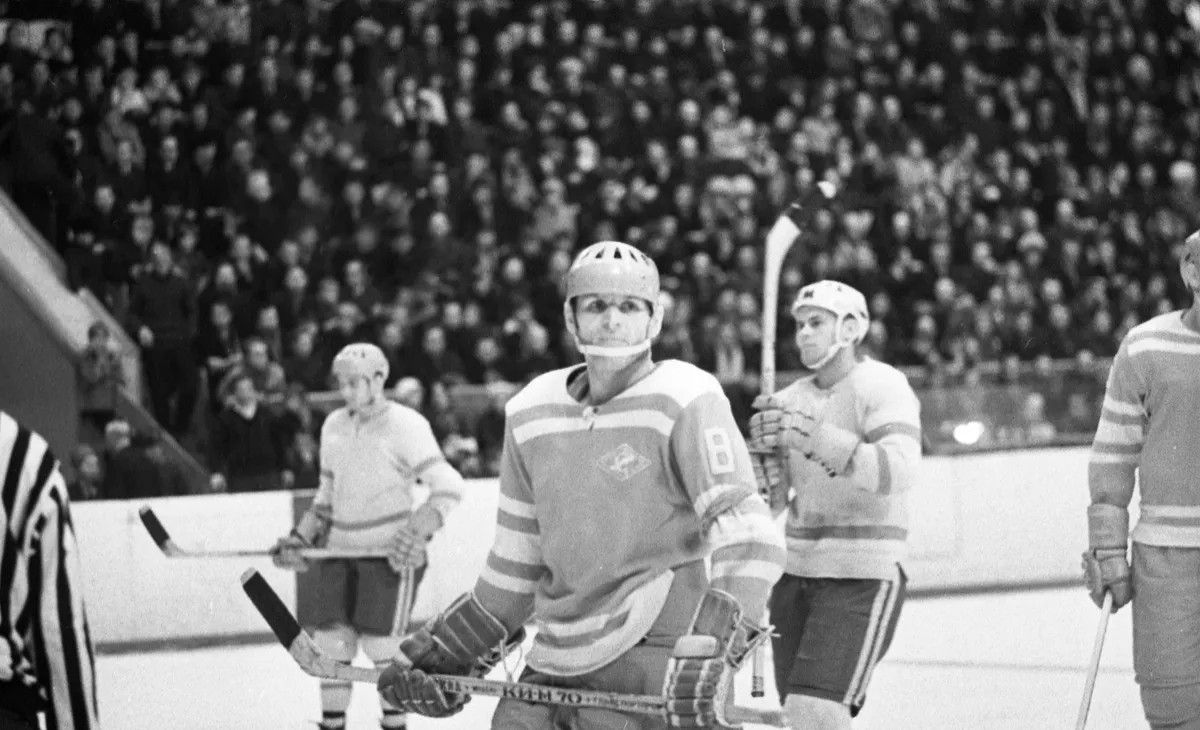
And she loved, of course. Even the army and Dynamo fans respected Borya and Zhenya of Mayorovs and the glory of Starshinov. "Here are the devils!" - used to say my father, who, in addition to CSKA, did not admit anyone when the Trinity from the Schiryaevo Field stadium arranged its famous carousel at CSKA's gates.
The Devils were really good, the Nasters were not recognized, and they could beat anyone - however, by their youth, they could even give way to an outsider. Under Anatoly Tarasov, when the master was the senior coach of the Russian team for three years, he did not allow them to the national team, and this could happen in only one case - if they moved to CSKA. But they were the Spartaks not only at the place of residence, but also in spirit, they saw themselves only in red and white, the barracks discipline preferred conscious service to sports and study, and epaulettes in super-affected, and their relatively free life of the late 1950s and the beginning of the 60s did not fit in any way.
It is not clear how they also managed to play amazingly. At their first match with the Canadian team “Marunz Chats” in November 1960, who spent his last season as the senior coach of the Tarasov team withdrew the entire trinity from the game, and Boris as the elder and the leader almost slapped the door. The next day, Tarasov released them-and Canadians received two goals from 20-year-old Strazinov, from 22-year-old Mayorovs one at a time. This did not help to get to the Olympics, and Arkady Chernyshev took them to the 1961 World Cup, which headed the national team.
In Geneva, the Spartaks chose 18 goals-more than the first army link with uncle Konstantin Lokevev, and a year later surpassed the invincible CSKA, becoming champions of the Union and in three years traveling from 17th place to the very top.
The senior coach of Spartak, Alexander Novokreshchens, did not tempt tactical wisdom, admonished the young leaders with the words “Keep the stick stronger and bread!”, So they, confusing the rivals with their carousel, “whipped” from the heart. The cheerful was hockey, romantic, beautiful to impossibility, and even effective-these guys did the result. And the role of the main final finals gradually passed from Boris Mayorov to Vyacheslav Starshinov, because he was mainly created for this. The shock force, which was in abundance imposed by Alexander Igumnov in 1957, the bridebox brothers, was just the fast and smart techies of Mayorov and was not enough. But Starshinov did not only take the attacking power, he also fit into their “carousel” hockey, in defense, in defense could work out for two, which he did when the team needed it. Rather, the teams are both Spartak and the national team.
His grip is iron, worker-peasant. Rustic roots (the foremen from under Rzhev, the parents moved to Moscow in the late 20s), hence the thoroughness, incredible perseverance, and an “unusual margin of strength”, but talent is already a gift from above.
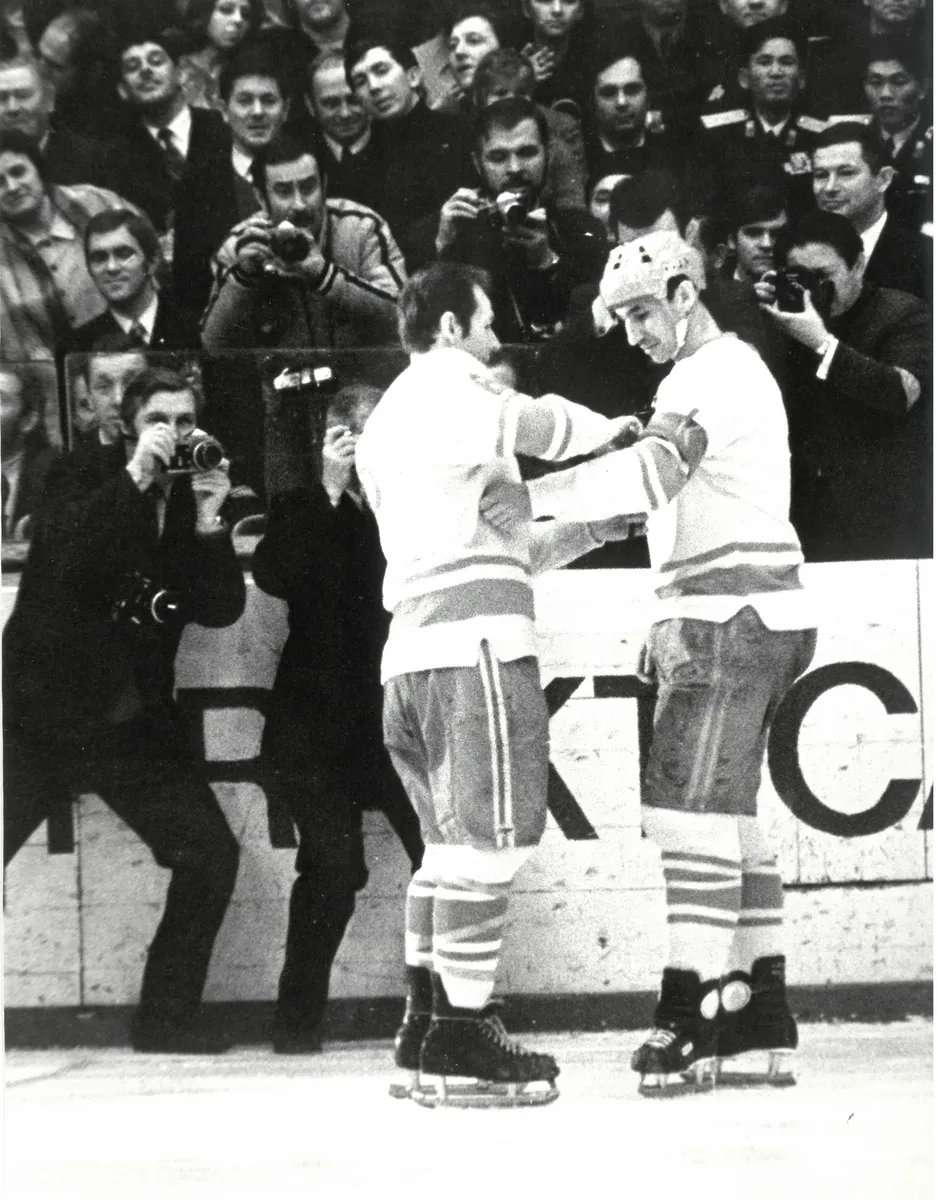
... Starshinov might not be in the center of the new bright link. Not because he was two years younger and less talented than the twins of the Mayorovs. He loved football more, which he repeatedly admitted after. In general, he sought considerable successes in everything that he was doing in the Spartak sections, including in hockey with a ball, volleyball and in acrobatics (I don’t know about success in boxing, which fame also did). Ten-year-olds of acrobatics will come around many years later-Boris Mayorov will somehow say that some born in the course of training could perform crazy Tarasov exercises with the accuracy of “only Slavka” close to the requirements of its coordination and force in combination with flexibility. Tarasov, by the way, was very appreciated by the foreman very much:
“Vyacheslav loved complex and voluminous training. I do not remember that the foremen at least once complained of excessive severity or the complexity of the loads. And in the games - in basketball according to hockey rules, in football, which we gave to hockey players "for sweet", Vyacheslav had almost no equal. "
Boris Mayorov entered the football field at the basis of Spartak, giving the Fatherland Click “Washing! Puck! ” But Vyacheslav Starshinov, who successfully played for the Spartak double and won the USSR championships - youth, student and among production teams - could not persuade even Andrei Petrovich Starostin with his brother Nikolai and another Nikolai - Ozerov. The Spartak was to play with the Tbilisi Dynamo, they hoped for the debutant-centerford. Glory put on the form, and was ready one hundred percent, but the large sports authorities at the last moment said “no”, and the persuasion of authoritative Spartacists did not help: “He really wanted to play. Nevertheless, he did not enter the field, fearing that the team could count the technical defeat. He went to the locker room, changed his mind, and left football forever. Having cool down, I realized that Starshinov acted correctly that I was angry with him in vain. This is not a person - flint! "
They were one of the last universal players in domestic sports, with a unique courtyard hardening, an indestructible craving for competition and victory in anything. They were the first and, probably, the last acting hockey players, who found themselves in a serious technical university without any concessions - it happened that they barely managed to play the games immediately after the exam. They brilliantly graduated from the Moscow Aviation Technological in three different specialties (as they were talked about, “they could collect the plane”), presented hopes as young scientists. “It is unlikely that I will be mistaken, assuming that Vyacheslav Starshinov will be a good scientific worker,” he told the head of the time for the production of aircraft engines. “This is undoubtedly a gifted person, inclined to serious analytical work.” The current young masters did not dream of such characteristics.
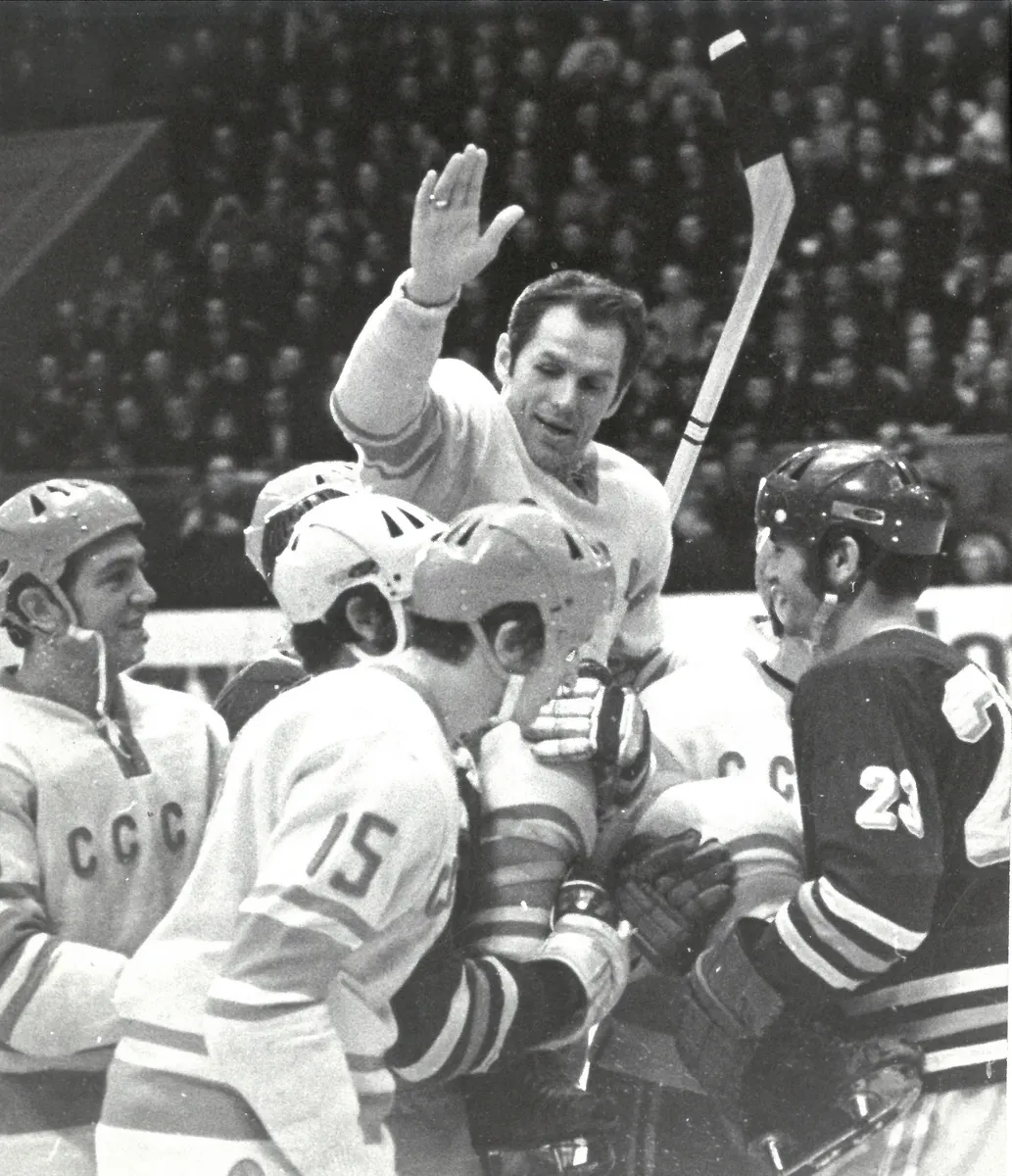
Hockey, of course, prevailed. Still not to take if, after the departak of the 62nd “Spartak”, they took the gold of the World Cup in Stockholm, which began the unprecedented series of nine in a row of the victories of the USSR national team-a record that cannot be surpassed. A year later, they became Olympic champions in the Innsbruck, hockey spring ended for Starshinov, and in their classic composition they no longer played in the national team-always addicted to other people's leaders, taking advantage of the directness and obstinacy of Eugene, persuaded Chernyshev in the end of 1964 to bring Maiorov, Majorov, as much as the national team, he no longer for the national team. He performed, and generally finished with hockey at 27. Spartak will lead the great Vsevolod Bobrov to the second victory in the championship, there will be a third victory, already without Bobrov. Three Spartak championships in the 60s, in my subjective opinion, “weigh” no less than victories at the world championships.
Vyacheslav and Boris will reach the second Olympic Victory in Grenoble-1968, the place in the three on the right flank will be alternately occupied by Anatoly Ionov, Victor Yakushev, Evgeny Zimin. Starting with Stockholm-69, the captain's bandage, which almost permanently belonged to Boris Mayorov, will be given to Strazinov. He will not always be comfortable without understanding the partner and the leader of God with mercy from the semi -grooming, but the foremen will pass with the national team to the end, and the weather will not spoil the weather with any of the partners. It is only a pity that it will not work to get into Sapporo-1972. But Bobrov will give Starshinov the opportunity to go on the ice in the link with Alexander Maltsev and Valery Kharlamov in the second match of the first and main super-series of the USSR-Canada in the fall of 1972, and the match lost in Toronto will be the last for him in the national team.
With the coaching of Spartak, it’s not that it doesn’t work out, just silver of 1973 and especially the fourth place in the next season was considered failure. He will return to the ice, and then he will go to Japan on the island of Hokkaido as a consultant, and in fact for three seasons he will go to the ice by the playing coach, he will ascend by the Odzi Seveni club to the championship, he will return to Moscow at the end of the 70s, at the age of 38, the candidate of pedagogical sciences Starshinov will again put the red-white form with the rhombus, and the first in Russian hockey will take A height of 400 abandoned goals, after it was able to surpass Boris Mikhailov, and after many years - Sergey Mozyakin and Danis Zaripov.
One can only assume how many goals it would be on the account of Starshinov, he would not do in the 70s a total of an almost five-year break-it would definitely be under 500. But according to the number of goals, abandoned in the highest division in one club - 408, Vyacheslav Starshinov is unconditionally and for a long time the best.
He does not regret anything. Because even after the end of the player’s career, he did not feel lost for a second. It came in handy everywhere, including in science. For many years he headed the department of physical education at the Moscow Engineering and Physical Institute. In the most difficult years for Spartak, he did everything to save the club. Hockey popularized.
Only sometimes it seemed to me that the Great Spartak veterans of the hockey of the zero were not very interesting. In addition to regret and pain for his native Spartak, which fell so that there was nowhere below, in their attitude to the new circumstances of life, light irony was also felt. And I understood veterans very well. So, as they played, recklessly enjoying hockey, Mayorovs and foremen, have not played for a long time.
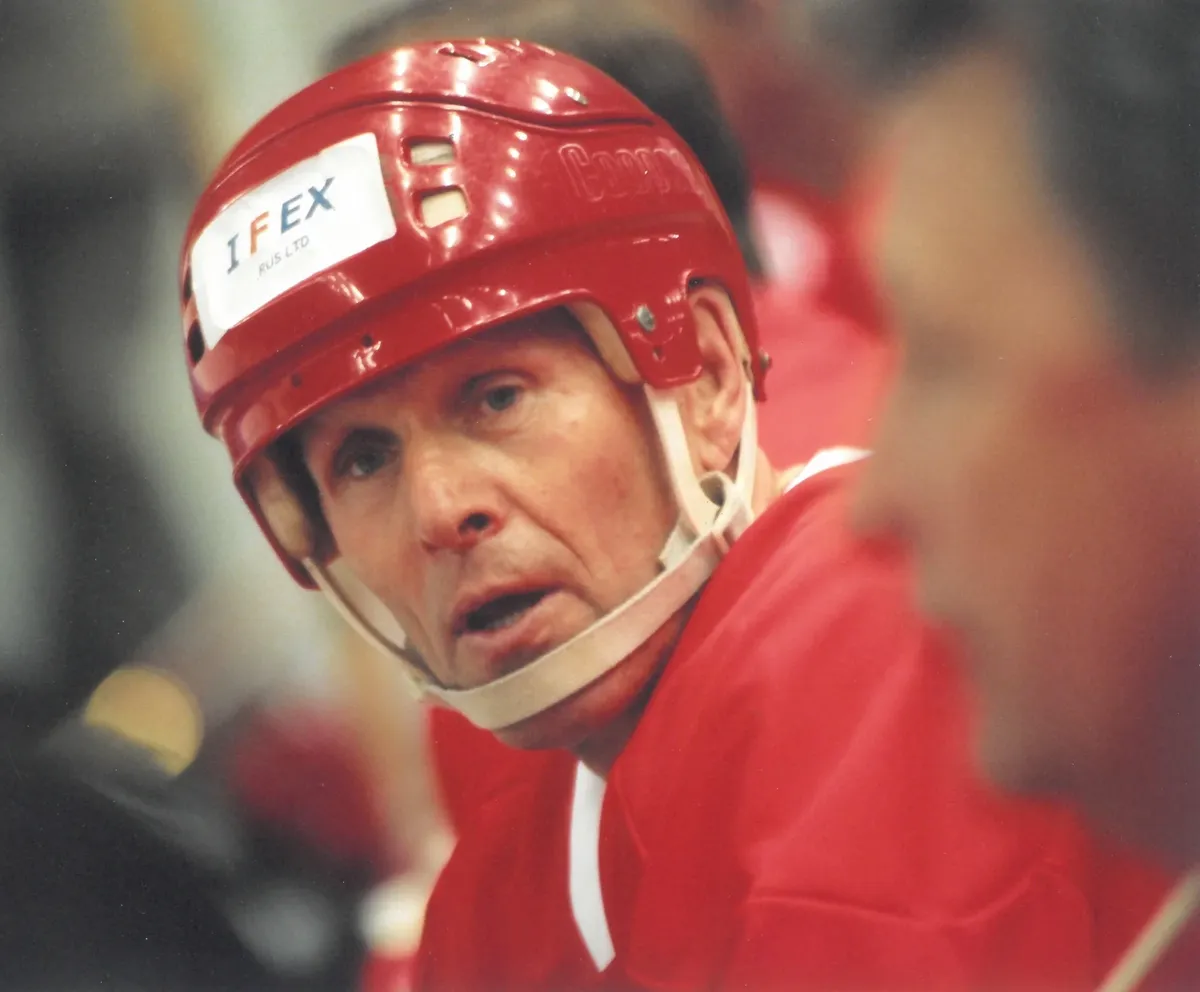
Vyacheslav Ivanovich always left two topics in several conversations behind brackets - about complex relationships within the classical version of the link, and the one that we call “personal life”. I'll leave it out of brackets now. It is better to give another quote from an interview with a 20-year ago: "If you do not want to be thrown out of this new life, you must adopt its laws, while remaining internally by yourself." It is said at least honestly.
... Of the hundreds of goals, abandoned by the current hero of the day, I remember the most distinctly remembered the Golden Vienna in 1967 at the gate of the Canadian national team. It was she who was awarded the epigram with the ending "that was the puck was not simple, it was the Golden Puck." First, the shallow return goal of Anatoly Firsov “Behind the Shivot” happened to the goalkeeper Set Martin. And at the most crucial moment, when the last ten -minute was already going on, Boris Mayorov’s throw, goalkeeper retorted.
But Starshinov, of course, finished off. I could not help but finish.