
Translated material
Freed from amnesty
Unlike Russia, an amnesty has been declared in Belarus by the 80th anniversary of the victory. But the political prisoners will not be released at all
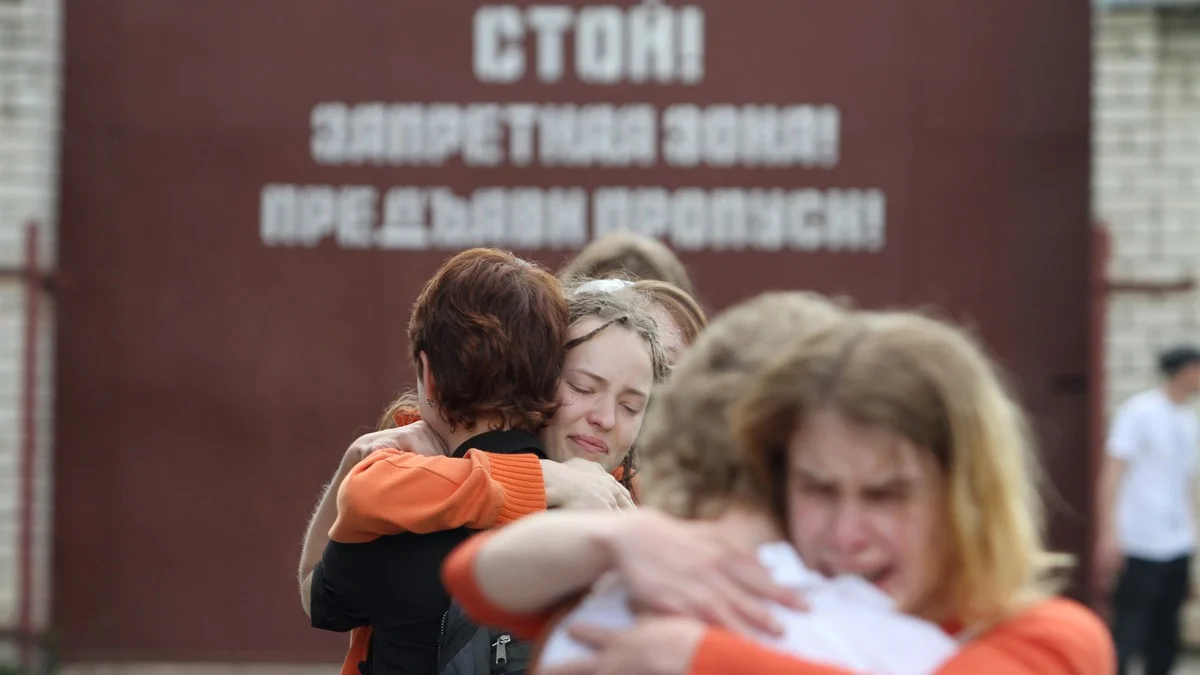
Photo: Itar-Tass
An amnesty was declared in Belarus: last week the bill was adopted in two readings, and on Monday it was signed by Lukashenko. The law will enter into force. The process itself will take six months. Under the amnesty, officials promise, 8,000 people will hit.
The main question that arises for everyone who hears about the upcoming large -scale amnesty in Belarus is - will it affect the political prisoners? Which of them has a chance to go out? Sorry for the spoiler, but I will answer right away: he will not touch. None of the thousands of Belarusian Politicals will be released. In any case, according to amnesty.
In general, this kind of bills are best read from the end, and not from the beginning, because the main information is contained at the end of the document. At the very beginning, meaningless hope still appears. For example, imprisonment is replaced by “domestic chemistry” to those who were not previously convicted, reached 70 years of age and sentenced to a term of no more than six years. Of course, you immediately begin to recall pensioners-prisoners. In the same way, the ineffective punishment in the form of imprisonment is replaced by “domestic chemistry” to those who have to sit for less than a year. There are also a lot of such political prizes in the Belarusian colonies. And then you read further - and exceptions begin.
First of all, the amnesty does not apply to those who are a malicious violator of the internal regulations of the correctional institution. And these are almost all political prisoners, because such is an unspoken order in the Belarusian zones: political ones are immediately made malicious violators. A report, schizo, PCT - and that’s it, the client is ready. He can no longer count on an amnesty or on parole.
But the most important thing is a list of articles by the Criminal Code of Belarus, on convicts on which amnesty also does not apply.
And in this list-everything: the “people's” 342th (“Organization of actions grossly violating public order”), and the numerous “insults of Lukashenko”, and all the same “extremist” articles.
In a word, not one of those on which the political prisoners are sitting, the authors of the law did not miss. They will not let any of them go to amnesty.
Of course, eight thousand citizens who fall under an amnesty are numbers that still sound impressive and create a multidimensional illusion of humanism. It seems as if by the 80th anniversary of the Victory the state has been generous and will produce people in packs. Yes, and the list of those who are subject to the effect of amnesty also sounds with a large degree of humanity: pregnant women, minors, disabled people, pensioners, single mothers, liquidators of the accident at the Chernobyl nuclear power plant. But most of these people will still not come out of prisons simply because ... they are not there.
Amnesty frees all these vulnerable categories of Belarusians from punishment, and so not related to deprivation of liberty. That is, those who are sentenced to public work, fines, prohibition of holding certain positions, correctional labor, and restrictions on military service will be amnestied. And with regard to imprisonment, numerous exceptions come into effect, which make a way out of prison almost impossible:
not fully compensated damage; condemnation on articles related to selfish or other interest; Debt on alimony. Not to mention the “extremist” articles on which political prisoners are sitting. They will not be freed not under amnesty, but from it.
Over the past five years, there have been four amnesties in Belarus. In 2020, the amnesty was dedicated to the 75th anniversary of Victory, according to the same criteria (however, they are always the same), it touched 5.4 thousand people. In 2023, 4.5 thousand convicts were amnestied - with the exception of those who are serving a sentence in protest and “extremist” articles. Last year was also dedicated to the date related to the Great Patriotic War-to the 80th anniversary of the liberation of Belarus from the Nazi invaders. That amnesty was applied to 4,000 convicts.
If we compare the texts of last year and current laws, then they coincide in almost everything. The only difference is that this year, the “drug” article 328 falls under the amnesty with the very edge. The amnesty involves a reduction in a term of one year earlier, serving sentences under this article. By the anniversary of the liberation of Belarus, convicts for drugs were not reduced.
Back in December 2014, at a meeting on countering the illegal trafficking of narcotic drugs, Lukashenko demanded that unbearable conditions create unbearable conditions for convicts under this article:
“For them, it is necessary to create unbearable conditions in the places of serving these terms ... If we do not have enough people for the same colony, give one unit, the barracks or something else in the colony of the strictest regime, we will establish such a regime that they, sitting in this colony, will be expected to ask death.”
To begin with, the convicts under Article 328 replaced ordinary white tags with green - people marked like that. Relatives of the convicts, first united in a spontaneous movement, and then into the public organization of Mother 328, began to knock on all doors, from the Belarusian prosecutor's office to the UN, demanding to stop discrimination. The green tag, they wrote, is a violation of the constitution and the Criminal Code. Oddly enough, the struggle for white ended with a victory: in 2019, convicts under Article 328 already wore ordinary tags in the colonies.
By the way, Tatyana Kanevskaya, who was convicted by the “narcotic” article, headed the “mother 328” social movement “Mother 328”. In many ways, the efforts of this woman, green discriminatory tags for convicts for drugs were canceled. Now Tatyana Kanevskaya is located in the Gomel women's colony - a six -year term is serving for participation in protests. She wears the yellow tag of an extremist. The amnesty on it, as well as on all the others, stained with yellow tags, also does not spread.