
Translated material
The night before the conclave
The Christian world froze in anticipation of news from the Vatican. On May 7, voting will begin for the new pope
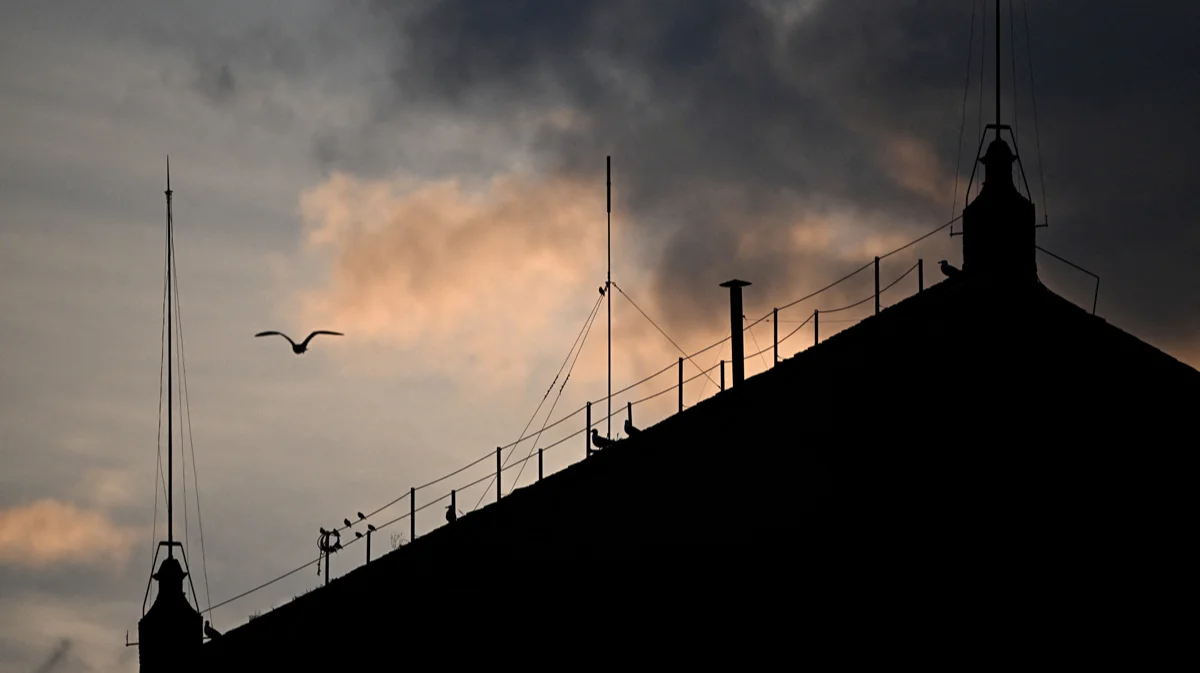
The sun sits behind a pipe on the roof of the Sistine Chapel on the eve of the conclave at the election of a new dad, Vatican, May 5, 2025. Photo: Dylan Martinez / Reuters / Scanpix / Leta
On Wednesday, on May 7, in the Sistine Chapel behind tightly closed doors begins the vote of the cardinals for the new Pope. The world learns about his election by white smoke from the pipe, which was mounted over the chapel on May 2. According to many vatikistanist experts, the elections will not be protracted and will lay down in two to three days. Italian candidates have the most chance: the Italians have not occupied the papal throne for almost 50 years, they missed ...
Cum Clave
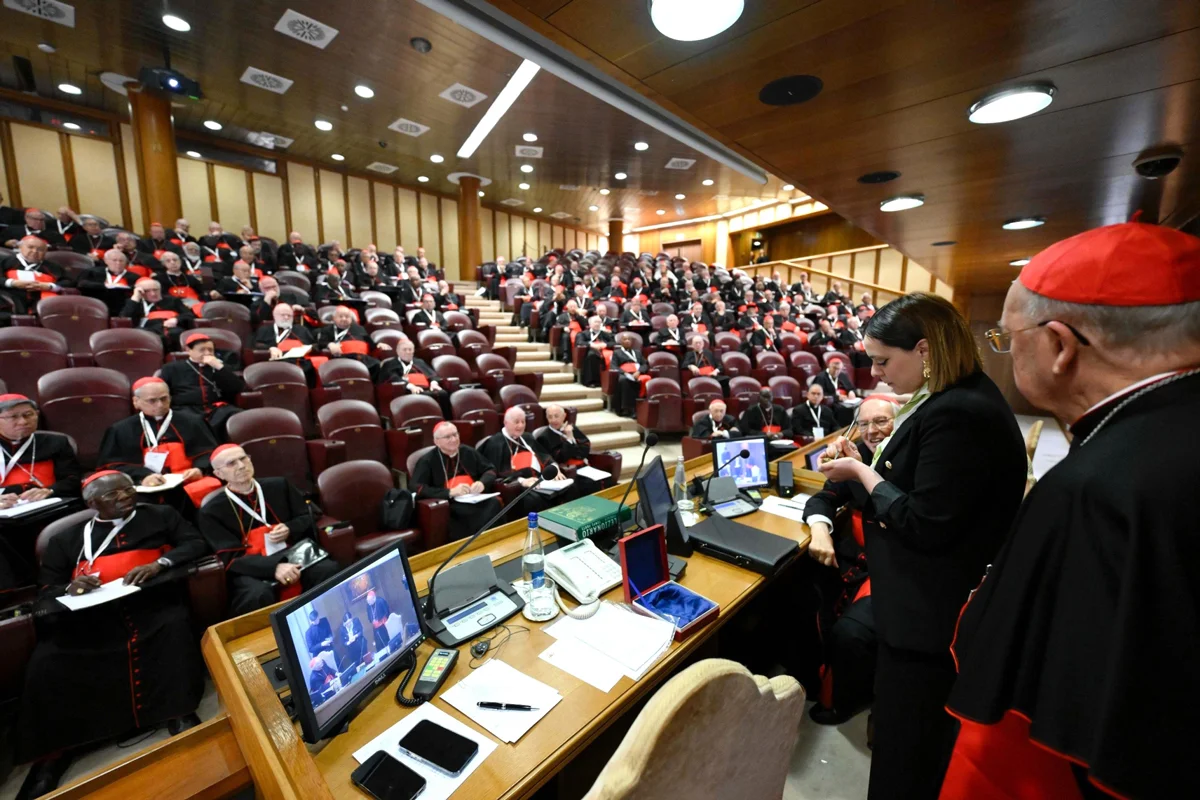
The XI universal congregation of the collegium of the cardinals, held in the Vatican on Monday, May 5, is the last organizational event preceding the Conclave-a closed collection of cardinals in the Sikistinsky chapel, which begins on May 7 and on which a new, 267th Pope-the head of the largest and most influential religious organization of the world should be elected in 2/3 votes. 133 people - the cardinals of the Roman Church, who have not reached 80 years old, have the right to vote on the conclave. Thus, the minimum number of votes for the election of the pope on the current conclave is 89. As a rule, a new dad is elected from their number.
A little more cardinals participated in the congregation - 170, but the collegium also includes the cardinals over 80, which will not be missed on the conclave (however, this does not deprive them of passive suffrage, that is, the dad at the time of election can be more than 80). Congregation is their last chance to influence the choice of younger counterparts. According to the Vatican Officiaz, the cardinals recorded the main factors affecting the choice of the pope in modern conditions: the active growth of the number of Catholics in the countries of the global south and the reduction of their share in the West, the problems of migration, wars and the restoration of collection in the management of the church.
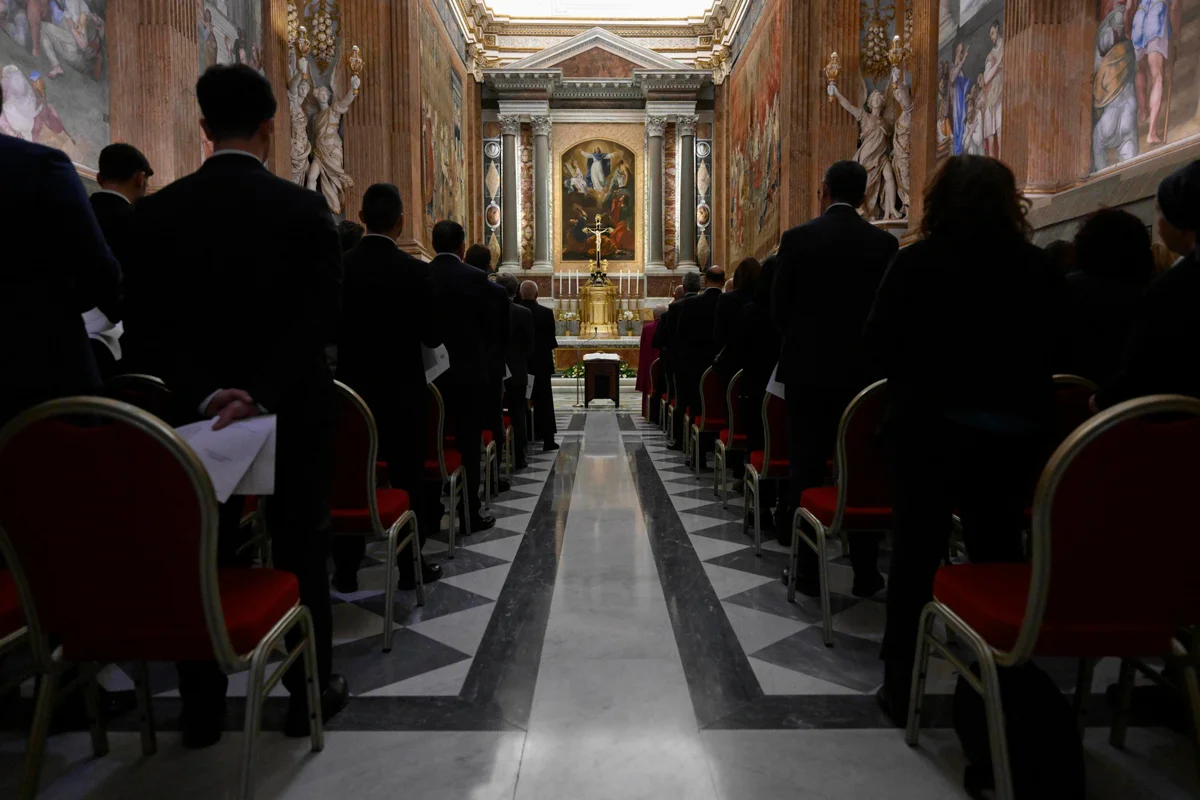
The very name of the upcoming conclave (from the Latin words “Cum Clave” - “Under the key”, “Under the shutter”) indicates an atmosphere of complete secrecy in which it should take place. Cardinals-collapses will lose the right to use communications for the time of meetings, and the rooms in the Vatican hotel where they will live are already hung with an unconscious film. About 80 lead seals are installed on the doors and gates enclosing a closed area, inside which the cardinals from the chapel to the hotel will move. The college took the oath of non -disclosure of the secrets of the conclave among about a hundred Vatican services: clergy, cleaners, cooks and medical workers.
The conclave should begin after the mass, lunch and special litania to all saints at about 16:30-and from that moment on all radio-telephone communications will be disconnected in the entire state of the Gorod Vatican.
Although there are no documentary evidence of how the conclave is passing, it is known from unofficial sources that at meetings, discussions alternate with voting. But at first, each cardinal offends the oath in anything to change the Catholic faith if it is chosen by the supreme pastor, a pontiff.
According to the law adopted by Pope Benedict XVI, 33 voting rounds can pass in the usual order, and if the dad is not elected according to their results, two candidates are released in the 34th round, who gained the maximum number of votes. At the same time, they themselves are deprived of the right to vote and the one who gains a simple majority wins. But practice shows that it does not reach the 33rd round: the last few dads were elected for 4-6 rounds. Over the past hundred years, the election of Pope John XXIII in 1958 (11 rounds) has taken most of all, the least Pope XII in 1939 (three rounds). Francis was elected on the fifth round, and his predecessor Benedict XVI in the fourth. On the first day of the conclave, there is only one - “sighting” - voting, in the following days - from two to four rounds, so that the average duration of the conclave in the new time is two days (in the Middle Ages, of course, there were cases that the elections lasted for years). The unsuccessful outcome of the next round is announced by black smoke from the pipe of the Sistine Chapel, about the successful - White, whom the most pious Catholics are waiting for the heart, on duty for the sake of this on the SV Square. Peter. And, of course, journalists, who are brought to the square.
"Dadabil"
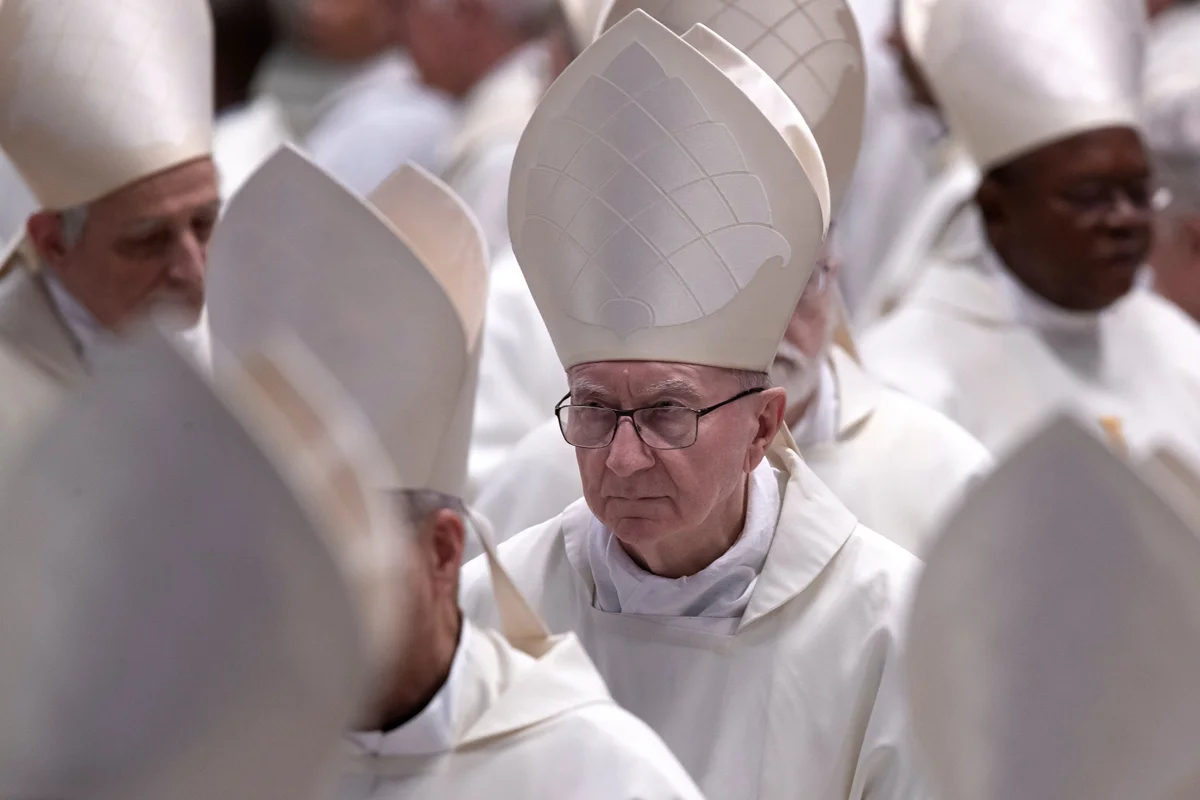
From the point of view of bookmakers in different countries of the world and expert vatics, the current actual head of the Vatican government, Secretary of State of St. Pietro Passolin is the most chances to be elected. He is only 70 years old (which is a big plus against the background of many “papabi”, which is over 80), he is friends with the current leadership of Italy and has a gigantic experience of diplomatic work, and in such difficult directions for the Vatican as North Korea, China, Israel, Vietnam and African countries. The position of the passolin in relation to “Svo” was not distinguished by Jesuity and (and remains) much more consistent than that of Pope Francis. On the very first day of full -scale military operations, on February 24, 2022, he signed the commander of the State Secretary of the Holy See, in which he described Putin’s actions as a “worst scenario” and warned about the “madness and horrors of war”. In the future, he supported Ukraine’s right to self -defense and strengthen his armed forces, which gained sincere sympathies in Kyiv.
In Ukraine, they perceive the second probable Italian candidate-Cardinal Matteo Dzuppy , the Archbishop of Bologna and the head of the conference of the Catholic bishops of Italy. It was his Francis who appointed his special representative to resolve the Russian-Ukrainian conflict, and as part of this mission, Dzuppy allowed himself diplomatic curtains towards the Kremlin, which, however, did not bring a special effect. Suppi is supported by the influential Catholic community of St. Egidia, which has a reputation as a closed order within the Catholic Church associated with the leading world politicians. The third candidate from the influential Italian party (and this is almost 30 cardinals!) Call the Latin Patriarch Jerusalem Pierbattist Pizzaball , who was not involved in the Russian-Ukrainian agenda, but was famous for its selfless attempts to establish a dialogue between Israel and Hamas and change itself to the hostages held in the tunnels of the Gaza. The French party is adjacent to the French, the most prominent representative of which is the liberal archbishop of Marseille Cardinal Jean-Mark Avelin , close to Pope Francis. The main candidates from the Global South are the liberal Philippine Cardinal Luis Tagle and the conservative Congolese Cardinal Friedolin Ambongo Binghound .
Lower positions in the informal rating of Novaya Gazeta, compiled after a survey of several experts in the Vatican, were occupied by the cardinals Peter Tarkson from Ghana, Robert Sarah from Guinea, Charles Mouse Bo from Myanmar, Raymond Burk and Timothy from the United States, Peter Erdo from the Netherlands, Jean-Claude Okhlod. Luxembourg, Jose Tolentin Mendons from Portugal, Mark Welle from Canada, Mario Grek from Malta and two more Italians - Claudio Gudzherotti (by the way, specialist in the post -Soviet space) and Angelo Shy (favorite of the 2013 election).
But no matter how long the lists of "daddy", "not everything is finished yet, not everything is allowed yet." The modest Argentine Cardinal Horge Mario Bergolo in 2013, if it was included in the list, then in one of the last places. But it was he who became Pope Francis-the fruit of the compromise between the Italian and American-German parties on the Conclave after the resignation of Benedict XVI.
Of the last six conclaves, only two ended with a predictable result (the election of Paul VI in 1963 and Benedict XVI in 2005), the results of the rest were a surprise.
According to the Religious Veda from the Institute of Oriental Studies of the Russian Academy of Sciences, Sergei Filatov, after the bright and paradoxic Francis, the new dad will become a man "moderate, not politicized and proved his ability to get along with different factions." And the Salvador Cardinal Gregorio Rosa Chavez supplements this forecast with a statement that the cardinals, in principle, have already decided on the candidate and "the conclave will be very short, two or three days."
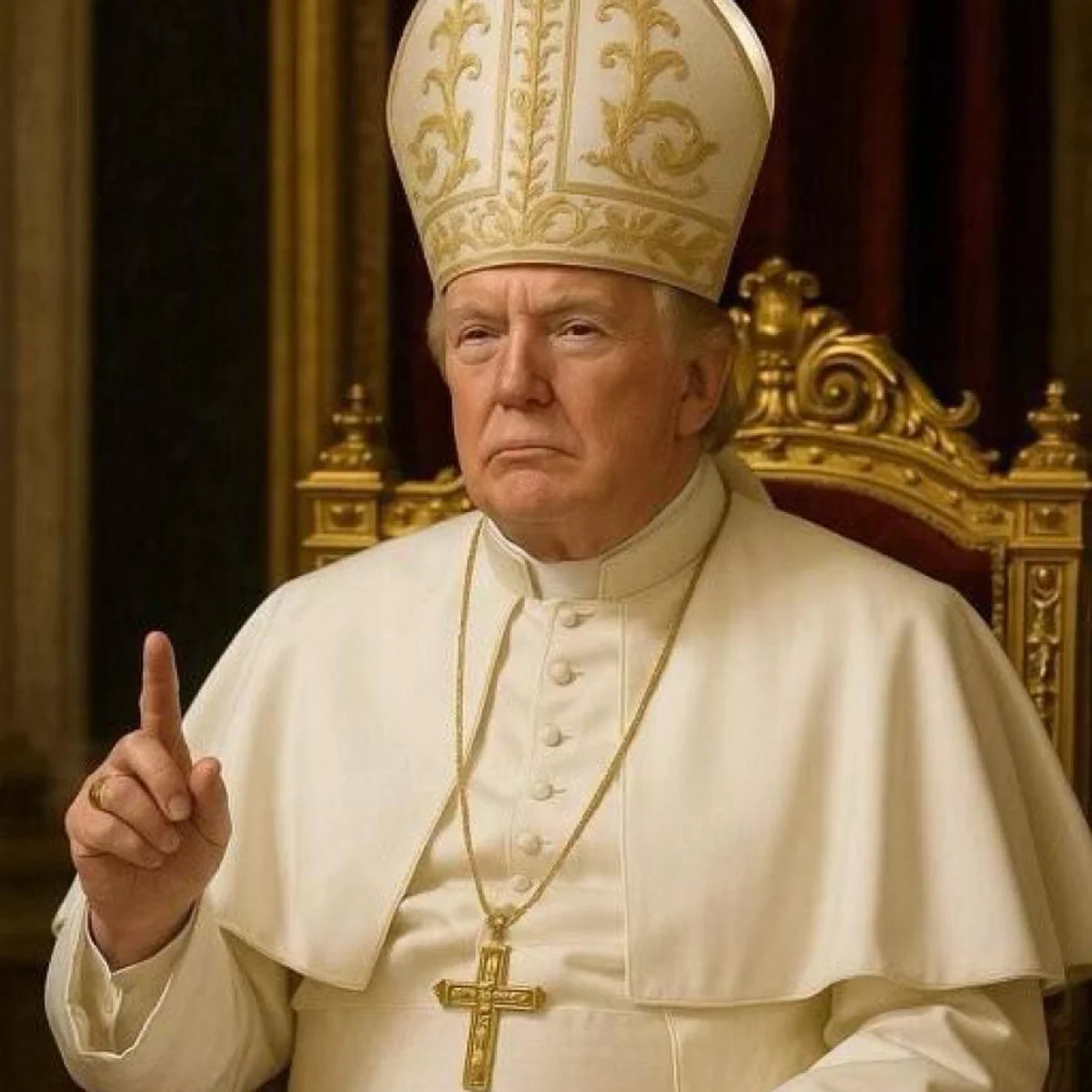
Where without Trump?
Nevertheless, without politicization, and in the grotesque, carnival form, preparation for the current conclave was not treated. The outrage of the calm was the great overthrow of the usual world order Donald Trump, who first called the best candidate for the papa of himself, a loved one, and then placed the collage in his social networks again, his beloved, in papal vestments. A joke (if it was a joke), it seems, crossed the line of blasphemy-she was forced to officially respond to the conference of the Catholic bishops of the state of New York, which said :
“We have just buried our beloved Pope Francis, and the cardinals will soon begin a solemn conclave to choose a new heir to St. Peter. No need to mock us. ”
In an interview, Trump also made it clear that he has a favorite among the cardinals-referring to the New York archbishop Timothy Dolan. But he has a reputation as such a frank trampist that the cardinals will not risk voting for such a candidate to turn the Vatican into a second Greenland (in the sense of the prospects for the annexation of the eccentric Trump administration).
But the sincere fans of Trump, who considered him the Messiah (“New Evrope” wrote about the specific religion of Trumpism , which arose at the junction of the Gospel of Success and the “Civil Religion” of the United States), find nothing ridiculous in the image of the holy father of Donald I. His image in the form of pope did not insult the demonstrative Catholic of Marco Rubio or The converted Catholic of Jay Di Wans. For all the absurdity of Trump's antics in it, you can still catch a serious hint. To recognize the great and terrible lord of America that there is a certain higher power in the world - unearthly origin - which is inaccessible to him with all its success and messianism. This is the power of the successor of the Apostle Peter, who still acts as a subject of global processes and is not yet subject to Trump, or Putin, nor Xi Jinping.