
Translated material
Sabotage in the Bundestag
Friedrich Mertz was elected new chancellor of Germany, but only on the second attempt. Who prevented him from and how will a failure vote affect the future of the German government?
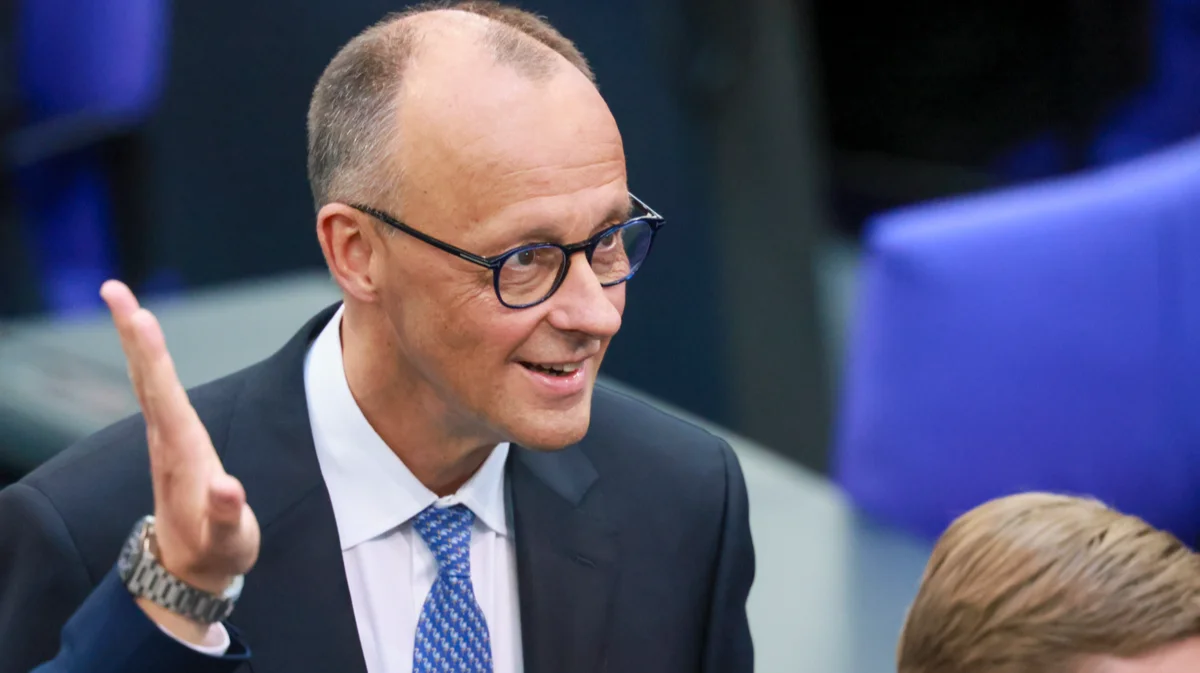
Frederick Mertz before the second round of voting in the Bundestag, Berlin, Germany, May 6, 2025. Photo: Hannibal Hanschke / EPA
On the morning of May 6, the Bundestag was supposed to choose a new chancellor with a secret vote. It was assumed that he would be the leader of the conservatives Friedrich Mertz, who went to this all his life. All formalities were observed: in February, the Mercatz party (CDU/CSU bloc) won the elections and was able to conclude an alliance with social democrats (SPD), necessary for the formation of the government.
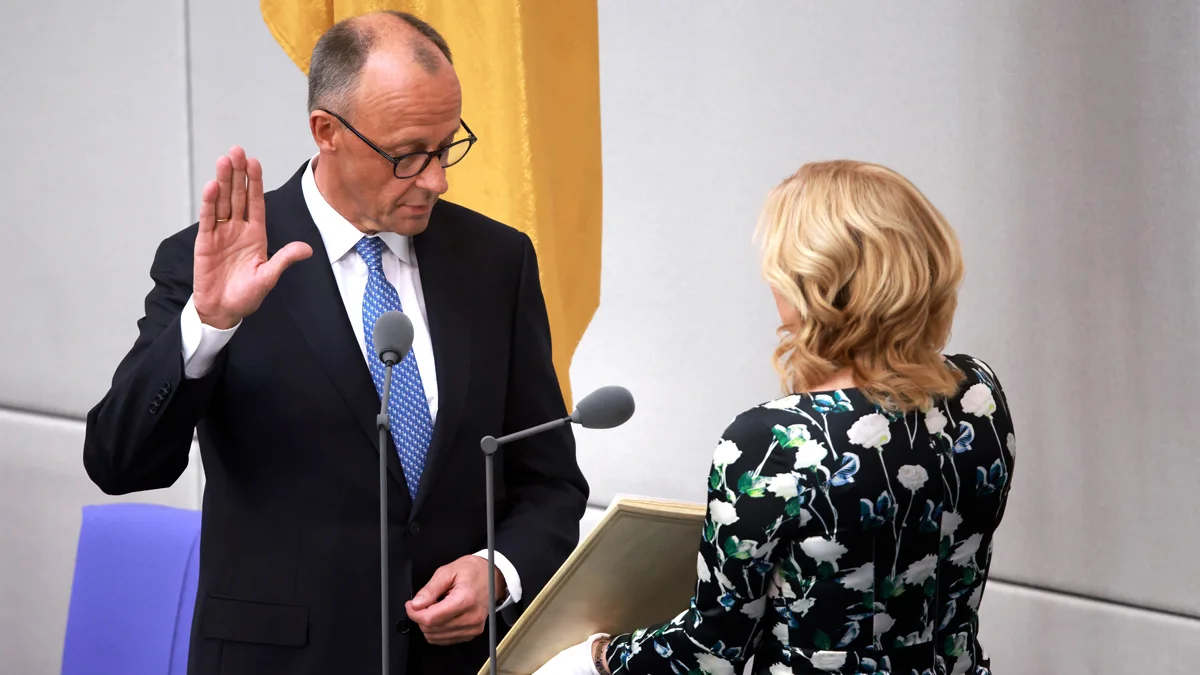
Together, two parties have 328 deputies, which gives not too wide, but still the majority in the 630-seat Bundestag of the new convocation. It seems that Mertz had no doubt about the success of voting and even brought with him ten liters of beer from his native Zauerland for celebration, and the next day he planned to go with the first chancellor visit to Paris. But something went wrong. During the vote, he gained only 310 votes of the necessary 316. This means that “alternative to Germany”, “green”, “left” and individual deputies of the future coalition - his own associates voted against his candidacy. A few hours later, the second round of voting passed. The stroke managed to turn the situation and gain 325 votes. The New Gazeta Europe tells how Mertz became the first German chancellor in history, who failed to vote for his candidate in the first round, and what this means for reforms conceived by the Government of the Mercke.
Blow in the back?
Nine in the morning. There is a rumble in the main hall of the German parliament. Voting will be about to begin. Frederick Mertz is preparing to survive the main moments of his political career. From the balcony, the family and his main opponent in the past are watching him - Angel Merkel. Voting begins.
It suddenly turns out that Mertz failed the vote in the first round and did not gain 316 votes he needed to be approved by the chancellor. On the one hand, he’s not getting used to the stupor, because once he had already lost the competition of Angel Merkel inside his party, and therefore he left politics and after some time returned.
On the other hand, this time things are really bad. Firstly, there has never been such a precedent in the history of Germany. Even the predecessor of the Mercke, Olaf Sholts, whose shoulders there was a motley alliance of three parties, was elected chancellor on the first attempt. Secondly, the problem is deeper than in simple inorganization. Nobody walked and did not get sick. All 328 deputies of the future coalition on the spot. So this is a deliberate sabotage. As the political scientist Alexander Dines from the Friedrich Ebert Foundation explains specifically for the New Evrope ( affiliated with the Social Democratic Party Germany. - Approx. Ed. ), "It is unlikely that anyone wanted to purposefully torpedo the notes." Everything could happen by accident:
-Separate deputies from among the conservatives and social democrats decided not to vote for the Mercke. It could be some personal grievances or disagreement with the party course. [Such dissatisfied] estimated that they can vote against, because the majority will still have, ”the expert explains.
Nevertheless, the versions immediately began to arise in the media: who and why could substitute the future chancellor?

Traitors in the "red" or "black"?
The most obvious scenario: “against” the opponents of the Mercke voted in the ranks of the Social Democrats. The party could remain dissatisfied with the coalition agreement, which the Red and Black signed the day before, on Monday. For example, “young socialists” (Jusos), the SPD youth organization, opposed the adoption of the document. In addition, some of the deputies from the Social Democrats within the parliamentary faction were painfully perceived by the January attempt of the Mercke to adopt the law along with the "alternative to Germany."
However, the current leader of SPD Lars Klingbail claims that all the deputies of his party voted over the hail. He cannot know for sure, because the vote was secret. Nevertheless, the representative of the left wing of the party Ralph Stegner supported the representative of the left wing of the party. “We have no alternative, otherwise the country will plunge into chaos,” the politician explained.
However, some Social Democrats still had the grounds to sabotage the elections of the chancellor. Moreover, not only secretly from the scurry, but also secretly from the leaders of their own party. According to Spiegel, in the course of the formation of the government both Mertz and Klingbail “pushed towards worthy Social Democrats”, for which they could decide both of them to annoy.
The second version sounds like this: “Put the pig” of the same one by their own single -partyists.
According to Dmitry Kartsev, the editor of the Verser, Mertz could ruin everything with his manner of doing business in his telegram channel. “I recall the numerous insids about the political style of the Merz and about how the communication was poorly organized about coalition negotiations inside the party: to trust more clingbayle (SPD) and Dorbindt (CSU) than their one -party people, regularly not informing any of them about their own decisions, at the last moment it is to cancel important meetings,” writes Kartsev.
In the ranks of CDU/CSU, two groups of internal opposition could be formed. On the one hand, the most conservative wing of Christian democrats could attack the Mercke to punish him for excessive, in their opinion, concessions to the social democrats during coalition negotiations.
On the other hand, the “Merkelians” could evade the party discipline, which are almost not represented in the office formed by Mern. This has already happened: during a joint voting with AFD on the issue of tightening migration rules, at least Antier Tilmann openly opposed the Mernov project. Eight more deputies did not vote, which could also be a form of disagreement.
However, organized resistance of both the first and second groups is still unlikely. Most likely, some of the dissatisfied simply wanted to give a signal to the future chancellor, but, in the end, there were too many of them.
The second time
According to the Basic Law of Germany, if the chancellor was not chosen on the first attempt, then within 14 days there is an opportunity to put this question on the voting of the Bundestag several more times.
After the failed first round, in which the German president nominates the Chancellor’s candidacy, the new candidate must be nominated by a large faction (at least 25% of the seats) and get 50%. If this did not work out for the second time, then the third tour will be followed, where the victory goes to the candidate, who gained a simple majority. At the same time, the German president can both approve the chosen chancellor in this way and declare new elections.
You can re -vote immediately if all parliamentarians agree. AFD, “left” and “green” did not have to persuade for a long time, but in the ranks of Christian and social democrats, panic began: it was urgent to calculate and convince the “sabotage”. Just in case, Klingbail decided to enlist the support of the Green, but they refused: “We will not vote for the Mercke,” said the leader of the “green” Drege. Around 14:10 it became known that all deputies agree to hold the second round.
“I think the [leaders of the ruling parties] thrashed their fractions, but who voted and how - this is a fortune -telling on the coffee grounds,” says Dines.
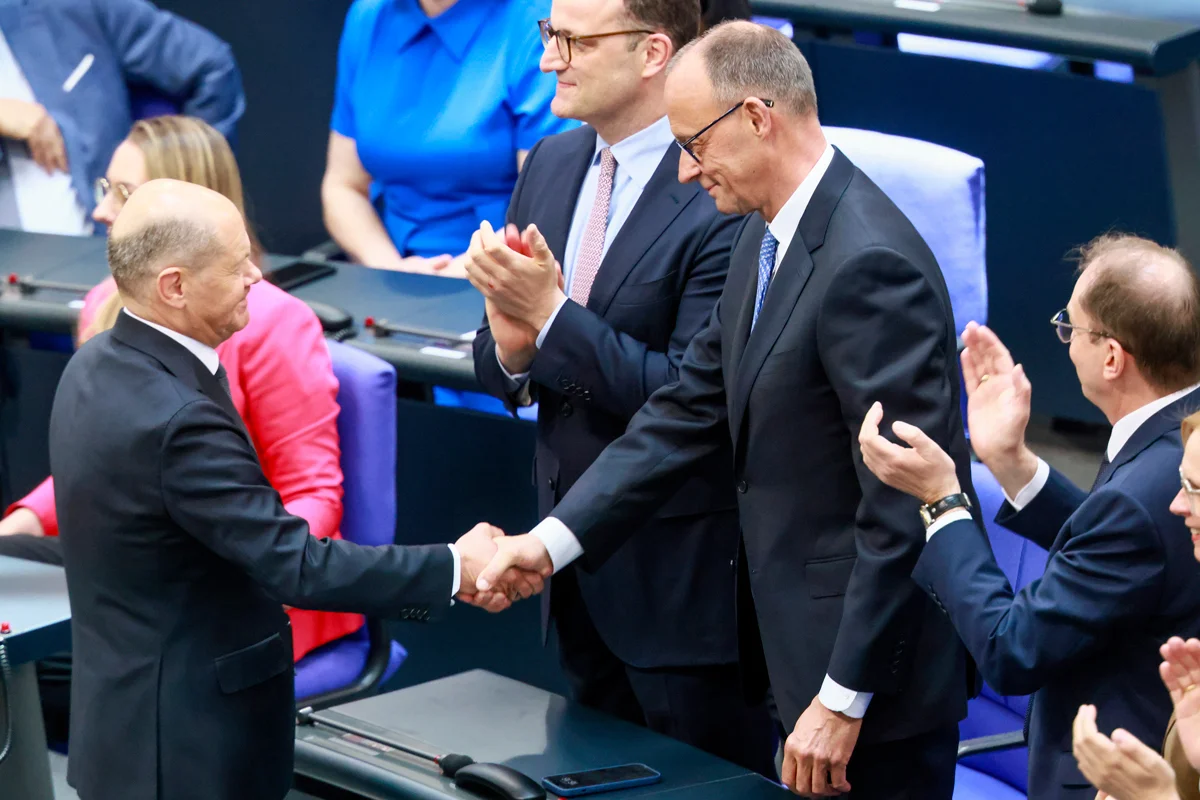
After a long break and a series of consultations, the vote still took place. In the second round, Mertz received 325 votes. Still not the same 328 places that both parties of his coalition own, which confirms the presence of stable "sabotage" in the ranks of parties. This is enough to become a chancellor. But is it enough to rule?
“We can’t say exactly how stable this coalition will be,” says Alexander Dines, “the very fact of such a difficult start does not mean anything. The real work begins only now. The parties had to develop an agreement very quickly, and, probably, not everyone was satisfied with the result.
To influence the speed of appointing the second round and on the possible support of the estate not only in parties from his coalition, but also, for example, some deputies from the "green" and "left", could also the Trump factor.
“In the international arena, everyone is waiting for Germany to get out of the“ inter -zero ”and will quickly respond to challenges, join the European coalition,” Dines explains what happened.