
Translated material
Indo-Pakistani conflict. Key concepts and events
The minimum of knowing about the new war between the two countries that have nuclear weapons
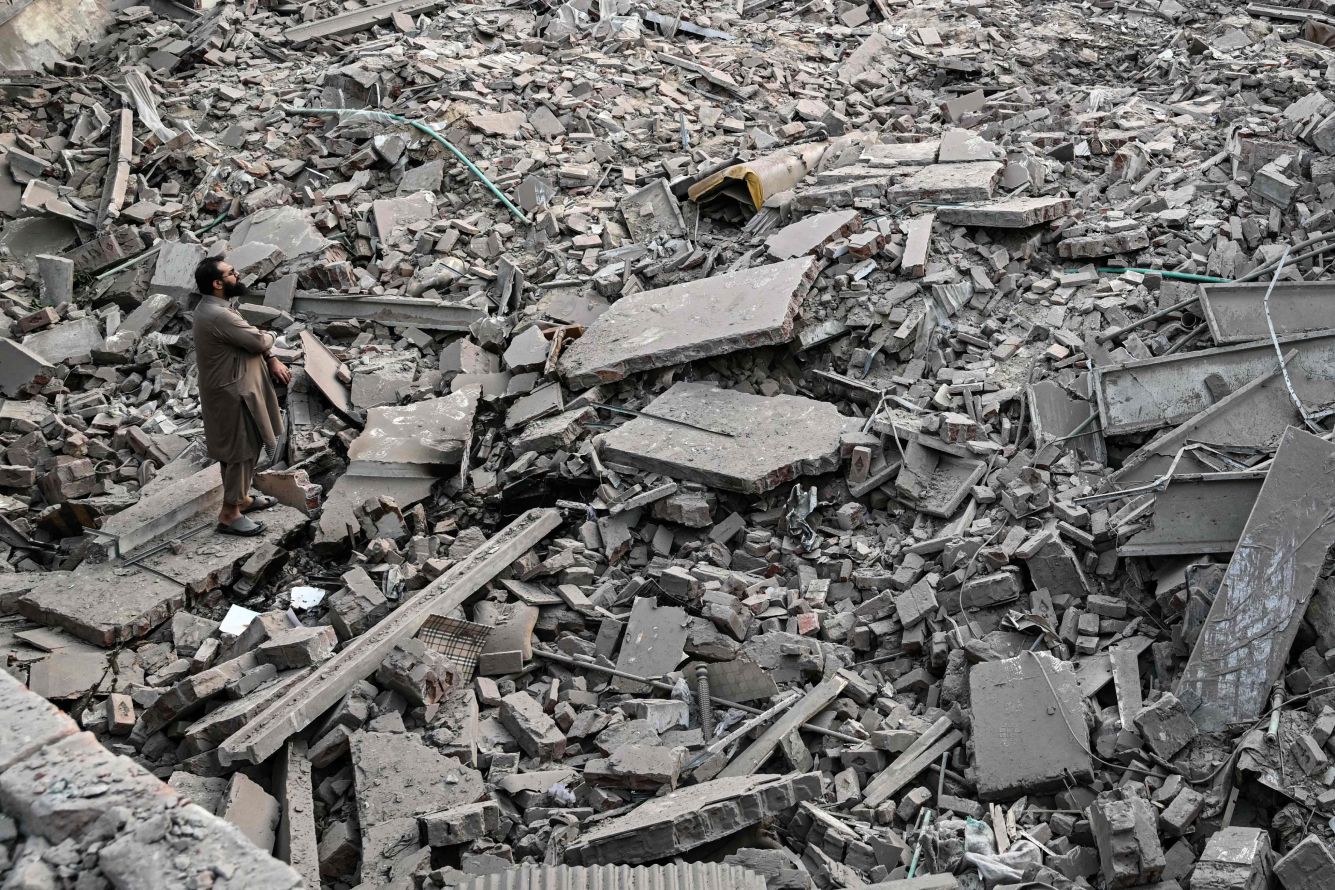
On May 6, India inflicted a series of missile, air and artillery blows to Pakistan. Pakistan promised to answer. The conflict between the two countries lasts exactly as much as they both exist: since 1947. During this time, three large wars and many skirmishes occurred. Both India and Pakistan are nuclear powers, which makes the situation especially frightening. We tell-as far as possible-because of which these countries are being angry.
Listen to the audio version of this text on "Radio Medusa"
Part One
Basic things that should be known about India and Pakistan
Both India and Pakistan are huge countries. But India is six times more ( UN data ): its population is approaching 1.5 billion people (first place in the world), while the population of Pakistan is about 250 million (fifth place). India is much richer (IMF data in India and Pakistan ): for GDP - about ten times (over 17 trillion dollars, or 8.5% of the global GDP against 1.67 trillion, or 0.8% of the global GDP in Pakistan); According to GDP per capita - almost double (12 thousand dollars against seven thousand at Pakistan).
India is included in the five world leaders in military expenditures - more than $ 86 billion in 2024, while Pakistan has about 10 billion dollars. Moreover, India only increases its military expenses, and in Pakistan they fell by 5% in 2024 compared to 2023.
Both India and Pakistan are nuclear powers. They, presumably , have 170–180 warheads. For comparison, in China - 600, in France - 290, in the UK - 225, in North Korea - 50; In Russia and the United States, the number of warheads is calculated by thousands.
Formally, both India and Pakistan are parliamentary republics. In fact, in Pakistan, the military’s influence on politics is traditionally strong, and a military dictatorship was established more than once (for example, in 1958, 1977 and 1999). And the return to the democratic substitution of power usually occurred as a result of military coups. The 1973 Constitution officially defined Islam as the state religion of Pakistan.
India is a stable democracy, that is, the power there is changing in the elections. But there are still quite a lot of political violence in India. For example, Prime Minister Indira Gandhi was killed in 1984 in revenge for the brutal suppression of Sikh separatism. Bloody interfaith clashes are not uncommon, especially in the north of the country, where Hindus and Muslims live mixed.
According to the Constitution, India is a secular state. Although about 80% of its population are Hindus, it is the third country in the world in terms of the Muslim population - after Indonesia and Pakistan.
The Indian government quite confidently controls the entire territory of the country, while in Pakistan there are entire regions (especially in the north, near the border with Afghanistan), to which the power of the central government in Islamabad does not actually apply. Local or alien tribes, clans, terrorist and criminal groups are hosted there (often this is all the same).
During the Cold War, India was friends with the USSR rather, and Pakistan - rather from the United States. India is now the largest buyer of Russian oil and weapons, and at the same time one of the largest trading partners of the United States. She continues to adhere to the policy of non-participation in the military blocs laid down by the founding father of the state Javaharlal Neuru back in the 1940s.
Since 2004, Pakistan has the official status of an important US ally outside NATO (the same, say, Australia, Japan and Israel). He was a key partner of the Americans during the war in Afghanistan. At the same time, Pakistan has a traditionally close relationship with China - for the most part they are friends against India. In the early 1970s, Pakistan played a key intermediary role in normalizing relations between the United States and China, which was crowned with the visit of Richard Nixon to China and its handshake with Mao Zedong.
Part two
Conflict Subject - Kashmir
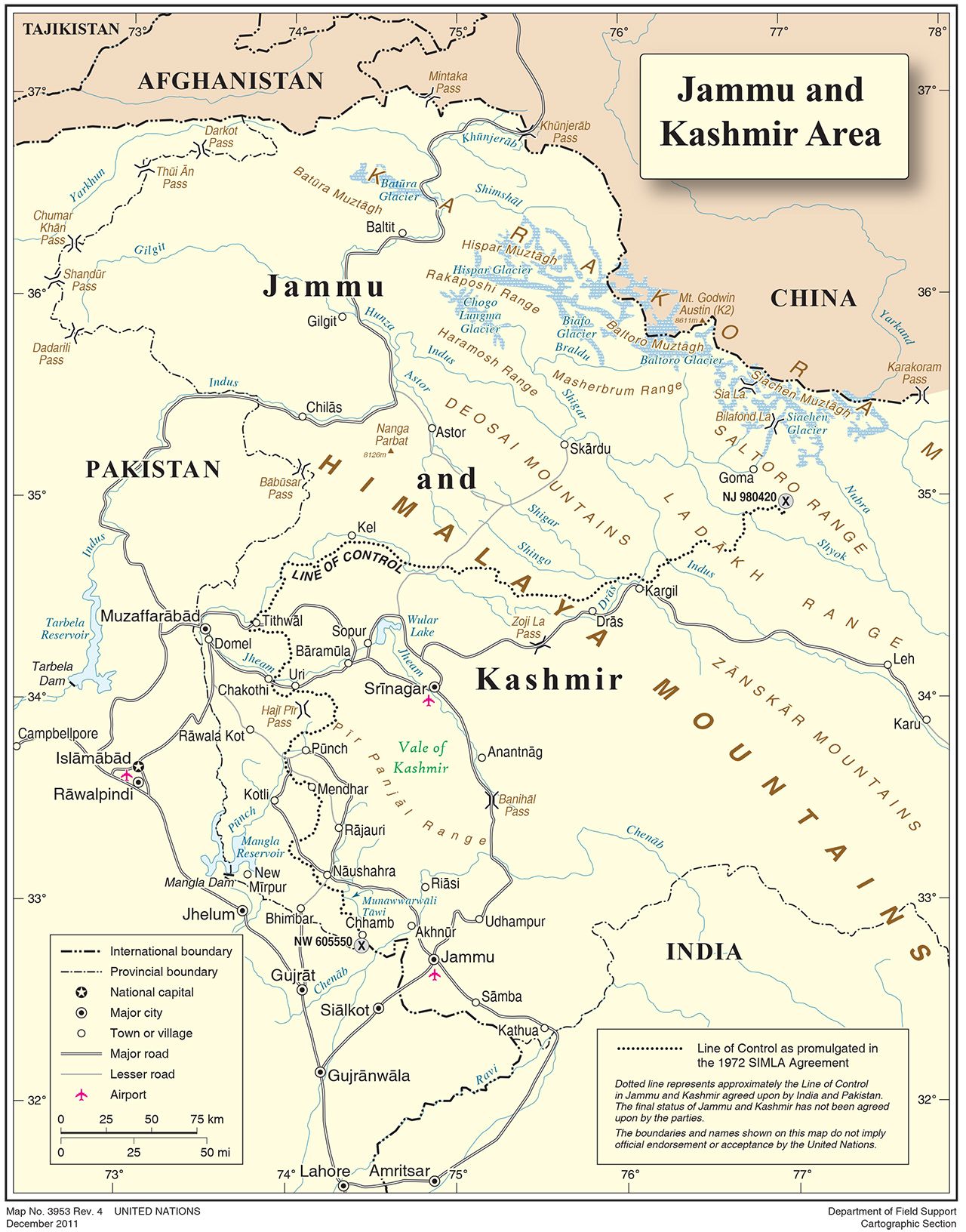
Kashmir is a historical and geographical region in the Himalayas, at the junction of Central and South Asia. Its population is a total of 17-18 million people, of whom a significant majority are Muslims. Now the region is divided between India (the allied territories of Jammu and Kashmir, Ladakh), Pakistan (special administrative unit of Gilgit-Baltistan and Azad-Kashmir's autonomy) and China (Plato Aksaychin).
Kashmir is, in fact, the gigantic slope of the Himalayas. From the southwest to the northeast, he rises from the plain of Penjab to one of the highest regions of the world. In Kashmir there are several peaks above 8 thousand meters above sea level.
Life is concentrated mainly in the inter -city valleys, of which the largest is the Kashmir Valley within the Indian Union territory of Jammu and Kashmir. Here is the most important city of the Srinar region (more than a million inhabitants, which by the standards of South Asia is not so many).
Both India and Pakistan have a “birth injury” - a section of British India. Almost the entire subcontinent - the current India, Pakistan and Bangladesh - was a colony of the British Empire. At least from the beginning of the twentieth century there were two large movements for independence: one purely Muslim, the other is mainly Hindu. And when, after the Second World War, Great Britain agreed to the decolonization of India, she decided to divide the subcontinent into Muslim and Hindu states.
In the northern part of the colony, this was especially difficult, because there Muslims and Hindus have been mixed up for centuries. The India section in 1947 was accompanied by pogroms, mass resettlements, conflicts due to land and houses. The number of victims is estimated in the range from 200 thousand to two million, refugees - from 12 to 20 million.
As part of British India, nominally independent states existed. When dividing, their rulers had to decide for themselves, join Hindu India or Muslim Pakistan. One of these states was the principality of Jammu and Kashmir, led by Maharaja Hari Singhu. He himself was an Hindu, and most of his subjects (nearly 80%) were Muslims. At the same time, he attended with both movements for independence: with the Indian-because of his left bias, with Pakistani-because it considered him a pagan, unworthy to rule the faithful.
India and Pakistan officially became independent states on August 14-15, 1947. Maharaja Hari Singh chose that Jamma and Kashmir remain on his own. Dissatisfied local Muslims raised the uprising. Pakistan did not slow to support them. Maharaja had to turn to India for help - and join her.
The first Indo-Pakistani war lasted until the end of 1948 and mainly determined the current configuration of the region: the North and the West remained under the control of Pakistan, and the center, the south and east-India.
Kashmir is not only the subject of the conflict in itself. He also became a symbol of the clash of two identities and two nationalisms, the point of assembly of all mutual insults of the Hindus and Muslims of South Asia. These grievances are not even drawn from the division of British India in 1947, but from much more ancient times - at least from the conquest of North India by the Great Mogles (Muslims from Central Asia) in the 16th century, and as a maximum from the Arab invasion of the Indus valley in the VIII century, at the dawn of Islamic history.
Part is the third
Three quarters of a century of conflict - important dates
1960 - Hero Treaty. Almost all the land suitable for agriculture in Pakistan is the valley of the Indus River. At the same time, the sources of Indus are in India. The countries, despite the enmity, agreed to use the river together, coordinate the construction and management of dams, channels and everything else. India unilaterally suspended the contract in April 2025, after the attack in Pakhalgam.
1962 -Indo-Chinese border war. China occupied a sparsely populated high -mountain plateau of Aksaychin, part of the Indian region of Ladakh. Next year, China signed an agreement on the demarcation of the border with Pakistan and received some more high -mountain territories in the eastern part of Kashmir.
1965 -Second Indo-Pakistani War. Pakistan began to send sabotage groups to the Indian part of Kashmir, intending to raise the uprising of local Muslims. India answered a full -scale military operation. The war lasted about a month and ended with a return to the status quo. The ceasefire agreement was signed through the mediation of the USSR in Tashkent.
1971 -The Third Indo-Pakistani War, it is also the war for the independence of Bangladesh. Pakistan, at its emergence, consisted of two unrefined parts - Western Pakistan (mainly the Indus Valley) and East Pakistan (the Muslim part of Bengal in the lower reaches of the Ganges). The Eastern Pakistan ultimately decided to separate. India supported him - and defeated the Pakistani army. East Pakistan became an independent state of Bangladesh.
1972 -Simlsk agreement following the results of the Third Indo-Pakistani War. It formalized the demarcation line in Kashmir, which developed back in 1948, and laid the foundation for normalizing relations between countries, including the exchange of embassies.
1974 - Operation "Smiling Buddha" - a test of Indian nuclear weapons. India did not sign an agreement on non -proliferation of nuclear weapons and a comprehensive prohibition of nuclear tests.
1984 - the beginning of the conflict on the Siachen glacier in the Himalayas, almost two decades of sporadic battles at an altitude of 6 thousand meters above sea level and at a temperature of up to -50 ° C. The conflict ended with the 2003 agreement, the glacier remained for India, more than two thousand people died-the vast majority due to hypothermia.
1998 -Operation "Chagai-I"-testing of Pakistani nuclear weapons. Pakistan, like India, did not sign an agreement on non -proliferation of nuclear weapons and an integral prohibition of nuclear tests.
1999 - Kargil war. She was preceded by an improvement in Indo-Pakistani relations, including the signing in 1998 of the Lahore Declaration on the prevention of a nuclear race. Some officers of the army and special services of Pakistan, dissatisfied with the "softness" of the Prime Minister Navaz Sharif in relation to India, began to send a soldier to the Indian part of Kashmir under the guise of volunteer mujahides. India not only repelled the attack, but was also able to prove that the operation was prepared in the Pakistani General Staff. The head of the General Staff Perevez Musharraf arranged a coup d'etat and shifted the ball, and in 2001 he became president.
2008 - a terrorist attack in Mumbai. Several groups of militants were firing at the railway station, captured a police station and two hotels. 175 people were killed. The terrorists represented the organization "Mujahids Dekkan" related to Al-Keda. It was the largest of the many terrorist attacks committed by jihadists in India in the 21st century. The Indian authorities insist that all or almost all these terrorist attacks were inspired by Pakistan, on the territory of which there are many camps for the training of militants and jihadist madrassas.
2025 -a terrorist attack in Pakhalgam: Jihadists from the previously little-known group of resistance, associated with the Islamist terrorist organization Lashkar-E-Tayba, killed 26 tourists in the Baysaran Valley near the city of Palgam in the Indian part of Kashmir.
Both sides use terrorist proxies
Lashkar-Taiba is known for its relations with interagency intelligence-the main Pakistani special service-and may, with some reservations, be considered as a Pakistani proxy. On May 6, India’s blows to Pakistan were a response to the Pakhalgamsky attack. The priority goals, according to the Indian side, were just jihadist madrassas and camp training camps.
At the same time, India also uses terrorist proxies. For example, she secretly supports the “Army of the Liberation of Belujistan” - a group operating in the West of Pakistan. However, to the scope of the Lashkar--Taybi, she is far away.
"Jellyfish"